Advertisement
Advertisement
July 2022 Supplement
Sponsored by The PERT Consortium™
Women Supporting Women to CLIMB in Venous Thromboembolism
Describing efforts by Women as One and The PERT Consortium™ to promote female physician thought leaders in venous thromboembolism.
The gender imbalance in medicine is amplified in the surgical and procedural specialties where men dominate. According to the census in 2020-2021, women represent 16.7% in orthopedic surgery, 20.4% in neurosurgery, 22% in interventional radiology (IR), and 25.5% in thoracic surgery. In contrast, women are drawn to fields such as obstetrics and gynecology (84.6%), pediatrics (71.1%), child neurology (68.7%), and allergy and immunology (61.9%). These trends have remained consistent since 2019.1 Despite an almost equal representation of male and female medical graduates in the United States (53.4% vs 45.5%), women comprise only 15.4% of IR fellows and residents and 7.3% of faculty members.2-4 Cardiology and pulmonary critical care specialties maintain similar gender imbalances. Fewer than 15% of practicing cardiologists and < 5% of interventional cardiologists are women, while 29.3% of critical care physicians, 40% of pulmonary physicians, and 34.9% of pulmonary and critical care physicians are female.5 Over the past decade, the percentage of female internal medicine residents (41.9%) and the percentage of female applicants for pulmonary (29.2%), critical care medicine (26.1%), and pulmonary critical care medicine (30.7%) fellowships are declining.6 Potential reasons in the literature include poor work-life balance, gender bias, lack of female physicians with senior academic rank, and the gender pay gap.5,7
Women comprise a minority of full professors in every field of medicine, with only 26% in internal medicine, 23% in radiology, and 14% in surgery.8 Women are also underrepresented at scientific and medical society conferences and on editorial boards of major academic journals, comprising 16% of editors in chief and 18% of board members.9 These gender disparities and lack of sponsorship lead to the invisibility of midcareer female academic physicians.9,10 Sponsors, as opposed to mentors, have the potential ability to use their power and influence to advocate for female physicians. Considering that women rarely hold governorship positions in medical schools, clinical departments, and editorial boards, men in these positions should strive to support midlevel female physicians and elevate them to executive leadership positions using a top-down approach (Figure 1).10
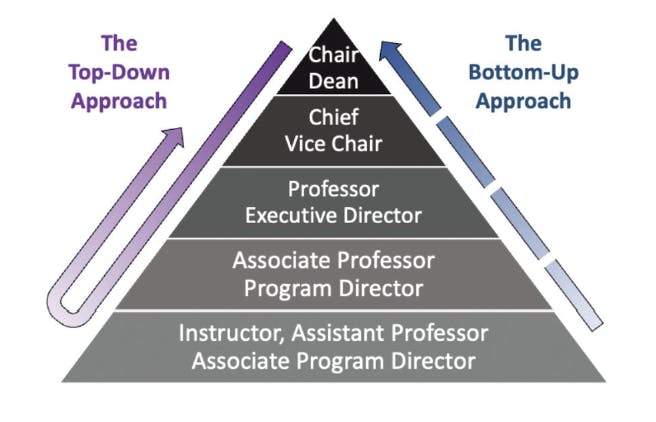
Figure 1. Strategies to promote gender equality in medicine: The top-down approach describes sponsorship of women by institutional leaders, often male, to recognize talented women and promote or assign them to leadership and authority positions. The bottom-up approach involves women mentoring women to provide skills and training to improve visibility and recognition.
BRIDGING THE GENDER INEQUALITY GAP: WOMEN AS ONE AND CLIMB
Efforts are being made from the bottom up to bridge the gap of gender inequality at the institutional and national levels (Figure 1). A systematic review of targeted programs designed to support the careers of women in academia has yielded positive outcomes in regard to self-rated skills and capabilities and reported improvements in promotion, retention, and remuneration.11
One such effort to break the ceiling is the effort by Women as One to highlight women and bring them to the forefront. Women as One was founded in 2019 by Drs. Roxana Mehran and Marie-Claude Morice with the aim of building a more inclusive, diverse, just workforce in medicine. It provides women with unique educational and professional opportunities consisting of educational programs, financial and mentorship awards, and opportunities to network with industry partners. A talent directory of 1,600 women physicians is freely accessible, and networking webinars focus on bringing mentors and mentees together.
In July 2020, Women as One launched CLIMB, an advanced-skills training program for a pilot group of interventional cardiologists. The program aims to level the playing field by providing skills and relationships with industry leaders to promote female physician participation on advisory boards and speakers’ bureaus and in clinical research. The program has shown rapid growth since its inaugural course and is expanding to new audiences. This year, CLIMB 2022 has created two learning pathways: CLIMB Clinical and CLIMB Research. The clinical pathway will include webinars in coronary, cardiac electrophysiology, pulmonary embolism (PE), and pulmonary vascular disease. The program will comprise two tracks: three sessions each focusing on a variety of topics. Interested candidates for the course have been reviewed and selected by the program directors. The course is in a webinar format and spans from June to August. It will be recorded and available for viewing by Women as One members after the session is completed.
The PE program of CLIMB is cosponsored by The PERT Consortium™, which aims to advance the status of PE care and promote research in its treatment. The marriage of these two innovative organizations will provide an exciting educational, networking, and career-building opportunity for female physicians in various fields of medicine who treat patients with venous thromboembolism (VTE). The CLIMB PE program (Figure 2) is divided into two tracks: Interventions in VTE and Critical Care in VTE.
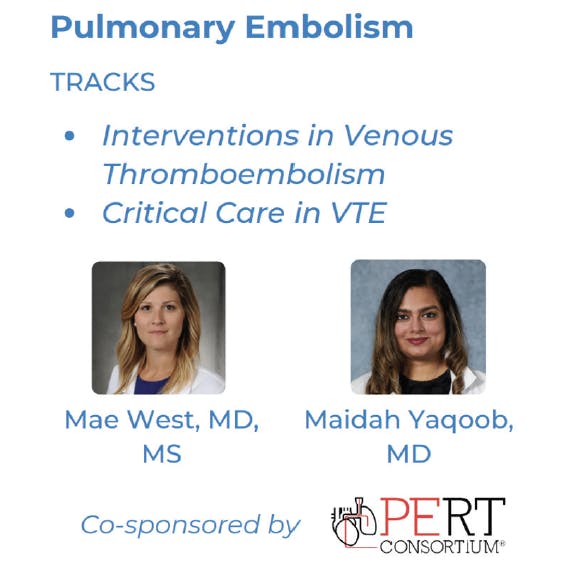
Figure 2. Women as One 2022 CLIMB skills training program. CLIMB Clinical PE Program Directors, Dr. Frances Mae West and Dr. Maidah Yaqoob. https://womenasone.org/uploads/2022/03/climb-2022-flyer-1.pdf
INTERVENTIONS IN VTE TRACK
The Interventions track is designed to appeal to interventional cardiologists, interventional radiologists, vascular surgeons, and cardiothoracic surgeons. Percutaneous methods to treat VTE have expanded in recent years. Knowledge of the functionality and limitations of these devices is important for interventionalists to expand their skill base to lead clinical programs, interact with industry partners, and participate in device-related clinical trials.
Session 1: Catheter-Based Pulmonary Artery Reperfusion Interventions
Pulmonary artery reperfusion can be obtained by one of three mechanisms: mechanical (aspiration or fragmentation), pharmacologic (catheter-directed thrombolysis [CDT]), or pharmacomechanical. Mechanical thrombectomy devices include mechanical fragmentation devices such as pigtail catheters, angioplasty, Cleaner (Argon Medical Devices, Inc.), and snares; rheolytic thrombectomy devices such as AngioJet (Boston Scientific Corporation); suction thrombectomy devices such as AngioVac (AngioDynamics), Indigo CAT8 (Penumbra, Inc.), and Jeti (Walk Vascular, LLC); and clot-extraction devices such as FlowTriever (Inari Medical).
The FLARE trial assessed the effects of using FlowTriever in patients with intermediate-risk PE. The data suggested it was safe and effective, with the absence of thrombolytic complications and need for postprocedural intensive care unit stay and with improvement in right ventricular/left ventricular (RV/LV) ratio and bleeding complications.12 EXTRACT-PE is a single-center multicenter trial using the Indigo CAT8 for intermediate-risk PE. The study demonstrated low rates of major bleeding and adverse events, along with a significant reduction in the RV/LV ratio.13
CDT can be performed via a multiside-hole catheter, catheters with expandable baskets with mini-infusion catheters (Bashir Plus endovascular catheter, Thrombolex, Inc.), or an ultrasound-assisted thrombolysis (USAT) catheter (EkoSonic, Boston Scientific Corporation). The combination of USAT with conventional CDT accelerates fibrinolysis, in turn allowing for greater penetration of the fibrinolytic into the thrombus. Two randomized controlled trials (RCTs), ULTIMA and OPTALYSE PE, and one prospective study, SEATTLE II, have evaluated the use of these catheters for RV dilation reversal in intermediate-risk PE populations.14-16
To date, there are no large RCTs comparing these devices to anticoagulation alone or to each other, leaving much debate over the use of these therapies for treatment of intermediate-risk PE. However, the available literature suggests that there is clinical equipoise, and trials are currently enrolling or in planning stages. We hope to enlighten the audience with real-world experience by case-based discussion led by experts in interventional fields who can share unbiased opinions of the different devices, including their limitations. We also aim to encourage attendees to join clinical inquiries as this area represents a significant knowledge gap in the field of PE.
Session 2: Interventions in Deep Vein Thrombosis
This session will shed light on the controversial data for reduction of postthrombotic syndrome (PTS) in deep vein thrombosis (DVT), as well as percutaneous interventions used to manage patients with May-Thurner syndrome, an underdiagnosed cause of lower extremity DVT predominantly in young women that leads to recurrent lower extremity DVTs.17,18
Thrombolytic therapy has been compared to anticoagulation alone in various trials, including CAVENT, which showed a decrease in the incidence of PTS.19 Conversely, the ATTRACT trial showed no significant difference in PTS and an increase in the risk of major bleeding events.20
Understanding the caveats of conflicting data and the role of interventions in the lower extremity and having knowledge of an underrecognized condition affecting young women can arm interventionalists with clinical acumen of these complex conditions. Case-based scenarios and discussion with thought leaders can help interventionalists confidently make treatment recommendations to referring physicians and patients.
Session 3: Inferior Vena Cava Filters for Management of DVT
Initially a prophylactic measure, indications for inferior vena cava (IVC) filters have evolved over time. IVC filters have been used in trauma patients, including those with spinal cord injuries and lower limb fractures who are at exceptionally high risk for developing VTE. A retrospective analysis of a large registry suggested that prophylactic IVC filter placement in trauma patients is associated with higher rates of DVT, with no difference in mortality compared to trauma patients who did not receive IVC filters.21 The 2019 European Society of Cardiology (ESC) guidelines recommend against routine prophylactic use of IVC filters, but use should be considered in patients with an absolute contraindication to anticoagulation or recurrence of PE despite therapeutic anticoagulation.22 Due to associated morbidities, efforts are directed toward IVC filter retrieval, with improvements in rates accomplished by creating registries and using a multidisciplinary approach to track filters.23
In this session, we will explore early and late complications; share pearls and techniques to approach challenging cases, highlighting anatomic variants, difficult retrieval, and filter fracture; and discuss outline systems used by institutions to track and ensure retrieval of IVC filters.
CLIMB: CRITICAL CARE IN VTE TRACK
The Critical Care pathway will include discussions on diagnostic modalities, management of critical care patients with PE, and mechanical circulatory support for high-risk PE patients. This track is designed to appeal to medical, cardiac, and anesthesia intensivists, as well as pulmonologists, interventional cardiologists, vascular medicine specialists, and cardiothoracic surgeons.
Session 1: Diagnostic Modalities in PE
This session will elucidate the variety of imaging techniques and advancements. The assessment of RV size and function is a major component for risk stratification of PE. Several CTA findings are associated with worse outcomes: RV/LV ratio, left atrial volume, pulmonary artery diameter, pulmonary artery obstructive index, interventricular septal deviation, and IVC contrast reflux.24-27 Alternate imaging modalities include ventilation perfusion scans, lower extremity duplex (in patients with high pretest probability of PE and inability to perform CTA), MR pulmonary arteriography, and catheter-based pulmonary angiography. Echocardiography, including point-of-care ultrasound, has evolved as an adjunctive tool for diagnosis for acute PE, with signs for RV dysfunction and PE severity including new RV strain, RV/LV ratio, tricuspid annular plane systolic excursion, McConnell’s sign, and clot in transit.28-30 Other investigational diagnostic modalities include dual-energy CT and single-photon emission CT scans. In this session, we will focus on the interpretation of these studies and the identification of high-risk features.
Session 2: Management of the Critical Care Patient
This session will incorporate complex decision-making regarding selection of vasopressors, airway management, fluid management, and thrombolytics. Hemodynamic support and oxygen management are hallmark to the care of patients with high-risk PE. A thorough understanding of PE pathophysiology (ie, the effects of fluid, vasopressors, anesthesia, positive pressure ventilation on RV afterload) is necessary for management of high-risk PE patients.31
Session 3: Mechanical Circulatory Devices for Management of High-Risk PE
Extracorporeal membrane oxygenation (ECMO) provides hemodynamic support and stabilization, thus providing critical time to employ anticoagulation or reperfusion interventions. ESC guidelines recommend ECMO in combination with other interventions such as surgical embolectomy and CDT in patients with hemodynamic instability from massive PE.21 An expert analysis published by the American College of Cardiology included acute PE as an indication for implementation of ECMO as a bridge to definitive reperfusion therapy.32
A systematic review evaluating ECMO in 19 case reports and case series of patients with acute massive PE suggested that patients experiencing cardiac arrest from PE are more likely to survive and have good neurologic outcomes compared to other causes of cardiac arrest.33 Two additional retrospective studies with a small number of patients showed improved survival compared to control groups.34,35 There is limited literature published for the use of mechanical circulatory devices in this patient population. A small study comparing ECMO to RV assist devices suggested improved oxygenation and cardiac output with RV assist devices compared to ECMO.36
This session at CLIMB will include a case-based discussion with experts in the field to help understand the intricacies of these therapies in patients with high-risk PE.
CONCLUSION
The CLIMB program will culminate in a combined session for the interventions and critical care tracks during The PERT Consortium™ annual meeting September 29 to October 1, 2022, in Tampa, Florida. This networking session will focus on partnering with industry, increasing visibility to clinical trial leads, and next steps for participants after completion of the CLIMB skills training program.
We are honored to be selected as the program directors for the Women as One CLIMB Clinical program in PE. We hope female physicians will find these sessions enlightening, inspiring, and empowering to take their career to the next step and continue to CLIMB toward gender equality in medicine.
1. American Medical Association (AMA). These medical specialties have the biggest gender imbalances. Accessed May 7, 2022. https://www.ama-assn.org/residents-students/specialty-profiles/these-medical-specialties-have-biggest-gender-imbalances
2. Association of American Medical Colleges (AAMC). ACGME residents and fellows by sex and specialty, 2019. Accessed May 31, 2022. https://www.aamc.org/data-reports/interactive-data/acgme-residents-and-fellows-sex-and-specialty-2019
3. Higgins MCSS, Hwang WT, Richard C, et al. Underrepresentation of women and minorities in the United States IR academic physician workforce. J Vasc Interv Radiol. 2016;27:1837-1844.e2. doi: 10.1016/j.jvir.2016.06.011
4. Accreditation Council for Graduate Medical Education. Accreditation Council for Graduate Medical Education: data resource book: academic year 2020-2021. Accessed May 13, 2022. https://www.acgme.org/globalassets/pfassets/publicationsbooks/2020-2021_acgme_databook_document.pdf
5. Burgess S, Shaw E, Zaman S. Women in cardiology. Circulation. 2019;139:1001-1002. doi: 10.1161/CIRCULATIONAHA.118.037835
6. Santhosh L, Babik JM. Trends in racial and ethnic diversity in internal medicine subspecialty fellowships from 2006 to 2018. JAMA Netw Open. 2020;3:e1920482. doi: 10.1001/jamanetworkopen.2019.20482
7. Thomson CC, Riekert KA, Bates CK, et al. Addressing gender inequality in our disciplines: report from the association of pulmonary, critical care, and sleep division chiefs. Ann Am Thorac Soc. 2018;15:1382-1390. doi: 10.1513/AnnalsATS.201804-252AR
8. Association of American Medical Colleges (AAMC). Faculty roster: US medical school faculty. Accessed May 12, 2022. https://www.aamc.org/data-reports/faculty-institutions/report/faculty-roster-us-medical-school-faculty
9. Lewiss RE, Silver JK, Bernstein CA, et al. Is academic medicine making mid-career women physicians invisible?. J Womens Health (Larchmt). 2020;29:187-192. doi: 10.1089/jwh.2019.7732
10. Amrein K, Langmann A, Fahrleitner-Pammer A, et al. Women underrepresented on editorial boards of 60 major medical journals. Gend Med. 2011;8:378-387. doi: 10.1016/j.genm.2011.10.007
11. Laver KE, Prichard IJ, Cations M, et al. A systematic review of interventions to support the careers of women in academic medicine and other disciplines. BMJ Open. 2018;8:e020380. doi: 10.1136/bmjopen-2017-020380
12. Tu T, Toma C, Tapson VF, et al. A prospective, single-arm, multicenter trial of catheter-directed mechanical thrombectomy for intermediate-risk acute pulmonary embolism: the FLARE study. JACC Cardiovasc Interv. 2019;12:859-869. doi: 10.1016/j.jcin.2018.12.022
13. Sista AK, Horowitz JM, Tapson VF, et al. Indigo aspiration system for treatment of pulmonary embolism: results of the EXTRACT-PE trial. JACC Cardiovasc Interv. 2021;14:319-329. doi: 10.1016/j.jcin.2020.09.053
14. Kucher N, Boekstegers P, Müller OJ, et al. Randomized, controlled trial of ultrasound-assisted catheter-directed thrombolysis for acute intermediate-risk pulmonary embolism. Circulation. 2014;129:479-486. doi: 10.1161/CIRCULATIONAHA.113.005544
15. Tapson VF, Sterling K, Jones N, et al. A randomized trial of the optimum duration of acoustic pulse thrombolysis procedure in acute intermediate-risk pulmonary embolism: the OPTALYSE PE trial. JACC Cardiovasc Interv. 2018;11:1401-1410. doi: 10.1016/j.jcin.2018.04.008
16. Piazza G, Hohlfelder B, Jaff MR, et al. A prospective, single-arm, multicenter trial of ultrasound-facilitated, catheter-directed, low-dose fibrinolysis for acute massive and submassive pulmonary embolism: the SEATTLE II study. JACC Cardiovasc Interv. 2015;8:1382-1392. doi: 10.1016/j.jcin.2015.04.020
17. Birn J, Vedantham S. May-Thurner syndrome and other obstructive iliac vein lesions: meaning, myth, and mystery. Vasc Med. 2015;20:74-83. doi: 10.1177/1358863X14560429
18. DeRubertis BG, Alktaifi A, Jimenez JC, et al. Endovascular management of nonmalignant iliocaval venous lesions. Ann Vasc Surg. 2013;27:577-586. doi: 10.1016/j.avsg.2012.05.024
19. Enden T, Haig Y, Kløw NE, et al. Long-term outcome after additional catheter-directed thrombolysis versus standard treatment for acute iliofemoral deep vein thrombosis (the CaVenT study): a randomised controlled trial. Lancet. 2012;379:31-38. doi: 10.1016/S0140-6736(11)61753-4
20. Vedantham S, Goldhaber SZ, Julian JA, et al; ATTRACT Trial Investigators. Pharmacomechanical catheter-directed thrombolysis for deep-vein thrombosis. N Engl J Med. 2017;377:2240-2252. doi: 10.1056/NEJMoa1615066
21. Hemmila MR, Osborne NH, Henke PK, et al. Prophylactic inferior vena cava filter placement does not result in a survival benefit for trauma patients. Ann Surg. 2015;262:577-585. doi: 10.1097/SLA.0000000000001434
22. Konstantinides SV, Meyer G, Becattini C, et al. 2019 ESC Guidelines for the diagnosis and management of acute pulmonary embolism developed in collaboration with the European Respiratory Society (ERS): the task force for the diagnosis and management of acute pulmonary embolism of the European Society of Cardiology (ESC). Eur Respir J. 2019;54:1901647. doi: 10.1183/13993003.01647-2019
23. Li X, Haddadin I, McLennan G, et al. Inferior vena cava filter—comprehensive overview of current indications, techniques, complications and retrieval rates. Vasa. 2020;49:449-462. doi: 10.1024/0301-1526/a000887
24. İn E, Aydın AM, Özdemir C, et al. The efficacy of CT for detection of right ventricular dysfunction in acute pulmonary embolism, and comparison with cardiac biomarkers. Jpn J Radiol. 2015;33:471-478. doi: 10.1007/s11604-015-0447-9
25. Meinel FG, Nance JW Jr, Schoepf UJ, et al. Predictive value of computed tomography in acute pulmonary embolism: systematic review and meta-analysis. Am J Med. 2015;128:747-759.e2. doi: 10.1016/j.amjmed.2015.01.023
26. González G, Jiménez-Carretero D, Rodríguez-López S, et al. Automated axial right ventricle to left ventricle diameter ratio computation in computed tomography pulmonary angiography. PLoS One. 2015;10:e0127797. doi: 10.1371/journal.pone.0127797
27. Aviram G, Rogowski O, Gotler Y, et al. Real-time risk stratification of patients with acute pulmonary embolism by grading the reflux of contrast into the inferior vena cava on computerized tomographic pulmonary angiography. J Thromb Haemost. 2008;6:1488-1493. doi: 10.1111/j.1538-7836.2008.03079.x
28. Kurnicka K, Lichodziejewska B, Goliszek S, et al. Echocardiographic pattern of acute pulmonary embolism: analysis of 511 consecutive patients. J Am Soc Echocardiogr. 2016;29:907-913. doi: 10.1016/j.echo.2016.05.016
29. Frémont B, Pacouret G, Jacobi D, et al. Prognostic value of echocardiographic right/left ventricular end-diastolic diameter ratio in patients with acute pulmonary embolism: results from a monocenter registry of 1,416 patients. Chest. 2008;133:358-362. doi: 10.1378/chest.07-1231
30. Pruszczyk P, Goliszek S, Lichodziejewska B, et al. Prognostic value of echocardiography in normotensive patients with acute pulmonary embolism. JACC Cardiovasc Imaging. 2014;7:553-560. doi: 10.1016/j.jcmg.2013.11.004
31. Baram M, Awsare B, Merli G. Pulmonary embolism in intensive care unit. Crit Care Clin. 2020;36:427-435. doi: 10.1016/j.ccc.2020.02.001
32. American College of Cardiology. Mehta H, Eisen J, Cleveland JC Jr. Indications and complications for VA-ECMO for cardiac failure. Published July 14, 2015. Accessed May 31, 2022. https://www.acc.org/latest-in-cardiology/articles/2015/07/14/09/27/indications-and-complications-for-va-ecmo-for-cardiac-failure
33. Yusuff HO, Zochios V, Vuylsteke A. Extracorporeal membrane oxygenation in acute massive pulmonary embolism: a systematic review. Perfusion. 2015;30:611-616. doi: 10.1177/0267659115583377
34. Pasrija C, Kronfli A, George P, et al. Utilization of veno-arterial extracorporeal membrane oxygenation for massive pulmonary embolism. Ann Thorac Surg. 2018;105:498-504. doi: 10.1016/j.athoracsur.2017.08.033
35. Maggio P, Hemmila M, Haft J, Bartlett R. Extracorporeal life support for massive pulmonary embolism. J Trauma. 2007;62:570-576. doi: 10.1097/TA.0b013e318031cd0c
36. Bhalla A, Attaran R. Mechanical circulatory support to treat pulmonary embolism: venoarterial extracorporeal membrane oxygenation and right ventricular assist devices. Tex Heart Inst J. 2020;47:202-206. doi: 10.14503/THIJ-19-7025


Advertisement
Advertisement