Advertisement
Advertisement
July 2022
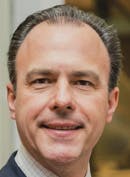
An Interview With Koen Deloose, MD
Dr. Deloose shares insights about his work in medical device development, thoughts on live case presentations and current trends in conferences, his current femoropopliteal treatment algorithm, and goals of the Belgian Society for Vascular Surgery and the Paris Vascular Insights meeting.
You’ve dedicated much of your work to researching new devices and technologies in clinical trials. What are the challenges and highlights of this work as an investigator?
Along with my daily hospital work as a vascular surgeon, I spend a lot of my “hobby that got out of hand” time on medical device research. With the ID3 Medical team, we try to cover the full spectrum of medical device development, from the early stages of design, in vitro testing, and animal testing to postmarket investigations. Covering all these phases of different vascular devices offers a fascinating view of the tools I use on a daily basis in my hybrid operating room. Especially in the endovascular world, material knowledge plays an extremely important role during algorithmic choices and final procedural outcomes. I love to plan, implement, and close out clinical studies. Each phase has its challenges and highlights. The discussion with the sponsor(s) about the project, the budget, the definition of outcomes, the statistics, and more brings motivated people around the table, debating all aspects of trial management. Implementing the final protocol in enthusiastic study centers, explaining the rationale to national and international investigator colleagues, and guiding the enrollment and follow-up phases provide outstanding contacts with worldwide interventionalists who often become my good friends by the end of the trial. The close-out phase with data collection and the final statistical analysis often opens never-expected insights, requiring further brainstorming.
Unfortunately, I have encountered important challenges for medical device research in 2022: Budgets are often too low as compared with pharma trials because costs are increasing tremendously. Also, the lack of personnel, more complex approval procedures with the authorities, defining the appropriate adjudication models, and the increasing need for expanding time investment are dangerous hurdles for the future of device trials. Nevertheless, I’m very hopeful that digital health technology—mobile health apps, wearable devices, telehealth and telemedicine, connectivity software, and artificial intelligence—will offer opportunities to improve management in the clinical trial process.
Along with your research efforts, you often perform and/or moderate live cases at meetings. What are the keys to a compelling, successful, and ethical live case presentation?
Live case performances provide excellent training opportunities because the audience can view a procedure performed by a key opinion leader (KOL) and interact in real time. However, several considerations must be made. For me, a patient’s safety is the ultimate priority over all other considerations. Well-balanced and in-depth informed consent is a conditio sine qua non for a live case performance. Today, I have the privilege to accept only live case proposals broadcast from my own hybrid room at AZ Sint Blasius in Dendermonde, Belgium. The familiar environment with my personal staff and hospital equipment are a must for a relaxed and elegant live case performance. An extra challenge is narrating while operating. For this reason, a second member of the operating team who is familiar with the procedure and the surgical technique is mandatory. One of us operates while the other addresses the specific questions of the audience. Also, these questions need to be strictly selected by the moderator. Only technical questions should be addressed. After the live case, in a separate room and in absence of the patient, more debate on strategy, indications, other approaches, and more can be performed. Clearly, careful selection of patients and cases (without causing a delay in patient care) is key for a smooth performance. Nowadays, I notice that high-quality, prerecorded, step-by-step videos are becoming more common, eliminating the potential ethical issues of live case performances.
As someone regularly presenting at conferences around the world and maintaining this trend virtually during the pandemic, what do you see as the distinct value of the in-person experience? The virtual? How can future educational endeavors be maximized to promote the unique utility of each option?
After navigating a year of online webinars, meetings, and congresses, I got “Zoom fatigue.” Nothing is more frustrating than debating for an hour with colleagues and audiences and then, instead of having a beer together, switching off and being alone in your office in front of your laptop. The lack of networking opportunities, the flaws of the digital platforms, and the extended time zone differences are serious downsides of the virtual approach. Also, my continuing responsibilities at the hospital and home intermittently made it an impossible combination. Of course, online meetings create lower cost, avoidance of long-distance traveling, and improved accessibility.
The hybrid meeting could potentially be the way to go in the future, although I will never be a real enthusiast. What hybrid means to me is there is an in-person meeting, there is a virtual meeting, and there is a little bit of digital overlap. With the virtual audience, it is much more difficult to interact in real time. Long before the pandemic, we were having these discussions because greater accessibility to congresses and reducing the number of annual meetings were high on the agenda. The pandemic was both a huge accelerator and a disrupter for this discussion.
Last year, it was announced that you and colleagues from your institution and from AZ Nikolaas formed a cross–hospital network collaboration. Can you tell us more about this program and its goals?
For the Belgian government, it is quite clear that collaboration between hospitals will increase the quality of health care, as well as has an economic benefit. Sharing resources and supporting services, integrating information technology systems, sharing experience and knowledge, and aligning goals between the different hospitals are key to making Belgian health care efficient and payable. For our vascular teams, it was crystal clear that action from the bottom up was mandatory. Our colleagues at Vitaz (previously known as AZ Nikolaas) have well-known expertise in minimally invasive thoracic surgery, and they introduce the newest techniques (eg, robotic- and video-assisted thoracoscopic surgery) to our surgical department in Dendermonde. On the other hand, our vascular department leads in the newest embolization techniques, carotid stenting, and chronic limb-threatening ischemia treatment, so we offer our expertise to their patient network. This exchange of experience and leadership is a win-win situation for our two thoracic-vascular departments, which is a benefit for our hospitals and also allows an increased number of patients to gain access to KOL health care in the described domains. Unfortunately, elements of the complex governance model of collaborations (eg, the differences in directory boards, general arrangements, financial regulations, and medical councils) are significant barriers. Further, collaboration increases efficiency to a certain level, but overly large collaborations can be too complex to manage. Finally, developing trust and a relationship over time is a challenge. Investment in a common goal and a long-term perspective is important for collaboration.
What are the unique challenges and opportunities facing Belgian vascular surgeons? As an executive in the Belgian Society for Vascular Surgery (BSVS), can you share some of the society’s initiatives and plans?
The BSVS board is working on three important dossiers in collaboration with the Belgian government Department of Health Care: reorganizing vascular surgeon training, updating the nomenclature of vascular procedures, and discussing modern reimbursement procedures for new medical devices. I’m especially concerned with the last topic. In the international scene, I notice that Belgium—as a small country that is potentially not very interesting economically—more and more misses the train of innovation and access to inspiring technology. The lack of reimbursement of venous and arterial thrombectomy devices, debulking tools, intravascular imaging, intravascular lithotripsy, stent grafts for thoracic endovascular aortic repair/fenestrated endovascular aneurysm repair/branched endovascular aortic aneurysm repair, and carotid stenting are painful reminders of this standstill. The disappointing decision-making of noncommunicating technical committees frustrates a lot of motivated vascular surgeons currently. A solution is not immediately in the scope, unfortunately. Nevertheless, it remains key to continue our efforts to persuade some of these decision-makers to join us in caring for the cardiovascular patient.
In 2019, in response to the Katsanos et al1 meta-analysis, you shared with us your revised femoropopliteal treatment algorithm for claudicants.2 What is your current algorithm for decisions on how to revascularize and maintain patency and lower limb health as long as possible?
Today, the preponderance of long-term effectiveness data has fueled the readoption of paclitaxel-coated balloons in the treatment of my peripheral artery disease (PAD) patients. The development of analyses involving approximately 300,000 patients comprising independent randomized and observational data sets offered me a consistent result that didn’t corroborate the mortality signal and instead reaffirmed the safety of paclitaxel-coated devices. The emergence of these data over the past 2 years has put the PAD treatment community in a new, more informed position since the report set this controversy in motion. With clear, durable benefits and reaffirmed safety, paclitaxel-coated balloons (angioplasty responders) and paclitaxel-eluting stents (angioplasty nonresponders) are again major players in my current PAD treatment algorithm. Only with very complex (anterograde-retrograde) subintimal recanalization should the local vessel toxicity of paclitaxel be taken into account and potentially avoided. More clarifications on this topic are needed in the near future.
What are the most pressing issues you want to cover at this year’s Paris Vascular Insights meeting, for which you are Chairman?
Together with my three French cochairing friends, we want to cover the entirety of vascular over the course of 3 days, including all aspects of PAD, aorta, carotid, embolization, and venous disease. The difference compared to other courses will be our high level of interactivity, which is our brand. The meeting will have case-based discussions, best-/worst-case scenarios, algorithm debates, in-depth analysis of late-breaking trials, and face-to-face hands-on workshops with KOLs in open and endovascular surgery, as well as several advisory boards, steering committee meetings, and industry encounters. Of course, don’t forget the ultimate environment of Palais Brongniart in Paris. No virtual event can beat this!
What is something on your professional bucket list that you haven’t yet achieved?
With the support of my wife and daughters, I have reached a lot of my professional goals, but working on a PhD thesis remains on my professional bucket list. When I was at the University of Leuven, a lot of coincidences made this impossible and forced me to start quickly as a full-time clinician in Dendermonde. Because I was so involved in the clinical work and then also in research, there was no time or opportunity for me to approach one scientific vascular topic in depth. Hopefully, in the (near) future, I will find some time to work on this. It would be the crowning achievement of all my professional efforts.
1. Katsanos K, Spiliopoulos S, Kitrou P, et al. Risk of death following application of paclitaxel-coated balloons and stents in the femoropopliteal artery of the leg: a systematic review and meta-analysis of randomized controlled trials. J Am Heart Assoc. 2018;7:e011245. doi: 10.1161/JAHA.118.011245
2. Deloose K. Lesion-specific SFA device selection. Endovasc Today. 2019;18:85-87.
Advertisement
Advertisement
Interested in reading more interviews?
To read more interviews with thought leaders in the vascular field, check out our Profiles & Perspectives hub.
Read More