Advertisement
Advertisement
July 2022
Sponsored by Inari Medical
Patient Pathways: How the ClotTriever System Is Changing DVT Treatment at Two University Hospitals in Europe
With Emma Wilton, MA, MD, FRCS, and Prof. Gerd Grözinger, MD


It has been estimated that nearly 700,000 cases of deep vein thrombosis (DVT) occur in Europe annually.1 Although DVT is common, standardization of patient pathways has been notably limited, leading to underdiagnosis and delays in care. Additionally, treatment options for these patients have been largely constrained to anticoagulation, which does not dissolve existing thrombus, or thrombolytics, which are effective only in the earliest stages of thrombus formation.2,3
But this reliance on insufficient therapies is changing , and progress is being driven by the emergence of effective, new technologies and treatments that benefit patients and improve hospital resource utilization. Since receiving CE Mark approval in 2020, the ClotTriever System (Inari Medical) has provided expanded opportunities for health care institutions to identify, refer, and treat symptomatic patients. The ClotTriever System is a purely mechanical device. Unlike thrombolytics, its mechanism of action provides an option to expand the window in which patients can benefit from treatment. Symptom onset has been used traditionally to gauge the appropriate timing of anticoagulation or thrombolytic treatment; however, mechanical thrombectomy with the ClotTriever System does not have the same limitations, as it has been shown to be an effective treatment for a wide range of thrombus chronicities—acute, subacute, and chronic.4,5 Furthermore, patients treated with the ClotTriever System are spared the bleeding risks and prolonged stays in a high-dependency unit, which are often associated with thrombolysis.
The ClotTriever System
The ClotTriever System is designed for use in the peripheral vasculature for the treatment of DVT.6 It has two main components: the ClotTriever sheath, with an integrated funnel to facilitate thrombus removal, and the ClotTriever catheter, with an atraumatic nitinol coring element and mesh collection bag (Figure 1). The ClotTriever catheter is introduced through the ClotTriever sheath and advanced over a guidewire. Once beyond the thrombus, the nitinol coring element and mesh collection bag are expanded into the vessel and retracted, dislodging thrombus and capturing it in the collection bag for removal.
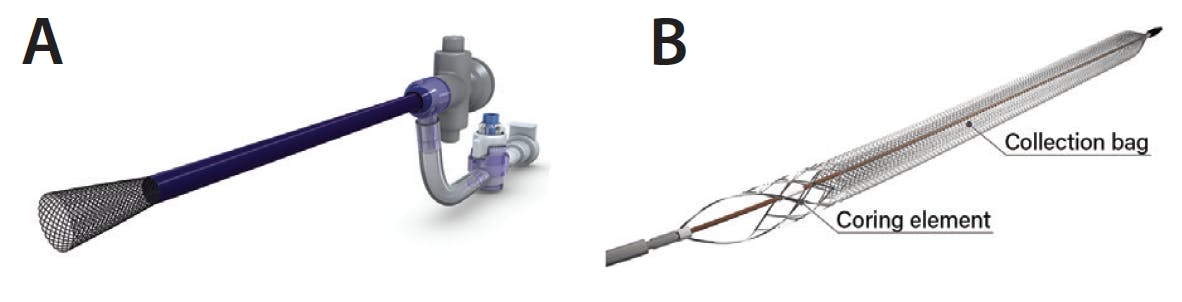
Figure 1. ClotTriever sheath (A) and catheter (B).
The effectiveness and safety of the ClotTriever System has been previously established. Dexter et al recently reported 6-month outcomes on the first 250 patients from the CLOUT registry,4 showing favorable effectiveness, safety, and sustained clinical improvements in patients with a range of thrombus chronicities. In a single-center retrospective analysis of 96 patients with acute iliofemoral DVT, Jolly et al reported that 97% of patients had complete or near-complete thrombus removal.7
The benefits of this treatment come into sharper focus when health care burden is taken into consideration. A recent interim analysis of resource utilization using mechanical thrombectomy to treat DVT in the United States health care system was recently presented at the Charing Cross International Symposium.8 Results showed a low hospital resource utilization burden among 250 patients in the CLOUT registry—due to 99.6% of patients being treated in a single session with the ClotTriever System, 0 mg of thrombolytics used, low blood transfusion rate, low hospital and intensive care unit (ICU) overnight stays (the average hospital stay was 1.8 days), and low 30-day venous thromboembolism (VTE)–related readmission rate.
The ClotTriever System is a safe and effective mechanical thrombectomy device that has the potential to enable hospitals to adopt lytic-free, interventional therapy for DVT patients that expands the window of time within which patients can benefit from treatment.
In this interview and the case reports that follow, Emma Wilton and Gerd Grözinger, physicians at two leading university hospitals in the United Kingdom and Germany, illustrate how the success of this technology has helped redefine patient care pathways and benefit resource utilization.
What is your practice for DVT?
Miss Wilton: Our practice begins with a consultation during which we take a full history with particular attention to any previous DVT, family history of VTE, and any current symptoms to suggest concomitant pulmonary embolus. To help establish potential age of the thrombus, we also ask about the length of time the patient has been experiencing symptoms. We record symptoms such as pain, leg swelling, and venous claudication, as well as bleeding risk factors, comorbidities, and the patient’s current anticoagulation regimen. We carry out a full clinical examination with attention to the degree and extent of swelling of the lower limb, any discoloration or phlegmasia and pain on compression of the calf and thigh, and whether there are palpable lower limb pulses. We will also review the imaging, including a duplex ultrasound scan and cross-sectional imaging (CT venogram or magnetic resonance venogram [MRV]).
Prof. Grözinger: After clinical and duplex ultrasound evaluation, there is usually an interdisciplinary conference where all DVT cases are discussed with regard to clinical symptoms and patient history. If patients are considered suitable for interventional treatment, we usually schedule them rapidly for an MRV for further evaluation. MRV plays a major role in our treatment algorithm to distinguish freshly formed clot against preexisting stenosis and scar tissue in the veins and to plan access sites and device use. We also evaluate the extent of the thrombosis into the lower leg or the inferior vena cava (IVC).
What is the patient pathway at your institution?
Miss Wilton: At our institution, patients with a suspected DVT arrive in two pathways. The first is traditional, in which the patient first presents to the emergency department or the DVT clinic. If appropriate, we will bring the patient to our vascular triage clinic for clinical review and possible intervention. A second and unique pathway is that we receive referrals from across our Vascular Network, from other National Health Service Trusts. Here, the referring team contacts us once the diagnosis of an acute iliofemoral DVT has been made, and subsequently, we review the imaging at Oxford University.
Once a patient has been diagnosed with iliofemoral DVT at the Department of Vascular Surgery, we arrange to review the patient in person in our vascular triage clinic where we have a multidisciplinary approach to patient selection. The patient is reviewed by both a vascular surgeon and an interventional radiologist who will make a decision to intervene or continue with anticoagulation alone. If we plan to intervene, but we are unable to perform the intervention on the same day, it will be scheduled at a later date.
Prof. Grözinger: Similarly, at our institution, we have two pathways. Usually, acute DVT is not an emergency situation; however, at times, rapid decisions are necessary to prevent a delay in treatment. If a patient presents to our emergency department with acute DVT, a rapid interdisciplinary discussion is triggered, followed by timely MRV and interventional treatment.
More commonly, as a referral center at a university hospital, we often receive patients in an outpatient setting. Patients are then referred either to our Department of Angiology or Department of Dermatology, and a similar course of action is set in motion.
When do you decide to intervene?
Prof. Grözinger: The decision to intervene is dependent on several factors. Usually, patients who benefit the most from an intervention present with descending thrombus from the pelvic vein down to the leg due to underlying stenosis or occlusion (May-Thurner anatomy). Other patients present with tumor compression or a coagulation disorder. There are also patients with ascending thrombosis who benefit from thrombectomy from the clinical standpoint of severe leg swelling or treatment of a phlegmasia.
Miss Wilton: The decision to treat is made on an individual patient basis. We factor in the severity of symptoms, age and comorbidities of the patient, age of the thrombus, distribution and extent of thrombosis, bleeding risks, and concurrent PE.
If the symptoms are not too severe and there are underlying factors that indicate an increased risk associated with intervention, we may continue with anticoagulation alone. In those cases, we would typically see the patient again within 1 to 2 weeks, and if the symptoms are worse or no better, then we would reconsider intervention.
Before availability of the ClotTriever System, what would you do when a patient presented with DVT symptoms?
Miss Wilton: Prior to the ClotTriever System, the pathway was the same, but the time frame was more restricted—we needed to make a decision and intervene ideally within 14 days of the onset of symptoms. Beyond that point, thrombus becomes more organized, and with catheter-directed thrombolysis (CDT) and the other mechanical thrombectomy devices available at the time, it was more difficult to achieve adequate thrombus removal. Now, if the decision to intervene is not clear cut, we have the option to give the patient a trial of anticoagulation alone and use the ClotTriever System later if needed.
Prof. Grözinger: Before the introduction of the ClotTriever System, the therapy approach was based on other thrombectomy devices, which achieved good but incomplete clearance of the vein. In many cases, the clearance was limited by the thrombus being considerably organized. These cases then had to be treated with CDT, which always carries the risk of bleeding complications or long stent lengths to treat veins that held residual thrombus.
When did you first begin to treat DVT with the ClotTriever System, and how often do you intervene using the device now?
Prof. Grözinger: We began using the ClotTriever System in 2020. The catalyst was the search for innovative systems that would avoid the risks of CDT and to decrease ICU stays, especially in young, otherwise healthy patients.
Miss Wilton: We started using the ClotTriever System in early 2021, and we were motivated by the ability to treat patients outside the 14-day window and in a one-stop setting. At this point, we intervene in two to three cases per month using the ClotTriever System.
What has your experience been with ClotTriever, and what was the learning curve?
Miss Wilton: The learning curve was quite quick with the ClotTriever System. There are techniques that can be employed to improve thrombus removal, including venoplasty of more subacute thrombus. The sheath size was an initial concern, but to date, we have had no access site complications and use a purse-string suture to close the wound.
Prof. Grözinger: In the hands of experienced interventionalists who are used to treating venous patients, the learning curve is rather quick, and the nice thing is that you get immediate positive feedback because you can see the results of the thrombectomy.
Have you collected and analyzed data from these cases, and what can you tell us about patient outcomes?
Prof. Grözinger: At our hospital, all patients go into a follow-up program, and data are collected to learn about their long-term outcomes. So far, all patients are doing well, and no device malfunctions or perforations have been seen using the ClotTriever System. The feedback of nearly all patients is quite positive after the cases, as most ClotTriever procedures can be performed using local anesthesia, without the need for general anesthesia, and patients feel rapid relief of their symptoms.
Miss Wilton: We have performed 18 cases and collected data from each case. Our patient outcomes so far are good, with rapid improvement in lower limb swelling and pain, similar to what Prof. Grözinger describes. Our primary assisted patency in stented cases is 89%, and secondary patency is 95%. None of the patients required CDT at the index procedure.
What is your process for follow-up with patients treated with the ClotTriever System?
Prof. Grözinger: The follow-up process for our DVT patients consists of regular clinical and ultrasound examinations, which are scheduled for every 3 months in the first year after discharge. Patients remain in follow-up to assess the clinical improvement and of course to monitor patency of the treated vein.
Miss Wilton: All of our patients have a duplex ultrasound scan on day 1 postintervention. If they have had an iliac venous stent implanted, then they will also have a duplex ultrasound scan at 2 and 6 weeks, 6 months, and 1 year. If no stent is placed, then they will have an additional scan at 6 weeks postintervention only.
All patients are seen in my vascular outpatient clinic at 6 weeks postintervention for clinical review. At that time, I am looking to ensure that their symptoms have improved—especially pain, swelling, and venous claudication—and that the access site is well healed.
Data strongly suggest that extracted and visualized thrombus is often more chronic than symptom duration or clinical assessment at the time of consultation might have indicated.5 In your experience, how often this true?
Miss Wilton: I would estimate this is true in the majority of cases. There are often mixed ages of thrombus, and the majority of cases have a chronic element.
Prof. Grözinger: I believe that in many cases, the real age of the thrombus is underestimated. Formation of thrombus is an ongoing process that can take quite some time, and patients usually are asymptomatic at the beginning of this formation. It is an interesting finding that we know from MRV and can now be confirmed by the results of the ClotTriever System, as the system can remove even highly organized thrombus material. This enables the use of shorter stents to accurately treat the causative underlying lesion.
Has ClotTriever changed your approach to DVT management?
Miss Wilton: Yes, it has. It has enabled us to treat patients without the use of thrombolytic agents. This means there is no longer the need for high-dependency unit beds. We are able to treat patients in a single setting, under local anesthesia in many cases, and therefore reduce the length of hospital stay. The ClotTriever has also enabled us to treat patients in the subacute period, up to 6 weeks following the onset of symptoms, with good results.
Prof. Grözinger: The introduction of the ClotTriever did not generally change the approach to DVT management. However, the strict time frame of more or less 4 weeks after symptom onset to treat DVT in the acute phase now can be extended to longer time frames, as the ClotTriever enables the clearance of the vein, even with more organized material. In addition, for patients with an otherwise unacceptably high risk of bleeding, mechanical thrombectomy lowers the barrier for treatment.
What kind of outreach do you do to advertise the ClotTriever option?
Prof. Grözinger: There was not much resistance to adopting this new system at our institution as the advantages are obvious with regard to avoiding ICU stays and patient satisfaction.
Miss Wilton: We have not specifically advertised our use of the ClotTriever device, but the positive outcomes from treating selected patients have increased our referrals. We did not encounter resistance either, as we were already treating acute DVTs. The ClotTriever device has actually served to improve the patient pathway, given our ability to perform the treatment in a single sitting, avoid the need for high-dependency unit beds, and reduce the length of a patient’s hospital stay.
What recommendations would you make to other institutions that would like to develop a program using the ClotTriever System?
Miss Wilton: Start with straightforward cases of symptomatic acute iliofemoral DVT in otherwise healthy patients. I also think it is useful to have a proctor or to have seen a few cases before embarking on the program to understand the device. Having a surveillance program following intervention, particularly if venous stents are implanted, is vital—as is a strict anticoagulation protocol. If stenting is undertaken, follow-up of these patients is essential to maintain stent patency and highlight any potential need for reintervention in the future.
Prof. Grözinger: Although the learning curve is quick, you and your referring physician should start with rather easy cases to get a feeling for the benefits of the system. You will get immediate, positive feedback.
What is the future of this program, and how will the ClotTriever System help you to achieve your goals?
Prof. Grözinger: An unmet need still is the treatment of clots extending into the IVC with larger diameters and the lack of temporary IVC filters. These new frontiers will have to be addressed by further dedicated devices.
Miss Wilton: The future is to continue the multidisciplinary approach to ensure that the appropriate patients are selected for intervention. We will continue to build on our experience with the ClotTriever System, increasing the number of patients that we can treat who also have a symptomatic ascending DVT and those with more chronic symptoms.
1. Cohen AT, Agnelli G, Anderson FA, et al. Venous thromboembolism (VTE) in Europe. The number of VTE events and associated morbidity and mortality. Thromb Haemost. 2007;98:756-764.
2. Czaplicki C, Albadawi H, Partovi S, et al. Can thrombus age guide thrombolytic therapy? Cardiovasc Diagn Ther. 2017;7(suppl 3):S186-S196. doi: 10.21037/cdt.2017.11.05
3. Silver MJ, Kawakami R, Jolly MA, et al. Histopathologic analysis of extracted thrombi from deep venous thrombosis and pulmonary embolism: mechanisms and timing. Catheter Cardiovasc Interv. 2021;97:1422-1429. doi: 10.1002/ccd.29500
4. Dexter DJ, Kado H, Schor J, et al. Interim outcomes of mechanical thrombectomy for deep vein thrombosis from the All-Comer CLOUT Registry. J Vasc Surg Venous Lymphat Disord. 2022;10:832-840.e2. doi: 10.1016/j.jvsv.2022.02.013
5. Maldonado TS, Dexter DJ, Kado H, et al; CLOUT Registry Investigators. Outcomes from the CLOUT registry show symptom duration may underestimate deep vein thrombus chronicity. J Vasc Surg Venous Lymphat Disord. Published online June 14, 2022. doi: 10.1016/j.jvsv.2022.04.015
6. US Food and Drug Administration. 510(k) premarket notification: ClotTriever thrombectomy system. Accessed January 24, 2022. https://www.accessdata.fda.gov/scripts/cdrh/cfdocs/cfpmn/pmn.cfm?id=K163549
7. Jolly MA, Shah D, Huff CM, et al. Outcomes from a tertiary care center utilizing a catheter thrombectomy system for managing acute iliofemoral deep venous thrombosis. J Vasc Surg Venous Lymphat Disord. Published online June 9, 2022. doi: 10.1016/j.jvsv.2022.04.010
8. Abramowitz S. Analysis of resource utilization using mechanical thrombectomy to treat DVT in the US healthcare system. Presented at: Charing Cross International Symposium; April 26, 2022; London, United Kingdom.
CASE STUDY: SUCCESSFUL TREATMENT OF A DVT PATIENT WITH THE CLOTTRIEVER SYSTEM AFTER A FAILED TRIAL OF ANTICOAGULATION
By Emma Wilton, MA, MD, FRCS
PATIENT PRESENTATION
A man in his late 40s presented to the emergency department with a 4-day history of bilateral lower limb and back pain. More recently, he had also developed swelling of both lower limbs. His symptoms were worse on the left side, and he had venous claudication. He had a history of bronchiectasis as a baby with multiple hospital admissions; however, there was no history of thrombosis and no current symptoms of shortness of breath or chest pains. On examination, he had moderate swelling of the bilateral lower limbs.
Duplex ultrasound was ordered, which showed occlusive thrombus in the common femoral vein and iliac veins bilaterally. Good inflow was seen in the femoral and profunda veins. A CT venogram was also ordered, which showed an atretic IVC with a normal hepatic segment. Acute thrombus was seen within the common femoral and iliac veins bilaterally. Hypertrophy of the azygous vein was also observed. After DVT was diagnosed, the patient was referred to the Department of Vascular Surgery. His case was reviewed in the vascular triage clinic, and a decision was made to treat the patient with anticoagulation alone due a gradual improvement in his symptoms and the potential degree of stenting that would be required to treat the underlying venous disease.
One week later, the patient returned to the vascular clinic with minor improvement in swelling but worsening venous claudication over a short distance. Despite a trial of anticoagulation, his symptoms continued to significantly impact his quality of life. Following a multidisciplinary discussion between the Departments of Interventional Radiology and Vascular Surgery, a decision was made to intervene with mechanical thrombectomy treatment using the ClotTriever System, along with IVC and bilateral iliac vein stenting.
PROCEDURAL OVERVIEW
Once in the interventional radiology suite, the patient was positioned supine. The procedure was carried out under general anesthesia. Thromboembolic deterrent stockings and Flowtron boots were applied before the start of the procedure. These stay on for the perioperative period until the patient is mobilizing. The bilateral mid femoral veins were prepped, and access was achieved using a microcatheter access set under ultrasound guidance. A 10-F sheath was placed in the left and right femoral veins, and fluoroscopy was performed, confirming subacute thrombus in the right (Figure 1A) and left iliac veins with chronic atresia of the IVC (Figure 1B and 1C). A wire and Glidecath C2 catheter (Terumo Interventional Systems) were then advanced on the left, crossing the IVC stenosis. Heparin boluses were given, with a target activated clotting time > 250 seconds.
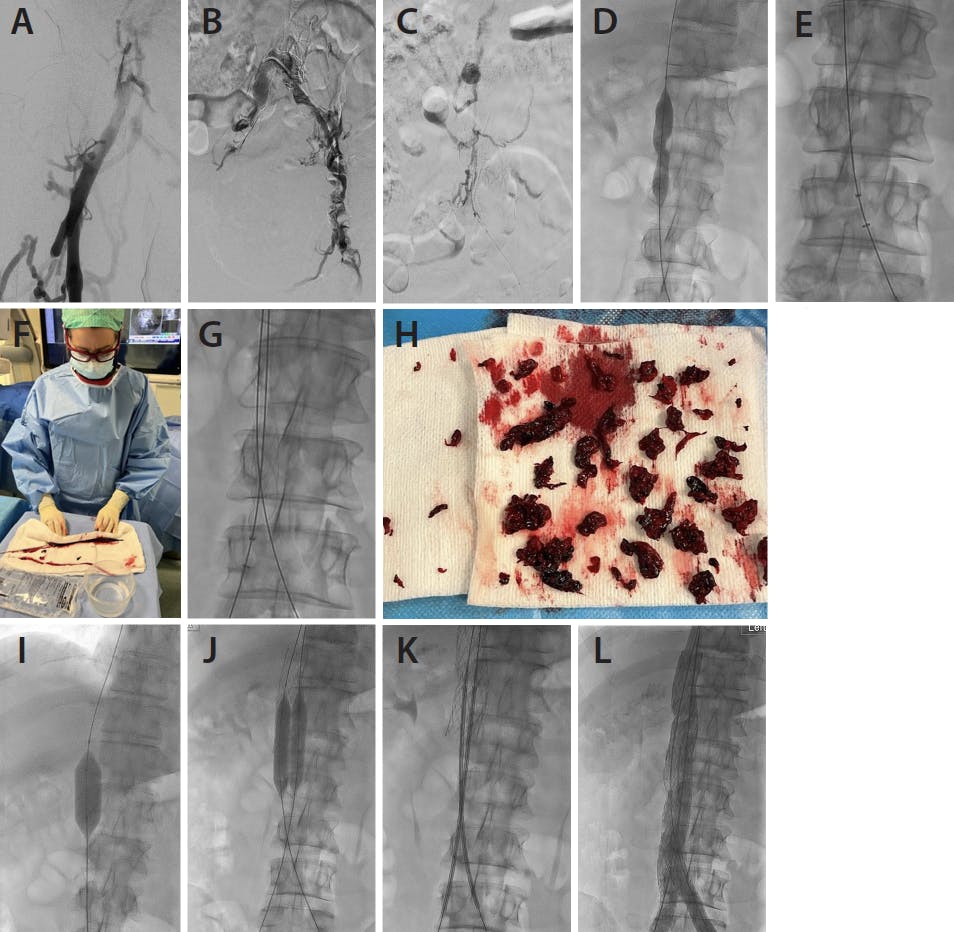
Figure 1. Initial venograms showed bilateral subacute thrombus in right iliac veins (A) and left iliac veins, with chronic atresia of the IVC (B, C). Venoplasty was performed on the atresia (D). The ClotTriever catheter was advanced in the left iliac vein (E). The ClotTriever collection bag and coring element were cleaned between passes (F). After five passes on the left, the ClotTriever catheter was advanced in the right iliac veins (G). Extracted thrombus (H). Following thrombectomy, venoplasty was performed in the IVC to 20 mm (I). Venoplasty of the IVC for preparation of kissing IVC and iliac stents (J, K). A final venogram demonstrated restored patency (L).
The wire was exchanged for an Amplatz Super Stiff guidewire (Boston Scientific Corporation), and the IVC was dilated to 14 mm (Figure 1D). Intravascular ultrasound (IVUS) was then performed, demonstrating clear bilateral femoral veins and iliac veins occluded with subacute thrombus.
The Amplatz wire was advanced and placed in the left subclavian vein. A 16-F ClotTriever sheath was positioned in the left femoral vein. The ClotTriever catheter was introduced through the sheath and advanced over the guidewire, beyond the location of the thrombus (Figure 1E). The ClotTriever catheter was deployed, expanding the collection bag and coring element into the vessel. As the catheter was retracted, thrombus within the iliac vein was captured in the ClotTriever collection bag and extracted from the patient. Five additional passes with the ClotTriever System were performed on the left. The ClotTriever catheter was cleared of thrombus after each pass (Figure 1F). These steps were repeated on the right (Figure 1G), for a total of four passes, extracting a large amount of thrombus (Figure 1H). Postthrombectomy IVUS confirmed excellent bilateral thrombus clearance.
Next, venoplasty was performed in the IVC, dilating to 20 mm (Figure 1I), followed by insertion of a 20- X 100-mm Abre stent (Medtronic). Venoplasty of the bilateral iliac veins was then performed, dilating to 14 mm (Figure 1J). Bilateral kissing iliac stents were placed extending into the right external iliac vein and left lower external iliac vein using two Abre 14- X 150-mm stents bilaterally and one Abre 14- X 80-mm stent on the left (Figure 1K).
The completion venogram and IVUS imaging demonstrated good flow and restored patency with approximately 90% of thrombus extracted (Figure 1L). All devices were removed, and purse-string sutures were placed bilaterally at the access sites to achieve hemostasis. The total procedure time was 2.5 hours.
The patient tolerated the procedure well and was transferred to a regular hospital room. The following day, his symptoms had improved, and a duplex ultrasound confirmed stent patency. He was discharged on a split treatment dose of low-molecular-weight heparin, as per our protocol, and wearing class 2 graduated elastic compression stockings. The patient was also encouraged to mobilize as much as possible. Our standard imaging surveillance was organized.
DISCUSSION
This case illustrates how the ClotTriever System has made it possible to refine our patient pathway to identify and treat more patients with symptomatic DVT. Unlike anticoagulation or thrombolysis, mechanical thrombectomy with the ClotTriever System is not limited by the need to treat within a narrow time frame corresponding to early thrombus formation. Instead, the ClotTriever System is able to remove thrombus of any chronicity—acute, subacute, chronic, or mixed age. For this reason, we were able to trial anticoagulation alone for this patient first, prior to intervention.
When anticoagulation failed to resolve the pain, swelling, and venous claudication, we were able to intervene and treat the DVT successfully with mechanical thrombectomy and stenting. Additionally, this patient did not require thrombolytic therapy or a costly stay in the high-dependency unit. This has implications for improved hospital resource utilization, and further refinement of the patient pathway.
Two weeks postintervention, this patient was seen in our vascular outpatient clinic for clinical review, as per our standard protocol. His symptoms had diminished considerably, and venous claudication was significantly improved. A duplex ultrasound showed the IVC and bilateral iliac venous stents to be widely patent, and the patient was commenced on warfarin. He would be seen for clinical review and further surveillance by duplex ultrasound at 6 weeks, 6 months, and 1 year postprocedure. With sustained patency of the stents, the patient will be converted to a direct oral anticoagulant and will return for clinical review and surveillance duplex ultrasound yearly.
CASE STUDY: OCCLUSIVE THROMBUS EXTENDING FROM THE EXTERNAL ILIAC VEIN AND PROTRUDING INTO THE IVC CLEARED WITH THE CLOTTRIEVER SYSTEM
By Prof. Gerd Grözinger, MD
PATIENT PRESENTATION
A woman in early 30s presented to the emergency department with rapid onset of pain and severe swelling of her left leg, which had a slight bluish discoloration. She had been suffering from intermittent left groin pain with some numbness for 1 week. A duplex ultrasound of the left leg was ordered, which revealed DVT, with thrombotic occlusion that extended from the left popliteal vein to the IVC, where parts of the thrombus were protruding.
An interdisciplinary discussion occurred, involving angiologists, vascular surgeons, and interventional radiologists, and after considering all treatment options, mechanical thrombectomy of all affected segments was favored. Intervention using the ClotTriever System was planned, with simultaneous embolic protection from a filter in the IVC.
MRV performed the following day confirmed an occlusive four-level thrombosis involving the IVC, up to the renal vein. Acute thrombotic occlusions involving the external Iliac vein (Figure 1A), femoral vein, and profunda femoral vein were identified (Figure 1B). Chronic narrowing and scarring of left common iliac vein was also seen (Figure 1C), and coronal and axial views (Figure 1D-F) confirmed extension of the thrombus into the IVC.
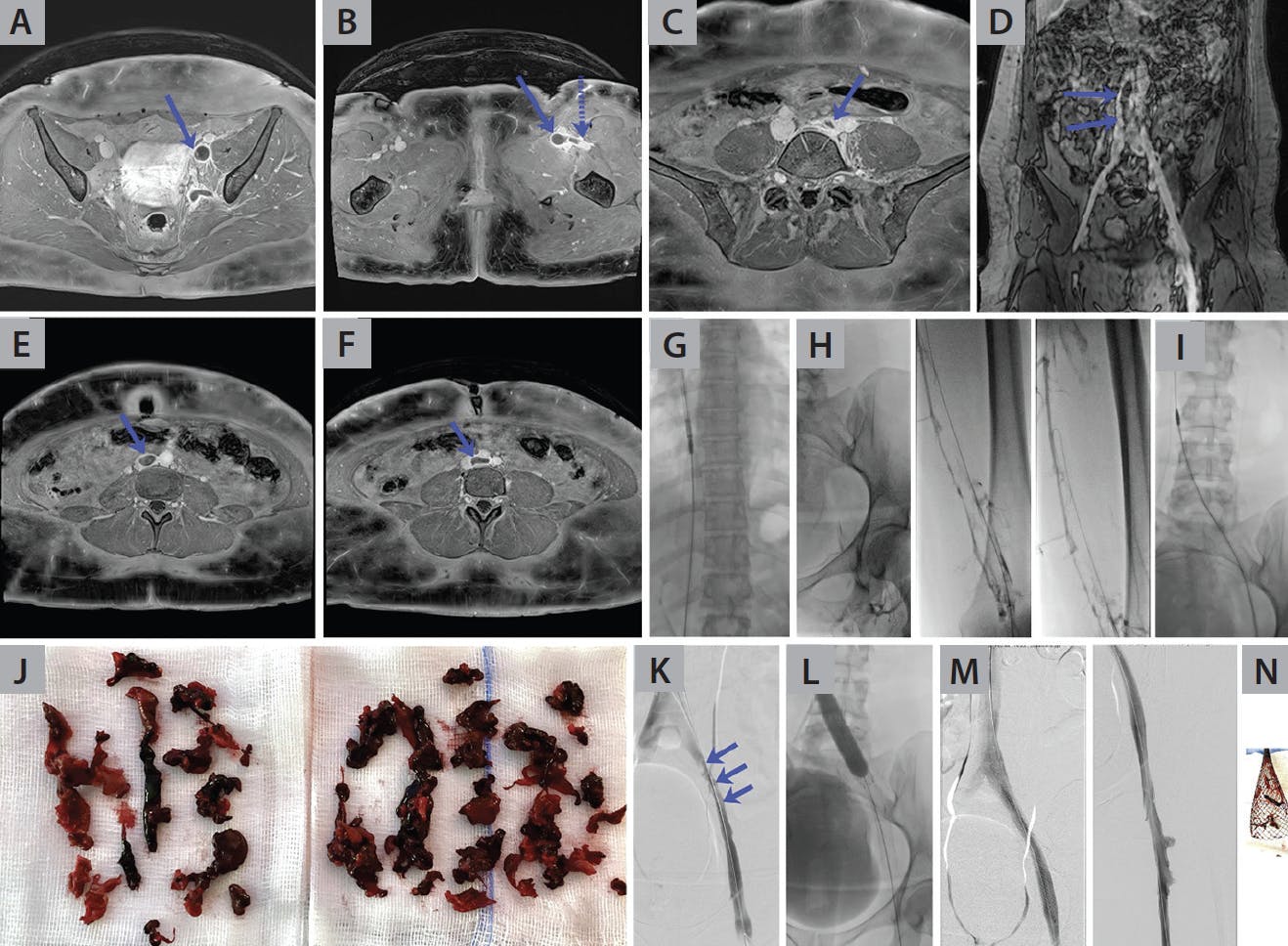
Figure 1. Preprocedural MRV axial views demonstrated acute thrombotic occlusion of the left external iliac (A), femoral, and profunda femoral veins (dotted arrow) (B). Chronic narrowing and scarring of left common iliac vein was also seen (C). Thrombus extended into the IVC, as shown in MRV coronal (D) and axial views (E, F). A temporary filter was placed in the retrohepatic IVC prior to thrombectomy (G). Venograms confirmed extensive thrombosis in the left lower extremity (H). The ClotTriever catheter was advanced into the IVC (I), and after several passes with the device, a significant amount of thrombus had been removed (J). Following thrombectomy, residual stenosis was seen, corresponding to the suspected lesion noted in preprocedure MRV (K). Two dedicated venous stents were placed to treat the residual stenosis (L). Final venograms demonstrated restored patency (M). Image of the Capturex filter postprocedure (N).
PROCEDURAL OVERVIEW
The patient was brought to the angiology suite and placed on the table in the supine position. The right neck was prepped and draped, and using ultrasound guidance, access to the right internal jugular (IJ) vein was achieved. A temporary filter (Capturex, Straub Medical) was then placed in the retrohepatic IVC for embolic protection (Figure 1G).
Next, the patient was repositioned and placed prone, and the left popliteal access site was prepped and draped. Ultrasound guidance was used to achieve micropuncture needle access into the left popliteal vein. A guidewire was advanced, and the needle was then replaced with a 4-F vascular sheath. Venography was performed, revealing completely occluded femoral, common femoral, and pelvic veins on the left (Figure 1H).
An 0.035-inch Amplatz wire was advanced, crossing the thrombotic veins from below and placed in the left axillary vein. The sheath was removed and a 13-F ClotTriever sheath was introduced. The ClotTriever catheter was then advanced over the wire into the IVC (Figure 1I), where the ClotTriever collection bag and coring element were deployed below the IVC filter. The expanded ClotTriever catheter was retracted from the pararenal IVC down to through the popliteal vein, coring and removing massive amounts of mixed-age thrombus from the patient (Figure 1J). Up to eight passes were performed with the ClotTriever System.
Repeat venography and IVUS confirmed the presence of chronic postthrombotic scar tissue in the common iliac vein, which extended to the external iliac vein on the left side (Figure 1K) due to May-Thurner–type compression. Angioplasty and stenting were performed following predilatation with Armada 35 (Abbott) and Atlas Gold (BD Bard) balloon catheters. A laser-cut 16- X 80-mm nitinol Abre stent was implanted in the common iliac vein, which was extended to the external iliac vein with a 14- X 100-mm braided nitinol Blueflow venous stent (Plus Medica) (Figure 1L). Final venography was performed with rapid dynamic visualization, which demonstrated restored flow through the previously occluded segments (Figure 1M).
Following the successful extraction of nearly 100% of thrombus, all devices were removed including the temporary IVC filter (Figure 1N), and hemostasis was achieved at the right IJ and left popliteal access sites. The patient experienced on-table relief from pain and swelling of the left leg, and her coloration was restored. She was given 12 hours of limited bed rest with leg elevation and was discharged 2 days later on anticoagulation and advised to wear class II compression stockings consistently.
DISCUSSION
This case illustrates the successful progression of a young, acute DVT patient through the patient pathway, from presentation to referral to our Department of Angiology and Interventional Radiology to effective mechanical intervention with the ClotTriever System. Using this system, we were able to clear the deep veins of mixed-age thrombus, including a large volume of more organized, chronic material, without the use of thrombolytic drugs. Additionally, this high level of thrombus clearance allowed us to pinpoint and treat the underlying lesion with excellent precision using shorter stents.
The patient experienced rapid symptom relief and did not require a stay in the ICU. She was discharged 2 days after the procedure on apixaban and clopidogrel. Our patient pathway includes scheduled follow-up of DVT patients in the first year after discharge. At the time of publication, follow-up for this patient had occurred at 3 months and 6 months, showing clinical improvement and sustained patency of the treated vein.
Advertisement
Advertisement