Advertisement
Advertisement
July 2022
Sponsored by Penumbra, Inc.
Moving the Peripheral Thrombectomy Field Forward With Computer-Aided Aspiration
With Robert Lookstein, MD, MHCDL, FSIR, FAHA, FSVM; D. Chris Metzger, MD; Patrick E. Muck, MD, RVT, FACS; Jonathan Bonilla, MD; Kush Desai, MD, FSIR; Gloria Salazar, MD, FSIR; Nikki Keefe, MD; Martyn Knowles, MD, MBA, FACS; Joseph J. Ricotta, MD, MS, DFSVS, FACS; Jake Forman, MD; Jean Bismuth, MD, FACS; and Alex Powell, MD
The Evolution of Thrombectomy Tools


Endovascular thrombectomy devices have developed at a rapid rate over the past 20 years. Although open embolectomy and lytic-based approaches are still commonplace, recent innovations show numerically comparable safety and efficiency measures with endovascular tools. With improved technology and high rates of single-session and frontline success, many are moving toward an endovascular-first approach. With a growing body of evidence, it is critical to understand how these tools have progressed over time and where the field of thrombectomy is going in the future.
Open Embolectomy and THROMBOLYTICS
A recent study found that 86% of acute limb ischemia (ALI) cases treated with open embolectomy required additional endovascular work.1 Improved efficacy of mechanical or pharmacologic tools have offered interventionalists an alternative frontline approach.
Thrombolytic administration provides a reduced risk of cardiovascular collapse and decreased clot burden in the treatment of pulmonary embolism (PE), venous thrombus, and ALI.2 However, multiple trials have found that the use of tissue plasminogen activator (tPA) is associated with significantly increased risk of bleeding across multiple disease states. The ATTRACT trial found fivefold higher major bleeding in patients treated with tPA for deep vein thrombosis, and the SEATTLE II trial, investigating the treatment of PE, had a 10% major bleed rate within 72 hours.3,4 As a result, mechanical, nonpharmacologic–based systems that rely on the potential for rapid removal of thrombus and therefore limit intensive care unit (ICU) costs have become a mainstay for thrombus resolution.
MECHANICAL REMOVAL
Stent retrievers were brought to market in the early 2000s. Built on the idea of capture and removal, they have proven an effective clot removal mechanism in the neurovasculature. However, a subgroup analysis of the ASTER trial found that greater than three passes of stent retrievers was an independent predictor of hemorrhage and worsening clinical outcomes.5 The authors concluded that stent retriever devices may be responsible for dissection undetectable on angiography or endothelial injury leading to ongoing in situ thrombosis. Furthermore, stent retrievers dragged through an atherosclerotic lesion may be more harmful than constant aspiration. Similar technology to stent retrievers have made their way to market for ALI. This is potentially niche technology that could result in higher levels of endothelial damage and rethrombosis when applied in the periphery.
MACERATION DEVICES
Breaking up thrombus mechanically through the use of fluid jets is a more recent thrombus management strategy; however, devices such as AngioJet (Boston Scientific Corporation) have been associated with acute kidney injury (AKI), with one study finding AKI incidence in as high as 21.9% in deep vein thrombosis cases.6 These AKI rates are not reported with devices that rely on aspiration alone.
MANUAL ASPIRATION
Prior to having continuous aspiration available, first-generation devices utilized syringes to produce aspiration to remove thrombus. However, as fluid fills the syringe, vacuum level quickly dissipates. Today, these syringes are often used in coronary aspiration. Manual aspiration has even made its way into the treatment of PE, being paired with large catheters that have been noted to cause hemodynamic decompensation.7 Now, with computer-aided aspiration, not only do you keep a high level of vacuum throughout the entire case, but the tool is designed to reduce blood loss by only aspirating while in thrombus.
COMPUTER-AIDED MECHANICAL THROMBECTOMY
Penumbra is the first company to offer a clot detection technology built to provide continuous aspiration when engaged in thrombus and intermittent aspiration in the patent vessel. With benchmark testing that shows an 18-to-1 fluid loss reduction, the Lightning® Computer-Aided Mechanical Aspiration System (Penumbra, Inc.) is designed to address blood loss concerns for efficient clot removal across the arterial and venous systems.* Paired with stainless steel hypotube catheters, the Lightning System is deliverable with 1:1 torqueability. The Lightning System is available in a 7- and 12-F platforms
Penumbra is moving the field of peripheral thrombectomy forward with the Lightning Intelligent Aspiration System. Designed for frontline thrombus removal, Lightning provides a competitive safety and efficacy profile in a single thrombectomy device. Penumbra’s innovation with the proprietary clot detection algorithm makes Lightning a versatile tool for addressing thrombus across multiple disease states. This technology advancement has now been acknowledged by CMS by granting new technology ICD-10 codes for computer-aided mechanical aspiration. New interim results from the STRIKE-PE Trial (N = 26) found a significant reduction in right ventricle/left ventricle ratio at 48 hours and 23.9% median change in mean pulmonary artery pressure (PAP), with a median thrombectomy time of 32.5 minutes when using Lightning 12.8 STRIKE-PE will measure not only clinical outcomes but will also look at quality-of-life metrics and a 6-minute walk test to better understand Lightning 12’s impact on patients’ well-being. Ongoing trials, BOLT and STRIDE, will further the evidence for Lightning in the venous and arterial spaces, respectively.
*Tests performed and data on file at Penumbra, Inc. Bench test results may not be indicative of clinical performance. Testing performed with Lightning Aspiration Tubing vs. dynamic aspiration tubing. Tests performed using water.
1. de Donato G, Setacci F, Sirignano P, et al. The combination of surgical embolectomy and endovascular techniques may improve outcomes of patients with acute lower limb ischemia. J Vasc Surg. 2014;59:729-736. doi: 10.1016/j.jvs.2013.09.016
2. Goldhaber SZ. PEITHO long-term outcomes study: data disrupt dogma. J Am Coll Cardiol. 2017;69:1545-1548. doi: 10.1 016/j.jacc.2017.01.027
3. Vedantham S, Goldhaber SZ, Julian JA, et al. Pharmacomechanical catheter-directed thrombolysis for deep-vein thrombosis. N Engl J Med. 2017;377:2240-2252. doi: 10.1056/NEJMoa1615066
4. Piazza G, Hohlfelder B, Jaff MR, et al. A prospective, single-arm, multicenter trial of ultrasound-facilitated, catheter-directed, low-dose fibrinolysis for acute massive and submassive pulmonary embolism: the
SEATTLE II study. JACC Cardiovasc Interv. 2015;9:1382-1392. doi:10.1016/j.jcin.2015.04.020
5. Bourcier R, Saleme S, Labreuche J, et al. More than three passes of stent retriever is an independent predictor of parenchymal hematoma in acute ischemic stroke. J Neurointerv Surg. 2019;11:625-629. doi: 10.1136/neurintsurg-2018-014380
6. Salem KM, Saadeddin Z, Go C, et al. Risk factors for acute kidney injury after pharmacomechanical thrombolysis for acute deep vein thrombosis. J Vasc Surg Venous Lymphat Disord. 2021;9:868-873. doi: 10.1016/j.jvsv.2020.11.005
7. Giri J, Sista AK, Weinberg I, et al. Interventional therapies for acute pulmonary embolism: current status and principles for the development of novel evidence: a scientific statement from the American Heart Association. Circulation. 2019;140:e774-e801. doi: 10.1161/CIR.0000000000000707
8. Schiro BJ, Peña CS, Muck PE, et al. Performance and safety of computer-aided mechanical aspiration thrombectomy with Lightning 12 for the treatment of submassive and massive pulmonary embolism: interim analysis of the STRIKE-PE study. Presented at: IVC 2021; November 4-6, 2021; Orlando, Florida.
TREATMENT OF SADDLE PE WITH LIGHTNING 12

PATIENT PRESENTATION
A man in his mid-60s presented to the emergency department (ED) with shortness of breath and syncope. He was hypoxic at the time of admission, oxygen saturation was 84% initially, and he was hypotensive with a blood pressure of 90/40 mm Hg. The patient was found to have atrial fibrillation with a rapid ventricular rate (RVR)and elevated brain natriuretic peptide (BNP). Imaging confirmed the presence of a saddle PE (Figure 1 and Figure 2).
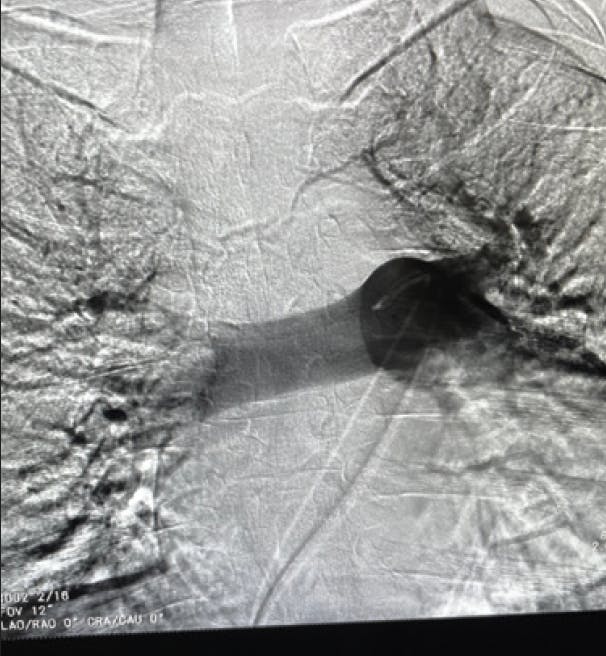
Figure 1. Pre-thrombectomy angiogram of the left main PA and distal branches.
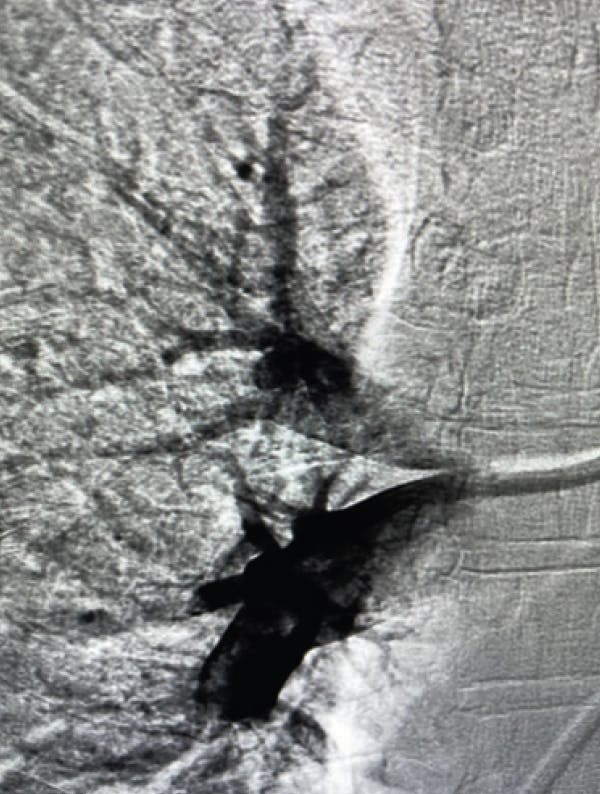
Figure 2. Pre-thrombectomy angiogram of the right main PA and distal branches.
PROCEDURAL DETAILS
Access was achieved with a 12-F, 65-cm DrySeal sheath (Gore & Associates). Initial main PAPs were 77/21 mm Hg with a mean of 38 mm Hg. The Lightning® 12 (Penumbra, Inc.) was introduced over a wire. The wire was removed, and the Separator 12 (SEP12, Penumbra, Inc.) was introduced through the catheter. Aspiration was turned on while the Lightning unit targeted thrombus. After 15 minutes of aspiration, the thrombus burden was significantly reduced (Figure 3, Figure 4, and Figure 5). A PAP drop of 18 mm Hg was achieved, with postintervention pressure measuring 35/14 mm Hg, with a mean of 20 mm Hg.
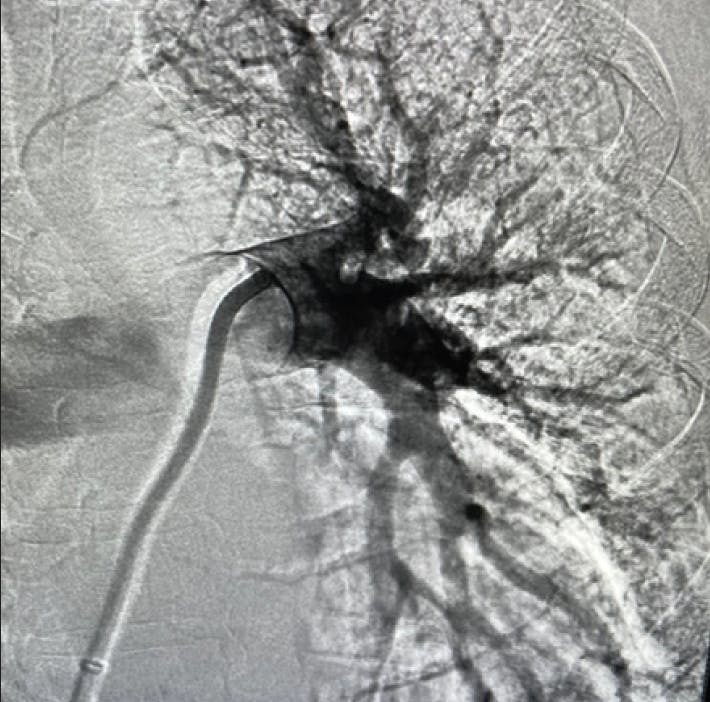
Figure 3. Post-thrombectomy angiogram of the left main PA and distal branches.
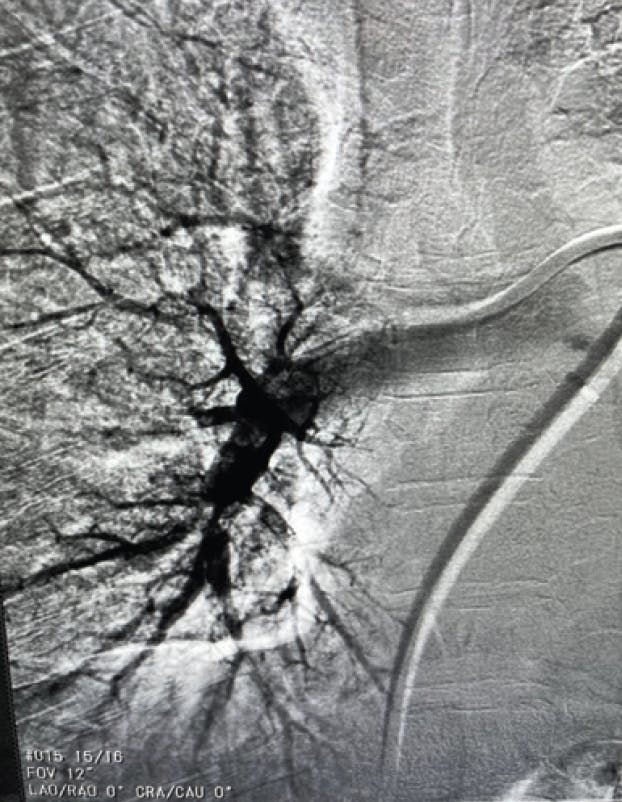
Figure 4. Post-thrombectomy angiogram of the right main PA and distal branches.
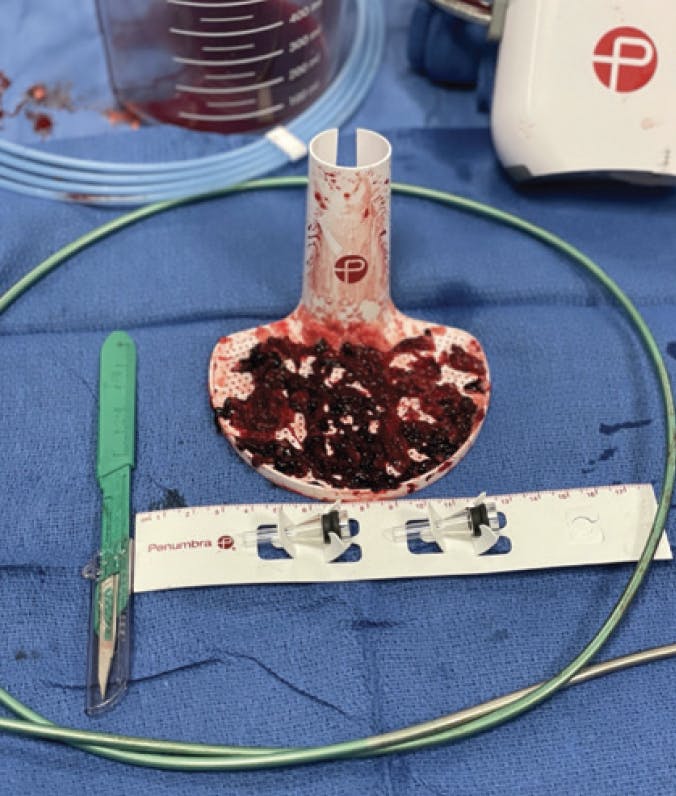
Figure 5. Procedural thrombus removal.
CONCLUSION
For high-risk PE patients, rapid restoration of blood flow to the lungs is paramount. The straightforward setup of Lightning 12 allows for quick access to the thrombus. The 12-F system provides the necessary torqueability and maneuverability for navigating this delicate vasculature. In cases with a high thrombus burden, I utilize the SEP12 frontline to clear the tip of the catheter, enabling continuous aspiration in the face of thrombus. Using Lightning’s clot detection algorithm to intermittently aspirate when in an open vessel, Lightning technology helped reduce the risk of removing viable blood unnecessarily. Using the audiovisual cues, Lightning drives the procedure by cueing the operator as to the presence or absence of clot. In this case, the patient showed clinical improvements with only 15 minutes of aspiration.
UPPER EXTREMITY VENOUS THROMBOEMBOLISM WITH COMPUTER-AIDED MECHANICAL ASPIRATION

PATIENT PRESENTATION
A man in his late 50s with extensive smoking history presented to the ED with progressive neck and facial swelling. The patient reported symptoms of tachycardia and shortness of breath, and he had progressive oxygen requirements. CT and ultrasound confirmed superior vena cava (SVC) syndrome secondary to suspected metastatic lung cancer, with a right upper lobe mass.
PROCEDURAL DETAILS
Venography confirmed high thrombus burden in right subclavian and axillary veins (Figure 1A and 1B), right and left innominate veins, as well as large thrombotic occlusion and compression of the SVC. Primary access was gained in the right brachial vein with an 11-F Pinnacle sheath (Terumo Interventional Systems), and a stiff Glidewire (Terumo Interventional Systems) was traversed through the compressed SVC into the inferior vena cava.
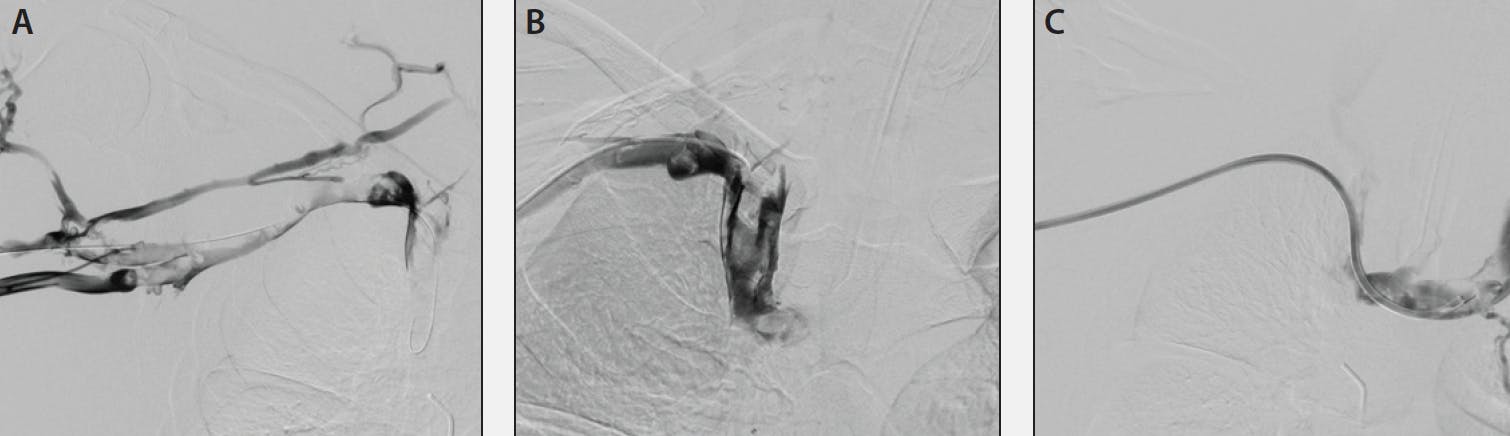
Figure 1. Pre- (A, B) and post-thrombectomy (C) angiograms of the subclavian vein.
Secondary access was gained through the right greater saphenous vein, where a triloop endovascular snare captured the Glidewire for through-and-through access. The Glidewire was exchanged for an Amplatz guidewire (Boston Scientific Corporation) to allow for angioplasty of the stenosed SVC.
Mechanical thrombectomy was performed utilizing the Lightning 12 HTORQ 115 cm and SEP12. With aspiration turned on, the computer-aided device provided continuous aspiration when engaged in thrombus from the subclavian, axillary, and innominate veins and the SVC and alternated to intermittent aspiration sampling when in an open vessel.
Intravascular ultrasound confirmed stenosis of caudal SVC was due to extrinsic tumor compression. A 15- X 50-mm Gianturco Z stent (Cook Medical) was advanced and deployed within the SVC and dilated with a 14-mm balloon. Final venography from the bilateral innominate vein demonstrated flow through SVC and subtotal thrombus resolution (Figure 2).
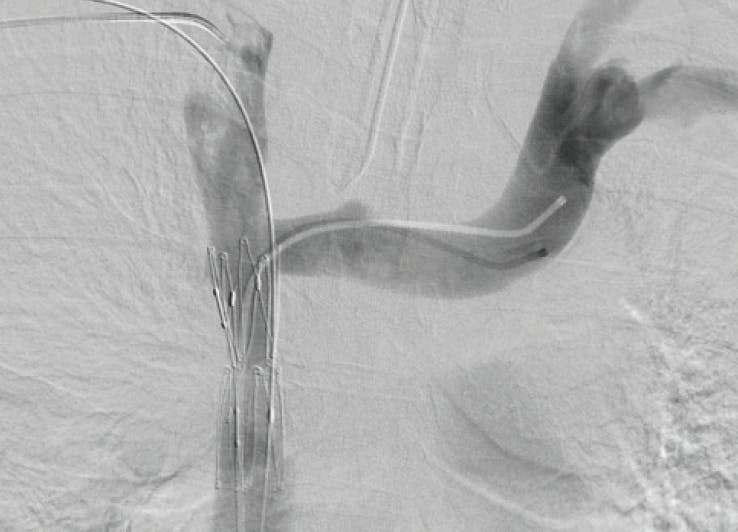
Figure 2. Final angiogram of innominate veins and SVC.
CONCLUSION
Lightning 12 paired with SEP12 provided frontline thrombus removal to treat upper extremity venous thromboembolism. The SEP12 kept the catheter tip clear while Lightning’s clot detection algorithm is designed to minimize blood loss via automatic valve control.
REMOVAL OF VISCERAL THROMBUS WITH COMPUTER-AIDED MECHANICAL ASPIRATION


Patient Presentation
A man in his early 50s was transferred for venous mesenteric ischemia and bowel ischemia with portal vein, superior mesenteric vein (SMV), and splenic vein thrombosis. He underwent bowel resection and was left open for a second look the following day. VIR was consulted from the thrombectomy. The degree of clot burden made for a challenging case, with access to the portal vein extremely difficult due to the open abdomen and placement of Abthera drain (3M) after bowel resection. Given the recent surgery, use of tPA was ill-advised; therefore, a Penumbra Lightning 7 device was selected to remove thrombus.
Procedural Details
Pre-procedure CT demonstrated extensive thrombus within the portal vein extending to the main right and left portal veins, SMV extending into the branches, and splenic vein. Ultrasound-guided transhepatic access was achieved via a branch of the right portal vein. Venography confirmed positioning into the portal system, and a 7-F, 25-cm sheath was placed. CT and angiography confirmed thrombus in the main portal vein, SMV, and splenic vein. Venography confirmed the degree of thrombus noted on CT imaging (Figure 1). Lightning 7 was introduced to perform computer-aided mechanical aspiration. Flow was restored to the SMV, splenic, and main portal vein using the thrombectomy system. Venography at completion demonstrated a significant improvement in outflow with hepatopedal flow (Figure 2). The access site was closed using coils and Gelfoam (Pfizer). The patient tolerated the procedure well without incident or complication. A second look in the operating room demonstrated no additional areas of bowel ischemia. Follow-up CT at 1 week showed no residual thrombus. The patient was discharged home after 10 days.
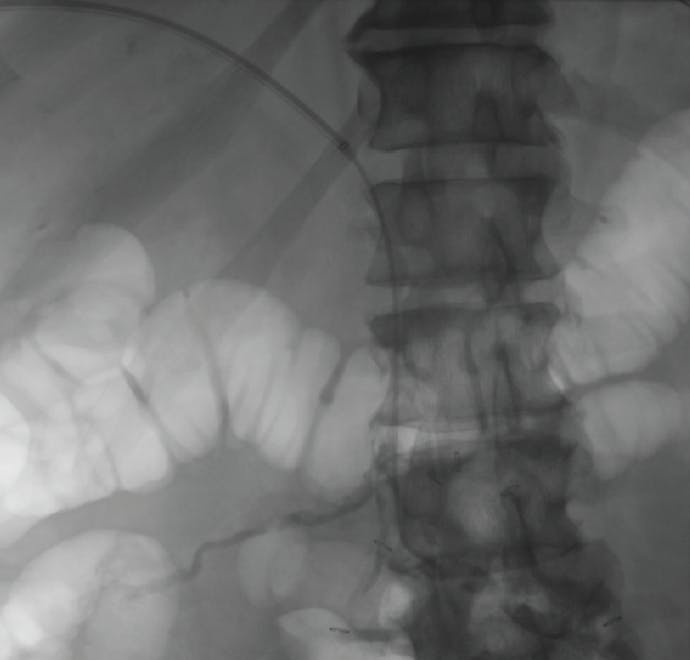
Figure 1. Initial SMV venogram. There is extensive thrombus within the SMV and branch vessels and no flow noted coursing toward the portal vein.
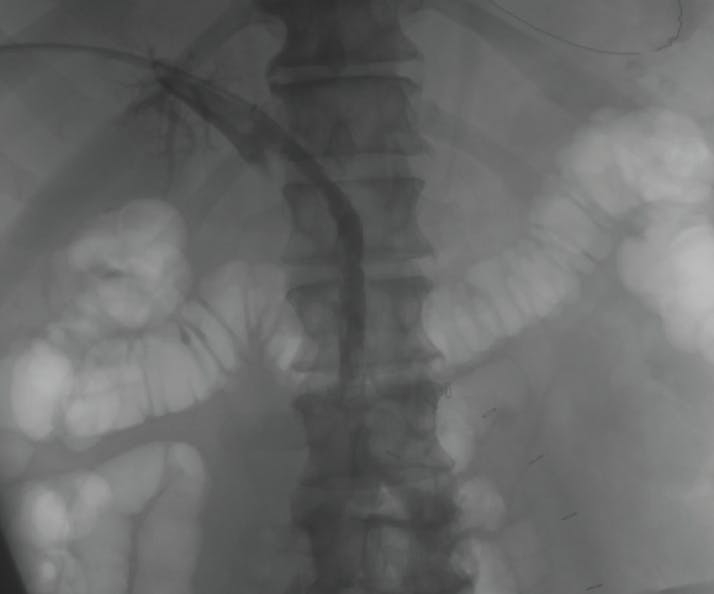
Figure 2. Final SMV venogram. There is hepatopedal flow noted from the distal SMV through the portosplenic confluence and into the portal branches. Although some residual clot is noted, there is prompt flow.
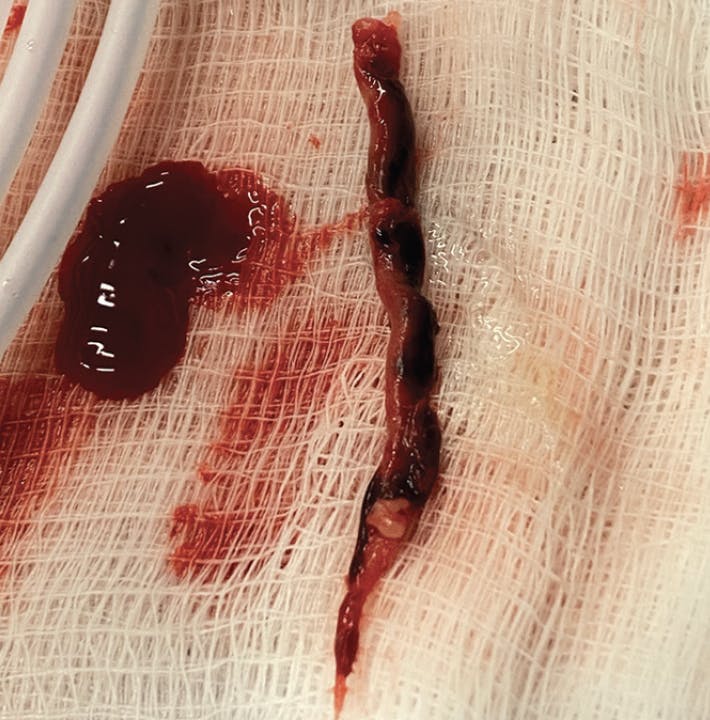
Figure 3. Thrombus removed from portal vein.
Conclusion
Computer-aided mechanical aspiration addresses thrombus in complex cases when the patient is not a prime candidate for tPA or open embolectomy. The Lightning 7 catheter is deliverable through tortuous anatomy and offers 1:1 torqueability that allows for removal of thrombus circumferentially throughout a vessel. The immediate restoration of blood flow allowed for on-table improvements with no need for further intervention.
Shifting Toward an Endovascular-First Approach for Arterial Thrombus Removal

Ingrained in my mind are the lessons from my surgical training about acute limb ischemia (ALI) and the necessity for prompt and effective restoration of blood flow either by open thrombectomy, bypass, or both. At the time of my training, there were no effective options for the endovascular management of arterial thrombosis (acute, subacute, or chronic), and options on the market were unimpressive and ineffective. Furthermore, the use of endovascular techniques for ALI was limited to Rutherford class 1 and select Rutherford class 2a patients and placing thrombolytic catheters and hoping for a thrombus-disappearing miracle. The effectiveness of these techniques was marred with long ICU stays, late-night calls about dropping fibrinogen levels, bleeding, and high rates of conversion to surgical interventions. Few dared to intervene on more ischemic patients with endovascular techniques, as there was no efficacious way to quickly clear thrombus. These were frustrating cases with inadequate endovascular results.
In 2015, I started hearing about a device that could be used to successfully remove arterial thrombus. After initial skepticism, I attempted a few cases and started to see the ease and effectiveness in select cases. As time went on, my experience and the rapid technologic advancement through portfolio additions of the Indigo® System (Penumbra, Inc.) changed my management of these cases. This was first to try and get a lumen for lytic therapy, but I quickly realized that you could treat the patient in one session entirely and very often without any thrombolytic therapy at all (often with mixed chronicity). My thrombolysis treatment algorithm evaporated and was replaced with a one-session percutaneous thrombectomy treatment. Furthermore, because I can rapidly remove thrombus, it has allowed treatment of select ALI class 2b as the first-line therapy or in combination with open thrombectomy, as long as time permits.
One apprehension for open thrombectomy is always the blind nature of the technique, as well as the inability to get open vessels below the ankle or in those with chronic peripheral artery disease (PAD). A strength of treatment with the Indigo device is the ability to guide thrombectomy visually, and this is nowhere near as important or impressive as in the pedal arch or in patients with underlying PAD. The Indigo System CAT RX has the ability to track around the pedal loop, optimizing outflow and avoiding reocclusion. As part of the Indigo Aspiration System, the Indigo CAT RX Aspiration Catheters and Indigo Separator 4 are indicated for the removal of fresh, soft emboli and thrombi from vessels in the coronary and peripheral vasculature. This technique can be performed completely percutaneous or in combination with open thrombectomy more proximally if needed. Purely open surgical techniques just cannot match some of these endovascular abilities that add to the armamentarium of treatment of these cases.
Arterial thrombosis and ALI are no longer limited to surgical intervention or thrombolytic therapy. The Indigo pipeline of arterial products has decreased the need for both surgical intervention as well as thrombolytic use in my practice, all while improving endovascular thrombus clearance and often matching surgical thrombectomy effectiveness. Additionally, I prefer Indigo to any other device on the market for efficiently tackling inframalleolar thrombus.
ARTERIAL THROMBECTOMY WITH LIGHTNING 7 FOR ALI


PATIENT PRESENTATION
A woman in her mid-80s was found several hours after a fall in her home. She was brought to the ED with a cold, pulseless, cyanotic right foot with no sensation or motor function. On examination, a large hematoma in the dorsum of her right foot and right shin was found. Arterial duplex ultrasound demonstrated no blood flow below her proximal superficial femoral artery (SFA). She was taken urgently to the hybrid endovascular operating room for angiography and intervention.
Due to the patient presenting with Rutherford class 2b ischemia with a large hematoma, mechanical thrombectomy was chosen over thrombolysis. An endovascular approach with a Lightning 7 (Penumbra, Inc.) was selected.
PROCEDURAL DETAILS
Under ultrasound guidance, the left common femoral artery was accessed in a retrograde fashion. A 5-F sheath was placed. A wire and catheter were advanced into the aorta, and the patient was systemically heparinized. Angiography demonstrated a patent abdominal aorta with patent common internal and external iliac arteries bilaterally. We then advanced a wire, 7-F sheath, and catheter up and over the aortic bifurcation to the right common femoral artery. A selective right lower extremity angiogram was obtained, revealing occlusion of the proximal SFA with a large thrombus (Figure 1A). There was reconstitution of the distal SFA, and then it reoccluded with a large piece of thrombus present. As a result, there was no filling of the popliteal and tibial arteries.
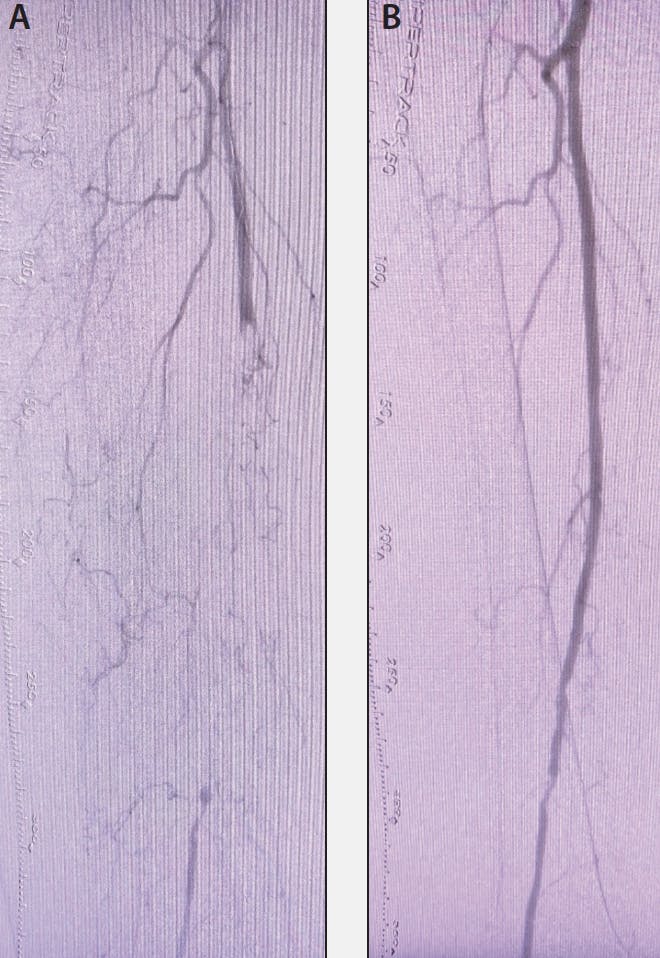
Figure 1. Pre- (A) and post-thrombectomy (B) angiograms of SFA and distal arteries.
We advanced a wire and a catheter through the occluded superficial femoral and popliteal arteries and performed mechanical thrombectomy using Lightning 7 for the SFA and popliteal artery (Figure 2). The Lightning procedure lasted approximately 3 minutes with an estimated blood loss of < 100 mL. Completion angiography demonstrated restoration of flow through the SFA and popliteal artery (Figure 1B).
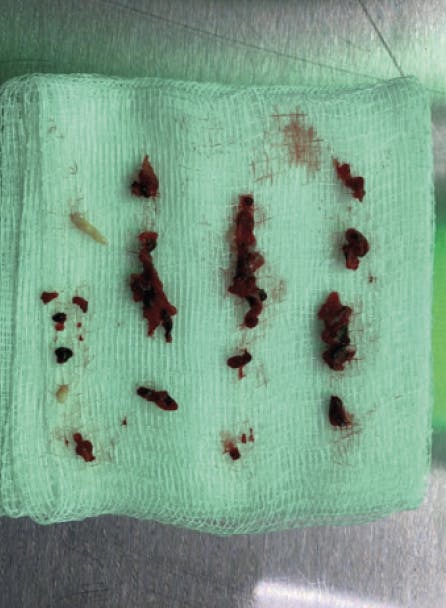
Figure 2. Procedural thrombus removal.
CONCLUSION
Lightning 7 allowed for expeditious limb salvage of an acutely ischemic extremity following trauma in a medically frail patient without complication. The procedure was minimally invasive and performed under local anesthetic with monitored sedation, keeping the patient from being subjected to anesthesia-related complications for an open procedure and bleeding complications from thrombolytic therapy.
EARLY USE OF LIGHTNING 7 FOR THE REMOVAL OF ORGANIZED IN-STENT THROMBUS

PATIENT PRESENTATION
A patient in their late 70s had been seen 3 months prior with acute-onset pain and claudication in a previously treated limb. Ultrasound at the time confirmed the occlusion of the stents. The treatment was delayed due to COVID-19 restrictions and patient illness. When the patient finally presented for treatment, the patient was suspected to have a subacute to chronic obstruction (Figure 1). We decided to utilize the Lightning 7 to remove the occulsion.
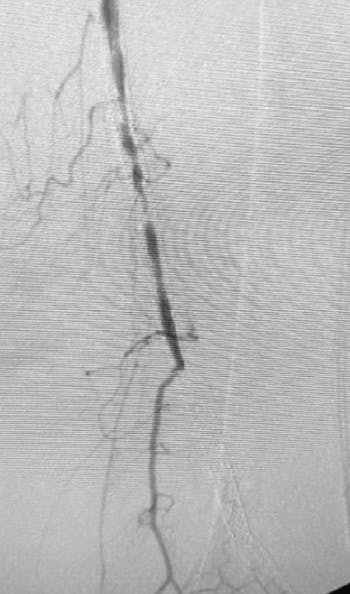
Figure 1. Pre-thrombectomy angiogram of occluded stent.
PROCEDURAL DETAILS
Contralateral access was gained using a Flexor 7-F sheath (Cook Medical). Lightning 7 was taken up and over to the face of the thrombus. Aspiration was turned on, and when Lightning engaged in thrombus, we followed the XTRACT technique and waited 90 seconds as the catheter ingested thrombus. Lightning 7 was used for < 5 minutes, with an estimated blood loss of < 100 mL (Figure 2 and Figure 3).
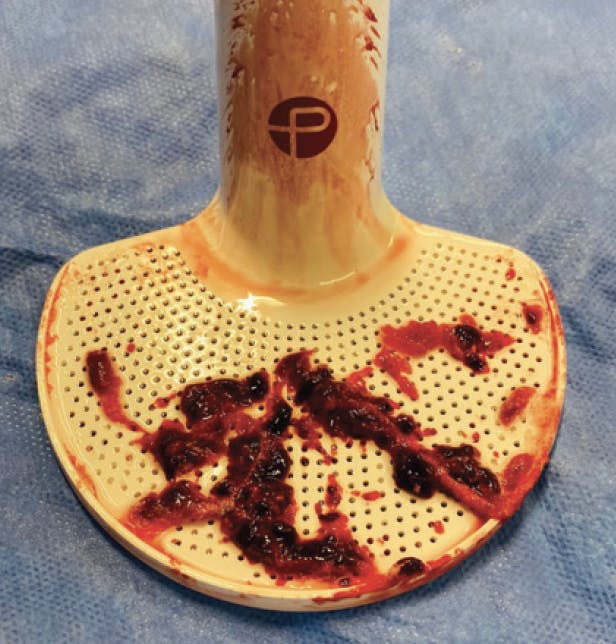
Figure 2. Procedural thrombus removal.
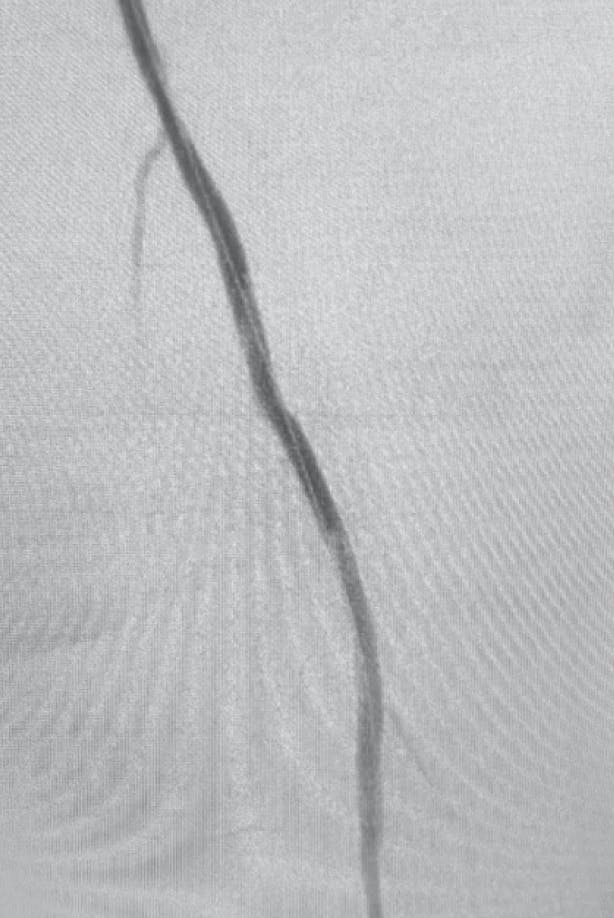
Figure 3. Post-thrombectomy angiogram of patent stent.
CONCLUSION
A nonacute thrombus may be a missed opportunity to use a percutaneous approach to restore flow. Unlike treating a soft embolic event, the XTRACT technique of waiting 90 seconds allowed the removal of more fibrous thrombus effectively with no distal emboli. Combining a large inner diameter while staying 7 F in access with maximum vacuum (Penumbra ENGINE™ Pump; Penumbra, Inc.) may be a fast and effective option for clot that is no longer considered acute.
TREATMENT OF ARTERIAL LOWER EXTREMITY ISCHEMIA WITH LIGHTNING 7

PATIENT PRESENTATION
A man in his early 70s presented with Rutherford class 2a right lower extremity ischemia with a history of thrombus in the left atrial appendage. He had a fall and subdural hematoma approximately 1 month before presentation; therefore, anticoagulation was held. Of interest, the patient had undergone a mechanical thrombectomy of his left leg 2 years before his current right leg condition.
PROCEDURAL DETAILS
An antegrade approach was used to gain access through the right common femoral artery. Initial imaging showed a blockage through the tibioperoneal trunk (TPT) (Figure 1). After four passes with Lightning 7, flow was restored through the TPT, but a blockage remained in the anterior tibial artery (Figure 2). Lightning 7 was reintroduced, and in two additional passes, the full flow was restored (Figure 3). After computer-aided aspiration with Lightning 7, the patient had a full resolution of symptoms. Noninvasive imaging showed normal flow for both legs at 6-month follow-up, and the patient was restarted on anticoagulation.

Figure 1. Pre-thrombectomy angiogram of the tibioperoneal trunk.
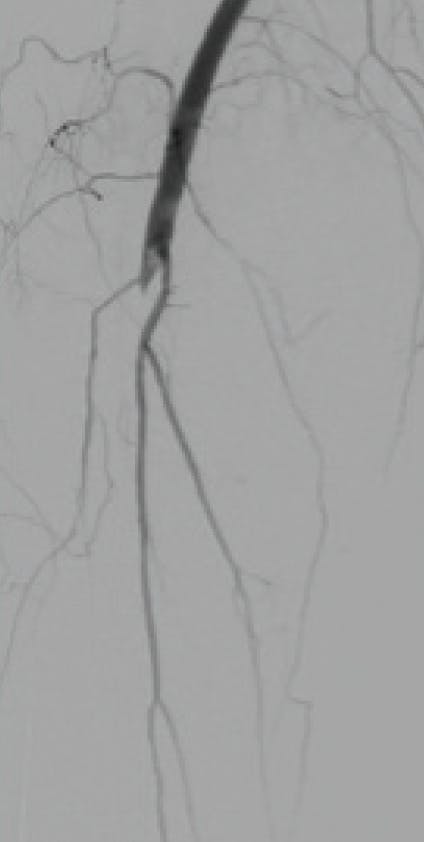
Figure 2. Pre-thrombectomy angiogram of anterior tibial artery.
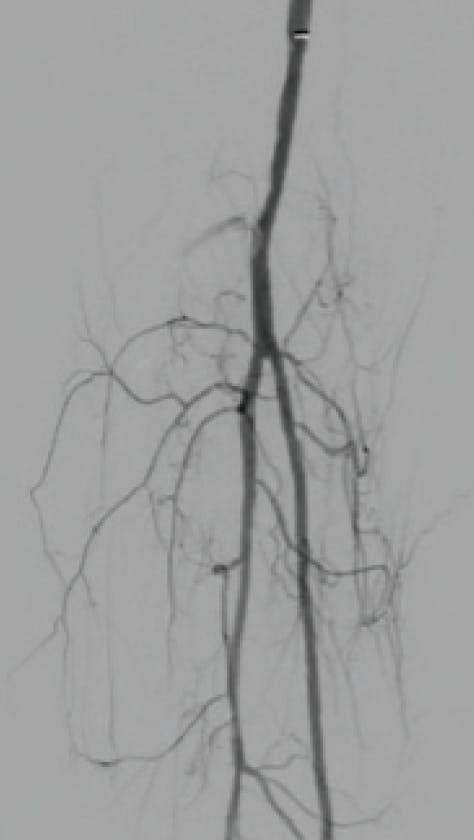
Figure 3. Post-thrombectomy angiogram of tibioperoneal trunk.
CONCLUSION
The only treatment option other than Penumbra’s Indigo System would have been an open surgical thromboembolectomy. The 7-F catheter is constructed from a single hypotube with laser-cut transitions to track distally for thrombus removal. The ease of use of Lightning 7 and rapid restoration of blood flow produced ideal results with endovascular treatment and a total procedure time of 1 hour.
Disclaimer: The opinions and clinical experiences presented herein are for informational purposes only. The results may not be predictive of all patients. Individual results may vary depending on a variety of patient-specific attributes.
Advertisement
Advertisement