Advertisement
Advertisement
July 2022
Sponsored by Inari Medical
The Dangers of Leaving Thrombus Behind
Two cardiologists discuss the benefit of checking all pulmonary embolism patients for remaining thrombus in the deep veins and share case examples demonstrating this practice.
With Maziar Mahjoobi, DO, FACC, FSCAI, and Jay Mohan, DO, FACC, FSCAI, FASE, RPVI


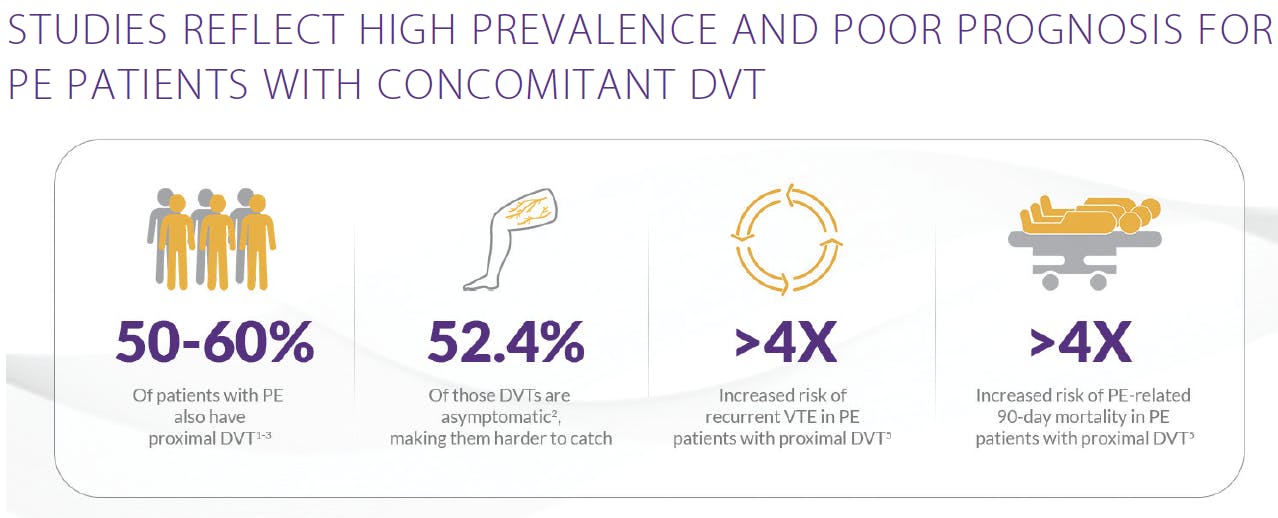
Despite a high prevalence of concomitant deep vein thrombosis (DVT) in pulmonary embolism (PE) patients, regular checks for remaining thrombus during index hospitalization do not always occur. This inconsistency is deeply problematic because concomitant DVT is both common and dangerous. Studies have estimated that 50% to 60% of patients with PE also have proximal DVT,1-3 and almost half of those patients are asymptomatic,2 which makes them more difficult to catch. Recently, published interim data from the FLASH registry showed that of 500 PE patients enrolled, 66.4% had concomitant DVT at the time of their PE diagnosis.4
In addition to the high prevalence of concomitant DVT, the prognosis for these PE patients is poor. A recent study concluded that PE patients with concomitant DVT have a more than fourfold increased risk of recurrent venous thromboembolism (VTE) and, similarly, a more than fourfold increased risk of PE-related 90-day mortality.5
Diagnosing DVT at or near the time of the index PE hospitalization may reduce PE-related mortality, reduce recurrent VTE, and prompt the timely prevention of postthrombotic syndrome (PTS). The CHEST VTE guidelines recommend bilateral ultrasound scans in PE patients to rule out concomitant DVT6; however, this is not common practice across specialties and institutions. In fact, none of the traditional risk stratification algorithms or scoring systems include concomitant DVT as a clinical predictor—including the PE response team (PERT) treatment algorithm, Bova score, European Society of Cardiology guidelines, or PE Severity Index (PESI)/simplified PESI.
In this article, interventional cardiologists Drs. Jay Mohan and Maziar Mahjoobi discuss how they’ve implemented processes to make sure that every PE patient they see is checked for concomitant DVT. They present two cases to illustrate the benefits of building routine DVT assessment into standard practice for PE management.
When did you first start scanning PE patients for remaining DVT?
Dr. Mahjoobi: Historically speaking, a lot of people with concomitant DVTs have been missed. The assumption has been that by the time we diagnose a patient with a PE, everything has embolized already, so why check the legs? But, we found that a significant amount of PE patients still have concomitant DVT that has not embolized. I started checking for concomitant DVT fairly early on in my career, and as an institution, we’ve been doing this for the last 4 years.
Dr. Mohan: I’ve been checking PE patients for concomitant DVT since I was a fellow, where I was trained to always consider lower extremity duplex as part of the routine examination for PE. Five years ago, we were strictly worried about treating the PE, and we didn’t place as much emphasis on treating the DVT. As physicians became more familiar with thrombectomy and large-bore access, it became a bigger point of emphasis.
How often do you screen PE patients for concomitant DVT now, and do you look for it in both legs?
Dr. Mohan: Always. The first thing I tell the emergency room (ER) to do when they call with a patient who has a PE is to make sure to get a lower extremity duplex. First, it further risk stratifies the patient. If they have a large iliofemoral DVT and a recent submassive PE, they’re at higher risk of decompensation. Also, for preprocedural planning, it tells me which leg has a DVT, so I don’t go there for access.
Dr. Mahjoobi: We screen almost 100% of the time, and we check bilaterally. A lot of patients who come in with a PE don’t realize they have a DVT. Not everyone has swelling—there are times when it’s obvious, but even in cases where we thought we knew exactly which leg was the culprit, scanning the contralateral leg allowed us to find more thrombus.
About two-thirds of PE patients in our real-world FLASH registry presented with concomitant DVT.⁴ Do you have any statistics on how often coexisting DVT is found at your institution? Is it a similarly high rate?
Dr. Mahjoobi: I would say it’s definitely over 50%, perhaps even 60% to 70%. It may not all be occlusive, and they may not all need to be treated. However, we find there’s a significant number that are concomitant with the PE. That includes both proximal and distal clot.
Dr. Mohan: I would agree that this is very, very common. I don’t have official stats, but based on my experience and the experience of my partners, I would say probably 80% will have a concomitant DVT at least at the popliteal or above. If it’s a submassive PE, they will usually have residual DVT. But if they present with a subsegmental PE, we don’t see as much DVT.
Why do you think not all hospitals look for concomitant DVT?
Dr. Mohan: In my experience, three specialties generally do PE treatment—interventional radiology, vascular surgery, and cardiology—and whether a physician checks for venous DVT will often depend on the specialty. From a cardiovascular standpoint, there has historically been a lack of training in treating venous disease. That’s why it’s so important to have order sets and a multidisciplinary PERT team to go over cases together and make sure things aren’t missed. That requires collaboration between different specialties.
Dr. Mahjoobi: I can’t really speak to why other institutions don’t do it. An ultrasound is not an invasive test, and the benefits far outweigh the risks. If you scan the legs, then you know where your access site is going to be, and you can plan for the procedure. Earlier in my career, I often depended on my physical exam to lead me to the right path; however, I quickly found out that wasn’t enough. You need to check, because non–flow-limiting thrombus is found often, changing your management. If you let that thrombus loose, then you’ll be working with more emboli.
At what point do you screen PE patients for concomitant DVT?
Dr. Mahjoobi: When the patient is diagnosed with a PE and either myself or one of my nurse practitioners is consulted, a bilateral lower extremity ultrasound happens automatically as part of the PE workup.
Dr. Mohan: Every patient is different, and it depends on their stability. If a patient is bordering on a massive presentation or is hemodynamically unstable and time is of the essence, I’ll do my own limited ultrasound evaluation in the lab before I achieve access. With submassive patients, you often have the luxury of 10 to 12 hours to do the preprocedural imaging before you must go into the lab. If a PE is discovered, we should always discover where it came from.
Do you always treat the concomitant DVT, even if the patient isn’t symptomatic? What is your algorithm in terms of proximal versus distal or occlusive versus nonocclusive?
Dr. Mohan: Yes, I always treat the DVT. If it’s iliofemoral or there is swelling or evidence of PTS, the patient will be at high risk of greater complications from PTS. I have a lower threshold for treating the DVT while the patient is still in the hospital. If asymptomatic, I may elect to bring the patient back as an outpatient to treat the DVT.
Dr. Mahjoobi: I treat most occlusive and almost all proximal DVT, even if a patient has no symptoms. If a patient is symptomatic, putting them on anticoagulation is not going to be enough, and we have this great mechanical thrombectomy tool, the ClotTriever System (Inari Medical), to utilize. When you go down the algorithm, if the patient is symptomatic and the clot is proximal and occlusive, it gets treated.
Let’s say you achieve access, obtain a venogram, and discover nonocclusive thrombus that will not affect your PE treatment. When do you treat the DVT?
Dr. Mahjoobi: Generally speaking, we treat the DVT the day after the PE. It’s difficult to have a patient in a supine position and work on the PE and then ask the patient to lay still for a second procedure in a prone position to treat the DVT. Most patients want to get out of the lab within an hour or so—they come in with PE and are tachycardic, tachypneic, etc. So, I’ve found that it works out better if I do this in two separate settings. At our institution, the same physician will treat the PE and DVT.
Dr. Mohan: I haven’t yet treated a concomitant DVT on the same day, and I will always treat the PE first. Generally, I’ll treat the DVT on the second or third day after PE treatment. Human dynamics matter a lot—the clinical presentation, the patient, how much contrast can be tolerated. If there is a lot of residual swelling and pain, we have to let the groin heal. We also need to make sure that respiratory status and dynamic status have stabilized after the PE treatment. Luckily, with the FlowTriever System (Inari Medical), patients tend to improve very quickly, which was an eye-opener compared to our previous treatment options.
Have you developed order sets for this, and how did you work with ultrasound technicians to make checking for concomitant DVT part of the standard workflow?
Dr. Mahjoobi: We have dedicated vascular ultrasound technicians, and they have been fantastic as far as availability and working this into standard workflow. Given the volume of PEs and DVTs that we do, they’re doing a lot of vascular work, and they know that looking for concomitant DVT goes to the top of the list because our scheduling and our therapy depend on what they find.
Dr. Mohan: We just switched to Cerner electronic health records, and we’re in the process of developing order sets for a PERT activation. I expect we will implement a check for concomitant DVT as part of that. As of now, any higher-risk PE activates the PERT team, but really, any PE should activate it. Eventually, we want to create formatted order sets so that everyone must follow quality metrics and the same set of rules in the PE space and we’re not missing anything.
What’s your process for follow-up with these patients, and what do you look for when you see them?
Dr. Mohan: Regardless of any intervention I do, I generally see patients 10 to 14 days after hospital discharge. I’ll see them in the office and first check their access sites, then ask how they’re doing and whether they are experiencing residual shortness of breath or swelling. Next, I will get a baseline vascular ultrasound to check for further DVT, and if there’s any residual chronic thrombus, I’ll follow up every 3 to 6 months. If there isn’t thrombus and they are doing well and completely asymptomatic, I’ll stop screening with vascular ultrasounds and keep them on their anticoagulation.
Dr. Mahjoobi: The time frame is similar for us. We usually obtain a 2-week follow-up echocardiogram to evaluate right ventricular (RV) strain, sight check the patient, and see how they are feeling. Most patients undergo hematology workup within 6 months of the procedure. Whether we stop anticoagulation at that time or continue is determined by whether the patient has a reason for being hypercoagulable. The 6-month follow-up allows me to have that conversation with the patient to talk about the risks and benefits of continuing or discontinuing anticoagulation, and this is done in conjunction with their primary care physician.
What would it take for other hospitals or physicians to make checking for DVT part of the protocol at their institution?
Dr. Mahjoobi: You just need a physician champion to initiate that protocol. Once it is protocol, nobody questions it. We have several different physicians who do what we do, and all of us will perform prethrombectomy lower extremity ultrasounds now because it is protocolized.
Dr. Mohan: Truthfully, Inari’s marketing approach helped to expand into the ER. My representative would print out flyers and posters of the cases we did, and I would show them to the ER along with pictures of the clot we took out. The ER became more willing to look for DVT because they’re interested to see how it’s treated. One of the biggest roadblocks I’ve noticed is that operators who don’t do concomitant work (ie, DVT and PE) don’t have that mindset to go and look for the DVT as well. As operators become more well-versed in DVT treatment, you’ll see more DVT being diagnosed and treated concomitantly to PE.
1. Becattini C, Cohen AT, Agnelli G, et al. Risk stratification of patients with acute symptomatic pulmonary embolism based on presence or absence of lower extremity DVT: systematic review and meta-analysis. Chest. 2016;149:192-200. doi: 10.1378/chest.15-0808
2. Hirmerova J, Seidlerova J, Chudacek Z. The prevalence of concomitant deep vein thrombosis, symptomatic or asymptomatic, proximal or distal, in patients with symptomatic pulmonary embolism. Clin Appl Thromb Hemost. 2018;24:1352-1357. doi: 10.1177/1076029618779143
3. Nishiwaki S, Yamashita Y, Morita Y, et al. Abstract 12827: impact of concomitant deep vein thrombosis on clinical outcomes in patients with acute pulmonary embolism. Circulation. 2019;140(suppl 1):A12827. doi: 10.1161/circ.140.suppl_1.12827
4. Toma C. Acute and long-term improvements following FlowTriever mechanical thrombectomy in patients with pulmonary embolism: six-month results from the FLASH registry. Presented at: Transcatheter Cardiovascular Therapeutics (TCT) conference; November 4-6, 2021; Orlando, Florida.
5. Jiménez D, Aujesky D, Díaz G, et al. Prognostic significance of deep vein thrombosis in patients presenting with acute symptomatic pulmonary embolism. Am J Respir Crit Care Med. 2010;181:983-991. doi: 10.1164/rccm.200908-1204OC
6. Stevens SM, Woller SC, Kreuziger LB, et al. Antithrombotic therapy for VTE disease: second update of the CHEST guideline and expert panel report. Chest. 2021;160:e545-e608. doi: 10.1016/j.chest.2021.07.055
Patient Treated for PE and Concomitant DVT During the Same Hospital Stay Using the FlowTriever and ClotTriever Systems
By Jay Mohan, DO, FACC, FSCAI, FASE, RPVI
PATIENT PRESENTATION
A man in his early 60s presented to the ER with worsening symptoms of shortness of breath and hypoxia, as well as pain and swelling in his right lower extremity. He had no history of DVT or PE, cancer, or hypercoagulable states. Two weeks prior, he became short of breath with mild exertion and soon developed mild chest pain. Once at the ER, he was found to have bilateral saddle PE (Figure 1A). Echocardiography and CT scans showed evidence of right heart strain and RV dilation and hypokinesis. Right lower extremity DVT was discovered in the right femoral and iliac segments.
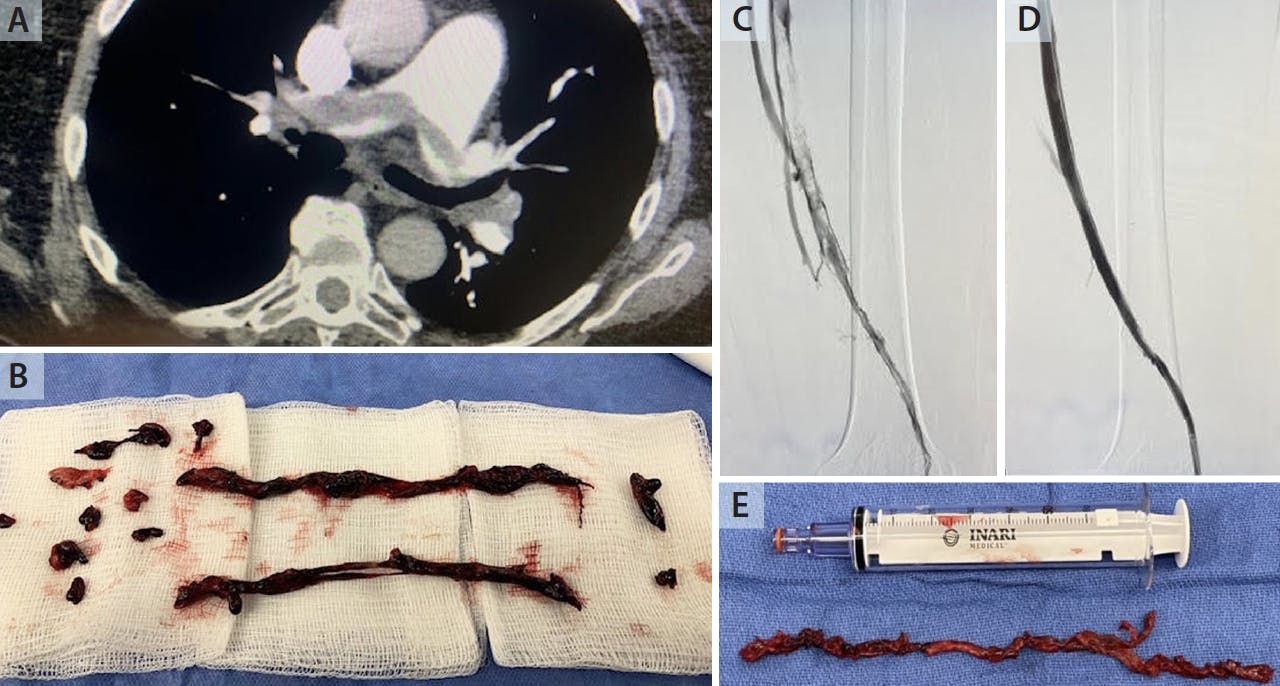
Figure 1. CT scan revealed bilateral and saddle PE (A). Thrombectomy performed with the FlowTriever System extracted significant thrombus (B). In a separate procedure to treat the DVT the next day, venography was performed on the right lower extremity, revealing a dilated right femoral vein with significant thrombus burden throughout the femoral, superficial, and popliteal segments. The right popliteal vein had diffuse thrombus and fibrotic stenosis (C). Final venography demonstrated return of flow and no significant thrombus remaining (D). Thrombus was extracted from the right lower extremity using the ClotTriever System (E).
Due to his persistent hypoxia and symptoms, mechanical thrombectomy with the Inari FlowTriever System was planned to treat the PE. After that procedure, mechanical thrombectomy with the ClotTriever System would be considered to treat the patient’s DVT.
PE PROCEDURAL OVERVIEW
The patient was brought to the heart center and placed on the cardiac catheterization table, where the left femoral site was prepared and a micropuncture technique and ultrasound guidance were used to access the left common femoral vein. A micropuncture sheath was inserted and venography was performed, demonstrating no evidence of thrombus on the left and no evidence of caval thrombus. Next, the sheath was upsized to 7 F and right heart catheterization was performed with a pulmonary wedge catheter placed into the right pulmonary artery (PA). The catheter was exchanged over a 0.035-inch Amplatz Super Stiff wire (Boston Scientific Corporation) and upsized to a 24-F DrySeal sheath (Gore & Associates). The 20-F Triever20 catheter (Inari Medical) was then introduced, and the FlowTriever System was advanced to the location of the thrombus. Next, the device was placed into the left PA, and thrombectomy was performed with significant extirpation of thrombus (Figure 1B). Selective pulmonary angiography demonstrated significant improvement in flow to the right lung with blush seen. Significant reduction of main pulmonary pressures was noted, improving from 54/14 mm Hg with a mean of 27 mm Hg preprocedure to 36/16 mm Hg with a mean of 21 mm Hg postprocedure. At this point, the sheath was removed and a figure-of-eight stitch placed to achieve hemostasis. The patient tolerated the procedure well without any immediate complications. Estimated blood loss was 30 mL.
After successful clearance of the right and left PAs, the patient was continued on intravenous heparin overnight and reevaluated the next morning. Significant pain and swelling remained in the right lower extremity, and a decision was made to perform mechanical thrombectomy of the residual iliofemoral DVT using the ClotTriever System.
CONCOMITANT DVT PROCEDURAL OVERVIEW
Later that day, the patient was brought to the cardiac catheterization lab and placed in a prone position. The right popliteal vein was cannulated, and a micropuncture sheath was inserted under ultrasound guidance. Venography was performed, revealing a dilated right femoral vein with significant thrombus burden throughout the right femoral, superficial, and popliteal segments. The right popliteal vein had diffuse thrombus and fibrotic stenosis (Figure 1C). Next, the micropuncture sheath was upsized to 8 F. A 0.035-inch guidewire was placed into the common femoral vein and subsequently into the right heart. Intravascular ultrasound (IVUS) was performed, confirming accurate placement of the wire in the deep venous system and demonstrating significant fibrosis and scarring and acute thrombosis from the common femoral through the popliteal vein. The inferior vena cava (IVC) was found to be widely patent with no significant thrombus. A venous spur with a severe, 70% compression point was noted at the ostium of the right iliac vein, with a compression of 55 mm² by reference to 119 mm².
After IVUS, the popliteal segment was dilated with an 8- X 40-mm balloon, and the sheath was upsized to a 13-F ClotTriever sheath. The ClotTriever catheter was inserted and advanced beyond the location of the thrombus, at which point the catheter was deployed and mechanical thrombectomy was performed. Three passes of the ClotTriever device were performed, and significant extirpation of matter was achieved. IVUS was reperformed for measurements, and the ClotTriever sheath was slowly withdrawn. A repeat venogram showed significant thrombus at the tip of the sheath in the popliteal vein. One more pass with the ClotTriever catheter was then performed, removing the additional thrombus (Figure 1E).
Venoplasty with a 10- X 40-mm balloon was performed in the iliac segment, as well as the femoral through popliteal segments. The final venogram showed an excellent result with a widely patent IVC, return of flow, and no significant thrombus remaining (Figure 1D). There was significant reflux present at the compression plate of the right iliac vein. Due to access issues, plans were made to stent the segment as an outpatient at a later date. The equipment and sheath were removed, and hemostasis was achieved with manual compression. Estimated blood loss was < 20 mL. The patient was discharged on rivaroxaban the same day.
DISCUSSION
PEs most often originate in the deep veins, and more thrombi may be found there with the potential for future embolization. Because standard orders for lower extremity duplex ultrasound do not include scanning the iliac segments, this can lead to missed DVTs in PE patients. In the case presented, a request was made to rule out concomitant DVT by checking the iliofemoral vascular bed during a lower extremity duplex ultrasound, prior to the index procedure.
The patient was found to have acute right lower extremity DVT, which influenced preprocedural planning for access during the PE procedure. He was treated for the DVT during the same hospitalization, resulting in successful mechanical thrombectomy and venoplasty of the right iliac vein through the popliteal vein. Compression syndrome of the right iliac vein with outflow obstruction was determined to be the likely cause of the patient’s unprovoked DVT and bilateral PE.
Since the procedure, the patient has experienced complete resolution of his symptoms. He has returned to work and is doing very well.
Routine Scan for Concomitant DVT in a PE Patient With Asymptomatic Leg Reveals Extensive Thrombus Burden in the Left Lower Extremity
By Maziar Mahjoobi, DO, FACC, FSCAI
PATIENT PRESENTATION
A man in his early 70s presented to the ER with complaints of shortness of breath that began 3 days prior. A CT chest scan ordered by his primary care physician earlier that day had shown bilateral PE. The patient had a history significant for hyperlipidemia, restless leg syndrome, and a DVT of unknown etiology in 2015 that had been treated with oral anticoagulants for several years. He stated that the dyspnea was sudden onset and denied any chest pain, dizziness, syncope, palpitations, or peripheral edema. Furthermore, he denied any recent travel, illness, or injury. Further evaluation confirmed acute bilateral PE, more extensive on the right than left, and an enlarged pulmonary trunk suggestive of PA hypertension. The patient was admitted to the hospital, and mechanical thrombectomy with the FlowTriever System was planned for the next day.
Shortly after the initial evaluation, a bilateral venous duplex ultrasound of the lower extremities was ordered as part of the PE workup to rule out DVT. Nonocclusive thrombus was noted within the left popliteal vein, extending into the left femoral vein and left common femoral vein. Occlusive DVT was noted within the left superficial femoral and popliteal vein. Given these findings of concomitant DVT, it was decided that the patient would be reevaluated after PE treatment for possible mechanical thrombectomy with the ClotTriever System during the same hospital stay.
PE PROCEDURAL OVERVIEW
The patient was brought to the cardiac catheterization lab in a fasted state. The bilateral groins were prepared and draped in the usual sterile manner. Fentanyl and midazolam were used for generalized discomfort throughout the procedure.
Because occlusive thrombus had been found in the left lower extremity, the right common femoral vein was chosen for access. Access occurred under ultrasound guidance in a retrograde fashion, and a 6-F sheath was placed over a wire using a modified Seldinger technique. A 5-F Judkins right 4 diagnostic catheter used to test arterial blood gases (ABG) and record pressures was exchanged for a 5-F pigtail wire. Selective angiography of the left PA was then performed, and a small amount of thrombus was noted in the left lower PA. The catheter was then placed in the right PA, where a selective angiogram of the right coronary artery showed a significant amount of thrombus within the right PA trunk, extending into both the upper and lower right PAs (Figure 1A).
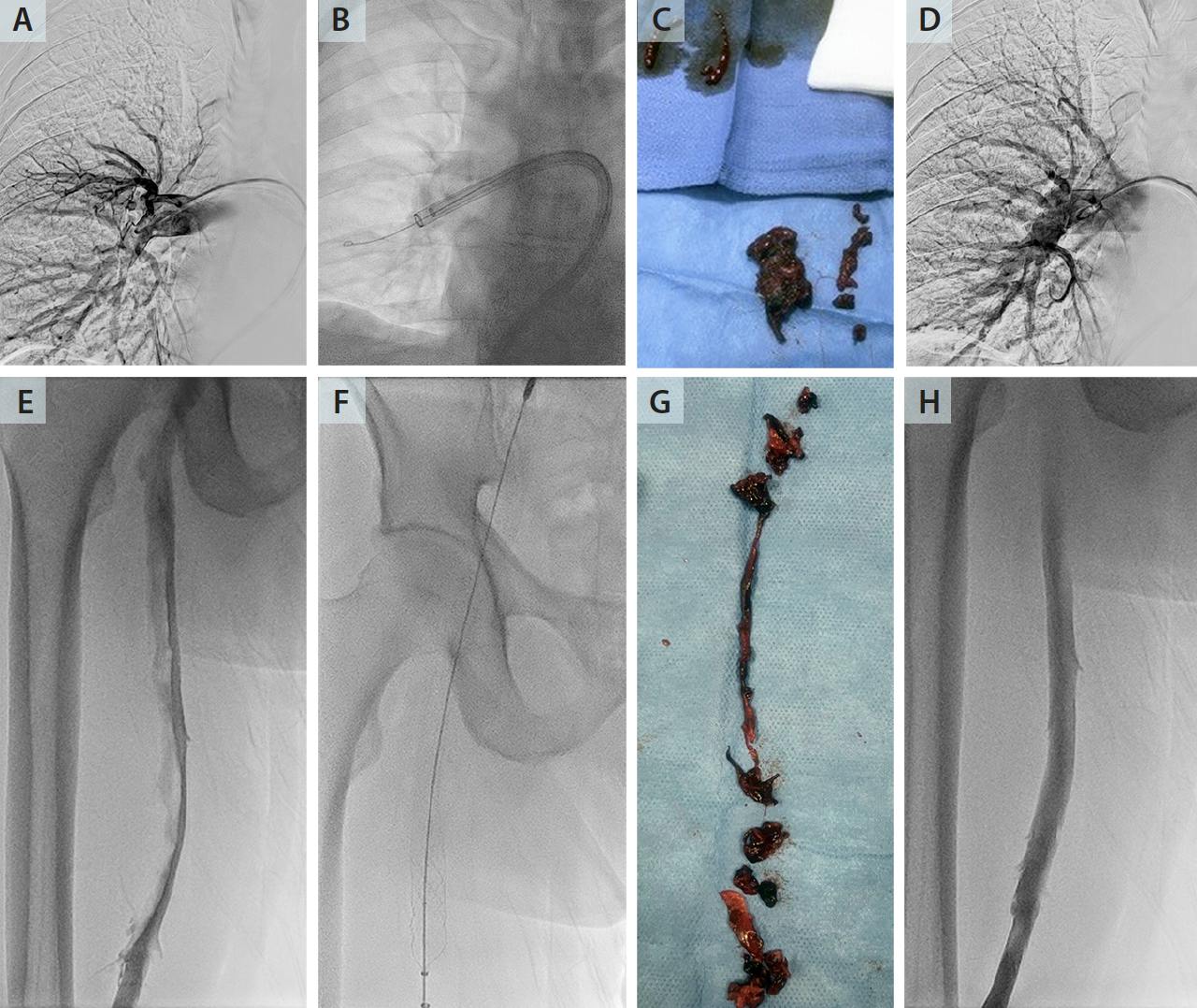
Figure 1. Selective angiography during the PE thrombectomy procedure demonstrated thrombus within the right PA trunk, extending into the upper and lower right PA (A). The Triever16 and Triever24 aspiration catheters were advanced into the right PA (B). Thrombus was extracted from the patient (C). Postthrombectomy, repeat angiography showed no remaining thrombus in the right PA (D). Prior to DVT thrombectomy, venography confirmed a large amount of thrombus in the femoral and common femoral veins (E). Dilation was performed with a 12-F dilator, and the ClotTriever catheter was deployed (F). Extracted thrombus (G). Repeat angiography demonstrated no residual thrombus (H).
Using a 22-F dilator, the right common femoral venotomy was dilated. The sheath was upsized to a 24-F DrySeal sheath. A 16-F Triever16 aspiration catheter (Inari Medical) was advanced over a Rosen wire, over which a 24-F Triever24 aspiration catheter (Inari Medical) was then advanced into the right PA (Figure 1B). One aspiration was performed with the Triever16 and two aspirations were performed with the Triever24, yielding a large amount of acute and chronic thrombus (Figure 1C). The patient’s oxygen saturation improved immediately postprocedure. All but 20 mL of the aspirated blood was returned to the patient via the FlowSaver Blood Return System (Inari Medical).
Repeat angiography revealed no thrombus burden in the right PA (Figure 1D). A pigtail catheter was then reintroduced into the right PA where hemodynamics and ABG were obtained once again. PA pressures were noted to have dropped from 46/13 mm Hg with a mean of 24 mm Hg prethrombectomy to 30/10 mm Hg with a mean of 17 mm Hg postthrombectomy.
The catheter was then brought back into the right atrium (RA) where the same tests were performed. Hemodynamic improvements were noted, with RA pressures dropping from 9/7 mm Hg with a mean of 5 mm Hg prethrombectomy to 4/2 mm Hg with a mean of 1 mm Hg postthrombectomy. The pigtail catheter was then removed, followed by removal of the 24-F sheath. Hemostasis of the right common femoral venotomy was achieved using a figure-of-eight suture.
The patient was brought to his room for further observation. He was re-evaluated the next day and although he had been asymptomatic for DVT on presentation, he was now experiencing pain and swelling in the left lower extremity. For that reason, mechanical thrombectomy of the DVT was planned for the same hospital stay.
CONCOMITANT DVT PROCEDURAL OVERVIEW
The next day, the patient was brought to the cardiac catheterization lab in a fasting state and placed in a prone position. The left popliteal area was prepared and draped in the usual sterile manner. Under ultrasound guidance, a micropuncture kit was used in a retrograde fashion to access the left popliteal vein. A modified Seldinger technique was used to place a 4-F micropuncture sheath over a wire. Selective angiography of the left popliteal vein with proximal runoff was then performed, confirming intraluminal placement of the wire. A significant amount of thrombus was noted in the left popliteal, femoral, and common femoral veins (Figure 1E), confirming the findings of the earlier duplex ultrasound. Dilation was then performed with a 12-F dilator, and a 13-F ClotTriever sheath was introduced. A ClotTriever catheter was inserted and advanced over a Rosen wire, beyond the thrombus, to the left common femoral vein distally, and deployed (Figure 1F). Three passes with the ClotTriever were then made in three separate quadrants, each time deploying the catheter and then extracting a substantial amount of thrombus burden, both chronic and acute (Figure 1G).
Repeat angiography was performed with a 4-F angled glide catheter from the left popliteal vein with proximal runoff, demonstrating no residual thrombus (Figure 1H). After successful thrombectomy, the sheath was removed, and hemostasis of the left popliteal vein was achieved using a figure-of-eight suture.
The patient was returned to his room for further observation and was discharged the next day on rivaroxaban. A hypercoagulable workup was planned with a hematologist. Follow-up with cardiology was planned for 6 weeks postprocedure.
DISCUSSION
The importance of checking PE patients for concomitant DVT is demonstrated in this case, in which a patient presented with shortness of breath and was found by the hospitalist to have acute bilateral PE. Although this patient was asymptomatic for DVT, checking him for remaining thrombus in the deep veins was essential because almost half of PE patients with concomitant proximal DVT are asymptomatic.1 Ordering bilateral venous duplex ultrasound for PE patients has become protocol at our institution, driven by an awareness of the sobering data on prognosis: PE patients with concomitant DVT have a twofold higher risk of mortality2 and a fourfold higher risk of VTE recurrence3 than those without concomitant DVT.
Diagnosing this patient’s DVT shortly after presenting to the ER also served to guide preprocedure planning. Having discovered significant thrombus in the left lower extremity, access was achieved on the right for the PE thrombectomy procedure.
After two successful thrombectomy procedures utilizing the FlowTriever and ClotTriever Systems, the patient’s symptoms had resolved, and he was discharged on oral anticoagulation shortly thereafter.
1. Hirmerova J, Seidlerova J, Chudacek Z. The prevalence of concomitant deep vein thrombosis, symptomatic or asymptomatic, proximal or distal, in patients with symptomatic pulmonary embolism. Clin Appl Thromb Hemost. 2018;24:1352-1357. doi: 10.1177/1076029618779143
2. Nishiwaki S, Yamashita Y, Morita Y, et al. Abstract 12827: impact of concomitant deep vein thrombosis on clinical outcomes in patients with acute pulmonary embolism. Circulation. 2019;140(suppl 1):A12827
3. Jiménez D, Aujesky D, Díaz G, et al. Prognostic significance of deep vein thrombosis in patients presenting with acute symptomatic pulmonary embolism. Am J Respir Crit Care Med. 2010;181:983-991. doi: 10.1164/rccm.200908-1204OCNic
Advertisement
Advertisement