Advertisement
Advertisement
June 2022
Sponsored by Medtronic
Percutaneous Arteriovenous Fistulas for Dialysis: A Case Example and the Long-Term Perspective
CASE EXAMPLE
A right-handed man in his late 60s with end-stage renal disease, hypertension, and type 2 diabetes had dialysis initiated with a central venous catheter (CVC) 3 months prior to referral for vein mapping and possible arteriovenous fistula (AVF) creation. He was receiving adequate dialysis but was disturbed by the catheter on his chest and the bathing limitations. On physical examination, he was a well-developed, well-nourished man with a body mass index of 33.5 kg/m2 and a right tunneled CVC. The blood pressure was 150/66 mm Hg on the left arm and nearly equal on the right. The Allen test was normal bilaterally, and there were no surgical scars or deformities of the upper extremities.
The vein map demonstrated that the patient was a candidate for bilateral upper arm fistulas but not for a wrist fistula. He was enrolled in the Ellipsys pivotal trial,1 started on aspirin and clopidogrel, and scheduled to return to the outpatient center for percutaneous AVF (pAVF) creation. After a supraclavicular brachial plexus block,2 the pAVF was created with ultrasound guidance in a 17-minute procedure, and the patient was then discharged home. The pAVF was prepared for dialysis in two additional procedures. In the first procedure, overall fistula flow was increased with balloon dilation of the proximal fistula and deep brachial vein flow was restricted by coil embolization; in the second procedure, flow was directed into the cephalic vein by banding the basilic vein (Figure 1).3
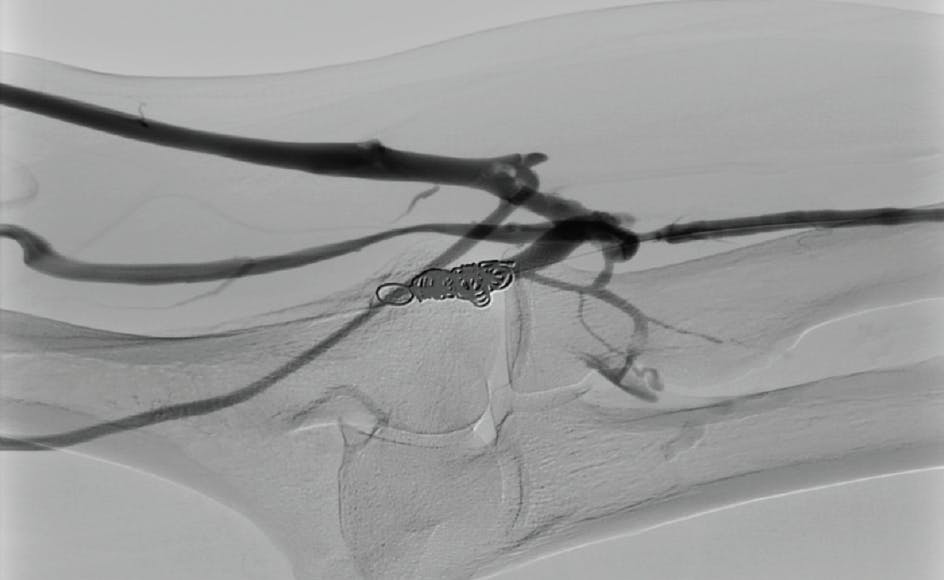
Figure 1. An angiogram of the pAVF after angioplasty and coil embolization.
At 56 days postindex procedure, two-needle cannulation was achieved at the prescribed rate, and the fistula has since been used continuously for 7 years. The patient had only one secondary maintenance procedure, which was balloon dilation of the perforating vein for low flow after 2 years of use (Figure 2).
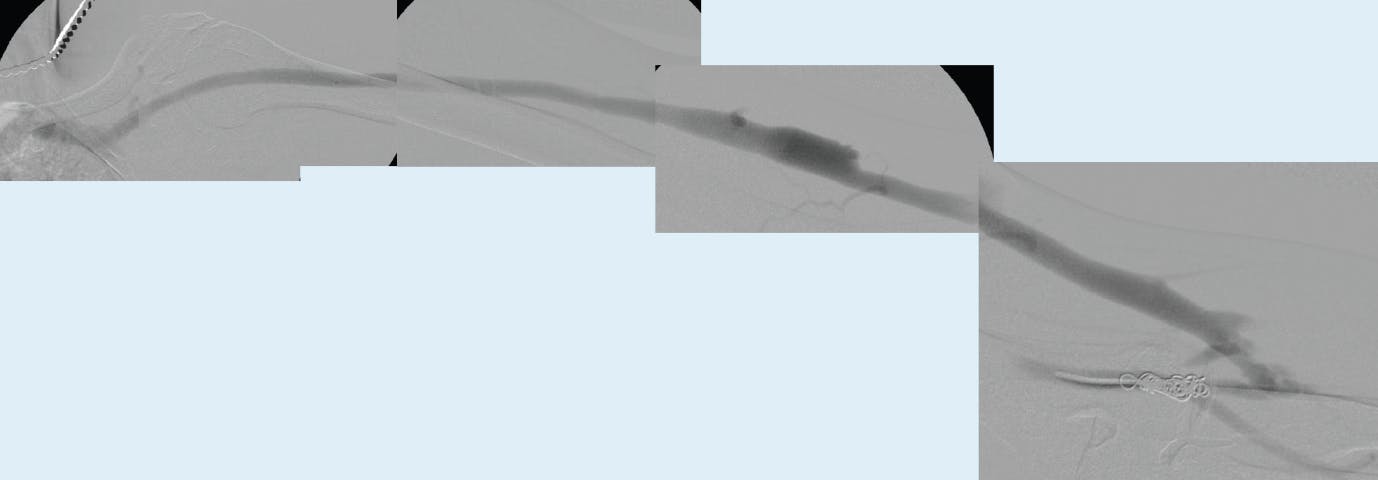
Figure 2. A fistulogram at 2 years postcreation.
No additional procedures have been required in the last 5 years. There is mild aneurysmal dilation of the fistula at the predominate site of access (Figure 3).
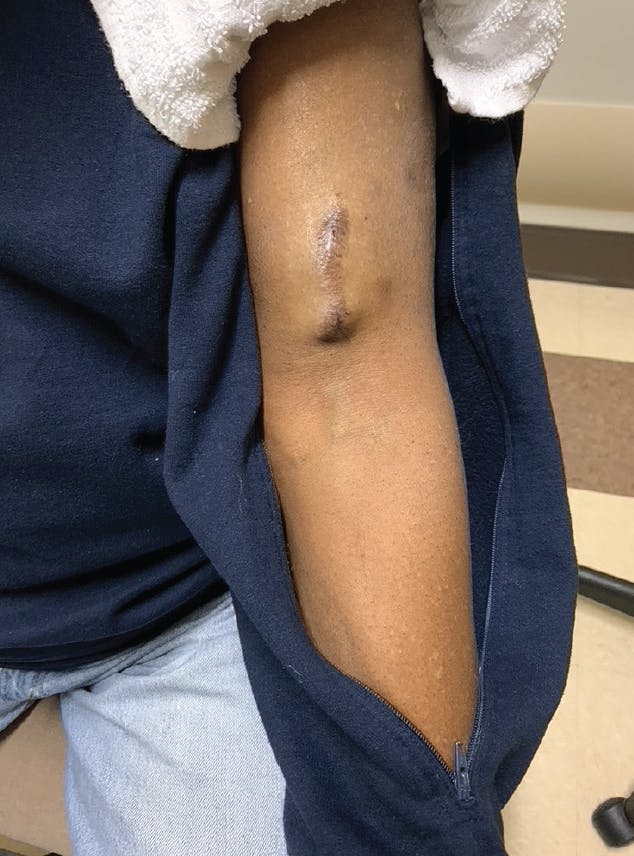
Figure 3. A photograph of the patient’s arm at 7 years after pAVF creation.
THE LONG-TERM PERSPECTIVE
This presented case is ideal and not unusual based on the results from the Ellipsys pivotal trial.1 The patient was evaluated and the pAVF created within 3 weeks of referral for vein mapping. The procedure time was similar to that of the mean reported time in the 1-year trial outcomes: 23.7 ± 11.3 minutes (range, 8-66 min).1 In the pivotal trial, providing pAVFs in the outpatient setting allowed patients to have office visits, procedures, and follow-up at the same convenient site of service, and it contributed to the high rates of patient satisfaction reported in a 2-year follow-up study of the pivotal trial patients.4
The pAVF in this case study required two procedures to prepare for cannulation at a typical United States dialysis center not yet using cubital veins for needle access. During the first year of the pivotal trial, 2.7 procedures per patient per year (PPPY) were required for fistula maturation and maintenance, which is lower than the 4.1 procedures PPPY reported for surgical fistulas5 but concerning with respect to long-term durability and cost. Aggressively treating spasm in the perforating vein and proximal radial artery with balloon dilation at the index procedure has increased initial blood flow, decreased early thrombosis, reduced maturation procedures, and decreased time to two-needle cannulation at the prescribed rate when compared to the results from the pivotal trial.3,6,7 Additionally, combining maturation procedures into a single follow-up visit post–index procedure has reduced the number of maturation procedures from 2.0 to 0.87 procedures per patient.3
The pAVF has unique qualities in terms of low flow volume and multiple outflow veins, which are thought to be responsible for reducing fistula-related complications and dysfunction,1,8,9 including aneurysm formation. In addition, these lower-flow fistulas decrease the risk of high-output cardiac failures.4
The Ellipsys™ vascular access system (Medtronic) anastomosis is created by tissue fusion and is immediate, permanent, and balloon dilatable.10 The fistula flow rate can be controlled by the operator using balloon size to determine fistula flow volume: For example, a 4-mm balloon will typically result in flows of 500 mL/min. Larger balloons such as a 5- or 6-mm balloon will result in flows of 600 to 900 mL/min or 800 to 1,400 mL/min, respectively.1,3,10,11 The multiple-outflow vein continues to demonstrate lower requirements for secondary intervention when compared to single-outflow surgical fistulas.12,13 The long-term data in patients from the Ellipsys pivotal trial demonstrate an average 0.32 procedures PPPY in years 2 to 5, which is well below the rate for surgical fistulas.5,14-16
CONCLUSION
The case study highlights some of the most important issues for pAVFs, including fistula use, cannulation, and durability. The results from Ellipsys pivotal trial long-term follow-up demonstrated high rates of successful pAVF use defined by two-needle cannulation at the prescribed flow rate in 92% of patients through 5 years.16 Other recent Ellipsys pAVF studies have shown similar high fistula use rates of 84% at 1 year3 and 85%.13 The pAVF use rate far exceeds the 54% to 63% reported rates for surgical fistula in the United States Renal Data System.17,18
Cannulation of the pAVF has been reported to be challenging in many cases because the fistulas have low to moderate flow and a different feel than single-outflow fistulas.19 Given the different “feel,” a common perception on physical exam is that the cannulation vessels are deeper in endovascular AVFs than surgical fistulas, but that is not the case. As such, for a new cannulator, approaching the vessel in a more horizontal fashion can assist in accessing the vessel successfully. These challenges have also increased the use of cubital vein access and encouraged the use of ultrasound-guided imaging and plastic cannulas. Results from long-term analysis of the intent-to-treat population from the Ellipsys pivotal trial have demonstrated excellent long-term use and survival of the Ellipsys fistulas, with 91.8% functional patency and 82% cumulative patency through 5 years.16
1. Hull JE, Jennings WC, Cooper RI, et al. The pivotal multicenter trial of ultrasound-guided percutaneous arteriovenous fistula creation for hemodialysis access. J Vasc Interv Radiol. 2018;29:149-58.e5. doi: 10.1016/j.jvir.2017.10.015
2. Hull J, Heath J, Bishop W. Supraclavicular brachial plexus block for arteriovenous hemodialysis access procedures. J Vasc Interv Radiol. 2016;27:749-752. doi: 10.1016/j.jvir.2016.02.003
3. Hull J, Deitrick J, Groome K. Maturation for hemodialysis in the Ellipsys post-market registry. J Vasc Interv Radiol. 2020;31:1373-1381. doi: 10.1016/j.jvir.2020.03.001
4. Beathard GA, Litchfield T, Jennings WC. Two-year cumulative patency of endovascular arteriovenous fistula. J Vasc Access. 2020;21:350-356. doi: 10.1177/1129729819877780
5. Arnold RJG, Han Y, Balakrishnan R, et al. Comparison between surgical and endovascular hemodialysis arteriovenous fistula interventions and associated costs. J Vasc Interv Radiol. 2018;29:1558-66.e2. doi: 10.1016/j.jvir.2018.05.014
6. Mallios A, Jennings WC, Boura B, et al. Early results of percutaneous arteriovenous fistula creation with the Ellipsys vascular access system. J Vasc Surg. 2018;68:1150-1156. doi: 10.1016/j.jvs.2018.01.036
7. Shahverdyan R, Beathard G, Mushtaq N, et al. Comparison of outcomes of percutaneous arteriovenous fistulae creation by Ellipsys and WavelinQ devices. J Vasc Interv Radiol. 2020;31:1365-1372. doi: 10.1016/j.jvir.2020.06.008
8. Lok CE, Huber TS, Lee T, et al. KDOQI clinical practice guideline for vascular access: 2019 update. Am J Kidney Dis. 2020;75(4 suppl 2):S1-S164. doi: 10.1053/j.ajkd.2019.12.001
9. Hebibi H, Achiche J, Franco G, Rottembourg J. Clinical hemodialysis experience with percutaneous arteriovenous fistulas created using the Ellipsys(R) vascular access system. Hemodial Int. 2019;23:167-172. doi: 10.1111/hdi.12738
10. Hull JE, Elizondo-Riojas G, Bishop W, Voneida-Reyna YL. Thermal resistance anastomosis device for the percutaneous creation of arteriovenous fistulae for hemodialysis. J Vasc Interv Radiol. 2017;28:380-387. doi: 10.1016/j.jvir.2016.10.033
11. Franco G, Mallios A, Bourquelot P, et al. Ultrasound evaluation of percutaneously created arteriovenous fistulae between radial artery and perforating vein at the elbow. J Vasc Access. 2020;21:694-700. doi: 10.1177/1129729819897654
12. Harika G, Mallios A, Allouache M, et al. Comparison of surgical versus percutaneously created arteriovenous hemodialysis fistulas. J Vasc Surg. 2021;74:209-216. doi: 10.1016/j.jvs.2020.12.086.
13. Shahverdyan R, Beathard G, Mushtaq N, et al. Comparison of Ellipsys percutaneous and proximal forearm Gracz-type surgical arteriovenous fistulas. Am J Kidney Dis. 2021;78:520-529.e1. doi: 10.1053/j.ajkd.2021.01.011
14. Falk A. Maintenance and salvage of arteriovenous fistulas. J Vasc Interv Radiol 2006;17:807-13. doi: 10.1097/01.RVI.0000217928.43396.35
15. Lok CE, Rajan DK, Clement J, et al. Endovascular proximal forearm arteriovenous fistula for hemodialysis access: results of the prospective, multicenter novel endovascular access trial (NEAT). Am J Kidney Dis. 2017;70:486-497. doi: 10.1053/j.ajkd.2017.03.026
16. Hull JE, Jennings W, Cooper R, et al. Long term results from the pivotal multicenter trial of ultrasound guided percutaneous arteriovenous fistula creation for hemodialysis access. J Vasc Interv Radiol. In press.
17. Woodside KJ, Bell S, Mukhopadhyay P, et al. Arteriovenous fistula maturation in prevalent hemodialysis patients in the United States: a national study. Am J Kidney Dis. 2018;71:793-801. doi: 10.1053/j.ajkd.2017.11.020
18. Thamer M, Lee TC, Wasse H, et al. Medicare costs associated with arteriovenous fistulas among US hemodialysis patients. Am J Kidney Dis. 2018;72:10-18. doi: 10.1053/j.ajkd.2018.01.034
19. Wasse H, Alvarez AC, Brouwer-Maier D, et al. Patient selection, education, and cannulation of percutaneous arteriovenous fistulae: an ASDIN white paper. J Vasc Access. 2020;21:810-817. doi: 10.1177/1129729819889793

Ellipsys Vascular Access System Brief Statement
Indications
The Ellipsys™ system is indicated for the creation of a proximal radial artery to perforating vein anastomosis via a retrograde venous access approach in patients with a minimum vessel diameter of 2.0 mm and less than 1.5 mm of separation between the artery and vein at the fistula creation site who have chronic kidney disease requiring dialysis.
Contraindications
The Ellipsys™ system is contraindicated for use in patients with target vessels that are <2 mm in diameter. The Ellipsys™ System is contraindicated for use in patients who have a distance between the target artery and vein > 1.5 mm.
Warnings
- The Ellipsys™ system has only been studied for the creation of an AV fistula using the proximal radial artery and the adjacent perforating vein. It has not been studied in subjects who are candidates for surgical fistula creation at other locations, including sites distal to this location.
- The Ellipsys™ system is not intended to treat patients with significant vascular disease or calcification in the target vessels.
- The Ellipsys™ system has only been studied in subjects who had a patent palmar arch and no evidence of ulnar artery insufficiency.
- Use only with the Ellipsys™ Power Controller, Model No. AMI-1001.
- The Ellipsys™ Catheter has been designed to be used with the 6 F Terumo Glidesheath Slender™*. If using a different sheath, verify the catheter can be advanced through the sheath without resistant prior to use.
- Use ultrasound imaging to ensure proper placement of the catheter tip in the artery before retracting the sheath, since once the distal tip of the catheter has been advanced into the artery, it cannot be easily removed without creation of the anastomosis. If the distal tip is advanced into the artery at an improper location, complete the procedure and remove the catheter as indicated in the directions for use. It is recommended that a follow-up evaluation of the patient is performed using appropriate clinical standards of care for surgical fistulae to determine if any clinically significant flow develops that require further clinical action.
Precautions
- This product is sterilized by ethylene oxide gas.
- Additional procedures are expected to be required to increase and direct blood flow into the AVF target outflow vein and to maintain patency of the AVF. Care should be taken to proactively plan for any fistula maturation procedures when using the device.
- In the Ellipsys™ study, 99% of subjects required balloon dilatation (PTA) to increase flow to the optimal access vessel and 62% of subjects required embolization coil placement in competing veins to direct blood flow to the optimal access vessel. Prior to the procedure, care should be taken to assess the optimal access vessel for maturation, the additional procedures that may be required to successfully achieve maturation, and appropriate patient follow-up. Please refer to the “Arteriovenous Fistula (AVF) Maturation” section of the labeling for guidance about fistula flow, embolization coil placement, and other procedures to assist fistula maturation and maintenance.
- The Ellipsys™ System is intended to only be used by physicians trained in ultrasound guided percutaneous endovascular interventional techniques using appropriate clinical standards for care for fistula maintenance and maturation including balloon dilatation and coil embolization.
- Precautions to prevent or reduce acute or longer-term clotting potential should be considered. Physician experience and discretion will determine the appropriate anticoagulant/antiplatelet therapy for each patient using appropriate clinical standards of care.
Potential Adverse Events
Potential complications that may be associated with creation and maintenance of an arteriovenous fistula include, but may not be limited to, the following:
- Total occlusion, partial occlusion or stenosis of the anastomosis or adjacent outflow vein
- Stenosis of the central AVF outflow requiring treatment per the treatment center’s standard of care
- Failure to achieve fistula maturation
- Incomplete vessel ligation when using embolization coil to direct flow
- Steal Syndrome
- Hematoma
- Infection or other complications
- Need for vessel superficialization or other maturation assistance procedures.
CAUTION: Federal (USA) law restricts this device to sale by or on the order of a physician.
Important Information: Indications, contraindications, warnings, and instructions for use can be found in the product labelling supplied with each device.
501066 ©2022 Medtronic. Medtronic, Medtronic logo are trademarks of Medtronic. TM* third party brands are trademarks of their respective owner. All other brands are trademarks of Medtronic. For global distribution. 06/2022
Advertisement
Advertisement