Advertisement
Advertisement
June 2022
Sponsored by Philips
Tackling Social Determinants of Health, One Patient at a Time
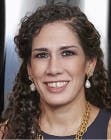
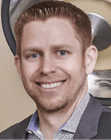
Lyssa Ochoa, MD, and Carl Negley, MBA, discuss addressing health inequities in San Antonio, Texas, opening an OBL/ASC, and developing a care model for the future.
Economically segregated as far back as 1900, several historical factors have perpetuated San Antonio, Texas’s divided nature. First, from 1903 to 1925, real estate developers included racial covenants in their deeds stating, “No African Americans or Hispanics could own, lease, or rent property within the north area of the city.”1 In the 1930s and 1940s, the Home Owners Loan Corporation and the Federal Housing Administration instigated further “redlining” in San Antonio by labeling Hispanic and African Americans as risks to the banks and prevented them from buying houses or properties. This led to reduced investment and educational funding going to those zip codes and a city separated by race, with people of Hispanic ethnicity residing in the west and south areas, African American residents in the east, and the north populated by predominantly White residents.1
Today, San Antonio remains one of the most impoverished cities in the United States. It is also a dichotomy, with disparate economies in the north and south sides. The southside has high poverty, dropout rates, unemployment, and crime. In Bexar County, 15.5% of the population has type 2 diabetes,2 with San Antonio’s (centered within Bexar County) southside having an even higher percentage (Figure 1).3 Access and quality of care are likewise substandard there.
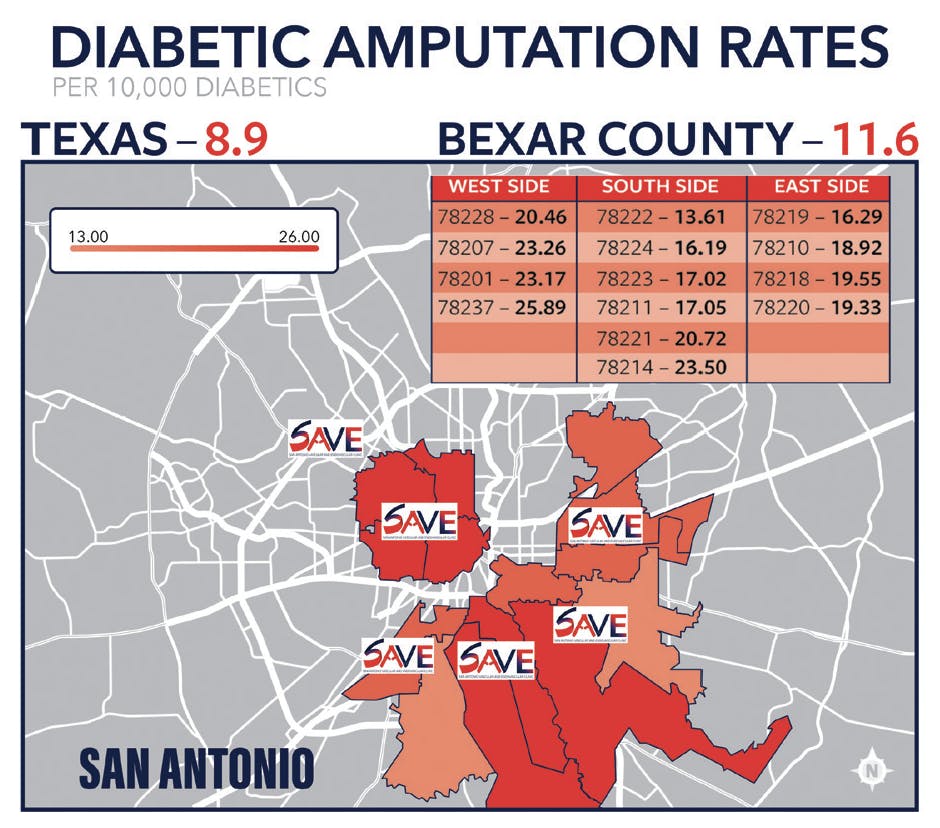
Figure 1. Bexar County diabetic amputation rates per 10,000 diabetics.
Adapted from Fletcher Stoeltje M. Losing limbs to a terrible disease. San Antonio Express-News. Accessed May 17, 2022. https://www.expressnews.com/news/local/article/Losing-limbs-to-a-terrible-disease-12776524.php. © San Antonio Express-News/ZUMA Press.
Dr. Lyssa Ochoa recognized the severe lack of medical services in South San Antonio and the limited progress made by independent private practices to address this need. The San Antonio Vascular and Endovascular (SAVE) Clinic was developed out of a passion to provide personalized, advanced quality vascular care to the “whole patient,” intervening only as required and becoming a nationwide model on how to challenge your staff in making positive differences in your patients.
What prompted you to open the SAVE Clinic?
Dr. Ochoa: During my early experience treating vascular patients in San Antonio, I quickly realized that the access to care and disease severity on the southside was very different from the northside. I was seeing patients in their 30s with uncontrolled type 2 diabetes, undergoing diabetic amputations, and being treated for heart attacks or strokes.
Here were my first close encounters with what I’ve come to know as “social determinants of health.” Intuitively, I knew factors like income, education, access, and employment disparities affected health care outcomes, but until I did some research and started working in the San Antonio region, I had woefully underestimated the extent of their impact. Developed by the Brookings Institution, the Hardship Index (Figure 2) determines a composite score from seven social factors.4 Using this index, you can rank zip codes relative to each other, with the lower numbers dark red, equating to the most difficult areas to live in.
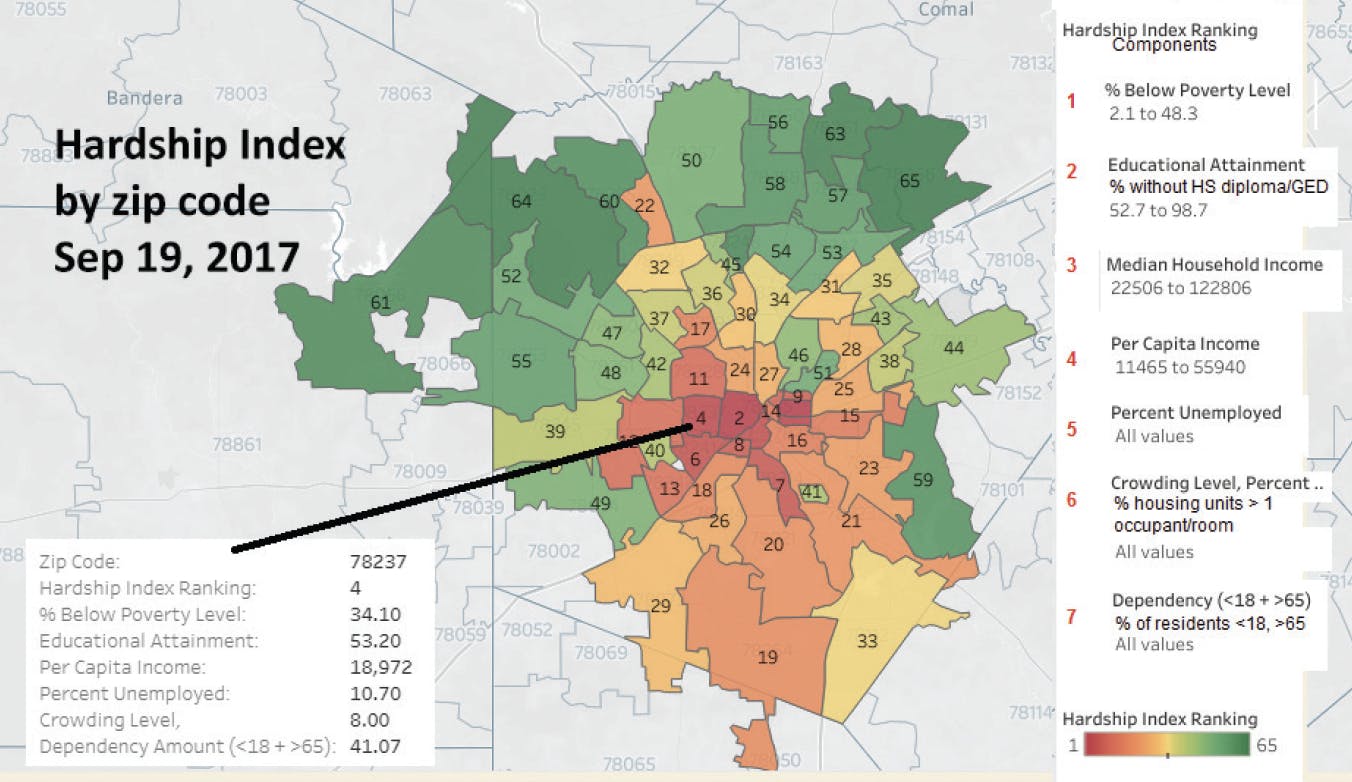
Figure 2. San Antonio Hardship Index based on social determinants.
Adapted from Casura L. San Antonio Hardship Index. Tableau Public. Accessed May 17, 2022. https://public.tableau.com/app/profile/lilygc/viz/SATXHardshipIndex/Story1
I suspected other clinicians in the region were likewise uninformed, and so I started talking to colleagues about these issues and social determinants. My thinking was, if I could just get our physicians to acknowledge the impact societal factors were having on patients in South San Antonio, maybe we could start to move the needle on this underserved population. For the most part, however, with most physicians being already on the verge of burnout and without any direct pathway to reimbursement, many had little interest in investing time or energy into these social determinants.
So, I decided to open a practice, the SAVE Clinic, to serve zip codes with the highest amputation rates by collaborating and interacting with every entity interested in helping improve health care outcomes in the south. I do know that if we are able to improve rates for diabetes-related amputations, everything upstream will have to improve also.
How did you transition to your own practice?
Dr. Ochoa: At first, going out on my own was intimidating. I knew I needed an office, front staff, ultrasound, a C-arm, and other things that go into a startup vascular practice. Carl had done this before and showed me the financial numbers. Well, those were big numbers, and it looked like a bridge too far to cross. Fortunately, Carl broke the numbers down into patient throughput—something I did understand. You’ll have to see this many patients. You’ll have to do this many surgeries, this many angiograms, this many veins, etc. Importantly, he showed me how it could be done with conservative, evidence-based treatment, instead of the “financially maximized” overutilization of atherectomy and stenting that many business-oriented consultants promote. And if you can do this minimum number of procedures, we’ll be financially viable. So, armed with this information, I was convinced we could dive in and do this.
Mr. Negley: When we first opened SAVE in February 2018, we leased a building on the southeast side of town that was an abandoned surgery center from the 1970s and 1980s. It was small, about 3,200 square feet, but it enabled us to roll in a C-arm and equip the office with ultrasounds, supplies, and everything we needed to operate our office-based lab (OBL) on day 1. Initially, we had that main clinic and four satellite clinics. It was Dr. Ochoa, me, and eight other employees. Crucial to our rapid startup was that Dr. Ochoa had been practicing in the San Antonio area for 6 years. People knew her and she had a patient following who came with her. I leveraged Philips early on in an advisory capacity to help bounce ideas off and put some planning options together. Their willingness to help, even though our approach was to maximize used equipment and leverage multiple suppliers, was appreciated. We did purchase Philips’ brand new fixed C-arm as an investment to do cardiac procedures in the future. We utilized Philips Medical Capital for the purchase, which included great financing and a disposables rebate program that helped pay off the loan quicker.
Why did you build in South San Antonio?
Dr. Ochoa: As our practice grew, we needed to move to a larger facility. So, we built our OBL/ambulatory surgical center (ASC) in the middle of the southside, equidistant from southeast and southwest. It was important that we provide better access to care for our patients, including state-of-the-art, high-quality, high technology–driven treatment. Sad, but true—I literally had other specialty doctors come to me and say, “Why are you building your office there? You need to go to the northside, that’s where the money is.” And I had to tell them, no, I’m building it exactly where I need it. Figure 1 and Figure 3 visualize the situation here in San Antonio and why we chose our location. To confirm the patient need, Figure 1 shows some of the worst diabetic amputation rates in the entire United States, almost all either downtown or southside. In Figure 3 you can see that health care providers are located downtown and to the north.5 Worse, there are only two very small hospitals comprised of 335 total beds that serve over half a million people below the red line. Together, all the evidence confirmed the need for our services in the region.
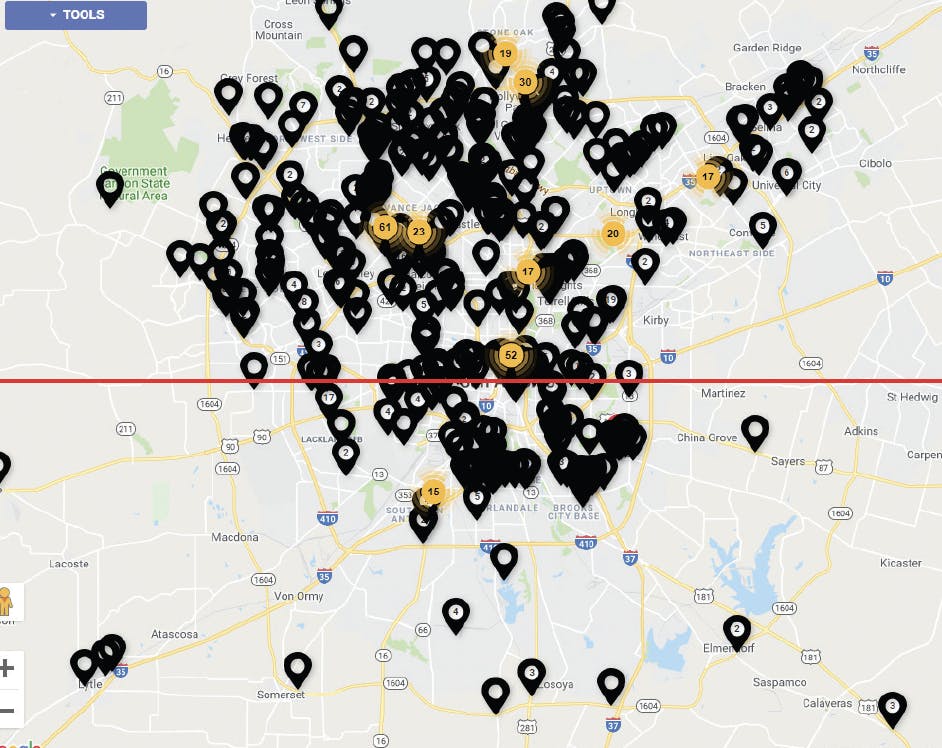
Figure 3. Map of health care providers in San Antonio.
Map data ©2022 Google. Based on data from National Provider Identifier (NPI) registry. Accessed May 17, 2022. https://npiregistry.cms.hhs.gov/
Mr. Negley: Figure 4 is a map of Medicare-accredited ASCs in the San Antonio area, as of 2020, and shows that no ASCs are currently located south of downtown.6 Once we gain our accreditation, we will be the first in the area to help serve our community. As we continue living with COVID-19 and its variants, and especially during these inflationary times, the population in southern San Antonio has few options to go to for elective outpatient surgeries. They either try to get an appointment at one of the two small hospitals or coordinate transportation up north—something that can be difficult for many folks in the area.
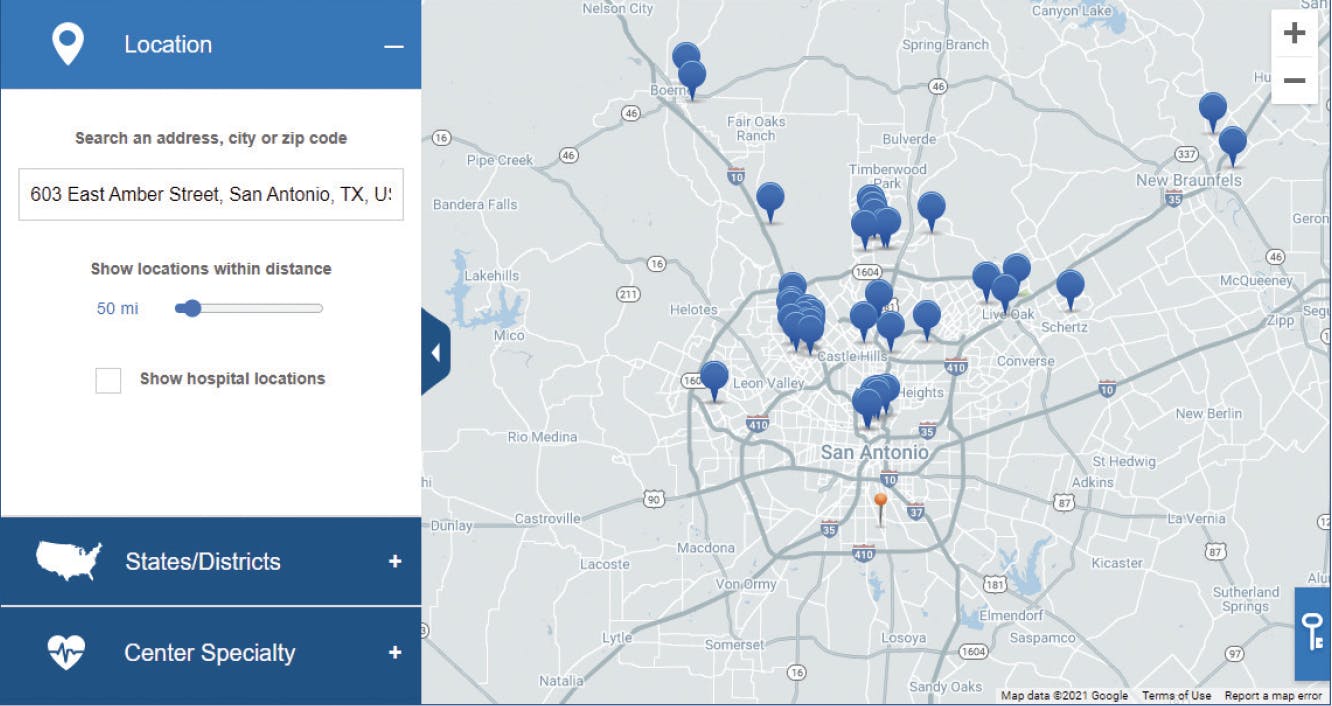
Figure 4. San Antonio Medicare-certified ASCs as of 2020.
Adapted from Advancing Surgical Care. Find an ASC. Accessed May 17, 2022. https://www.advancingsurgicalcare.com/advancingsurgicalcare/asc/findanasc
How has your practice evolved?
Dr. Ochoa: Today, we have three doctors, four midlevels, and 40 employees. We completed construction on our hybrid OBL/ASC in 2021 and have seven satellite clinics. It sounds crazy, but we literally pack a 15-passenger van with my ultrasound techs, medical assistants, and front desk staff; load up our diagnostics and computers; and head to our satellite clinics (that we timeshare) to see patients.
We do this because in southside San Antonio, another key social determinant of health is transportation. Frankly, it’s easier for my team to pack up and go to them than for some patients to get to us. So that has been one of our strategies—to create physical access to care where none existed. Coordinating all this is difficult but imperative. To keep up with multiple hospitals, we do leverage technology using an app that has a chronology of every patient, their issues, treatments, medications, doctors, and insurance status. It is not quite as extensive as an electronic record, but it is something we can access on the go with our smartphones. Every night we have a review with the physicians and midlevels so that we all know the daily progress and/or issues with each patient we see. Critical decisions are made by the group after fully vetting the issue, including the plan going forward. In this manner, any of us can respond to external physician or nurse calls and questions.
We have two operating rooms as part of the ASC; on some days it’s used as an OBL, and other days, it’s an ASC. Today, we are just doing vascular cases and working on getting certified by the Centers for Medicare & Medicaid Services. Once certified, we want to bring in other services and specialties—such as pain management; ear, nose, and throat; urology; and podiatry—that our patients don’t currently have access to. Obviously, I want to be able to attract other surgeons to the ASC to have a place they can help deliver quality care to the patients. It’s a convenience for them and will help increase the access to specialty care for southside folks who really need it.
In retrospect, we were fortunate to have built the full hybrid at the outset. And I owe a lot to Carl for that. When we first started mulling the idea of building an OBL, he ran some compelling estimates, and that tipped the scales in favor of building the OBL and ASC with just a bit more investment. Although we’re not in it just for the money, this was a fiscally prudent recommendation that we can convert into future benefits for this patient population. We named it the Mission ASC as sort of a double entendre to honor United Nations Educational, Scientific and Cultural Organization’s San Antonio Missions that run through the southside and communicate that it is our mission to provide excellent care where it’s needed most.
What sets you apart?
Dr. Ochoa: We are a team of well-trained, entrepreneurial vascular surgeons and midlevels who collectively provide the full spectrum of vascular care, arterial care, venous care, carotids, aortas, and even lymphedema. Unlike many “vascular centers” that only churn out lucrative angiograms, I require the team be experts in the variety of procedures that our patients present.
The other part is that we really focus on addressing vascular outcomes through the social determinants of health lens (Figure 2). Our preference, and that of the health care industry, is to provide the upstream education, lifestyle options, exercise, medications, or minor treatments that can help prevent serious downstream problems, including ruptured aneurysms, strokes, or amputations. I urge my staff, physicians, and midlevels, to the extent possible, to understand these social components, whether it’s health literacy, transportation issues, neighborhood dynamics, civic engagement, employment status, or income, to help me with outreach to try and ease the impacts of these social factors. For example, we’re working on several grants right now to figure out the best funding mechanisms for our communities. Furthermore, many of our patients do qualify for Medicaid or Affordable Care Act assistance and just need help through the process. We can refer them to local social and legal services. Additionally, we work with other South San Antonio health care providers to develop health-promotion strategies.
I think what makes us unique is that we are doing more than just the interventional part; we are also treating patients by minimizing some of the social determinants, improving upstream health, and preventing downstream consequences.
What type of education and outreach does your lab do?
Dr. Ochoa: Patient education starts on day 1. We bring the new patient in, they get the full vascular diagnostic workup same-day, and they see a doctor. We provide education every time someone comes in with diabetes, high blood pressure, high cholesterol, or is a smoker. They get information on A1c control, foot care, diabetic diets, and smoking cessation programs locally or online. And of course, we invest in our clinical staff, educating future health care providers. We also have residents and medical students who rotate in with us, and my team even lectures at local high schools to help bring awareness to vascular disease. We do a lot of outreach at community centers, senior centers, and health fairs with talks on arterial and venous disease, nutrition, and exercise. We also work closely with city council members and county commissioners to garner help in influencing social factors.
How are you addressing social determinants?
Dr. Ochoa: I think it’s important to know that we physicians went to medical school to make things better, to make people better, and to make communities better. As a surgeon, you are not only captain of the clinic but a leader in the community. With that comes responsibility to lead on several fronts. But most of us weren’t taught how to engage with the community in all these ways. Many physicians just don’t know how, but right now there’s a big conversation on both acknowledging and mitigating the social determinants of health.
I think some of my colleagues are having these conversations and want to know what they can do. I honestly believe that just having these talks inspires some to do what they can. I want to set the leading example, whereby others say “Oh, that’s how we can expand our practice to include social determinants of health.” I hope someday to be there.
When I graduated from medical school, I was pulled in two, dichotomous directions: enter academics, where I would do research, publish, and teach future surgeons—to match my idealism—or enter private practice and sell my soul. Percolating through my mind after opting for the private sector, I quickly grasped that I could still satisfy my idealism by making a difference serving underserved communities. You can be financially viable, become a leader in your community, and hopefully be a spark for change. If we can train our future physicians to know that this is an option and encourage them to go a more entrepreneurial route, think outside of the box, and still make a good living, I want to be that change agent.
How has your experience been as a woman physician and business owner?
Dr. Ochoa: First, as a female in a male-dominated field located in the “machismo” area of Texas, my biggest challenge is the people who underestimate me. It’s interesting the way men respond to me. I’ve learned to be very clear and direct in a professional manner of who I am, what I know, what I do, and what I expect from them. Some people won’t like that, but most business professionals respect it.
Second, I’ve learned to be comfortable with the uncomfortable. Opening a business was the scariest thing I’ve done in my life. Leaving a lucrative, 20+ surgeon, mostly male group, with lots of vacation and not a lot of call to start my own practice, I was told “You are crazy.” Know that as you go down this road, you’re going to be uncomfortable at times, and that’s okay.
Can you provide advice for someone starting an OBL or ASC and addressing health care inequalities?
Dr. Ochoa: Get to know your community and understand the people, not just as patients, and be a part of the community. Don’t focus solely on the financial numbers. Real investment in the community is important. Get to know the physicians and civic leaders there in person, go by and introduce yourself, shake their hands, give them your phone number, and explain what your mission is.
Have a shared mission. My entire team—from the front desk to the physicians—needs to share in our mission. They need to believe, in word and deed, that we’re here for the patients. We try to hire within our patient communities so that we bring people on who understand the social challenges and have some tie in the communities. It is critical that we find the right people who have the same drive and the same passion. If you’re there just for a paycheck and résumé building you won’t last long. Ironically, if you put your heart and soul into this work, you’ll ultimately be far better off.
Mr. Negley: Surround yourself with good advisors. Look for someone like Philips who will offer counsel such as, “Have you considered this? Here are some ways to do that. This is how we can help with financing. Here’s a list of vetted vendors to do your X, Y, or Z.” Philips with their SymphonySuite solution was very helpful and genuinely wanted us to succeed.
At Philips, we believe there is always a way to make life better, together. We are driven to help organizations achieve their goals whether they be technical, clinical, business, or societal, today and for years to come. Our OBL and ASC Solutions—SymphonySuite—offers expertise in the out-of-hospital industry for cardiovascular and endovascular labs in addition to a full range of services, partners, and products to open an OBL, ASC, or hybrid lab. To learn more about the Philips SymphonySuite solution visit www.philips.com/SymphonySuite.
1. Tovar A. San Antonio’s redlining and segregation. Accessed May 17, 2022.
https://digitalcommons.tamusa.edu/hist4301_spring2020/1
2. Texas Public Radio. Diabetes week: 1 In 7 people in San Antonio have type 2 diabetes. Even more remain undiagnosed. How can we break the cycle? Accessed May 17, 2022. https://www.tpr.org/podcast/the-source/2021-08-22/diabetes-week-1-in-7-people-in-san-antonio-have-type-2-diabetes-even-more-remain-undiagnosed-how-can-we-break-the-cycle
3. Fletcher Stoeltje M. Losing limbs to a terrible disease. San Antonio Express-News. Accessed May 17, 2022. https://www.expressnews.com/news/local/article/Losing-limbs-to-a-terrible-disease-12776524.php
4. Casura L. San Antonio Hardship Index. Tableau Public. Accessed May 17, 2022. https://public.tableau.com/app/profile/lilygc/viz/SATXHardshipIndex/Story1
5. National Provider Identifier (NPI) Registry. Accessed May 17, 2022. https://npiregistry.cms.hhs.gov/
6. Advancing Surgical Care. Find an ASC. Accessed May 17, 2022. https://www.advancingsurgicalcare.com/advancingsurgicalcare/asc/findanasc
Advertisement
Advertisement