Advertisement
Advertisement
March 2022
Sponsored by Medtronic
“Choco PAC” Strategy in Endovascular Therapy for Femoropopliteal Lesions
Outlining a vessel preparation strategy using the Chocolate™* PTA balloon followed by the IN.PACT™ Admiral™ DCB† to treat femoropopliteal lesions.
Drug-coated balloon (DCB) angioplasty for femoropopliteal lesions has been shown to obtain satisfactory results.1 However, despite promising DCB data, the IN.PACT™ Global 1-year results reported a 21.2% provisional stenting rate in patients with intermittent claudication and ischemic rest pain.2 The IN.PACT™ Global CTO cohort study reported 46.8% of cases with provisional stenting.3 To repair the dissection, a stent needs to be deployed; however, stents can lead to inflammatory reactions, intimal hyperplasia, and increased amount of scaffolding in the femoropopliteal axis, eventually leading to an increased risk of in-stent restenosis (ISR), stent fracture, or even occlusion of the artery.4 When ISR or occlusion occurs after stent implantation, the clinical outcome is poor. Tosaka et al reported on 133 femoropopliteal lesions treated with balloon angioplasty after ISR.5 The rate of recurrent ISR at 2 years was 84.8% in patients with class III (totally occluded) lesions compared to 49.9% in patients with class I lesions (focal lesions ≤ 50 mm in length). Recurrent occlusion was 64.6% versus 18.9%, respectively.
A “leave nothing behind” endovascular strategy employs therapies to preserve the native vessel and minimize the need for stenting. Optimal vessel preparation reduces the risk of severe dissections and adequately dilates the lesion to prepare the vessel bed for desired adjunctive therapy. There are limited approved atherectomy devices in Japan; however, in their absence, various vessel preparation techniques have been devised using conventional balloons, such as the use of long balloons, prolonged inflation, and slow inflation.6-8 Conventional balloon angioplasty often creates multidirectional stress to the vessel wall, leading to a higher risk of vessel dissection. To address this risk, the Chocolate™* percutaneous transluminal angioplasty (PTA) balloon catheter (Medtronic) (Figure 1) was designed to limit the balloon’s expansion to create a series of small balloon segments (called pillows and grooves) that are intended to minimize the local forces during angioplasty to reduce vessel damage.9 The Chocolate™* PTA balloon’s performance has been demonstrated by the Chocolate™* BAR registry; in 262 patients treated with femoropopliteal lesions, a bailout stent rate of 1.6% was reported and there were no flow-limiting dissections.10

Figure 1. The Chocolate™* PTA balloon is a semi-compliant balloon that is encased in a nitinol-constraining structure.
My strategy for treating femoropopliteal lesions is to perform vessel preparation with a Chocolate™* PTA balloon, followed by an IN.PACT™ Admiral™ DCB† (Medtronic) for better long-term results. We named this strategy the “Choco PAC” strategy, and we are actively using it for patients to preserve the native vessel and avoid stent implantation.
CASE STUDY
A man in his 60s with a history of diabetes mellitus and hypertension was experiencing intermittent claudication of his right leg (Rutherford class 3). His ankle-brachial index (ABI) dropped to 0.82 on the right foot.
Lower limb arterial echography showed a chronic total occlusion (CTO) of the right superficial femoral artery (SFA) (Figure 2A). His symptoms in the foot did not improve with medication and exercise therapy, so we decided to perform endovascular therapy after consultation with a vascular surgeon.
After gaining access, the lesion was dilated with a 5.0- X 120-mm Chocolate™* PTA balloon based on 1:1 vessel sizing as measured by intravascular ultrasound. Balloon dilatation was performed for a total of 2 minutes at half nominal pressure (3 atm) for the first 30 seconds and nominal pressure (6 atm) for the next 90 seconds (Figure 2B). Lower limb angiography after balloon dilatation showed good vessel dilatation without major vessel dissection (Figure 2C). Next, we used two 5.0- X 150-mm IN.PACT™ Admiral™ DCB† (Figure 3A). Final angiography revealed sufficient vessel expansion without major vessel dissection (Figure 3B and 3C). The patient’s ABI improved from 0.82 to 1.05 and his symptoms subsided.
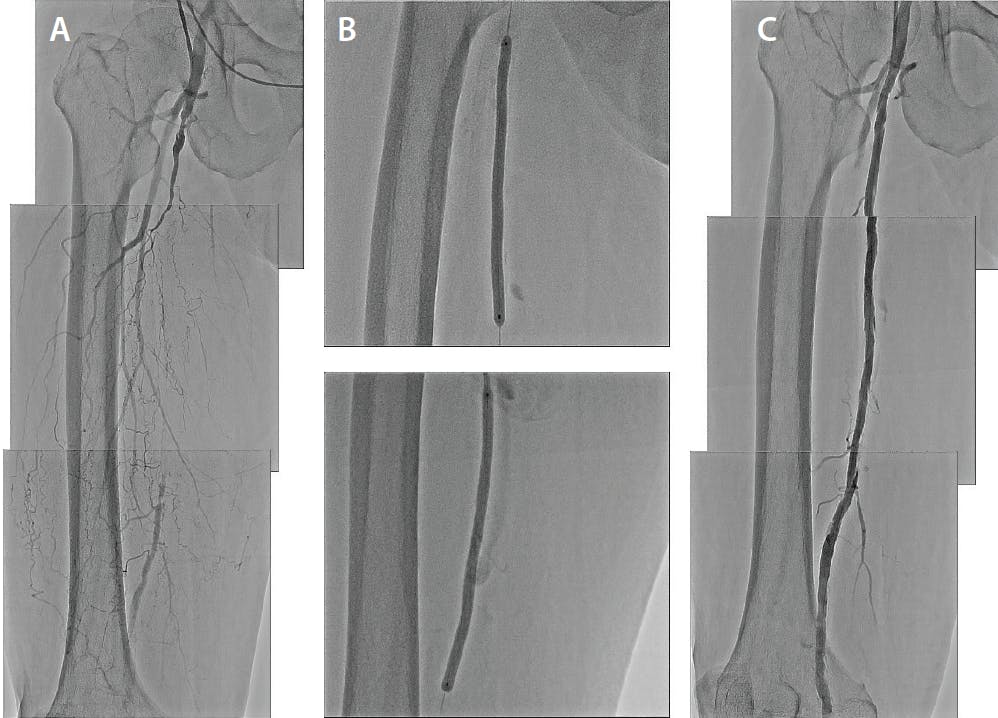
Figure 2. Angiography before treatment showing a CTO in the right SFA (A). Balloon dilatation was performed two times with a Chocolate™* PTA balloon (5 X 120 mm) (B). After balloon angioplasty, angiography showed sufficient vessel dilatation without major vessel dissection (C).
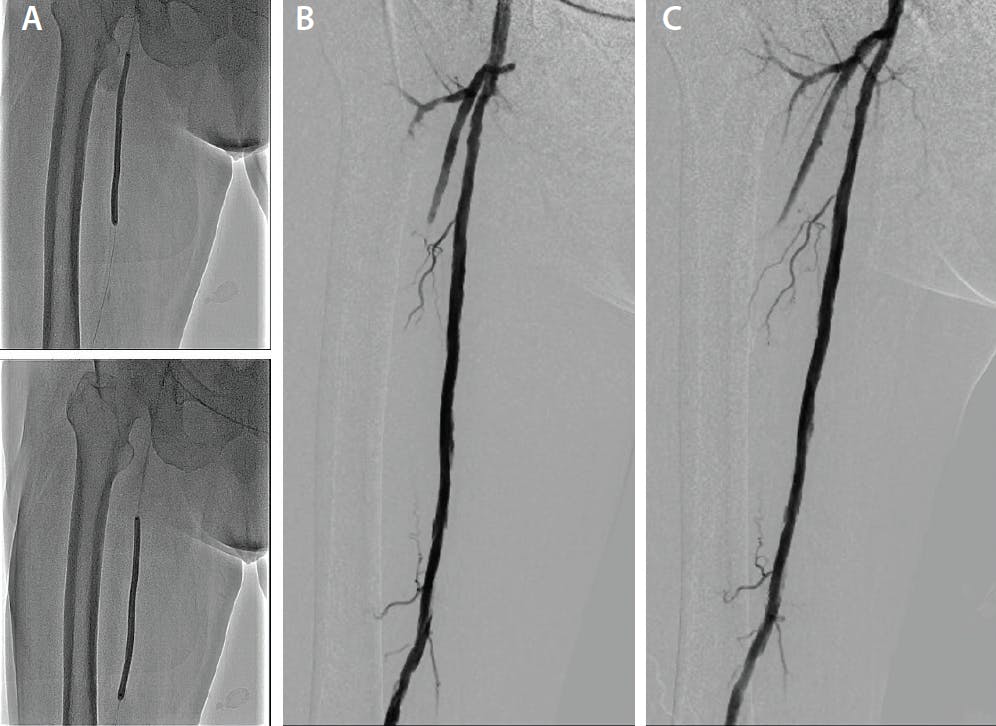
Figure 3. Balloon dilatation was performed two times with an IN.PACT™ Admiral™ DCB† (5 X 150 mm) (A). On anteroposterior and left anterior oblique 30° views, final digital subtraction angiography showed sufficient vessel expansion and no major vessel dissection (B, C).
At approximately 10 months postprocedure, no recurrence of symptoms were observed.
DISCUSSION
In endovascular therapies for femoropopliteal lesions, a significant proportion of patients benefit from a “leave nothing behind” strategy, such as those with small vessels, non-stenting zones, and younger age. However, DCB angioplasty alone is insufficient without successful vessel preparation as supported by the high bailout stent rate in studies of DCB angioplasty.2,3 The Chocolate™* PTA balloon was designed to sufficiently expand blood vessels while minimizing vessel dissection.
Conventional balloons impart torsional stresses through a twisting motion during unfolding, radial stresses outwardly during expansion, and longitudinal stresses during inflation and elongation (Figure 4). In contrast, the Chocolate™* PTA balloon utilizes a nitinol-constraining structure that protects the vessel wall during inflation. Additionally, once at nominal pressure, the nitinol cage limits the expansion of the balloon and creates pillows and grooves to provide uniform, predictable, and atraumatic dilatation. These pillows allow for vessel dilatation without cutting or scoring, while the grooves provide stress relief and plaque modification.
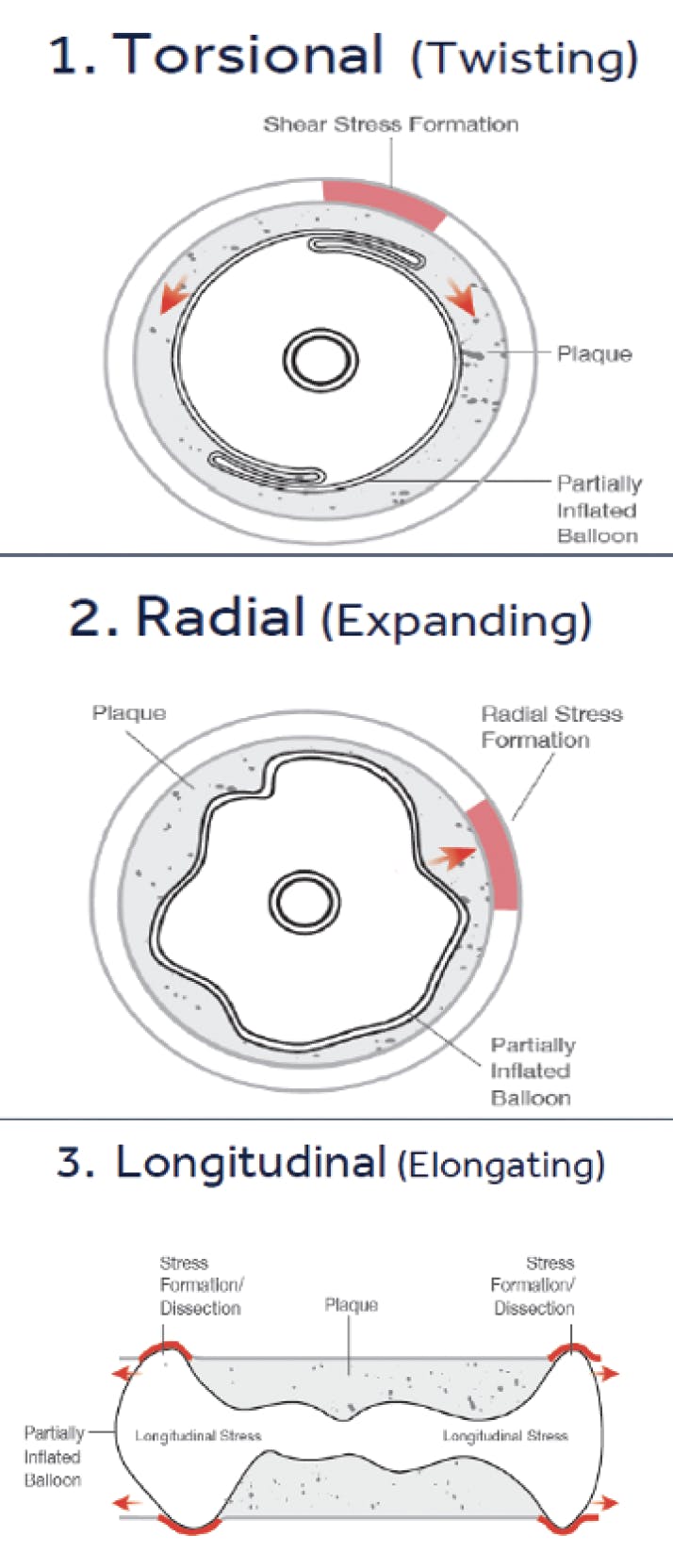
Figure 4. Reprinted from Ward C, Mena-Hurtado C. Novel use of pillows and grooves: the Chocolate™* PTA balloon catheter. Endovasc Today. 2014;13:24-28.
CONCLUSION
Our Choco PAC strategy includes vessel preparation with the Chocolate™* PTA balloon, followed by angioplasty with the IN.PACT™ Admiral™ DCB†. In our experience, the Choco PAC strategy provides good clinical outcomes following DCB angioplasty, even in cases of CTOs. We have found that the Chocolate™* PTA balloon is an effective preparation device for DCB angioplasty and has helped us provide durable patient outcomes.
†In the European Union, the approved product name for the IN.PACT™ Admiral™ drug-coated balloon is IN.PACT™ Admiral™ Paclitaxel-coated PTA Balloon Catheter.
™*Third party brands are trademarks of their respective owners.
UC202211688IE ©2022 Medtronic. All rights reserved. Medtronic, Medtronic logo are trademarks of Medtronic. All other brands are trademarks of a Medtronic company. 2/2022
1. Feldman DN, Armstrong EJ, Aronow HD, et al. SCAI consensus guidelines for device selection in femoral-popliteal arterial interventions. Catheter Cardiovasc Interv. 2018;92:124-140. doi: 10.1002/ccd.27635
2. Zeller T, Brodmann M, Micari A, et al. Drug-coated balloon treatment of femoropopliteal lesions for patients with intermittent claudication and ischemic rest pain. Circ Cardiovasc Interv. 2019;12:e007730. doi: 10.1161/CIRCINTERVENTIONS.118.007730
3. Tepe G, Micari A, Keirse K, et al. Drug-coated balloon treatment for femoropopliteal artery disease: the chronic total occlusion cohort in the IN.PACT Global Study. JACC Cardiovasc Interv. 2019;12:484-493. doi: 10.1016/j.jcin.2018.12.004
4. Kokkinidis DG, Armstrong EJ. Emerging and future therapeutic options for femoropopliteal and infrapopliteal endovascular intervention. Interv Cardiol Clin. 2017;6:279-295. doi: 10.1016/j.iccl.2016.12.011
5. Tosaka A, Soga Y, Iida O, et al. Classification and clinical impact of restenosis after femoropopliteal stenting. J Am Coll Cardiol. 2012;59:16-23. doi: 10.1016/j.jacc.2011.09.036
6. Tan M, Urasawa K, Koshida R, et al. Comparison of angiographic dissection patterns caused by long vs short balloons during balloon angioplasty of chronic femoropopliteal occlusions. J Endovasc Ther. 2018;25:192-200. doi: 10.1177/1526602818756610
7. Horie K, Tanaka A, Taguri M, et al. Impact of prolonged inflation times during plain balloon angioplasty on angiographic dissection in femoropopliteal lesions. J Endovasc Ther. 2018;25:683-691. doi: 10.1177/1526602818799733
8. Sugihara M, Mine K, Futami M, et al. Efficacy of super slow inflation as lesion preparation for drug-coated balloons in femoropopliteal lesions. Circ Rep. 2020;2:682-690. doi: 10.1253/circrep.CR-20-0095
9. Sirignano P, Mansour W, d’Adamo A, et al. Early experience with a new concept of angioplasty nitinol-constrained balloon catheter (Chocolate®) in severely claudicant patients. Cardiovasc Intervent Radiol. 2018;41:377-384. doi: 10.1007/s00270-017-1840-9
10. Mustapha JA, Lansky A, Shishehbor M, et al. A prospective, multi-center study of the Chocolate balloon in femoropopliteal peripheral artery disease: the Chocolate BAR registry. Catheter Cardiovasc Interv. 2018;91:1144-1148. doi: 10.1002/ccd.27565
Indications, Safety, and Warnings
If you are located in the United States, please refer to the brief statements below to review applicable indications, safety and warning information. See the device manual for detailed information regarding the instructions for use, indications, contraindications, warnings, precautions, and potential complications/adverse events. For further information, please call Medtronic at 1.763.514.4000 and/or consult the Medtronic website at www.medtronic.com.
If you are located in Japan, please refer to the product’s electronic package insert for information on purpose of use and effect, instructions for use, precautions including warnings and contraindications, and information on potential adverse events.
If you are located outside the United States or Japan, see the device manual for detailed information regarding instructions for use, indications, contraindications, warnings, precautions, and potential adverse events. For further information, contact your local Medtronic representative and/or consult the Medtronic website at www.medtronic.com and select your appropriate country/region.
Chocolate™* PTA Balloon
Important Information: Indications, contraindications, warnings and instructions for use can be found in the product labelling supplied with each device.
Indications for Use: The Chocolate™* PTA Balloon Catheter is intended for balloon dilatation of lesions in the peripheral vasculature, including the iliac, femoral, ilio-femoral, popliteal, infra-popliteal, and renal arteries.
Caution: Federal (USA) law restricts this product for sale by or on the order of a physician.
IN.PACT™ Admiral™ Drug-Coated Balloon
Indications for Use: The IN.PACT™ Admiral™ Paclitaxel-coated PTA Balloon Catheter is indicated for percutaneous transluminal angioplasty, after appropriate vessel preparation, of de novo, restenotic, or in-stent restenotic lesions with lengths up to 360 mm in superficial femoral or popliteal arteries with reference vessel diameters of 4-7 mm.
Contraindications
The IN.PACT Admiral DCB is contraindicated for use in:
- Coronary arteries, renal arteries, and supra-aortic/cerebrovascular arteries
- Patients who cannot receive recommended antiplatelet and/or anticoagulant therapy
- Patients judged to have a lesion that prevents complete inflation of an angioplasty balloon or proper placement of the delivery system
- Patients with known allergies or sensitivities to paclitaxel
- Women who are breastfeeding, pregnant or are intending to become pregnant or men intending to father children. It is unknown whether paclitaxel will be excreted in human milk and whether there is a potential for adverse reaction in nursing infants from paclitaxel exposure.
Warnings
- A signal for increased risk of late mortality has been identified following the use of paclitaxel-coated balloons and paclitaxel-eluting stents for femoropopliteal arterial disease beginning approximately 2-3 years post-treatment compared with the use of non-drug coated devices. There is uncertainty regarding the magnitude and mechanism for the increased late mortality risk, including the impact of repeat paclitaxel-coated device exposure. Physicians should discuss this late mortality signal and the benefits and risks of available treatment options with their patients.
- Use the product prior to the Use-by Date specified on the package.
- Contents are supplied sterile. Do not use the product if the inner packaging is damaged or opened.
- Do not use air or any gaseous medium to inflate the balloon. Use only the recommended inflation medium (equal parts contrast medium and saline solution).
- Do not move the guidewire during inflation of the IN.PACT Admiral DCB.
- Do not exceed the rated burst pressure (RBP). The RBP is 14 atm (1419 kPa) for all balloons except the 200 and 250 mm balloons. For the 200 and 250 mm balloons the RBP is 11 atm (1115 kPa). The RBP is based on the results of in vitro testing. Use of pressures higher than RBP may result in a ruptured balloon with possible intimal damage and dissection.
- The safety and effectiveness of using multiple IN.PACT Admiral DCBs with a total drug dosage exceeding 34,854 µg of paclitaxel in a patient has not been clinically evaluated.
Precautions
- This product should only be used by physicians trained in percutaneous transluminal angioplasty (PTA).
- This product is designed for single patient use only. Do not reuse, reprocess, or resterilize this product. Reuse, reprocessing, or resterilization may compromise the structural integrity of the device and/or create a risk of contamination of the device, which could result in patient injury, illness, or death.
- Assess risks and benefits before treating patients with a history of severe reaction to contrast agents.
- The safety and effectiveness of the IN.PACT Admiral DCB used in conjunction with other drug-eluting stents or drug-coated balloons in the same procedure or following treatment failure has not been evaluated.
- The extent of the patient’s exposure to the drug coating is directly related to the number of balloons used. Refer to the Instructions for Use (IFU) for details regarding the use of multiple balloons and paclitaxel content.
- The use of this product carries the risks associated with percutaneous transluminal angioplasty, including thrombosis, vascular complications, and/or bleeding events
- Vessel preparation using only pre-dilatation was studied in the clinical study. Other methods of vessel preparation, such as atherectomy, have not been studied clinically with IN.PACT Admiral DCB.
- This product is not intended for the expansion or delivery of a stent.
Potential Adverse Effects
- The potential adverse effects (e.g. complications) associated with the use of the device are: abrupt vessel closure; access site pain; allergic reaction to contrast medium, antiplatelet therapy, or catheter system components (materials, drugs, and excipients); amputation/loss of limb; arrhythmias; arterial aneurysm; arterial thrombosis; arteriovenous (AV) fistula; death; dissection; embolization; fever; hematoma; hemorrhage; hypotension/hypertension; inflammation; ischemia or infarction of tissue/organ; local infection at access site; local or distal embolic events; perforation or rupture of the artery; pseudoaneurysm; renal insufficiency or failure; restenosis of the dilated artery; sepsis or systemic infection; shock; stroke; systemic embolization; vessel spasms or recoil; vessel trauma which requires surgical repair.
- Potential complications of peripheral balloon catheterization include, but are not limited to the following: balloon rupture; detachment of a component of the balloon and/or catheter system; failure of the balloon to perform as intended; failure to cross the lesion.
- Although systemic effects are not anticipated, potential adverse events that may be unique to the paclitaxel drug coating include, but are not limited to: allergic/immunologic reaction; alopecia; anemia; gastrointestinal symptoms; hematologic dyscrasia (including leucopenia, neutropenia, thrombocytopenia); hepatic enzyme changes; histologic changes in vessel wall, including inflammation, cellular damage, or necrosis; myalgia/arthralgia; myelosuppression; peripheral neuropathy.
- Refer to the Physician’s Desk Reference for more information on the potential adverse effects observed with paclitaxel. There may be other potential adverse effects that are unforeseen at this time.
- Please reference appropriate product Instructions for Use for a detailed list of indications, warnings, precautions and potential adverse effects. This content is available electronically at www.manuals.medtronic.com.
CAUTION: Federal (USA) law restricts this device to sale by or on the order of a physician.
Advertisement
Advertisement