Advertisement
Advertisement
March 2022
Sponsored by Inari Medical
Long-Term Consequences of DVT: Is Mechanical Thrombectomy the Answer?
Despite challenging patient presentations, the ClotTriever System shows great promise in patients with recurrent deep vein thrombosis, chronic thrombus, and venous ulcers.
With Dustin Harmon, DO, FACC; Michael Larone Campbell, MD; and Angelo G. Marino, DO



One to three of every 1,000 people develop deep vein thrombosis (DVT) in the United States annually,1 resulting in nearly 350,000 hospitalizations.2 Current guidelines recommend anticoagulation—a conservative therapy—to treat DVT,3 which may prevent further thrombus from forming but does not dissolve existing thrombus. Residual thrombus left behind after conservative therapies has been shown to double the chance of recurrent venous thromboembolism (VTE)4 and postthrombotic syndrome (PTS).5
PTS is a frequent, long-term complication that develops in up to 50% of patients with DVT.6 Patients are likely to experience pain, swelling, skin discoloration, and skin peeling, and that is only the beginning. In the limb where the original DVT occurred, patients eventually have heaviness, pain, itching, cramps, paresthesia, edema, and, in the most severe cases, venous ulcers with concomitant risk of amputation.
Understandably, patients with PTS have a reduced quality of life (QOL).7 Those with moderate PTS may experience a QOL worse than that of a patient with chronic lung disease, diabetes, or arthritis. For those with severe PTS, QOL is similar to that of a patient with cancer or congestive heart failure.8
Management and treatment of patients with worsening venous disease add to the health care burden and result in up to a 45% increase in medical expenditure.9 Adding to the economic costs are missed work and unemployment. Almost 90% of PTS patients are unable to work 10 years after diagnosis, and for those with venous leg ulcers, it is estimated that 2 million workdays are lost annually in the United States.7
Conservative therapies have shown mixed results in addressing PTS in patients with residual thrombus. Anticoagulation and compression stockings are often used, but neither treatment prevents the occurrence of PTS or influences the severity of PTS or rate of recurrent VTE. Thrombolytics have their limitations—they cannot break up chronic collagenous thrombus and are therefore not an option for many of these patients.
In patients who have already developed PTS, the available treatments are the same conservative therapies with their limitations (with the exception of open surgical procedures that are used only in rare circumstances) and, in the case of thrombolytics, the same inability to dissolve chronic thrombus. Unfortunately, there is no evidence of a permanent solution for these patients, only symptom management. Patients with long-term DVT who may have PTS are left with the debilitating consequences of this disease.
Endovascular interventions of the future must be able to reduce the potential for recurrent thrombotic episodes and ultimately serve to reverse long-term consequences of DVT. These devices must aim to remove chronic thrombus while regaining lumen size. Could mechanical thrombectomy play a role in treating these patients?
THE CLOTTRIEVER SYSTEM
The ClotTriever System (Inari Medical) is designed for use in the peripheral vasculature for the treatment of DVT10 in a single session, without the need for thrombolytics or intensive care unit (ICU) monitoring. It has been shown that acute, subacute, and chronic thrombus can be successfully removed using this system.11
The ClotTriever System has two main components: the ClotTriever sheath, with an integrated funnel to facilitate thrombus removal, and the ClotTriever catheter, with an atraumatic nitinol coring element and mesh collection bag (Figure 1). When the ClotTriever catheter is introduced through the ClotTriever sheath and advanced over a guidewire beyond the thrombus, the nitinol coring element and mesh collection bag are expanded into the vessel. As the ClotTriever is retracted, the coring element dislodges thrombus, capturing it in the collection bag and removing it from the patient.
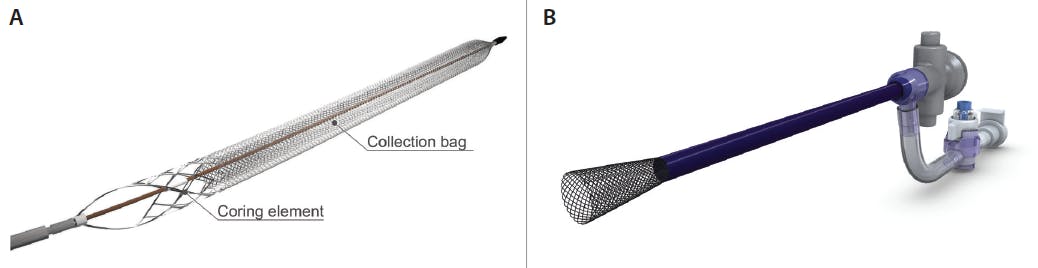
Figure 1. ClotTriever sheath (A) and catheter (B).
The ClotTriever BOLD catheter was recently added to the ClotTriever System and is compatible with the ClotTriever sheath. The ClotTriever BOLD catheter features the same atraumatic nitinol coring element as the original ClotTriever catheter with approximately 30% greater radial force, allowing it to better engage and remove thrombus. As an additional tool in the tool kit, the ClotTriever BOLD catheter may be used at the physician’s discretion, especially in cases of more chronic DVT.
This article highlights three cases in which the ClotTriever System was used in patients with recurrent DVT, chronic thrombus, and venous ulcers. The results demonstrate that mechanical thrombectomy shows promise in treating these severe patient presentations, leading to immediate and long-term symptom relief, improvement in a patient’s QOL, and reduced health care burden.
1. Kahn SR, Comerota AJ, Cushman M, et al; American Heart Association Council on Peripheral Vascular Disease, Council on Clinical Cardiology, and Council on Cardiovascular and Stroke Nursing. The postthrombotic syndrome: evidence-based prevention, diagnosis, and treatment strategies: a scientific statement from the American Heart Association. Circulation. 2014;130:1636-1661. Published correction appears in Circulation. 2015;131:e359. doi: 10.1161/CIR.0000000000000130
2. Centers for Disease Control and Prevention (CDC). Venous thromboembolism in adult hospitalizations - United States, 2007-2009. MMWR Morb Mortal Wkly Rep. 2012;61:401-404.
3. Stevens SM, Woller SC, Baumann Kreuziger L, et al. Executive summary: antithrombotic therapy for VTE disease: second update of the CHEST guideline and expert panel report. Chest. 2021;160:2247-2259. doi: 10.1016/j.chest.2021.07.056
4. Young L, Ockelford P, Milne D, et al. Post-treatment residual thrombus increases the risk of recurrent deep vein thrombosis and mortality. J Thromb Haemost. 2006;4:1919-1924. doi: 10.1111/j.1538-7836.2006.02120.x
5. Dronkers CEA, Mol GC, Maraziti G, et al. Predicting post-thrombotic syndrome with ultrasonographic follow-up after deep vein thrombosis: a systematic review and meta-analysis. Thromb Haemost. 2018;118:1428-1438. doi: 10.1055/s-0038-1666859
6. Kahn SR. The post-thrombotic syndrome. Hematology Am Soc Hematol Educ Program. 2016;2016:413-418. doi: 10.1182/asheducation-2016.1.413
7. Kahn SR, Ginsberg JS. Relationship between deep venous thrombosis and the postthrombotic syndrome. Arch Intern Med. 2004;164:17-26. doi: 10.1001/archinte.164.1.17
8. Baldwin MJ, Moore HM, Rudarakanchana N, et al. Post-thrombotic syndrome: a clinical review. J Thromb Haemost. 2013;11:795-805. doi: 10.1111/jth.12180
9. Guanella R, Ducruet T, Johri M, et al. Economic burden and cost determinants of deep vein thrombosis during 2 years following diagnosis: a prospective evaluation. J Thromb Haemost. 2011;9:2397-2405. doi: 10.1111/j.1538-7836.2011.04516.x
10. US Food and Drug Administration. 510(k) premarket notification. Accessed January 24, 2022. https://www.accessdata.fda.gov/scripts/cdrh/cfdocs/cfpmn/pmn.cfm?id=K163549
11. Beasley R. An update on the CLOUT registry. Presented at: New Cardiovascular Horizons; June 4, 2021; New Orleans, Louisiana.
Extraction of Chronic Thrombus From a Patient With a Prolonged History of VTE Using the New ClotTriever BOLD Catheter
By Dustin Harmon, DO, FACC
PATIENT PRESENTATION
A woman in her mid-60s presented to the emergency department (ED) with weakness, worsening shortness of breath (SOB), intermittent chest discomfort with inhalation, associated nausea, and cough. The patient had a history of VTE that included a pulmonary embolism (PE) 10 months before. Although she had been on apixaban, she stopped after 3 months due to financial constraints and had experienced ongoing SOB ever since. She was tachycardic but stable on evaluation in the ED. The patient had a history of uncontrolled diabetes and had been treated with chemotherapy for endometrial cancer roughly 5 weeks before presenting. Her hemoglobin was low, and she was chronically anemic due to the cancer.
CTA showed bilateral PE, significant right heart strain with a right ventricular/left ventricular ratio of 1.25, and large thrombus burden in the inferior vena cava (IVC) and bilateral iliac veins. The patient was treated successfully using the FlowTriever System (Inari Medical) to remove a large PE on the left and clear thrombus from the IVC and left iliac vein. No treatment was performed on the right pulmonary artery.
At that point, a duplex ultrasound of the lower extremities confirmed that extensive thrombus burden remained on the right, from the popliteal vein (PV) to the common femoral vein (CFV), which would require mechanical thrombectomy for further therapeutic benefit. The patient was continued on anticoagulation and scheduled for treatment with the ClotTriever System 36 hours later.
PROCEDURAL OVERVIEW
The patient was brought to the cardiac catheterization lab for the procedure. Her right PV was accessed under ultrasound guidance, and an 8-F Pinnacle Precision sheath (Terumo Interventional Systems) was inserted. A Glidewire Advantage guidewire (Terumo Interventional Systems) was advanced through the sheath into the right subclavian vein. Intravascular ultrasound (IVUS) was performed, which showed a patent IVC and patent right iliac vein. Significant thrombus burden was noted throughout the right femoral vein (FV; Figure 1A and 1B) and right PV. It was decided that the ClotTriever BOLD catheter would be used.
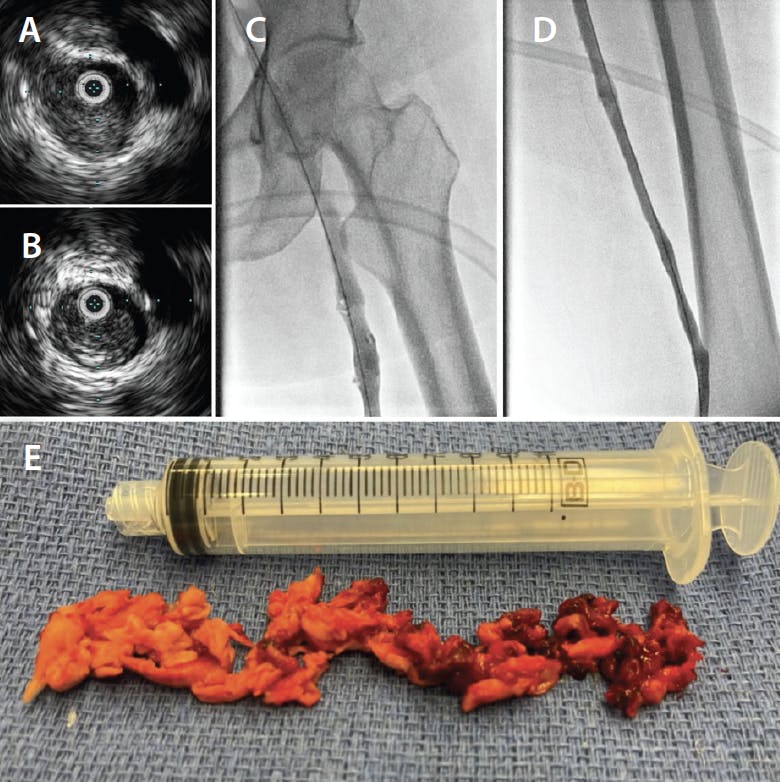
Figure 1. IVUS performed prior to the ClotTriever procedure revealed significant thrombus burden in the right FV (A, B). Postprocedure venography demonstrated a patent right CFV (C) and patent right PV (D). Chronic thrombus extracted using the ClotTriever BOLD catheter (E).
The 8-F sheath was removed, and a 16-F dilator was advanced into the PV. The dilator was then removed, and the ClotTriever sheath was introduced. The ClotTriever BOLD catheter was inserted through the sheath and advanced beyond the thrombus where the nitinol coring element and mesh collection bag were expanded. The ClotTriever BOLD catheter was then retracted, capturing a large amount of chronic thrombus in the collection bag.
Two additional passes were performed with the ClotTriever System, successfully extracting significant thrombus burden from the FV to the PV (Figure 1E). The ClotTriever BOLD catheter was then removed, and the 8-F Pinnacle Precision sheath was placed into the ClotTriever sheath. At that point, a venogram was obtained that demonstrated a patent right CFV (Figure 1C) and right PV (Figure 1D). A figure-of-eight suture was placed, and the ClotTriever sheath was then removed. The procedure time was 31 minutes.
The patient experienced immediate, on-table relief from her symptoms and stated that her legs felt better. Hemostasis was achieved, and she was returned to her bed in the telemetry unit. After 2 days, she was discharged from the hospital to a subacute rehabilitation facility in stable and improved condition.
DISCUSSION
We treated a patient with DVT and recurrent VTE with mechanical thrombectomy using the ClotTriever BOLD catheter, which extracted significant amounts of chronic thrombus. After the patient stopped her home anticoagulation regimen, she developed symptoms consistent with acute PE, which was treated first with the FlowTriever System. The DVT procedure was performed in one short session, with no need for an ICU stay or further intensive monitoring, and the patient was discharged 2 days later.
This case demonstrates the importance of assessing concomitant DVT status in PE patients. According to numerous studies, concomitant DVT is highly prevalent, occurring in up to 90% of acute PE patients,1 with 50% to 60% having proximal DVT.2-4 PE patients with concomitant DVT have a two times higher risk of mortality4,5 and a four times higher risk of VTE recurrence5 than those without concomitant DVT. These data, and this case in particular, highlight the need to look for residual thrombus in the lower extremities when evaluating a PE patient.
Given the patient’s history, it was also not surprising that the extracted thrombus was chronic, suggesting that although the most recent VTE event appeared to be sudden, the thrombus had been there for some time. Nevertheless, the ClotTriever System was very effective at removing this chronic thrombus and made the overall procedure effortless.
1. Nishiwaki S, Morita Y, Yamashita Y, et al; COMMAND VTE Registry Investigators. Impact of no, distal, and proximal deep vein thrombosis on clinical outcomes in patients with acute pulmonary embolism: from the COMMAND VTE registry. J Cardiol. 2021;77:395-403. doi: 10.1016/j.jjcc.2020.10.019
2. Becattini C, Cohen AT, Agnelli G, et al. Risk stratification of patients with acute symptomatic pulmonary embolism based on presence or absence of lower extremity DVT: systematic review and meta-analysis. Chest. 2016;149:192-200. doi: 10.1378/chest.15-0808
3. Hirmerova J, Seidlerova J, Chudacek Z. The prevalence of concomitant deep vein thrombosis, symptomatic or asymptomatic, proximal or distal, in patients with symptomatic pulmonary embolism. Clin Appl Thromb Hemost. 2018;24:1352-1357. doi: 10.1177/1076029618779143
4. Nishiwaki S, Yamashita Y, Morita Y, et al. Abstract 12827: impact of concomitant deep vein thrombosis on clinical outcomes in patients with acute pulmonary embolism. Circulation. 2019;140(suppl 1):A12827
5. Jiménez D, Aujesky D, Díaz G, et al; RIETE Investigators. Prognostic significance of deep vein thrombosis in patients presenting with acute symptomatic pulmonary embolism. Am J Respir Crit Care Med. 2010;181:983-991. doi: 10.1164/rccm.200908-1204OC
Chronic Thrombus Extracted From Patient’s Bilateral Lower Extremities After Extended COVID-19 Hospitalization
By Michael Larone Campbell, MD
PATIENT PRESENTATION
A woman in her early 50s with chronic obstructive pulmonary disease and hypertension had been hospitalized at an outside facility for 63 days with COVID-19. Her hospital stay was complicated by acute renal failure requiring hemodialysis, lower extremity DVT, PE, and cellulitis of the right upper extremity that developed after an intravenous infiltration. The patient was only treated with anticoagulation and was eventually discharged on apixaban.
Over the next 2 months, she developed lower extremity DVT and corresponding symptoms of PTS, including leg swelling. The patient also presented with right upper extremity DVT, worsening arm swelling, and SOB that prompted her to go to the ED.
CTA demonstrated bilateral PE, which was treated with anticoagulation therapy. CT also revealed bilateral lower extremity DVT, as well as right upper extremity DVT involving the brachial and subclavian arteries. The interventional radiology (IR) department was consulted to consider placing an IVC filter. On examination by the IR team, the patient was breathing approximately 40 times per minute. The patient had significant lower extremity edema, making pedal pulses difficult to palpate. Her lower extremities were warm and well perfused with intact sensory and motor function. Although her right hand was necrotic with gangrene, she did have a palpable right radial pulse. The patient appeared to be in a hypercoagulable state, possibly related to her COVID-19 infection. A lower extremity duplex ultrasound revealed extensive DVT bilaterally from the tibial veins to the CFVs.
Rather than place a filter, mechanical venous thrombectomy with the ClotTriever System was planned to remove occlusive and nonocclusive thrombus from the bilateral lower extremities.
PROCEDURAL OVERVIEW
The patient was placed in the prone position under conscious sedation, and the right lateral popliteal fossa was prepped and draped.
Real-time ultrasound guidance was used to achieve micropuncture needle access into the right PV; however, the initial attempt to pass an 0.018-inch wire was unsuccessful owing to the significant thrombus burden. Subsequently, an 18-gauge access needle was used, followed by a 0.035-inch guidewire advanced through the needle. The needle was then replaced with a 6-F vascular sheath.
Angiography performed through the sheath confirmed occlusive thrombus in the right PV and FV (Figure 1B). Venography demonstrated patency of the right common iliac vein (CIV) and the IVC without stenosis but demonstrated thrombus within the lower right common external iliac vein (EIV). Access was achieved similarly on the left, where angiography revealed partially occlusive thrombus throughout the left PV and FV (Figure 1A), with minimal thrombus extending to the level of the left CFV. The left CIV and EIV were patent.
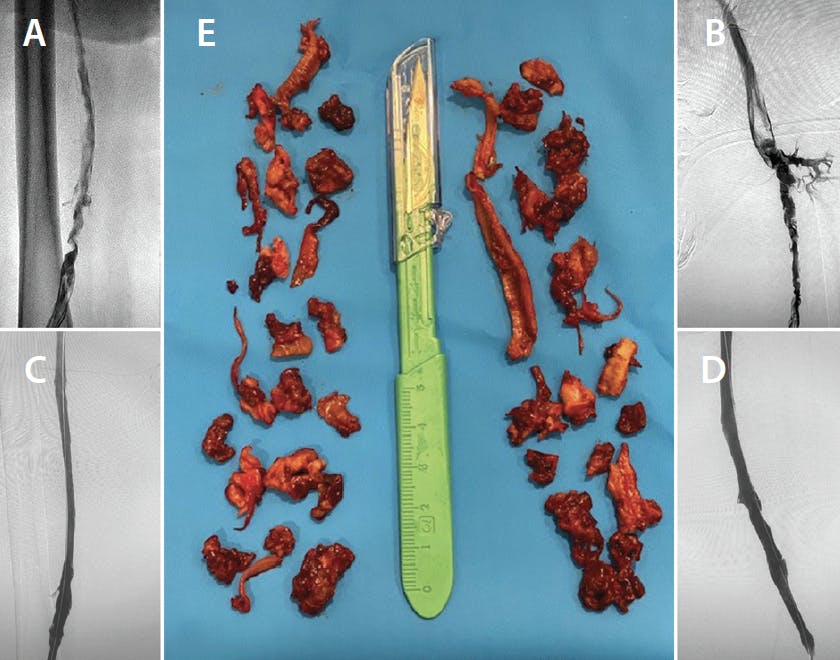
Figure 1. Preprocedure left angiography demonstrated partially occlusive thrombus throughout the left PV and SFV (A). Preprocedure angiography of the right SFV, CFV, and distal EIV revealed a large thrombus extending into the EIV (B). After mechanical thrombectomy with the ClotTriever System, angiography demonstrated patency of the left (C) and right (D) PV and SFV. Chronic thrombus extracted from the left and right lower extremities (E).
A catheter was placed through the sheath on the right, and an 0.035-inch Amplatz wire was advanced into the right subclavian vein before the sheath was removed. After serial dilations, a 13-F ClotTriever sheath was introduced into the right PV, and balloon angioplasty was performed to allow the integrated funnel to expand. The ClotTriever catheter was advanced over the wire and placed just above the cranial aspect of the thrombus in the right CFV, where the ClotTriever collection bag and coring element were deployed. The expanded ClotTriever catheter was pulled back through the CFV, superficial femoral vein (SFV), and PV, coring and extracting substantial subacute and chronic thrombus from the patient. In total, four passes were performed on the right with the ClotTriever System.
Postthrombectomy angiography confirmed an excellent outcome with restored patency of the right PV, SFV, and CFV (Figure 1D). No significant residual thrombosis and no underlying stenosis were observed. The right iliac veins remained patent.
Similar steps were performed in the left lower extremity. After three passes with the ClotTriever System, substantial subacute and chronic thrombus was retrieved from the left CFV, FV, and PV. Postthrombectomy angiography demonstrated an excellent outcome, with patency restored to the left FV, CFV, EIV, and CIV (Figure 1C). The IVC remained patent.
A total of seven passes with the ClotTriever System removed chronic thrombus from the bilateral lower extremities (Figure 1E). Estimated blood loss for the procedure was negligible at 20 mL. Satisfied with the outcome, both sheaths were removed, and hemostasis was achieved with purse-string sutures on the right and left.
The procedure went well without complication, and there was a noticeable decrease in swelling immediately postprocedure. The procedure was performed in a single 45-minute session without thrombolytic drugs, and no ICU stay was needed.
The patient underwent partial amputation of her necrotic fingers and was discharged 4 days later.
DISCUSSION
After an extended battle with COVID-19, a patient presented with symptoms of PTS, including upper and lower extremity swelling and pain, as well as SOB and a necrotic hand. This was an extremely difficult presentation with recurrent VTE that had worsened since her earlier hospital stay and was likely made up of chronic thrombus: collagen-rich material that thrombolytic treatment would fail to dissolve. Despite the complexities of the patient’s extensive disease, the ClotTriever System, a mechanical thrombectomy system, was used to successfully extract substantial amounts of subacute and chronic thrombus in a single session, with minimal blood loss. As the majority of thrombus had been removed with the ClotTriever System, filter placement was deemed unnecessary. The procedure was uneventful, with no further complications. No residual thrombus or underlying stenosis were observed. Patency and flow were restored, and symptoms improved immediately after the procedure, giving the patient some relief from the long-term consequences of DVT.
Lower Extremity Venous Ulcer Healed After Complex Mechanical Thrombectomy Procedure With the ClotTriever System
By Angelo G. Marino, DO
PATIENT PRESENTATION
A woman in her early 80s presented to the ED after a visiting nurse discovered maggots in the weeping wounds of a left lower extremity venous ulcer. The patient had a complex medical history that included asthma, hypertension, diabetes mellitus, coronary artery disease, and non–ST-segment elevation myocardial infarction. A Denali IVC filter (BD Interventional) had been placed in 2018, and in the years since, the patient developed chronic bilateral lower extremity swelling. Over the previous 6 months, she developed a nonhealing ulcer and verrucous phlebolymphedema, and over the previous 3 to 4 weeks, she became unable to ambulate secondary to pain and swelling.
Venous duplex ultrasound of the bilateral lower extremities revealed extensive DVT in both EIVs to the tibioperoneal trunk. A CT venogram showed thrombus extending from the infrarenal IVC filter through the bilateral lower extremity venous vasculature. There was no thrombosis above the filter or in the renal veins; however, one of the IVC filter struts extended into the right gonadal vein. It was determined that the patient would be treated with mechanical thrombectomy of the IVC, iliac, and bilateral lower extremities using the ClotTriever System and the FlowTriever System, and the IVC filter would be replaced. A nontraditional technique was planned to prevent engagement with the IVC filter.
PROCEDURAL OVERVIEW
The patient was first placed supine on the interventional table, and ultrasound guidance was used to achieve access to the right internal jugular (IJ) vein from a transverse approach. A 14-F, 45-cm sheath was advanced and placed just caudal to the IVC filter legs. The patient was then turned prone, and the bilateral PVs were accessed under ultrasound guidance.
Bilateral venograms confirmed occlusive thrombus (Figure 1A and 1B). In both the right and left PVs, a 0.035-inch Glidewire Advantage was advanced into the IVC above the level of the filter with the aid of a 5-F glide catheter. A 20-mm Amplatz GooseNeck snare kit (Medtronic) with a loop was advanced through the IJ vein sheath to snare the guidewires, which then exited through the right IJ access site.
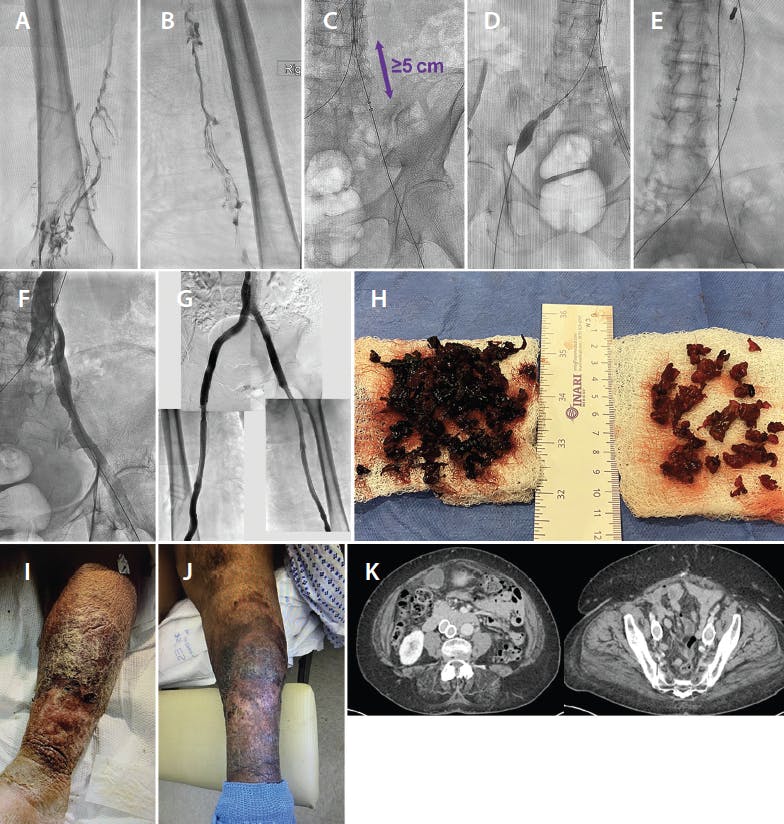
Figure 1. Preprocedure bilateral venograms taken in the prone position confirmed occlusive thrombus from the popliteal through the FVs on the left (A) and right (B). A ClotTriever catheter was advanced into the infrarenal IVC and stopped 5 cm below the tip of the right IJ sheath (C). Venoplasty of the lower IVC and left iliac vein revealed a tight waist on the balloon, indicating presence of chronic thrombus (D). “Dueling” ClotTriever catheters engaged the walls of the inferior IVC (E). Repeat venograms of the left lower extremity demonstrated a patent PV, FV, and CFV, with residual nonocclusive thrombus seen in the CFV, CIV, and lower IVC (F). After thrombectomy, brisk in-line flow and washout were seen throughout the bilateral lower extremities and into the IVC (G). Thrombus extracted from the bilateral iliofemoral veins and IVC (H). Compared to venous ulcer images taken preprocedure (I), significant improvement was seen 1 week postprocedure (J). Ultrasound (images not shown) and CT venograms confirmed sustained patency in the lower extremity vessels and iliocaval stents at 1.5 years postprocedure (K).
Thrombus Removal: Right and Left FV, PV, and EIV
After serial dilation of the access sites, the catheters were exchanged for 16-F ClotTriever sheaths. IVUS performed on the right confirmed continuous, true lumen wire positioning and demonstrated extensive, heterogeneous, occlusive thrombus from the level of the filter through the PV. A ClotTriever catheter was inserted over the wire into the right PV and carefully advanced into the infrarenal IVC, stopping 5 cm below the right IJ sheath’s tip (Figure 1C). The ClotTriever collection bag was then tunneled carefully into the IJ sheath, using a nontraditional technique to prevent engagement with the filter while allowing the coring element to open and capture thrombus below. Using this technique, mechanical thrombectomy was performed and repeated several times in the right lower extremity, yielding a large amount of subacute and chronic thrombus from the IVC and right lower extremity.
Venography and IVUS were performed at regular intervals, demonstrating continuous clearing of thrombus, with minimal to no residual thrombus in the right FV to PV and EIV.
Similarly, IVUS showed occlusive thrombus in the left PV extending through the left CIV. The ClotTriever System was successfully used to remove the thrombus, and postprocedure IVUS confirmed minimal to no residual thrombus in the left PV to FV and EIV. However, nearly occlusive thrombus remained in the left profunda FV.
Thrombus Removal: IVC Filter, IVC, and Left Iliac Vein
Subsequently, the right 16-F sheath was exchanged over the wire for a 24-F Triever24 aspiration catheter (Inari Medical). The catheter was advanced to the IVC filter, and multiple rounds of suction embolectomy yielded a moderate amount of subacute and chronic thrombus. A follow-up inferior venacavogram demonstrated reduction of thrombus within the IVC filter. However, a moderate amount of residual IVC thrombus was present, as well as large thrombus extending into the lower IVC from the left CIV. A 2-0 nylon purse-string suture was placed for hemostasis given the size differences between the 24-F catheter and 16-F sheath.
At this point, repeat mechanical thrombectomy of the lower IVC and left CIV was performed, followed by pelvic venography demonstrating severe stenosis at the origin of the EIV, which was confirmed with IVUS. The residual thrombus appeared more chronic.
Serial venoplasty of the lower IVC and left iliac vein was performed (Figure 1D), followed by repeat bilateral thrombectomy of the lower IVC and left iliac vein using the ClotTriever catheter. Repeat venography of the lower IVC and left iliac veins demonstrated decreased thrombus burden; however, a large residual thrombus was present in the lower IVC, and a small amount was present in the iliac veins. The decision was made to proceed with IVC filter retrieval and repeat thrombectomy of the lower IVC.
Filter Retrieval and Placement of New Filter
The 20-mm GooseNeck snare was advanced through the right IJ vein sheath, and the filter hook was captured. XL FlowTriever disks (Inari Medical; 25 mm) were introduced through the right PV sheath and deployed in the suprarenal IVC for embolic protection. The filter was then carefully retrieved from the infrarenal IVC.
A contrast venacavogram obtained through the right IJ confirmed absence of thrombus within the suprarenal FlowTriever disks. Next, new XL FlowTriever disks were deployed in the suprarenal IVC for embolic protection because the FlowTriever disks from the PV access were removed. The Glidewire Advantage wires from the PV sheaths were advanced into the right subclavian veins.
The inferior IVC was noted to be approximately 32 mm in diameter. Therefore, two side-by-side ClotTriever catheters were used to fully engage the walls (Figure 1E). IVC and bilateral lower extremity mechanical thrombectomy was performed several times, removing a large amount of thrombus. The ClotTriever catheters were inserted through both PVs and pulled simultaneously down through the IVC and bilateral lower extremities. Follow-up bilateral lower extremity venograms, an inferior venacavogram, and IVUS demonstrated significant improvements, with only a small amount of wall-adherent nonocclusive thrombus in the lower IVC and left iliac veins. Repeat venoplasty of the left CIV and EIV was performed.
Repeat thrombectomy with the ClotTriever via left PV access yielded additional chronic thrombus. Repeat left lower extremity and iliac venograms and an inferior venacavogram demonstrated a patent left lower extremity PV, FV, and CFV, with residual nonocclusive thrombus present in the CFV, CIV, and lower IVC (Figure 1F). No thrombus was noted around the FlowTriever disks in the suprarenal IVC, and the decision was made to proceed with iliocaval stenting.
The FlowTriever disks were removed, and a Günther Tulip filter (Cook Medical) was inserted through the right IJ vein sheath and partially deployed.
Bilateral 16-mm Venovo kissing stents (BD Interventional) were placed, extending from just below the renal veins and into the CFVs, and were then postdilated using kissing balloons. Subsequent venograms with IVUS showed no significant residual thrombus and brisk in-line flow and washout through the bilateral lower extremities into the IVC (Figure 1G).
The Günther Tulip IVC filter was then fully deployed. All sheaths were removed, and hemostasis was achieved with 2-0 nylon purse-string sutures. A significant amount of thrombus had been extracted during the procedure (Figure 1H), and blood loss was < 50 mL. The patient appeared to tolerate the procedure well.
At 1 week postprocedure, the ulcers showed significant improvement and a substantial decrease in swelling (Figure 1I and 1J). At 3 months postprocedure, the patient’s lower extremity swelling was almost completely resolved, and her ulcers continued to improve. At her most recent follow-up 1.5 years later (Figure 1K), the patient reported that she can now walk without any leg pain and has become significantly more active.
DISCUSSION
Venous ulcers affect > 20 million people in the United States, with 1% to 2% of these patients experiencing CEAP (clinical, etiology, anatomy, pathophysiology) 5 and 6 disease. That percentage increases to 5% for patients aged > 65 years. In fact, up to 4% of patients aged > 65 years have an active venous ulcer.1 Timely diagnosis and treatment of venous outflow and obstruction are critical to healing.2
In the presented case, an elderly patient with a history of VTE had leg swelling for > 6 months that caused her to lose the ability to walk and led to more advanced symptoms of PTS, including the formation of bilateral CEAP 6, nonhealing ulcers. Low filter placement in response to a left lower extremity DVT 2 years before had contributed to additional thrombus formation and occlusion from the IVC down through the bilateral PVs.
This complex case was well planned, using “dueling” ClotTrievers to maximize thrombus extraction and clear the way for full iliocaval reconstruction from the bilateral CFV to the renal veins. The immediate increase in flow and patency in the vessels and corresponding stents was sustained out to 1.5 years postprocedure and led to substantial healing of the patient’s ulcers. She regained mobility over time and ultimately experienced an improved QOL.
On a technical note, several similar procedures have been performed since the success of this one, and it is now preferred to keep the patient in the supine position for the duration of the procedure. PV access is achieved with the patient in the prone position, after which the patient is placed on the procedure table in the supine position and the bilateral popliteal access sites, bilateral groins, and right neck are prepped and draped. When venograms/IVUS confirm proper access in the PVs, larger sheaths are placed. This allows all potential access sites to be available for use in complex cases such as this.
1. Crawford JM, Lal BK, Durán WN, Pappas PJ. Pathophysiology of venous ulceration. J Vasc Surg Venous Lymphat Disord. 2017;5:596-605. doi: 10.1016/j.jvsv.2017.03.015
2. De Maeseneer MG, Kakkos SK, Aherne T, et al. European Society for Vascular Surgery (ESVS) 2022 clinical practice guidelines on the management of chronic venous disease of the lower limbs. Eur J Vasc Endovasc Surg. Published online January 10, 2022. doi: 10.1016/j.ejvs.2021.12.024
Advertisement
Advertisement