Advertisement
Advertisement
November 2022 Supplement
Sponsored by Surmodics, Inc.
Practice Profile: Longer Equipment Means 50% Growth in Radial-to-Peripheral Procedures
A conversation with Michael De Luca, MD.
Dr. Michael De Luca, an interventional cardiologist with El Paso Cardiology Associates in El Paso, Texas, performs femoral access procedures about 1% of the time—for the rest, he prefers the radial approach, both for coronary and peripheral cases.
Dr. De Luca didn’t begin this way. As a fellow, he learned about the radial approach but was frustrated by the available tools, noting that the sheaths kept getting stuck in the radial artery. He began doing radial-to-peripheral procedures when radial sheaths became available, but he was still limited by the lengths of balloon catheters. That changed earlier this year, when he started using Sublime™ Radial Access Balloon Catheters, which are available in 250 cm (.014) and 220 cm (.018) working lengths.
“With the longer balloons, I can do 50% more cases without having to do a femoral stick,” he says. Together with the 150 cm Sublime™ Radial Access Guide Sheath, available in 5 or 6 Fr, he uses Sublime™ balloon catheters to treat everything from routine superficial femoral artery (SFA) cases to pedal reconstructions and chronic total occlusions below the knee.
We spoke with Dr. De Luca about lessons he’s learned from adopting a radial-first strategy for peripheral procedures.
When and why did you first take up the radial-to-peripheral approach?
I started using the radial-to-peripheral approach about 8 years ago. We started having problems with high bleeding rates from performing access through the groin. Unless I pulled a sheath and held manual pressure myself, probably 40% of my patients were getting hematomas. Patients were also getting pseudoaneurysms and I was having to control them.
What was your approach to patient selection for your radial cases?
I started with patients I knew were not good candidates for femoral access. Some were patients I knew were never going to remain still in recovery, so they were going to bleed for sure. Other patients were obese, so I was never going to get a good access site in the groin. Nobody was going to be able to hold pressure, and even if we used a closure device, it wasn’t likely going to work.
What were the equipment limitations back then?
Most balloons were only 135 or 150 cm long at best. You could only go down to the iliacs, femoral, or the proximal SFA, but that was mainly in women. With men, it was even harder. Later, a 200 cm rapid-exchange balloon came out and I could get down farther. The problem was I didn’t have a sheath long enough to travel down to support the wire when I was pulling the balloon back. If you weren’t careful, once you got the rapid-exchange balloon down to the tibial arteries, the wire would bend on the balloon when you pulled it back. There wasn’t enough support for the catheter way down there.
The other problem was that no company followed suit with atherectomy devices or intravascular ultrasound that could reach that far. This is still an issue, but I’ve had extremely good results with balloon angioplasty alone in the SFA and popliteal and tibial arteries with the Sublime™ Radial Access products.
What are your impressions of the Sublime™ Radial Access Platform? Let’s start with the guide sheath.
With the 120 and 150 cm sheaths, I can get down far and I don’t have to worry about delivering a balloon. The guide sheath is firm, and it travels easily to the locations I want to reach. When I extract it, I don’t have issues with it getting stuck in the radial arteries and causing spasms. It’s also flexible enough to go through the brachiocephalic arch, which can be difficult if you’re taking a right radial approach. Compared with other guide sheaths I’ve used, the Sublime™ Radial Access Guide Sheath is just a grade ahead.
With the Sublime™ Radial Access .014 and .018 RX PTA Balloon Catheters, the added length is clearly a big deal. But it’s not just the overall length—the rapid-exchange mechanism is also longer, so you can pass it, you can pull it, and you don’t have to worry about it folding on your wire and then having to go through a different vessel. These balloons travel easily, I can get them to where I want them to go, and when I deflate them, they come out easily. That’s why I use them.
What practical advice would you give physicians who are just starting with the radial approach to the periphery?
Number one, use ultrasound to access the radial artery. I’ve seen people struggle with getting radial access, and if it takes them too long, they’re not going to do it. It’s easy with ultrasound. I’d also advise people to start with left arm access, which is easier than using the right arm. When you work from the right side, you need to cross the brachiocephalic arch, which creates a little extra level of difficulty.
Another thing has to do with passing wires. Traditionally, as cardiologists, we’ve been trained to put a catheter over a wire. But my experience with radial is that you should not do that. The radial arteries have little branches, and the wire we use for access (the J wire) is designed for a femoral artery. In the radial, the wire doesn’t “J,” it stays pointing out. If you advance the wire yourself, without a catheter, you can feel where it’s going. If you push with a catheter, you lose that feel, and the wire may go down a little branch and cause a hematoma. But even if that happens, a hematoma in the arm is much easier to control than one in the groin.
Do you think radial-to-peripheral is ready for prime time?
Definitely. People just need to break the habit of going femoral. With a little training, you can become very comfortable with radial access. If you use ultrasound and left arm access, it’s fairly easy to get started.
Caution: Federal (US) law restricts the Sublime™ Radial Access Guide Sheath and the Sublime™ Radial Access .014 and .018 RX PTA Dilatation Catheters to sale by or on the order of a physician. Please refer to each product’s Instructions for Use for indications, contraindications, warnings, and precautions.
Case Report: Successful Bilateral Angioplasty Treatment of Tibial Arteries Using the Sublime™ Radial Access Platform
By Michael De Luca, MD
Patient Presentation
A woman in her early 80s with a history of peripheral artery disease and intermittent claudication in both legs presented with symptoms of pain and numbness to the lower extremities.
Diagnostic Findings
A diagnostic angiogram of the right lower extremity revealed 90% occlusion in the mid-section of the anterior tibial (AT) artery, which provided collaterals to the peroneal artery (Figure 1). The peroneal artery had collaterals to the distal posterior tibial (PT) artery. No areas of occlusion could be accessed into the peroneal or PT arteries.
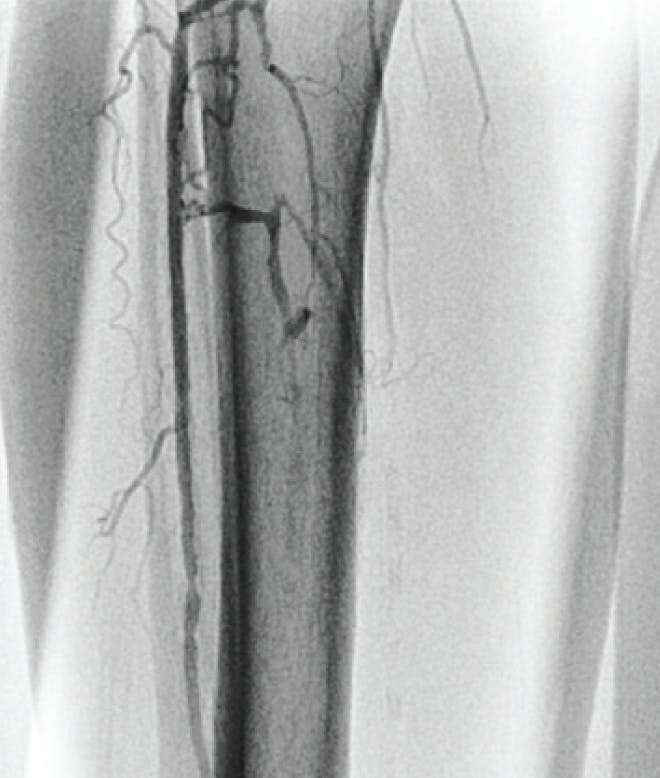
Figure 1. Angiogram revealed 90% occlusion of the AT artery and a total occlusion of the PT artery.
A diagnostic angiogram of the left lower extremity revealed total occlusion of the distal section of the PT artery. The AT artery had a collateral over to the distal PT artery.
Treatment
Radial access was achieved via the right upper extremity and an access guidewire was inserted and advanced under fluoroscopy. After the initial angiogram, a 6 Fr, 150 cm Sublime™ Radial Access Guide Sheath was inserted and advanced to the right superficial femoral artery. A guidewire was inserted, advanced to the right AT artery, and successfully crossed the occlusion. A 2.5 X 40 mm Sublime™ Radial Access .014 RX PTA Dilatation Catheter was advanced to the AT artery, inflated twice for 2 minutes per inflation, and then removed (Figure 2).
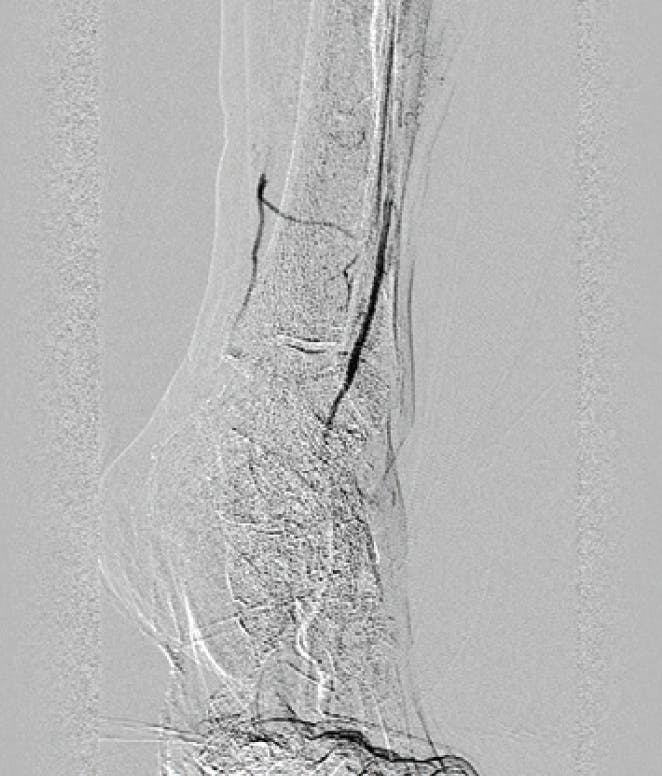
Figure 2. 2.5 X 40 mm Sublime™ Radial Access .014 RX PTA Dilatation Catheter used to treat the stenosis.
With flow restored to the right AT artery, the Sublime™ Radial Access Guide Sheath was pulled back and was rerouted to the left superficial femoral artery. The guidewire was advanced through the occlusion in the left PT artery and down to the ankle. A 2.0 X 220 mm Sublime™ Radial Access .014 RX PTA Dilatation Catheter was advanced down the leg and inflated in a stepwise fashion to reach the distal PT artery. Once in the occlusion, the balloon was inflated multiple times for 2 minutes per inflation to restore flow (Figure 3).
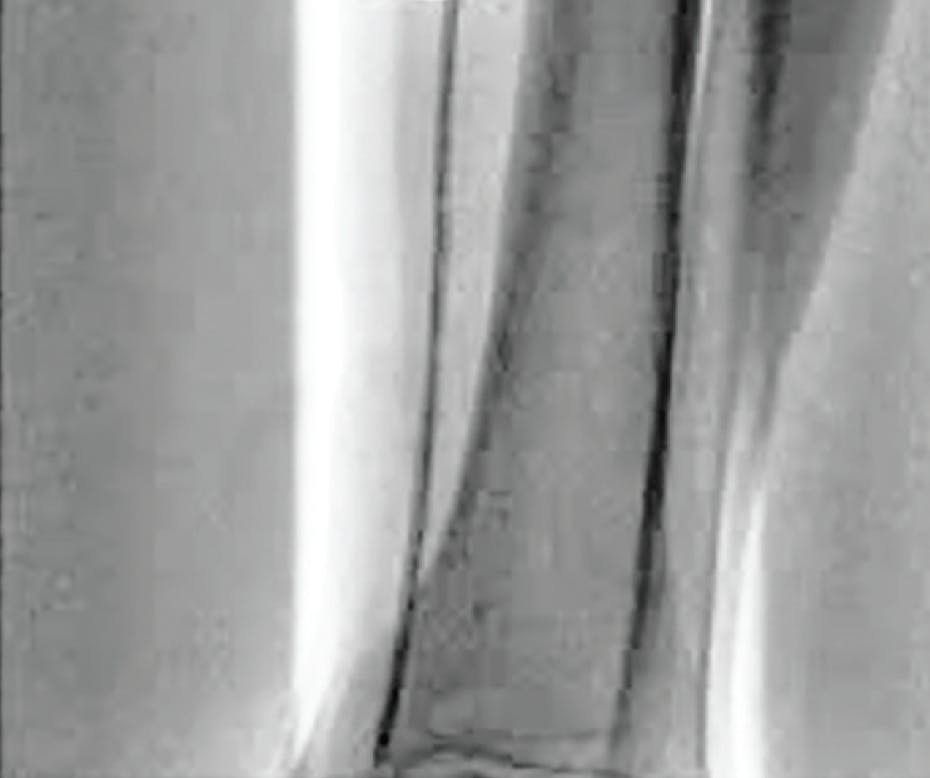
Figure 3. 2.0 X 220 mm Sublime™ Radial Access .014 RX PTA Dilatation Catheter used to treat the stenosis.
Post Procedure Outcome
A final arteriogram was obtained and showed reduction from 90% occlusion in the right AT artery to 20% to 30% residual stenosis (Figure 4). Also confirmed was reduction from 100% occlusion in the left distal PT artery to < 30% residual stenosis.
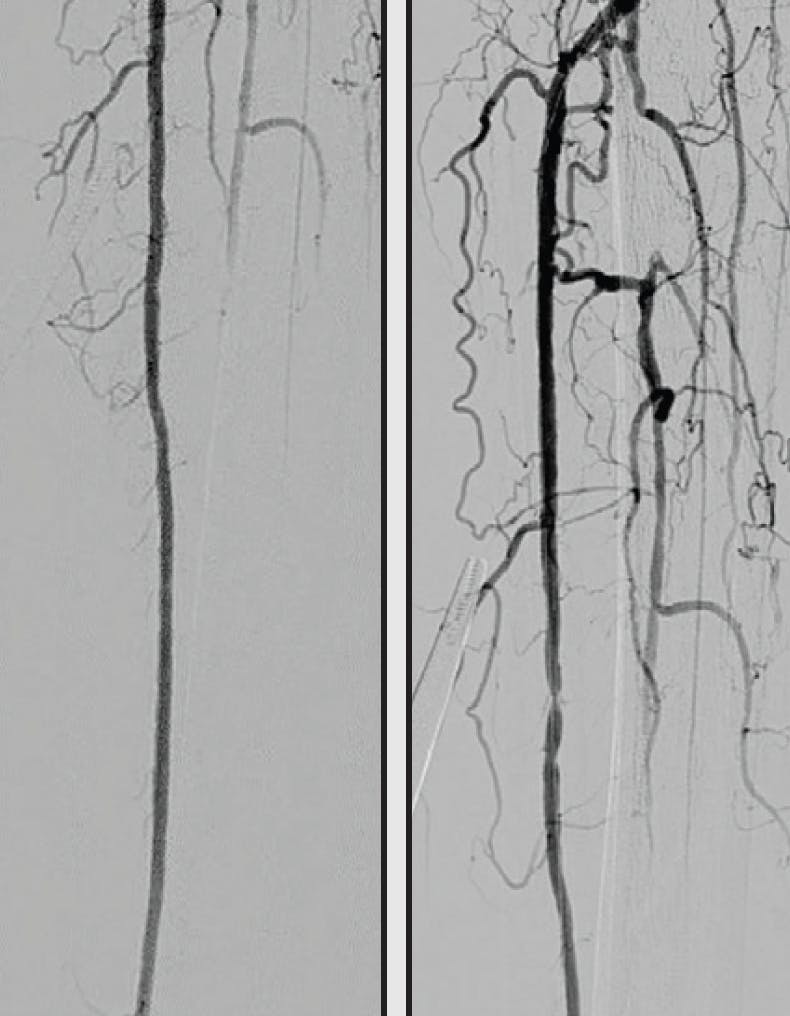
Figure 4. Arteriogram demonstrating reduced stenoses.
The Sublime™ Radial Access Guide Sheath and Sublime™ Radial Access RX PTA Dilatation Catheters were instrumental in delivering bilateral angioplasty to the patient in a single procedure and restoring flow to the extremities. Utilizing a radial approach allowed both legs to be treated during a single procedure.
Caution: Federal (US) law restricts the Sublime™ Radial Access Guide Sheath and the Sublime™ Radial Access .014 and .018 RX PTA Dilatation Catheters to sale by or on the order of a physician. Please refer to each product’s Instructions for Use for indications, contraindications, warnings, and precautions.

Advertisement
Advertisement