Advertisement
Advertisement
November 2022 Supplement
Sponsored by Surmodics, Inc.
Practice Profile: Radial-to-Pedal Access: A “Mic-Drop” Innovation That Can Save a Limb
A conversation with Paul Michael, MD, FSCAI.
Dr. Paul Michael began his medical education at age 10, helping his father, a Miami veterinarian, in the operating room. By age 12, he was assisting with veterinary surgery, general anesthesia, and placing IVs—a challenge in dehydrated cats—and receiving on-the-job training in catheters and devices. The joy of “using your hands to transform medical outcomes” in his father’s practice planted the seeds of his career as an interventional cardiologist.
Today, as the Medical Director of Palm Beach Heart & Vascular, in Boynton Beach, Florida, he is passionately dedicated to providing what he calls “transformational outcomes” in the field of limb salvage. He built out his practice as a care continuum wheel, with a clinic, a vascular lab, an interventional suite, and a recovery area. “We’re in the wound-closing business,” he says. “To close wounds, you need to be able to revascularize as well as treat the ‘whole’ person, not just the ‘hole’ in the person.” A frequent speaker at international congresses, Dr. Michael is renowned for applying advanced coronary revascularization techniques to the lower extremity, including opening blood vessels down to the foot using a radial access approach. His zeal for radial access dates to the mentors who encouraged him to explore outside-the-box solutions before dedicated equipment was available. “We used to build our own guide catheters,” he says. “It was no different from what my dad used to do.” Doing the right thing at the right time for the right reason meant having to frequently “MacGyver” equipment when purpose-built tools were not available.
We asked Dr. Michael about lessons he’s learned in using radial access for treatments aimed at preventing amputation and relieving critical limb ischemia (CLI) and the current state of dedicated radial-to-peripheral equipment.
As someone focused on limb salvage, why do you think it’s important to have endovascular equipment capable of reaching all the way to the foot from a radial access point?
With CLI, or end-stage peripheral artery disease (PAD), we’re often talking about multivessel, multisegment disease. That’s why radial to pedal access is extremely beneficial. Adding another meaningful access option that favors a particular vascular anatomy is always a benefit in complex cases. If you have a patient with disease in the inframalleolar vessels and corresponding wound anatomy, you need to reconstruct the foot vessels. Aortoiliac, femoropopliteal, and tibial disease can all be looked at as “inflow” vessels when foot vessels are diseased, and these can be treated with many approaches. Being able to perform pedal revascularization from the radial access has advantages, such as maintaining a single access point in multivessel, multisegment disease; minimal to no sedation usage; less recovery time; patient comfort; procedural mobility for elderly patients with lumbosacral disease; internal balloon tamponade for retrograde tibial access; less equipment usage per case; as well as economic advantages related to all of the aforementioned benefits in the outpatient and inpatient setting.
I’ll give you an example. Not long ago, I had a diabetic patient who had already had one leg amputated. After he developed ulcers on his remaining leg, his surgeon told him the leg would need to be amputated as well. They didn’t give him another option. The patient fortunately sought a second opinion and found his way to us. Using coronary interventional techniques through radial artery access, we were able to successfully take devices all the way down to his foot and restore flow. He spent 2 hours in recovery and went home. After that, it’s all about wound management and follow-up.
Your passion is delivering exceptional patient outcomes, but your practice is also a business. What are the economics of performing radial access procedures?
Economics is important and radial access is a money saver. First, there is the recovery time involved in a procedure. If you can shorten your recovery time by adopting radial, you’ve already offset any added costs with these devices. Why? (1) You don’t have to pay a nurse to sit and watch the patient as long during recovery; (2) you don’t have to use a femoral closure device; and (3) you can reduce complications. And remember, complications are not just a financial cost. There’s a psychologic, physical, and emotional cost to a complication, both for the patient and the operator.
When you’re teaching or mentoring people who are new to radial access, where do you begin?
I teach them how to do diagnostic angiograms via radial access because that’s low-hanging fruit. All my diagnostics are done with a radial approach. We put an introducer sheath in, and I use a 150 cm flush catheter to perform low-contrast abdominal and terminal aortography, if necessary, followed by subselective unilateral runoffs. I can subselect each leg and keep contrast volumes low by using CO2 angiography and diluted contrast. Plus, navigating the ascending and descending aorta can be tricky for those with no experience, so this is a great place to build confidence. Being able to manage difficult anatomy is important because you don’t want to get stuck spending too much time on that during an intervention. The best way to learn is to spend time watching an experienced operator, then being supervised by a supportive mentor or partner.
You began using the Sublime™ Radial Access Platform earlier this year. What do you think is different about the Sublime™ Guide Sheath and Balloon Catheters?
First is the lower profile of the 5 Fr radial guide sheath, which didn’t exist before. You can do a lot of nifty things with a 5 Fr, 150 cm sheath. Surmodics also has the longest balloons on the market, and they’re highly deliverable. The first case I did with Sublime™ Radial Access devices was a pedal loop reconstruction from the wrist. This can’t be done with other equipment. To me, that’s a mic-drop, and we don’t have many of those with devices these days.
Aside from pedal reconstruction, what other types of cases lend themselves to requiring a longer radial platform?
This platform shines for combined iliac and tibial disease or similar types of complex cases. I’ve also found that longer equipment is useful for treating bypass grafts. We did an axillobifemoral bypass that could not have been done cleanly without the Sublime™ Radial Access devices. Other examples could include morbid obesity hostile to groin access when you want to get down to the legs and you need ipsilateral antegrade access. You can use a radial approach instead of having to do a direct superficial femoral artery (SFA) stick. Or if there’s proximal SFA disease, and groin access is not a good option.
Caution: Federal (US) law restricts the Sublime™ Radial Access Guide Sheath and the Sublime™ Radial Access .014 and .018 RX PTA Dilatation Catheters to sale by or on the order of a physician. Please refer to each product’s Instructions for Use for indications, contraindications, warnings, and precautions.
Case Report: Left Plantar Diabetic Foot Ulceration With Rutherford Category 6 CLI
By Paul Michael, MD, FSCAI
Patient Presentation/Baseline
A 72-year-old male with type 2 diabetes mellitus, coronary artery disease, hypertension, and a history of PAD with left axillofemoral bypass and sequential femoral-tibial bypass grafting presented with large nonhealing diabetic foot ulceration and severe rest pain of his left leg. He was referred for a second opinion regarding amputation prevention.
Diagnostic Findings
With known occlusion of distal aorta and femorofemoral graft, the diagnostic angiogram revealed a subtotal occlusion of the patient’s left profunda artery to the anterior tibial (AT) artery bypass graft and chronic total occlusions of the left peroneal and posterior tibial artery (Figure 1).
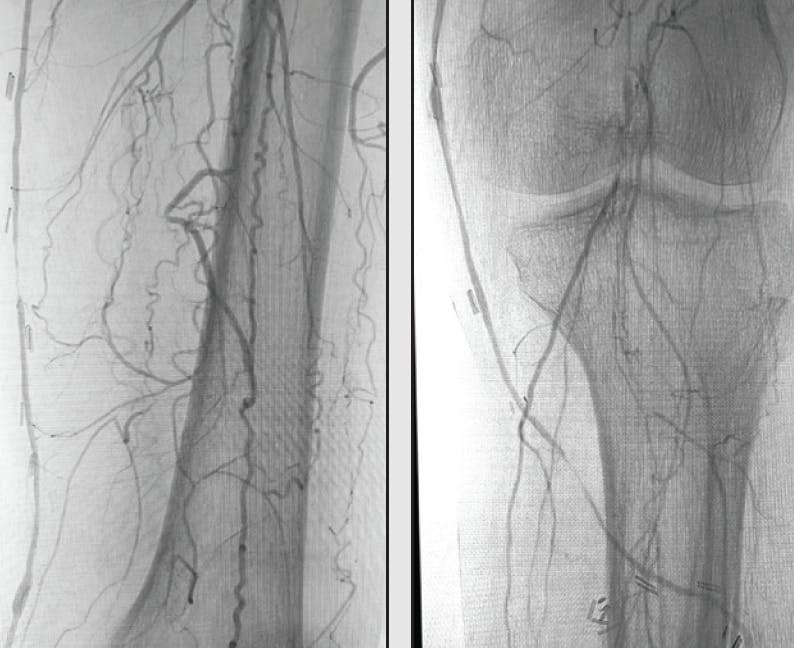
Figure 1. Diagnostic angiogram revealed subtotal occlusion of the left profunda artery to the AT artery bypass graft.
Treatment
With the patient awake under local anesthesia, ultrasound-guided left radial artery access was achieved, followed by insertion of a 5 Fr, 120 cm Sublime™ Radial Access Guide Sheath through the axillofemoral graft, terminating in the left profunda artery. The graft lesion was crossed with a 300 cm, .014 guidewire, which was parked in the left AT, followed by sequential balloon angioplasty using 250 cm Sublime™ Radial Access .014 PTA Balloon Catheters (sized 2.5 X 220 mm, 3.0 X 220 mm, and 4.0 X 220 mm; Figure 2). PTA was followed by immediate on-table debridement of the diabetic foot ulcer.
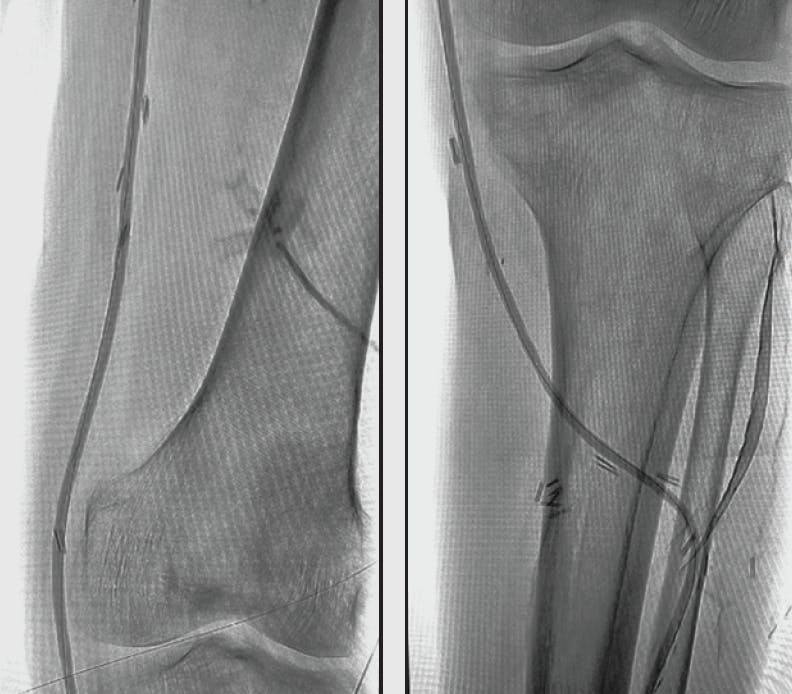
Figure 2. Sequential balloon angioplasty using Sublime™ Radial Access .014 PTA Balloon Catheters (2.5 X 220 mm, 3.0 X 220 mm, 4.0 X 220 mm).
Post Procedure Outcome
The revascularized foot received the necessary perfusion and driving pressure for successful debridement (Figure 3). The patient is currently ambulatory and completely healed 6 months into CLI follow-up with patent PTA results assessed by ultrasound surveillance.
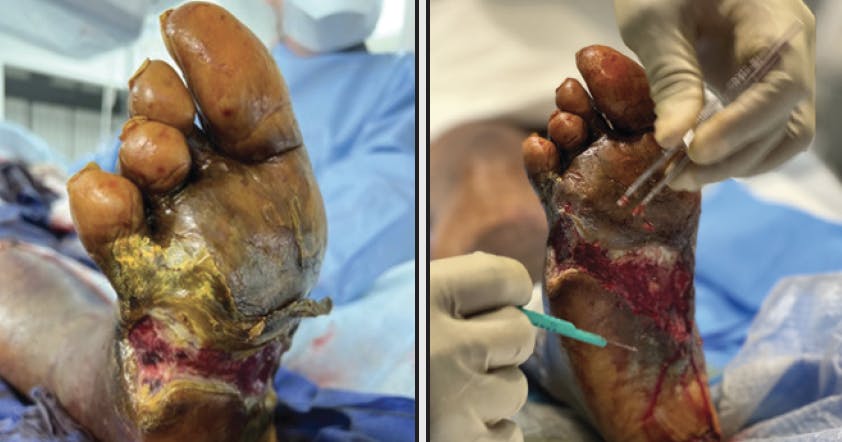
Figure 3. The revascularized foot received the necessary perfusion and driving pressure for successful debridement.
The dedicated, purpose-built Sublime™ Radial Access Guide Sheath and Sublime™ Radial Access RX PTA Balloon Catheters were successful in restoring flow of the left femoral-tibial graft through an axillofemoral graft (Figure 4), providing a meaningful outcome in a diabetic patient facing amputation with Rutherford category 6 CLI disease.
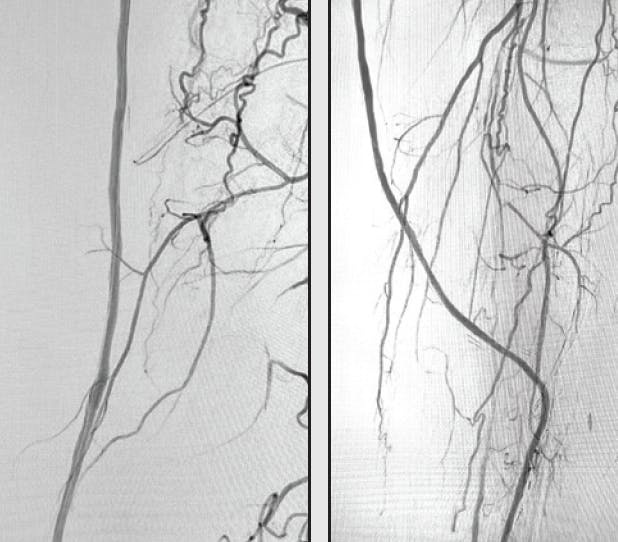
Figure 4. The Sublime™ Radial Access Guide Sheath and Sublime™ Radial Access RX PTA Balloon Catheters were successful in restoring flow.
Caution: Federal (US) law restricts the Sublime™ Radial Access Guide Sheath and the Sublime™ Radial Access .014 RX PTA Dilatation Catheters to sale by or on the order of a physician. Please refer to each product’s Instructions for Use for indications, contraindications, warnings, and precautions.

Advertisement
Advertisement