Advertisement
Advertisement
November 2022 Supplement
Sponsored by Surmodics, Inc.
Radial-to-Peripheral Has Arrived—What Does the Future Hold?
A conversation with Ankur Lodha, MD.
Dr. Ankur Lodha is an interventional cardiologist with Cardiovascular Institute of the South in Lafayette, Louisiana. He has served as a reviewer for prominent medical journals and has published numerous articles and abstracts in the field of endovascular medicine.
You’ve been a passionate advocate of radial-to-peripheral intervention. What inspired you to begin using and championing this approach?
We came across patients who were in a great deal of pain but were avoiding having a procedure because of the negative experience they had with groin access and manual closure. Patients would put off procedures until they literally couldn’t take the pain any longer. Some of the patients had serious complications in the groin and had to go in for surgery, and one of the patients died. Those experiences made a deep impression on me.
As an interventional cardiologist, I was familiar with performing coronary interventions through the radial approach and knew how convenient, comfortable, and safe it is for those patients. So, when I came to Louisiana in 2014 and we started building up a peripheral artery disease (PAD) practice, I wondered why we were still using the femoral approach—why not make these procedures safer with radial? But very few physicians were doing radial-to-peripheral procedures at the time, and there was no dedicated equipment available.
What has changed since then?
Everything is dependent on the level of confidence you have in your tools. One of the reasons radial-to-peripheral interventions did not take off initially was that we did not have the equipment available that was long enough to reach and cross distal lesions. We now have a wide array of tools that make radial-to-peripheral possible and these tools work very well.
You’ve said that radial access performed in office-based labs (OBLs) will transform how PAD patients are treated in the United States. Why is that?
I firmly believe that OBLs are here to stay and that most patients will eventually undergo interventions in OBLs. Hospitals are overloaded—they don’t have enough beds or enough staff. Furthermore, patients don’t want to go to the hospital, especially after the COVID-19 pandemic. They prefer procedures with safer access that can get them on their feet quickly and are less expensive. As taxpayers, we want procedures to be done in a way that can significantly reduce health care expense.
To make this happen, we must concentrate on reducing complications in OBLs. Most complications happen with access, and the case is now closed that radial access reduces complications and improves patient satisfaction compared with femoral access. OBLs need to make the transition to radial now, not only because it’s better for patients, but because OBL payments will eventually be tied to patient outcomes and satisfaction. This has already started to happen in hospitals, and OBLs will be next.
Radial access makes great business sense for OBLs. Since adopting radial access, we’ve been able to perform at least two more cases per day because our patients can be discharged early.
Patient comfort and safety aside, what types of clinical situations did you encounter that made radial access preferable to femoral access?
There were many. To give one example, if we have a high and steep aortic bifurcation of the aorta, it can be nearly impossible to take a sheath up and around that anatomy from a femoral access site. Some patients have tortuous bifurcations, and therefore, catheters lose trackability, pushability, and torqueability to cross the lesions (Figure 1). It’s like driving a car in the Grand Prix. This requires more contrast and radiation in those patients, which is not safe. Radial access allows the operator to enter either artery from above rather than going up and over from the femoral artery. This approach also enables the physician to treat lesions in both legs in one procedure.
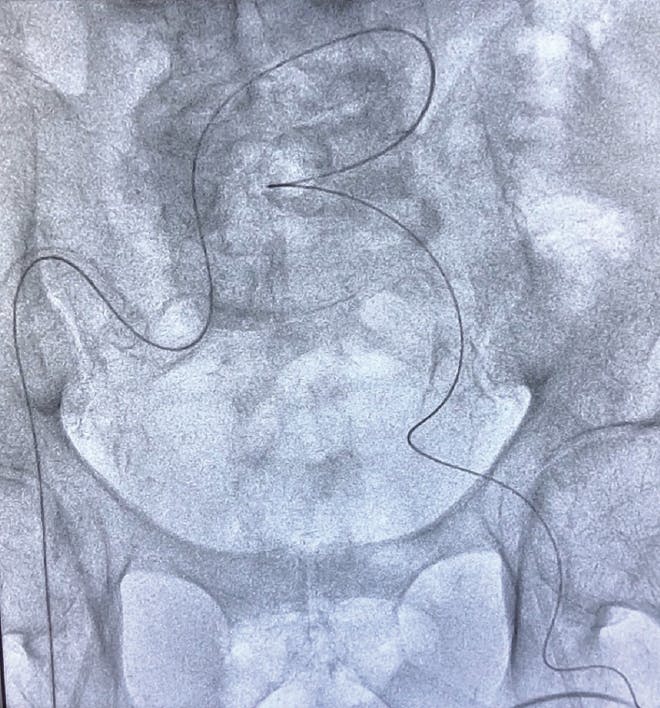
Figure 1. Complex tortuosity of the aortic bifurcation in a patient receiving arterial intervention via the femoral approach.
Another example is with obese patients—not only can achieving femoral access with obese patients be extremely difficult, these patients are also at an increased risk for groin complications. Radial access is the preferred approach for this patient population.
When you started doing radial-to-peripheral cases 6 years ago, what types of cases were not possible because you lacked suitable equipment?
We were quite motivated, but there were still some cases we had to do from the femoral approach, such as complicated superficial femoral artery (SFA) occlusions, critical limb ischemia due to infrapopliteal disease, and complex iliac artery disease. The access complications that resulted from these cases made us even more determined to go radial and to work with industry to develop the right new tools.
Where are we now in terms of radial-to-peripheral tools?
I think to start, we are very well placed in terms of access sheaths, balloons, and wires. What we lack is imaging—we don’t have a dedicated 200 or 220 cm intravascular ultrasound system. That’s a problem. We also need drug-coated balloons and drug-eluting stents.
Having said that, I think 80% of the cases done in an OBL today can easily be done radially with the current equipment. It helps that OBLs by nature do less complicated cases. If you select patients correctly, you will rarely need to cross over from radial to femoral access. Today, our crossover rate is < 2%.
What has been your experience with the Sublime™ Radial Access Guide Sheath and Sublime™ balloon catheters?
We’ve been using these products since they first came out and they’re very good. First and foremost, the Sublime™ Radial Access Platform includes new sizes and working lengths that allow us to provide radial access to many more patients than were possible before.
Regarding the Sublime™ Radial Access Guide Sheath (Figure 2), it’s great there is a 6 Fr size; however, the availability of 5 Fr allows us to perform radial interventions on patients with smaller arteries—older female patients, for example—who otherwise would require femoral access. The 5 Fr size can be used in infrapopliteal lesions when we know we’re not going to need a stent. In my opinion, the 5 Fr guide sheath is a complete game changer.
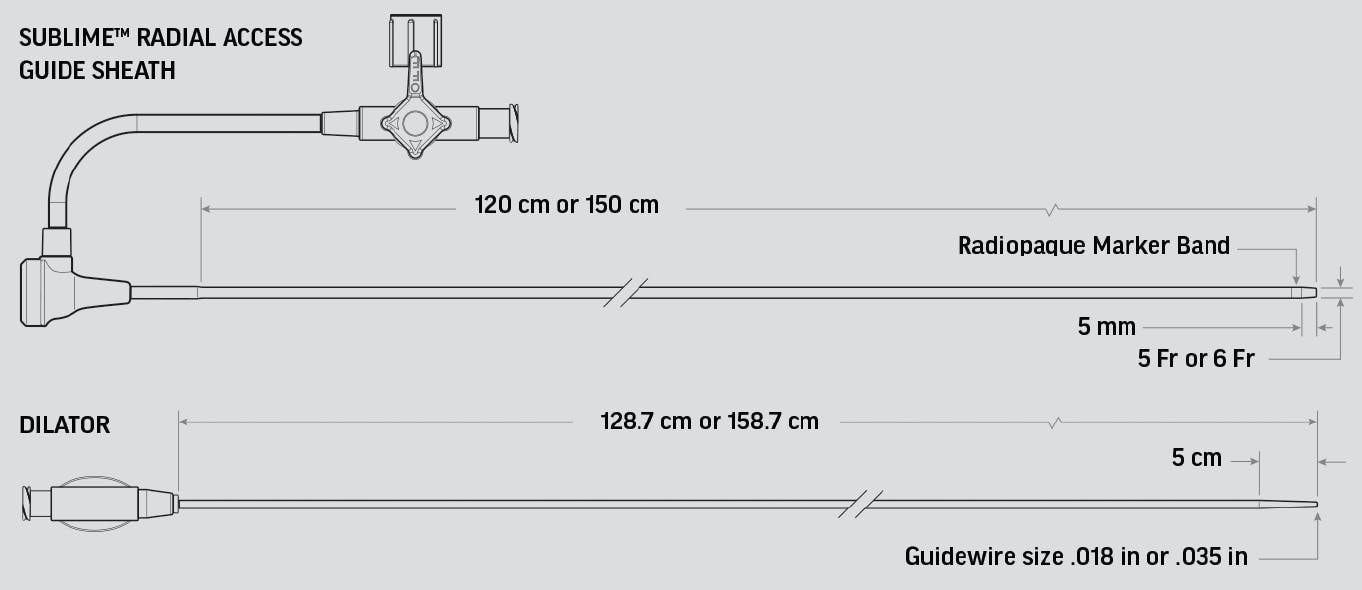
Figure 2. The Sublime™ Radial Access Guide Sheath.
The Sublime™ Radial Access Balloon Catheters (Figure 3) deserve special mention. They’re the longest shaft length, radial dedicated balloons on the market. At 220 and 250 cm (.018 and .014, respectively), they allow us to go all the way to the infrapopliteal, cross the pedal loop, and even go back to the other infrapopliteal vessels. We’re able to do this very easily now, and this was not possible with the shorter lengths previously available. I think it’s game changing. We need products that can reach lesions anywhere in the peripheral anatomy, and Sublime™ Radial Access devices have helped us fill a lot of these gaps.
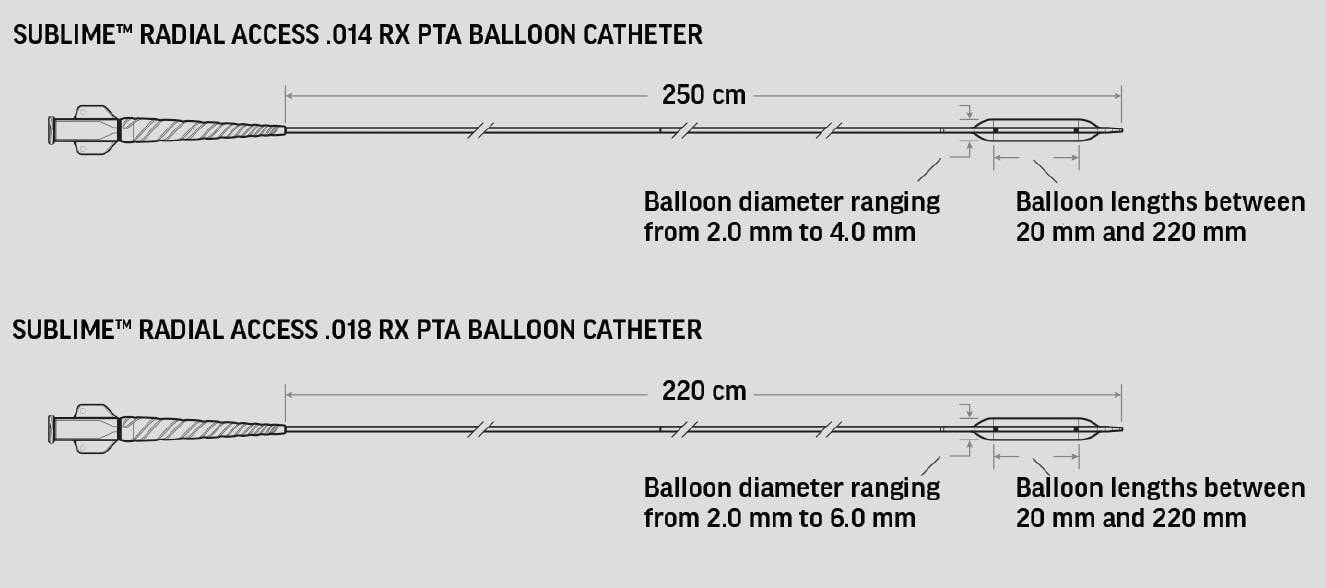
Figure 3. The Sublime™ Radial Access .014 (top) and .018 (bottom) RX PTA Balloon Catheters.
Physicians may assume you lose pushability with a rapid exchange (RX) platform. What’s been your experience with the deliverability of the Sublime™ RX Balloon Catheters?
The pushability of an RX balloon is dependent on the RX length. The RX length of the Sublime™ RX PTA Balloon Catheters is the longest on the market (45 cm for the .014 and 50 cm for the .018), and this makes these balloons behave pretty much like over-the-wire balloons. In addition, the Sublime™ balloon catheters are constructed with a hypotube that transitions from being very stiff and supportive on the proximal end to very flexible at the distal end of the device. This combination of the shaft design with the longer RX length gives us a tremendous amount of pushability with a low profile that’s also very trackable. These devices work very well for the distal lesions we treat.
What kinds of cases are straightforward to perform via radial access, which require some experience, and which are best left to femoral?
Straightforward cases include simple SFA lesions of < 100%, short chronic total occlusions of the SFA, and infrapopliteal diseases that are not long occlusions. These can easily be done via a transradial approach. Once your team has done about 20 or 25 of these cases, you should easily be able to perform slightly more complex procedures such as infrapopliteal long occlusions, SFA long occlusions, or calcified lesions. For more complicated cases, you can consider a hybrid radial-pedal approach.
Cases that still require a femoral approach include those that involve a covered stent being delivered in an iliac artery occlusion. You need a 7 Fr sheath for that. But we do perform radial-assisted iliac occlusion procedures, where we cross the iliac artery from the radial approach but deliver stents through the femoral artery.
Radial artery occlusion (RAO) has been called the Achilles’ heel of radial access. What are your thoughts?
RAO does happen, but the incidence is very low. Overall, I don’t think RAO is much of a concern. It’s clinically silent. Radial arteries recanalize, and you can still access occluded radial arteries for future procedures using ultrasound guidance. These occlusions are short and easily reaccessed. We have done this often.
What would you say the learning curve is for transitioning to radial access in an OBL?
The perception that radial is hard to learn has slowed adoption in OBLs because OBLs are built on patient turnover. Taking the time to learn a new approach can initially delay procedures. But I would like to use this opportunity to tell people that the learning curve for physicians is not that hard—it’s really just five to 10 cases. And once you get trained in radial procedures, you can safely discharge these patients early.
What’s the best way to get radial access adopted in a new facility?
You need to have one person who champions radial access in a group. This person trains the staff, and then the staff trains the other doctors. That’s precisely what happened in my practice. Our scrub techs were very well trained after a few cases so they could troubleshoot and help other physicians. The nurses also became strong advocates because they could see the patient benefits firsthand. Our techs and nurses would point out cases that were ideal for radial and push the physicians to do them. Later, the physicians realized this was a great call and began doing radial cases routinely.
Let’s switch gears and focus on how radial access has helped you build your OBL business. Has radial access helped to grow your referral network?
Big time. Patients overwhelmingly prefer wrist access over groin access. When you offer the radial approach, your patients become your biggest advocates. Patients talk to friends who have similar peripheral issues and tell them how easy their wrist access procedure was compared with the groin procedure they had before. Many patients get repeat procedures due to the nature of the disease, and once they experience the ease of recovery and greater comfort of radial access they would never prefer the femoral access. They remember the experience of having to lie flat on their backs for hours after a femoral access procedure, which can be very uncomfortable and even painful. These patients will go back to their primary care doctors and say, “Wow, Dr. Lodha did this procedure from my wrist that everybody else does from the groin.” That kind of patient satisfaction drives referrals.
Can you describe how you leverage radial access in community outreach and marketing?
We use a variety of approaches aimed directly at patients. Our message is, if you need a procedure, ask your doctor about radial access because it’s safer, easier, more comfortable, and more convenient.
Like many practices, we’re active on social media, but the most effective way we’ve found to reach the community is through television. We talk to news people, who are very interested these days in medical procedures and available devices. This gets us into the main morning and evening news segments and helps us gain recognition. We also focus on print media. We’ve been featured in articles in a variety of local magazines. Finally, we do community outreach in nursing homes and make direct contact with primary care physicians.
Radial access equipment is generally more expensive than equipment for femoral access. Can you speak to any direct cost savings that may mitigate this expense?
It’s not surprising that radial equipment is somewhat more expensive. Not only does it come in longer lengths, but more research has gone into making the equipment perform well at these lengths. But, aside from the patient satisfaction radial brings, there are direct cost savings.
One obvious example is elimination of the need for femoral closure devices, which are far more expensive than the simple closure devices used in radial cases. But there’s also reduction in OBL staff time. Radial access reduces the acuity of postoperative care. In femoral cases, nurses have to check the groin every 10 or 15 minutes for postoperative recovery, and during sheath pull you need two dedicated nurses next to the patient. For radial access cases, that is not needed and postoperative recovery is very safe and uneventful.
Do you envision a day when femoral access for peripheral cases is the exception rather than the norm?
100%. The question will not be, “why radial?” It will be, “why not radial?” Radial access is going to make procedures for our patients safer and much more comfortable. I don’t see any other way.
Caution: Federal (US) law restricts the Sublime™ Radial Access Guide Sheath and the Sublime™ Radial Access .014 and .018 RX PTA Dilatation Catheters to sale by or on the order of a physician. Please refer to each product’s Instructions for Use for indications, contraindications, warnings, and precautions.
Case Report: Successful Below-the-Knee Angioplasty Using the Sublime™ Radial Access Platform
By Ankur Lodha, MD
Patient Presentation
A 52-year-old male presented with discomfort to his left calf and had pregangrenous changes of nonhealing wounds on the toes of his left foot.
Diagnostic Findings
Diagnostic angiogram of the left lower extremity revealed a 100% occluded left anterior tibial (AT) artery, which was most likely the cause of the patient’s bluish discoloration (Figure 1).
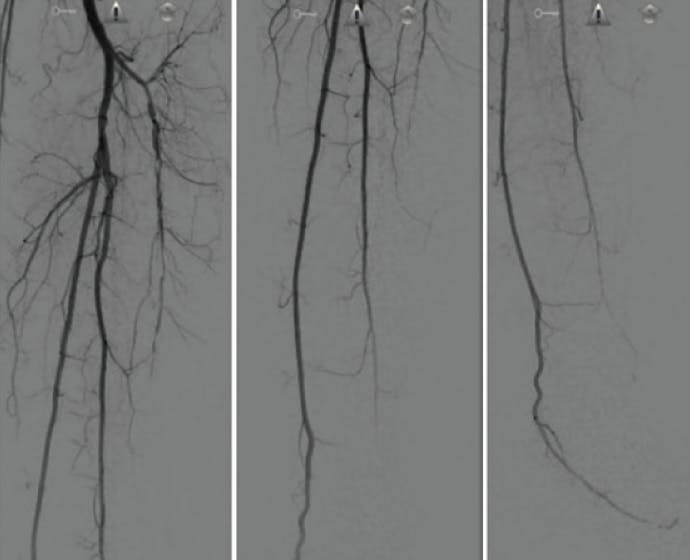
Figure 1. Angiogram revealed a 100% occluded left AT artery.
Treatment
Access was achieved via the left radial artery using ultrasound guidance. A pigtail catheter was inserted over a guidewire and placed in the distal abdominal aorta so an abdominal aortography and a left femoral artery angiography could be performed. Once completed, a 5 Fr, 150 cm Sublime™ Radial Access Guide Sheath was inserted and a guidewire and 2.0 X 220 mm Sublime™ Radial Access RX PTA Catheter were advanced to cross the lesion in the AT artery. The balloon was inflated in an attempt to open the lesion; however, the guidewire was not able to cross (Figure 2). The guidewire was then repositioned in the posterior tibial artery where it crossed the pedal loop and was advanced retrograde to the AT artery. A 2.0 X 220 mm Sublime™ Radial Access .014 RX PTA Dilatation Catheter was then advanced to the lesion in the left AT artery where it tracked through the pedal loop. The balloon was inflated and removed after deflation. A 3.0 X 220 mm Sublime™ Radial Access .014 RX PTA Dilatation Catheter was then inserted, advanced to the lesion in the left AT artery, and was inflated and removed (Figure 3).
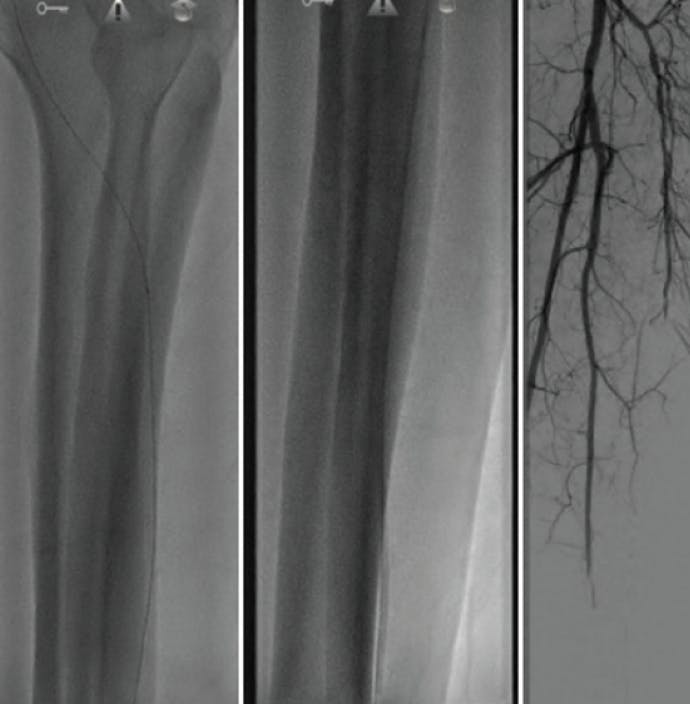
Figure 2. Guidewire and PTA Catheter attempt to cross the lesion.
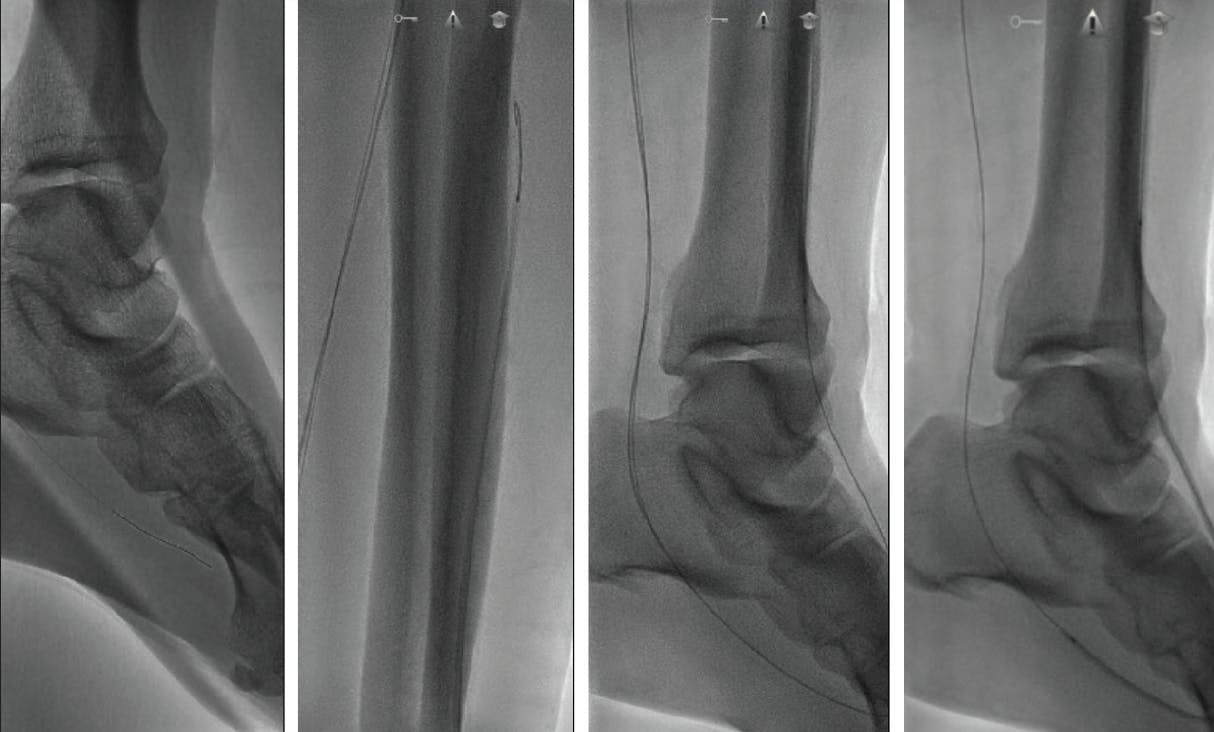
Figure 3. Sublime™ Radial Access .014 RX PTA Dilatation Catheter inflation.
Post Procedure Outcome
The patient underwent balloon angioplasty of the left AT artery. Following the successful intervention, the patient’s angiography revealed 100% recanalization of the affected artery (Figure 4).
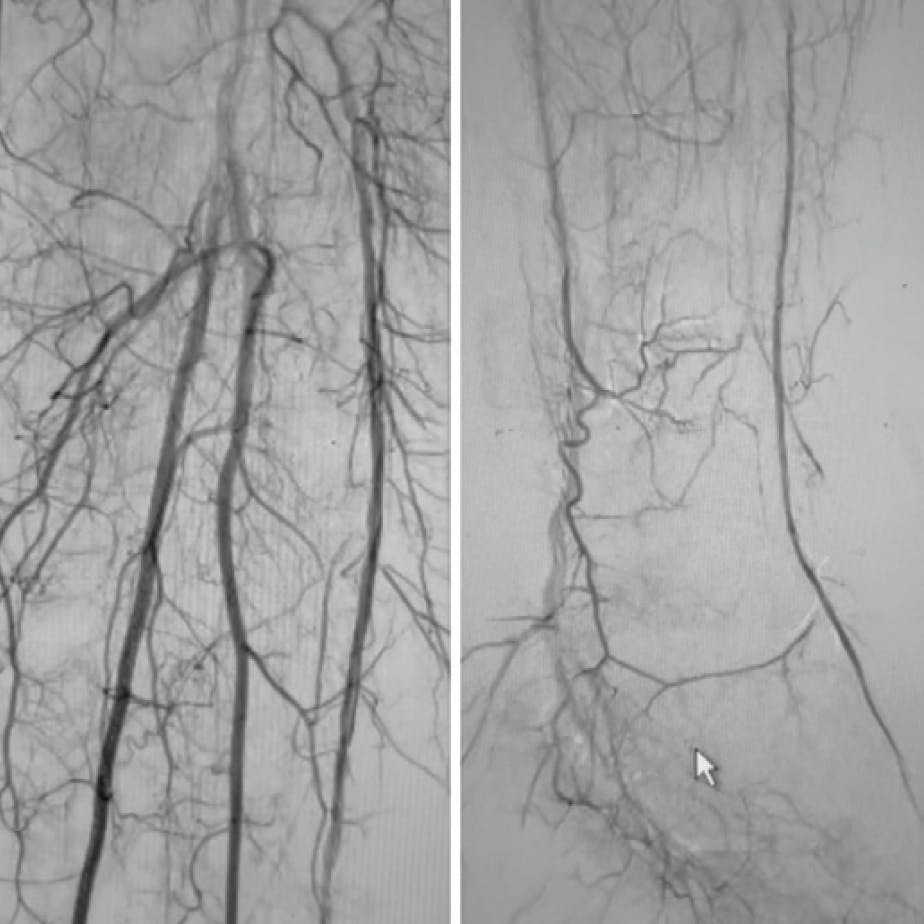
Figure 4. Arteriogram demonstrating 100% recanalization of the affected artery.
Caution: Federal (US) law restricts the Sublime™ Radial Access Guide Sheath and the Sublime™ Radial Access .014 RX PTA Dilatation Catheters to sale by or on the order of a physician. Please refer to each product’s Instructions for Use for indications, contraindications, warnings, and precautions.

Advertisement
Advertisement