Advertisement
Advertisement
November 2022
An Interview With Kak Khee Yeung, MD, PhD, FEBVS
Dr. Yeung discusses the building of a biobank with live patient cells for understanding AAA pathophysiology, capabilities of AI for personalized medicine in vascular care, the importance of enjoying your work, and more.
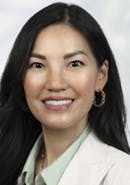
At Amsterdam UMC, you were instrumental in the building of a laboratory and large national biobank of live patient cells for the purpose of developing three-dimensional vascular models and understanding abdominal aortic aneurysm (AAA) pathophysiology. How would you describe the initial need for this project? And, can you tell us more about how the biobank is being used today?
We have made advances in AAA treatment, especially by introducing endovascular repair. However, reinterventions after endovascular aneurysm repair (EVAR) are still high due to progression of the disease. We still do not have a medical treatment, and we cannot predict AAA progression. The only parameter we currently use in daily practice to guide our decisions is AAA diameter. My goals are to provide therapy tailored to the patient and predict whether an AAA will progress. The ideal prediction model for precision medicine of AAA incorporates microlevel information (cell changes) as well as macrolevel data (mechanical information of anatomic structures) because both components are essential to the development of AAAs.
Therefore, I built a unique biobank with patients’ live cells and developed automatic image analysis with deep learning of the anatomy of the AAA. With the cells from the biobank, I have discovered that smooth muscle cell (SMC) function of the AAA wall is associated with the AAA growth rate. Currently, we are expanding the biobank so that we can have more patients to characterize. We have performed phosphoproteomics analysis on the SMC, and we are also including endothelial cells and skin fibroblasts. The latter can be transdifferentiated into SMC or used as induced pluripotent stem cells.
You’ve also expressed an interest in the use of artificial intelligence (AI) in vascular interventions and recently published a paper on a deep learning network for fully automatic stent graft segmentation based on completion digital subtraction angiography during EVAR.1 What are the potential real-world implications of this study?
Fully automatic stent graft segmentation can be used to evaluate a large number of images in a very short period of time to analyze the exact position of the stent graft. This can be used to evaluate migration (even very small changes), help analyze endoleaks, and study movements of the endograft (hemodynamic changes).
How would you describe the current and/or future capabilities of AI for personalized medicine in vascular care, and what are you working on in this area?
We are working on advancing analysis of all images involved in AAA treatment: duplex ultrasound, CTA, and MRI. For instance, think of automatic analysis of thrombus, perivascular fat tissue on CT scans, and accelerating and advancing MRI for AAA diagnosis and treatment.
We are also enhancing clinical decision-making by developing a specific prediction model that connects clinical imaging data with the pathophysiology of the AAA. With AI techniques, we can analyze multisource data and include biologic parameters.
Another focus of your research in the realm of AAAs is vascular SMCs, and earlier this year you and colleagues published a paper on the role that vascular SMC dysfunction plays in the development and progression of AAAs.2 What are the next steps you hope to take in this research area?
We are performing extensive phosphoproteomics analysis, building three-dimensional vascular models, and validating the patient-specific SMC function with clinical outcome. We hope to find key biomarkers in SMCs that can be linked to AAA progression.
One of your titles at Amsterdam UMC is Principal Investigator and Research Director. What does this role entail, and can you give us a preview of some of your upcoming projects?
I am the founder of the research projects, as well as the person responsible for guiding these projects and the staff working on them. Currently, I am guiding 14 PhD students, two MD/PhD students, one postdoc, two data managers, and one lab technician.
Regarding future projects, with a very large and talented international consortium, I have submitted a grant to the European Union commission (Horizon 2020) on the use of AI in advancing patient-centered care in AAA and peripheral artery disease (PAD). The project title is VASCUL-AID.
In a partnership with Stanford, you have been studying the potential for metformin to suppress AAA progression. What is the current status of this work and its potential to affect AAA care?
We have found that metformin has positive effects on SMC function by enhancing SMC contraction and reducing inflammation. The final analysis is performed in SMC, and we will publish the data soon.
Currently, we are also working together with Anders Wanhainen, MD, from Uppsala University in Sweden on the MAAAGI clinical trial. This is a multicenter randomized trial on small AAA. The intervention group will receive metformin, and the control group will not. The endpoint is growth rate, which will be measured on CT scans. We will also collect plasma samples to investigate the proteomics and RNA profile.
From kicking off your vascular surgery journal club with karaoke to cohosting the “Televascular Games” educational competition, you have a unique, fun approach to certain aspects of your work, particularly with younger doctors and trainees. Why do you think this is important?
Work is fun! Vascular surgery is fun, and research is fun too! You can only deliver good work when you like your work. I think that team-building is very important. The projects are only successful because of the great work that everyone is doing. I really appreciate the input of younger doctors and trainees. They will give energy to the work. Young talents are the future. And, of course, I like karaoke.
Though still early in your career, you have accomplished a great deal and continually receive exciting new opportunities and recognitions—your receipt of the Dekker grant, role as an honorary advisor to the Romanian prime minister, and now your role as the European Society for Vascular Surgery Academy PAD Pathway Lead. What is one position or accomplishment you wish to achieve in the future?
I would be very happy if our consortium receives the Horizon 2020 funding so we can make large steps into implementing and validating AI for the clinical care of AAA and PAD patients. I will also be applying for a European Research Council grant to study sac dynamics after EVAR. Along with that, as part of my tenure track, I hope to be appointed as a full professor soon.
1. Kappe KO, Smorenburg SPM, Hoksbergen AWJ, et al. Deep learning-based intraoperative stent graft segmentation on completion digital subtraction angiography during endovascular aneurysm repair. J Endovasc Ther. Published online July 9, 2022. doi: 10.1177/15266028221105840
2. Rombouts KB, van Merrienboer TAR, Ket JCF, et al. The role of vascular smooth muscle cells in the development of aortic aneurysms and dissections. Eur J Clin Invest. 2022;52:e13697. doi: 10.1111/eci.1369
Advertisement
Advertisement
Interested in reading more interviews?
To read more interviews with thought leaders in the vascular field, check out our Profiles & Perspectives hub.
Read More