Advertisement
Advertisement
November 2022
Managing Ruptured Acute and Chronic Aortic Dissections
Endovascular options in the acute setting.
By Ryan Gouveia e Melo, MD; Tarek Hamwi, MD; and Nikolaos Tsilimparis, MD, PhD, FEBVS, FACS
Aortic dissection affects 4.8 per 100,000 individuals per year, representing an important health care burden in both the acute and chronic phases.1 These patients are extremely challenging to manage, and there is always a certain degree of unpredictability. Current definitions characterize aortic dissections as hyperacute, acute, subacute, or chronic if they occur in the first 24 hours, 1 to 14 days, 15 to 90 days, and > 90 days, respectively.2 These time definitions are of the utmost importance when considering endovascular repair of aortic dissections due to the differences in aortic fragility and plasticity.3
Aortic rupture in the setting of aortic dissections results in a high rate of death due the outcomes of open repair and the inability to adequately address the false lumen (FL) with the currently available endovascular options. Rupture may occur in the acute setting due to extreme aortic fragility and inadequate impulse control.4 In the chronic phase, rupture usually occurs secondary to aneurysmal degeneration.4 Both occur at high rates in these patients.4,5 Durham et al showed that during follow-up of uncomplicated medically managed type B aortic dissections (TBADs) at 4 years, 29.2% of patients required aortic-related interventions and 38.3% died.4 Therefore, adequate and thorough follow-up of these patients is mandatory to offer repair of late aneurysm degenerations before they rupture. An et al found that only 14% of patients followed guideline-directed follow-up strategies after initial type A aortic dissection (TAAD) repair.6 This is especially worrisome if distal dissection and persistent FL exist due to the risk of aneurysm degeneration and future complications.7-9
This article uses cases of acute and chronic aortic dissection ruptures to illustrate the challenges encountered and the various possible options for repair.
ENDOVASCULAR MANAGEMENT OF AORTIC RUPTURE
Endovascular management of aortic dissection ruptures is challenging for three reasons: (1) proximal landing zones may be affected by the dissection, (2) distal landing zones may be affected by the dissection, and (3) persistent FL reentry flows make it impossible to seal a rupture if not addressed. For example, after a thoracic endovascular aortic repair (TEVAR), FL perfusion may be maintained by four types of entry flows: type Ia (proximal perigraft flow), type Ib (distal perigraft flow due to a distal stent graft–induced new entry tear [SINE] or septal fenestration), type II entry flow (through collaterals communication with the FL), or type R (antegrade flow from the true lumen [TL] into the FL through distal branch fenestrations—uncovered intercostal arteries, visceral or renal arteries, lumbar arteries, iliac branches—or septal fenestrations).2 These different types of entry flows may be managed with different techniques.2 For type I endoleaks, proximal or distal extension of the repair may be the best option; however, for type II or type R entry flows, direct FL occlusion techniques may be better.10-12
Whereas cases of acute TBAD ruptures in the descending thoracic aorta may be treated with simple TEVAR, in chronic TAADs or TBADs with aneurysmal degeneration and rupture, usually a simple TEVAR is not sufficient due to enlargement of landing zones and large FL. In these cases, a safe nondissected proximal landing and addressing FL reentry flows distally are both usually necessary.13 In these postdissection aneurysm ruptures, if the patient has previously had proximal aortic repair due to a previous TAAD and the dissection involves the arch, we will start by using an arch endograft, which is usually a graft intended for another patient and adapted either by having longer stents or by switching the order of the target vessels in the inner branches.9 If there is a healthy landing zone at least in zone 2, we would perform a TEVAR (with or without cervical debranching depending on the case, vertebral artery origin and collateralization with the basilar artery, and aortic cover extension) with 10% to 20% proximal oversizing depending on the quality of the landing zone and no oversizing distally, which usually implies using a tapered graft. Distally, we size the graft according to the largest diameter measured in the TL, which has been coined by Spear et al as the “croissant length.”14 We avoid using endografts with proximal uncovered stents in the proximal landing zone, and our graft of choice is the Zenith TX2 dissection endovascular graft (ZDEG, Cook Medical), with available diameters varying between 22 and 42 mm.
After performing TEVAR, we assess false flow by obtaining an angiogram directly in the FL below the endograft. If FL perfusion is identified, then FL occlusion techniques are employed. At this point, it is important to actively look for reentries even in the iliac arteries—especially when using larger sheaths—that might occlude the reentries and give a false impression of no FL filling. In case of FL perfusion, we start by deploying a candy-plug (CP) device (Cook Medical) parallel to the distal end of the TEVAR and may add plugs or coils if FL perfusion is still present after the CP implantation.
If the rupture occurs at the thoracoabdominal level, exclusion of the rupture involves hybrid repair or using solely endovascular techniques with off-the-shelf grafts, physician-modified endografts, or parallel grafts to treat the visceral vessels.
In a rupture setting for both acute or chronic dissections, one must keep in mind where the rupture has occurred and how will it be possible to achieve rupture seal with proximal and distal extension but also FL occlusion.
CASE 1: CHRONIC TBAD WITH POSTDISSECTION TAAA RUPTURED AT THE DESCENDING THORACIC AORTA
A man in his early 60s was admitted to the emergency department due to acute back pain and hypotension. He had a previous history of acute TBAD managed conservatively but had been lost to follow-up in another institution. CTA performed at admission showed a large type 2 postdissection thoracoabdominal aortic aneurysm (TAAA) with a ruptured FL at the descending thoracic aorta. He was immediately transferred to the operating room, and through bilateral percutaneous femoral access, first underwent Ishimaru zone 2 TEVAR (using a ZDEG-PT-34-30-162 endograft), followed by balloon inflation inside the endograft for hemodynamic control.
Video 1. Intraoperative image sequences of the FL occlusion techniques. First, the candy-plug was positioned. Due to significant remaining gutters, the FL around the candy-plug was catheterized and a sheath was brought on the left of the candy-plug, then over and curved to the right of the Candy-Plug. After, plugs and coils were deployed gradually on both sides followed by further coiling from the contralateral femoral access for definitive seal.
After stabilizing the patient, an angiogram was obtained in the ascending aorta showing correct proximal seal and at the distal aorta both in the TL and the FL just distally to the TEVAR showing retrograde perfusion of the FL. A 46-mm, third-generation CP device was advanced inside the FL and deployed parallel to the distal end of the thoracic endograft. Due to residual FL perfusion in the existing gutters around the CP, further occlusion plugs (Amplatzer II, Abbott) and coils were placed on both sides of the CP to fill all the remaining space. After the CP was positioned, due to significant remaining gutters, the FL around the CP was catheterized, and a sheath was brought to the left of the CP, then over and curved to the right of the CP. By placing the sheath in this position, we were able to gradually deploy occlusion plugs and coils on both sides of the CP, followed by further coiling from the contralateral femoral access for definitive seal. The aneurysm was successfully sealed, and the patient survived. The next step is preparation for complete endovascular repair using a custom-made fenestrated device.
CASE 2: CHRONIC TAADs After PREVIOUS PROXIMAL AORTIC REPAIR AND DESCENDING POSTDISSECTION TAA RUPTURE
A man in his early 70s presented with a contained rupture of thoracic aortic descending post–type A dissection aneurysm (Figure 1A-D). He underwent previous proximal hemiarch repair at another institution and had developed an arch and descending thoracic aneurysm but had been lost to follow-up. The dissection had multiple flaps (Figure 1B) and a very large FL at the descending thoracic level (Figure 1C). Additionally, his left carotid artery was occluded.
Due to the lack of proximal landing zone in the arch, we planned for a complete arch repair using a custom-made, triple-inner-branched arch graft (Cook Medical) ordered for another patient, followed by descending TEVAR and CP just above the visceral vessels (Figure 2A). Due to the enlarging diameter of the whole aorta and various distal communicating tears, FL occlusion was not expected with a simple TEVAR.
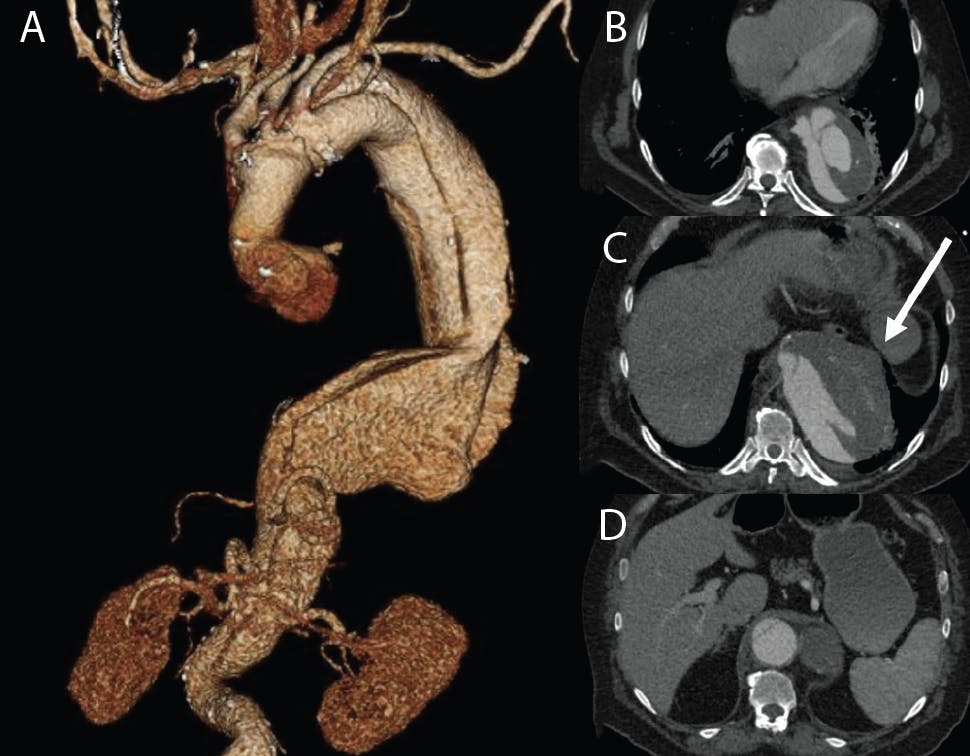
Figure 1. CTA showing a contained rupture of a post–type A thoracoabdominal aneurysm (TAA). The rupture is seen in the descending thoracic aorta. Three-dimensional (3D) reconstruction of the rupture (A). Axial CTA showing multiple lumens in the thoracic aorta (B). Axial CTA showing the contained rupture (arrow) (C). Axial CTA showing our intended distal landing zone above the celiac trunk (D).
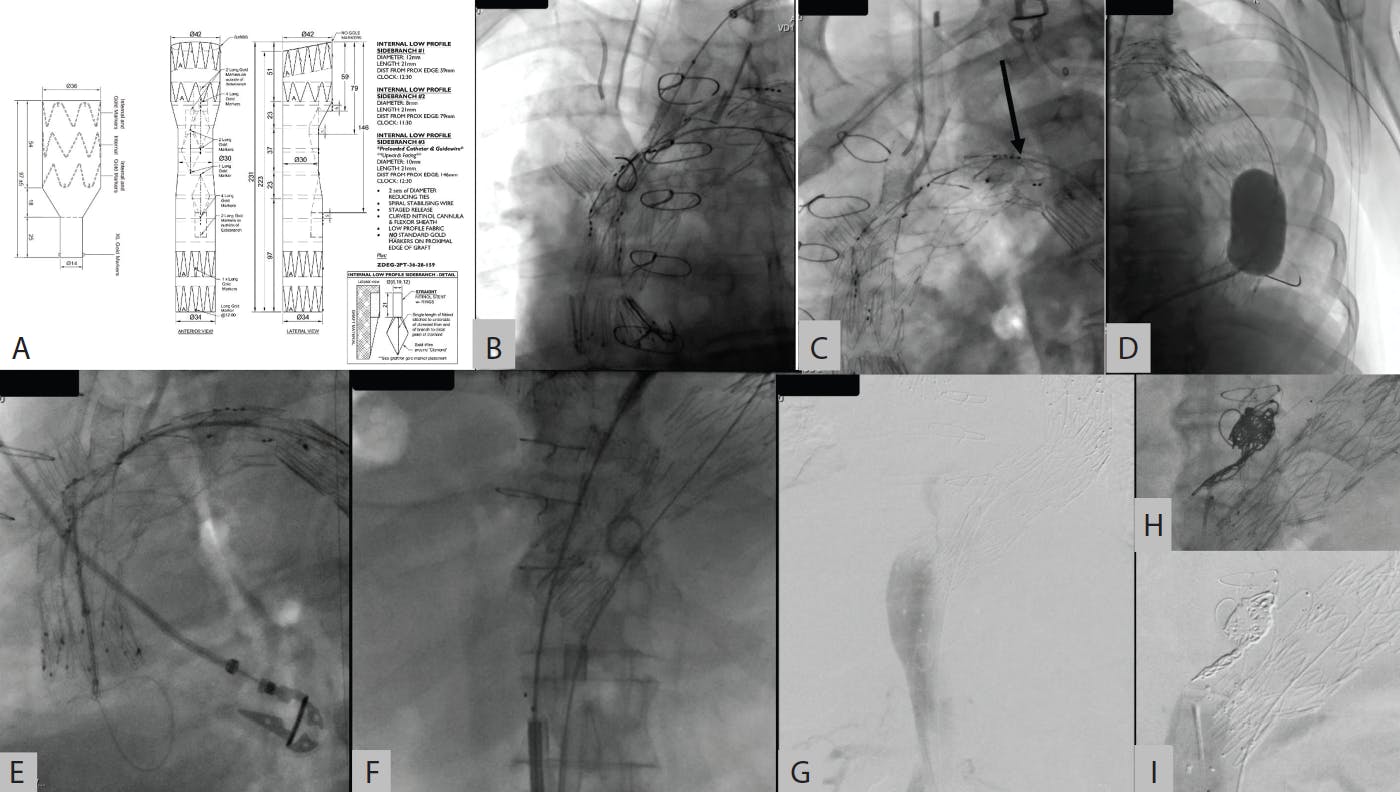
Figure 2. Graft plan from a triple inner arch branch graft we had on the shelf for another patient and a CP (left) (A). Intraoperative image showing the arch device deployed and both inner branches stented, the first antegrade branch for the innominate artery and second antegrade branch for the LSA (B). Intraoperative image showing placement of an occluder plug in the retrograde branch (C). Intraoperative image showing a snare coming from the innominate branch and a wire from femoral access to achieve a through-and-through wire from the branch to advance the thoracic endografts (D). Placement of the CP device in the FL (E). FL angiogram showing residual flow in the aneurysm sac (F). Further cooling of the FL around the CP device (G). Final angiograms of the FL showing adequate seal (H, I).
The procedure was performed with right axillary artery and left brachial artery cutdown and bilateral percutaneous femoral access. The arch branch graft device was deployed using the previous aortic graft as proximal seal and the first and second antegrade inner branch for the innominate and left subclavian artery (LSA), respectively (Figure 2B). The third retrograde branch was sealed with an Amplatzer II occlusion device using the preloaded catheter and wire for access (Figure 2C). After this, a distal TEVAR was performed. During the TEVAR procedure, difficulties in advancing the endografts were encountered due to extreme angulations of the thoracic aorta, during which time the patient developed an uncontained rupture and cardiac arrest, requiring an endoclamping balloon (Figure 2D) and resuscitation maneuvers; the patient recovered after one cycle of advanced resuscitation life support. To allow the advancement of the thoracic grafts, a through-and-through wire was placed through the first arch branch to the femoral access (Figure 2E). TEVAR was performed to the level of the supraceliac aorta, and a self-occluding third-generation CP device was placed parallel to the distal end of the TEVAR to achieve FL seal (Figure 2F). Although the patient was stable, a distal reentry flow to the FL was seen in late phases of the control angiogram (Figure 2G), which was sealed with further coiling of the FL around the CP device (Figure 2H and 2I). Control angiography and early CTA showed adequate patency of both arch branches and aneurysm seal with no endoleaks or reentry flows to the aneurysm (Figure 3).
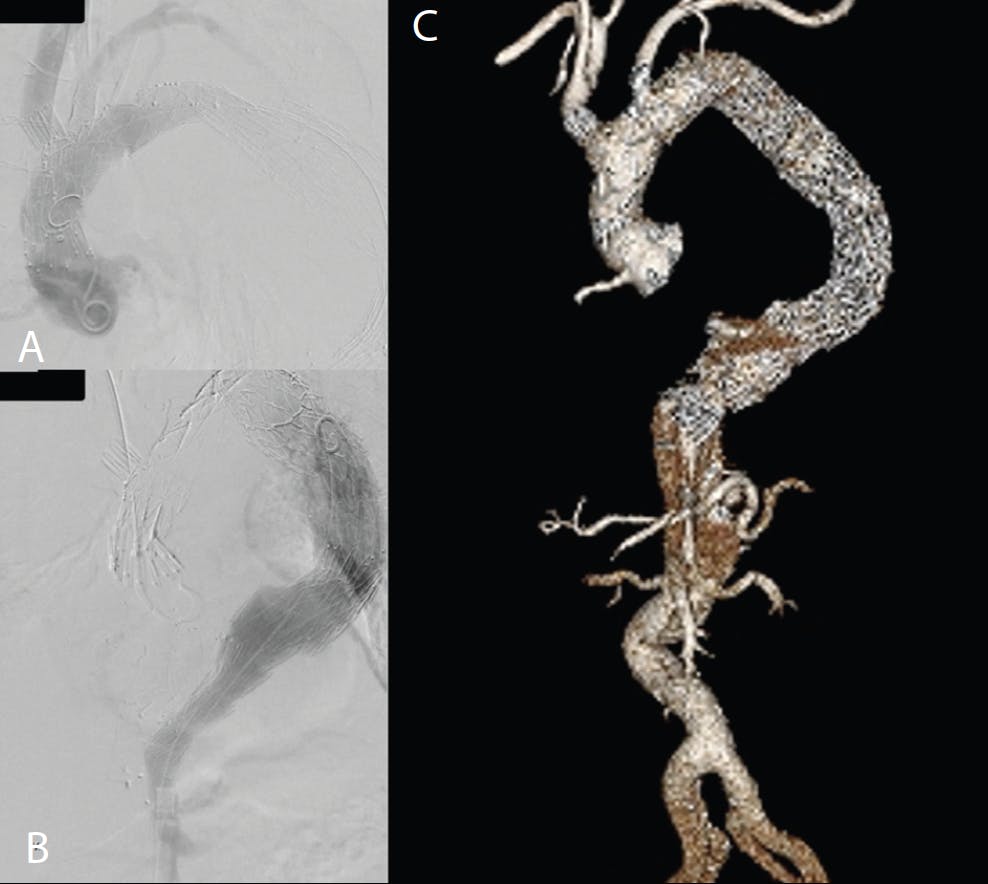
Figure 3. Final control angiograms (A, B). Control CTA with 3D reconstruction (C).
Discussion
We recently published a similar case in which a patient in his mid 50s presented with a post-TAAD rupture who had previous proximal ascending aortic wrapping.9 In the urgent setting, he underwent a triple-branched arch repair using a custom-made device designed for another patient, distal TEVAR, and concomitant placement of a CP device for FL occlusion. To adjust the graft design to the patient, the LSA and left carotid artery were stented in a switched position with the retrograde inner branch for the left carotid and the second antegrade inner branch for the LSA. The patient was successfully treated, and follow-up CTA showed adequate aneurysm exclusion and perfusion of all branches.9
CASE 3: ACUTE TBAD RUPTURE AFTER TEVAR AND PETTICOAT FOR MESENTERIC AND DISTAL MALPERFUSION
A man in his mid 50s was admitted due to acute TBAD with severe intractable hypertension, mesenteric ischemia, and lower limb bilateral ischemia (Figure 4A). He underwent TEVAR in the hyperacute phase using a ZDEG endograft with proximal landing in Ishimaru zone 2 with LSA coverage and distal landing 3 cm above the celiac artery (Figure 4A and 4B), followed by direct superior mesenteric artery stenting with a covered balloon-expandable stent (Figure 4C). After 24 hours, due to persistent lower limb malperfusion and compressed TL below the TEVAR (Figure 5A and 5B), a PETTICOAT (provisional extension to induce complete attachment) was performed using a Zenith dissection bare-metal stent (Cook Medical). Twelve hours later, the patient developed an aortic rupture at the thoracoabdominal level (Figure 6A and 6B). However, the patient was hemodynamically stable under permissive hypotension protocol, and the CTA showed no active contrast extrusion. He urgently underwent thoracoabdominal repair using a T-branch graft (Cook Medical) with a distal unibody and right iliac branch device, followed by left carotid–to–left subclavian bypass to improve spinal cord perfusion (Figure 6C and 6D). All bridging stents were placed through the struts of the previous bare-metal dissection aortic stent. The rupture was sealed, and the patient survived. However, he developed spinal cord ischemia and only recovered partially after all adjunctive rescue measures.
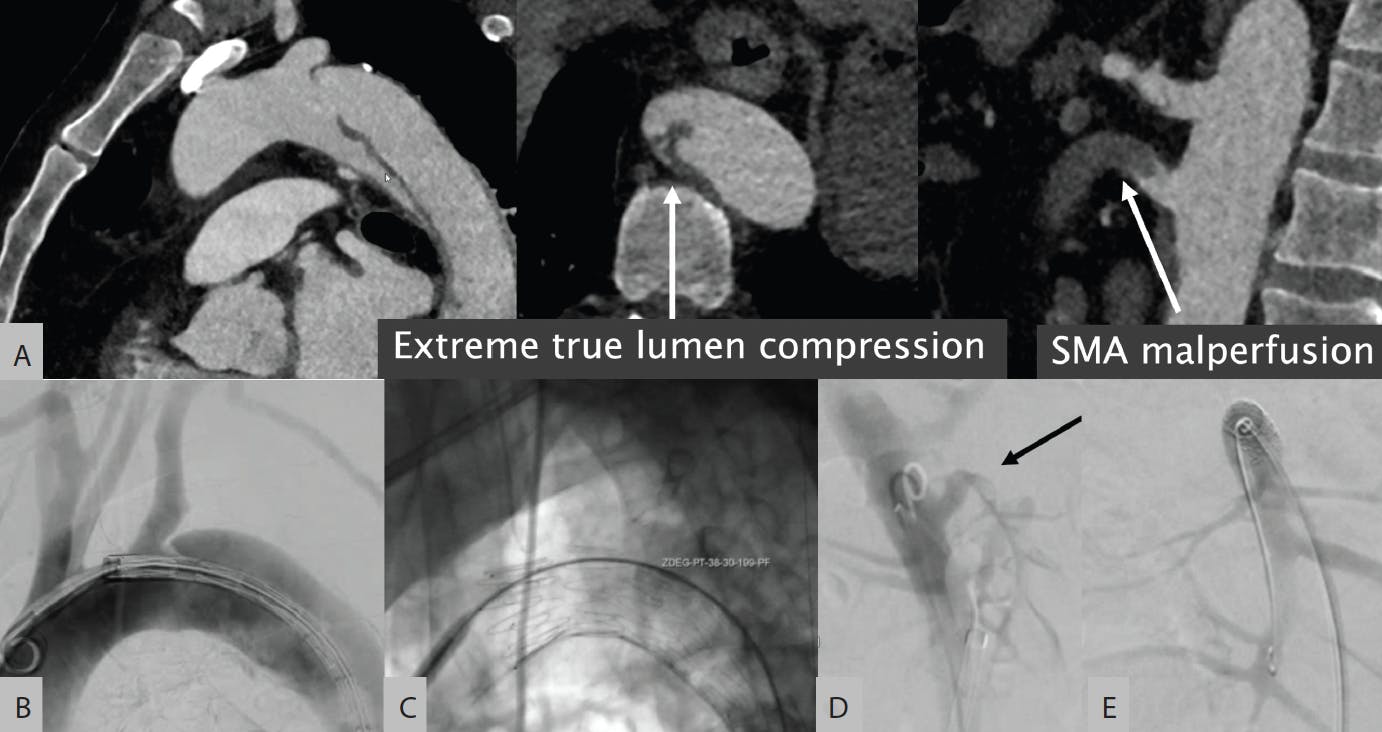
Figure 4. Preoperative CTA showing the large entry tear (left), the extremely compressed TL (middle) and superior mesenteric artery malperfusion (right) (A). Placement of thoracic endograft in Ishimaru zone 2 (B). Deployment of thoracic endograft (C). Diagnostic angiogram showing the superior mesenteric artery malperfusion (D). Control superior mesenteric artery angiogram after stenting (E).
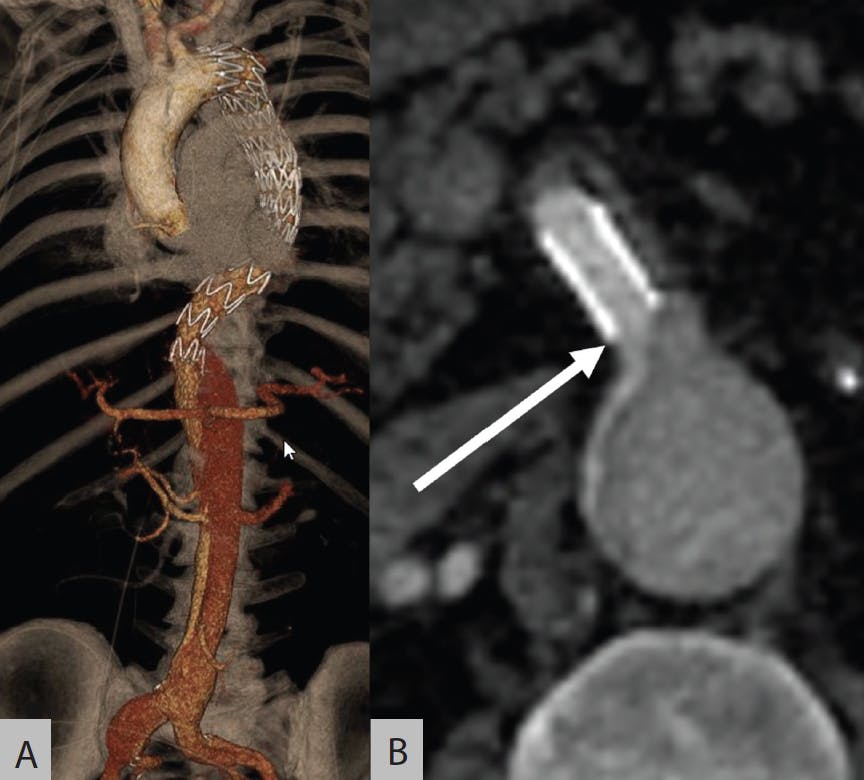
Figure 5. Control 3D reconstruction of the CTA showing correct placement of the thoracic endograft and mesenteric perfusion but persistent TL compression in the abdominal aorta (A). Axial CTA showing correct stent placement and mesenteric perfusion but persistent TL compression below (B).
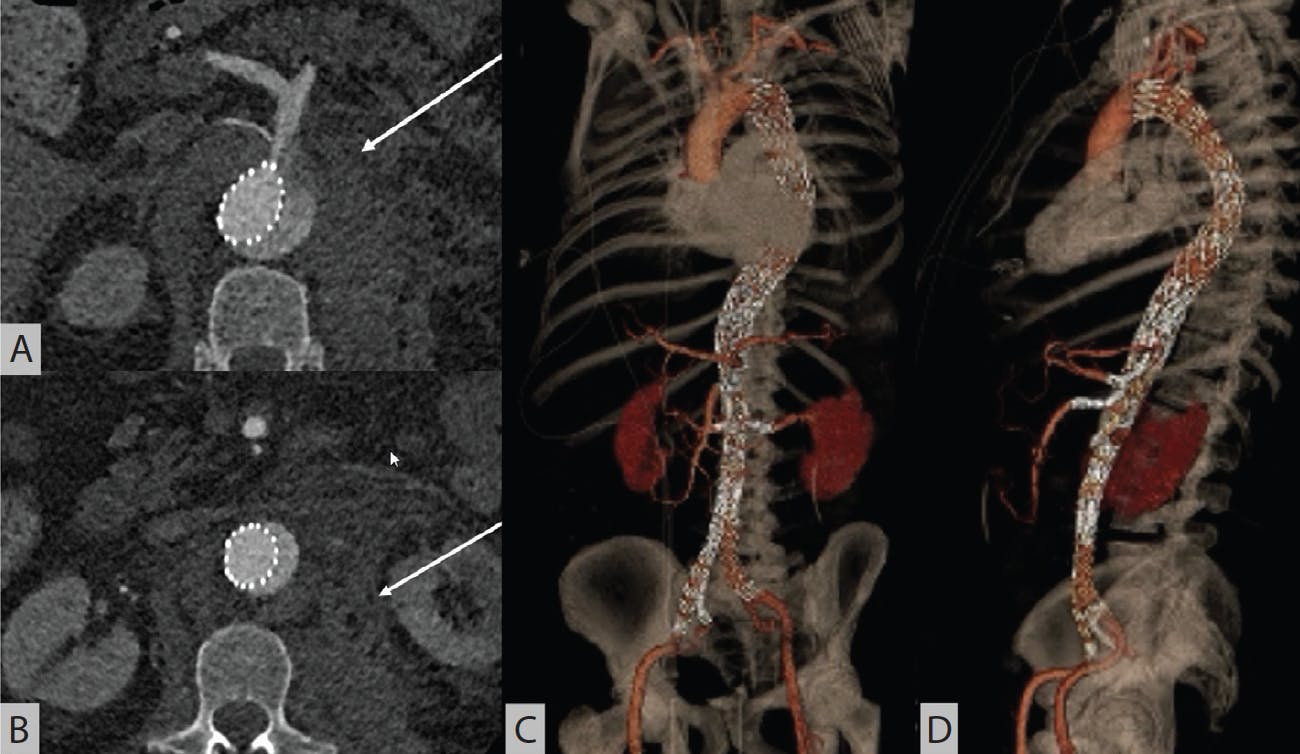
Figure 6. CTA showing the ruptured FL at the abdominal level (arrows) (A, B). Control CTA 3D reconstruction after total endovascular repair of the aorta with a branched off-the-shelf graft placed inside the previous uncovered aortic dissection stent and the right side iliac branch device (C, D).
CONCLUSION
Ruptured aortic dissections are challenging and sometimes desperate cases, requiring advanced endovascular skills and an experienced team in complex endovascular aortic repair. For proximal seal, a healthy, nondissected proximal aortic landing zone is necessary. For distal seal in the thoracic aorta, usually additional techniques for FL occlusion are necessary such as the use of CP devices, occlusion plugs, and coils. If distal seal is necessary below the thoracic aorta, usually complete aortic repair is necessary with higher risks of spinal cord ischemia. Ideally, aortic dissections that survive the acute phases should be extensively monitored to repair aneurysm degenerations in a timely manner before they rupture.
1. Gouveia E Melo R, Mourão M, Caldeira D, et al. A systematic review and meta-analysis of the incidence of acute aortic dissections in population-based studies. J Vasc Surg. 2022;75:709-720. doi: 10.1016/j.jvs.2021.08.080
2. Lombardi JV, Hughes GC, Appoo JJ, et al. Society for Vascular Surgery (SVS) and Society of Thoracic Surgeons (STS) reporting standards for type B aortic dissections. J Vasc Surg. 2020;71:723-747. doi: 10.1016/j.jvs.2019.11.013
3. VIRTUE Registry Investigators. Mid-term outcomes and aortic remodelling after thoracic endovascular repair for acute, subacute, and chronic aortic dissection: the VIRTUE Registry. Eur J Vasc Endovasc Surg. 2014;48:363-71. doi: 10.1016/j.ejvs.2014.05.007
4. Durham CA, Cambria RP, Wang LJ, et al. The natural history of medically managed acute type B aortic dissection. J Vasc Surg. 2015;61:1192-1198. doi: 10.1016/j.jvs.2014.12.038
5. Bashir M, Jubouri M, Tan SZCP, et al. The misnomer of uncomplicated type B aortic dissection. J Card Surg. 2022;37:2761-2765. doi: 10.1111/jocs.16728
6. An KR, de Mestral C, Tam DY, et al. Surveillance imaging following acute type A aortic dissection. J Am Coll Cardiol. 2021;78:1863-1871. doi: 10.1016/j.jacc.2016.06.025
7. Lin FY, Tseng YH, Huang JW, et al. Fate of distal aorta after acute type A aortic dissection repair: Change and persistency of postoperative false lumen status. Int J Cardiol. 2018;266:50-55. doi: 10.1016/j.ijcard.2018.01.010
8. Tsilimparis N, Detter C, Heidemann F, et al. Branched endografts in the aortic arch following open repair for DeBakey Type I aortic dissection. Eur J Cardiothorac Surg. 2018;54:517-523. doi: 10.1093/ejcts/ezy133
9. Stana J, Fernandes Prendes C, Banafsche R, et al. Emergent triple-branched TEVAR and redistribution of the branches to the supra-aortic target vessels for treatment of a contained ruptured descending aortic aneurysm associated with a chronic type A aortic dissection. J Endovasc Ther. 2021;28:309-314. doi: 10.1177/1526602820985270
10. Saremi F, Hassani C, Lin LM, et al. Image predictors of treatment outcome after thoracic aortic dissection repair. Radiographics. 2018;38:1949-1972. doi: 10.1148/rg.2018180025
11. Eleshra A, Kölbel T, Tsilimparis N, et al. Candy-Plug generation II for false lumen occlusion in chronic aortic dissection: feasibility and early results. J Endovasc Ther. 2019;26:782-786. doi: 10.1177/1526602819871613
12. Rohlffs F, Tsilimparis N, Fiorucci B, et al. The Candy-Plug technique: technical aspects and early results of a new endovascular method for false lumen occlusion in chronic aortic dissection. J Endovasc Ther. 2017;24:549-555. doi: 10.1177/1526602817709252
13. Mougin J, Oderich GS, Multon S, et al. Commentary: urgent repair of postdissection thoracoabdominal aortic aneurysms using branched endografts. J Endovasc Ther. 2020;27:929-935. doi: 10.1177/1526602820943865
14. Spear R, Sobocinski J, Settembre N, et al. Early experience of endovascular repair of post-dissection aneurysms involving the thoraco-abdominal aorta and the arch. Eur J Vasc Endovasc Surg. 2016;51:488-97. doi: 10.1016/j.ejvs.2015.10.012
Advertisement
Advertisement