Advertisement
Advertisement
September 2022
An Interview With Alex M. Barnacle, BM, MRCP, FRCR
Dr. Barnacle discusses the rewarding and challenging aspects of a career in pediatric interventional radiology, including the fight for recognition of the field.
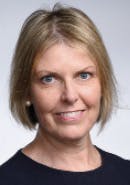
From your work founding a pediatric cryoablation service and authoring the upcoming pediatric interventional radiology (PIR) policy/guidance document for the United Kingdom (UK) to ensuring that PIR has a presence at IR-focused scientific meetings and starting the Paediatric IR UK annual meeting, you have been at the forefront of the cause to support and advance PIR in the UK and worldwide. How did you get your start in PIR?
It took me a long, long time to work out what part of medicine felt like a good fit for me. I started out in pediatrics back in the late 1990s but knew from very early on that I wanted to be doing something more technical and hands on. So, I spent a year in neonatal intensive care and pediatric surgery. I loved the neonatal intensive care unit role, where I learned to intubate to place long lines and arterial lines in very premature babies. During that job, I witnessed a pediatric radiologist, Dr. Jo Fairhurst, arrive in the middle of the night to place bilateral nephrostomies in a newborn, and it seemed like a miracle to me. She became my greatest mentor for the next 10 years as I navigated my way through pediatrics to radiology. PIR was really not a thing back then. In 2002, I was committed to a career in adult IR when I was introduced to Professor Derek Roebuck during a diagnostic radiology training rotation at Great Ormond Street Hospital for Children (GOSH) in London. Derek is the father of PIR in the UK and one of the specialty’s founders internationally, and I was immensely fortunate to meet him when I did. I applied for a diagnostic radiology fellowship at GOSH and spent almost all of it in the angiography suite with Derek. As the only trainee in a very busy hospital that was just waking up to the idea of what IR could offer for children, and with Derek to train me, I had the best learning experience anyone could wish for.
What are your favorite aspects of working in this emerging field?
There are so many brilliant aspects to a career in PIR. I love that almost every day brings you the chance to learn something new. I am fortunate to still work at GOSH, where we treat children with such a variety of rare diseases and get to be a part of their groundbreaking care. I encounter something new almost every week, even after 20 years in this field. I love the challenge of fighting to work out how to apply adult IR techniques and equipment for use in children, although that can also be one of the most frustrating parts of the job. Perhaps most of all, I am still acutely aware of the privilege of being allowed to operate on a child. Often, we have the opportunity to really influence a child’s entire life through the work we do and watch them grow into young adults, whether that be by helping cure their cancer or working with them over many years in the IR clinic.
You’ve shared that one hurdle to acceptance is a lack of knowledge about what PIR can do. How would you summarize the benefits of an adequately staffed and resourced PIR center to those unfamiliar with PIR? What would you like both future PIRs and current IRs to know about the field?
As I often say, PIR today is where adult IR was 20 or 30 years ago. We have a constant fight to be recognized by other clinical teams, be included in oncology or trauma protocols, get access to enough patients to produce meaningful treatment data, and receive adequate training positions and consultant posts. All the reasons why IR is a game changer in adults apply even more in children. Expert health care can give a child another 70 or 80 years of life, and so procedures that minimize vessel trauma, abdominal adhesions, or scarring are an obvious win. Just as importantly, minimally invasive procedures often mean less time off from school for the child; less time in a scary hospital environment; more time with their parents, siblings, and friends; and—ever more important in the current financial climate—less time off from work for parents and caretakers. As IRs, we know without a shadow of a doubt that if we were ill, we would want our own treatment to be minimally invasive when possible, and we should advocate for the same standard of care for the youngest in our society. Currently, there are yawning discrepancies in the care children are offered, and it all just depends on whether there is someone pushing PIR in your city or not.
Can you tell us about your outreach work establishing a PIR service in Sri Lanka? What was the impetus to do this work?
We have a very active vascular anomalies service at GOSH, with many different teams involved. One of our plastic surgeons, Dr. Bran Sivakumar, is from Sri Lanka and returns regularly to work with the plastic surgery team there to treat children with congenital hand abnormalities. Every time he visited, a few children would find their way into the clinic who in fact had a vascular malformation and not a congenital hand deformity at all. He suggested I come along to help the Sri Lankan teams learn to treat those patients too. I have been there twice with the plastic surgery team, partly funded by a UK charity, and worked alongside the pediatric radiology and surgical teams in Colombo. It has been an immense privilege. I was astounded by the teams’ abilities and their courage to deliver pretty incredible interventions with the bare-minimum facilities and equipment. It was a huge learning curve for me too. Without much input from me, they now have thriving vascular anomalies and percutaneous nephrolithotomy (PCNL) services there, and we still communicate every few weeks about complex cases.
What are you working on in the area of interventional oncology (IO) for children? Given the need for further data for pediatric IO to be more widely accepted, what would your ideal clinical trial or study include?
It is challenging to break into the world of pediatric oncology because almost every patient is in a trial, and none of those trials include IO. Pediatric oncologists also seem to be inherently cautious about considering new treatment options. I think the likeliest route to accessing patient treatment pathways, as well as the route most likely to show benefit in mainstream pediatric oncology, is in pediatric liver tumors. Alongside that, we need to be collecting data on all pediatric IO procedures. No single center will be doing IO in any great numbers, but together we can collate our data and make it meaningful.
You lead the Vascular Anomalies Service at your hospital and are nationally known for your work with pediatric vascular malformations. How is the approach to treatment different when considering vascular malformations in children versus adults, and what is on the horizon in this area?
One of the reasons I love this work is because you must consider the whole child, as well as the family. They come to you with such a burden of expectation, as well as misconceptions acquired from the internet or from centers that were trying their best but did not understand the nuances of this unique corner of medicine. The work not only encompasses the technical aspects of how to treat the various diseases but also the more complex side of working with families coming to terms with knowing their child has a lifelong medical condition and may have significant differences in appearance or function. You must work hard to gain their trust and work with them toward realistic goals. I also love the multidisciplinary aspect of the work and learn from my colleagues in other specialties all the time. For instance, over the last 15 years, we’ve pioneered a unique orbital vascular malformation service in our hospital—I have had to learn a lot about ophthalmology very fast!
One project on your resume is ICECaP, the first pediatric ablation registry in Europe. How would you contextualize the necessity of such a registry? What is its current status?
The ICECaP registry is currently recruiting from all centers across Europe. We want to capture data on all cryoablation procedures performed in children, for both benign and malignant disease. Like all interventions, we must prove that cryoablation is safe in children before we can show it is effective. We also need substantial numbers to be able to identify risk factors for complications or determine which diseases respond better. I must admit, I thought the data collection would be pretty straightforward, but it has been extremely challenging enlisting other centers, mainly because so many pediatric health care institutions don’t know what PIR is and have so far been very cautious about data sharing, despite the PIRs in those centers wanting to contribute.
As an advocate for diversity, equality, and inclusion, what do you consider to be the highlights and opportunities for women in IR, and what are practical ways that all interventional radiologists can promote allyship?
I think IR is simply one of the best specialties out there and, although I am clearly biased, I think PIR in particular brings huge rewards in terms of job satisfaction, innovation, and diversity of caseload. I am immensely proud that our PIR international society, the Society for Pediatric Interventional Radiology, has a very balanced membership, with women currently making up 50% of the Board of Directors. That is simply unheard of in other areas of IR. It is a well-worn cliché, but I believe it is a fact that you have to “see it to be it.” Several IR centers in Europe have a very high proportion of women, but many others have none at all. It suggests that a diverse department is attractive to people seeking such diversity and opportunity. I strongly believe that centers that model diversity as the norm will thrive. If you have had great opportunities and mentors in your career, as a woman or a man, you owe it to your colleagues and the next generation to pass that on. The more we all contribute to the careers of our juniors as their allies, the more we will all be enriched. And, if we find ourselves to be in a minority, then we have to be courageous and put our head above the parapet, no matter how uncomfortable that feels, to show ourselves to be normal, expert, hardworking, and collegiate doctors. Just doing that will encourage others to see this as normal too.
Your societal involvement includes roles related to social media/communications, and you’re an active social media user yourself. What are your “rules” for use as a physician?
Honestly, I am a bit of a technophobe and would never have imagined myself incorporating social media in my career; but in fact, I learn much on Twitter and have met so many great people in that space who have inspired me to broaden my approach to my working life. It is a great way to engage with colleagues around the world, learn great tips and tricks, and keep professional connections alive. In addition, it raises my awareness of other aspects of my profession and often challenges me to think twice about things. For example, I have recently been really humbled to read in-depth about particular challenges that junior doctors in the UK are facing, and that has prompted me to be more compassionate in my approach to juniors in my workplace. Also, a recent thread about getting colleagues’ names right at work has made me a stickler for this in our team briefs.
Our hospital has very strict rules about social media engagement, so unlike many other interventional radiologists, I cannot post specific cases I have been involved with. That has forced me to rethink how I share my work challenges, aspirations, and learning curves. Plus, people seem to like seeing what life is like in a children’s hospital, and there is no end to the content possibilities from a day in PIR. If posting about being stuck in a lift with Buzz Lightyear means someone comes across PIR for the first time, it will have been worth it.
What does it mean to you to be invited to deliver the Cardiovascular and Interventional Radiological Society of Europe (CIRSE) Roesch Lecture on the topic of PIR?
It really is a great honor. The Roesch Lecture is always a highlight of the CIRSE meeting—a chance to hear about IR innovation and its challenges. I think PIR fits that brief so well. I’m equally thrilled that CIRSE has chosen to give this platform to a female voice, for only the second time since the Josef Roesch lecture was initiated in 2003. I hope the lecture can inspire the CIRSE community to think afresh about PIR and consider how they could help it to grow.
Advertisement
Advertisement
Interested in reading more interviews?
To read more interviews with thought leaders in the vascular field, check out our Profiles & Perspectives hub.
Read More