Advertisement
Advertisement
September 2022
Sponsored by TRUVIC Medical, Inc.
Early Experience With the Prodigy™ Thrombectomy System
A first-hand account highlighting the performance of the Prodigy system in a peripheral artery disease case.
Vascular thrombosis occurs through multiple etiologies including but not limited to arteriosclerosis, vascular injury, and thromboembolic events. Thrombosis can result in a wide range of clinical events that, left untreated, can result in acute limb-threatening ischemia (ALI). Acute arterial thrombosis could also occur in cases of critical limb ischemia (CLI) due to acute vascular injury or long chronic total occlusions (CTOs) with thrombosis. Per the Society for Vascular Surgery, ALI and CLI are associated with increased mortality, risk of amputation, and impaired quality of life.1 Current clinical practice to treat patients with ALI include traditional strategies like plain old balloon angioplasty (POBA) and stenting, and more modern strategies like atherectomy and mechanical thrombectomy. This article describes the latest device for the interventionalists’ armamentarium for mechanical thrombectomy—the Prodigy™ thrombectomy system (TRUVIC Medical, Inc.).
THE PRODIGY THROMBECTOMY SYSTEM
The Prodigy thrombectomy system (Figure 1) was intentionally created with the physician in mind. The device was designed from the ground up to fulfill the clinical situations where vascular thrombus occurs and to elevate the overall procedural performance. The Prodigy thrombectomy system is comprised of the Prodigy catheter, the Prodigy HotShot™ controller, and the Prodigy Twist™ device. All Truvic thrombectomy systems are compatible with the Truvic Generator and accessories, which comprises canisters and tubesets.
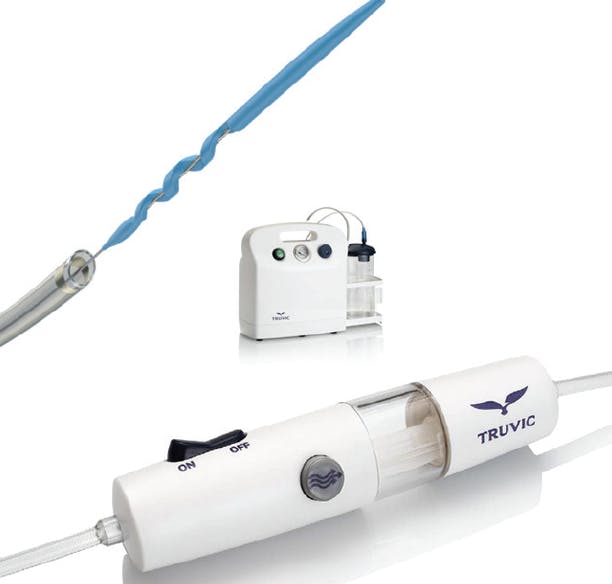
Figure 1. The Prodigy thrombectomy system is intended for the removal of fresh, soft emboli and thrombi from vessels of the peripheral arterial and venous systems. It is not approved for use in the coronaries, pulmonary vasculature, or the neurovasculature.
The Prodigy catheter’s advanced design combines variable braided construction with specific polymer jacket transition zones, and results in the right balance between flexibility and pushability in a variety of vascular anatomies. The Prodigy HotShot controller features a unique TruView™ clot capture container and integrated manual controls that put the power of controlled aspiration in the palm of the operator’s hands. Finally, the Prodigy Twist connects with each catheter to optimize clot engagement when needed and can make a difference in case outcomes.
WHO TO TREAT
When treating peripheral artery disease (PAD) patients with CLI, the risk of developing acute and/or subacute arterial occlusions is prevalent. In a subset of these patients, thrombolytics may be contraindicated (such as those patients with recent surgery or stroke) or fail to adequately lyse the thrombus. In both of these situations, the Prodigy thrombectomy system can be an effective tool to allow the interventionalist to aspirate the thromboemboli successfully in a variety of peripheral arterial vessel beds.
BACKGROUND
The Mercy Heart Institute operates four hospitals across the metro Cincinnati area. Mercy West is a 250-bed hospital that has comprehensive endovascular and surgical interventions for the entire spectrum of cardiovascular diseases. Our CLI and amputation prevention program services a diverse patient population. The system and our team regularly treat > 1,000 PAD patients each year.
Patient Presentation
A 78-year-old woman with a history of prior stroke, hypertension, hyperlipidemia, and tobacco abuse presented with Rutherford category 4 CLI. Access was achieved via the left radial artery. An initial angiogram showed bilateral superficial femoral artery (SFA) occlusion, which reconstituted at the popliteal artery (Figure 2). There was single-vessel runoff to the dorsalis pedis artery (bilateral anterior tibial arteries were patent) and all plantar vessels were supplied by collateral circulation.
Figure 2. Diagnostic angiogram.
Treatment Course
A 6-F, 119-cm radial sheath was positioned into the left common femoral artery. Then, with the support of an 0.035-inch microcatheter and 0.018-inch wire, the lesion was successfully traversed and true lumen access of the popliteal artery was confirmed by angiography.
Our first strategy was to reopen the SFA CTO with POBA. Using 4- and 5- X 150-mm balloons, flow was re-established. However, subsequent angiograms showed very sluggish flow through the SFA. Large thrombus burden remained in the proximal SFA (Figures 3 and 4). Thrombolytics were not used due to the patient’s increased bleeding risk (ie, advanced age, sex, weight, prior cerebrovascular accident). An 0.014-inch SpiderFX filter (Medtronic) was placed to protect from distal embolization due to single-vessel runoff.
A decision was made to evaluate the Prodigy system for this patient. The Prodigy 6-F catheter was introduced into the anatomy via the previously placed filter wire.
Figure 3. Angiogram after 4- X 100-mm ballooning showing large residual proximal SFA thrombus burden.
Figure 4. Angiogram after 5- X 100-mm ballooning demonstrating continued sluggish flow through the SFA.
Under fluoroscopy, the Prodigy 6-F catheter’s TruTip™ bevel tip was clearly visible and was observed to engage the clot (Figure 5). The clot was pulled back to the sheath, but the sheath disengaged the clot from the Prodigy catheter tip. At this junction, we decided to use the Prodigy Twist device to further engage and disrupt the clot (Figure 6). The Twist’s radiopaque marker bands were clear under fluoroscopy, and the relative position to the catheter’s TruTip was easy to visualize. Both the rotating and back-and-forth techniques with the Twist device were used to disrupt and engage the clot, and, with the vacuum on, visual feedback on clot and blood flow was immediately available to me as the operator (Figure 7). The combination of maximum vacuum power via the Prodigy catheter and clot engagement with Prodigy Twist helped to retrieve the clot from the patient’s vessel, and we established straightline, brisk flow, with only slight residuals. Additional angiograms were obtained and showed that brisk flow to the foot was evident. The remaining vessels were treated with standard POBA and stents for the remaining disease (Figure 8). The final stent was a 6- X 100-mm Misago stent (Terumo Interventional Systems).
Figure 5. The Prodigy catheter engaged on the clot.
Figure 6. The Prodigy Twist facilitating clot ingestion.
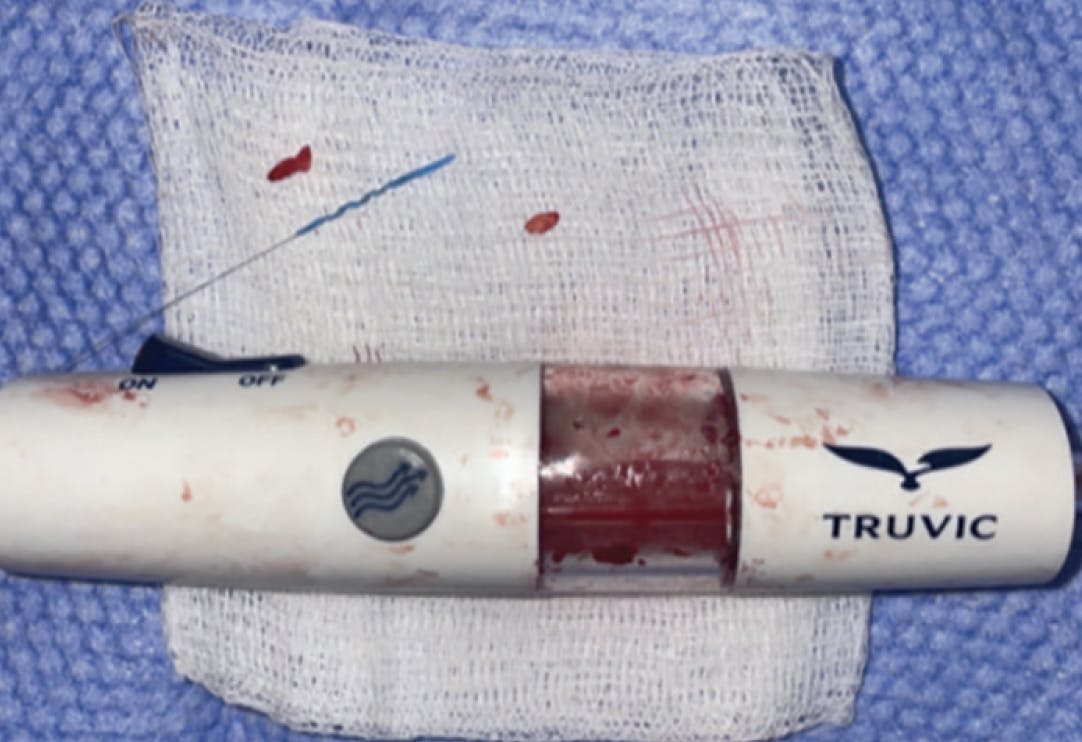
Figure 7. Clot captured in handheld HotShot controller with Twist device after the case was completed.
Figure 8. Final angiogram poststenting.
Case Conclusion
Overall, the case outcome was a success, and we were able to remove the clot from the patient in a single session, without the need for tissue plasminogen activator that would result in an intensive care unit stay. All devices performed as expected and we were able to re-establish straightline flow to the foot. Trackability of the Prodigy system was positive. The Twist device was a welcome addition to help engage and disrupt clot and assisted in achieving a positive result for the patient. The Prodigy system provides an important new tool for the treatment of peripheral arterial thrombectomy.
Important Safety Information available here and on the truvic.com website.
1. Society for Vascular Surgery. Patients with chronic limb-threatening ischemia (CLTI). Accessed August 24, 2022. https://vascular.org/patients-and-referring-physicians/referring-physicians/who-refer/patients-chronic-limb-threatening
M10055.A

Advertisement
Advertisement