Advertisement
Advertisement

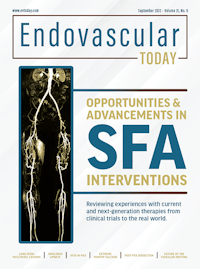
This month marks 20 years since Endovascular Today published its first edition. In our September 2002 issue, experts addressed wide-ranging topics, including the future of carotid stenting, the potential for drug-coated devices, and the opportunities and challenges facing aortic aneurysm repair. The importance of multispecialty collaboration was imprinted on that first collection, with authors from varied backgrounds represented, including the FDA. Looking back on the insights shared in our launch issue—so many of which have proven prescient in the conversation even today—we reflect with immense gratitude on the opportunity we have had to work in such a vital and constantly progressing field. We are grateful that our intrepid Chief Medical Editors, Editorial Advisors, and authors saw the potential for this project and took a chance on a startup publishing company that had no prior foothold in covering vascular disease.
Much has changed over the past 2 decades in vascular intervention, but the willingness of individuals to contribute their expertise to the larger conversation remains a hallmark of the field and grows with each passing day. Physicians, industry, and regulatory experts have built bridges together with patient-centered advancements in mind, generously allowing Endovascular Today and our colleagues in the media and meeting landscape to be conduits for disseminating their progress.
We thank every author, panelist, moderator, and interviewee for sharing experiences with us and our audiences. With schedules more crowded than ever, we appreciate the time you take to write, revise, respond, and collaborate. To our colleagues in industry, in addition to the work you do to advance the field, we thank you for supporting our efforts over the years. Most importantly, we thank our readers for your interest, feedback, and encouragement.
We also fondly remember our past team members for their contributions. We come to work each day and build on what you started and contributed along the way.
Interventional techniques continue to expand into new horizons—some previously unimagined—and we look forward to growing our own capabilities and integrating the rapid-paced vascular and communications fields.
—The Endovascular Today team
Advertisement
Advertisement