Advertisement
Advertisement
September 2022
Role of Intravascular Ultrasound in Superficial Femoral Artery Interventions
An update on emerging evidence on the use of IVUS in SFA interventions.
The superficial femoral artery (SFA) is part of the femoropopliteal segment, which is the most commonly diseased infrainguinal artery in patients presenting with symptomatic peripheral artery disease. Advancing technology allows an endovascular-first approach in lesions of increasing complexity, including long-segment disease, heavily calcified lesions, and chronic total occlusions (CTOs), and is advantageous for patients with accruing comorbidities, advanced age, and for those at increased surgical risk. Despite these advances, the durability of percutaneous revascularization still remains a major issue, with rates of restenosis after femoropopliteal stenting reported to be 30% to 40% within 2 years.1 The use of intravascular ultrasound (IVUS) has shown resounding procedural and clinical benefits during coronary intervention, resulting in a lower risk of stent-related events, myocardial infarction, and cardiovascular death in follow-up.2 Emerging data suggest that IVUS-guided revascularization may have a similar impact on outcomes after lower extremity arterial interventions.
IMPACT OF IVUS ON PROCEDURAL OUTCOMES
The use of IVUS to guide lower extremity revascularization has the potential to improve outcomes by several mechanisms, which can be categorized as preintervention (ie, prior to device treatment), intraprocedural (ie, determining the next therapeutic step, such as whether to proceed with stent implantation), and postintervention optimization (ie, investigating residual disease or dissection). In the preintervention phase, IVUS can be used prior to delivery of therapy to help plan the procedure and optimize device sizing, as IVUS provides a more accurate determination of vessel and lesion characteristics compared with angiography alone (Figure 1). In a prospective analysis of 1,967 limbs undergoing femoropopliteal interventions, IVUS-derived reference vessel diameter was significantly larger compared with that determined by angiography (6.0 ± 1.0 mm vs 5.0 ± 1.0 mm; P < .001), with more pronounced differences in previously stented vessels, small vessels, CTOs, and those with bilateral calcification.3 IVUS can also be used to better understand plaque morphology, such as the degree of calcific burden (Figure 2), and investigate the causes of filling defects, including acute thrombus (Figure 3).
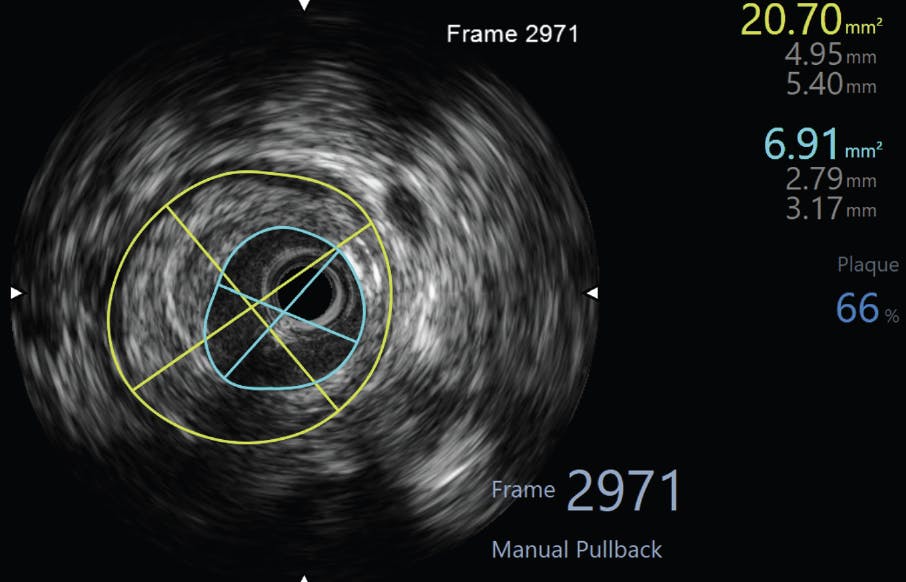
Figure 1. IVUS-guided sizing. The yellow circle represents the area of the normal vessel, and the blue circle represents the remaining luminal area as a result of atherosclerotic plaque.
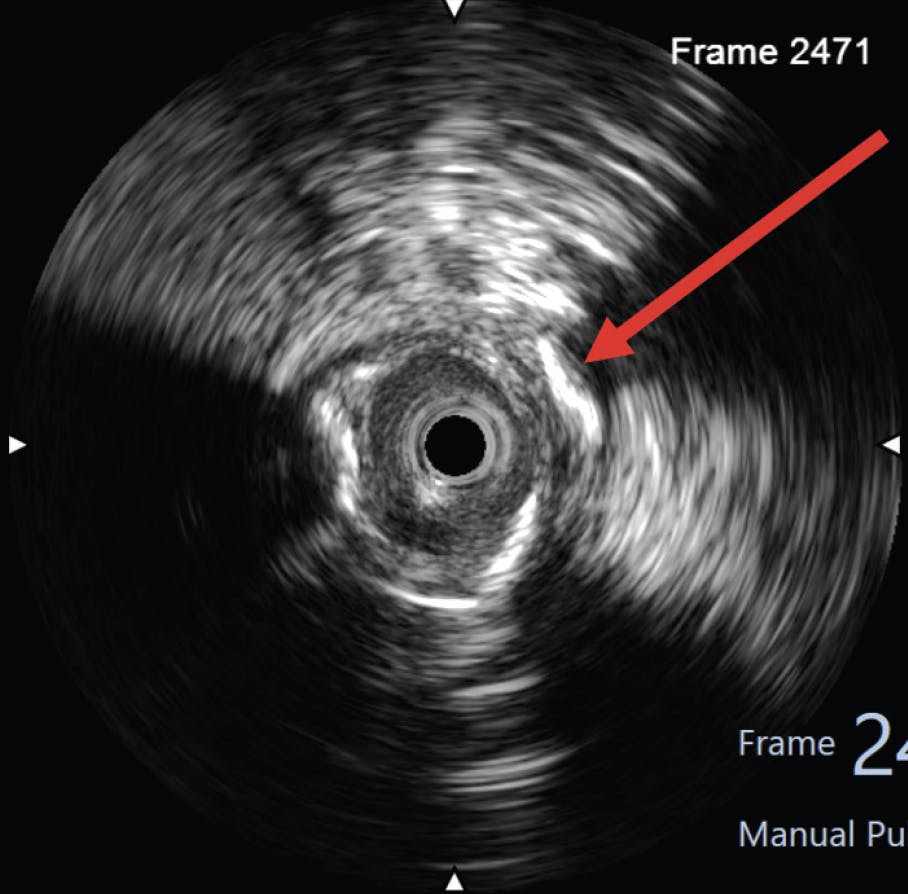
Figure 2. IVUS assessment of plaque morphology. Highlighted are deep calcific plaque that may only be modifiable with treatment modalities such as intravascular lithotripsy.
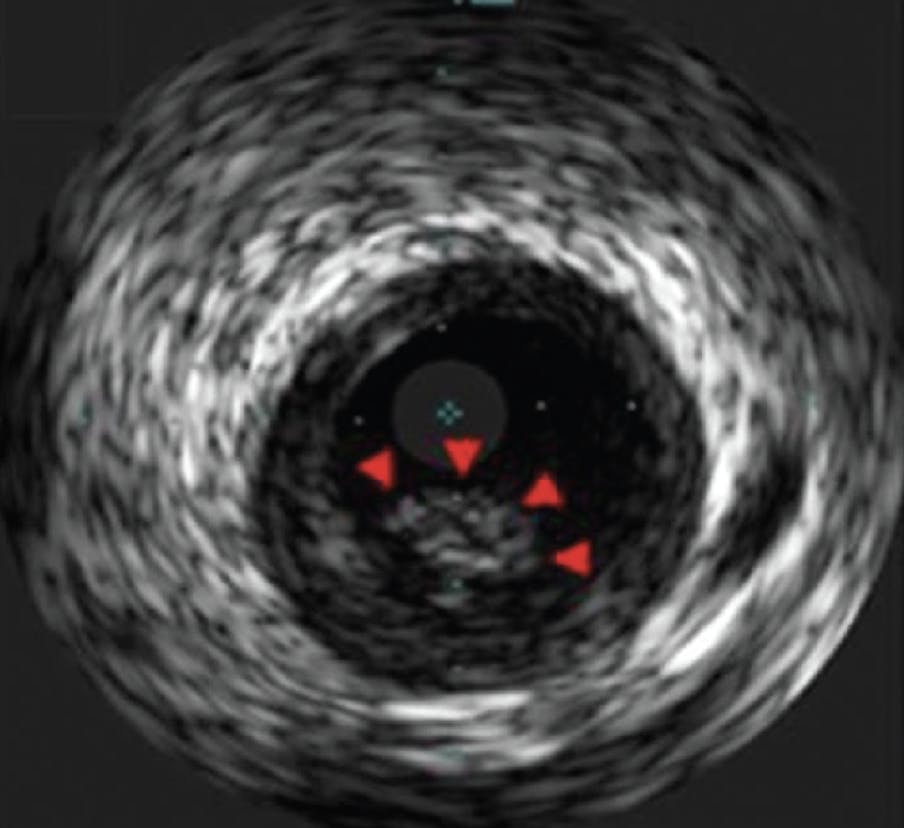
Figure 3. IVUS-guided assessment of a filling defect. Arrows point to a thrombotic occlusion of the vessel.
Intraprocedural use of IVUS is efficacious in helping with decisions on definitive treatment, including device sizing, determining next steps (eg, further plaque debulking), and confirming luminal wire passage during CTO crossing. A propensity-matched, retrospective analysis of 231 patients with de novo femoropopliteal lesions treated in the IN.PACT study with the In.Pact Admiral drug-coated balloon (DCB; Medtronic) showed decreased rates of restenosis at 2 years when IVUS external elastic membrane–based DCB sizing was employed.4 A single-center, retrospective study of 82 de novo femoropopliteal CTOs found that IVUS-guided CTO crossing was associated with lower clinically driven target vessel revascularization as compared with non–IVUS-guided interventions at 12 months (83.9% vs 62.8%; P = .036), and true lumen angioplasty rates were higher compared to non–IVUS-guided wiring (91.1% vs 51.3; P < .001).5
Postinterventional optimization with IVUS includes the opportunity to improve detection of complications (eg, dissections) and optimize implants (eg, stent apposition) (Figure 4). A meta-analysis of 11 observational studies including 1,703 femoropopliteal lesions found that lower minimum lumen area (standard mean difference, –0.30; 95% CI, –0.46 to –0.15) and dissections (odds ratio [OR], 1.58; 95% CI, 1.01-2.49; P = .047) were associated with increased mid-term restenosis.6 These studies suggest that IVUS-derived data carry important prognostic implications and can provide actionable decision support in interventions.
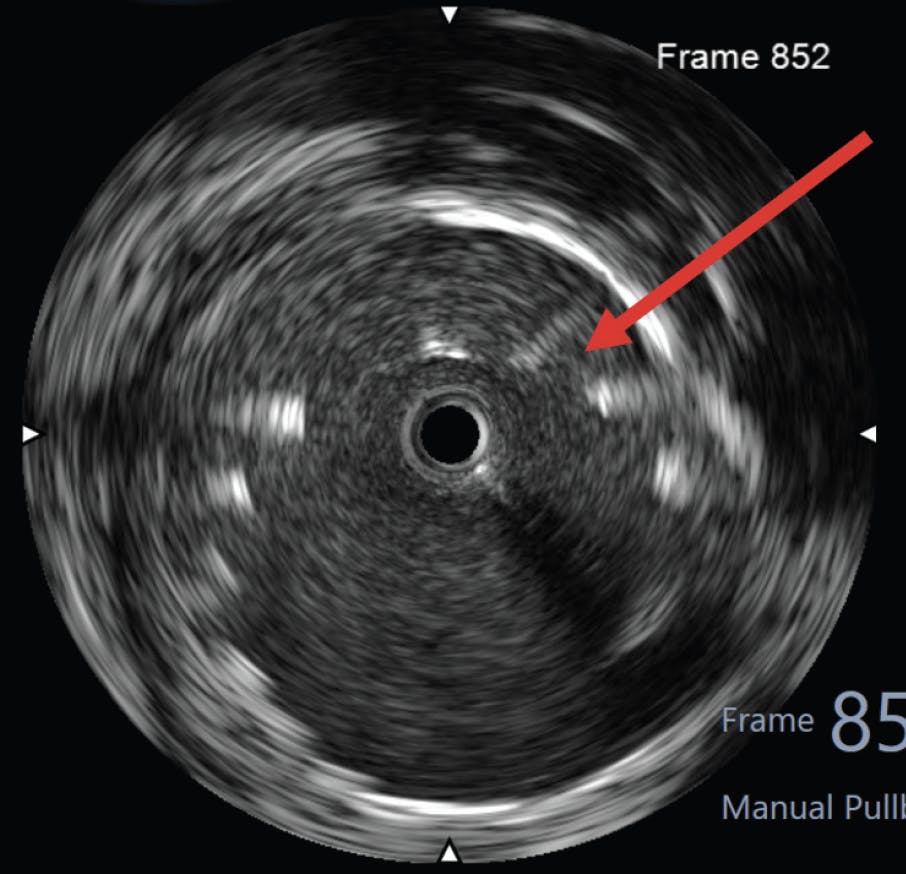
Figure 4. IVUS assessment of stent placement postimplantation. Note that the stent struts are not apposed to the vessel wall.
PROSPECTIVE TRIAL DATA
To date, only one prospective, randomized controlled trial has evaluated outcomes of peripheral IVUS when used as part of a femoropopliteal artery revascularization strategy compared with angiography alone. Allan et al randomized 150 patients (1:1) undergoing femoropopliteal artery interventions to angiography alone versus angiography with a prescribed protocol using IVUS data.7 The arms were balanced in terms of treated angiographic lesion length (median, 125 mm [IQR, 60-250 mm] vs 100 mm [IQR, 40-195 mm]; P = .105) and lesion characteristics, including presence of CTOs, quality of runoff, popliteal involvement, and degree of calcification. The main finding of the trial was a lower rate of the primary powered endpoint (binary restenosis) at 12 months with the use of IVUS compared with angiography alone (72.5% vs 55.4%; P = .008). There was no difference in clinically driven target lesion revascularization (84.2% and 82.4%; P = .776); however, the study was not powered to detect differences in clinical outcomes.
Notably, the use of IVUS resulted in a change to the prerandomization endovascular treatment plan in approximately 80% of cases in the treatment arm (n = 60 of 76). This is similar to the rate of change in treatment plan of 74% when IVUS guidance was used during percutaneous coronary intervention in the ADAPT-DES study, suggesting the information provided by IVUS has significant clinical impact on revascularization and that it may be similar in coronary and peripheral interventions.8 The primary benefit was driven by upsizing the diameter of DCBs due to a discrepancy between angiographic- and IVUS-derived measurements of lumen size, possibly allowing for more successful delivery of antiproliferative therapy to the vessel wall. However, reference vessels were also smaller in 10.7% of cases, in which upsizing of DCBs would not have been appropriate, indicating that IVUS allows for tailoring of treatment. A major limitation of this study was that angiography was not required to be done in two planes, limiting accurate vessel assessment. Conversely, this highlights the inherent limitations of planar imaging such as angiography in accurately assessing vessel size and lesion severity compared to luminal imaging.
CONSENSUS FINDINGS ON PERIPHERAL IVUS
Although the evidence is still limited, clinicians have generally supported the use and growth of IVUS during SFA interventions. A recent expert consensus involved a multidisciplinary panel of 42 vascular specialists who rated the application of IVUS use during peripheral intervention, stratified by procedural phase and arterial segment.9 Summarizing the findings from the femoropopliteal artery portion of the document, IVUS was highly supported during all phases of peripheral revascularization. During the preinterventional phase, use was determined as “may be appropriate” for determining etiology of vessel occlusion and plaque morphology and as “appropriate” for assessing ambiguous lesions, filling defects, and vessel sizing and minimizing contrast use. It was rated as “appropriate” in all intraprocedural scenarios, including identifying the location of wire crossing track, determining the next therapeutic step, and vessel sizing for devices. IVUS use was also rated as “appropriate” for all postintervention optimization scenarios, including identifying residual stenosis and plaque after debulking, stent optimization, and dissection detection.
PRACTICE PATTERNS IN THE UNITED STATES
At present, data suggest that there remains significant variability among operators regarding the use of IVUS to guide SFA intervention in the United States. An analysis of Medicare data by Deery et al noted that of 58,552 index femoropopliteal interventions, 11,394 (19%) were IVUS guided. IVUS use was associated with claudication versus critical limb-threatening ischemia (OR, 1.23; 95% CI, 1.11-1.36) and atherectomy versus angioplasty alone (OR, 2.09; 95% CI, 1.83-2.39). An association of IVUS use with higher-volume providers and those with higher rates of service provided in office-based labs (OBLs) was also noted.10 The association with use in claudication, in conjunction to highly reimbursed therapies such as atherectomy, and use in OBLs raises important questions regarding appropriate application of IVUS and the cost implications. Nonetheless, cost concerns should be tempered if there is a notable clinical improvement for patients with minimal risk, as noted by Allan et al.7 A separate contemporary analysis of 697,794 peripheral arterial interventions performed among Medicare beneficiaries aged ≥ 65 years from January 2016 to December 2019, of which 78,152 (11.2%) were IVUS guided, corroborated increased use of IVUS in OBLs and ambulatory surgical centers, which are the primary sites of growth of both peripheral interventions and IVUS use. Importantly, this analysis showed a decreased risk of major adverse limb events with IVUS use (hazard ratio, 0.68; 95% CI, 0.68-0.69; P < .001) through a median follow-up of 425 days.11 The limitations of these analyses include that they are nonrandomized and use less granular claims-based data. However, if IVUS use offsets future health care costs incurred by improving clinical and functional outcomes, it may justify more widespread application.
THE FUTURE OF IVUS IN PERIPHERAL INTERVENTIONS
Data thus far indicate that use of IVUS is associated with improved procedural patency and outcomes at 1 year after femoropopliteal interventions, with the prospect that this may translate into substantial improvements in longer-term, patient-oriented outcomes such as reductions in major amputation. Further prospective data will help fortify this relationship. The drivers of the present heterogeneity in IVUS use during peripheral interventions are poorly understood. Identifying implementation barriers, such as lack of provider familiarity with IVUS image interpretation or concern with additional procedural workflow time, may represent gaps that can be addressed to improve adoption of peripheral IVUS. Lastly, formal cost-effectiveness studies are warranted to evaluate if widespread adoption of IVUS use during SFA interventions results in favorable health care spending, both periprocedurally and over the long term.
1. Rymer JA, Jones WS. Femoropopliteal in-stent restenosis. Circ Cardiovasc Interv. 2018;11:e007559. doi: 10.1161/CIRCINTERVENTIONS.118.007559
2. Ahn JM, Kang SJ, Yoon SH, et al. Meta-analysis of outcomes after intravascular ultrasound-guided versus angiography-guided drug-eluting stent implantation in 26,503 patients enrolled in three randomized trials and 14 observational studies. Am J Cardiol. 2014;113:1338-1347. doi: 10.1016/j.amjcard.2013.12.043
3. Iida O, Takahara M, Soga Y, et al. Vessel diameter evaluated by intravascular ultrasound versus angiography. J Endovasc Ther. 2022;29:343-349. doi: 10.1177/15266028211047946
4. Kurata N, Iida O, Takahara M, et al. Clinical impact of the size of drug-coated balloon therapy on restenosis rate in femoropopliteal lesions. J Endovasc Ther. Published online March 6, 2022. doi: 10.1177/15266028221081082
5. Tsubakimoto Y, Isodono K, Fujimoto T, et al. IVUS-guided wiring improves the clinical outcomes of angioplasty for long femoropopliteal CTO compared with the conventional intraluminal approach. J Atheroscler Thromb. 2021;28:365-374. doi: 10.5551/jat.57166
6. Jiang J, Xu W. Predictability and usefulness of intravascular ultrasound-guided angioplasty in patients with femoropopliteal lesions. Int Angiol. 2022;41:74-81. doi: 10.23736/S0392-9590.21.04769-6
7. Allan RB, Puckridge PJ, Spark JI, Delaney CL. The impact of intravascular ultrasound on femoropopliteal artery endovascular interventions: a randomized controlled trial. JACC Cardiovasc Interv. 2022;15:536-546. doi: 10.1016/j.jcin.2022.01.001
8. Witzenbichler B, Maehara A, Weisz G, et al. Relationship between intravascular ultrasound guidance and clinical outcomes after drug-eluting stents: the assessment of dual antiplatelet therapy with drug-eluting stents (ADAPT-DES) study. Circulation. 2014;129:463-470. doi: 10.1161/CIRCULATIONAHA.113.003942
9. Secemsky E, Mosarla R, Rosenfield K, et al. Appropriate use of intravascular ultrasound during arterial and venous lower extremity interventions. J Am Coll Cardiol Interv. 2022;15:1558-1568. doi: 10.1016/j.jcin.2022.04.034
10. Deery SE, Goldsborough E, Dun C, et al. Use of intravascular ultrasound during first-time femoropopliteal peripheral vascular interventions among Medicare beneficiaries. Ann Vasc Surg. 2022;80:70-77. doi: 10.1016/j.avsg.2021.09.024
11. Secemsky EA, Hawkins B, Divakaran S. Temporal trends, practice variation, and associated outcomes with use of intravascular ultrasound during peripheral arterial intervention. Presented at: Transcatheter Cardiovascular Therapeutics; November 28, 2021.
Advertisement
Advertisement