Advertisement
Advertisement
September 2022
Optimizing Technique for Success: A Guide for the Use of IVUS in Femoropopliteal Intervention
Technical tips for use of IVUS to guide therapy preintervention and assess efficacy of treatment.
By Richard B. Allan, BHlth Sc(Hons), PhD; Christopher L. Delaney, BMBS, PhD, FRACS; and Phillip J. Puckridge, MBBS, FRACS
Over the last decade, there has been increased interest in using intravascular ultrasound (IVUS) to support peripheral arterial endovascular interventions; however, it remains essentially a boutique technology primarily used by a small minority of interventionalists.1 Although there are retrospective data suggesting benefits and a subsequent increase in the use of IVUS,2 little prospective data are available. Our experience with IVUS led us to undertake a randomized controlled trial (RCT) comparing outcomes of IVUS and angiography guidance in femoropopliteal interventions, which showed a significant reduction in binary restenosis at 12 months in cases with IVUS guidance available as compared with cases without IVUS guidance.3 Additionally, differences in imaging findings with angiography and IVUS were present in > 80% of cases, resulting in changes to treatment in almost 80% of the cases with IVUS available.
IVUS allows total vessel evaluation rather than the limited luminal imaging provided by angiography. The key benefits of IVUS prior to treatment are its ability to (1) optimize treatment by accurately determining the true vessel diameter and allow matching of the device size to the actual vessel size, (2) identify the true lesion length and ensure that the entire lesion is treated, and (3) guide the choice of treatment type to match the nature of the pathology. Posttreatment IVUS is also beneficial to identify inadequate initial treatment and optimize retreatment during the procedure.
This experience has highlighted the merits of routine use of IVUS in femoropopliteal interventions. IVUS reveals important findings that are unsuspected on angiography. Restricting the use of IVUS to selected cases will inevitably result in missing clinically important information. This article details a series of observations and suggestions to assist IVUS users in optimizing their practice. Note that some specific technical comments relate to the IVUS system manufactured by Philips and may be different for other systems.
GETTING STARTED
Understand what you are looking at.
IVUS provides a cross-sectional image of the vessel, allowing visualization of vessel wall structures (Figure 1). Make sure you are familiar with normal and abnormal IVUS appearances. The best way to gain familiarity with IVUS is by using it. The learning curve for image interpretation can be reduced by applying prior ultrasound experience or working with a colleague with ultrasound expertise, such as a vascular sonographer, during interventional cases.
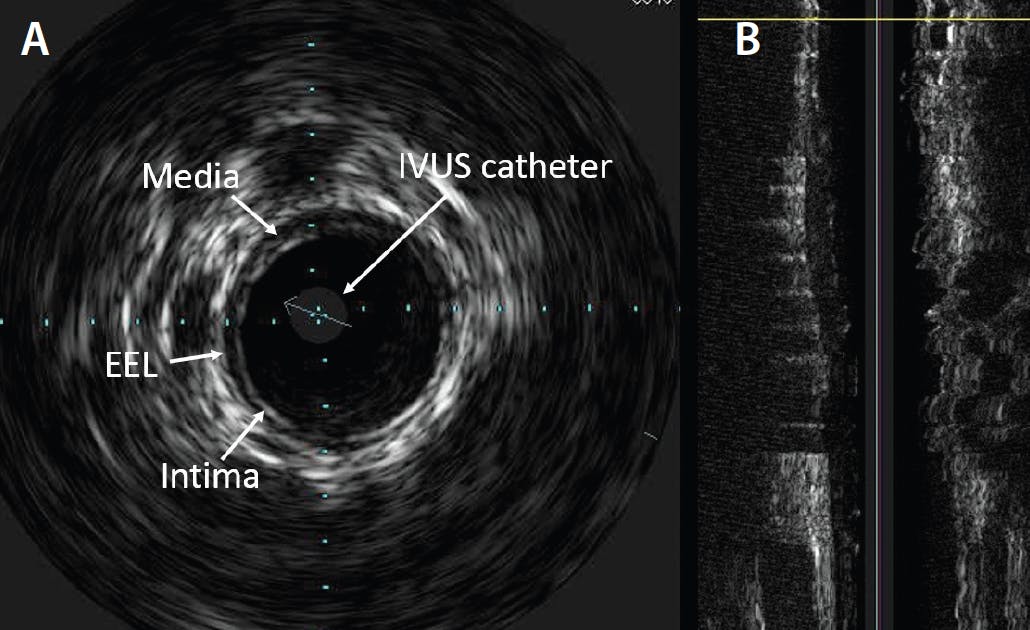
Figure 1. IVUS image of a normal artery, as shown by an axial image (A) and a longitudinal vessel profile created by “stacking” of consecutive axial frames (B). The IVUS catheter and arterial wall structures are clearly demonstrated. EEL, external elastic lamina.
Optimize image quality.
Learn how to optimize the image. Poor-quality imaging equals poor-quality information. IVUS machines are simple, with only three important controls: image gain, field of view, and ring-down suppression. Take note of the ring-down suppression function to ensure that artifacts are avoided (Figure 2).
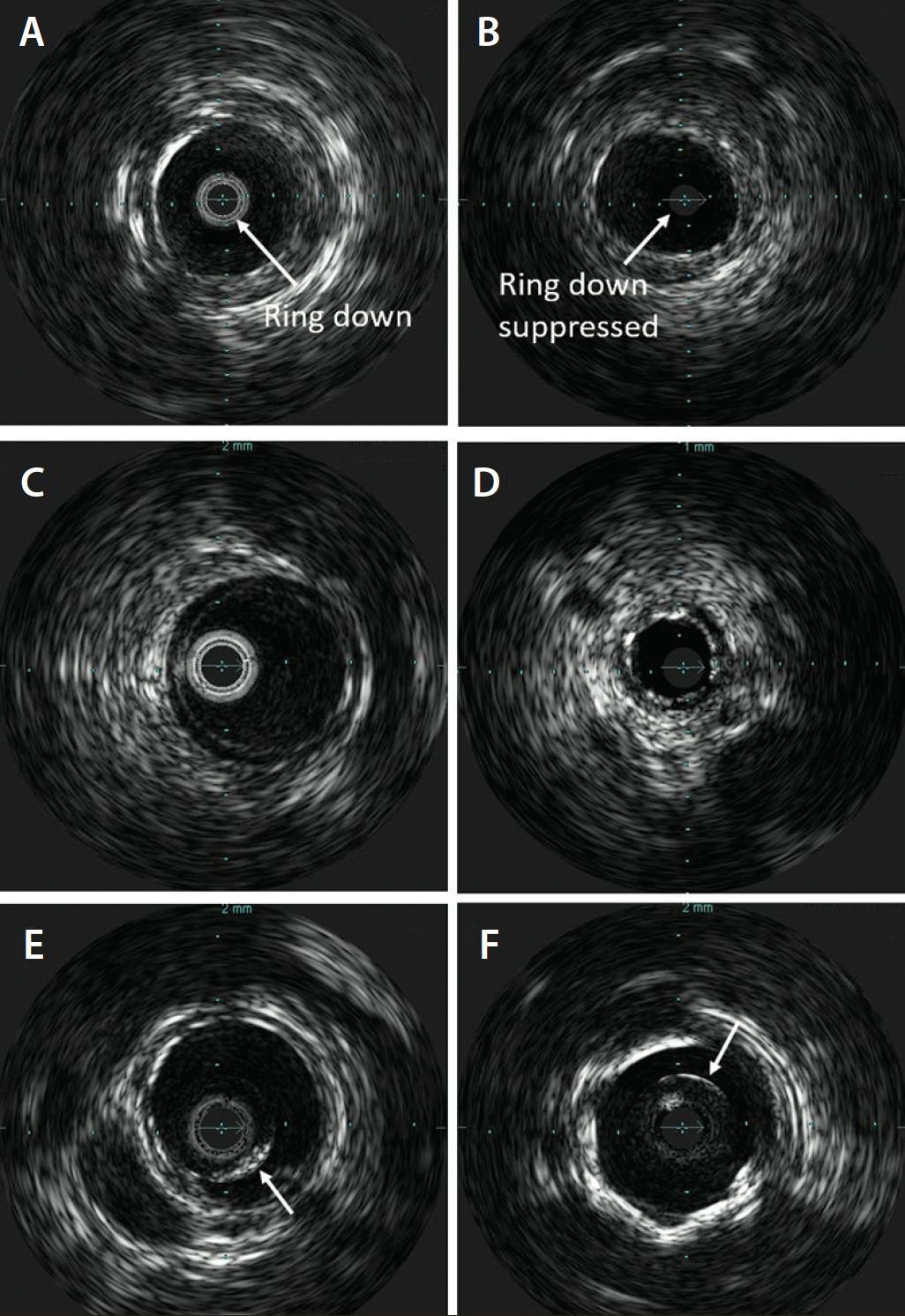
Figure 2. Ring down is a bright rim of echoes generated by solid state IVUS transducers, which obscures the immediate zone around the IVUS catheter (A). Ring down can be suppressed using an electronic masking tool (B), allowing visualization of structures close to the catheter. It should be activated when the catheter is in the middle of the lumen to avoid artifacts. If activated close to the wall due to eccentric catheter location (C) or small vessel size (D), it will result in artifacts that may mimic a dissection (E) and intraluminal material (F).
Establish a standardized imaging method and apply it uniformly.
It is important to develop a consistent methodology. There are different ways of doing this, but it needs to be consistent to be repeatable. We routinely record a pullback prior to and after treatment as a reference. We use manual pullback, as mechanical pullback is time consuming and not suited to longer lesions. We do this under fluoroscopy with a radiopaque ruler, using “bookmarking” at regular intervals, to allow correlation between IVUS and angiography (Figure 3). A recorded pullback allows immediate review of areas of interest and a permanent imaging record. If required, further “live” imaging can clarify areas of uncertainty. We use both 0.014- and 0.018-inch IVUS catheters (their imaging quality is essentially comparable); however, the 0.018-inch catheter is preferred due to its slightly larger field of view.
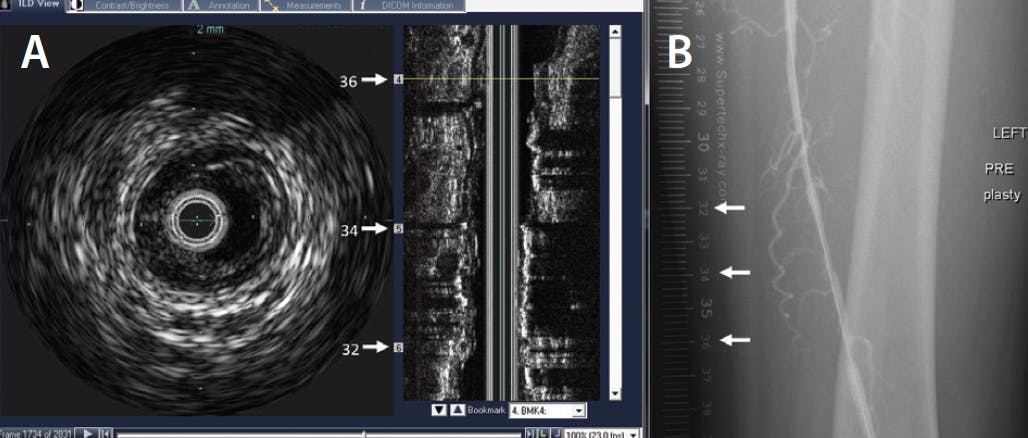
Figure 3. IVUS image with arrows indicating bookmarks created at 2-cm intervals. The level of the displayed image is indicated by yellow line at the 36-cm bookmark (A). Angiogram demonstrating the radiopaque ruler with centimeter markers corresponding to IVUS bookmarks (B).
PREINTERVENTION ASSESSMENT
Use IVUS to measure the vessel.
The IVUS lumen measurement will be different than that measured by angiography, but it is important to understand it is not always larger. The superior accuracy of IVUS compared to angiography related to lumen size measurement is well established.4-7 There is an assumption that IVUS measurements are always larger than measurements on angiography. This is true in most cases, and our RCT found a systematic bias toward larger measurements with IVUS. However, the study also found that the IVUS measurement was smaller than the quantitative angiography measurement in 10.7% of cases.3
One of the reasons for the disparity between modalities is that the lumen is often eccentric. Angiographic lumen assessment is dependent on the orientation of the x-ray beam to the lumen shape. Differences in orientation between the two can lead to under- or overestimation of the lumen size when significant eccentricity is present (Figure 4). Routine oversizing may therefore result in a balloon that is significantly too large and cause unnecessary trauma. Conversely, undersizing will result in poor apposition of the balloon to the vessel wall and, when using drug-coated balloons (DCBs), will result in inadequate drug delivery to the intima.
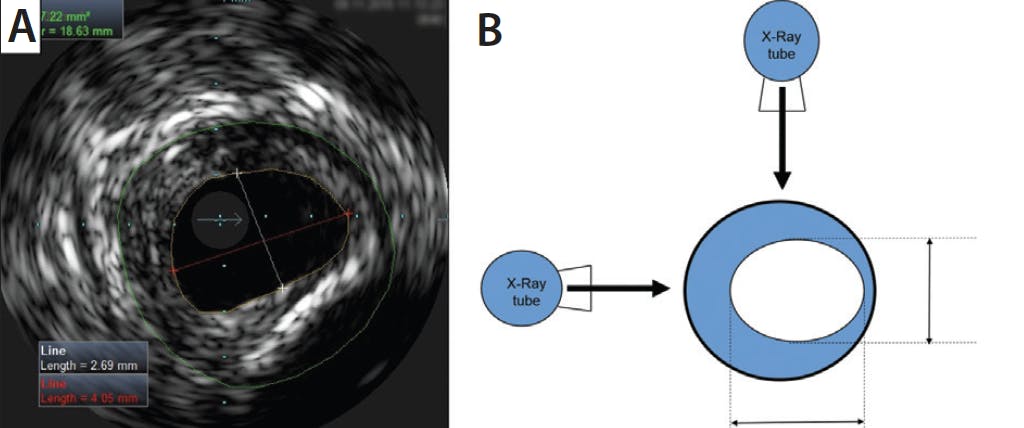
Figure 4. The superficial femoral artery (SFA) with an eccentric lumen with a difference of 1.3 mm between maximum and minimum diameters (A). Schematic demonstrating the potential difference in angiographic lumen size depending on orientation between the x-ray beam and the vessel (B).
Lesions may be longer than they look on angiography.
It is important to assess segments proximal and distal to the angiographic lesion with IVUS. In our RCT, we found that lesions were usually longer on IVUS (Figure 5), and a change in treatment length was the most common change in therapy when IVUS was used to guide treatment. This resulted in treatment lengths that tended to be longer in the IVUS group. Therefore, IVUS helps avoid geographic misses in relation to drug delivery in cases treated with DCBs and helps ensure that stent landing zones are free of disease.
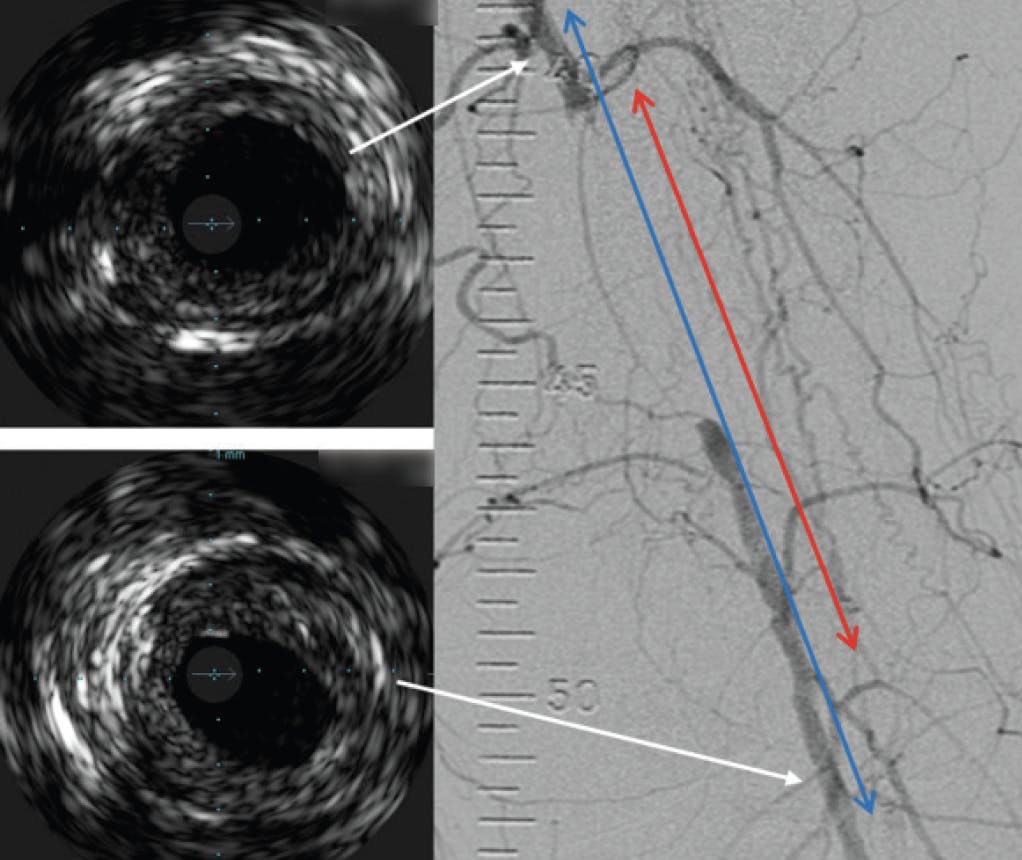
Figure 5. Lesion length is longer on IVUS than digital subtraction angiography (DSA), with significant lumen reduction and plaque burden beyond the margins of the DSA-defined lesion. The red arrowed line indicates the lesion length on DSA; the blue arrowed line indicates lesion length on IVUS.
Angiography cannot visualize plaque and can result in the wrong choice of treatment.
A stenosis may not necessarily be due to plaque. Negative vessel remodeling is commonly present in peripheral artery disease8 and can result in stenosis that is indistinguishable on angiography from a stenosis due to plaque (Figure 6, Video 1). Atherectomy is a common vessel preparation technique designed to reduce the plaque burden prior to angioplasty; however, this would be the wrong treatment choice when the stenosis is due to negative remodeling. In this scenario, atherectomy would, at best, be an expensive waste of time due to the lack of significant plaque. Unfortunately, it could also result in wall damage (Figure 7) that may initiate a severe neointimal hyperplastic response and rapid restenosis.9 The identification of negative modelling with minimal plaque burden should therefore preclude the use of atherectomy. In such cases, DCB angioplasty treatment is more prudent, saving time, cost, and reducing the risk of reintervention.
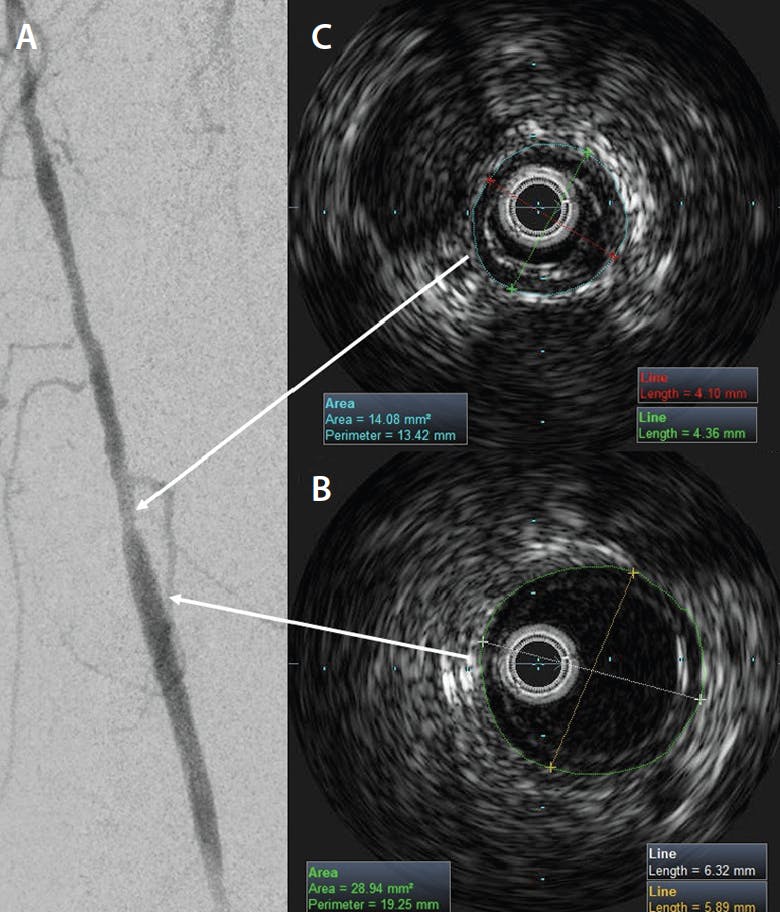
Figure 6. DSA of distal SFA with stenotic segments (A). IVUS of normal reference vessel (vessel diameter, 6.1 mm; area, 28.9 mm2) (B). IVUS of stenosis with minimal plaque burden but marked negative remodeling (vessel diameter, 4.2 mm; area, 14.1 mm2) (C).
Video 1. Example of a negative vessel remodeling. IVUS pullback demonstrating a segment of normal-sized vessel and a segment demonstrating marked negative remodeling. Note that the lumen reduction is primarily due to the negative modelling with only a mild plaque burden present.
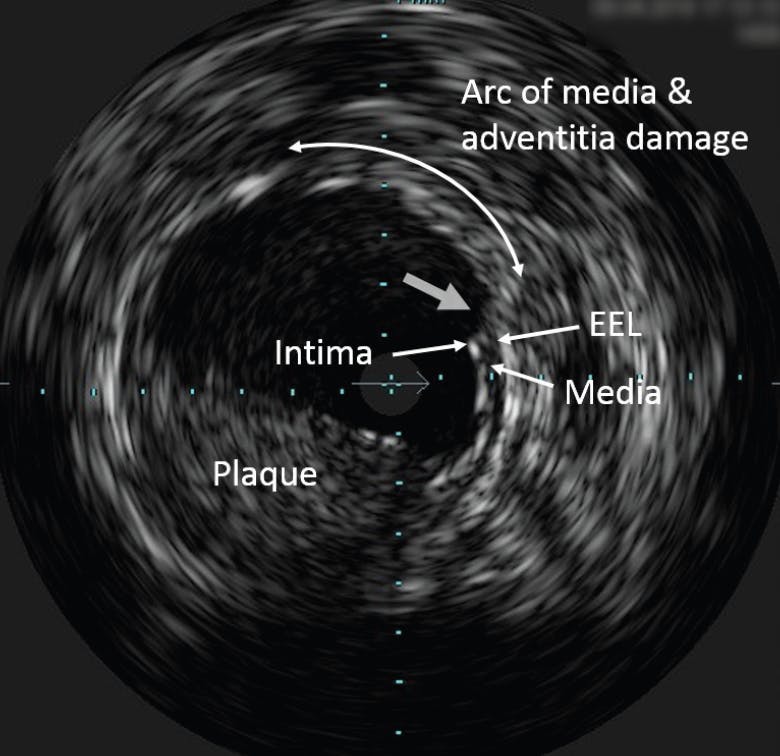
Figure 7. IVUS after directional atherectomy and angioplasty showing evidence of excision of the media with extension of lumen beyond the external elastic lamina (EEL) indicating adventitial damage (large arrow). The defect involves approximately 70° of the wall.
A similar risk may be present when there is markedly eccentric plaque. In a concentric lesion, the plaque effectively “protects” the wall from the atherectomy device, but in eccentric lesions, some of the wall may be free of plaque and therefore be at risk for wall injury (Figure 8). In this instance, the information gained from IVUS can allow a more directed application of the atherectomy technique or a change in treatment modality.
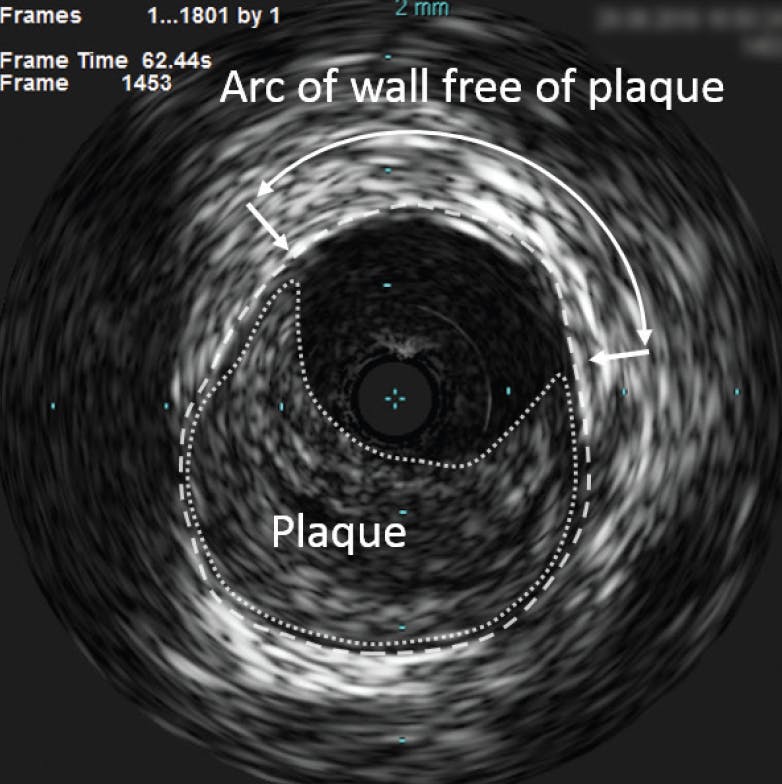
Figure 8. Vessel with eccentric plaque. Arrows and arc indicate the wall free of plaque. This zone is potentially at risk of damage during atherectomy. The dashed line indicates the EEL and the dotted line shows the extent of plaque.
Calcium is usually more severe and extensive than it appears on angiography.
Angiography is inferior to IVUS for characterizing vessel wall calcification, systematically underestimating both presence and severity.4,5,10-12 The increasing range of devices designed to treat calcified lesions makes appropriate treatment selection more challenging and increases the importance of accurate pretreatment assessment. The superior imaging provided by IVUS can assist in characterizing calcium (Figure 9) and optimizing treatment methods. A calcium arc ≥ 180° is the generally accepted threshold for severe calcification and is a predictor of restenosis.13-15 Although calcium is easily identified on IVUS, it also produces an acoustic shadow that obscures structures deep to the calcium. This makes estimation of plaque volume impossible and can hinder differentiation of intimal and medial calcium.
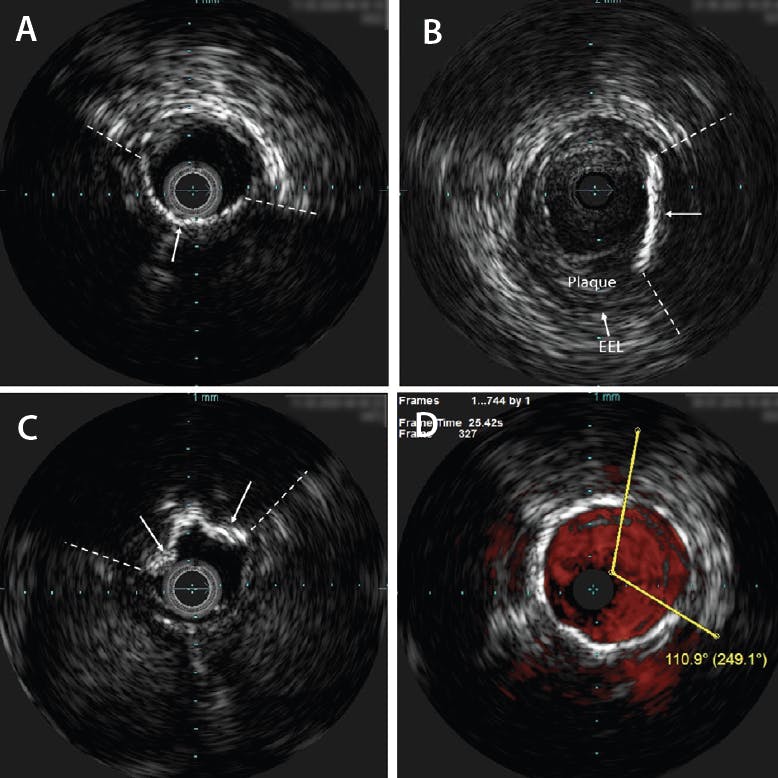
Figure 9. Vessel wall calcification can be recognized by intensely bright echoes (arrows) and acoustic shadow deep to the calcium (dashed lines) due to total reflection and absorption of the ultrasound beam. Medial calcification (arrow) is characterized by location within the media and smooth contour (A). Intimal calcification (arrow) is characterized by location within the plaque and superficial location relative to the vessel wall (B). Intimal calcification may have an irregular contour and may project into the lumen (arrows) (C). Calcium severity can be quantified by measuring arc of calcium around the wall (D). In this case, medial calcification extends 249° around the wall. Note that medial and intimal calcium may both be present, and shadowing from intimal calcium may obscure visualization of medial calcium.
IVUS assessment of plaque composition is difficult beyond the identification of calcification.
Although fibrotic plaque is likely to be more echogenic, there are no data supporting differentiation of fibrous and nonfibrous plaque with standard IVUS imaging. The virtual histology (VH) method is validated in the coronary arteries but not in the peripheral arteries. We do not use it due to the lack of validation, a limited field of view, and poor tracking of the vessel profile (Figure 10).
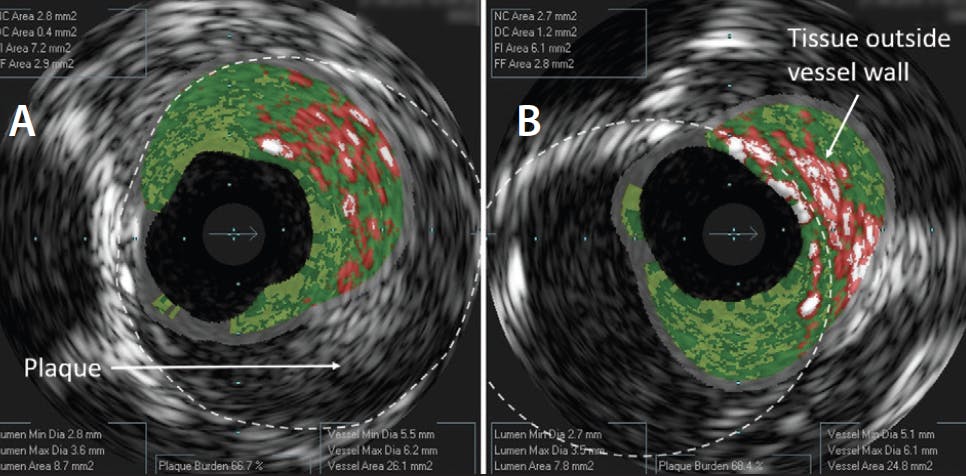
Figure 10. VH analysis displayed as multicolored area bounded by light gray border. The actual vessel boundary (EEL) is indicated by a dashed line. Technical limitations of VH analysis include potential for poor tracking of vessel boundaries and maximum field of view of 10 mm, which is insufficient for most SFAs. Some plaque not included within the analysis (A). Tissue outside artery wall included in the analysis (B). Note that in both cases, the field of view is insufficient to display the entire artery. Also note that the quantitative data provided in these cases will be inaccurate.
IVUS can confirm the path of CTO crossing.
The choice of treatment in chronic total occlusions (CTOs) is often dependent on whether crossing has a subintimal component. The path of CTO crossing is often uncertain on angiography but is easily established with IVUS (Figure 11). In most cases, the IVUS catheter can be easily passed through the occlusion, but if resistance is met, predilation with a small-diameter balloon (2 mm is usually adequate) will reduce the risk of catheter damage.
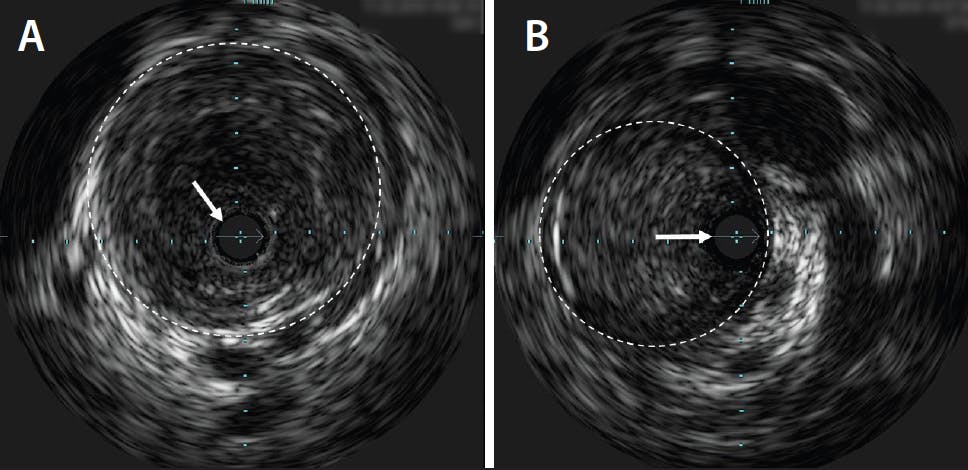
Figure 11. IVUS catheter (arrow) located centrally in lumen confirming intimal path within the CTO (A). IVUS catheter (arrow) eccentrically placed against media, without intervening intima, confirming subintimal path within the CTO (B). Dashed lines represent the vessel wall (EEL).
POSTINTERVENTION ASSESSMENT
Posttreatment angiography imaging is imprecise and may not identify inadequate initial treatment.5,16 We found that additional treatment was required in 25% of cases due to residual disease seen on IVUS after normal posttreatment angiography. In 47% of these cases, dissection was more severe on IVUS, while residual stenosis was more severe in 42% of cases and inadequate stent expansion was detected in 11% of cases.3
IVUS provides a more detailed assessment of postangioplasty dissection than angiography17; however, it is not clear how best to identify clinically significant dissection with IVUS. The angle of the dissection arc is the most quoted IVUS dissection parameter (Figure 12) and an angle of ≥ 180° has been proposed as the threshold for severe dissection.18 There is little evidence to support this threshold, and much smaller angles (ie, 64°-70°) have been reported as predictors of restenosis.19,20 Other IVUS parameters may be useful, with evidence supporting a minimum lumen area (Figure 12) of < 12 to 13 mm2 as a predictor of restenosis.19,21 In our experience, we have found a combination of dissection arc and minimum lumen to be superior to a single criterion (Video 2). There is currently no consensus on IVUS assessment of dissection. The currently accepted imaging definition of severe dissection is the presence of flow limitation on angiography. Studies comparing this to a range of IVUS dissection parameters are required to inform future consensus on the identification of clinically significant dissection. A technical limitation to using dissection angle is the lack of electronic angle measurement tools on current systems, forcing users to rely on visual assessment.
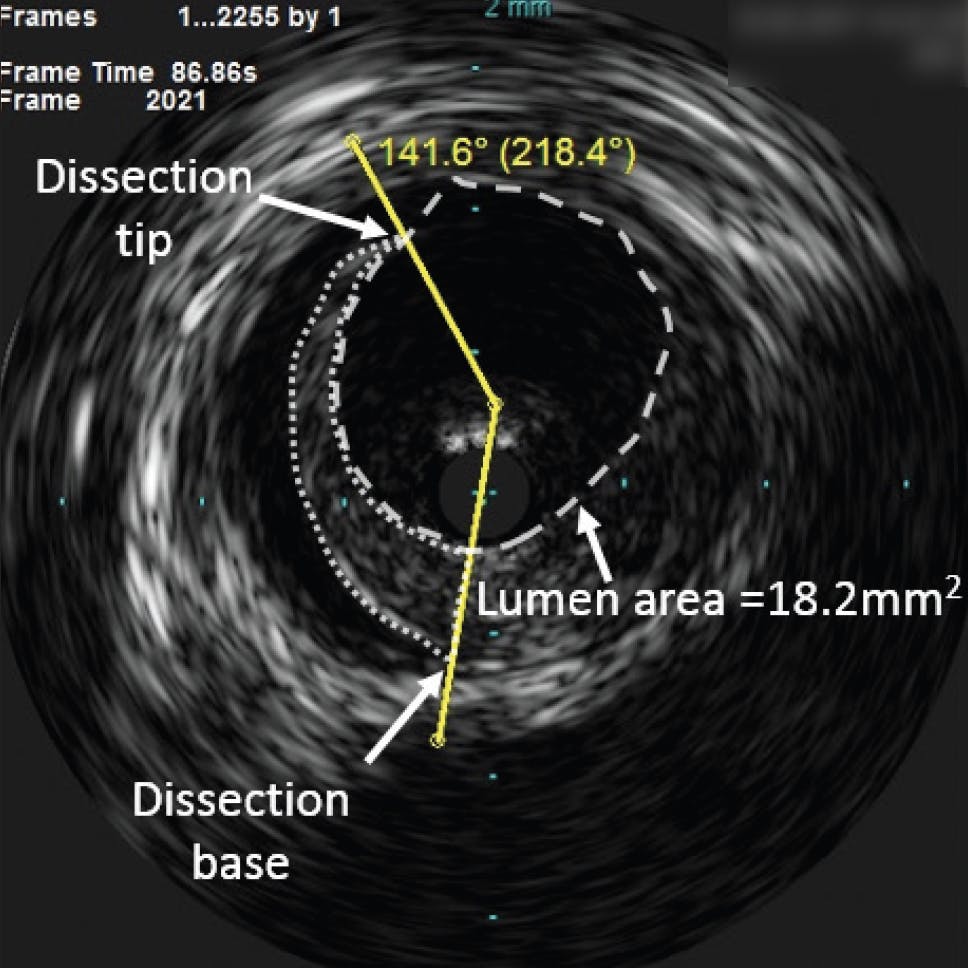
Figure 12. Postangioplasty dissection with measurement of the dissection angle and lumen area (dashed line). The dissection flap is indicated by a dotted line. The dissection angle is defined as the arc from the free tip of the dissection to the point where the dissection flap meets the vessel wall.
Video 2. Example of a postangioplasty dissection. IVUS pullback, with ChromaFlo imaging, through a segment with extensive dissection. The maximum dissection arc is 145° with an associated significant residual lumen reduction (lumen area = 12.5 mm2). Note the presence of moderate intimal calcification throughout (maximum arc of 110°).
ChromaFlo (Philips), a non-Doppler blood flow detection function, is also useful for identifying dissection, particularly for new operators (Figure 13). Its use can shorten the learning curve, but with greater experience, it is not routinely required, although it remains useful for clarification of uncertain appearances.
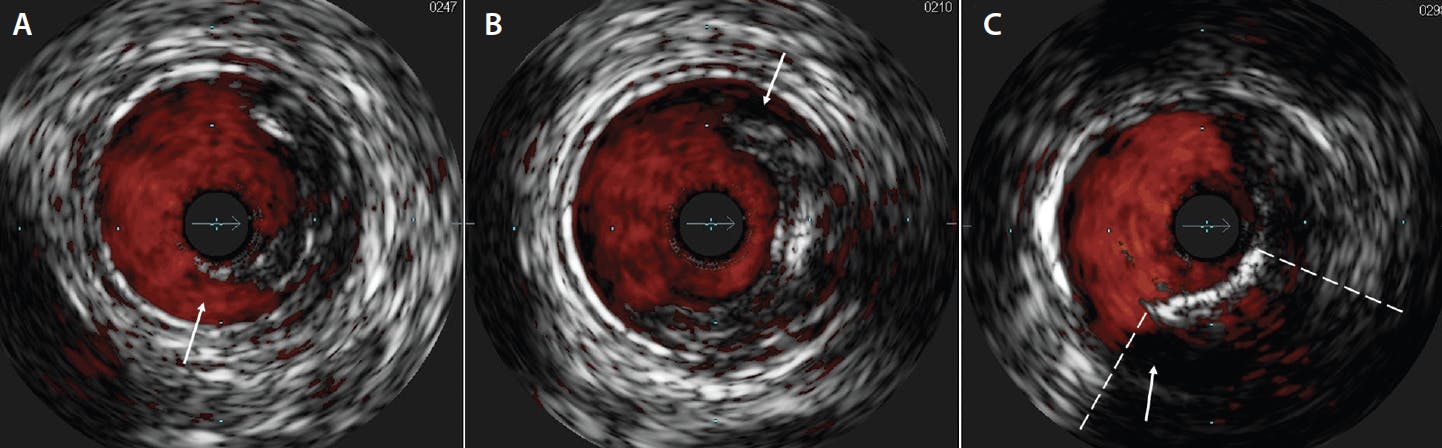
Figure 13. ChromaFlo detects blood flow (red areas on image) using signal tracking software. Blood flow detected deep to a dissection flap (arrow) (A). Dissection flap (arrow) with no blood flow detected, probably due to slow flow that is below the detection threshold of the software (B). No flow displayed deep to a dissection flap (arrow) due the large arc of acoustic shadow from intimal calcium (dashed lines) (C). In this case, measurement of the dissection angle is impossible.
As with preintervention lumen measurement, IVUS assessment is superior to angiography for assessment of residual stenosis. Angiography may be even less accurate after treatment due to the increased irregularity of the postangioplasty lumen.5
The ability of IVUS to identify inadequate stent deployment was demonstrated in our RCT and provided an opportunity for repeat ballooning that otherwise would not have occurred. The cross-sectional nature of IVUS enables identification of poor stent apposition (Figure 14) and allows quantification of the degree of underexpansion (Figure 15). This is important, as there is evidence that minimum stent lumen area and distal vessel size are predictors of restenosis after stenting.22-25
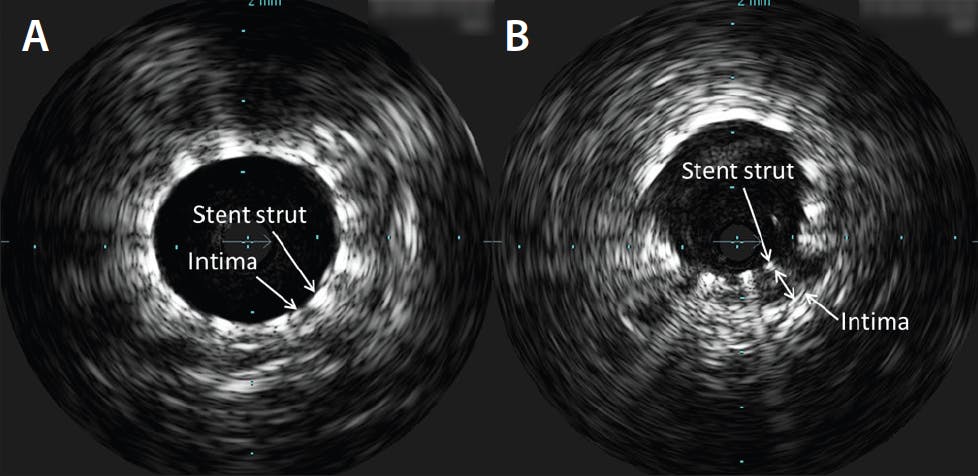
Figure 14. Poor stent apposition. A normally expanded stent with struts and intima closely apposed (A). An underexpanded stent with a 0.5-mm gap between the struts and intima (B).
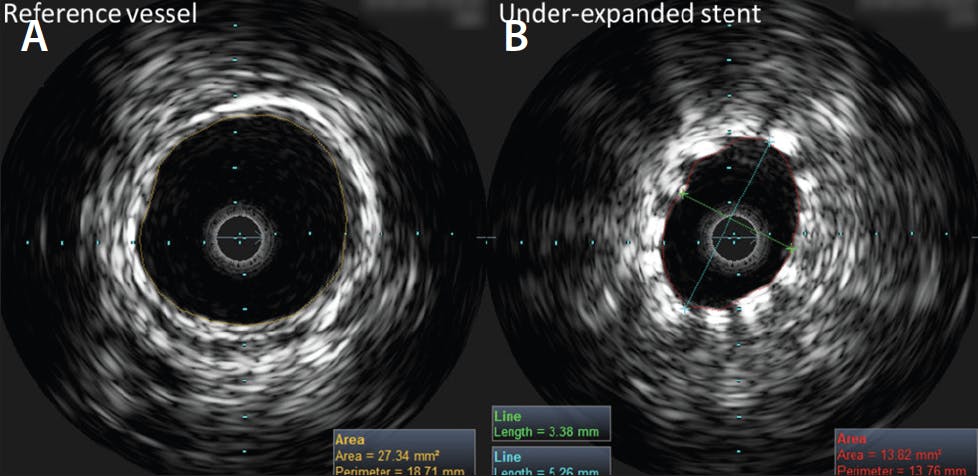
Figure 15. An underexpanded stent. Reference vessel with a lumen area of 27 mm2 (A). An underexpanded stent with a lumen area of 13 mm2 (B).
CHALLENGES
Lack of funding for peripheral IVUS in most jurisdictions is the greatest impediment to the adoption of this technology. There is a dearth of high-level prospective data on the use of peripheral arterial IVUS and no prospectively collected health economic analysis. These data are essential to justify changes to funding arrangements. Consensus across specialist groups on how and when to use IVUS is also required to ensure the appropriate use of this technology. Finally, there are limited opportunities for training in IVUS, and an expansion of education opportunities is essential.
CONCLUSION
IVUS is no longer a luxury; it is a key tool to ensure optimal outcomes in endovascular intervention for PAD. The use of IVUS is beneficial both preintervention in guiding therapy and postintervention in understanding the efficacy of treatment. Implementation of the strategies proposed herein will help reduce the learning curve associated with IVUS, and patients will reap the benefits.
1. Deery SE, Goldsborough E, Dun C, et al. Use of intravascular ultrasound during first-time femoropopliteal peripheral vascular interventions among Medicare beneficiaries. Ann Vasc Surg. 2022;80:70-77. doi: 10.1016/j.avsg.2021.09.024
2. Secemsky E, Hawkins B, Divakaran S. Temporal trends, practice variation, and associated outcomes with use of intravascular ultrasound during peripheral arterial intervention. Presented at: Transcatheter Cardiovascular Therapeutics; November 4-6, 2021; Orlando, Florida.
3. Allan RB, Puckridge PJ, Spark JI, Delaney CL. The impact of intravascular ultrasound on femoropopliteal artery endovascular interventions: a randomized controlled trial. JACC Cardiovasc Interv. 2022;15:536-546. doi: 10.1016/j.jcin.2022.01.001
4. Mintz GS, Popma JJ, Pichard AD, et al. Patterns of calcification in coronary artery disease. A statistical analysis of intravascular ultrasound and coronary angiography in 1155 lesions. Circulation. 1995;91:1959-1965. doi: 10.1161/01.cir.91.7.1959
5. van Lankeren W, Gussenhoven EJ, Pieterman H, et al. Comparison of angiography and intravascular ultrasound before and after balloon angioplasty of the femoropopliteal artery. Cardiovasc Intervent Radiol. 1998;21:367-374. doi: 10.1007/s002709900282
6. Arthurs ZM, Bishop PD, Feiten LE, et al. Evaluation of peripheral atherosclerosis: a comparative analysis of angiography and intravascular ultrasound imaging. J Vasc Surg. 2010;51:933-939. doi: 10.1016/j.jvs.2009.11.034
7. Nissen SE, Gurley JC, Grines CL, et al. Intravascular ultrasound assessment of lumen size and wall morphology in normal subjects and patients with coronary artery disease. Circulation. 1991;84:1087-1099. doi: 10.1161/01.cir.84.3.1087
8. Schoenhagen P, Ziada KM, Vince DG, et al. Arterial remodeling and coronary artery disease: the concept of “dilated” versus “obstructive” coronary atherosclerosis. J Am Coll Cardiol. 2001;38:297-306. doi: 10.1016/s0735-1097(01)01374-2
9. Tarricone A, Ali Z, Rajamanickam A, et al. Histopathological evidence of adventitial or medial injury is a strong predictor of restenosis during directional atherectomy for peripheral artery disease. J Endovasc Ther. 2015;22:712-715. doi: 10.1177/1526602815597683
10. Mintz GS, Pichard AD, Kent KM, et al. Interrelation of coronary angiographic reference lumen size and intravascular ultrasound target lesion calcium. Am J Cardiol. 1998;81:387-391. doi: 10.1016/s0002-9149(97)00924-7
11. Tobis JM, Mallery J, Mahon D, Let al. Intravascular ultrasound imaging of human coronary arteries in vivo. Analysis of tissue characterizations with comparison to in vitro histological specimens. Circulation. 1991;83:913-926. doi: 10.1161/01.cir.83.3.913
12. Gussenhoven EJ, Essed CE, Lancee CT, et al. Arterial wall characteristics determined by intravascular ultrasound imaging: an in vitro study. J Am Coll Cardiol. 1989;14:947-952. doi: 10.1016/0735-1097(89)90471-3
13. Fujihara M, Kozuki A, Tsubakimoto Y, et al. Lumen gain after endovascular therapy in calcified superficial femoral artery occlusive disease assessed by intravascular ultrasound (CODE study). J Endovasc Ther. 2019;26:322-330. doi: 10.1177/1526602819836095
14. Aihara H, Higashitani M, Takimura H, et al. Differences in intravascular ultrasound measurement values between treatment modalities for restenosis in femoropopliteal lesions. Circ J. 2020;84:1320-1329. doi: 10.1253/circj.CJ-20-0218
15. Kurata N, Iida O, Takahara M, et al. Predictive factors for restenosis following stent-supported endovascular therapy with intravascular ultrasound evaluation for femoropopliteal chronic total occlusion. J Vasc Interv Radiol. 2021;32:712-720.e1. doi: 10.1016/j.jvir.2020.11.020
16. Gerritsen GP, Gussenhoven EJ, The SH, et al. Intravascular ultrasonography before and after intervention: in vivo comparison with angiography. J Vasc Surg. 1993;18:31-40. doi: 10.1067/mva.1993.41957
17. Allan RB, Wise NC, Wong YT, Delaney CL. Comparison of angiographic dissection classification systems in the femoropopliteal arteries using IVUS validation and reliability testing. J Endovasc Ther. 2022;29:193-203. doi: 10.1177/15266028211047952
18. Shammas NW, Shammas WJ, Jones-Miller S, et al. Optimal vessel sizing and understanding dissections in infrapopliteal interventions: data from the iDissection below the knee study. J Endovasc Ther. 2020;27:575-580. doi: 10.1177/1526602820924815
19. Kakizaki S, Kozuki A, Kijima Y, et al. Predictor analysis of 1-year restenosis after percutaneous transluminal angioplasty for femoropopliteal stenotic lesions using intravascular ultrasound. Heart Vessels. 2021;36:1661-1669. doi: 10.1007/s00380-021-01845-8
20. Kozuki A, Takahara M, Shimizu M, et al. Outcomes of dissection angles as predictor of restenosis after drug-coated balloon treatment. J Atheroscler Thromb. 2021;28:954-962. doi: 10.5551/jat.59774
21. Gussenhoven EJ, van der Lugt A, Pasterkamp G, et al. Intravascular ultrasound predictors of outcome after peripheral balloon angioplasty. Eur J Vasc Endovasc Surg. 1995;10:279-288. doi: 10.1016/s1078-5884(05)80043-7
22. Miki K, Fujii K, Kawasaki D, et al. Intravascular ultrasound–derived stent dimensions as predictors of angiographic restenosis following nitinol stent implantation in the superficial femoral artery. J Endovasc Ther. 2016;23:424-432. doi: 10.1177/1526602816641669
23. Mori S, Hirano K, Nakano M, et al. Intravascular ultrasound measurements after drug-eluting stent placement in femoropopliteal lesions: determining predictors of restenosis. J Endovasc Ther. 2015;22:341-349. doi: 10.1177/1526602815580308
24. Miki K, Fujii K, Fukunaga M, et al. Impact of post-procedural intravascular ultrasound findings on long-term results following self-expanding nitinol stenting in superficial femoral artery lesions. Circ J. 2013;77:1543-1550. doi: 10.1253/circj.cj-12-1182
25. Iida O, Takahara M, Soga Y, et al. 1-year results of the ZEPHYR registry (Zilver PTX for the Femoral Artery and Proximal Popliteal Artery): predictors of restenosis. JACC Cardiovasc Interv. 2015;8:1105-1112. doi: 10.1016/j.jcin.2015.03.022
Advertisement
Advertisement