Advertisement
Advertisement
September 2022
Sponsored by Penumbra, Inc.
Real-World Perspectives on Thrombus Removal With the Lightning™ Intelligent Aspiration System 7
Case examples demonstrating the use of Indigo® System Lightning™ 7 Computer-Aided Mechanical Aspiration, which is designed for fast and efficient thrombus retrieval.
With Maria Antonella Ruffino, MD, EBIR, FCIRSE; Kamel Kechabtia, MD; and Daniel Kearns, BA(Hons), MBBS, PgCert, MAcadMEd, FRCR
Mechanical Aspiration of an Occluded Femoral–Posterior Tibial Artery Bypass With Lightning™ 7

PATIENT PRESENTATION
A woman in her mid 70s presented with hypertension, dyslipidemia, coronary heart disease, atrial fibrillation, previous ischemic stroke, and a history of peripheral arterial occlusive disease. She had previous iliac stenting of the left common iliac artery, as well as multiple angioplasties of the left superficial femoral and popliteal arteries in the last 2 years. She arrived at our hospital after being referred for the recent appearance of a small wound at the second toe of the left foot with pain that was unresponsive to medical therapy.
A duplex ultrasound was performed, revealing a new occlusion of the left femoropopliteal axis. Distally, the anterior tibial artery and peroneal artery were occluded, with patency of the posterior tibial artery.
After discussion of the case at our hospital’s vascular board, the decision was made to create an in situ femoral–posterior tibial artery–saphenous vein bypass in light of the previous revascularization failures. A few hours postprocedure, the patient reported acute pain at the left foot. She underwent local thrombolysis, thromboaspiration, embolectomy, and revision of the distal anastomosis, with completely restored patency. Four days after the intervention, the patient had a new occlusion of the bypass, which was confirmed by duplex ultrasound. At clinical evaluation, her foot was pale, cold, and had reduced sensation. The posterior tibial artery was pulseless.
INTERVENTION
The patient was brought to the hybrid room and systemically heparinized. After left common femoral artery cutdown, a 4-F sheath was positioned. Preliminary angiography showed a bypass obstruction at the level of the knee (Figure 1).
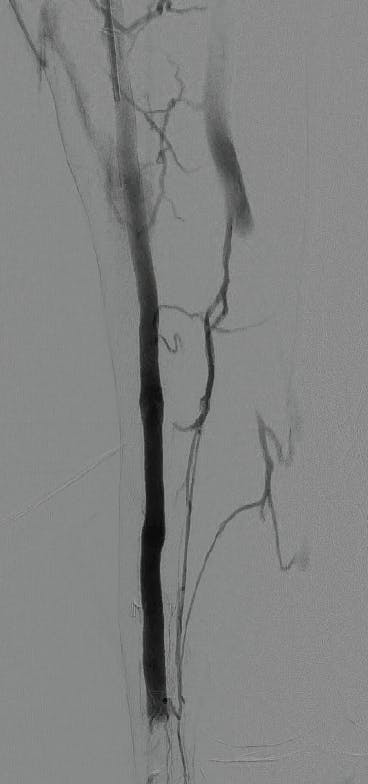
Figure 1. Preliminary angiography confirmed the occlusion of the femoral–posterior tibial artery bypass.
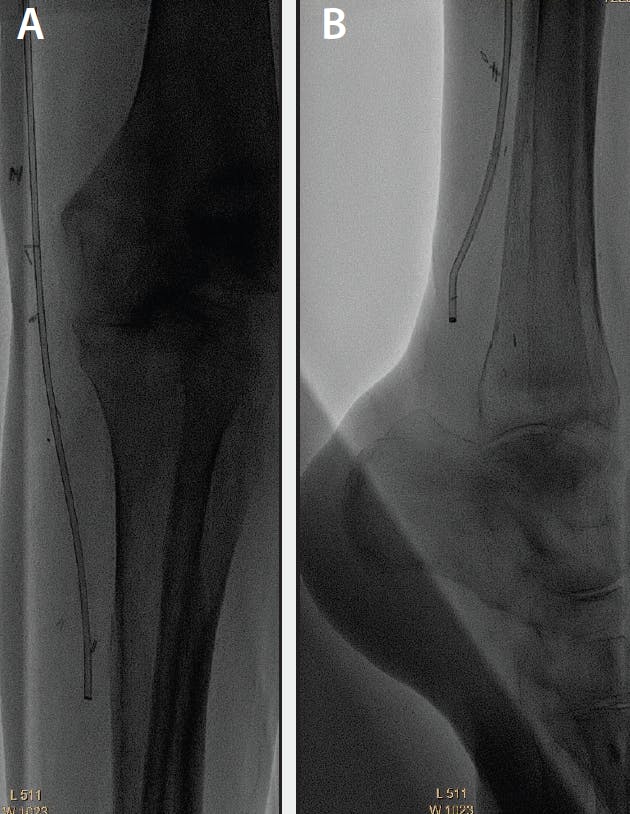
Figure 2. Mechanical aspiration with Lightning 7 along the bypass (A) and into the posterior tibial artery (B).
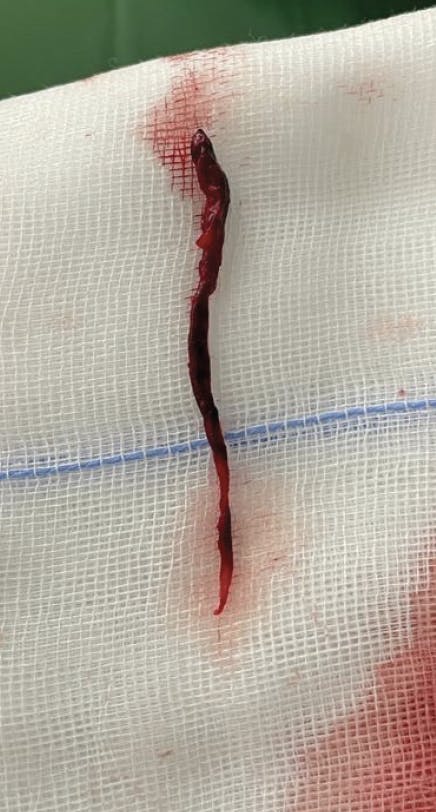
Figure 3. Thrombotic material from the mechanical aspiration.
A Lightning™ 7 Aspiration Catheter was introduced on an 0.018-inch guidewire. The aspiration system was connected to the Penumbra ENGINE™ aspiration pump (Penumbra, Inc.) and advanced along the bypass, with thrombus aspiration from proximal to distal and then back (Figure 2A). The trackability of the system enabled thrombectomy to the level of the distal anastomosis and aspiration of the posterior tibial artery (Figure 2B), with thrombus removal (Figure 3). Postaspiration angiography showed restored patency of the bypass and the posterior tibial artery, but there was some residual thrombus seen into the lateral branch of the plantar arch (Figure 4). After selective catheterization of the plantar branch with an 0.014-inch guidewire and a 4-F Bern diagnostic catheter (Tempo Aqua, Cordis) and selective angiography confirming its distal patency, percutaneous transluminal angioplasty (PTA) was performed with a 2-mm balloon (Figure 5). Completion angiography confirmed restored patency of the bypass and plantar arch, with good runoff (Figure 6). The patient was discharged on 100 mg of aspirin once daily and 110 mg of dabigatran twice daily.
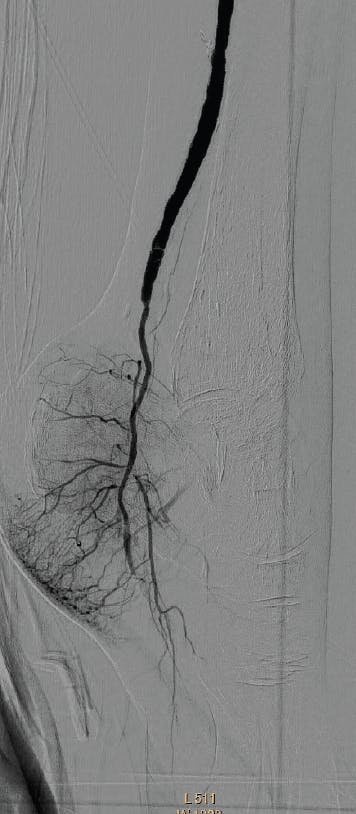
Figure 4. Angiography shows patency of the bypass and posterior tibial artery, with residual thrombus into the lateral plantar artery.
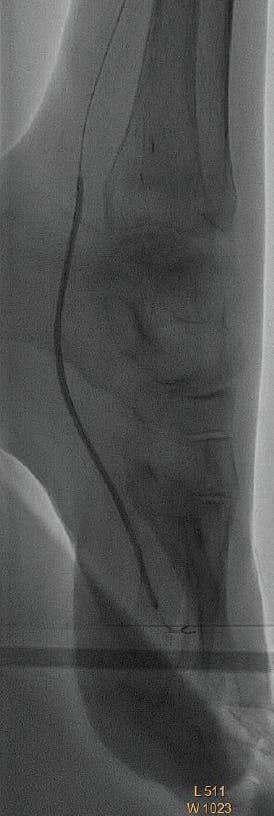
Figure 5. PTA at 2 mm of the lateral plantar artery.
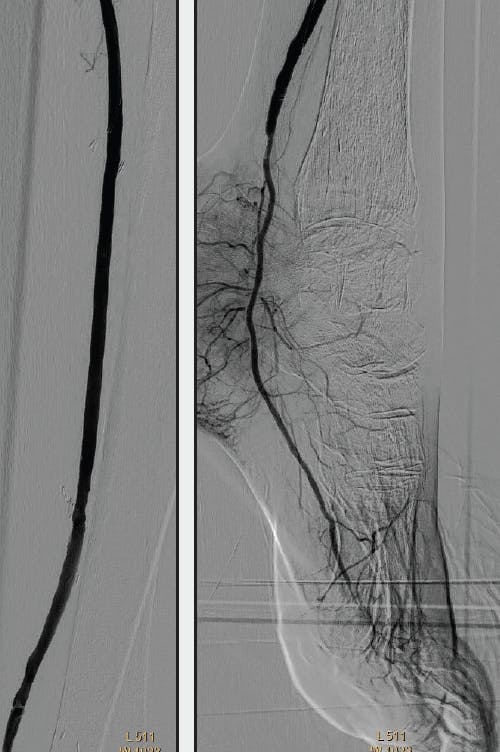
Figure 6. Completion angiography confirms patency of the bypass and good distal runoff.
DISCUSSION
Acute limb ischemia (ALI) still represents a challenging condition for vascular and endovascular specialists. Fast revascularization is mandatory to reduce the risk of amputation and death. Nowadays, many endovascular techniques are available with good outcomes, but we still lack evidence regarding which treatments are superior. Catheter-directed thrombolysis (CDT) may be considered if initiated promptly for patients with Rutherford grade IIb ALI, and may be combined with percutaneous aspiration or thrombectomy. Unfortunately, the treatment can carry a risk of bleeding complications,1 which may require an intensive care unit stay during treatment. The recent shortage of alteplase could lead to a shift in ALI treatment from lytic therapy to mechanical techniques. Aspiration thrombectomy with the Indigo® System has demonstrated its safety and efficacy in the management of ALI.2 The Indigo System with Lightning 7 offers continuous aspiration when engaged in thrombus to efficiently remove clot for arterial revascularization. The Lightning algorithm automatically detects when the system is in a patent blood vessel and changes from continuous aspiration into intermittent aspiration. This automatic valve control may reduce intraprocedural blood loss. The CAT7 offers 1:1 torqueability for tortuous below-the-knee vessels. Its stainless steel hypotube design also offers an inner lumen that is essentially the same power of the previous CAT8 while maintaining a 7-F profile.
ALI still represents a challenging condition. However, Lightning 7’s size and high-power aspiration paired with a proprietary clot-detection algorithm may provide revascularization designed to mitigate blood loss for select ALI cases.
1. Björck M, Earnshaw JJ, Acosta S, et al. European Society for Vascular Surgery (ESVS) 2020 clinical practice guidelines on the management of acute limb ischaemia. Eur J Vasc Endovasc Surg. 2020;59:173-218 .doi: 10.1016/j.ejvs.2019.09.006
2. de Donato G, Pasqui E, Sponza M, et al; INDIAN trial collaborators. Safety and efficacy of vacuum assisted thrombo-aspiration in patients with acute lower limb ischaemia: the INDIAN trial. Eur J Vasc Endovasc Surg. 2021;61:820-828. doi: 10.1016/j.ejvs.2021.01.004
Thromboaspiration of Arterial Thrombus Using Lightning 7

PATIENT PRESENTATION
A patient in their early 70s had a history of chronic smoking cessation and treated hypertension. The patient underwent recanalization angioplasty with drug-eluting stents (Eluvia, Boston Scientific Corporation) due to a femoropopliteal occlusion that caused stage 2 claudication at 300 meters. The patient was regularly checked by control Doppler ultrasounds and was on dual antiplatelet therapy but returned urgently 1 year after initial recanalization for severe claudication (< 50 m) and stage 3 nocturnal pain. Doppler and CTA showed a femoropopliteal in-stent thrombosis (Figure 1).
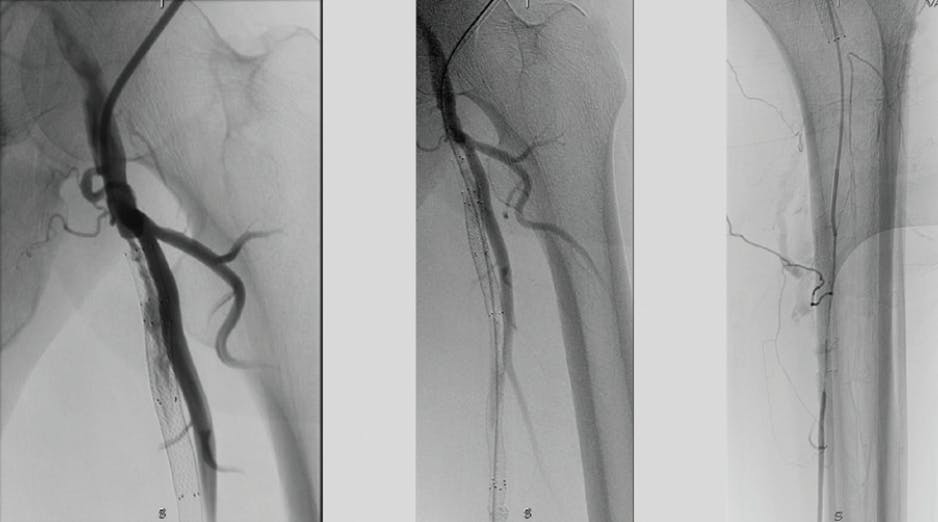
Figure 1. Preprocedural angiography.
Two possibilities were presented and discussed with the patient and the medical team: mechanical thrombectomy or surgical bypass. It was decided with the patient to proceed with an endovascular approach, given the option to keep the native vessel and as the symptoms started 3 weeks prior.
INTERVENTION
The patient was urgently hospitalized to perform endovascular mechanical thrombectomy, and the decision was made to use Lightning 7 technology as front-line treatment. Lightning 7 includes the CAT7 aspiration catheters as well as Lightning Tubing.
The Lightning 7 system is paired with the Penumbra ENGINE for high-power aspiration but remains low profile. Staying in a 7-F system, anterograde access was achieved with a 7-F introducer (Radifocus, Terumo Europe) and 0.035-inch guidewire (M straight, Terumo Europe). Seven thousand units of heparin and 5 mg of isosorbide dinitrate were administered. The Lightning 7 catheter was advanced over the wire. Once in place, the guidewire was removed, and the aspiration turned on.
Lightning’s audio and visual cues provide intraprocedural feedback to the operator. When in patent blood flow, a flashing green light is seen (Figure 2A and 2B), and audible clicking can be heard as the system intermittently aspirates. When engaged in the thrombus, the clicking stops to indicate the system is in continuous aspiration. If occluded for > 20 seconds, the flashing green light turns yellow.
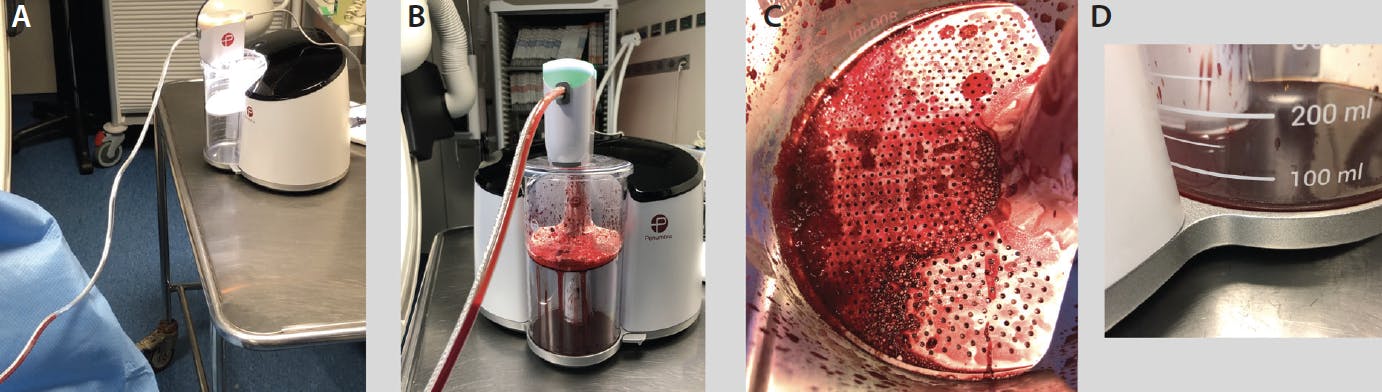
Figure 2. The Penumbra ENGINE pump and Lightning 7 computer-aided system: the visual yellow indicator after 20 seconds of contact with the thrombus (A); the green indicator at the end of the procedure (B); thrombus removed with Lightning 7 and Separator 7 (C); minimal blood loss (D). Lightning 7 includes the CAT7 aspiration catheters as well as Lightning Tubing.
Once the yellow light flashed, indicating the potential need for the Separator 7 (Penumbra, Inc.), the Separator 7 was placed (Figure 3). The radiopaque tip was advanced 1 cm outside the face of the catheter, and a second operator cycled the Separator in and out of the catheter while aspirating. With the Separator keeping the tip of the catheter clear, only two passes of the Lightning 7 were required to remove the in-stent thrombosis.
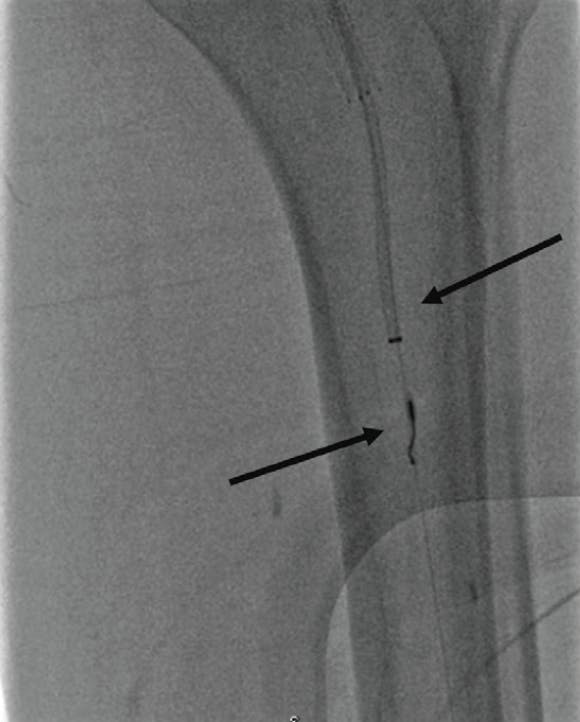
Figure 3. The Lightning 7 and Separator 7.
Then, the Lightning 7 progressed toward the below-the-knee trifurcation. The thrombus was removed from both the anterior and posterior tibial arteries (Figure 2C), and flow was restored. The underlying stenosis was treated with the Armada PTA catheter (Abbott) and excluded, placing a stent at the origin of the superficial femoral artery.
RESULTS
Technical and clinical results after the thrombectomy were successful (Figure 4). The patient had dual therapy with aspirin, clopidogrel, and apixaban for 6 months. At 1-month postprocedure follow-up, the patient did not show in-stent stenosis or drug resistance, with good clinical results and no more claudication or nocturnal pain. Doppler ultrasounds will be performed every quarter, and after 1 year, every 6 months thereafter.
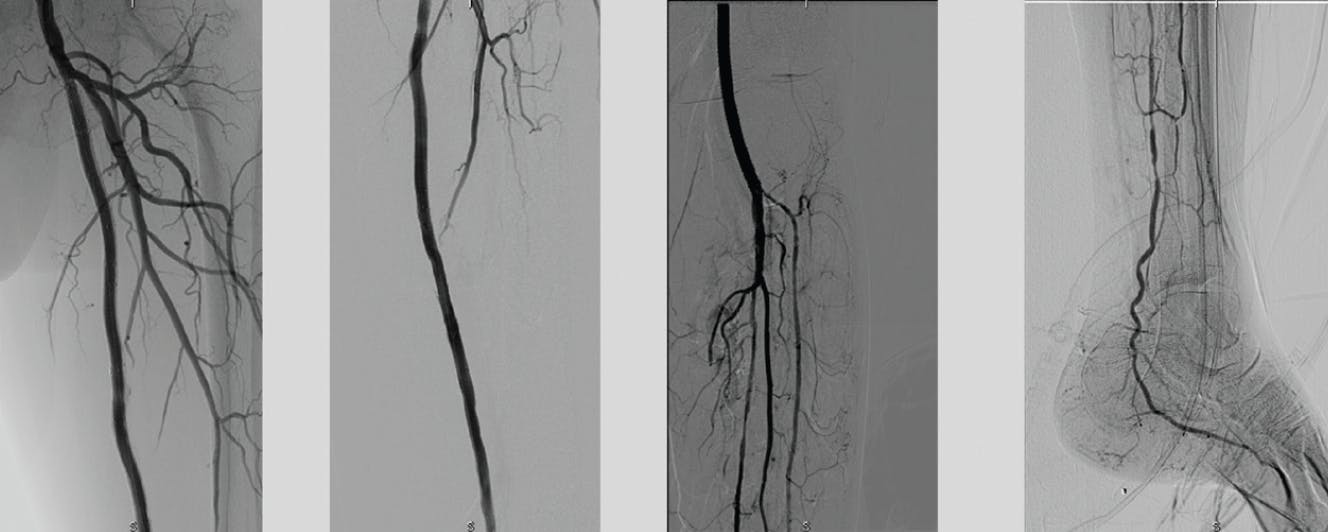
Figure 4. Postprocedural angiography.
DISCUSSION
Mechanical thrombectomy devices play a key role in thrombus removal. Because of the drugs used during a procedure, the puncture site hole is important to consider to minimize the bleeding risk postprocedure. Low-profile thrombectomy catheters may offer reduced risk of access-site bleeds when compared to larger-bore systems or surgical cutdowns. Lightning 7 is the only 7-F catheter with essentially the same power as an 8-F catheter due to the laser-cut hypotube and with the trackability and torqueability needed to provide an intelligent system that is designed to help minimize blood loss (Figure 2D). In this case example, it allowed us to avoid a surgical approach because we did not have distal vascularization (Figure 1). Lightning 7 is a versatile tool that should be considered for front-line revascularization of arterial occlusions, and everyone should have it on their shelves.
Thromboaspiration of Subacute/Chronic Arterial Thrombus Using Lightning 7

PATIENT History
A man in his late 50s with type 2 diabetes mellitus presented with a 6-week history of progressive fifth toe necrosis secondary to popliteal artery occlusion. An initial thromboaspiration and angioplasty had been performed, with the final images demonstrating some non–flow-limiting stenotic residual subacute/chronic thrombus (Figure 1A). The patient’s foot failed to improve, so it was decided to repeat the procedure 2 weeks later with the Lightning 7.
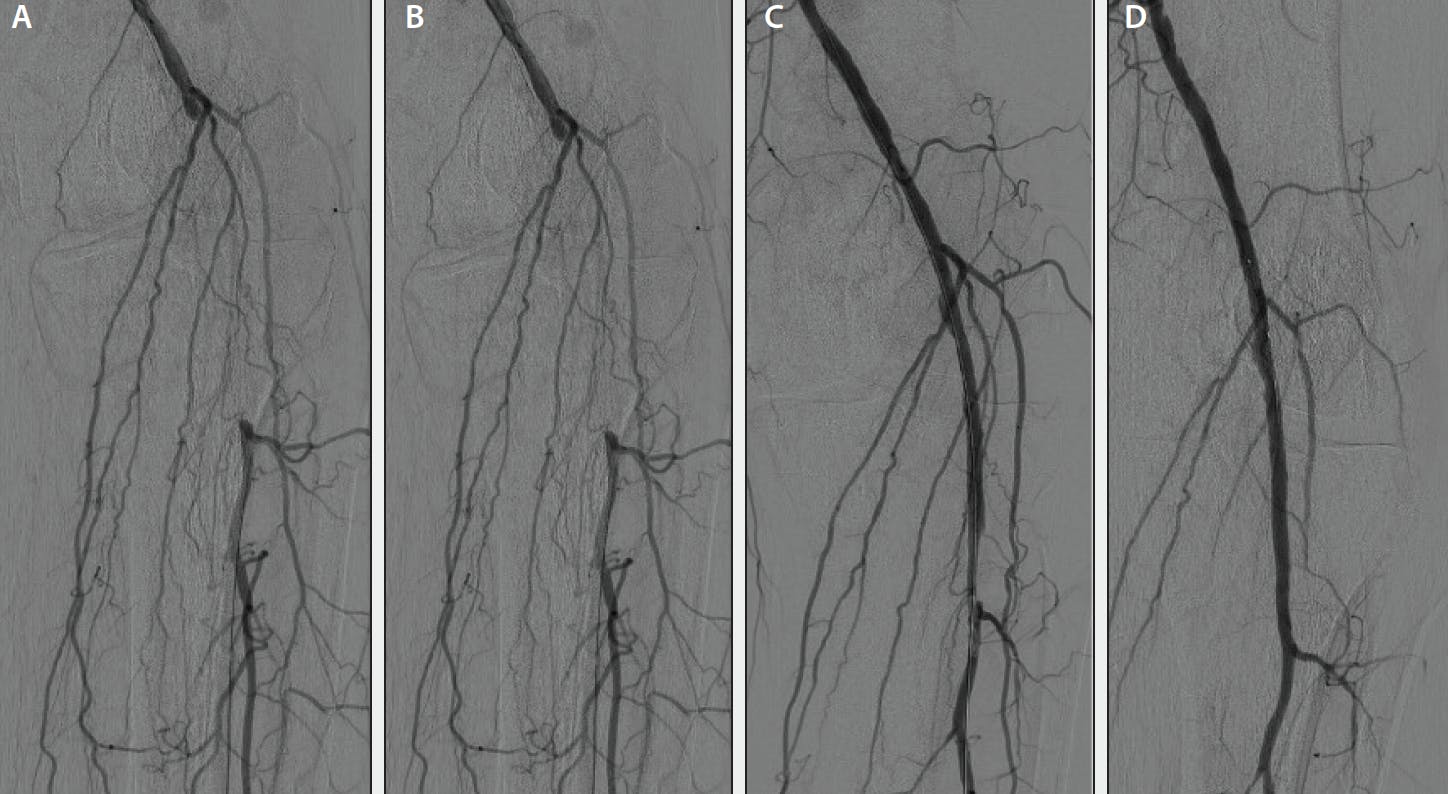
Figure 1. Digital subtraction angiography of the popliteal artery from previous procedure (A), before Lightning 7 (B), after a short period of thromboaspiration (C), and after 45 minutes of thromboaspiration (D).
INTERVENTION
Through a 7-F, 45-cm sheath with detachable hub (Destination, Terumo Europe) via the ipsilateral approach, angiography demonstrated recurrence of the occlusion (Figure 1B).
Penumbra’s Lightning 7 system is comprised of the CAT7 XTORQ catheter and Lightning Intelligent Aspiration Tubing. The curved tip of the XTORQ catheter offers a circumferential sweep of 28 mm to clear central and wall-adhesive thrombus. The Lightning tubing provides computer-aided valve control, designed to help limit blood loss. When the computer algorithm detects thrombus at the face of the catheter, it provides continuous aspiration at −29 inHg.
Lightning 7 quickly cleared the acute thrombus (Figure 1C) and left a similar appearance to the end of the original procedure. Facilitated by the sheath’s removable hub, the more chronic thrombus was removed using the XTRACT technique1; the catheter engaged thrombus for 90 seconds before being removed with aspiration left turned on, thus removing thrombus through the sheath while still engaged with the catheter tip by aspiration. With the Lightning technology allowing a total aspiration time of 45 minutes, both the acute and the subacute/chronic thrombus were successfully removed, restoring flow to the foot (Figure 1D).
DISCUSSION
The evidence base supporting use of thromboaspiration to clear peripheral arterial thrombus is growing, with both the PRISM and INDIAN trials demonstrating its safety and efficacy1,2 and the ongoing STRIDE trial potentially continuing to strengthen this evidence base. Given the benefits of avoiding thrombolytics where possible, at our institution, we have been keen to embrace endovascular techniques to manage arterial occlusion.
Up until now, our treatment algorithm has broadly been to use thromboaspiration in the acute phase; but in the subacute/early chronic phase, blood loss has limited our use of suction thromboaspiration, and we have thus tended to use rotational thrombectomy for thrombus clearance.
As this case demonstrates, the advent of the Lightning system combined with the CAT7 catheter has allowed us to be far more extensive with our use of thromboaspiration, while limiting blood loss to 300 mL. As a result, we were successful in this case at retrieving thrombus that had been present for at least 6 weeks (as demonstrated on duplex ultrasound 4 weeks before the previous procedure), which is far beyond the time frame we would usually expect thromboaspiration to be successful with previous Indigo generations.
The audiovisual cues make the system simple to use. In particular, the XTRACT technique to remove the harder, older thrombus was easy to perform, and these cues allowed for identification of when the thrombus is corked at the catheter end.
Another advantage of Lightning 7 is the need to only maintain 7-F access, with similar suction power to the 8-F system. The CAT7 catheter material is thinner than that of CAT8, and as a result, there is only a 12% reduction in the luminal area when reducing the required access by a French size.
Lightning 7 is an important addition to the treatment options available to clear arterial thrombus that will hopefully broaden the array of patients able to be treated and widen the time period in which thromboaspiration is likely to be successful.
1. Saxon RR, Benenati JF, Teigen C, et al. Utility of a power aspiration–based extraction technique as an initial and secondary approach in the treatment of peripheral arterial thromboembolism: results of the multicenter PRISM trial. J Vasc Interv Radiol. 2018;29:92-100. doi: 10.1016/j.jvir.2017.08.019
2. de Donato G, Pasqui E, Sponza M, et al. Safety and efficacy of vacuum assisted thrombo-aspiration in patients with acute lower limb ischaemia: the INDIAN trial. 2021;61:820-828. doi: 10.1016/j.ejvs.2021.01.004
Disclaimer: The opinions and clinical experiences presented herein are for informational purposes only. The results may not be predictive of all patients. Individual results may vary depending on patient-specific attributes and other factors. Product availability varies by country.
Advertisement
Advertisement