Advertisement
Advertisement
September 2022
Sponsored by Veryan Medical
Understanding and Addressing the Dynamic Challenges of Treating the Distal SFA
Latest data from the next-generation mimetic BioMimics 3D stent.
The superficial femoral artery (SFA) and popliteal artery have complex biomechanics and undergo severe conformational changes, which makes this vessel segment a hostile environment for stent placement.1 This arterial segment is highly dynamic and exposed to forces such as compression, elongation, torsion, and bending (Figure 1). In the distal SFA and proximal popliteal artery, the axial shortening is even higher than in the distal popliteal artery.2
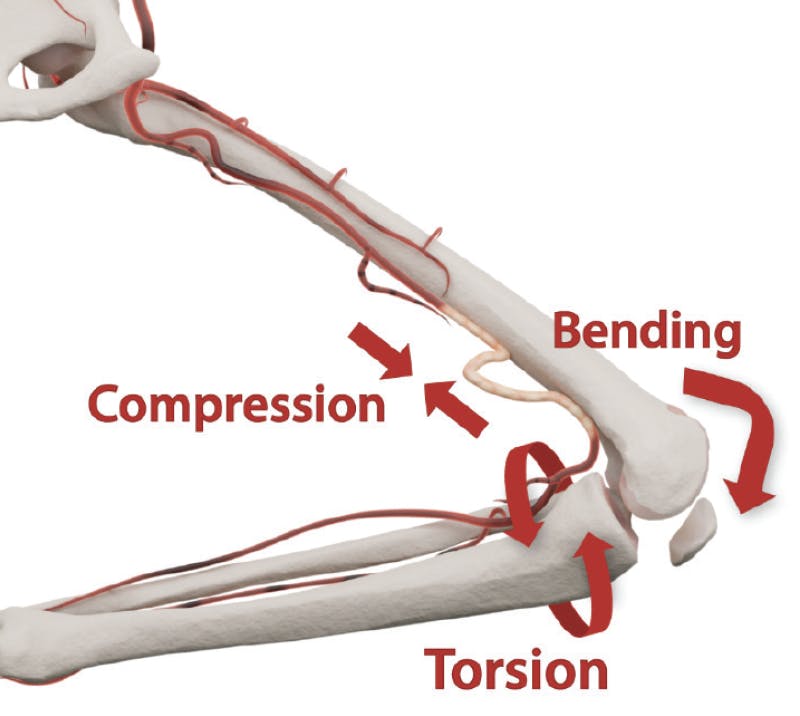
Figure 1. Forces on the femoropopliteal artery. The model demonstrates that the femoropopliteal artery is prone to forces such as compression, bending, and torsion and that the compression (shortening) is most significant in the distal SFA segment.
As demonstrated in cadaver studies, the native artery shortening results in a natural increase in the curvature of the vessel. This is particularly relevant in the distal SFA, as this region is prone to the most significant forces in the entire femoropopliteal segment.1 Clinicians have long known about the challenges of treating occlusive disease in this area with a high incidence of native vessel disease, stent fracture, and reocclusion.
BIOMIMICS 3D
The BioMimics 3D helical centerline stent (Veryan Medical; Figure 2) has unique design characteristics that were specifically built to treat femoropopliteal lesions. It features improved biomechanical compatibility that allows the device to shorten, elongate, and twist with the artery as it moves. Subsequently, the risk of stent fractures, arterial damage, and kinking is reduced, ultimately reducing the risk of restenosis.3 In preclinical studies, BioMimics 3D withstood the greatest axial compression before fracturing compared to conventional straight stents.4
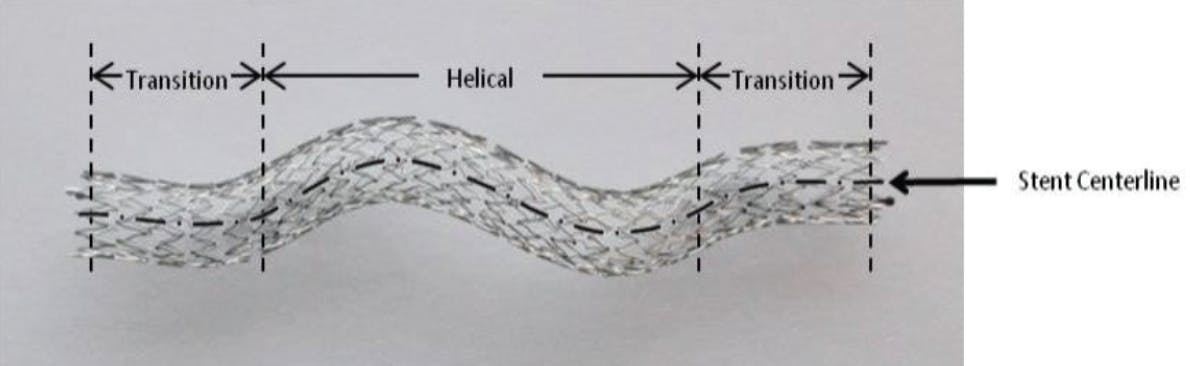
Figure 2. The BioMimics 3D stent with its helical centerline and transition zones. The transition zone consists of three crowns at each end, with gradually reduced radial force.
Furthermore, the BioMimics 3D elevates wall shear stress, thus limiting neointimal hyperplasia and smooth muscle cell proliferation, reducing thrombus formation and inflammation, and ultimately reducing the risk for restenosis.3-6
Another beneficial factor in this highly dynamic environment is the gradually reduced radial force at the stent ends, which further reduces microtrauma, abnormal flow patterns, and step change at the junction between stent and native vessel.
In contrast, straight stents tend to straighten the blood vessel, reducing the vessel shortening (Figure 3). Therefore, adjacent, unstented arterial segments tend to deflect in an exaggerated manner during hip and knee bending because their ability to accommodate the arterial shortening is compromised. This exaggerated bending could lead to stent kinking, stent fractures, and accelerated intimal hyperplasia formation at the stent edges.1,4
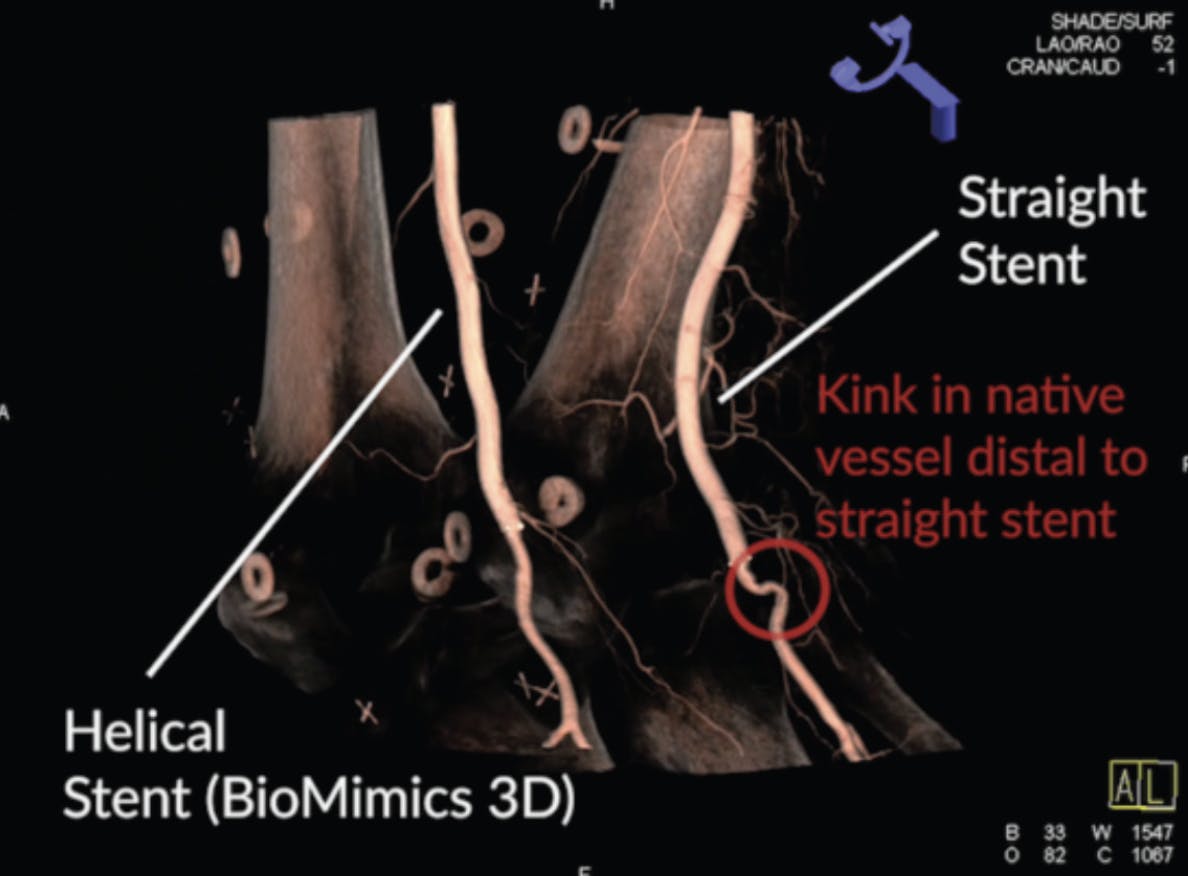
Figure 3. A femoropopliteal cadaver model showing the difference in arteries implanted with a straight stent versus a helical centerline stent.
Similarly, the mock vessel shown in Figure 4 mimics the anatomy when the stented segment exits the adductor canal into the popliteal fossa. This model demonstrates that the BioMimics stent has the ability to absorb axial compression, thereby reducing the bending load on the stent in the transition section from the constrained to unconstrained regions. At this juncture, stents are prone to extreme deformations, including axial and radial compression, bending, and torsion, which may result in stent fractures. The BioMimics 3D stent can absorb the axial compression along the length of the device and exhibits an undulating behavior similar to the native vessels. In contrast, straight stents are less able to accommodate the axial compressive force applied in the adductor canal region.
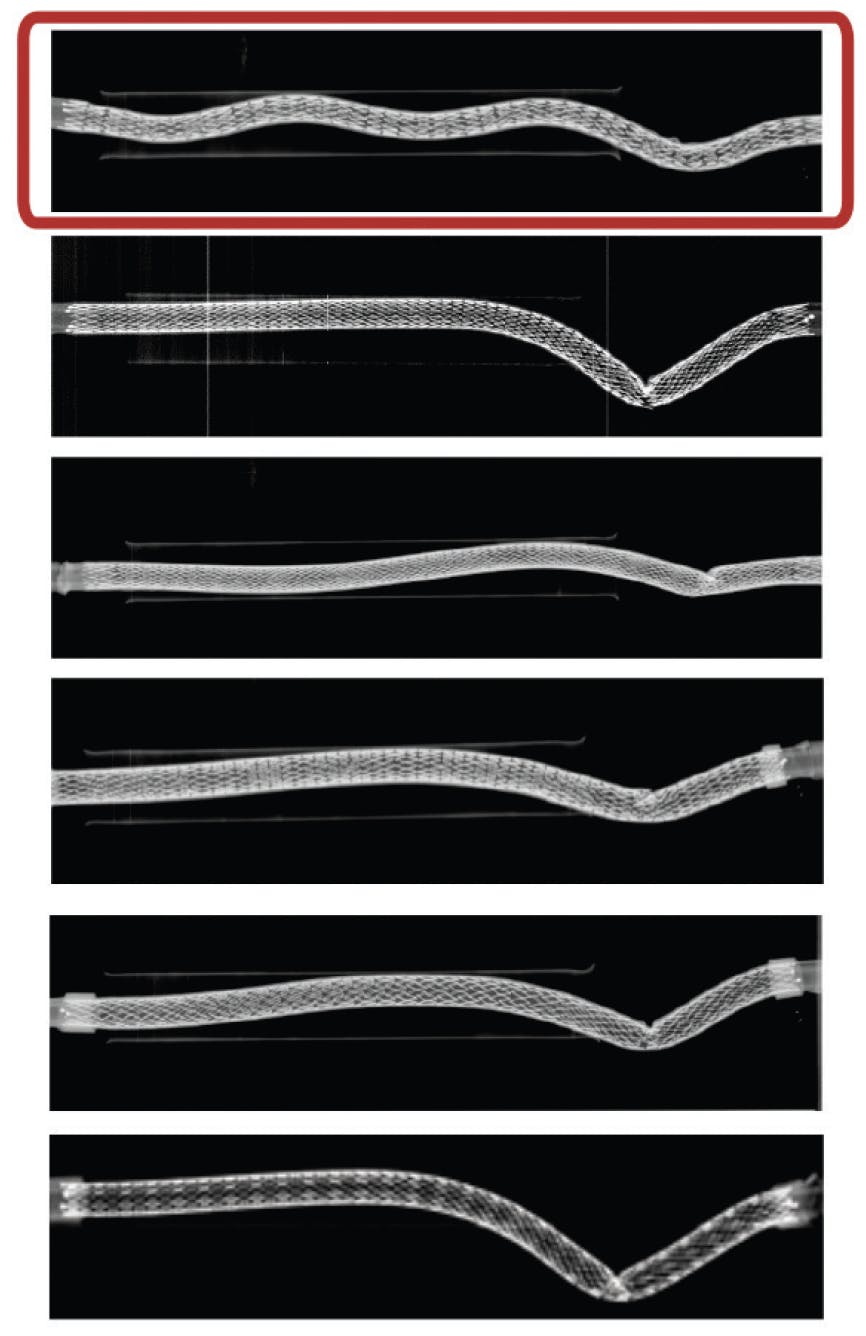
Figure 4. The BioMimics 3D (red rectangle) versus contemporary traditional stents in a mock vessel model. High-resolution x-rays of a selection of commercially available laser-cut nitinol stents undergoing axial compression in a bench test model, simulating the adductor canal–to–popliteal fossa junction.
CLINICAL DATA
The MIMICS clinical investigation of the BioMimics 3D vascular stent system evolved from a first-in-human study to a randomized trial that demonstrated superior 2-year primary patency rate compared to a straight stent control in femoropopliteal lesions.7 Similar excellent 2-year safety MIMICS 3D European registry and effectiveness results were reported in Journal of Endovascular Therapy from the MIMICS-2 investigational device exemption study.8 Finally, evidence for the performance of the BioMimics 3D stent has been observed in large real-world registries within the MIMICS program.9
The MIMICS 3D European registry has enrolled 507 patients with 518 lesions and 3-year data, which were presented at the Leipzig Interventional Course in 2022.10 A post hoc analysis was performed to compare outcomes between lesions located solely in the proximal to mid SFA (n = 105 lesions) compared with those located solely in the distal SFA/proximal popliteal (n = 178 lesions).
Baseline parameters were similar, except that the patients in the distal SFA/proximal popliteal group were older, had more previous myocardial infarctions (MIs), had less diabetes, and demonstrated a trend toward more occluded segments, with shorter lesion length (Table 1).
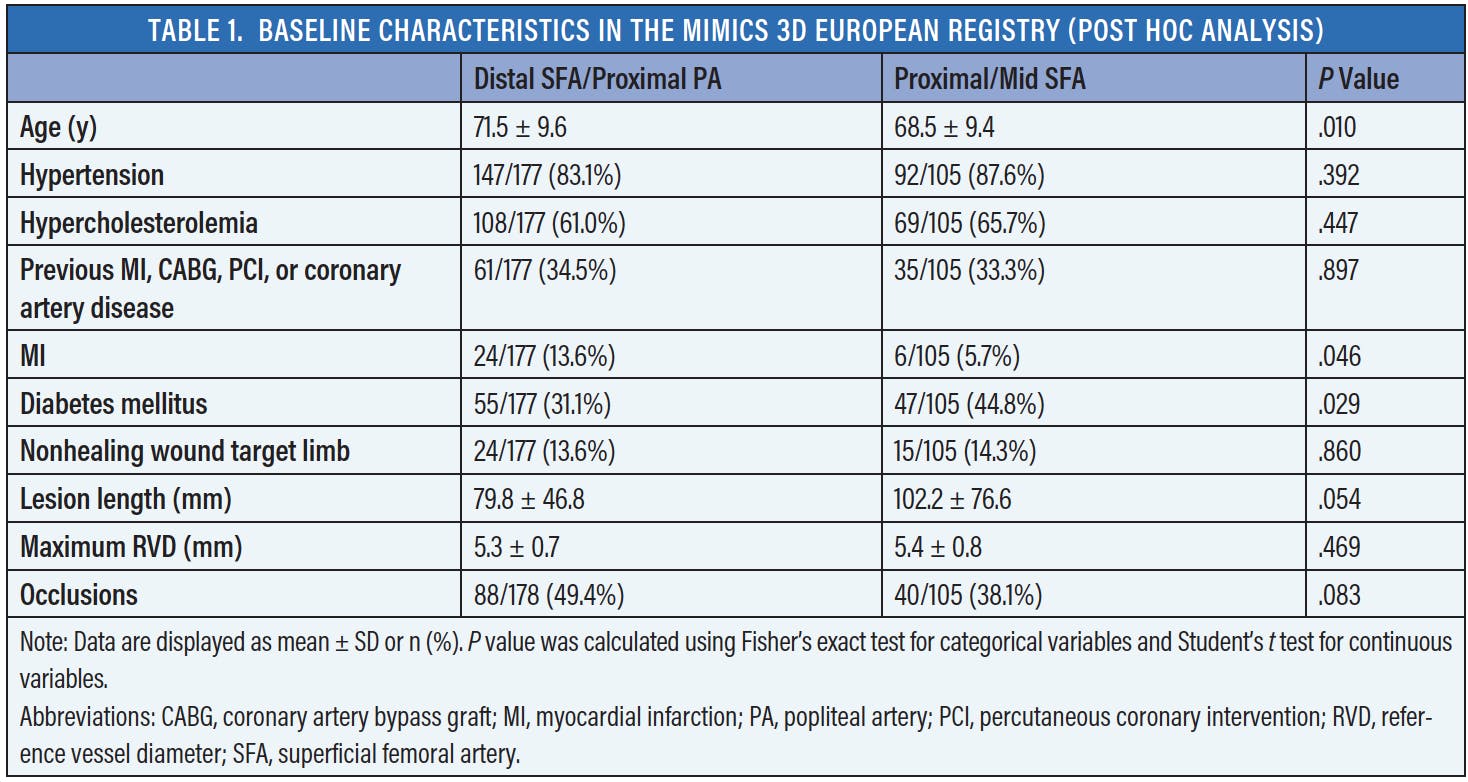
There was no difference in clinical outcomes through 3-year follow-up, with nearly identical outcomes in 3-year primary patency and 3-year freedom from clinically driven target lesion revascularization (75.6% for the distal SFA/proximal popliteal group vs 77.3% for proximal to mid SFA group, and 81.8% vs 82.7%, respectively) (Figure 5 and Figure 6).
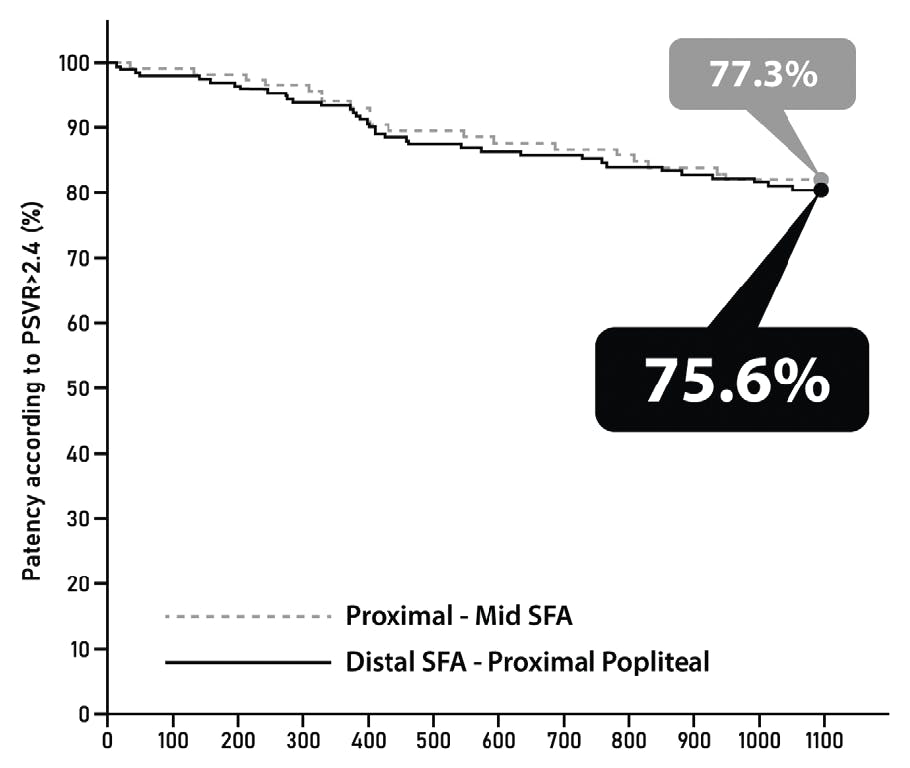
Figure 5. Primary patency through 3 years (1,095 days). PSVR, peak systolic velocity ratio.
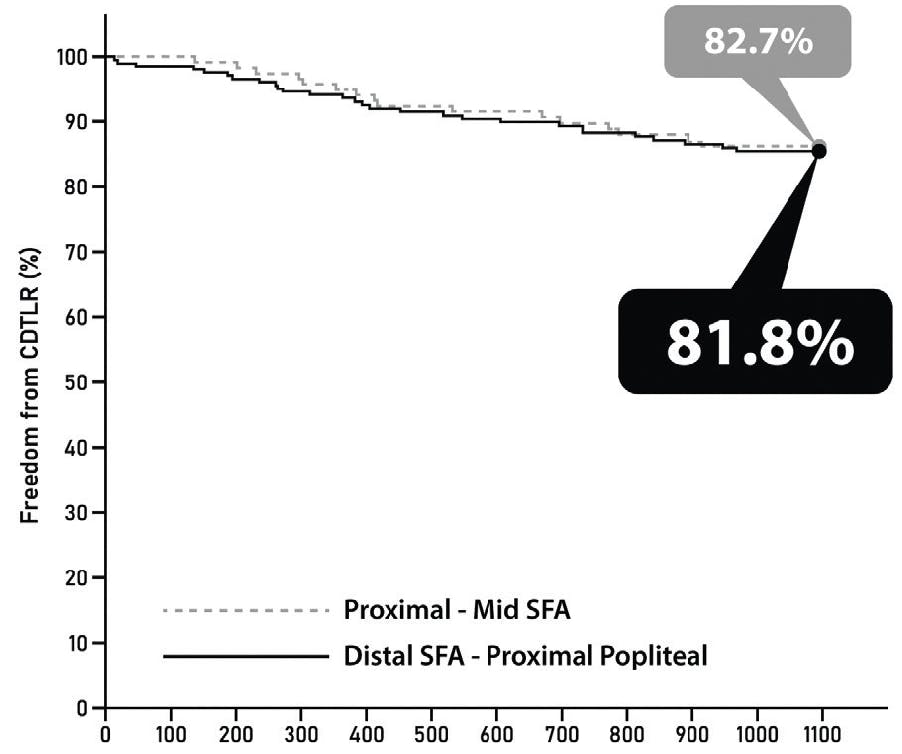
Figure 6. Clinically driven target lesion revascularization (CDTLR) through 3 years (1,095 days).
Certainly, outcomes might have been affected by baseline parameters. Patients with distal SFA/proximal popliteal lesions were older and had more MIs in their medical history, but patients with proximal to mid SFA lesions had more diabetes and longer lesions.
Importantly, despite the hostile environment, stent fractures occurred in < 1% of BioMimics 3D stents at 3 years in the distal SFA/proximal popliteal group. Furthermore, the results in this group compare well even to drug-eluting stents placed in the femoropopliteal bed. Selecting studies with similar lesion lengths, freedom from clinically driven target lesion revascularization was 92.7% at 12 months versus 85.8% to 94.7% in the Zilver PTX and the SuperNOVA trials11-13; 86.8% at 24 months versus 78% to 89.5% in the IMPERIAL, BATTLE, SuperNOVA, and Zilver PTX trials11,13-15; and 81.8% at 36 months versus 85.3% to 87.2% in the MAJESTIC and Zilver trials, which both had a shorter average lesion length (70.8 and 66.4 mm, respectively).11,16
CONCLUSION
The distal SFA/proximal popliteal segment is a hostile environment exhibiting mechanical forces where traditional nitinol stents do not generally perform well. The BioMimics 3D stent, with its helical centerline and transition zones, was specifically designed to react progressively to the dynamic changes of this vascular region during hip and knee bending. The subgroup analysis of the MIMICS 3D registry demonstrates the suitability of the BioMimics 3D stent for use in this segment, with no difference in 3-year primary patency or clinically driven target lesion revascularization compared to the straighter proximal to mid SFA segment and with data that are comparable to drug-eluting stents. We eagerly await the follow-up from the recently completed enrollment in the MIMICS 3D registry to further confirm these findings.
1. Smouse HB, Nikanorov A, LaFlash D. Biomechanical forces in the femoropopliteal arterial segment. Endovasc Today. 2005;4:60-62, 64-66.
2. Ansari F, Pack LK, Brooks SS, et al. Design considerations for studies of the biomechanical environment of the femoropopliteal arteries. J Vasc Surg. 2013;58:804-813. doi: 10.1016/j.jvs.2013.03.052
3. Ansel G, Rundback JH, Zeller T. BioMimics 3D: impacting outcomes through stent design. Endovasc Today. 2021;20:76-78.
4. Gaines PA. Biomimetic stents and the benefits of swirling flow. Endovasc Today Eur. 2015;3:64-68.
5. Caro CG, Seneviratne A, Heraty KB, et al. Intimal hyperplasia following implantation of helical-centreline and straight-centreline stents in common carotid arteries in healthy pigs: influence of intraluminal flow. J R Soc Interface. 2013;10:20130578. doi: 10.1098/rsif.2013.0578
6. Carlier SG, van Damme LC, Blommerde CP, et al. Augmentation of wall shear stress inhibits neointimal hyperplasia after stent implantation: inhibition through reduction of inflammation? Circulation. 2003;107:2741-2746. doi: 10.1161/01.Cir.0000066914.95878.6d
7. Zeller T, Gaines PA, Ansel GM, et al. Helical centerline stent improves patency: two-year results from the randomized mimics trial. Circ Cardiovasc Interv. 2016;9:e002930. doi: 10.1161/circinterventions.115.002930
8. Sullivan TM, Zeller T, Nakamura M, et al. Treatment of femoropopliteal lesions with the BioMimics 3D vascular stent system: two-year results from the MIMICS-2 trial. J Endovasc Ther. 2021;28:236-245. doi: 10.1177/1526602820980419.
9. Lichtenberg M, Zeller T, Gaines P, et al. BioMimics 3D vascular stent system for femoropopliteal interventions. Vasa. 2022;51:5-12. doi: 10.1024/0301-1526/a000980.
10. Lichtenberg M. MIMICS-3D: 3-year clinical outcome for the BioMimics 3D stent in a real-world population. Presented at: LINC; June 6-9, 2022; Leipzig, Germany.
11. Dake MD, Ansel GM, Jaff MR, et al. Durable clinical effectiveness with paclitaxel-eluting stents in the femoropopliteal artery: 5-year results of the Zilver PTX randomized trial. Circulation. 2016;133:1472-1483; doi: 10.1161/circulationaha.115.016900
12. Dake MD, Ansel GM, Jaff MR, et al. Paclitaxel-eluting stents show superiority to balloon angioplasty and bare metal stents in femoropopliteal disease: twelve-month Zilver PTX randomized study results. Circ Cardiovasc Interv. 2011;4:495-504. doi: 10.1161/circinterventions.111.962324
13. Powell RJ, Jaff MR, Schroë H, et al. Stent placement in the superficial femoral and proximal popliteal arteries with the Innova self-expanding bare metal stent system. Catheter Cardiovasc Interv. 2017;89:1069-1077. doi: 10.1002/ccd.26976
14. Müller-Hülsbeck S, Benko A, Soga Y, et al. Two-year efficacy and safety results from the IMPERIAL randomized study of the Eluvia polymer-coated drug-eluting stent and the Zilver PTX polymer-free drug-coated stent. Cardiovasc Intervent Radiol. 2021;44:368-375. doi: 10.1007/s00270-020-02693-1
15. Gouëffic Y, Sauguet A, Desgranges P, et al. A polymer-free paclitaxel-eluting stent versus a bare-metal stent for de novo femoropopliteal lesions: the BATTLE trial. JACC Cardiovasc Interv. 2020;13:447-457. doi: 10.1016/j.jcin.2019.12.028
16. Müller-Hülsbeck S, Keirse K, Zeller T, et al. Long-term results from the MAJESTIC trial of the Eluvia paclitaxel-eluting stent for femoropopliteal treatment: 3-year follow-up. Cardiovasc Intervent Radiol. 2017;40:1832-1838. doi: 10.1007/s00270-017-1771-5
PAM 323 Version 1.0
CAUTION: Federal (USA) law restricts this device to sale by or on the order of a physician.

Advertisement
Advertisement