Advertisement
Advertisement
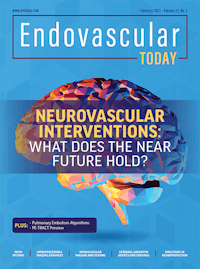
Although much of what is now common practice in the field of vascular neurointervention has only relatively recently gained widespread acceptance, our understanding of the disease states, therapeutic options, and potential outcomes has already seen exponential growth. The advent of new, more tailored devices and continued advancements in imaging allow us to treat more patients and anatomies, and the field’s commitment to generating high-level data shows us some answers and also new questions. However, with each new device and data set also comes considerations as to their ideal applications, and many of the routine challenges we face each day would have had different solutions even just a few years ago.
In this edition of Endovascular Today, we’ve invited experts to discuss their decision-making in areas without much clinical trial data to date, perspectives on new device options entering the market, and how developments in imaging can best be utilized.
In the stroke setting, the horizons of time, size, and location continue to be probed. With recent large-scale trials focusing on large vessel occlusions showing the benefit of intervention in suitable patients, the focus now shifts to medium-sized vessels. In a discussion with Drs. Maxim Mokin and Patrick Nicholson, we explore the possible applications of aspiration and stent retrievers in this setting, the state of current data, and what answers we need most.
Next, a panel including Drs. Fawaz Al-Mufti, Adam S. Arthur, Violiza Inoa, and Jared Knopman explores the rapidly growing field of chronic subdural hematoma interventions, touching on current capabilities as well as unmet needs to address. Drs. Kareem El Naamani and Stavropoula I. Tjoumakaris detail the latest advancements in cerebral aneurysm embolization and occlusion and how modern devices have evolved in both their function and deployment.
For perspectives on the impact of recent advances in imaging, Drs. Dorothea Altschul and Eytan Raz summarize the roles of direct-to-angio and in-room CT. Next, Drs. Demetrius Lopes and Matt Gounis provide their experiences with high-frequency optical coherence tomography, and Dr. Luis Savastano describes the utility of laser angioscopy.
Closing our feature on emerging trends in neurointervention, Drs. Johanna M. Ospel and Mayank Goyal provide an update on cerebroprotection in combination with mechanical aspiration, detailing various types of agents, challenges in the clinical trial setting, and future directions for this hopeful therapy.
Elsewhere in this edition, Endovascular Today’s editors have assembled a feature on pulmonary embolism (PE) therapies that includes a preview of the PE-TRACT randomized trial with Principal Investigator Akhilesh Sista, MD, and a look at algorithms for treating massive PE featuring Drs. Osman Ahmed, Jonathan Paul, Andrew J.P. Klein, and Maidah Yaqoob. Closing this edition is an interview with foremost venous therapies expert Dr. Kush Desai, who comments on the need for objective outcome measures and multidisciplinary approaches.
Whether your practice currently includes decisions on whether and when to treat stroke, the optimal imaging for a unique neurointervention case, or challenging cerebral aneurysms, we believe the practical discussions contained in this edition share great insight applicable and of interest to specialists of all backgrounds and levels of expertise. We hope you agree and look forward to your feedback.
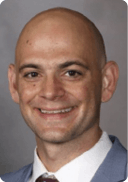
Waleed Brinjikji, MD
Guest Chief Medical Editor
Advertisement
Advertisement