Advertisement
Advertisement
January 2023
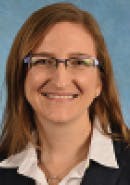
An Interview With Katharine McGinigle, MD, MPH
Dr. McGinigle discusses her current and future research efforts in limb preservation, precision medicine and machine learning for CLTI, Enhanced Recovery After Surgery programs, disparity reduction, and more.
You’ve shared that your passion is in peripheral vascular disease and limb preservation, and you were recently awarded the American Limb Preservation Society Traveling Fellowship for your accomplishments in this area. What led you to choose this as your focus?
Put simply, this is where there is the greatest clinical need. With the rapid increase in diabetes, the prevalence of complex peripheral artery disease (PAD) is increasing too. It feels important to be at the forefront of this disease, which is getting worse, not better, over time. Working at University of North Carolina Medical Center, the safety-net hospital for my state, I also feel a moral imperative to treat patients with chronic limb-threatening ischemia (CLTI), as it is no secret that it disproportionately affects people of color, women, and patients with multiple social barriers, including poor access to medical care. From a technical standpoint, it’s also a really engaging and challenging disease to treat that requires a lot of creativity and evolving skill sets.
In 2021, you received grants to study the use of precision medicine to define adaptive treatment strategies for CLTI. What do you see as the potential for precision medicine in CLTI?
The potential is almost limitless. In fact, a career goal of mine is to use precision medicine to fundamentally change the way we treat PAD. Precision medicine aims to provide the right treatment for the right patient at the right time. The presentation of CLTI is variable—there are 64 permutations of the wound, ischemia, and foot infection (WIfI) criteria alone, and that doesn’t even account for comorbidities, the complexity of the arterial anatomy, or a patient’s ability to access care. Our understanding of how to sequence wound care, medical optimization, and revascularization (not to mention which type of revascularization) is totally rudimentary and often just driven by what is convenient or provides an immediate, if not durable, result.
Limb preservation and survival outcomes aren’t good, and they haven’t improved over decades. To me, this means we must rethink the entire approach and get smarter about how we apply medical, podiatric, and interventional/surgical treatments to each individual patient. Right now, my lab is developing clinical decision aids that are tailored to the patient’s presentation and their response to prior therapies. We already have a lot of useful risk-prediction tools, but my goal is to tell you what treatment to offer to get the best outcome considering that specific patient’s risk and the response they’ve had to previous revascularization.
On the topic of tailoring treatments, you and colleagues analyzed a machine learning–based risk stratification scheme for CLTI and identified the presence of distinct patient clusters within CLTI.1 What are the real-world implications of these findings, and do they provide any insight into how we should approach the recently published results of the BEST-CLI trial,2 for which you were a Site Principal Investigator?
This paper is one of the first steps in thinking about PAD care more like cancer care, which is a useful framework for understanding what tailored treatments can look like. We found three clusters, or stages, of patients with CLTI that not only have different limb loss rates but also different survival rates. By understanding—quantitatively, not just intuitively—how patients are different, we can choose treatments more intentionally, as is done for cancer when deciding if chemotherapy should be offered before or after surgery. For example, a patient in rest pain with focal femoral artery occlusion and without other end-organ problems is similar to a patient with stage I or II cancer. It is likely that treatments will be less complex and there will be good long-term survival. On the other hand, a patient with an ischemic wound, multifocal arterial occlusions, and renal failure is likely to have poor survival rates, similar to stage IV cancer. Even if aggressive and invasive treatment is warranted, end-of-life decision-making should play a role in the patient’s treatment choices.
This is relevant as we digest all of the results from the BEST-CLI trial because there was such a high rate of reintervention, limb loss, cardiac events, and death in both arms. Taking a deeper look into the BEST-CLI data will show us that the need for intensified medical therapy, further revascularization, and/or wound management is complex with highly variable patient responses. We all know that some patients undergo reinterventions that are worthwhile because they keep them walking pain-free, but others receive the same number of reinterventions and don’t respond as well. Limb preservation and survival don’t depend just on vein quality or the device used but on who the patient is. My hope is that a more robust staging system will help us determine who is best served with various medical/wound/interventional treatment sequences so we can minimize reintervention and maximize CLTI-free survival for everyone.
Much will be discussed about the details of the BEST-CLI publication in the coming months, but on a personal note, is there anything you have gleaned from your time as Site Principal Investigator that you have taken with you as you care for patients outside of this trial?
I think we all learned the importance of multidisciplinary teams who routinely review cases together. I really enjoy working in teams with other types of specialists who have the same goal of preserving the lives and limbs of some of our sickest patients. These colleagues are always willing to challenge my interventional/surgical-biased viewpoints and keep me open-minded about new literature from their fields and alternate approaches to patient care.
With an increase in technologic advances for the CLTI/PAD patient population, what is your philosophy for deciding whether/how to apply a new technique/device?
I’m always eager to try everything, and I really love participating in trials to bring new concepts/devices forward. It’s fun to work with these innovators and engineers, and our devices have evolved a lot. But, I think the entire community recognizes we have yet to break through with a truly pivotal advance that changes the disease landscape. For that reason, even though I’m an eternal optimist who always believes each device could be the next best thing, I remain skeptical. I track all of my revascularization outcomes and limb loss rates by WIfI stage, and if a new device doesn’t make a noticeable difference, then I usually gravitate toward the lowest-cost/highest-value products. That focus on using the truly valuable products instead of the newest or most marketed has been critically important for me in a state hospital with a challenging payor mix, and it is something all of us physicians in technology-heavy fields should focus on.
A significant accomplishment of yours from 2022 was the publication of an international consensus document on Enhanced Recovery After Surgery (ERAS) for patients undergoing open aortic vascular surgery.3 What were your goals when setting out to author these guidelines? What changes do you hope for in vascular care as more ERAS programs are developed, and what results have you seen since the initiation of the program at your institution?
ERAS is a multidisciplinary clinical pathway to minimize the stress of operations, reduce complications, and get patients well as quickly as possible. In addition to the aortic guidelines, the lower extremity bypass document has just been endorsed and sent for publication, and the document for major limb amputation is being drafted.
The real benefit of these clinical pathways is that care is more proactive rather than reactive and that patients are encouraged to be a more active partner in their care. I have also found that unwarranted care variation is reduced, which helps reduce postsurgical complications, readmissions, and health care disparities. I believe that having clearly described process measures allows everyone to contribute to the top of their license in a coordinated, positive way and that workplace conflict and inefficiencies are reduced.
As ERAS for vascular surgery is adopted and gains widespread use across the world, I hope we can uniformly elevate the care that is provided with the existing resources. Improving survival is within reach by making the right thing the easy thing to do across all perioperative specialties, and I hope that these guidelines help each of you achieve that at your institutions.
From published papers on gender and racial disparities in PAD and female underrepresentation in clinical trials to social media discussions about issues related to equity, identifying and reducing the disparities present in vascular care is at the heart of your work. If you were to be granted funding to focus on an initiative or research project related to disparities in the vascular field, what would you choose?
There are so many ways to tackle health equity and health care disparities, and it’s really exciting to see researchers and clinicians moving beyond identifying disparities to developing ways to address them. If I had all the funding in the world, I’d like to see systems-aligned precision medicine become a reality. To me, this means designing tailored treatment rules to get the “right treatment, right patient, and right time” to patients in their specific social contexts.
I plan to design multidisciplinary, tailored treatment plans so that improved limb preservation and survival will be attainable for all patients, even those without access to centers of excellence, those who face the greatest health care disparities, or those who are at the highest risk of not fulling adhering to optimal treatment strategies. I also see a role for ERAS here, as I believe the team-based framework used for ERAS will be helpful in implementing the optimal treatment sequences discovered in my precision medicine work. I hope this research will elevate the care of all patients with CLTI, but certainly, creating data-driven treatment rules and translating them into practice with ERAS teams will limit unwarranted care variation and lessen disparities.
What advice would you share to early career physicians regarding building professional and personal support systems?
It truly takes a village, and different people will play different support roles along the way. Professionally, work with people who are willing to let you do what you think is important—whether that is focusing on a particular clinical area or reducing your clinical load to go back to school or start a lab. In the early years, you may not know what that “true north” is for you, but you will know if you have the kind of partners who will support your journey and sponsor you when opportunities arise. I think that is decent advice for personal support systems as well. Being a physician is hard, and we often put work before self, which means personal support is really important. Our work takes a toll on loved ones too, but if they see your vision and love you for it, then you have it made.
1. Chung J, Freeman NLB, Kosorok MR, et al. Analysis of a machine learning-based risk stratification scheme for chronic limb-threatening ischemia. JAMA Netw Open. 2022;5:e223424. doi: 10.1001/jamanetworkopen.2022.3424
2. Farber A, Menard MT, Conte MS, et al; BEST-CLI Investigators. Surgery or endovascular therapy for chronic limb-threatening ischemia. N Engl J Med. Published online November 7, 2022. doi: 10.1056/NEJMoa2207899
3. McGinigle KL, Spangler EL, Pichel AC, et al. Perioperative care in open aortic vascular surgery: a consensus statement by the Enhanced Recovery After Surgery (ERAS) Society and Society for Vascular Surgery. J Vasc Surg. 2022;75:1796-1820. doi: 10.1016/j.jvs.2022.01.131
Advertisement
Advertisement
Interested in reading more interviews?
To read more interviews with thought leaders in the vascular field, check out our Profiles & Perspectives hub.
Read More