Advertisement
Advertisement
July 2023 Supplement
Sponsored by The PERT Consortium™
PE Centers of Excellence™: The Next Big Innovation in Pulmonary Embolism Care
An overview of the creation of centers of excellence by The PERT Consortium™.
By Steven Pugliese, MD; Mahir Elder, MD, FACC, FSCAI; and Jamie L. Reed
The concept of health care–based centers of excellence (CoEs) dates to 1982 when Humana copyrighted the term to designate expert subspecialty programs within their health network.1 There remains no consensus on the definition of a CoE, as the term spans a wide range of industries and is often designated without a defined set of criteria. Within health care, CoE programs have been developed to concentrate expertise and related resources within a particular specialty of medicine to provide comprehensive and multidisciplinary care with the goal of achieving the best patient outcomes.1 Perhaps the most well-known specialty accreditation programs are administered by The Joint Commission in partnership with key governing health care organizations such as the American Heart Association and the American Stroke Association to oversee a range of programs from stroke and cardiovascular care to orthopedic surgery and Alzheimer disease.2 Despite CoE designations being commonplace, criteria for these various entities are variable and outcomes data for their effectiveness is mixed.3,4
If this is true, why do CoE programs in medicine continue to be developed? There are three primary reasons for this. The first is that an unmet patient care need is identified. In 2011, the Pulmonary Hypertension Association (PHA) created CoEs based on concerns that expert recommended diagnostic algorithms were not being followed, as up to 60% of patients referred to expert pulmonary hypertension centers were already on therapy contrary to published guidelines.4 Results from a single-center experience suggested that patients with pulmonary hypertension treated in a PHA-accredited care center had lower mortality and hospitalization rates compared to patients treated in nonspecialty care centers.5 Second, there is perceived value from patients, hospitals, and payors. Walmart, the world’s large employer, which is self-insured, incentivizes care for employees who are candidates for spinal and cardiac surgery to utilize CoEs to improve the quality of care and reduce costs.6 Additionally, in partnership with the Mayo Clinic, they created an internal oncology-based CoE for their employees, resulting in roughly 20% of referred patients receiving a change in treatment plan. Lastly, the CoEs allow a natural research network of participating sites to develop databases and registries with the goal of improving care and informing care decisions. When the PHA developed their pulmonary hypertension CoE accreditation process, they created the PHA Registry in parallel to maintain a database of patient demographics, diagnostic testing, treatments, and patient outcomes. The integrated registry not only provides a robust platform for research but helps inform the need for practice change with each accreditation period.
CONCEPT OF A PERT AND THE INCEPTION OF PE CENTER OF EXCELLENCE™
The rise of pulmonary embolism response teams (PERTs) stems from a concept born at Massachusetts General Hospital in 2012 whereby a multidisciplinary group of pulmonary embolism (PE) experts was formed to discuss challenging acute PE cases in the absence of robust scientific evidence or standards of care.7 Soon, many university and large community-based hospitals followed suit and formed their own PERTs. In 2015, The National PERT Consortium™ was created as a national not-for-profit organization with a mission to “advance the status of PE care and promote research in the treatment of PE.”8 The PERT Consortium™ now has more than 150 institutions registered and includes sites in the United States, Europe, Asia, Canada, South America, and Australia.
The PERT concept has grown far beyond the initial intent, which was to decide the best treatment options for patients with life-threatening PE. The current role of institutional PERTs are now quite broad and include ensuring patients with PE are diagnosed and treated promptly, matching high-risk patients with appropriate advanced therapies, following patients long term after the hospital stay, and serving as a platform for clinical trials and independent research. Unfortunately, 11 years after establishment of the first PERT, there remains no universal standard of care for the management of patients with acute PE, with wide variability in practice patterns between institutions in the PERT organization.9 Furthermore, acute PE mortality remains unacceptably high, delays in diagnosis and initiation of anticoagulation are common, only a small fraction of patients with the highest-risk PE receive advanced therapies, and few patients receive appropriate post-PE care.10 Therefore, the mission of the PE Center of Excellence™ certification is to establish a universal standard of care for the treatment of acute PE, facilitate collaboration that improves outcomes and patient safety, promote and disseminate recent advances in technology, and—through registration of institutions in a high-quality database—ensure that our practices and treatments are outcome driven.
An Overview of the Development of PE Center of Excellence™
The PE Center of Excellence™ program will encompass two categories of care: the regional care center and the comprehensive care center (Figure 1). Eligibility for the PE Center of Excellence™ program will be process-driven and not through utilization of a predefined treatment algorithm or outcomes. The development of the PE Center of Excellence™ process included over 40 PE experts from various specialties around the United States. Using scientific research, current guidelines, and expert consensus, the working groups focused their efforts on five major domains of a PERT, which include (1) PERT structure, (2) evaluation processes, (3) treatment processes, (4) transitions of care, and (5) outcomes (Figure 2).
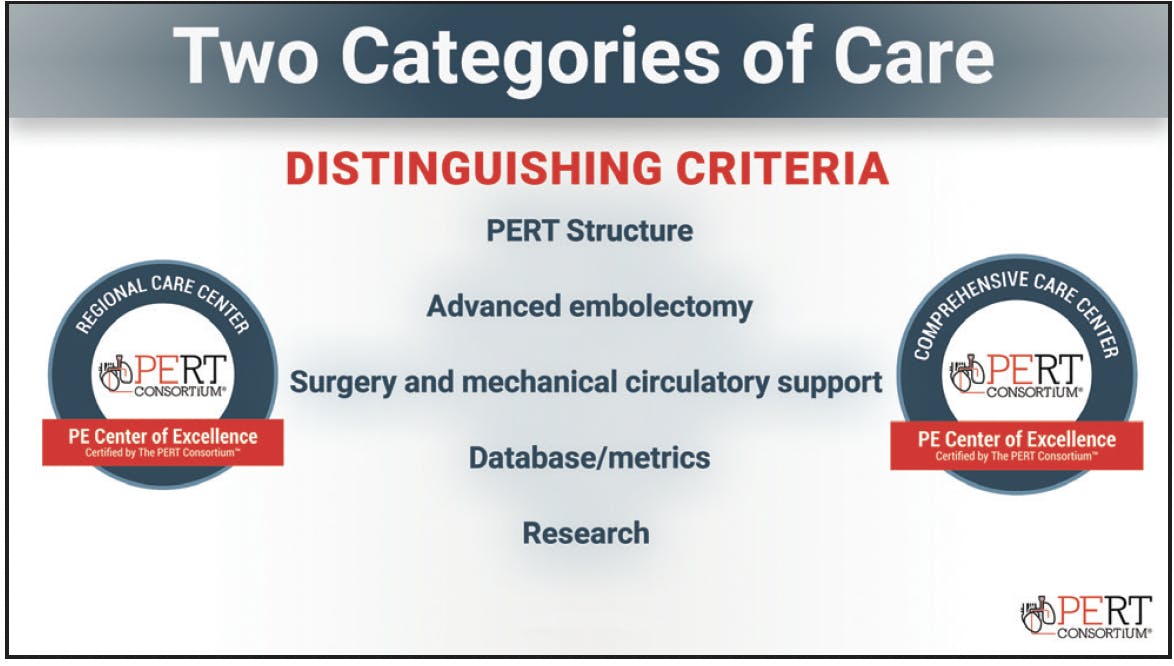
Figure 1. The PE Centers of Excellence™ two categories of care.
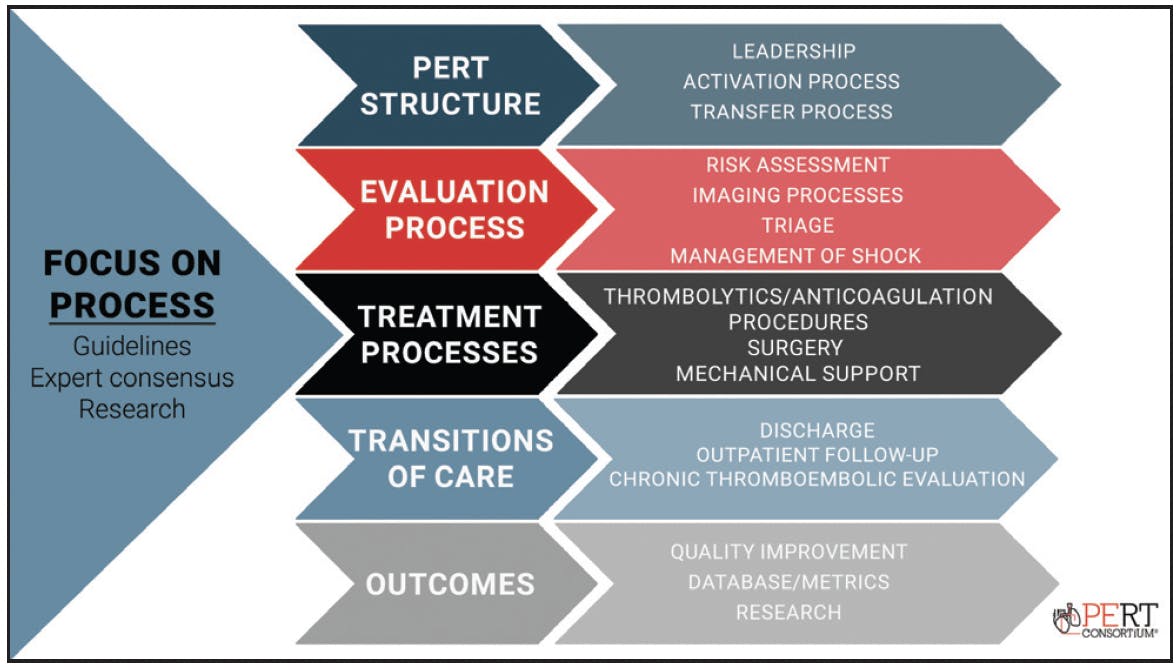
Figure 2. The five major domains of a PERT.
Both the regional care center and comprehensive care center will be required to provide the highest level of PE-related care 24 hours per day, 7 days per week, 365 days per year with strict oversight regarding the five outlined domains. The two categories of certification will differentiate by available therapies and practices provided at each respective institution. For example, only comprehensive care centers will have requirements surrounding advanced embolectomy devices, cardiac surgery, mechanical circulatory support, research, and data collection (Figure 1). To ensure that PE Centers of Excellence™ have defined processes in place for PE care, a major opportunity for certified centers will be participation in The PERT Consortium™ Quality Assurance Database, which generates a quarterly dashboard that summarizes key quality metrics related to PE care. All certified institutions will be required to submit a small subset of data elements from the larger PERT database, track their own internal metrics, and understand the current standard of care. At the local level, the quarterly dashboard will be a powerful tool to inform treatment decisions and outcomes. Centrally, the data generated by the registry will guide future analyses in the establishment of robust standards of care for acute PE treatment. The current PERT database has > 50 sites participating and has enrolled > 10,500 patients. Furthermore, a growing number of PE Centers of Excellence™ will generate an organized network for clinical trial integration and rapid dissemination of new technologies. To be considered for certification, institutions will be able to apply online in a user-friendly portal or smartphone application. The application process will include site-specific information and protocol collection, a remote site review process, and formal certification. As the field of PE is rapidly evolving, we anticipate that sites will renew certification every 2 years.
CONCLUSIONS AND FUTURE STEPS
A series of landmark multicenter randomized controlled trials involving patients with acute PE are underway to determine the best medical and endovascular treatment options. Over the next 5 years, the landscape of PE will most likely undergo a shift regarding not only patient and treatment selection but also to redefine relevant outcomes. For instance, there is increasing recognition that in addition to mortality and bleeding rates, treatment outcomes will need to include patient-centered outcomes such as quality of life, exercise tolerance, and the development of chronic thromboembolic complications. Applications for pilot sites are targeted to open in the fourth quarter of 2023 with general enrollment aimed for the first quarter of 2024. Working groups continue to meet frequently to finalize the details surrounding application requirements and cost structure. We look forward to providing more information at the 9th Annual Pulmonary Embolism Symposium in Austin, Texas, in September 2023.
1. Elrod JK, Fortenberry JL. Centers of excellence in healthcare institutions: What they are and how to assemble them. BMC Health Serv Res. 2017;17(suppl 1):425. doi: 10.1186/s12913-017-2340-y
2. The Joint Commission. Working together to improve patient care. Accessed June 26, 2023. https://www.jointcommission.org/who-we-are/who-we-work-with/our-partnerships/
3. Kobayashi T, Young MN, Giri J. Volume, outcomes, and “centers of excellence” for pulmonary embolism care. Vasc Med. 2021;26:47-49. doi: 10.1177/1358863X20980523
4. Visovatti SH. Pulmonary embolism center of excellence: putting it all together. Interv Cardiol Clin. 2023;12:393-398. doi: 10.1016/j.iccl.2023.03.006
5. Pi H, Kosanovich CM, Handen A, et al. Outcomes of pulmonary arterial hypertension are improved in a specialty care center. Chest. 2020;158:330-340. doi: 10.1016/J.CHEST.2020.01.046
6. Pakizegee M, Stefanacci RD. Centers of excellence: criteria and comprehensive clinical pathways. J Clin Pathw. Published online March 2019. https://www.hmpgloballearningnetwork.com/site/jcp/article/centers-excellence-criteria-and-comprehensive-clinical-pathways
7. Kabrhel C, Jaff MR, Channick RN, et al. A multidisciplinary pulmonary embolism response team. Chest. 2013;144:1738-1739. doi: 10.1378/CHEST.13-1562
8. PERT Consortium. About the PERT Consortium. Accessed June 26, 2023. https://pertconsortium.org/about/
9. Rosovsky R, Zhao K, Sista A, et al. Pulmonary embolism response teams: purpose, evidence for efficacy, and future research directions. Res Pract Thromb Haemost. 2019;3:315-330. doi: 10.1002/RTH2.12216
10. Konstantinides SV, Meyer G. The 2019 ESC guidelines on the diagnosis and management of acute pulmonary embolism. Eur Heart J. 2019;40:3453-3455. doi: 10.1093/eurheartj/ehz726


Advertisement
Advertisement