Advertisement
Advertisement
July 2023 Supplement
Sponsored by The PERT Consortium™
Pulmonary Embolism Clinical Trial Updates
Trial principal investigators provide insight into and updates to the APEX-AV, PE-TRACT, HI-PEITHO, and STORM-PE studies.
With Mona Ranade, MD; Akhilesh Sista, MD, FSIR, FAHA; Stavros V. Konstantinides, MD; Kenneth Rosenfield, MD, MHCDS; and Rachel P. Rosovsky, MD, MPH
The APEX-AV Study

The APEX-AV (Acute Pulmonary Embolism Extraction Trial with the AlphaVac System) study (NCT05318092) is an investigational device exemption study aimed at evaluating the efficacy and safety of the AlphaVac multipurpose mechanical aspiration (MMA) F1885 system (AngioDynamics, Inc.) for the treatment of acute intermediate-risk pulmonary embolism (PE) Figure 1. The single-arm study is led by Coprincipal Investigators William Brent Keeling, MD, and Mona Ranade, MD. The study will enroll patients at up to 20 hospital-based sites in the United States. Patient enrollment commenced in October 2022 and is expected to complete by early 2024.1
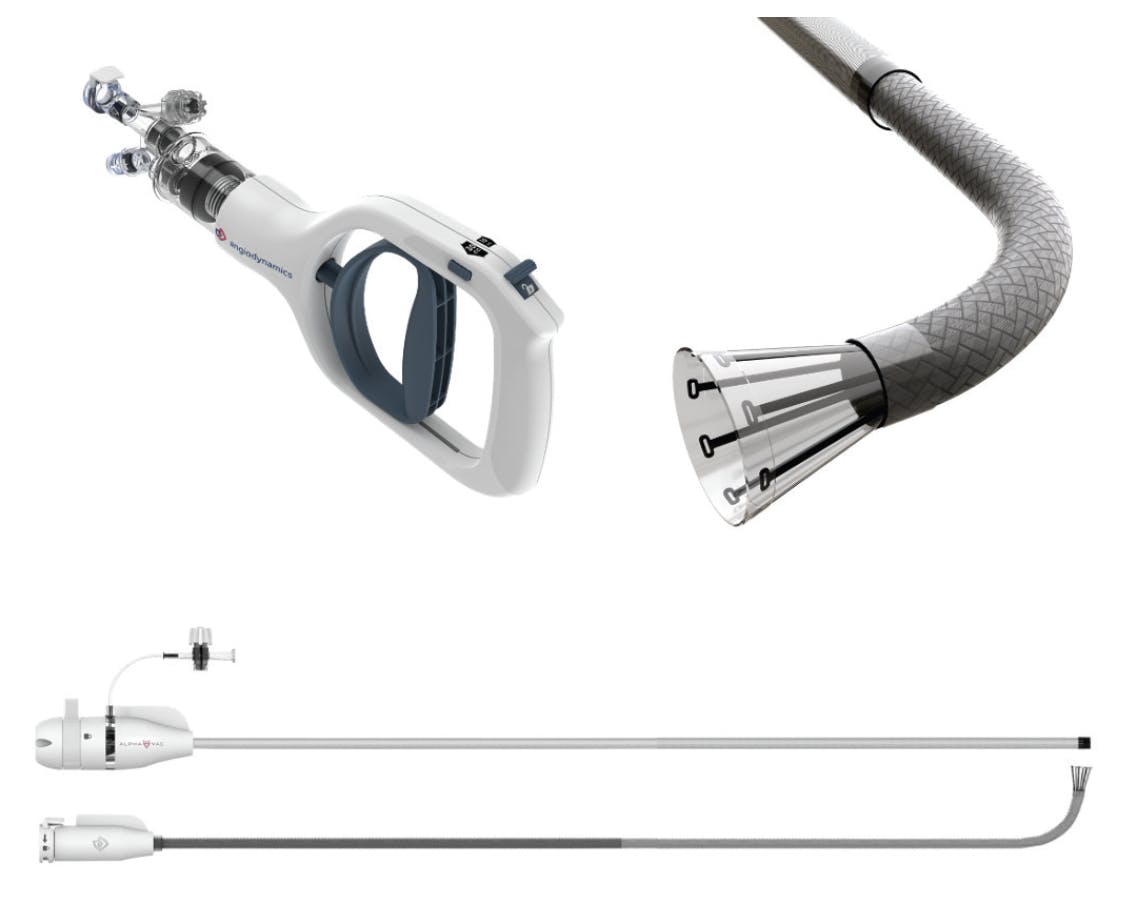
Figure 1. AlphaVac MMA F1885 System. The cannula is indicated for the nonsurgical removal of thrombi or emboli from the venous vasculature as well as aspiration of contrast media and other fluids from the venous vasculature.
Courtesy of AngioDynamics, Inc.
The AlphaVac F1885 thrombectomy system consists of an 18-F cannula (105-cm long) with an 85° angled tip and was cleared by the FDA for the removal of thrombus from the venous system.* An ergonomic handle that acts as the engine or the vacuum source creates an off-circuit method of action and includes the volume-limiting switch, which allows the user to dictate the amount of aspirated material per pull of the handle, thereby minimizing blood loss during the procedure.
The primary efficacy endpoint of the APEX-AV study is the reduction in right ventricular/left ventricular (RV/LV) ratio from baseline to 48 hours postprocedure. The primary safety endpoint is the rate of major adverse events, including device-related death and major bleeding within the first 48 hours. Patients will be followed for 30 days after the index procedure. The study will also evaluate secondary efficacy endpoints, including thrombolytic use within 48 hours of the procedure, length of stay in the intensive care unit/hospital, and change in modified Miller Index from baseline to 48 hours postprocedure, as assessed by CTA. The secondary safety endpoints include rate of device-related complications (comprising clinical deterioration, cardiac injury, pulmonary vascular injury, major bleeding) and device-related death within 48 hours of the index procedure. This study will also conduct an exploratory analysis to evaluate unmet health care needs with study enrollments and outcomes.
*The AlphaVac MMA F1885 System is not indicated for treatment of PE and is considered off-label.
1. Evaluating the safety and efficacy of the AlphaVac multipurpose mechanical aspiration (MMA) F1885 PE for treatment of acute pulmonary embolism (APEX-AV). Clinicaltrials.gov website. Accessed June 8, 2023. https://clinicaltrials.gov/ct2/show/NCT05318092
The PE-TRACT Study

Approximately 5% of patients presenting with submassive PE treated with anticoagulation alone will experience fatal or nonfatal clinical deterioration.1 Thus, routine reperfusion therapy with the intent of reducing the incidence of clinical deterioration is unlikely to be of benefit in most patients with submassive PE. However, many more patients (30%-50%) suffer from dyspnea, reduced quality of life, and physiologic impairment (a combination termed by some as the “post-PE syndrome”).2-4 It is hypothesized that residual thrombus and RV dysfunction contribute to these symptoms, and an outstanding question is whether up-front thrombus removal with catheter-directed therapy (CDT) reduces the incidence of these post-PE impairments.
The PE-TRACT (Pulmonary Embolism–Thrombus Removal with Catheter-Directed Therapy) study (NCT05591118) has been designed to address this knowledge gap. Funded by the National Heart, Lung, and Blood Institute, PE-TRACT is a randomized, controlled, open-label, assessor-blinded, parallel-group, multicenter trial comparing CDT plus anticoagulation (CDT group) to anticoagulation alone (no-CDT group) in patients with acute submassive PE. Its primary objective is to determine whether the CDT group has better cardiopulmonary health in the year following PE than the no-CDT group. Five-hundred patients with submassive PE diagnosed by CTA (RV/LV ratio > 1 and main or lobar PE) will be randomized to CDT or no-CDT. Allowed CDT techniques are mechanical thrombectomy (MT) and catheter-directed lysis (CDL) with devices that are cleared for the treatment of PE. Exclusion criteria include age < 18 years, inability to walk, life expectancy < 1 year, and contraindications to thrombolytic drugs if CDL is to be used. There are two primary outcomes linked by a gatekeeping strategy—the peak oxygen uptake at 3 months (via a cardiopulmonary exercise test [CPET]) and the New York Heart Association (NYHA) class at 12 months. These two outcomes were chosen because they encompass physiologic and patient-reported measures. The gatekeeping strategy anchors the patient-reported measure to the physiologic peak oxygen uptake. If CDT result in an improvement in peak oxygen uptake, the trial will be considered negative regardless of any difference in NYHA class.
The primary safety outcome is a composite of major bleeding, major cardiovascular or pulmonary injury, and major procedure-related serious adverse events. Secondary outcomes include clinical deterioration at 7 days, the 6-minute walk distance at 12 months, and generic quality of life at 12 months. The trial will enroll at 30 to 50 clinical sites across the United States over a period of approximately 40 months. The primary manuscript is expected to be submitted in 2028.
PE-TRACT is the only non–industry-sponsored trial of its magnitude and scope. It is therefore an essential trial to nonprocedural PE stakeholders, as it features numerous protections against bias in its design and conduct. After PE-TRACT’s completion, physicians will be able to confidently advise patients presenting with submassive PE whether CDT is or is not likely to improve their cardiopulmonary health in the following year. Subgroup analyses will identify which groups may benefit the most from CDT. Other CPET parameters (eg, ventilatory and cardiac efficiency) will offer exploratory insights into the post-PE syndrome. Ultimately, PE-TRACT will enable the creation of level 1 guideline recommendations and spur innovation regardless of its result. Its successful completion should therefore be a major priority for the PE community.
Disclaimer: Research reported in this publication was supported by the National Heart, Lung, And Blood Institute of the National Institutes of Health under Award Number UG3HL155798. The content is solely the responsibility of the authors and does not necessarily represent the official views of the National Institutes of Health.
1. Meyer G, Vicaut E, Danays T, et al. Fibrinolysis for patients with intermediate-risk pulmonary embolism. N Engl J Med. 2014;370:1402-1411. doi: 10.1056/NEJMoa1302097
2. Kahn S, Hirsch A, Beddaoui M, et al. "Post-pulmonary embolism syndrome" after a first episode of PE: results of the E.L.O.P.E. study. Blood. 2015;126:650. doi: 10.1182/blood.V126.23.650.650
3. Kahn SR, Akaberi A, Granton JT, et al. Quality of life, dyspnea, and functional exercise capacity following a first episode of pulmonary embolism: results of the ELOPE cohort study. Am J Med 2017;130:990.e9-990.e21. doi: 10.1016/j.amjmed.2017.03.033
4. Sista A, Miller L, Kahn SR, Kline JA. Persistent right ventricular dysfunction, functional capacity, exercise intolerance, and quality of life impairment following pulmonary embolism: systematic review with meta-analysis. Vasc Med. 2016;22:37-43. doi: 10.1177/1358863X16670250
The HI-PEITHO Trial


Massive or high-risk PE presenting with clinical and hemodynamic instability is a medical emergency requiring reperfusion treatment. Options include systemic intravenous (IV) thrombolysis/fibrinolysis, catheter-directed mechanical treatment with or without local thrombolysis, and surgical embolectomy.1-3 However, a much larger part of the PE severity spectrum covers the intermediate-high–risk class, specifically “stable” patients who may exhibit (1) RV dysfunction on echocardiography or CT pulmonary angiography (CTPA) and (2) myocardial injury as indicated by elevated laboratory biomarkers on admission.2 In these patients, the PEITHO trial demonstrated the clinical efficacy of full-dose IV thrombolysis as reflected by a reduction in the clinical composite of death from any cause or hemodynamic collapse within 7 days of randomization. However, this benefit came at a high price, with stroke occurring in 12 (2.4%) patients randomized to the thrombolysis arm (odds ratio [OR], 12.10; 95% CI, 1.57-93.39 vs heparin alone) and hemorrhagic in 10 cases.4
Pharmacomechanical reperfusion, notably ultrasound-assisted thrombolysis (USAT), has the potential of reversing RV dilation, pulmonary hypertension, and anatomic thrombus burden at a considerably lower risk of major bleeding and hemorrhagic stroke than systemic thrombolysis.5-8 The HI-PEITHO (Higher-Risk Pulmonary Embolism Thrombolysis) trial (NCT04790370) is a multinational, controlled, randomized, adaptive-design, multicenter, parallel-group comparison trial. The primary objective is to assess whether USAT plus anticoagulation is associated with a significant reduction in the composite outcome of PE-related mortality, cardiorespiratory decompensation or collapse, or nonfatal symptomatic and objectively confirmed PE recurrence compared to anticoagulation alone within 7 days of randomization. Study patients are randomized 1:1 to treatment with USAT plus anticoagulation versus anticoagulation alone. Allocation to the treatment arms is open label to investigators and patients, but adjudication of the composite primary outcome and safety outcomes is performed by a blinded clinical events committee.
Upon confirmation of intermediate-high–risk PE, patients are screened for specific clinical criteria indicating an elevated risk of early death and/or imminent hemodynamic collapse. These include: (1) heart rate ≥ 100 bpm; (2) systolic blood pressure ≤ 110 mm Hg; and (3) respiratory rate > 20 breaths/min-1 and/or oxygen saturation on pulse oximetry (SpO2) < 90% (or partial arterial oxygen pressure < 60 mm Hg) at rest while breathing room air. Patients are required to meet two or more of the above three clinical criteria.
The study flow diagram is shown in Figure 1. The trial protocol strongly recommends starting USAT within 2 hours of randomization. The primary outcome is a composite of PE-related mortality, cardiorespiratory decompensation or collapse, or nonfatal symptomatic and objectively confirmed recurrence of PE, within seven days of randomization. Cardiorespiratory collapse or decompensation is defined as cardiac arrest or need for cardiopulmonary resuscitation; signs of shock; placement on extracorporeal membrane oxygenation, intubation, or initiation of noninvasive mechanical ventilation; or a NEWS (National Early Warning Score) of ≥ 9, confirmed on two consecutive measurements 15 minutes apart. The study is designed to detect a 15% versus 5% difference (OR, 0.298) in the primary endpoint event rates. A total of 406 patients will yield 90% power to detect the target difference in event rates. Adaptation of the trial, if necessary, will follow predefined rules and be based on the results of the interim analysis. Analysis of the primary endpoint will be performed on the intention-to-treat population and, as a second step, the per-protocol population.
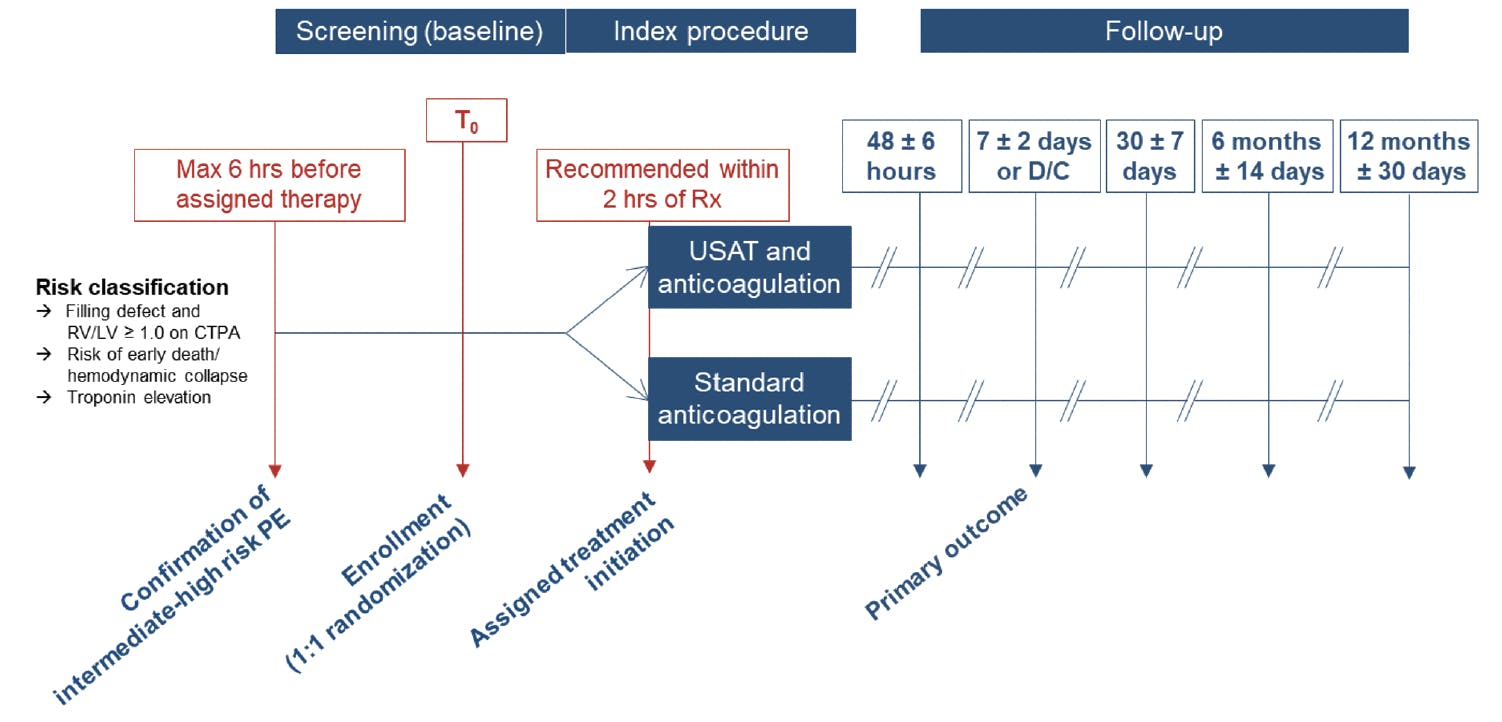
Figure 1. Flow diagram of the HI-PEITHO trial. CTPA, CT pulmonary angiography; D/C, discharge; LV, left ventricular; PE, pulmonary embolism; RV, right ventricular; USAT, ultrasound-assisted thrombolysis.
Additional outcomes include disease-specific and generic quality of life, functional limitation, and health care resource utilization.9-14
As of June 2023, 65 sites have been initiated, and a total of 183 patients have been enrolled at 56 active sites. The estimated completion of enrollment is December 2024.
In conclusion, HI-PEITHO is a landmark trial, the first to perform a randomized comparison evaluating the potential benefit of advanced therapy in patients with high-intermediate-risk PE. The results of this trial will fill a portion of the evidence gap for PE and inform management for this group of patients in which there is currently significant variation in treatment. HI-PEITHO is also unique in its balance of enrollment of patients between the United States and Europe and is the first of many trials incorporating a collaborative partnership between industry and The The National Pulmonary Embolism Response Team (PERT) Consortium. As a seminal trial, HI-PEITHO is expected to inform international guidelines and set standards for evaluation of catheter-directed reperfusion options.
1. Jaff MR, McMurtry MS, Archer SL, et al. Management of massive and submassive pulmonary embolism, iliofemoral deep vein thrombosis, and chronic thromboembolic pulmonary hypertension: a scientific statement from the American Heart Association. Circulation. 2011;123:1788-1830. doi: 10.1161/CIR.0b013e318214914f
2. Konstantinides SV, Meyer G, Becattini C, et al. 2019 ESC guidelines for the diagnosis and management of acute pulmonary embolism developed in collaboration with the European Respiratory Society (ERS). Eur Heart J. 2020;41:543-603. doi: 10.1093/eurheartj/ehz405
3. Stevens SM, Woller SC, Kreuziger LB, et al. Antithrombotic therapy for VTE disease: second update of the CHEST guideline and expert panel report. Chest. 2021;160:e545-e608. doi: 10.1016/j.chest.2021.07.055
4. Meyer G, Vicaut E, Danays T, et al. Fibrinolysis for patients with intermediate-risk pulmonary embolism. N Engl J Med. 2014;370:1402-1411. doi: 10.1056/NEJMoa1302097
5. Bajaj NS, Kalra R, Arora P, et al. Catheter-directed treatment for acute pulmonary embolism: Systematic review and single-arm meta-analyses. Int J Cardiol. 2016;225:128-139. doi: 10.1016/j.ijcard.2016.09.036
6. Kucher N, Boekstegers P, Muller OJ, et al. Randomized, controlled trial of ultrasound-assisted catheter-directed thrombolysis for acute intermediate-risk pulmonary embolism. Circulation. 2014;129:479-486. doi: 10.1161/CIRCULATIONAHA.113.005544
7. Piazza G, Hohlfelder B, Jaff MR, et al. A prospective, single-arm, multicenter trial of ultrasound-facilitated, catheter-directed, low-dose fibrinolysis for acute massive and submassive pulmonary embolism: the SEATTLE II study. JACC Cardiovasc Interv. 2015;8:1382-1392. doi: 10.1016/j.jcin.2015.04.020
8. Tapson VF, Sterling K, Jones N, et al. A randomized trial of the optimum duration of acoustic pulse thrombolysis procedure in acute intermediate-risk pulmonary embolism: the OPTALYSE PE trial. JACC Cardiovasc Interv. 2018;11:1401-1410. doi: 10.1016/j.jcin.2018.04.008
9. ATS Committee on Proficiency Standards for Clinical Pulmonary Function Laboratories. ATS statement: guidelines for the six-minute walk test. Am J Respir Crit Care Med. 2002;166:111-117. doi: 10.1164/ajrccm.166.1.at1102
10. Klok FA, Cohn DM, Middeldorp S, et al. Quality of life after pulmonary embolism: validation of the PEmb-QoL Questionnaire. J Thromb Haemost. 2010;8:523-532. doi: 10.1111/j.1538-7836.2009.03726.x
11. Boon GJAM, Barco S, Bertoletti L, et al. Measuring functional limitations after venous thromboembolism: optimization of the Post-VTE Functional Status (PVFS) scale. Thromb Res. 2020;190:45-51. doi: 10.1016/j.thromres.2020.03.020
12. Ware JE Jr., Sherbourne CD. The MOS 36-item short-form health survey (SF-36). I. Conceptual framework and item selection. Med Care. 1992;30:473-483.
13. Devlin NJ, Brooks R. EQ-5D and the EuroQol group: past, present and future. Appl Health Econ Health Policy. 2017;15:127-137. doi: 10.1007/s40258-017-0310-5
14. Klok FA, Barco S, Siegerink B. Measuring functional limitations after venous thromboembolism: a call to action. Thromb Res. 2019;178:59-62. doi: 10.1016/j.thromres.2019.04.003
The STORM-PE Trial

STORM-PE is a first-of-its-kind randomized controlled trial comparing anticoagulation alone to anticoagulation plus catheter-directed thrombectomy in patients with acute PE. PE is a leading cause of morbidity and mortality worldwide.1 Patients who experience right heart strain and hemodynamic collapse due to their acute PE are at the highest risk of poor outcomes. As a result, numerous societal guidelines recommend reperfusion therapy in addition to anticoagulation for these high-risk patients.2-4 However, in patients who exhibit right heart strain but are hemodynamically stable, there is no consensus on the best treatment. STORM-PE (NCT05684796), sponsored by Penumbra, Inc. and in partnership with The National PERT Consortium™, is a prospective, multicenter, randomized controlled trial evaluating conservative medical management with anticoagulation alone to anticoagulation plus mechanical aspiration thrombectomy in patients with acute intermediate-high–risk PE.
Anticoagulation is well-established as the mainstay of therapy in all patients diagnosed with acute PE unless contraindicated and is recommended as first-line treatment by numerous societal guidelines.2-4 The need for additional therapy in patients with intermediate-high–risk PE, as defined by right heart strain on both imaging and laboratory biomarkers, is not well established primarily due to lack of randomized controlled trials in this setting. The European Society of Cardiology, American Heart Association, and PERT guidance statements all recommend monitoring these patients and consider employing advanced therapies in those who deteriorate or have high-risk features.2-4 Addressing this gap in care and recognizing the clinical equipoise, STORM-PE will evaluate the safety and efficacy of adding catheter-directed thrombectomy with the Lightning Flash catheter (Penumbra, Inc.) to anticoagulation in this patient population. Specifically, this trial will include 100 patients from up to 20 sites and will focus on determining whether treatment with the Indigo aspiration system (Penumbra, Inc.) is able to relieve right heart strain more than treatment with anticoagulation alone and without putting patients at increased risk for adverse events.
The primary outcome of STORM-PE is the change in RV/LV ratio at 48 hours on original therapy, as assessed by CTPA. Secondary outcomes include major adverse events within 7 days: a composite of clinical deterioration requiring escalation of care, PE-related mortality, symptomatic recurrent PE, or major bleeding, as well as within 90 days: all-cause mortality, PE-related mortality, and symptomatic PE recurrence. In addition to these important clinically relevant outcomes, STORM-PE will also measure quality of life and functional status assessments to help evaluate how patients in both treatment arms recover through their 90-day follow-up. By capturing these patient-relevant outcomes, STORM-PE will allow for better understanding of the determinants of well-being that play an important role in the recovery after PE.5
This trial is led by a multidisciplinary steering committee including two National Principal Investigators, Rachel Rosovsky, MD, MPH, and Robert Lookstein, MD, as well as a broad representation of the physician specialties from around the world that care for these patients from diagnosis to treatment and post-PE follow-up. No randomized trials to date have compared anticoagulation alone to anticoagulation plus mechanical aspiration thrombectomy in patients with acute PE. The results of this trial will advance the understanding of the role of mechanical aspiration thrombectomy in the management of acute PE and will inform future guidelines and set standards to improve the outcomes for patients with this life-threatening condition. We anticipate the first patient in to be enrolled in Q3 2023, and the duration of the trial is expected to be about 2.5 years.
1. Raskob GE, Angchaisuksiri P, Blanco AN, et al. Thrombosis: a major contributor to global disease burden. Semin Thromb Hemost. 2014;40:724-735. doi: 10.1055/s-0034-1390325
2. Giri J, Sista AK, Weinberg I, et al. Interventional therapies for acute pulmonary embolism: current status and principles for the development of novel evidence: a scientific statement from the American Heart Association. Circulation. 2019;140:e774-e801. doi: 10.1161/CIR.0000000000000707
3. Konstantinides SV, Meyer G, Becattini C, et al. 2019 ESC Guidelines for the diagnosis and management of acute pulmonary embolism developed in collaboration with the European Respiratory Society (ERS): The Task Force for the diagnosis and management of acute pulmonary embolism of the European Society of Cardiology (ESC). Eur Respir J. 2019;54: 1901647. doi: 10.1183/13993003.01647-2019
4. Rivera-Lebron B, McDaniel M, Ahrar K, et al. Diagnosis, treatment and follow up of acute pulmonary embolism: consensus practice from the PERT Consortium. Clin Appl Thromb Hemost. 2019;25:1076029619853037. doi: 10.1177/1076029619853037
5. de Jong CMM, Rosovsky RP, Klok FA. Outcomes of venous thromboembolism care: future directions. J Thromb Haemost. 2023;21:1082-1089. doi: 10.1016/j.jtha.2023.02.015
Advertisement
Advertisement