Advertisement
Advertisement
June 2023
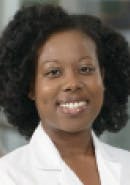
An Interview With Yolanda Bryce, MD, RPVI
The Memorial Sloan Kettering interventional radiologist discusses the intersection of cancer and peripheral artery disease and the program she founded for this population, starting the institution’s breast tumor cryoablation program, career advice, and more.
What have been the advantages of your dual training in breast imaging and interventional radiology (IR), and how do the two roles intersect?
I have been able to work with expertise on both breast cancer and vascular disorders. The intersection between my training uniquely positioned me to bring cryoablation of breast cancer to my institution. I treat patients who have breast cancers—some that is very locally advanced and in patients who are not eligible for surgery or are refusing surgery.
Peripheral artery disease (PAD) in cancer patients is a focus for you, and you founded Memorial Sloan Kettering Cancer Center (MSKCC)’s Noninvasive Vascular Imaging Center for this population. What are the unique needs of PAD and cancer that necessitated such a program?
Vascular disease is often overlooked in the cancer patient. However, vascular disease can be a source of great morbidity and loss of function in some patients, affecting their outcome and quality of life.
Patients with cancer and PAD often have different simultaneous treatments, may have bleeding or clotting risk, or may have multiple contributions for their symptoms (eg, peripheral neuropathy, tumor compression of nerves, and PAD). To address these multiple factors, it is necessary to maintain a multidisicplinary team approach while owning the cardiovascular space with medication optimization, walking program, and revascularization as indicated, and close follow-up with imaging and in the clinic.
How do you present the program’s offerings to referring physicians?
I have given a lot of lectures regarding the subject and often reach out to clinicians when these patients are encountered. I have created collaborative relations with cardiology, medicine, geriatrics, and hematology, and they refer patients to me. I also have an electronic system in place that alerts me to any patient seen at MSKCC with a peripheral vascular disease code.
You are Principal Investigator for a currently recruiting study of PAD in cancer patients who will be having surgery. What knowledge do you hope to gain from this study, and how might it inform your practice going forward?
I hope to assess the true prevalence of PAD in this population, which is currently underdiagnosed at my institution, as well as compare outcomes in cancer patients with and without PAD. I hope to bring to light the impact of PAD on cancer outcome. Most institutions focus only on cardiac and cerebrovascular disease, and less attention is placed on PAD. It is also helping me understand what numbers will be needed for a larger study with PAD screening.
In last year’s Society of Interventional Radiology Research Consensus Panel on racial disparities in critical limb ischemia outcomes and amputation rates, you and colleagues prioritized a research agenda for closing this disparity gap. What would your ideal research project in the realm of disparity reduction, PAD related or not, look like?
We need to establish the benefit of PAD screening in high-prevalence communities through a randomized controlled trial. Currently, the United States Preventive Services Task Force has stated that there is insufficient evidence to recommend PAD screening, even though it is known that there are minority groups with higher prevalence and such a stance may propagate disparities.
Along with founding the PAD program at MSKCC, you also started the institution’s breast tumor cryoablation program. What have been the challenges and highlights of the program?
To get buy-in from surgeons, I presented at many meetings, always maintaining a smile no matter how much I was criticized for this newer technique, and frequently reminded them of the service when I came across a nonsurgical candidate.
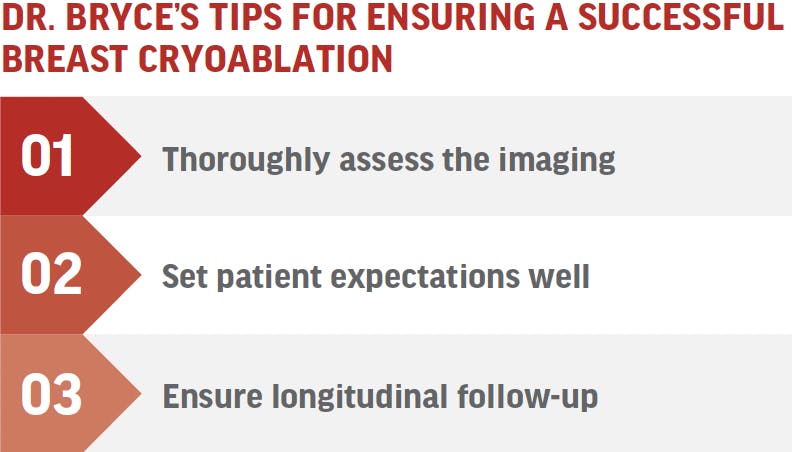
It was very difficult to get buy-in from surgery, as MSKCC is a very surgeon-driven institution. However, I believe that now they see me as an added asset who takes care of patients that they cannot given surgical candidacy. It took a lot of lectures and reminders.
What is one piece of career advice you share with physicians in your IR Training Program?
Have an incredible work ethic. Most things can be taught and improved upon if one is willing to work hard.
What strategies have you found effective for avoiding physician burnout?
Spending designated uninterrupted time with those I love. It is important to be intentional, plan vacations, weekly outings, and commit to spend money well earned toward hobbies and activities that bring you and your loved ones joy and mental rest. It is something I have not done well, but I am committed to improve!
What is something you are looking forward to in the next year, personally or professionally?
I hope the IR residency program at our institution will be ever stronger, our vascular lab and clinic will grow, and the trials I am focused on will fall into place and impact many.
Advertisement
Advertisement
Interested in reading more interviews?
To read more interviews with thought leaders in the vascular field, check out our Profiles & Perspectives hub.
Read More