Advertisement
Advertisement
March 2023
Sponsored by Inari Medical
Clinical Evidence Matters: How ClotTriever Became the Most Studied Thrombectomy Device in DVT Care
With Nicole Ilonzo, MD, and Lorena De Marco, MD, FACS, RPVI, CWSP
Women’s History Month is an opportunity to highlight the contributions of women physicians in the treatment of venous thromboembolism (VTE). Here we present the work of Dr. Nicole Ilonzo and Dr. Lorena De Marco, vascular surgeons whose participation in clinical research demonstrates their dedication to exceptional patient care and has resulted in improved outcomes at their respective institutions.
The importance of clinical evidence in guiding treatment decisions and advancing patient care cannot be overstated. Substantial, high-quality data are needed to learn about the safety and effectiveness of new devices, implement hospital process changes, and ultimately improve patient outcomes. Additionally, older, often more conservative treatments must be reassessed in the context of newer devices and the associated clinical evidence. This article summarizes the available evidence for a new class of deep vein thrombosis (DVT) intervention using thrombolytic-free mechanical thrombectomy.
The ClotTriever System (Inari Medical), designed to rapidly remove thrombus in a single session, has emerged as the most studied of these treatments, with > 700 patients evaluated across nine studies1-14 and > 70 peer-reviewed publications to date (Figure 1). Among these are robust data sets: (1) the CLOUT registry, the largest study to evaluate mechanical thrombectomy for DVT patients; (2) an analysis to contextualize CLOUT versus ATTRACT data; and (3) other prominent ClotTriever experiences.
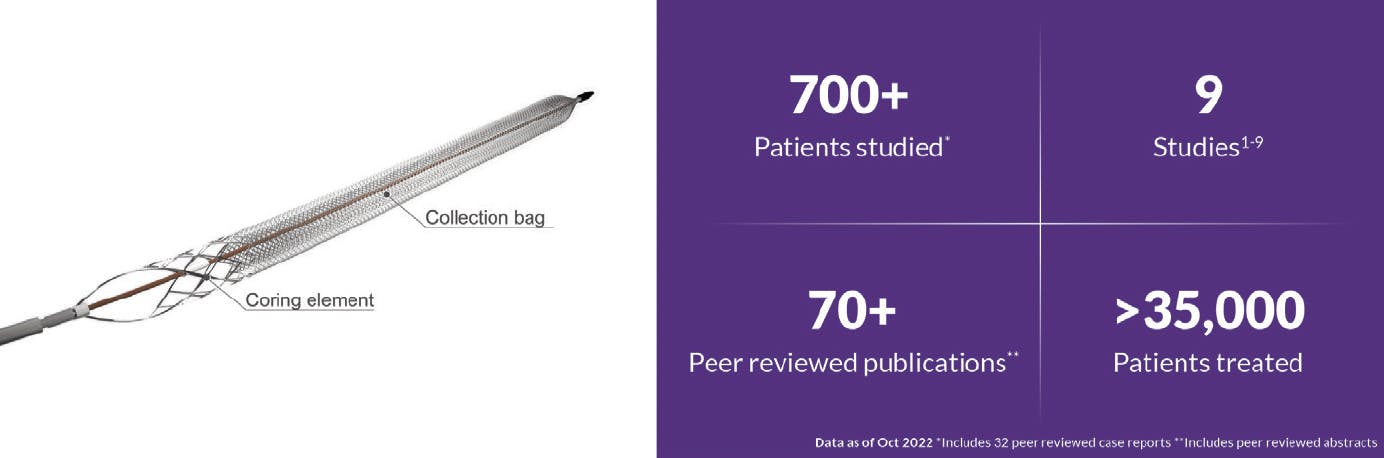
Figure 1. ClotTriever is the most studied thrombectomy system for the treatment of DVT, with excellent results replicated across multiple studies and published in peer-reviewed journals.
CLOUT REGISTRY
The 500-patient CLOUT registry is a prospective, multicenter, all-comer, single-arm study designed to evaluate patient outcomes for proximal lower extremity DVT treated with the ClotTriever System (Figure 2). The primary endpoint of the study is complete or near-complete (≥ 75%) removal of thrombus by core lab–assessed Marder score. Follow-up visits are ongoing at 6 months and 1 and 2 years.
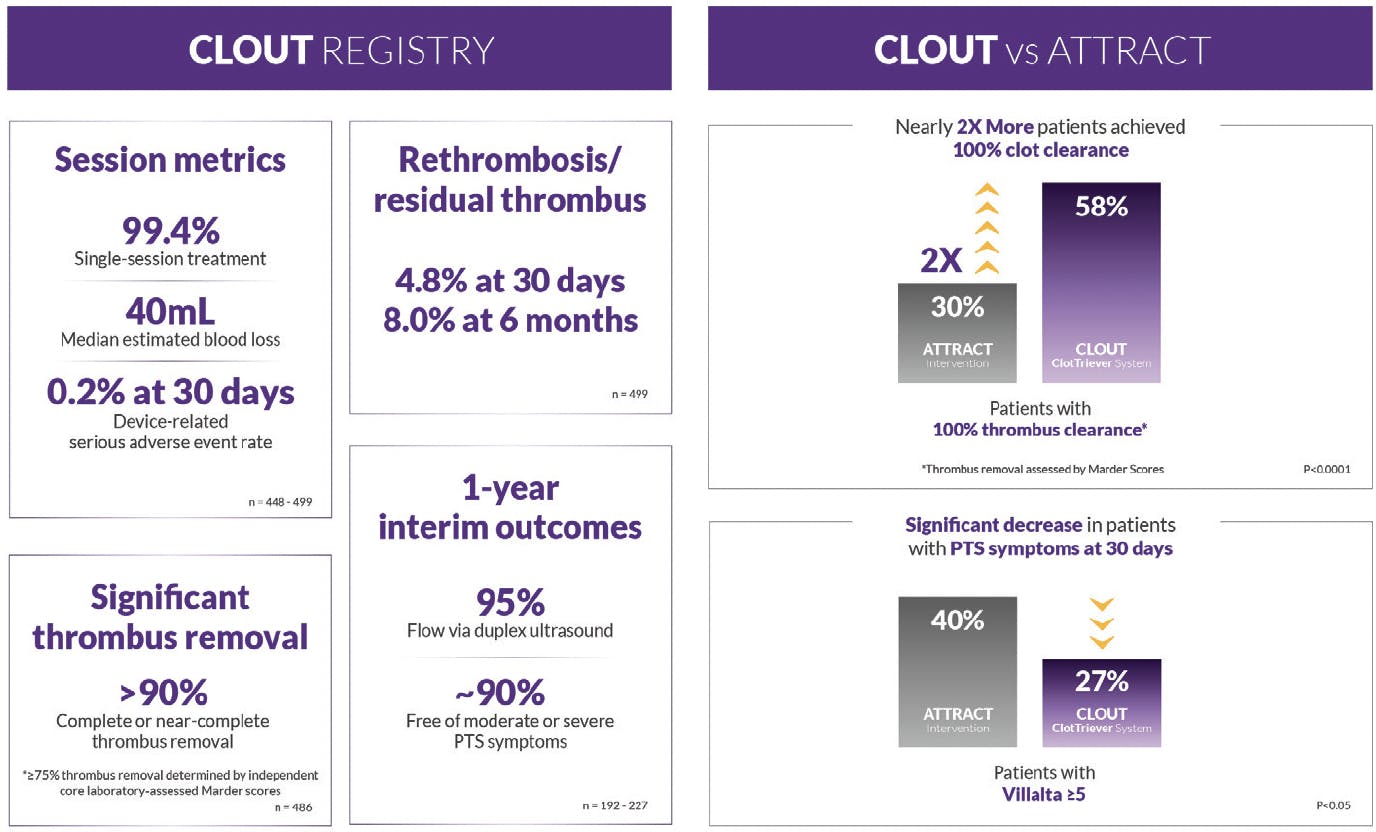
Figure 2. ClotTriever System outcomes in lower extremity DVT patients and results from a propensity score–matched analysis of CLOUT vs the ATTRACT intervention arm.
The ClotTriever System demonstrated outstanding safety and effectiveness results. Excellent short- and longer-term outcomes were reported, including 91% complete or near-complete thrombus removal.8,11-13 The median estimated blood loss was 40 mL. There was a favorable safety profile at 30 days, with 1% all-cause mortality, 0.2% device-related serious adverse event rate, and no incidence of valve or vessel injury. The rethrombosis/residual thrombus rate was 4.8% at 30 days and 8% at 6 months. At 1 year, there was 95% normal flow on duplex ultrasound and approximately 90% freedom from moderate-to-severe postthrombotic syndrome (PTS) symptoms.
CONTEXTUALIZING CLOUT VS ATTRACT INTERVENTION ARM
The ATTRACT trial is often used as a reference for DVT intervention and has shown mixed results, with approximately 50% of patients in both the intervention and conservative therapy arms developing PTS by 2 years. It is important to note that the intervention arm was predominantly catheter-directed thrombolysis, and the trial was conducted prior to the emergence of newer intervention options like the ClotTriever System. To put modern mechanical thrombectomy into context with historical treatment outcomes, a propensity score–matched analysis was performed using data from CLOUT and data from the ATTRACT intervention arm, resulting in 166 matched pairs. Because the two studies were conducted differently, this approach allowed for matching patients with similar baseline characteristics. ClotTriever showed superior thrombus extraction and improved 30-day Villalta scores—nearly twice as many CLOUT patients had complete thrombus removal, and 13% fewer CLOUT patients had Villalta scores ≥ 5 at 30 days15 (Figure 2).
OTHER PROMINENT CLOTTRIEVER STUDIES
Data from the CLOUT registry are consistent with the results of other large ClotTriever patient series published in peer-reviewed journals by highly respected physicians from large academic centers.1-2,4,6-7,9 In a study of 96 patients with acute iliofemoral DVT at OhioHealth Riverside Methodist Hospital, Jolly et al reported that 97% of patients had ≥ 75% thrombus removal, 97% had normal flow, and 100% had normal or partial compressibility at 30 days.7 Moreover, the readmission rate at 30 days was 0%. In a study of DVT patients at Duke Health, Weissler et al reported that venous flow was reestablished in all 18 patients after treatment with the ClotTriever device.9
BUILDING ON THE EVIDENCE
Current data on ClotTriever outcomes have called into question the conservative medical management received by 90% of VTE patients,16 as well as the use of high-risk thrombolytic-based treatments that had long been the standard for VTE intervention.
In keeping with a commitment to generating high-quality, meaningful clinical data, Inari Medical has announced the DEFIANCE randomized controlled trial (NCT05701917) comparing mechanical thrombectomy with ClotTriever to anticoagulation alone. The study will enroll up to 300 patients with proximal DVT and symptoms < 12 weeks and will follow them out to 6 months. The primary endpoint is the severity of PTS at 6 months. Data from the DEFIANCE study will inform us if patients receiving intervention with mechanical thrombectomy will receive further benefits in clinical outcomes versus patients treated with conservative medical management alone.
CASE STUDIES
Current data largely support the use of the ClotTriever System to treat VTE, and > 35,000 patients have been treated with the device. In this article, Dr. Nicole Ilonzo and Dr. Lorena De Marco present three representative cases in which ClotTriever was used to treat upper and lower extremity DVT successfully.
Cases both complex and straightforward reflect the findings of the 500-patient CLOUT study in terms of single-session, thrombolytic-free treatment; complete or near-complete thrombus removal; and negligible estimated blood loss. Both physicians are involved in data collection at their respective institutions, providing valuable insights and information on the effects of mechanical thrombectomy in real-world settings. Their work, presented here, has contributed to the advancement of VTE disease treatment.
1. Benarroch-Gampel J, Pujari A, Aizpuru M, et al. Technical success and short-term outcomes after treatment of lower extremity deep vein thrombosis with the ClotTriever system: a preliminary experience. J Vasc Surg Venous Lymphat Disord. 2020;8:174-181. doi: 10.1016/j.jvsv.2019.10.024
2. Zia S, Juneja A, Chadnick Z, et al. Provisional review and comparison of ClotTriever mechanical thrombectomy versus catheter directed and other mechanical thrombolysis and thrombectomy modalities for lower extremity deep venous thrombosis. J Vasc Surg. 2020;72:e243-e244. doi: 10.1016/j.jvs.2020.04.403
3. Irshad A, Shah P, Jain AK, et al. Promising novel technique for percutaneous extraction of chronic lower extremity deep venous thrombosis: clinical experience with the ClotTriever system. J Vasc Surg. 2020;72:e60-e61. doi: 10.1016/j.jvs.2020.04.110
4. Raskin A, Verma A, Brennan TD. Single-session thrombolysis-free treatment of deep vein thrombosis with a novel mechanical thrombectomy device. JACC Case Rep. 2021;3:415-420. doi: 10.1016/j.jaccas.2020.12.049
5. Shah NG, Wible BC, Paulisin JA, et al. Management of inferior vena cava thrombosis with the FlowTriever and ClotTriever systems. J Vasc Surg Venous Lymphat Disord. 2021;9:615-620. doi: 10.1016/j.jvsv.2020.09.008
6. Wadhwa V, Malhotra A, Kesselman A. Abstract no. 128 rapid single-session mechanical thrombectomy of lower extremity deep venous thrombosis using the ClotTriever system: a single-institution experience. J Vasc Interv Radiol. 2021;32:S57. doi: 10.1016/j.jvir.2021.03.134
7. Jolly MA, Lockhart MM, Shah D, et al. Outcomes from a tertiary care center using a catheter thrombectomy system for managing acute iliofemoral deep vein thrombosis. J Vasc Surg Venous Lymphat Disord. 2022;10:1044-1050. doi: 10.1016/j.jvsv.2022.04.010
8. Dexter DJ, Kado H, Schor J, et al. Interim outcomes of mechanical thrombectomy for deep vein thrombosis from the all-comer CLOUT registry. J Vasc Surg Venous Lymphat Disord. 2022;10:832-840.e2. doi: 10.1016/j.jvsv.2022.02.013
9. Weissler EH, Cox MW, Commander SJ, Williams ZF. Restoring venous patency with the ClotTriever following deep vein thrombosis. Ann Vasc Surg. 2023;88:268-273. doi: 10.1016/j.avsg.2022.07.031
10. Maldonado TS, Dexter DJ, Kado H, et al. Outcomes from the ClotTriever outcomes registry show symptom duration may underestimate deep vein thrombus chronicity. J Vasc Surg Venous Lymphat Disord. 2022;10:1251-1259. doi: 10.1016/j.jvsv.2022.04.015
11. Shaikh A. Featured abstract: safety and effectiveness of the ClotTriever System for treating deep vein thrombosis: six-month outcomes of the fully enrolled CLOUT registry. J Vasc Interv Radiol. 2023;34(suppl):S12. doi: 10.1016/j.jvir.2022.12.062
12. Dexter DDJ, et al. One year interim outcomes of mechanical thrombectomy for deep vein thrombosis from the real-world CLOUT registry. J Vasc Surg Venous Lymphat Disord. 2023;11:458-459. doi: 10.1016/j.jvsv.2022.12.037
13. Dexter DDJ, Kado H, Shaikh A, et al. Safety and effectiveness of mechanical thrombectomy from the fully enrolled multicenter, prospective CLOUT registry. JSCAI. Published online February 22, 2023. doi: 10.1016/j.jscai.2023.100585
14. Abramowitz S, Kado H, Schor J, et al. Six-month deep vein thrombosis outcomes by chronicity: analysis of the real-world CLOUT registry. J Vasc Interv. In press.
15. Abramowitz S. Propensity-score matched analysis of early clinical outcomes from the CLOUT and ATTRACT studies. Presented at: The VEINS; October 31, 2022; Las Vegas, Nevada
16. Key NS, Kasthuri RS. Current treatment of venous thromboembolism. Arterioscler Thromb Vasc Biol. 2010;30:372-375. doi: 10.1161/ATVBAHA.109.197145
Rapid Removal of Acute, Right-Sided Iliofemoral DVT Brings Similarly Rapid Relief to Symptomatic Patient

PATIENT PRESENTATION
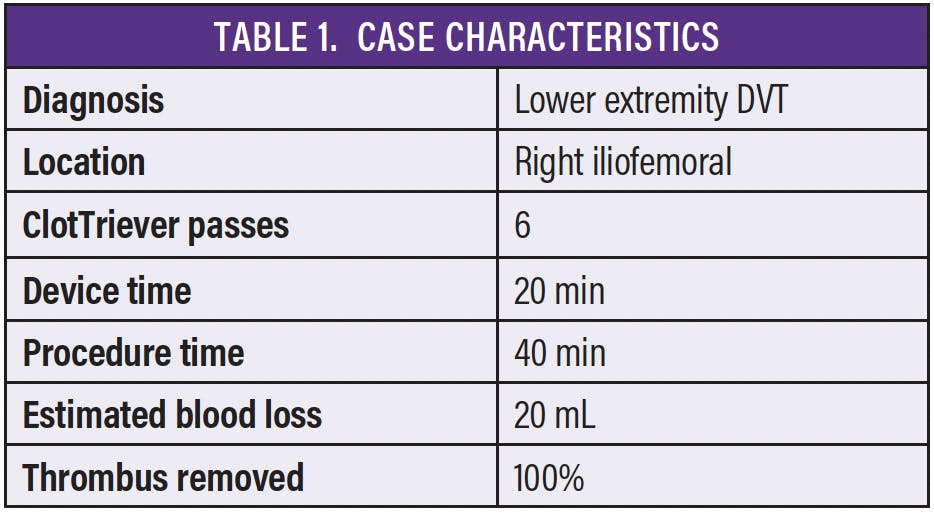
A man in his early 60s presented to the emergency department (ED) with severe right groin pain and lower extremity swelling that had worsened that morning. He denied any prior history of DVT. An ultrasound performed in the ED revealed iliofemoral DVT on the right side, and given the extent of thrombus in the iliac vein, a decision was made to intervene using the ClotTriever System for mechanical thrombectomy (Table 1).
PROCEDURAL OVERVIEW
The patient was taken to the operating room and placed in a prone position, and the right lower extremity was prepped and draped. The right popliteal vein was accessed with a micropuncture needle and wire under ultrasound guidance. The micropuncture needle was then exchanged for a micropuncture sheath, and a Bentson wire was advanced into the popliteal vein. The micropuncture sheath was then exchanged for a short 6-F sheath.
A venogram demonstrated significant thrombus within the iliofemoral vein and extending into the common iliac vein (CIV), just distal to the confluence (Figure 1A). Using a 5-F angled GlideCath (Terumo Interventional Systems) and a Bentson wire, the lesion was crossed all the way up through the iliac vein, and the Bentson wire was advanced into the inferior vena cava (IVC) (Figure 1B). Next, a 9-F short sheath was advanced into the venotomy of the popliteal vein, and intravascular ultrasound (IVUS) performed at the level of the femoral vein revealed significant thrombus. IVUS was performed of the iliac vein and distal IVC, identifying a hemodynamically significant region of compression at the origin of the left CIV.
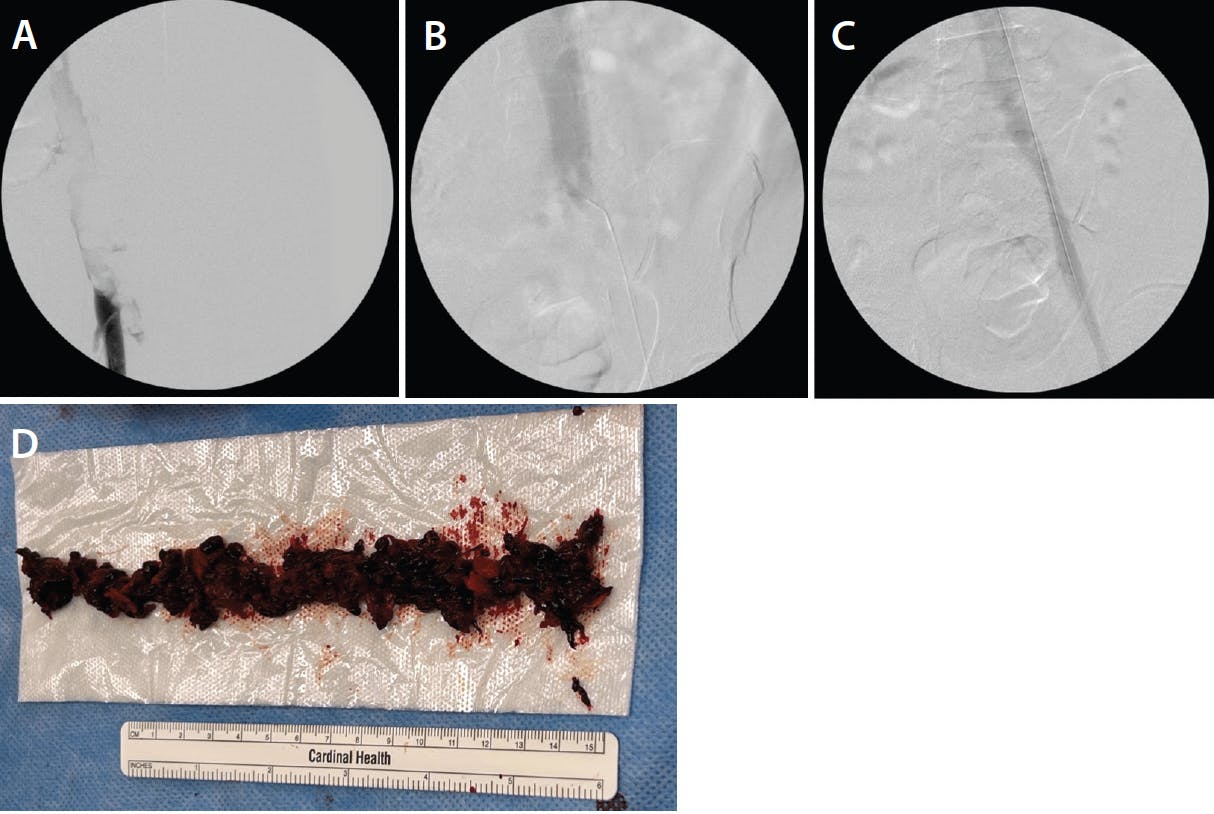
Figure 1. Preprocedure venography shows thrombus extending from the iliofemoral vein into the CIV (A). A Bentson wire crosses the lesion and is advanced into the IVC (B). Postprocedure venography demonstrates good flow through the iliac and femoral segments (C). Extracted thrombus (D).
The Bentson wire was advanced up into the right internal jugular vein, and a vertebral catheter was advanced over it. Next, the Bentson wire was exchanged for an Amplatz wire and the 9-F short sheath was backed out. A 16-F dilator was used, followed by insertion of the ClotTriever catheter, which was advanced into the popliteal vein and all the way up to the distal IVC, beyond the location of the thrombus. The nitinol coring element and mesh collection bag were then deployed at the iliac vein and the catheter was then retracted, capturing and removing significant acute thrombus (Figure 1D). In total, six ClotTriever passes were completed in four quadrants.
Repeat IVUS revealed hemodynamically significant stenosis, so a 16- X 120-mm Abre stent (Medtronic) was placed from the right CIV takeoff to just before the profunda vein takeoff. Accurate placement was confirmed on IVUS. Then, a 16-mm balloon was used to perform angioplasty of the proximal aspect of the stent. A venogram demonstrated good flow throughout the entire iliac and femoral veins (Figure 1C). IVUS of the stent showed good wall apposition and no hemodynamically significant stenosis.
All wires and catheters were removed, and a purse-string stitch was applied. Total procedure time was 40 minutes, and total device time was 20 minutes. All thrombus was removed with an estimated blood loss of 20 mL. The patient tolerated the procedure well and was taken to the recovery room in stable condition.
CONCLUSION
The patient’s pain resolved postprocedure, and the swelling improved greatly. Postoperatively, he had no swelling and reports that he is doing well.
Thrombosed Left Subclavian Vein Associated With First Rib Impingement Treated Successfully With the ClotTriever System
By Nicole Ilonzo, MD
PATIENT PRESENTATION
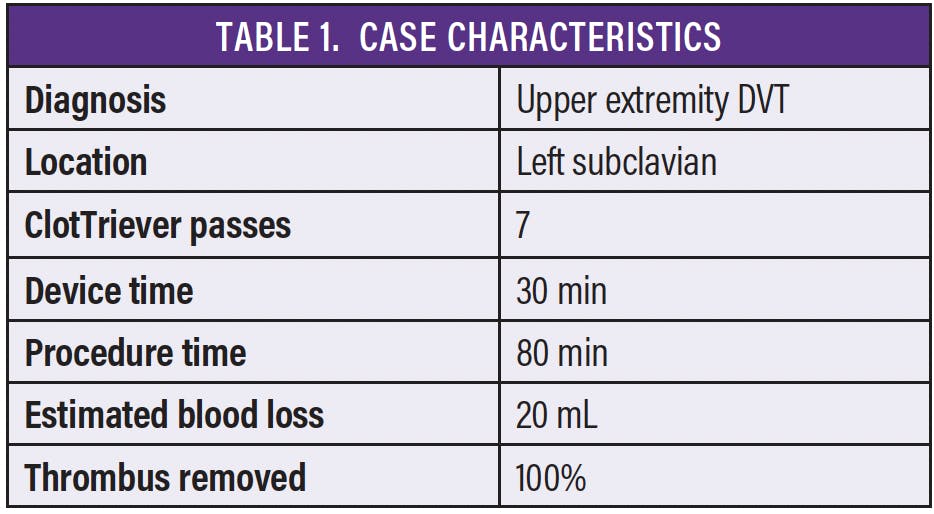
A man in his late 50s presented to the ED with significant left upper extremity swelling that began after exerting himself during a workout at the gym. Over the course of 3 months, the swelling increased but worsened acutely the day of presentation. In the ED, a duplex ultrasound demonstrated subclavian vein DVT. The decision was made to intervene with mechanical thrombectomy using the ClotTriever System (Table 1).
PROCEDURAL OVERVIEW
The patient was brought to the operating room and prepped for the procedure. A micropuncture needle and a wire were used to access the left basilic vein, and an 8-F sheath was advanced over the wire. Next, a Bentson wire was advanced into the left axillary vein, followed by a Berenstein catheter.
Venography was performed and demonstrated occlusion of the left subclavian vein and collateralization of vessels around the thrombus (Figure 1A). The Bentson wire was used to cross the occlusion and advance all the way into the IVC and was then exchanged for an Amplatz wire. Next, the tract overlying the venotomy was dilated, and a ClotTriever sheath was advanced into the basilic vein. The ClotTriever catheter was inserted through the sheath and advanced beyond the location of the thrombus. The nitinol coring element and mesh collection bag were expanded, and the ClotTriever catheter was retracted, evacuating a large thrombus burden (Figure 1B). In total, six passes were made with the ClotTriever along the subclavian and axillary segments.
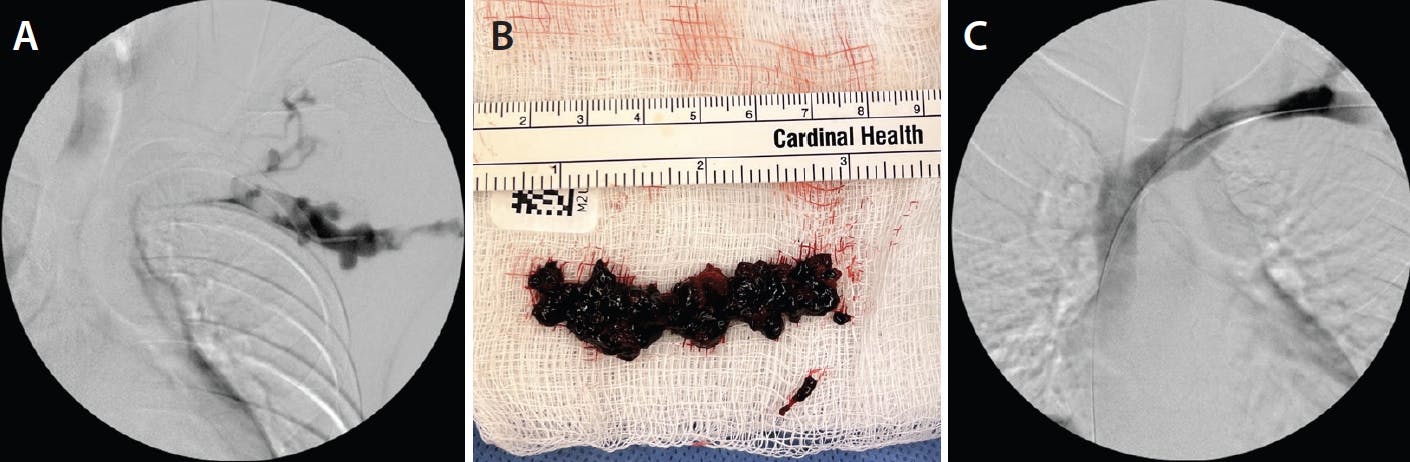
Figure 1. Preprocedure venography showed occlusion of the left subclavian vein and collateralization of vessels (A). After six passes with the ClotTriever System, a large thrombus burden was extracted (B). Completion angiography demonstrated flow through the subclavian vein and superior vena cava (C).
An angiogram demonstrated impingement of the subclavian vein by what was likely the first rib. Next, balloon angioplasty was performed with a 14-mm XXL balloon dilatation catheter (Boston Scientific Corporation). A completion angiogram demonstrated good flow through the subclavian vein into the superior vena cava (Figure 1C). Some stenosis remained due to thoracic outlet syndrome that will require future surgical management. All wires and catheters were removed. The skin overlying the venotomy was repaired with a monocryl 4-0 purse-string suture, and the patient’s arm was wrapped in an elastic bandage.
The total procedure time was 80 minutes, and total device time was 30 minutes. All thrombus was removed with an estimated blood loss of 20 mL. The patient tolerated the procedure well and was taken to the recovery room in stable condition.
CONCLUSION
Postprocedure, the patient’s swelling resolved, and an MRI was planned to evaluate for thoracic outlet syndrome. On 2-week follow-up, the patient denied any residual swelling and reported that he is doing well.
Extensive Occlusive Iliofemoral DVT Treated With the ClotTriever System, Resolving Extreme Left Lower Limb Swelling

PATIENT PRESENTATION
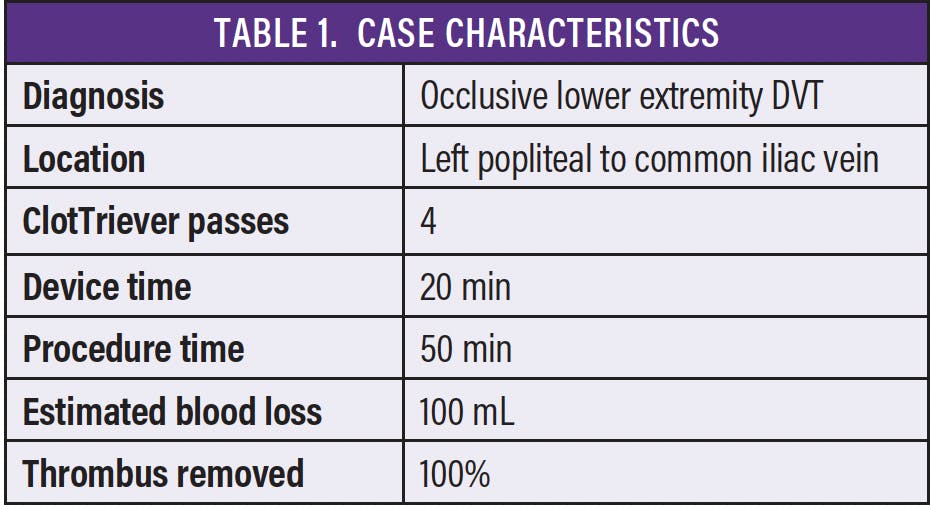
A woman in her early 80s presented to the ED with a left lower limb that had swelled to three times the size of the contralateral limb. She had been sedentary since a wrist surgery 4 weeks prior and developed left buttock pain. The patient underwent outpatient ultrasound but no DVT was found at that time. Further swelling of her lower extremity prompted her to go to the hospital, where an ultrasound revealed extensive right lower extremity DVT involving the common femoral vein. A CT venogram confirmed extensive occlusive thrombus from the left popliteal vein to the left CIV. Given her swelling and discomfort, a decision was made to perform mechanical thrombectomy using the ClotTriever System (Table 1).
PROCEDURAL OVERVIEW
The patient was placed in a prone position under general anesthesia and intubated. The left and right popliteal fossae were prepped and draped, and the left popliteal vein was accessed under ultrasound guidance using a 5-F micropuncture needle, wire, and sheath. These were exchanged for a 6-F sheath. Venography of the left lower extremity was performed, revealing occlusions from the deep femoral vein to the left CIV.
The common femoral and iliac vessels were cannulated using a 0.035-inch, 260-cm Glidewire Advantage guidewire (Terumo Interventional Systems) and 0.035-inch, 135-cm TrailBlazer support catheter (Medtronic). Multiple venograms were obtained, identifying a large amount of thrombus in the left popliteal vein, femoral vein, common femoral vein, external iliac vein, and CIV (Figure 1A and 1B), with no contrast flowing into the IVC secondary to compression (Figure 1C). After some difficulty crossing the CIV into the IVC, venacavograms were obtained and revealed a patent IVC. The patient was fully heparinized, at which point the Glidewire was exchanged for an Advantage wire that was then advanced and positioned on the right internal jugular vein. The 6-F sheath track was dilated, and a 13-F ClotTriever sheath was advanced, followed by introduction of a ClotTriever BOLD catheter. The catheter was positioned beyond the location of the thrombus, and the collection bag and nitinol coring element were deployed. The catheter was then retracted, removing a very large amount of thrombus from the CIV through the popliteal vein (Figure 1D). The catheter was advanced and retrieved four times in four different quadrants. On the fourth pass, there was significantly less thrombus extracted, so a repeat venogram was obtained. The popliteal vein, femoral vein, common femoral vein, and iliac vein segments were patent with contrast flowing (Figure 1E-F); however, flow into the IVC was still diminished.
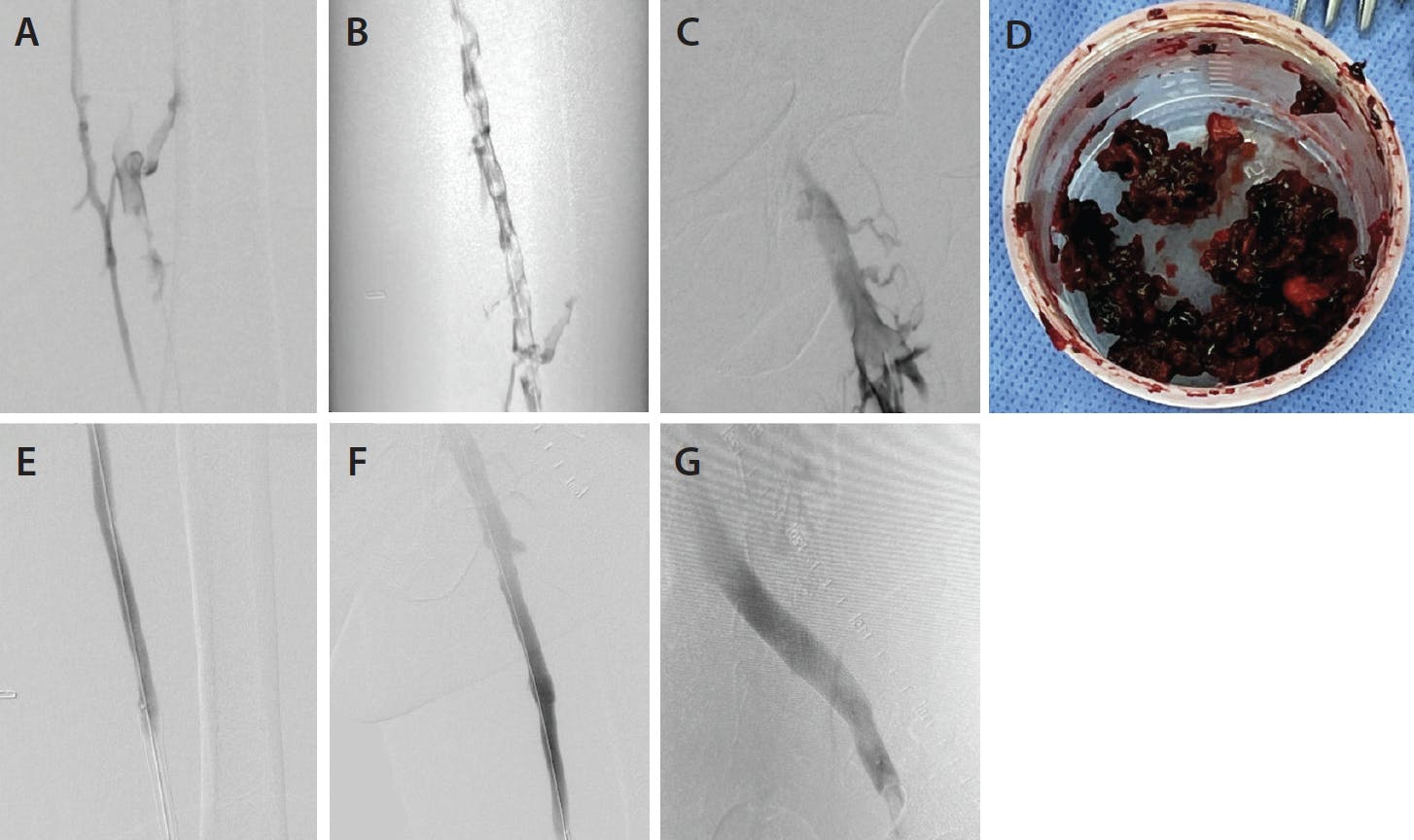
igure 1. Preprocedure venograms demonstrate thrombus in the left popliteal, femoral, common femoral, external iliac, and common iliac segments (A, B). No contrast flowed into the IVC (C). Extracted thrombus (D). Repeat venogram demonstrates patent popliteal, femoral, common femoral, and iliac vein segments (E, F). Completion venogram confirms good flow into the IVC and resolved stenosis (G).
Radiologic findings were indicative of May-Thurner syndrome, prompting angioplasty to be performed in the CIV with a 12-mm balloon. Residual stenosis of approximately 50% remained, and a 16- X 60-mm Wallstent (Boston Scientific Corporation) was placed, followed by postangioplasty with a 16-mm balloon. A completion venogram showed resolution of the stenosis with good flow going into the IVC (Figure 1G). The sheath, wires, and catheters were retrieved, and a purse-string stitch was applied around the sheath with a 2-0 Prolene suture (Ethicon, a Johnson & Johnson company).
There were no complications, and the patient tolerated the procedure well. The total procedure time was 50 minutes, and total device time was 20 minutes. All thrombus was removed with an estimated blood loss of 100 mL. Postprocedure, it was planned for the patient to remain on enoxaparin, keep the leg elevated and compressed, and start ambulation. A workup was planned for a right renal mass found on imaging studies incidentally.
CONCLUSION
A patient with profound left leg swelling was treated successfully for extensive occlusive left lower extremity DVT with left CIV stenosis using the ClotTriever System. Postprocedure, she remained on enoxaparin and eventually underwent nephrectomy. Her stent has remained patent at 2-week and 1- and 6-month follow-up visits with no residual swelling.
Advertisement
Advertisement