Advertisement
Advertisement
March 2023
How I Do It: Management of Type II Endoleak With a Transcaval Approach
For anatomically suitable patients, transcaval embolization is a well-tolerated minor intervention with favorable outcomes for the management of type II endoleaks.
By Kristina Giles, MD, FSVS, FACS, and Aarathi Minisandram, MD, MA, MS
Type II endoleaks are common after endovascular aneurysm repair, occurring in 10% to 30% of patients.1,2 Approximately 30% to 50% of these will resolve on subsequent imaging without intervention or will remain clinically and radiographically asymptomatic. Only about 10% of patients with type II endoleak will require intervention for sac expansion or symptoms from their endoleak.3 There are multiple approaches to the management of type II endoleaks, including continued observation with serial imaging or embolization. Embolization can be performed using various approaches to the source vessel or directed at the sac itself.
APPROACHES TO TYPE II ENDOLEAK EMBOLIZATION
Options for type II endoleak management include preemptive embolization of the inferior mesenteric artery (IMA), lumbar vessels, or perigraft aortic sac using certain size or preidentified high-risk criteria.4-7 Options for postoperative management of persistent type II endoleaks include superior mesenteric artery (SMA) approach to the IMA, hypogastric approach to a lumbar vessel, perigraft approach (if a catheter can be advanced alongside the limb), embolization using transcaval or translumbar approach, transgraft embolization, open or laparoscopic ligation, and graft explantation.8-14 The benefit of techniques that involve direct sac access is the ability to maneuver within the sac to identify multiple source vessels. This also allows the procedure to be done as a diagnostic modality if CTA timing fails to identify an endoleak in the setting of sac expansion.
ANATOMIC CRITERIA AND APPROACH ALGORITHM
Translumbar access to the sac is not always feasible due to anatomic constraints including bowel, kidney, and/or bone. Perigraft access is likewise not always attainable due to iliac tortuosity or tight limb apposition. Transcaval embolization is generally anatomically feasible in the setting of an aneurysm sac due to the sac distorting the inferior vena cava (IVC; Figure 1). Our typical algorithm for selecting an approach is to use the SMA-to-IMA approach through radial access if the type II endoleak source is a large IMA and the transcaval approach for lumbar-based endoleaks or those with both IMA and lumbar vessels.
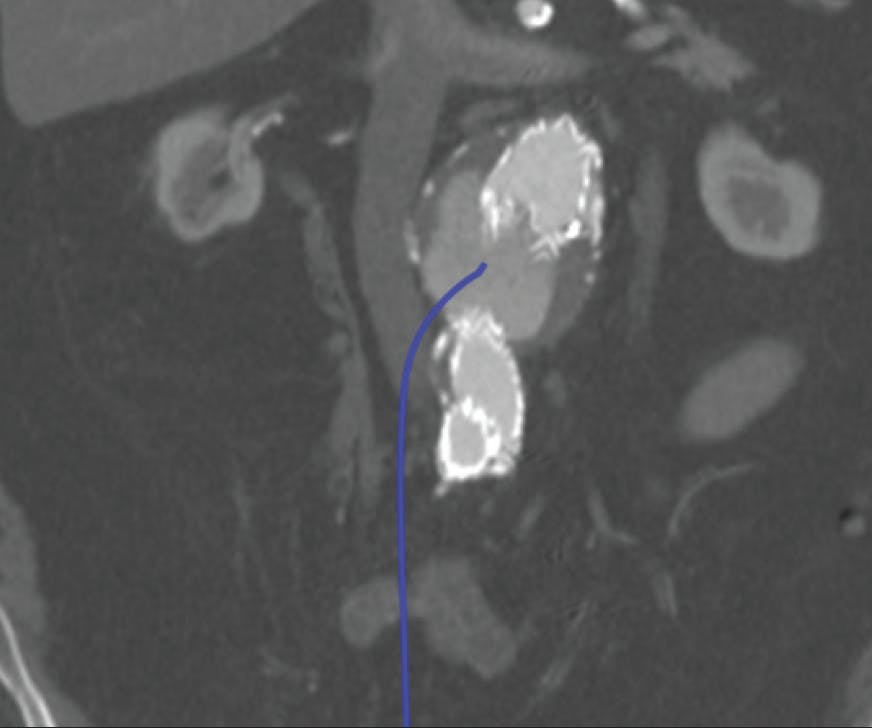
Figure 1. Coronal view of a CTA showing appropriate anatomic suitability for transcaval access to the aneurysm sac, with the base of the aneurysm sac and active flow abutting the IVC. The blue line represents aneurysm sac access via the IVC.
Transcaval embolization is ideal when the IVC abuts the base of the aneurysm sac, giving appropriate alignment for an easy angle of entry into the sac. The entry site must be free of dense calcium, and the nearest graft limb should not be directly along the aneurysm wall adjacent to the caval border. The nidus of flow within the sac can be anywhere within the sac; however, the procedure will be most straightforward if it is in a direct line with the access point.
Preoperative CTA is performed for all patients considered for transcaval embolization with subsequent three-dimensional (3D) reconstruction. Our institution uses Aquarius (TeraRecon) for reconstruction. Two gantry angles are calculated to determine the planned views where the catheter will best abut the aneurysm sac from the IVC with maximal angulation and align with the trajectory of aneurysm sac entry. These should be 90° from one another and typically range between right anterior oblique (RAO) 30° to 45° (“side angle,” where the curved device is shown in maximal profile) and left anterior oblique (LAO) 45° to 60° (“line of sight,” where the device is viewed as a straight line showing the puncture trajectory). Recently, we have been using CT overlay in all cases to help translate the 3D relationship into the two-dimensional fluoroscopic image during the procedure as well (Figure 2).
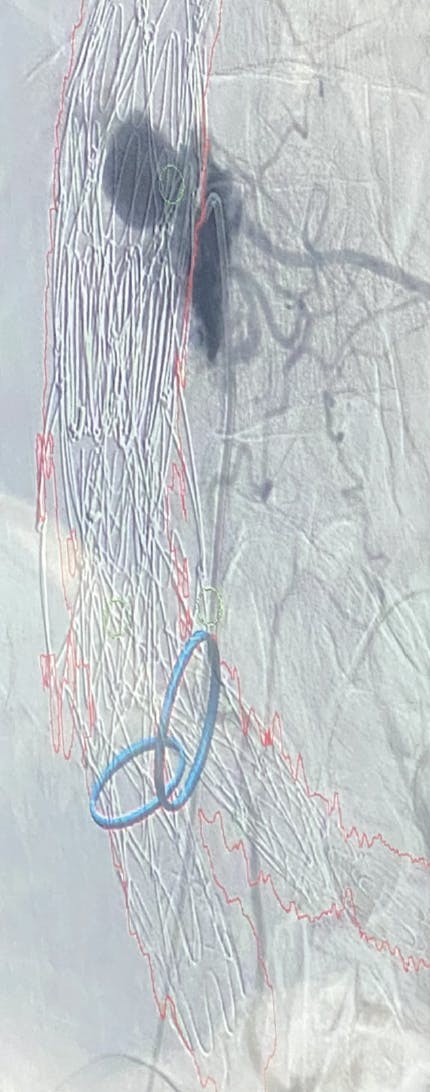
Figure 2. Example of imaging overlay markings showing planned puncture site and planned embolization target (green circles).
TRANSCAVAL EMBOLIZATION STEP BY STEP
Transcaval embolization can be performed under local/monitored anesthetic care or under general anesthesia, depending on patient comorbidities and perioperative anesthetic risk. The ability to have transient apnea is desired but not crucial in most cases.
A diagnostic aortogram can be obtained if questions remain from preoperative imaging regarding the endoleak type. Next, the right femoral vein is accessed using ultrasound guidance. A 10-F support sheath from a transjugular intrahepatic portosystemic shunt (TIPS) set is advanced into the IVC over a wire. Intravascular ultrasound or venography can be performed to delineate sac border and anatomy, but this is typically omitted in our practice. We then advance the TIPS device over a stiff Glidewire (Terumo Interventional Systems) into the IVC near the proposed site of puncture. We use the Rösch-Uchida transjugular liver access set (Cook Medical) or the Liverty (BD Interventional) for transcaval aneurysm sac entry (Table 1). The Rösch-Uchida consists of an introducer sheath, a guiding catheter with angled metal cannula inside, a 5-F inner catheter, and a puncture needle stylet. The Liverty consists of an introducer sheath, a steerable cannula, a 5-F inner catheter, and an 18-g puncture needle. The device is advanced to the aneurysm sac edge to guide entry into the aneurysm sac at a 45° to 90° angle as possible. Static images are obtained in the preplanned RAO and LAO gantry angles (Figure 3). Adjustments can be made to ensure the puncture trajectory is correct and not pointing too far posterior or too close to a graft limb. A combination of bony landmarks, graft landmarks, optional imaging overlay, and tactile feedback is used to ensure adequate positioning.
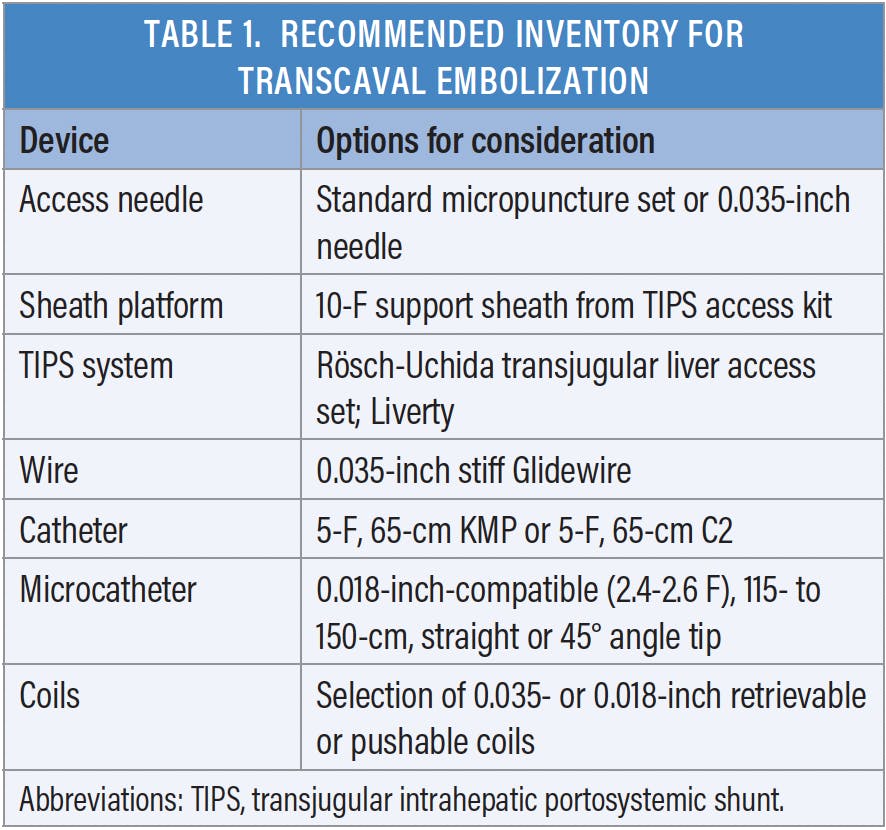
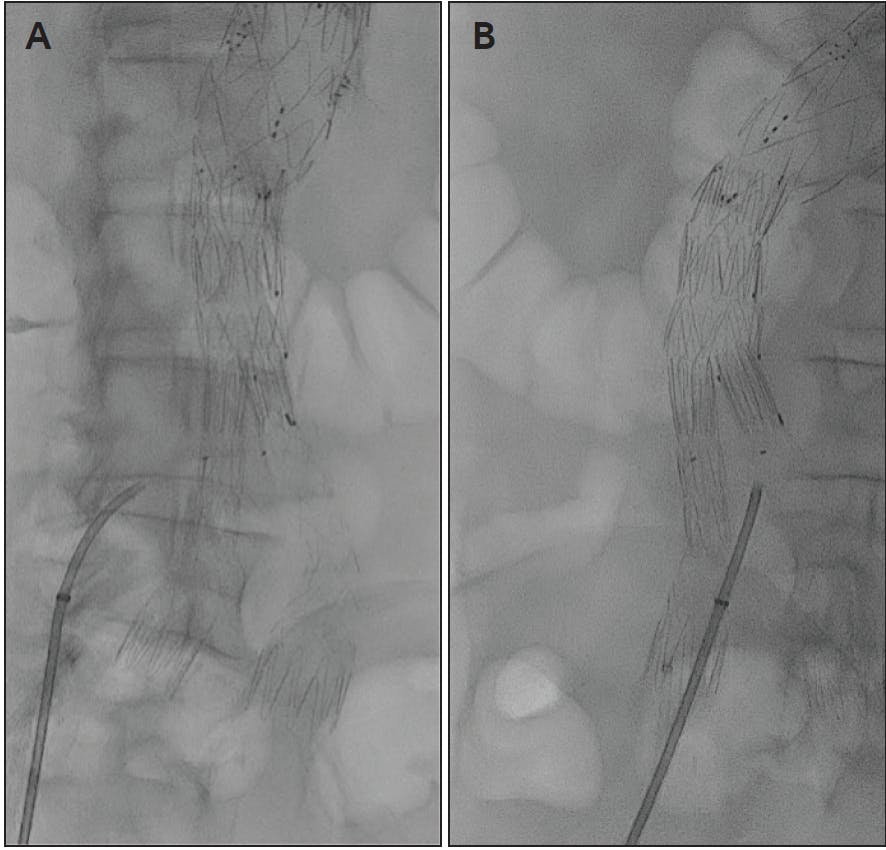
Figure 3. RAO (A) and LAO (B) gantry angles showing side view and line of sight angles for accomplishing sac entry.
The puncture needle and 5-F catheter are then quickly advanced into the sac. The needle is removed, leaving the 5-F inner catheter in the aneurysm sac. If backbleeding is immediately encountered, a sac angiogram is obtained to identify the nidus of flow in the sac and source vessels. If there is no immediate backbleeding with the initial puncture, then a stiff Glidewire is advanced and looped within the aneurysm sac to verify sac entry and attempt further guidance toward the desired target area (Figure 4). The 5-F catheter can be exchanged for a longer catheter and/or one with an angle to help direct toward the endoleak. Once backbleeding is noted, a sac angiogram in one or more angles is obtained to delineate the anatomy (Figure 5). Pressure transduction can also be performed to assess pressure before and after treatment. At this point, 0.035-inch coils could be used for embolization. Alternatively, a microcatheter can be advanced (with a wire if further directional guidance is desired) and 0.018-inch coils can be used for embolization (Figure 6). A variety of coil types (varied by size, shape, and flexibility) allow for tight packing to fully disrupt the flow path and force thrombosis of the lumbar or IMA vessels at their origins. Interval sac angiograms are obtained to evaluate embolization and progress (Figure 6B-E). We don’t typically catheterize lumbar vessels for embolization; however, this could be accomplished via directional targeting with the wire and catheter combinations. Completion imaging should show no further contrast flow into the source vessels and also exhibit no washout from the sac injection. Further adjuncts can be used as embolization of an area is at or nearing completion, including injection of a liquid embolic agent, thrombin, and/or a flowable hemostatic agent. Additional areas within the sac can be targeted if more than one type of endoleak is suspected. If there is difficulty directing the wire and catheter to a specific location, the Liverty steerable portion could be driven into the sac over a stiff wire or the Rösch-Uchida could be exchanged for a steerable sheath and advanced into the sac. If the area of flow is unknown from preoperative imaging, not found initially, or there are multiple areas of inflow suspected, it is important to move a 5-F catheter to several areas within the sac to ensure a complete sampling for flow is performed.
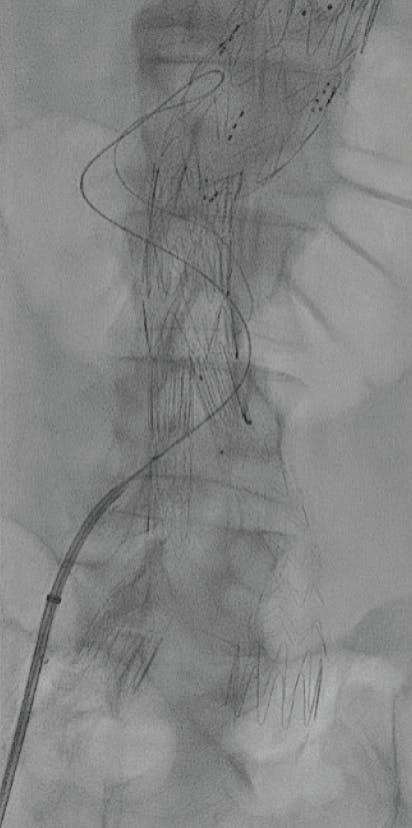
Figure 4. Wire advanced within the aneurysm sac after puncture.
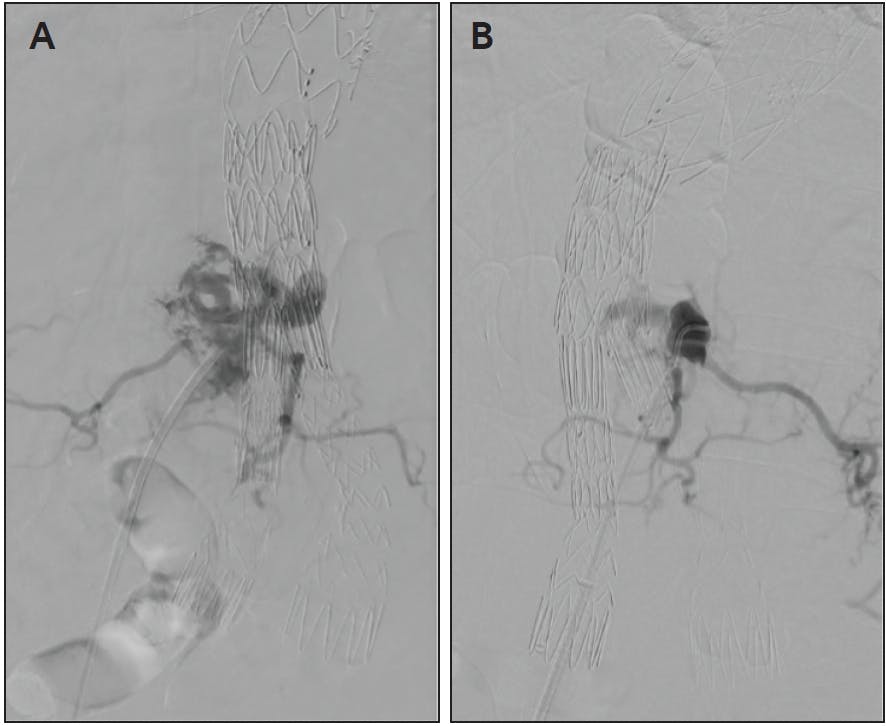
Figure 5. A sac angiogram is performed to identify the origin vessels and nidus of flow. RAO (A) and LAO (B) gantry angles are shown.
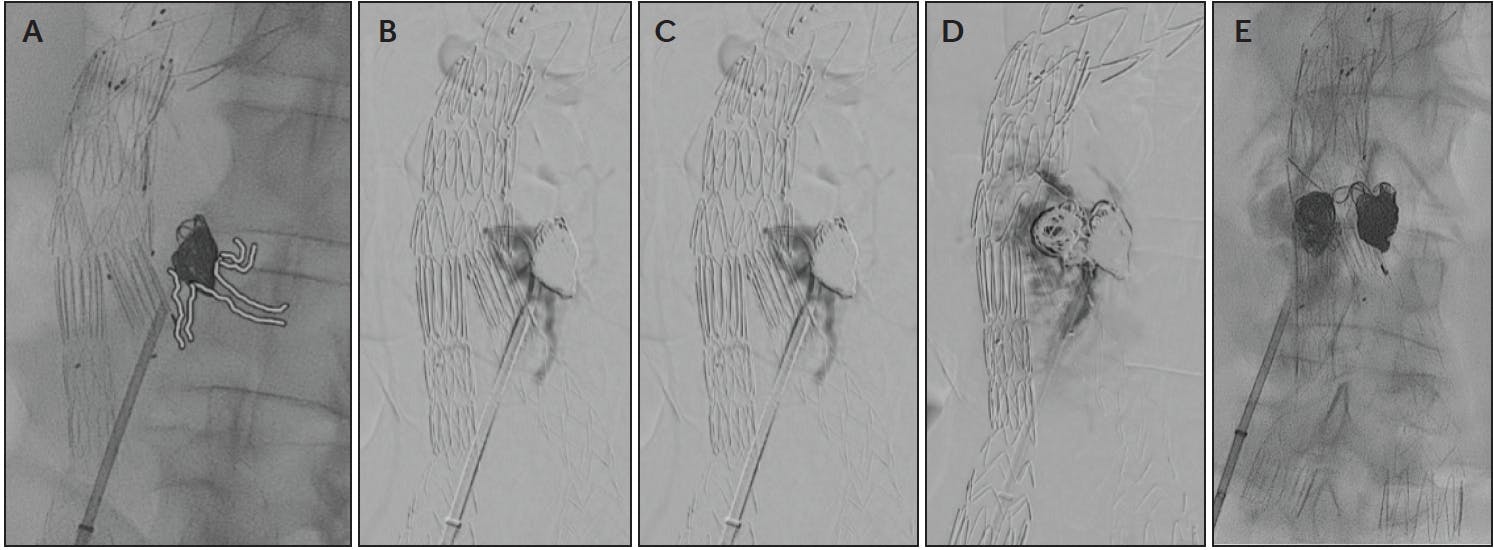
Figure 6. Coil embolization of the flow tract with source vessel markings (A); interval sac angiograms show progress through embolization (B-E).
When embolization is complete, the catheter is withdrawn into the IVC and a venogram can be performed to ensure no extravasation (Figure 7). Once satisfied, the system is removed through the femoral vein, and manual pressure is held for closure.
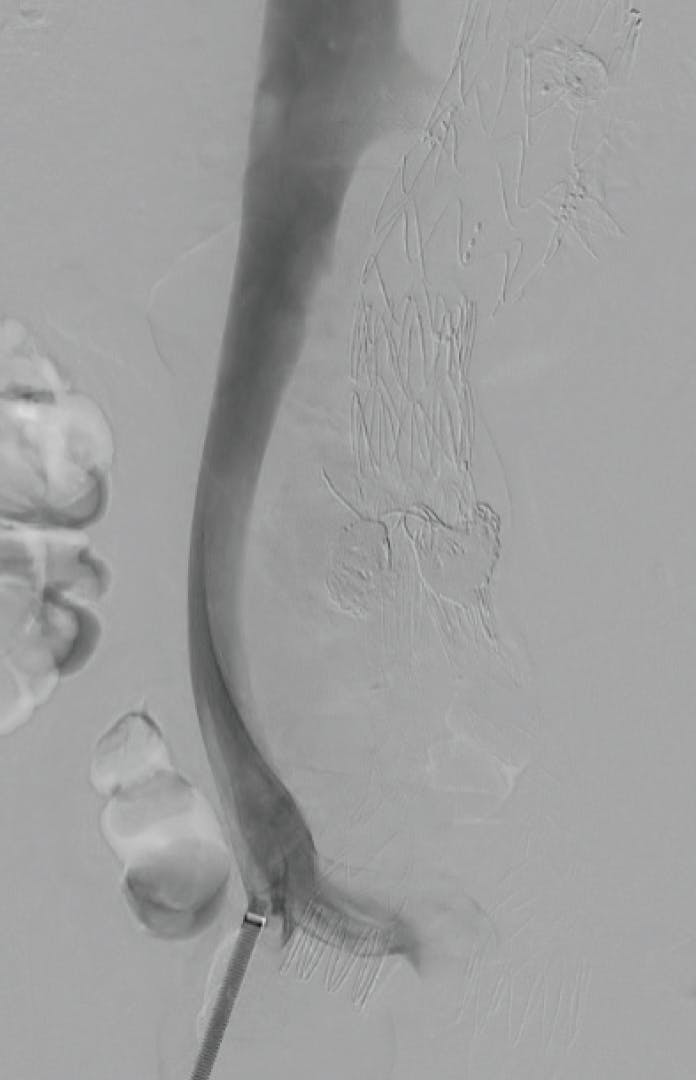
Figure 7. Completion venogram.
FOLLOW-UP AND SURVEILLANCE
Patients are typically discharged the day of surgery, with follow-up at 3 months with repeat CTA. After those results, 6- or 12-month CTA surveillance is planned, with the ultimate goal of transitioning to annual duplex imaging when diameter stability or regression is seen without further endoleak. In our experience, a number of patients who undergo transcaval embolization have undergone prior endovascular intervention for treatment of type II endoleak. Overall, our results show this to be a well-tolerated minor intervention with favorable outcomes for the management of type II endoleaks. This approach continues to be our preferred method of treatment for anatomically suitable patients.12,13
1. Kondov S, Dimov A, Beyersdorf F, et al. Inferior mesenteric artery diameter and number of patent lumbar arteries as factors associated with significant type 2 endoleak after infrarenal endovascular aneurysm repair. Interact Cardiovasc Thorac Surg. 2022;35:ivac016. doi: 10.1093/icvts/ivac016
2. Ward TJ, Cohen S, Patel RS, et al. Anatomic risk factors for type-2 endoleak following EVAR: a retrospective review of preoperative CT angiography in 326 patients. Cardiovasc Intervent Radiol. 2014;37:324-328. doi: 10.1007/s00270-013-0646-7
3. Rokosh RS, Wu WW, Dalman RL, Chaikof EL. Society for Vascular Surgery implementation of clinical practice guidelines for patients with an abdominal aortic aneurysm: endoleak management. J Vasc Surg. 2021;74:1792-1794. doi: 10.1016/j.jvs.2021.04.042
4. Manunga JM, Cragg A, Garberich R, et al. Preoperative inferior mesenteric artery embolization: a valid method to reduce the rate of type II endoleak after EVAR? Ann Vasc Surg. 2017;39:40-47. doi: 10.1016/j.avsg.2016.05.106
5. Samura M, Morikage N, Otsuka R, et al. Endovascular aneurysm repair with inferior mesenteric artery embolization for preventing type ii endoleak: a prospective randomized controlled trial. Ann Surg. 2020;271:238-244. doi: 10.1097/SLA.0000000000003299
6. Vaillant M, Barral PA, Mancini J, et al. Preoperative inferior mesenteric artery embolization is a cost-effective technique that may reduce the rate of aneurysm sac diameter enlargement and reintervention after EVAR. Ann Vasc Surg. 2019;60:85-94. doi: 10.1016/j.avsg.2019.03.012
7. Barleben A, Quinones-Baldrich W, Mogannam A, et al. Midterm evaluation of perigraft arterial sac embolization in endovascular aneurysm repair. J Vasc Surg. 2020;72:1960-1967. doi: 10.1016/j.jvs.2020.01.077
8. Sarac TP, Gibbons C, Vargas L, et al. Long-term follow-up of type II endoleak embolization reveals the need for close surveillance. J Vasc Surg. 2012;55:33-40. doi: 10.1016/j.jvs.2011.07.092
9. Gallagher KA, Ravin RA, Meltzer AJ, et al. Midterm outcomes after treatment of type II endoleaks associated with aneurysm sac expansion. J Endovasc Ther. 2012;19:182-192. doi: 10.1583/11-3653.1
10. Baum RA, Carpenter JP, Golden MA, et al. Treatment of type 2 endoleaks after endovascular repair of abdominal aortic aneurysms: comparison of transarterial and translumbar techniques. J Vasc Surg. 2002;35:23-29. Published correction appears in J Vasc Surg. 2002;35:852. doi: 10.1067/mva.2002.121068
11. Kasirajan K, Matteson B, Marek JM, Langsfeld M. Technique and results of transfemoral superselective coil embolization of type II lumbar endoleak. J Vasc Surg. 2003;38:61-66.
12. Giles KA, Fillinger MF, De Martino RR, et al. Results of transcaval embolization for sac expansion from type II endoleaks after endovascular aneurysm repair. J Vasc Surg. 2015;61:1129-1136. doi: 10.1016/j.jvs.2014.12.002
13. Scali ST, Vlada A, Chang CK, Beck AW. Transcaval embolization as an alternative technique for the treatment of type II endoleak after endovascular aortic aneurysm repair. J Vasc Surg. 2013;57:869-874. doi: 10.1016/j.jvs.2012.09.021
14. Wisselink W, Cuesta MA, Berends FJ, et al. Retroperitoneal endoscopic ligation of lumbar and inferior mesenteric arteries as a treatment of persistent endoleak after endoluminal aortic aneurysm repair. J Vasc Surg. 2000;31:1240-1244. doi: 10.1067/mva.2000.105007
Advertisement
Advertisement