Advertisement
Advertisement
May 2023
Sponsored by Cagent Vascular
Using Serranator® in Challenging CLTI Cases
Serration technology is utilized in below-the-knee arteries to restore blood flow and promote wound healing.
With Matthew Holland, MD, FACC, FSCAI; Ariela Zenilman, MD; Brian DeRubertis, MD; and Vishal Kapur, MD
Chronic limb-threatening ischemia (CLTI) is a challenging disease to treat, requiring a tailored approach and comprehensive endovascular toolbox. The goal of treatment is to achieve wound healing, limb salvage, and improve quality of life. An innovative technology utilizing serrations has been developed to provide better, consistent results in these challenging cases.
The Serranator® PTA Serration Balloon Catheter (Cagent Vascular) is a semicompliant balloon with three longitudinal serrated strips. The serration technology applies up to 1,000 times the point force of plain old balloon angioplasty (POBA) along the linear planes of the serration points, thus delivering controlled and predictable vessel dilation using lower inflation pressures. In a recent core lab–adjudicated study, Serranator PTA provided CLTI patients with more luminal gain when compared to POBA alone; Serranator also provided 2.4 times greater volumetric blood flow than POBA in a recent study subanalysis. Furthermore, Serranator provided a 49% improvement in residual stenosis compared to POBA and an even greater result in CTOs (62% improvement compared to POBA), while minimizing dissections and vessel recoil that may otherwise require bailout stent placement.1
This article presents three real-world case studies outlining the successful treatment of patients with CLTI using Serranator as the primary treatment modality.
Case 1: Severe Occlusion of the Tibial and Dorsalis Pedis Arteries in a Patient With Acute Kidney Injury
By Matthew Holland, MD, FACC, FSCAI
CLINICAL PRESENTATION
A man in his mid 50s with housing insecurity presented to the emergency department with 2 weeks of right foot pain, swelling erythema, and ulceration on the plantar aspect of the right great toe and midfoot (Figure 1A). He had limited, intermittent contact with the health care system. Medical history was notable for type 2 diabetes; hypertension; hyperlipidemia; chronic, untreated hepatitis C with cirrhosis; and alcohol abuse in remission.
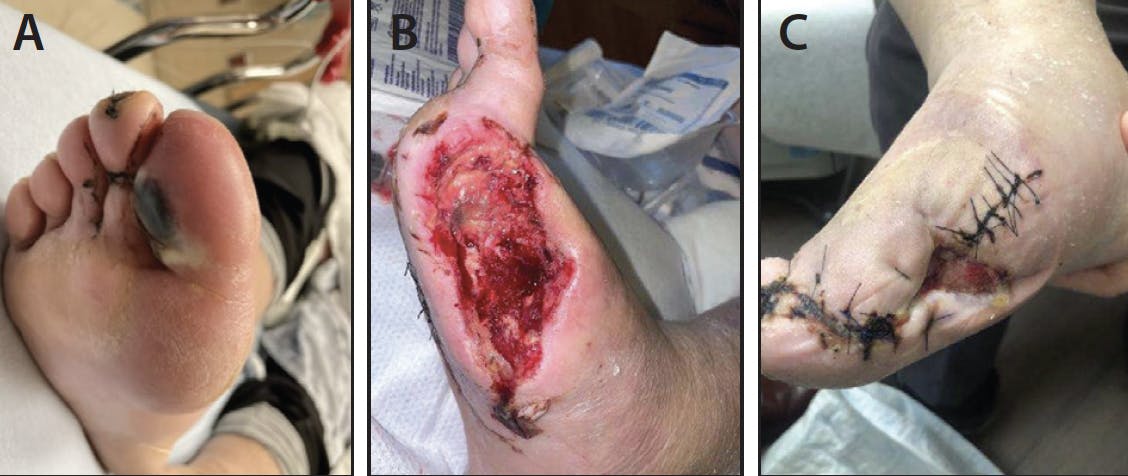
Figure 1. Wound images at initial (A), postamputation and preprocedure (B), and 3 months post-Serranator (C).
Clinical presentation and laboratory studies met criteria for sepsis. Notable findings included leukocytosis (white blood count, 16,000/µL), anemia (hemoglobin and hematocrit, 7.5 g/dL and 23%), acute kidney injury (AKI) versus chronic (creatinine, 2.9 mg/dL; no baseline value available), C-reactive protein of 268 mg/L, and hemoglobin A1c of 6.1% with a glucose level of 242 mg/dL.
MRI of the right foot was consistent with osteomyelitis of the distal phalanx of the right great toe and necrotizing deep space infection. The patient was started on vancomycin and cefepime and taken urgently to the operating room (OR) on the evening of admission for right hallux amputation with incision and drainage of the right foot extending through the plantar midfoot demonstrating purulence and necrotic material. The postoperative diagnosis was severe diabetic foot infection with necrotizing soft tissue infection of the first ray and plantar midfoot and osteomyelitis of the right hallux (Figure 1B).
The patient underwent noninvasive vascular studies the next day with inability to obtain ankle-brachial index due to medial calcinosis and inability to obtain toe pressures due to amputation, wound, and pain. The pulse volume recording at the right ankle was dampened.
The hospital course was notable for AKI with a creatinine peak at 4.8 mg/dL and the diagnosis of nephrotic range proteinuria. Foot and bone culture grew group G Streptococcus and anaerobes. Antibiotics were changed to ceftriaxone and metronidazole. The patient returned to the OR for repeat incision and drainage on days 4, 6, and 9. On day 11, he underwent first ray amputation. Limited bleeding was noted, and wound vacuum-assisted closure was placed. On day 18, he developed wound breakdown and bedside debridement was performed. No bleeding from the wound was noted, and interventional cardiology was consulted.
Review of foot x-rays noted marked vascular calcification. Creatinine was still elevated at 2.8 mg/dL. The decision was made to perform catheter angiography with limited dilute contrast.
PROCEDURE DETAILS
The patient was prehydrated per protocol. Left common femoral (CFA) artery 5-F access was obtained with ultrasound guidance and micropuncture technique. The right common iliac artery was engaged with a 5-F internal mammary artery catheter. No contrast was injected. A 0.038-inch Glidewire Advantage guidewire (Terumo Interventional Systems) and a 0.035-inch, 150-cm-length NaviCross catheter (Terumo Interventional Systems) were advanced into the right popliteal artery. A pullback pressure gradient was measured from the distal popliteal back through the right common iliac artery, demonstrating no areas of significant pressure gradient or obstruction. The catheter was then advanced over an 0.018-inch Command wire (Abbott) and placed into the posterior tibial (PT) artery, followed by the anterior tibial (AT) artery, and limited dilute contrast angiography was performed. This demonstrated severe, multisegment, heavily calcified subtotal occlusions of the PT artery and severe proximal and mid AT disease, with total occlusion of the distal AT and dorsalis pedis (DP) arteries (Figure 2 and Figure 3).
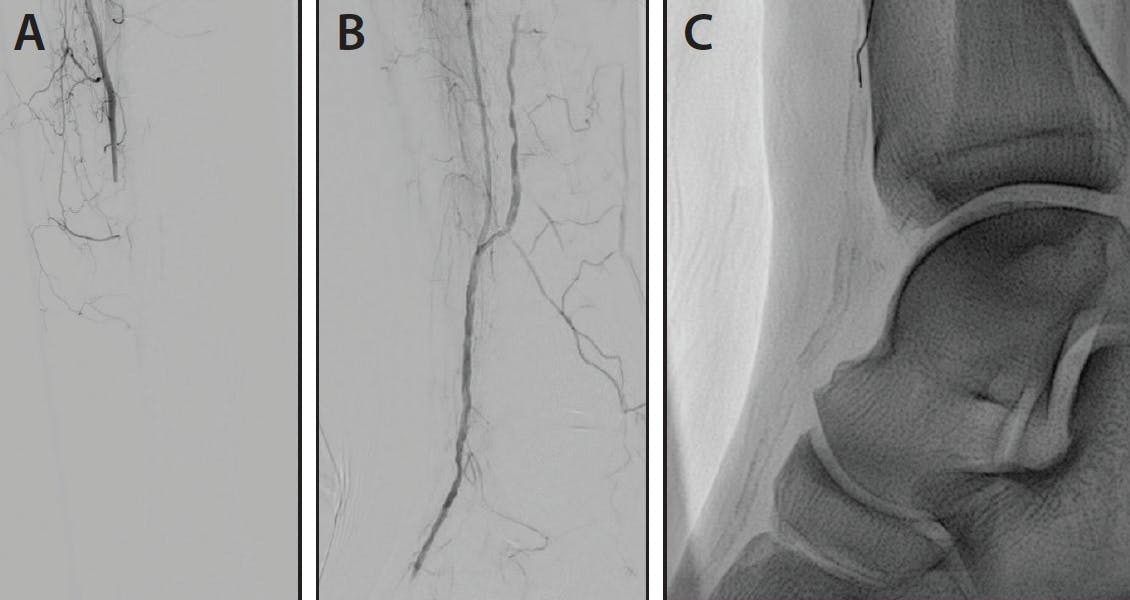
Figure 2. Preprocedural angiograms of the AT artery (A), the distal AT and PT arteries (B), and AT calcification (C).
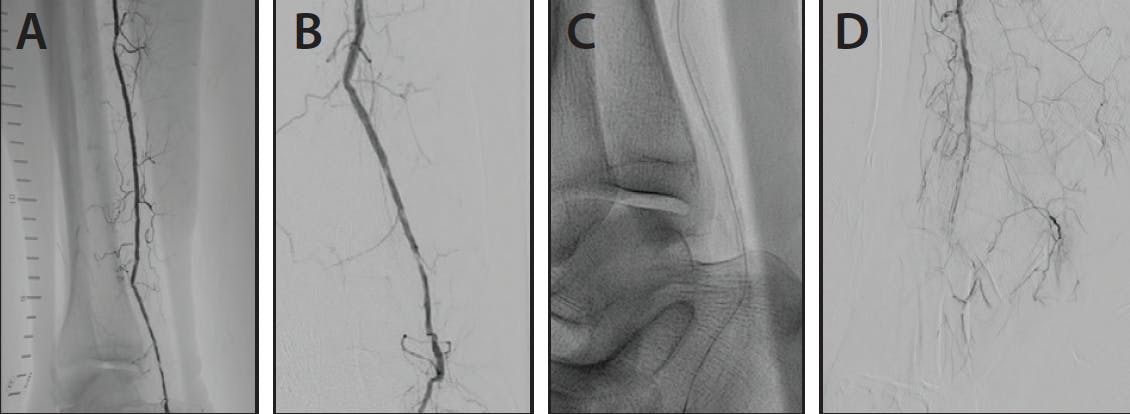
Figure 3. Preprocedural angiograms of the PT artery (A), distal PT artery (B), distal PT calcification (C), and DP artery (D).
A 6-F, 65-cm up-and-over Destination sheath (Terumo Interventional Systems) was utilized. The patient was then heparinized. A 0.018-inch, 150-cm NaviCross was placed over the 0.018-inch Command wire into the AT. Proximal and mid AT stenoses were crossed with a 0.014-inch Sion Blue wire (Asahi Intecc USA). The distal AT and DP artery total occlusions were crossed relatively easily with a Pilot 50 wire (Abbott). A 2- X 150-mm Nanocross angioplasty balloon (Medtronic) was used for overlapping inflations extending from the mid DP through the ostial AT. Full balloon expansion could not be achieved at 14 atm in the distal AT and proximal DP arteries. There remained no distal outflow from the AT and DP arteries. A 6-F Export catheter (Medtronic) was placed and multiple rounds of manual aspiration were performed, retrieving small amounts of red and white thrombotic material. Local distal administration of nitroglycerin was performed through this catheter, leading to improved outflow. A severe distal DP stenosis at the origin of the first dorsal metatarsal artery was noted. The Pilot wire was placed across this stenosis, and balloon angioplasty was performed to 8 atm with a 2- X 40-mm Apex balloon (Boston Scientific Corporation). Limited angiography at that time revealed brisk outflow, including bleeding/extravasation into the wound. A severe calcified stenosis in the distal AT and proximal DP arteries was then treated via a 2.5- X 80-mm Serranator balloon for a single 2-minute inflation at 2 to 4 atm, with full balloon expansion.
Attention was then turned to the PT artery. The Pilot 50 wire was placed, and multiple overlapping 14 atm inflations were performed throughout the entire length of the PT artery with the 2- X 150-mm balloon. There were a number of areas throughout the PT artery where full balloon expansion could not be achieved. A 2.5- X 80-mm Serranator balloon was then used for multiple overlapping 2-minute inflations to a maximum of 6 atm throughout the mid and distal PT artery, with full balloon expansion.
Final limited dilute contrast angiography demonstrated two-vessel runoff via the AT and PT artery (Figure 4), with bleeding/extravasation at the hallux amputation site and vascular blush to the wound bed. The total contrast volume was 25 mL for the entire case.
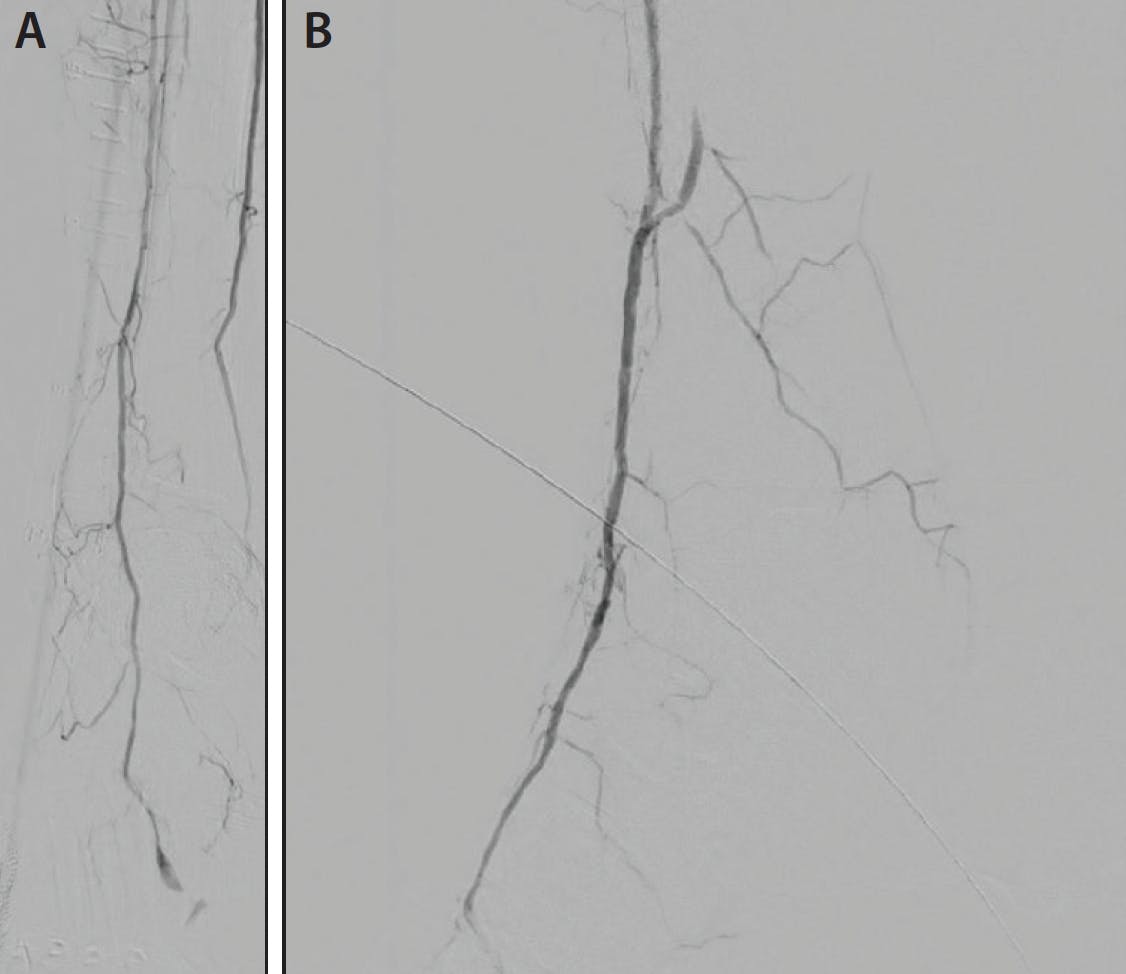
Figure 4. Post-Serranator angiograms of the two-vessel runoff (A) and AT artery (B).
POSTINTERVENTION COURSE
The patient returned to the OR the next day for continued wound bleeding, repeat incision and drainage, and ACell graft placement. He was discharged from the hospital on day 27 to respite care, with home health wound care three times per week and frequent podiatry follow-up with outpatient debridement. Approximately 6 weeks postdischarge, the patient was taken back to the OR for complete resection of the first metatarsal, partial resection of the second ray, and application of a biological graft. Bone culture grew multiresistant Enterobacter. Levofloxacin and linezolid were started, and outpatient wound care continued. The patient was seen in the cardiology clinic 2.5 months postintervention. He was no longer on antiplatelet or anticoagulation therapy due to worsening iron deficiency anemia. The wound was healing well (Figure 1C), and the patient had no complaints.
Case 2: Recurrent Occlusions of the PT and AT Arteries After Transmetatarsal Amputation
By Ariela Zenilman, MD, and Brian DeRubertis, MD
CLINICAL PRESENTATION
A man in his early 60s with known vascular disease presented with diabetes, coronary artery disease, and end-stage renal disease after renal transplant. Three months prior, he underwent angiography of the right leg, and the AT and PT arteries were recanalized using atherectomy and balloon angioplasty. He returned to our office after undergoing transmetatarsal amputation (TMA) of the affected limb for increasing pain in the limb as well as poor wound healing of the TMA stump. The exam was concerning for loss of the palpable pedal pulses that had been established on completion of the patient’s prior procedure, and his TMA site had dry necrotic edges. Given these findings, repeat angiography was warranted.
PROCEDURE DETAILS
After establishing ultrasound-guided access of the CFA and confirming absence of aortoiliac disease, diagnostic images were obtained of the limb and confirmed recurrent PT and AT occlusion (Figure 1A). A 6-F, 90-cm crossover sheath was placed, the patient was systemically anticoagulated, proceeded by crossing the tibial occlusions.
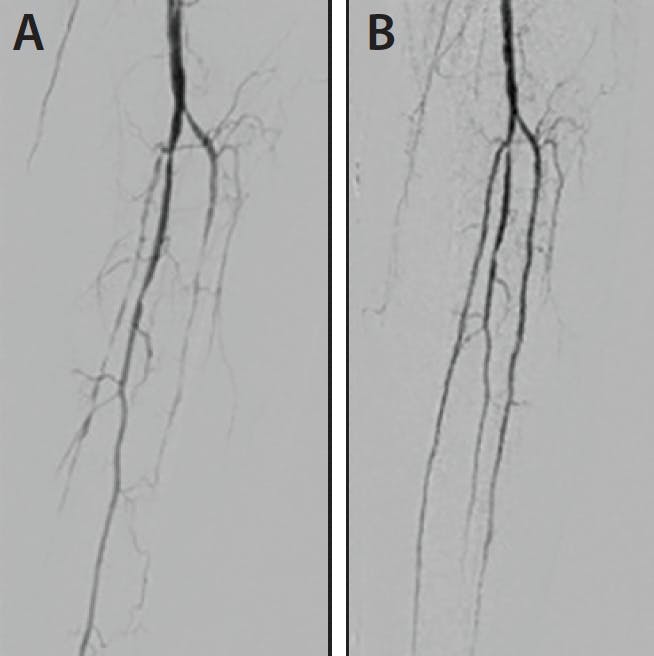
Figure 1. Pretreatment PT and AT occlusions (A); post-Serranator treatment provided flow in both PT and AT arteries (B).
The tibioperoneal trunk appeared patent and free from hemodynamically significant stenosis. The PT artery, although patent at its origin, was diminutive throughout and functionally occluded given the > 95% stenosis over a long, 30-cm segment. The AT artery was patent beyond its origin but occluded for 20 cm before reconstituting. The peroneal artery appeared patent and consisted of the primary outflow to the distal lower leg, helping to reconstitute the ankle-level AT artery via the anterior communicating branch.
The PT lesion was crossed with a 0.014-inch Command ES wire and then predilated using a 2.5- X 240-mm Jade balloon (Cardiovascular Systems, Inc.) to facilitate crossing of the Serranator balloon. Next, a 3.5- X 120-mm Serranator balloon was inflated sequentially from the distal third of the lower-leg PT artery up to its origin. The AT lesion was crossed in similar fashion using the 0.014-inch Command ES wire, followed again by predilatation and then treatment with a 3.5- X 120-mm Serranator balloon from the mid lower leg up to its origin.
On completion angiography, the AT and PT artery crossed the ankle to perfuse the DP artery and the inframalleolar PT artery, respectively. There were no residual flow limitations or stenosis of these runoff vessels and no evidence of distal embolic complications (Figure 1B).
CASE 2 DISCUSSION
In this case, the patient presented with recurrent disease after standard balloon angioplasty and atherectomy. Given his progression of symptoms and progressive tissue loss after TMA, aggressive reintervention was necessary for limb salvage. We elected to predilate with smaller balloons to facilitate passage of the Serranator balloon. The 3.5- X 120-mm Serranator was then used as definitive treatment to achieve improved luminal gain relative to our prior intervention while minimizing the risk of flow-limiting dissections or residual stenosis. This stepwise approach to tibial intervention was successful on completion angiography.
What outcomes do you typically see when you use Serranator?
Drs. Zenilman and DeRubertis: Anecdotally, we see a reduced need for other plaque-modifying devices, including atherectomy catheters, because the Serranator system appears to allow for lesion expansion without a high rate of flow-limiting dissection, as would be expected with standard balloon angioplasty. This makes Serranator a particularly useful tool when performing drug-coated balloon (DCB) angioplasty in lesions that would typically be pretreated with atherectomy.
Why have you added Serranator to your below-the-knee (BTK) algorithm?
Drs. Zenilman and DeRubertis: We’ve added Serranator in our BTK cases to improve acute outcomes after balloon angioplasty and reduce the need for additional plaque-modifying devices.
What is different about the Serranator from other specialty balloons?
Drs. Zenilman and DeRubertis: The Serranator appears to have a much more aggressive lesion-scoring system than typical “scoring” or cutting balloons. This allows for better lesion expansion and may help with drug delivery when combined with a DCB.
Case 3: Significant BTK Disease Involving the AT, PT, and Peroneal Arteries
By Vishal Kapur, MD
CLINICAL PRESENTATION
A man in his early 60s with a medical history of diabetes, hypertension, hyperlipidemia, coronary artery disease with prior intervention of the left anterior descending artery, and known peripheral artery disease presented to the clinic with rest pain and an ulcer in the right great toe. The patient stated that the rest pain had been present for > 6 months, with recent onset of ulceration of the right great toe noted after cutting his nails almost 2 months prior. Initially, the ulcer was managed by his podiatrist, but there was no improvement in his wound, with worsening signs and symptoms. He presented to the vascular clinic for further evaluation and management. The patient had an initial workup, including an arterial Doppler that revealed significant BTK disease involving the AT, PT, and peroneal arteries. The patient subsequently underwent lower extremity angiography, which confirmed significant left leg BTK disease.
PROCEDURE DETAILS
First, 6-F retrograde access was obtained in the right CFA, and a 6-F Destination sheath was placed in the left CFA. The left AT artery was deemed to be responsible for the patient’s presentation (Figure 1A). A hydrophilic 0.014-inch wire with use of an 0.018-inch support catheter was used to cross the lesion. Subsequently, angioplasty with a 3- X 80-mm balloon was performed, followed by a 3.5- X 120-mm Serranator balloon. The results of the Serranator balloon angioplasty were satisfying, with no residual dissection, recoil, or bailout stenting. Completion angiography showed excellent results, with blood flow to the left AT artery supplying into the entire foot, including the area of ulceration (Figure 1B). The procedure was completed without complications.
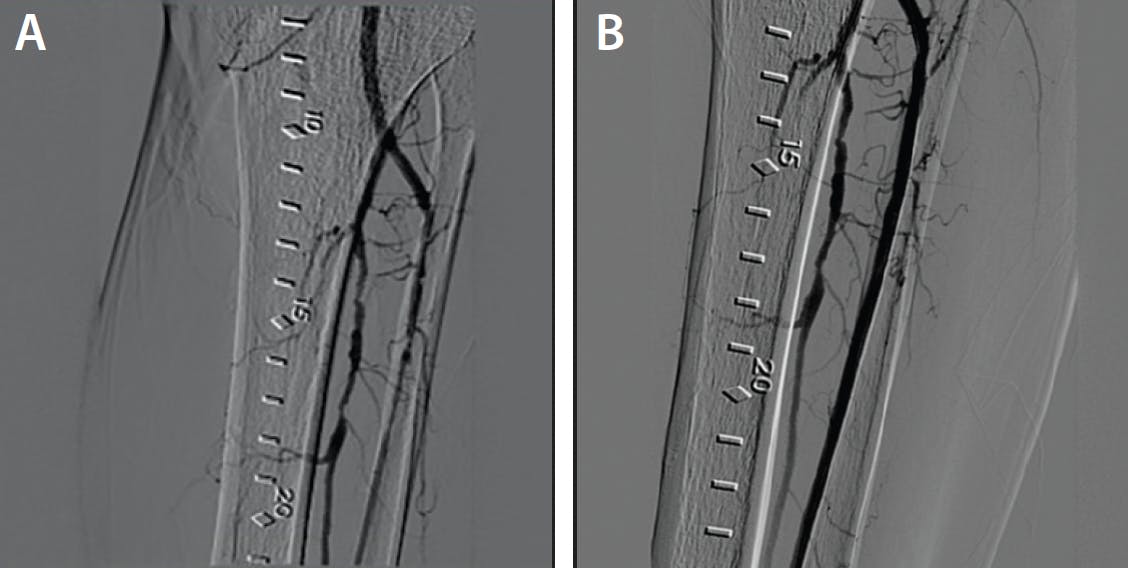
Figure 1. Pretreatment angiogram (A); Post-Serranator treatment provided excellent lumen gain in AT (B).
POSTINTERVENTION COURSE
The patient was prescribed dual antiplatelet therapy; conservative management of his diabetes, blood pressure, and cholesterol; and wound care. At follow-up in the clinic, the patient demonstrated significant healing of the left great toe ulcer. The patient responded well to therapy and is continuing follow-up and noninvasive testing.
CASE 3 DISCUSSION
Why have you added Serranator to your BTK algorithm?
Dr. Kapur: There are limited effective devices available to treat tibial lesions. Use of plaque-modification techniques is an important part of managing BTK lesions, specifically calcified lesions. The use of BTK stenting is limited to more proximal vessels, and the use of DCBs is still not approved. Serranator provides an excellent option for BTK intervention for both luminal gain and plaque modification. Based on my experience, Serranator has less chance of dissection compared to regular balloon angioplasty and improved blood flow distally.
Do you typically see this level of acute luminal gain when you use the Serranator? Do you see successful long-term outcomes after Serranator?
Dr. Kapur: In my experience, Serranator provides excellent luminal gain both angiographically and as shown on intravascular ultrasound. This is especially important in patients with nonhealing wounds or gangrene with impending amputation. In combination with wound therapy, Serranator has shown benefits in the form of increased blood flow to the area, thereby promoting wound healing.
What makes this product different than other specialty balloons?
Dr. Kapur: Serranator is a semicompliant balloon with three embedded external serrated metal strips. The serrated strips are designed to create linear, interrupted scoring along the endoluminal surface during balloon angioplasty. To achieve its goal, the balloon requires low pressure (4 atm) for 1 minute followed by 6 atm for 1 minute. This allows for excellent results, with low probability of flow-limiting dissection.
1. Guetl K, Muster V, Schweiger L, et al. Standard balloon angioplasty versus Serranator serration balloon angioplasty for the treatment of below-the-knee artery occlusive disease: a single-center subanalysis from the PRELUDE-BTK prospective study. J Endovasc Ther. Published online November 20, 2022. doi: 10.1177/15266028221134891
Advertisement
Advertisement