Advertisement
Advertisement
November 2023
Sponsored by Shockwave Medical
Integrating Shockwave Peripheral IVL Into Our EVAR/TEVAR Practice
Larger sizes now available for large, calcified vessels.
With Angela Giese, MD; Trissa Babrowski, MD; and Ross Milner, MD, FACS



Tell us a little bit about your abdominal aortic aneurysm (AAA) program at UChicago.
The University of Chicago Center for Aortic Diseases specializes in managing the full range of aortic disease with a recognized track record of success. We often treat complex cases in high-risk patients who were denied care at other institutions. Treatment of patients with AAAs is a large component of our practice. We employ a wide array of techniques from endovascular to traditional open surgical repair as well as hybrid solutions to provide our patients with personalized care. Our groundbreaking research and ongoing clinical trials give us a unique opportunity to work with the latest industry devices and cutting-edge technology to offer comprehensive modern vascular surgery care.
What are the risk factors for AAA?
AAA disease is often referred to as the “silent killer.” AAAs are typically asymptomatic until they rupture, which requires emergent surgical intervention, and is often fatal. Given the high proportion of individuals who have an AAA and are asymptomatic, it is important to understand the risk factors for developing an AAA. Patient education and screening for the disease are salient strategies to reduce aneurysm-related mortality. Those at higher risk are patients aged > 65 years with a history of smoking, a positive family history of AAA, and patients with genetic syndromes (ie, collagen vascular disorders). Although more frequently identified in men, women also can develop AAAs. Modifiable lifestyle risk factors that predispose for AAA include uncontrolled high blood pressure, high cholesterol, and tobacco abuse.
What is your algorithm for determining your AAA repair approach (open surgical vs endovascular repair)?
Younger patients who are in good health are frequently reasonable candidates for traditional open surgical treatment, as this method provides the most durable, long-term solution. Older patients and those with significant comorbidities who have the appropriate anatomy for an endovascular approach may be better candidates for an endovascular aneurysm repair (EVAR). We always consider overall patient fitness and anatomy when evaluating each person for an elective aneurysm repair.
How do you go about case planning for EVAR?
First, we consider the patient’s age, comorbidities, and anatomic constraints. History of previous surgery, femoral access size and quality, burden of atherosclerotic disease, iliac tortuosity, aortic neck size and length, neck angulation, and thrombus in the neck are important factors when considering a patient for any treatment modality. Based on these factors, we discuss the options with the patient and list the various risks/benefits and long-term expectations for each treatment option. Female patients tend to have smaller arteries than their male counterparts, which may increase the complexity of an endovascular repair in this patient population.
What is your philosophy on access for both EVAR as well as thoracic endovascular aortic repair (TEVAR)?
We typically require an access vessel 6 mm in diameter bilaterally for EVAR delivery, especially on the main body side, and 7 mm on at least one side for TEVAR. For patients who are not candidates for an open operation but have small access, we employ various adjuncts to assist—creation of open and endoconduits, plain old balloon angioplasty (POBA), Shockwave Intravascular Lithotripsy (IVL; Shockwave Medical), or even the use of inferior vena cava for TEVAR deployment.
What factors determine your access approach?
The size and atherosclerotic disease burden of the access vessels dictate our approach. With other factors being equal, we use the larger access vessel to introduce the largest sheath. The presence of atherosclerosis and calcified arteries not only at the point of access but also throughout the iliac arteries can be problematic. Depending on the location, diseased arteries are either treated with open endarterectomy in the common femoral arteries or Shockwave IVL for calcific disease within the iliacs. Adjunctive stenting is also sometimes necessary to facilitate device delivery. If there is minimal calcific disease, we typically predilate the lesion with a standard angioplasty balloon to accommodate the appropriate delivery sheath or device.
What challenges does calcium specifically pose in access?
Calcified plaque is often recalcitrant to traditional POBA, which carries inherent risk. Balloon angioplasty requires high inflation pressures to treat challenging lesions. This results in a high risk of rupture, dissection, and stent fracture within highly calcified arteries. Atherectomy is not indicated in the aortoiliac/femoral segments, and thus this disease pattern is traditionally treated with angioplasty and balloon-expandable stents in an attempt to “crack and pave” the lesions and create an endoconduit. This method is less desirable when EVAR is already planned. Iliac rupture, especially when close to the aortic bifurcation, is one of the toughest complications to manage and thus is often fatal.
When did you start incorporating Shockwave IVL into access? What got you onboard with using IVL for access?
We have been using Shockwave IVL more routinely in our EVAR/TEVAR cases over the last 2 years. We have found that this pretreatment not only facilitates safe navigation of larger sheaths in patients with calcified stenotic iliac arteries but also creates what we think is a more effective seal zone in an otherwise diseased iliac artery. We feel the action of IVL, producing cracks in calcified arteries, improves arterial compliance thus allowing our planned stent to expand more fully as intended. In addition to their ability to crack calcium, we prefer the use of the Shockwave IVL balloons given their low inflation pressures (2 and 4 atm) compared with traditional angioplasty balloons that require higher balloon inflations. This reduces risk of iliac rupture. An additional benefit, in our experience, has been a reduction in limb occlusion. Anecdotally, we have found that disrupting these calcified stenoses with Shockwave IVL reduces the likelihood of recoil within these segments and helps prolong primary patency.
Given your comments on more effective seal zones, are there instances where you use IVL to change compliance of the vessel for better graft deployment versus simply access?
In patients with significant aortoiliac disease and effectively minimal to no “healthy” seal zone, we believe that improving the compliance of the vessels in these zones with IVL facilitates complete stent graft expansion. Anecdotally, we have found that this reduces limb occlusions in this population.
How have the larger-diameter offerings (8-12–mm diameter balloons) of the Shockwave L6 device (Shockwave Medical) impacted your practice?
Larger diameters work great for vessel preparation of calcified iliac arteries prior to EVAR. A length of 30 mm provides the requisite coverage for a standard common iliac artery (CIA) without the unnecessary angioplasty of more distal vessels. With the shorter balloon length of Shockwave L6, we don’t have to worry about inflating in the external iliac artery where the balloon may be oversized for that caliber vessel and put the patient at undue risk. Moreover, the transition to an 0.018-inch platform on the L6 device has the advantage of improved wire support in tortuous vessels.
Has the availability of IVL minimized your need for complicated access pre-EVAR/TEVAR? What are the benefits?
Yes, 100%. Since integrating IVL into our practice, we rarely have the need to create endoconduits to facilitate EVAR deployment in diseased iliac vessels. This means we can perform the procedure without placing those additional stents, reducing cost. Additionally, avoiding the creation of an open surgical conduit has obvious benefits.
As device profiles improve, do you still see a role for IVL pre-EVAR/TEVAR?
As long as there is calcified iliac disease, there will be a role for IVL to optimize vessel preparation. If device profiles become significantly smaller and there is no iliac disease, then we don’t see a need for IVL in those individuals.
What unmet needs are there still for AAA patients? What new technology do you see as impactful in the space?
Type II endoleaks are the Achilles' heel of EVAR. They are often difficult to treat and draw considerable resources to manage. New technology within this space would be very useful. Decreasing device profile is an obvious benefit to prevent prolonged limb ischemia and iliac complications in patients with smaller access.
CASE 1: USE OF SHOCKWAVE IVL IN A TORTUOUS AND CALCIFIED LEFT EIA DURING COMPLEX EVAR
By Trissa Babrowski, MD
Case Presentation
A woman in her late 60s presented for evaluation of an asymptomatic pararenal AAA and bilateral CIA aneurysms. Her past medical history was pertinent for dementia, hypertension, and hyperlipidemia. Her surgical history included an abdominal hysterectomy. She was a former smoker. Recent CTA showed an interval increase in her pararenal AAA to 5.5 cm (from 5.0 cm) and bilateral CIA aneurysms, with the left measuring 3.6 mm (from 2.7 mm) and the right 3.1 mm (from 3.1 mm). Given the rate of expansion over 8 months, particularly of her left CIA aneurysm, we recommended proceeding with repair. We discussed the options including an endovascular approach, open surgery, and observation. The patient’s family member elected to proceed with an endovascular approach.
Procedural Overview
Endovascular repair presented several challenges given her anatomic constraints and calcified arteries (Figure 1). The suprarenal neck anatomy was not ideal given some dilation at this level. Unfortunately, the patient was not a candidate for a fenestrated repair due to neck angulation. The risks and benefits of a two-vessel versus four-vessel parallel grafting endovascular aortic repair (chimney EVAR) were discussed. Her bilateral CIA aneurysms also met size criteria for repair. She was a candidate for unilateral iliac branch endoprosthesis (IBE) on the right but would require coil and coverage of the left hypogastric artery. We also planned to use Shockwave IVL at the origin of the left external iliac artery (EIA) given the hairpin tortuosity and calcified stenosis at this location (Figure 2). In light of her comorbidities, the family wished to proceed with the lowest-risk procedure. Thus, the tentative plan was to treat with an aortic device to the level of the superior mesenteric artery (SMA) with placement of two chimney renal stents, a right IBE, left EIA IVL, and left hypogastric coil and coverage.
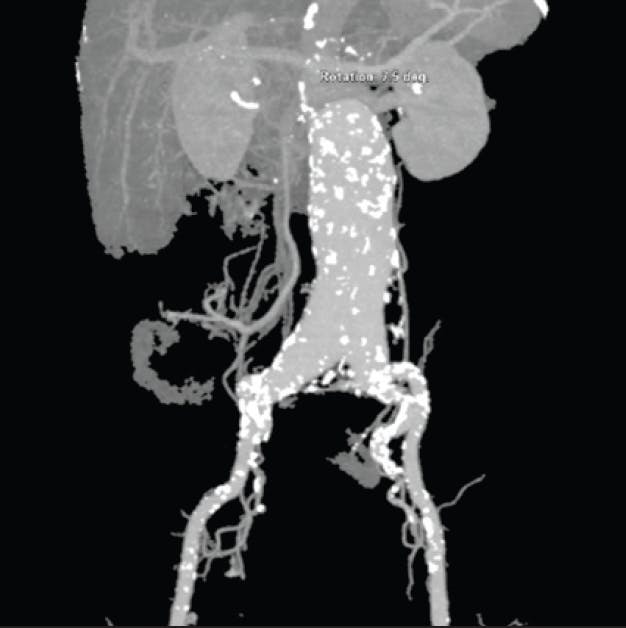
Figure 1. Pararenal AAA with bilateral CIAs and bilateral iliac calcification.
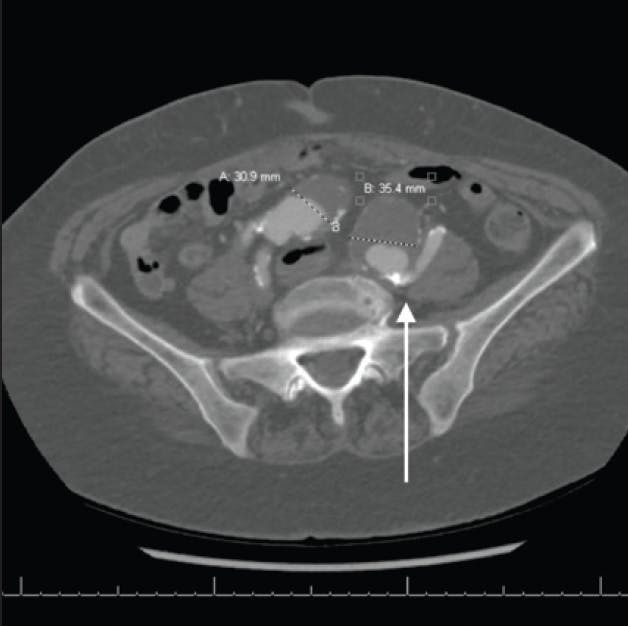
Figure 2. Bilateral CIA aneurysms. The arrow depicts the origin of left EIA making a hairpin turn with a severe calcified preocclusive stenosis.
Intraoperatively, initial attempts to advance catheters and wires via a left iliac approach were unsuccessful due to significant stenosis within the distal left CIA and proximal EIAs. Eventually, a 0.014-inch wire was advanced up the left side and an 8-mm Shockwave M5+ IVL catheter (Shockwave Medical) was positioned across the stenosis. After performing IVL, our ability to track the larger sheath improved (Figure 3). Subsequently, we were able to perform left hypogastric coiling, right IBE placement, placement of two renal snorkel stents, and EVAR. A small gutter leak was identified on completion angiogram (Figure 4), which later resolved. Her postoperative course was uncomplicated, and the patient was discharged on postoperative day 2. She represented for follow-up at 1- and 6-month intervals with evidence of a small type II endoleak but reducing AAA sac sizes at 4.32 cm (from 5.5 cm) (Figure 5). Iliac stent seal was excellent, with no evidence of kinking or fracture within the left EIA hairpin turn (Figure 6). Her type II endoleak is being observed.
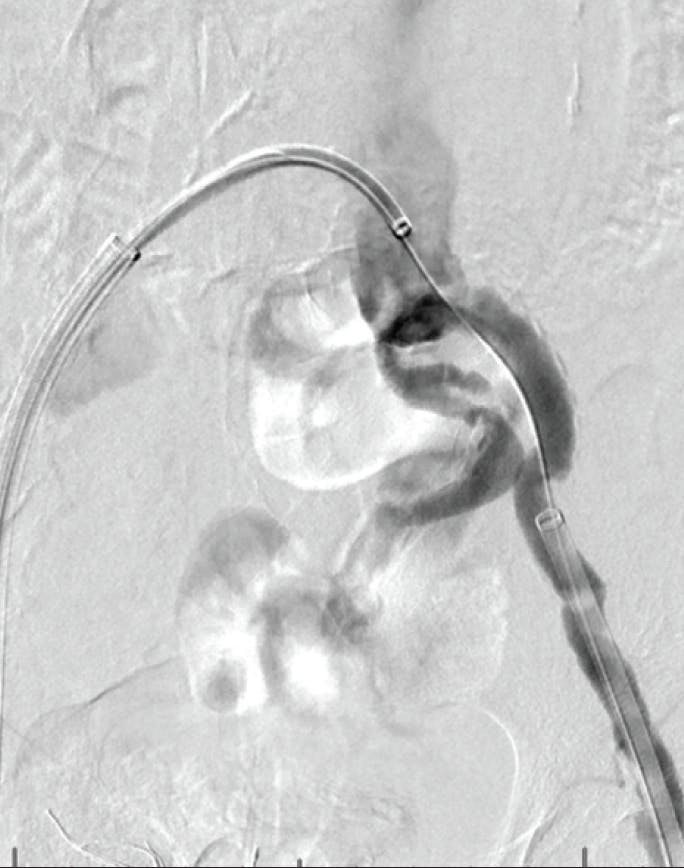
Figure 3. Angiogram after Shockwave IVL of the left EIA origin.
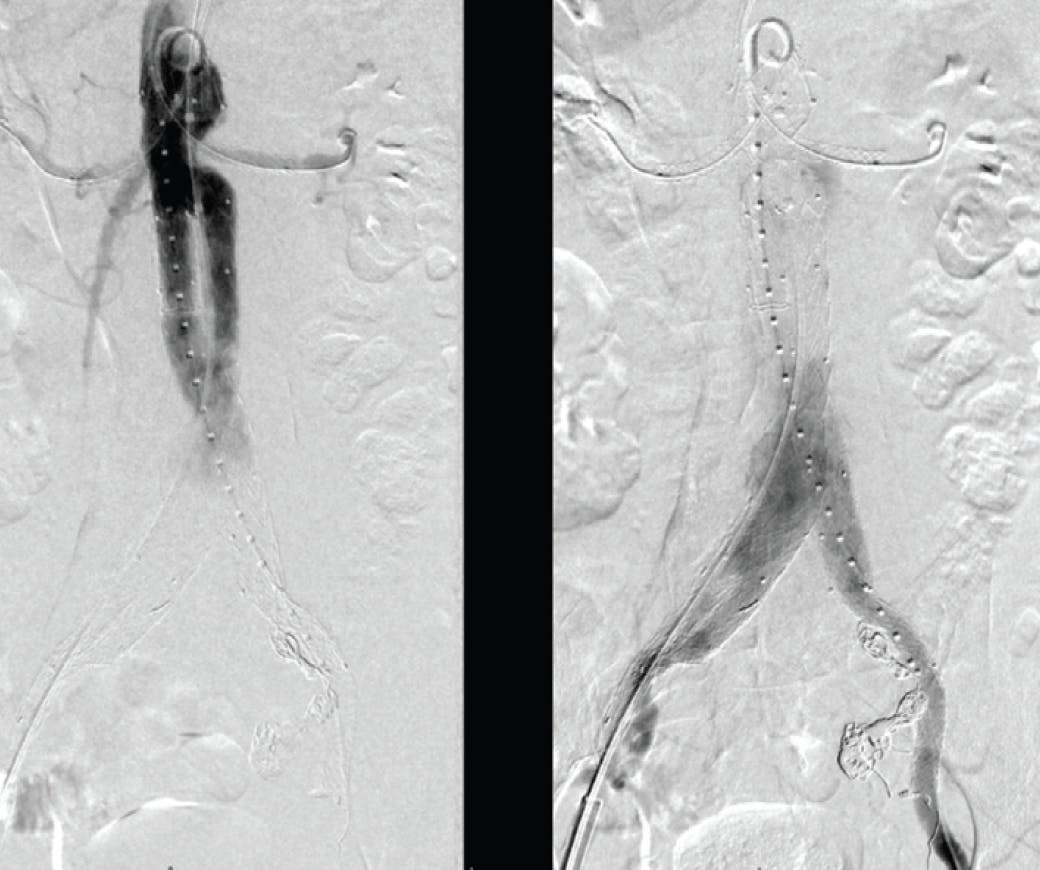
Figure 4. Completion angiogram. Left side shows top of graft and right side shows filling of right IBE and left EIA stent graft. Also note small gutter leak evident on the right image.
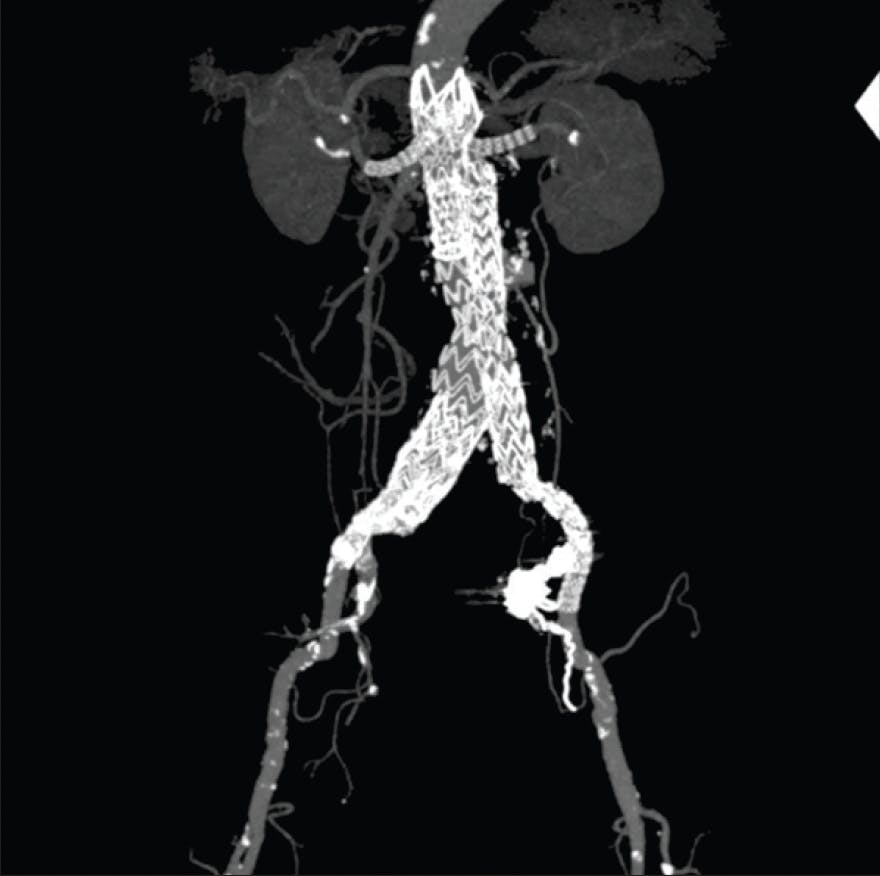
Figure 5. One-month postoperative CTA.
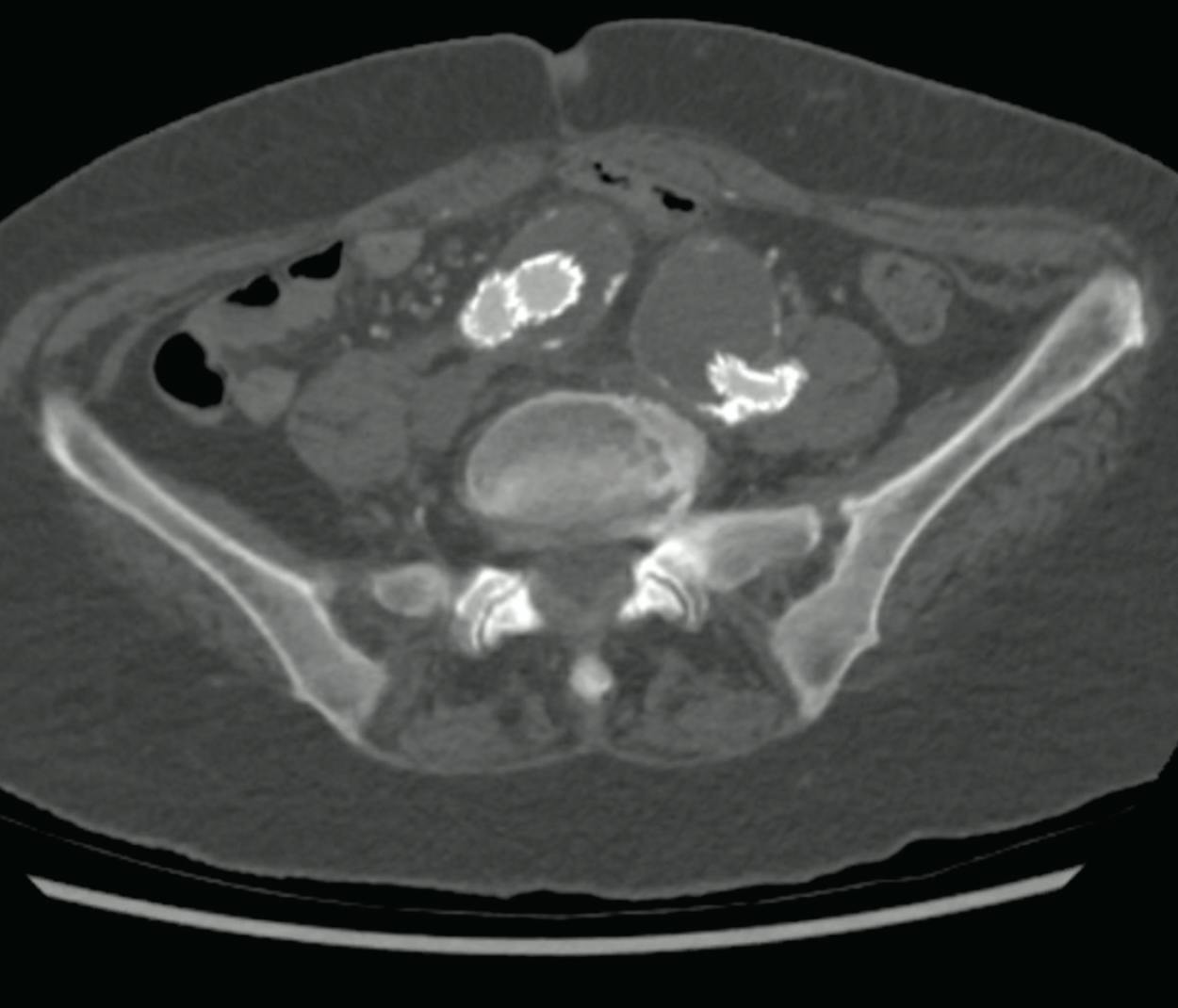
Figure 6. Bilateral CIA aneurysms with patent stent graft flow. No evidence of kinking.
CASE 2: CALCIFIED CIAs TREATED WITH SHOCKWAVE IVL AS VESSEL PREPARATION PRIOR TO EVAR
By Ross Milner, MD, FACS
Case Presentation
A man in his early 80s presented with an expanding 5.7-cm AAA and calcified iliac arteries. He had a medical history significant for hypertension, hypercholesterolemia, and was a former smoker. CTA showed an infrarenal AAA with extensive circumferential mural thrombus. There was significant atherosclerotic calcification of the abdominal aorta and its branches (Figure 1). There was also little visualized flow within the bilateral internal iliac arteries, but these were not thought to be occluded (Figure 2). The risks and benefits of EVAR were explained to the patient. Given his exceptionally calcified CIAs, we planned to use Shockwave IVL in order to safely place the aortic device.
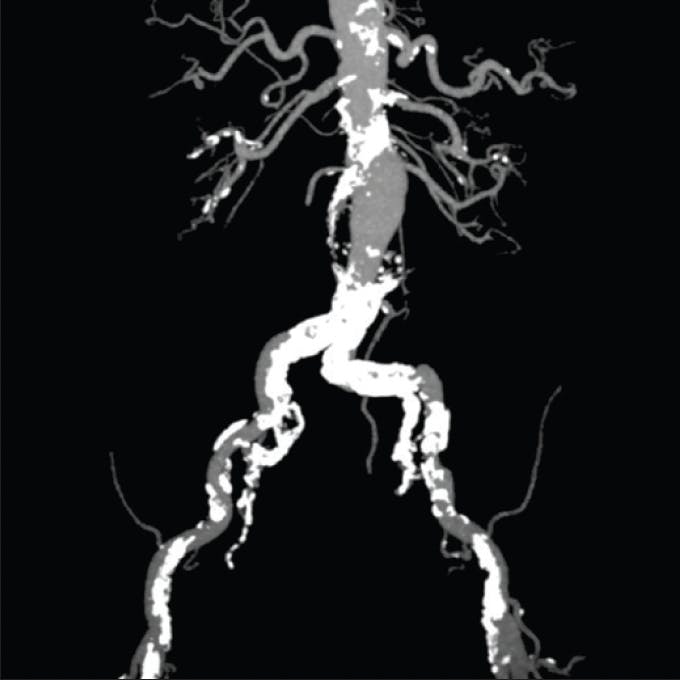
Figure 1. AAA and severe bilateral calcified iliac disease.
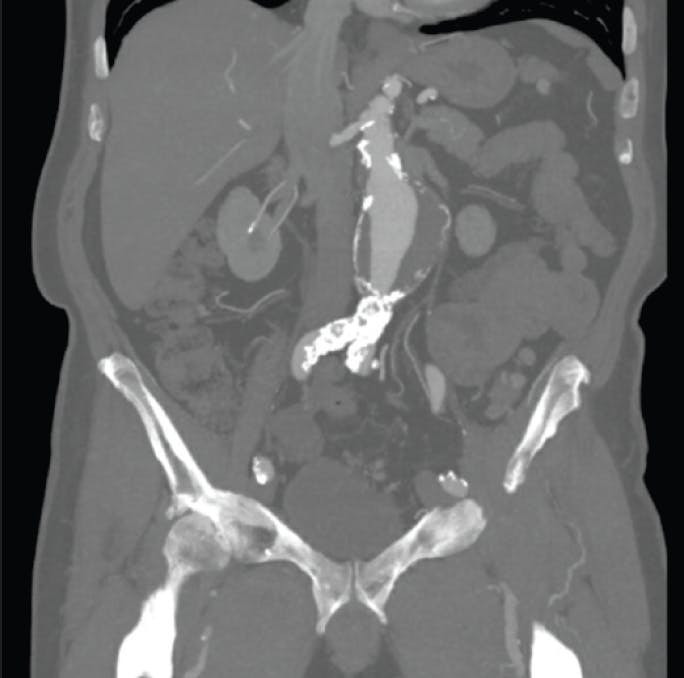
Figure 2. AAA and severe bilateral calcified iliac disease with patent flow throughout the iliac segment.
Procedural Overview
Intraoperatively, after the appropriate access was obtained, an exchange was then made for a 0.014-inch Hi-Torque Spartacore (Abbott) wire bilaterally. We then placed bilateral 8-mm Shockwave M5+ catheters. These were initially deployed into the CIAs in a kissing fashion. They were inflated to 4 atm, and four separate cycles of IVL treatments were performed. The IVL catheter was then retracted into the distal CIAs and proximal EIAs, and four additional cycles of IVL treatment were performed. Following IVL treatment, the iliac arteries were now appropriately large enough to accommodate larger sheaths and the aortic device (Figure 3). The EVAR was then completed without difficulty. Completion angiography showed patent renal arteries and flow throughout the graft without evidence of endoleak (Figure 4).
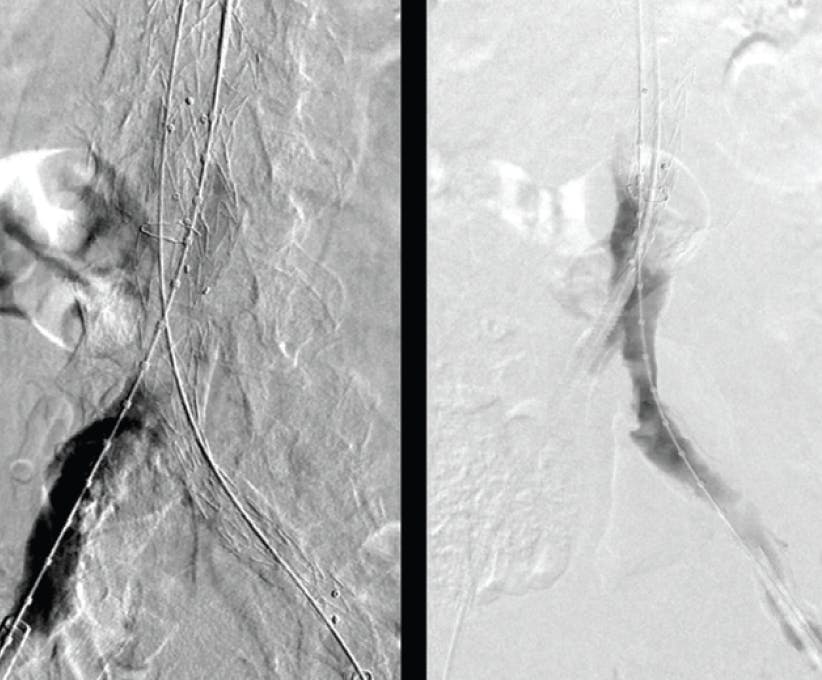
Figure 3. Angiogram after Shockwave IVL of the bilateral CIAs and deployment of the aortic device. Right CIA and left CIA depicted on the left- and right-hand fluoroscopic images, respectively.
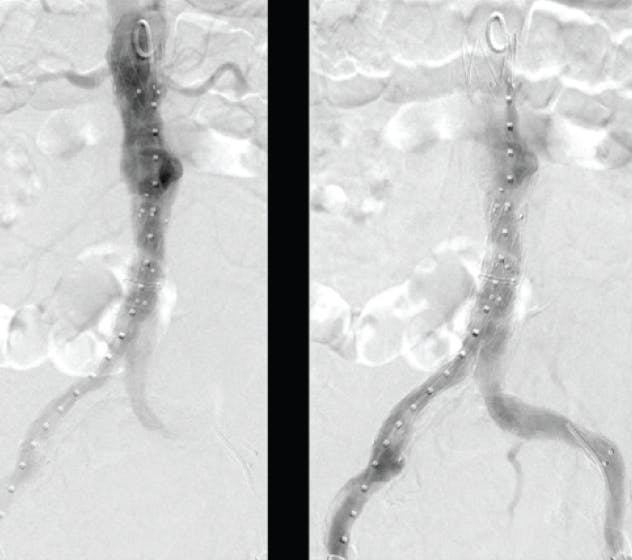
Figure 4. Completion angiogram with patent renal arteries (left) and flow throughout the graft without evidence of endoleak (right).
The patient recovered uneventfully and was discharged on postoperative day 1. The patient presented 2 months postoperatively with a decreasing AAA sac size measuring 5.5 cm and a patent EVAR stent with no evidence of endoleak (Figure 5).
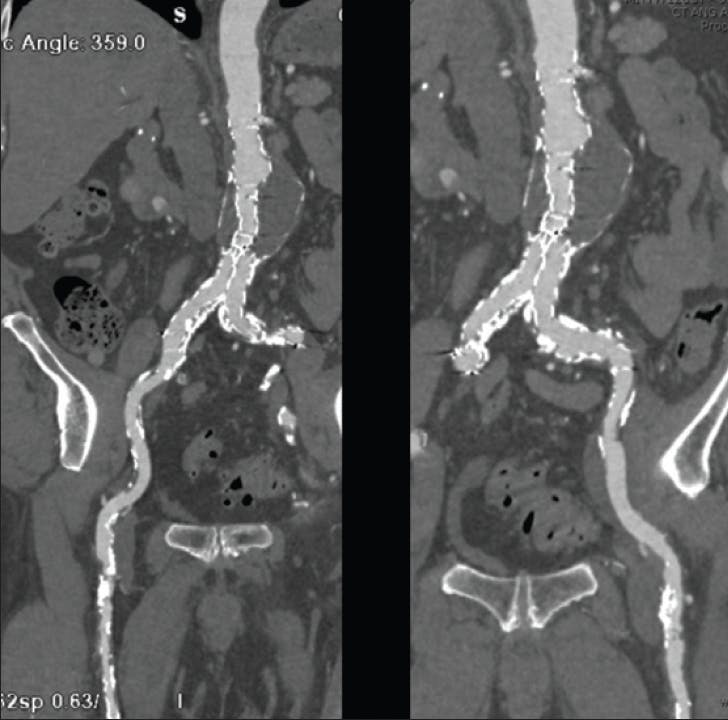
Figure 5. Postoperative CTA with patent EVAR and no evidence of endoleak. Patent right limb (left side) and patent left limb (right side).
CASE 3: AN ENLARGING AAA WITH SEVERE BILATERAL ILIAC ARTERY CALCIFICATION PRETREATED WITH SHOCKWAVE IVL
By Ross Milner, MD, FACS
Case Presentation
A man in his early 70s presented with a known slowly enlarging juxtarenal AAA. The patient remained asymptomatic but now meets criteria for repair at 5.6 cm. His past medical history included chronic obstructive pulmonary disease, hypertension, and present tobacco abuse. Of note, the patient just completed a course of pulmonary rehabilitation. Imaging showed a partially thrombosed infrarenal AAA measuring up to 5.6 cm (Figure 1). The focal outpouching consistent with penetrating aortic ulcer in the proximal portion of the aneurysm was new from prior imaging. Severe atherosclerotic disease of the vasculature was present and most severe in the proximal right CIA (Figure 2). In the setting of his age and comorbidities, we discussed the risks and benefits of EVAR. Given his aortoiliac disease, we discussed the possibility of femoral-femoral bypass and uni-iliac device if we were unable to insert a bifurcated device. In addition to EVAR, our operative plan included the use of IVL for his calcified occlusive disease and more flexible Viabahn VBX balloon-expandable stents (Gore & Associates) as the limbs of the endograft.
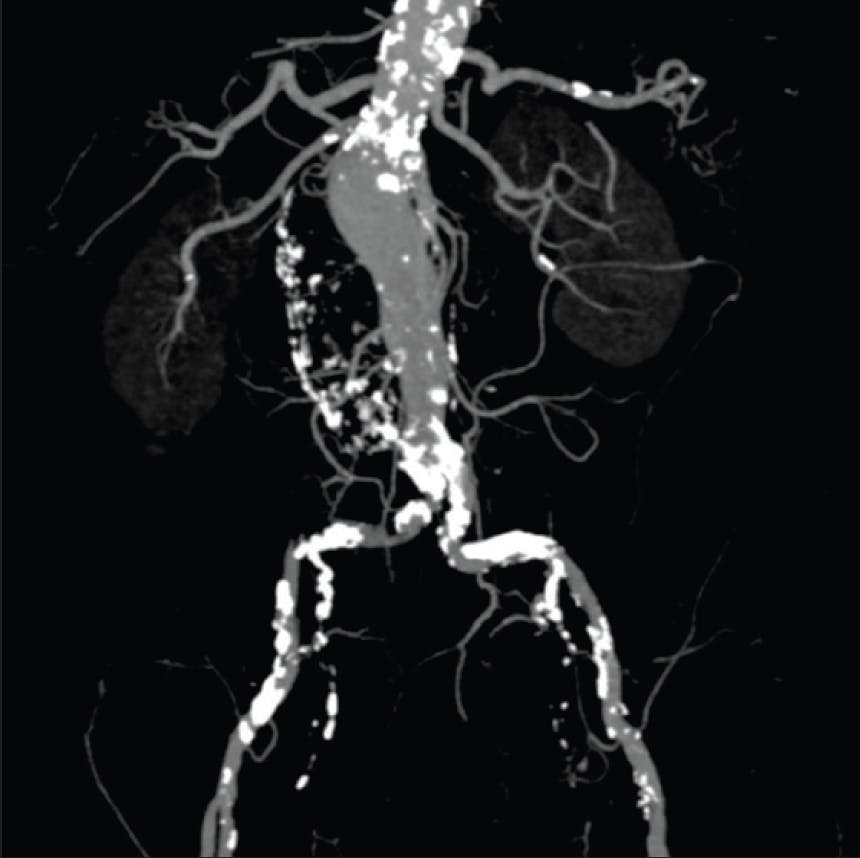
Figure 1. AAA and calcified atherosclerotic disease throughout the aorta and its branches.
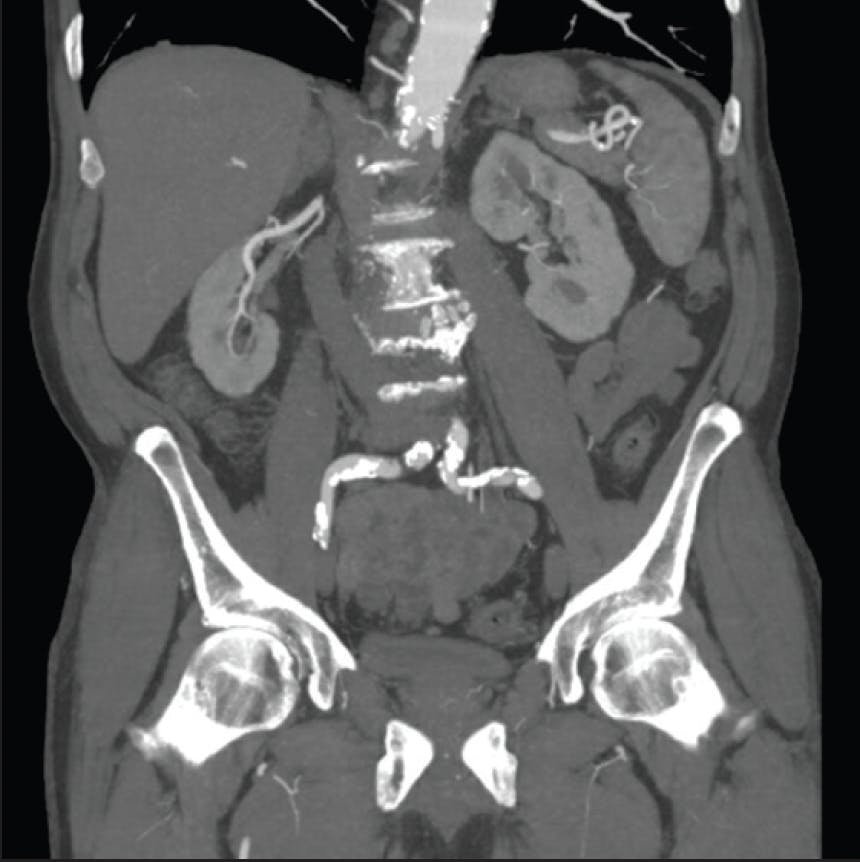
Figure 2. Preoperative CTA showing severe calcification of bilateral iliac arteries.
Procedural Overview
Intraoperatively, after the appropriate access was achieved, we performed retrograde angiograms of the right and left iliac arteries to assess the degree of disease (Figure 3). It was obvious that pretreatment of the iliac stenoses would be required prior to advancement of the graft. We advanced a 0.014-inch wire bilaterally and then inserted bilateral 8-mm Shockwave M5+ catheters. These were used in the CIAs on both sides (Figure 4). After performing IVL for the maximum amount that the balloons could be utilized on both sides (300 pulses total), significant improvement was seen such that endograft placement was possible (Figure 5 and Figure 6).
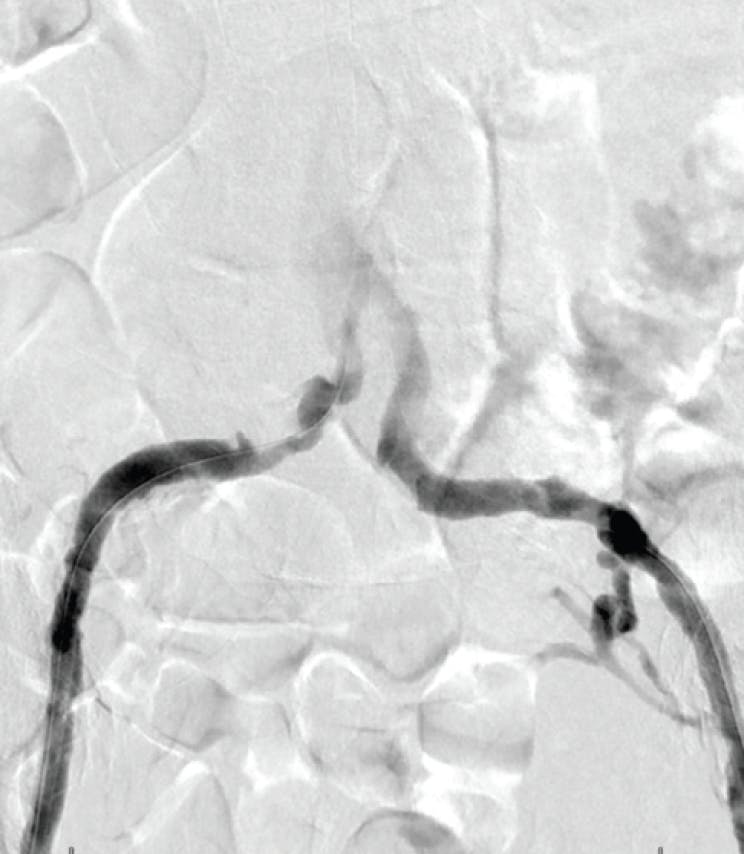
Figure 3. Intraoperative bilateral retrograde angiograms before Shockwave IVL. Note the diseased bilateral CIAs.
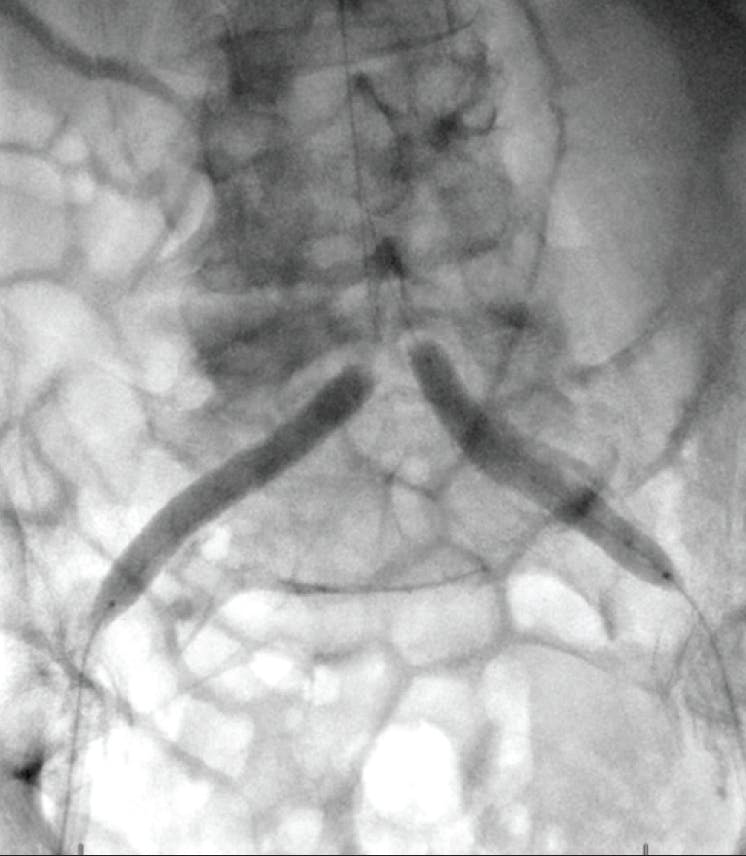
Figure 4. Shockwave IVL angioplasty of bilateral CIAs.
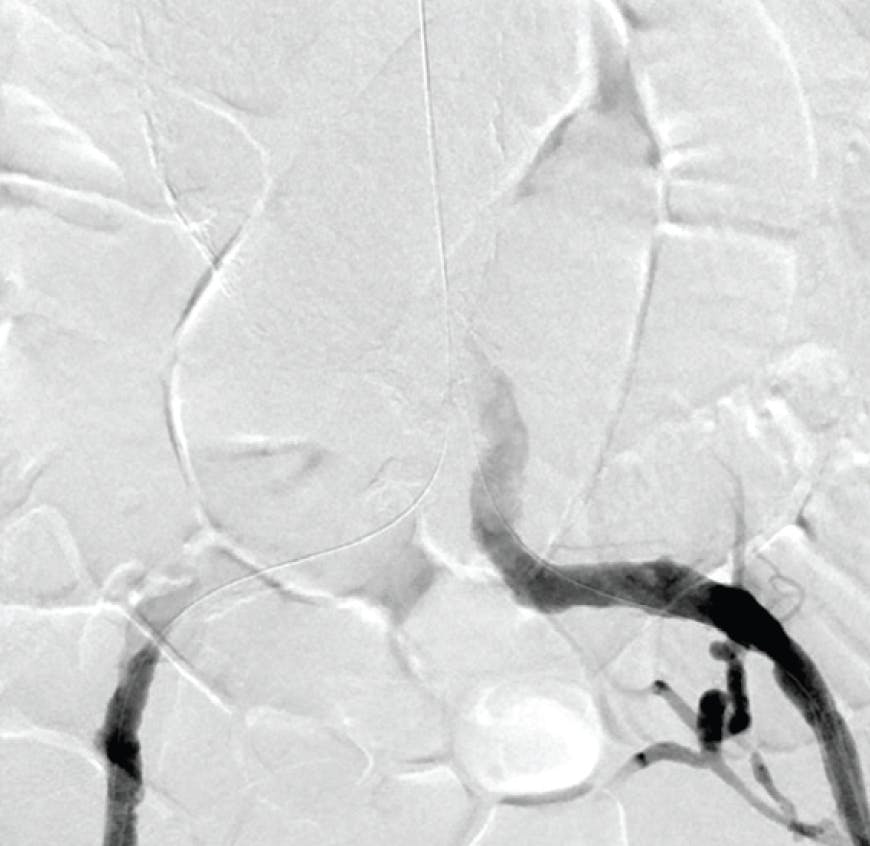
Figure 5. Post-Shockwave retrograde iliac angiogram showing improvement in vessel caliber in the left CIA.
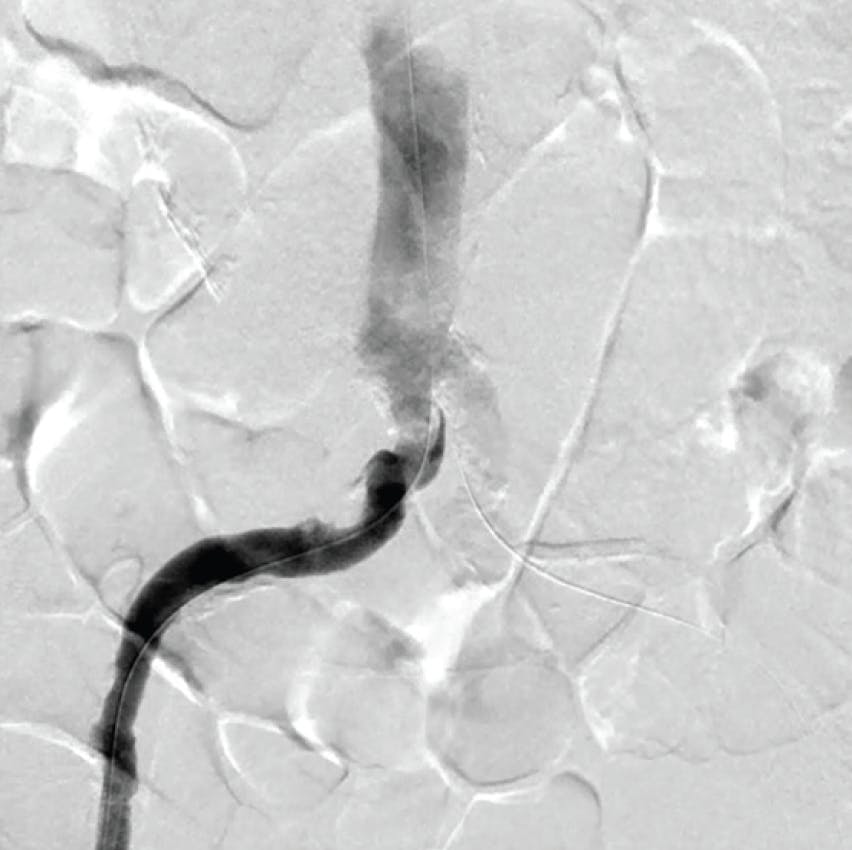
Figure 6. Post-Shockwave retrograde iliac angiogram showing improvement in vessel caliber in the right CIA.
On the left side, a serial dilation was performed with 12-, 14-, and 16-F sheaths. On the right side, a 12-F sheath was inserted into the abdominal aorta. The 16-F sheath was then removed from the left common femoral artery, and the main body device was advanced without difficulty. The contralateral gate was cannulated and then extended with a 10- X 82-mm limb. This was specifically deployed above the aortic bifurcation. We then advanced an 8- X 79-mm balloon-expandable Viabahn VBX. This was left undeployed to allow for enough space at the aortic bifurcation to complete the delivery of the device on the other side. The main body device and ipsilateral limb were then completely deployed and removed without difficulty. A 16-F sheath was then inserted. We were able to extend with a 10- X 82-mm limb on this side as well. This came down to just above the aortic bifurcation and matched nicely with the other limb. We selected a 9- X 79-mm balloon-expandable Viabahn VBX for the left side. Both balloon-expandable VBX stents were then deployed simultaneously. The proximal neck and all overlap sites were then ballooned. Angioplasty of the VBX stents was performed in a kissing balloon fashion from the bifurcation of the device all the way to the end of the iliac limbs. The iliac stents opened up very nicely. On completion angiography, the patients had evidence of a type Ia endoleak (Figure 7). Nine EndoAnchors (Medtronic) were placed with significant improvement of endoleak (Figure 8).
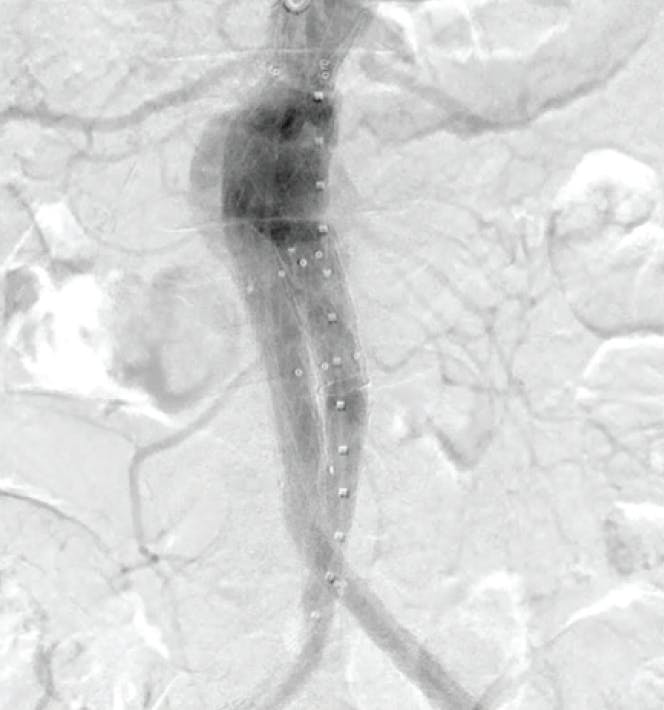
Figure 7. Completion angiogram revealed a type Ia endoleak.
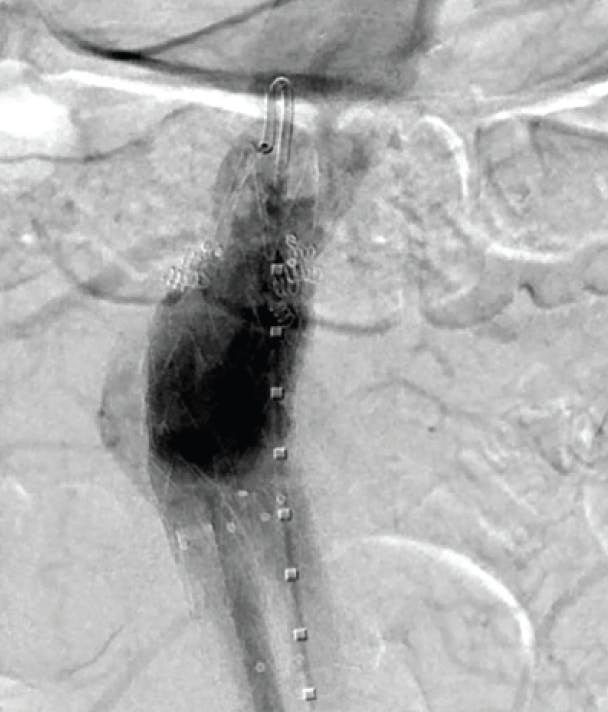
Figure 8. Angiogram after EndoAnchor placement showing a diminished type Ia endoleak.
The patient had an uneventful recovery and was discharged on postoperative day 3. Postoperative CTA at 1 month showed a patent EVAR with decreasing AAA sac measuring 5.3 cm and no evidence of endoleak (Figure 9 and Figure 10).
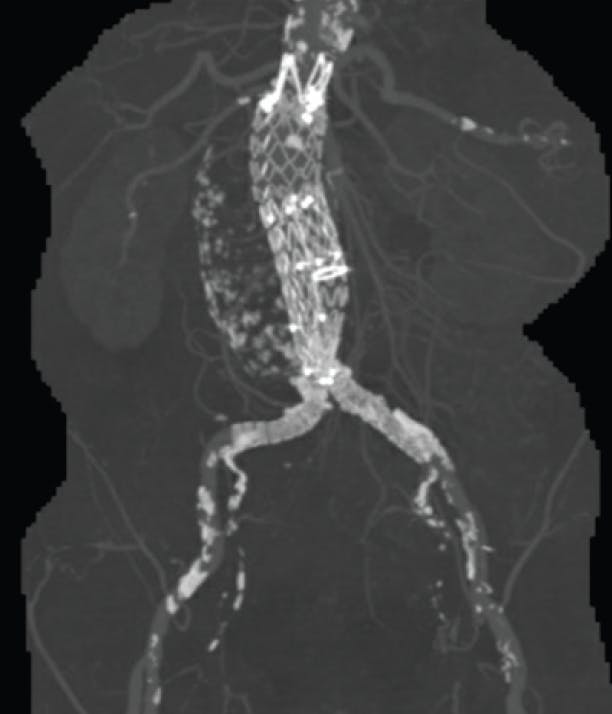
Figure 9. Postoperative CTA at 1 month showing a patent EVAR and no evidence of endoleak.
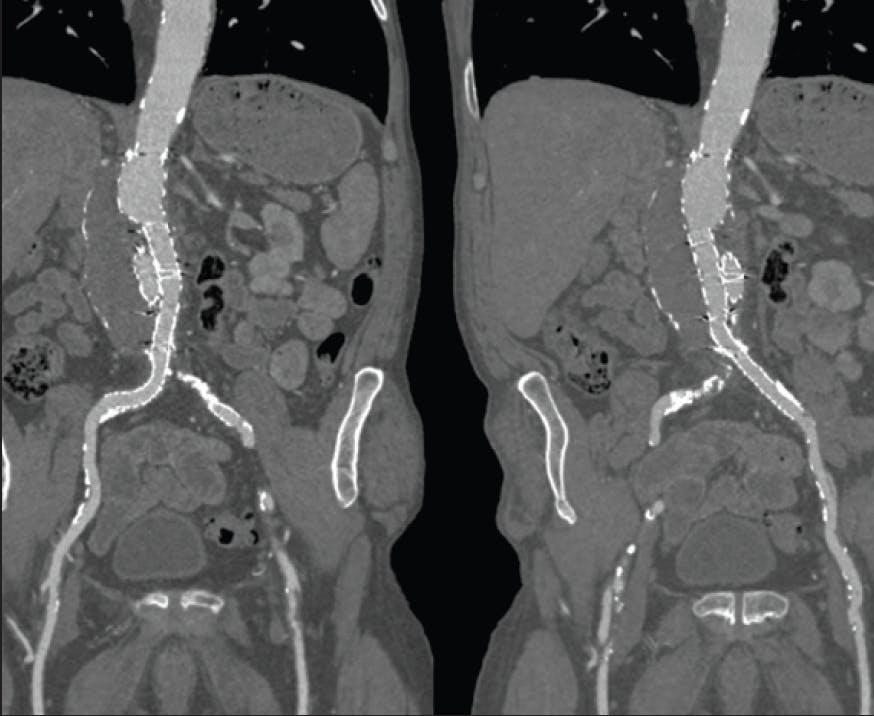
Figure 10. Postoperative CTA at 1 month with excellent seal of bilateral iliac limbs and no evidence of compression or endoleak.
Views expressed are those of the authors and not necessarily those of Shockwave Medical.
PERIPHERAL SAFETY INFORMATION | US
In the United States: Rx only.
Indications for Use—The Shockwave Medical Intravascular Lithotripsy (IVL) System is intended for lithotripsy-enhanced balloon dilatation of lesions, including calcified lesions, in the peripheral vasculature, including the iliac, femoral, ilio-femoral, popliteal, infra-popliteal, and renal arteries. Not for use in the coronary or cerebral vasculature.
Contraindications—Do not use if unable to pass 0.014" (M5, M5+, S4) or 0.018" (L6) guidewire across the lesion-Not intended for treatment of in-stent restenosis or in coronary, carotid, or cerebrovascular arteries.
Warnings—Only to be used by physicians who are familiar with interventional vascular procedures—Physicians must be trained prior to use of the device— Use the generator in accordance with recommended settings as stated in the Operator’s Manual.
Precautions—use only the recommended balloon inflation medium—Appropriate anticoagulant therapy should be administered by the physician— Decision regarding use of distal protection should be made based on physician assessment of treatment lesion morphology.
Adverse effects–Possible adverse effects consistent with standard angioplasty include–Access site complications –Allergy to contrast or blood thinner– Arterial bypass surgery—Bleeding complications—Death—Fracture of guidewire or device—Hypertension/Hypotension—Infection/sepsis—Placement of a stent—renal failure—Shock/pulmonary edema—target vessel stenosis or occlusion—Vascular complications. Risks unique to the device and its use—Allergy to catheter material(s)— Device malfunction or failure—Excess heat at target site.
Prior to use, please reference the Instructions for Use for more information on indications, contraindications, warnings, precautions and adverse events. www.shockwavemedical.com/IFU
SPL-70193 Rev. A
Advertisement
Advertisement