Advertisement
Advertisement
November 2023
Sponsored by Medical Metrics, Inc.
The Role of the Core Lab in Pursuit of Clinical Trial Excellence
The selection of a medical imaging core lab can make or break a clinical study.
By David Deaton, MD, FACS; Peter A. Schneider, MD, FACS; N. Shastry Akella, PhD; and Daniel Auger, PhD
The FDA regulates medical devices under the Medical Devices Amendment of 1976, which now extends to > 8,000 manufacturers producing an estimated 190,000 distinct medical devices.1,2 Spending on medical devices has ballooned from $36 billion in 1983 to $173 billion in 2019 (in constant dollars).3,4 For cardiac and vascular studies, medical imaging is nearly ubiquitous in its utility as an endpoint. Medical imaging in clinical settings is often subjective and interpreted in the context of a clinical scenario that includes patient symptoms, prior conditions, prior procedures, and a host of other considerations. As endovascular procedures involving implantable devices began to grow significantly in the 1990s, it became clear that medical imaging data derived from investigational sites were often inconsistent between sites and even within a site.5 Contrary to clinical diagnosis, interpretation of medical imaging in the context of a clinical research study requires a more prescribed and technical analysis that will yield consistent results across all investigational sites and strong correlation among analysts of that imaging. These factors led to the development of what we now refer to as Imaging Core Laboratories, or core labs. The most basic functions of the core lab are to provide independent, unbiased, accurate, reliable, and consistent analysis and adjudication of the imaging results. In clinical trials, utilizing a rigorous imaging protocol and accurate analysis tools helps maintain the consistency in image analysis methodologies and, ultimately, imaging outcomes.
CORE LAB EVOLUTION
Core labs have evolved rapidly from their inception in the early 1990s to present day. The earliest core labs were usually extensions of academic clinical institutions, formed to address the inconsistency and inaccuracy that was documented in clinical imaging study reports. These institutions had both the clinical and research capabilities central to the fundamental value of a medical imaging core laboratory, namely the ability to analyze medical imaging consistently. As the volume of medical device inventions multiplied, the demand for these services increased and the provision of core lab services expanded from clinical and academic institutions to private entities that offered this capability either as the primary service or as an adjunct to other research capabilities, such as contract research organizations.
Specifically in the cardiovascular space, core labs were also distinguished by their capabilities. Some concentrated on a limited number of imaging modalities, while others endeavored to build capability across all the widely used cardiovascular imaging modalities, including angiography, CT, MR, echocardiography, ultrasound (US), intravascular US, optical coherence tomography, and others. The original core labs were relatively simple, with physicians measuring analog images (ie, x-ray film, US videotape) using simple measurement tools (ie, calipers). Today, for core labs to operate at the highest level, competence across a broad array of processes is critical and expected by trial sponsors, regulatory authorities, and the clinical research community. Image processing methods demand increasingly sophisticated software to evaluate the images acquired by trial sites. Three- and four-dimensional measurements and an ever-increasing number of postprocessing techniques dictate that core labs have requisite specialization not only in day-to-day operations but also in the imaging science that governs the planned analysis and resulting data.
Regulatory bodies are now more rigorous in their requirements for medical image analysis, the image handling process, and data integrity. Applicable certifications such as ISO 9001:2015, 21 CFR Part 11 compliance, and a comprehensive quality management program for all aspects of the medical imaging components of a trial are increasingly critical in response to the scrutiny from regulatory bodies charged with ensuring that the devices they approve meet the applicable safety and efficacy requirements.
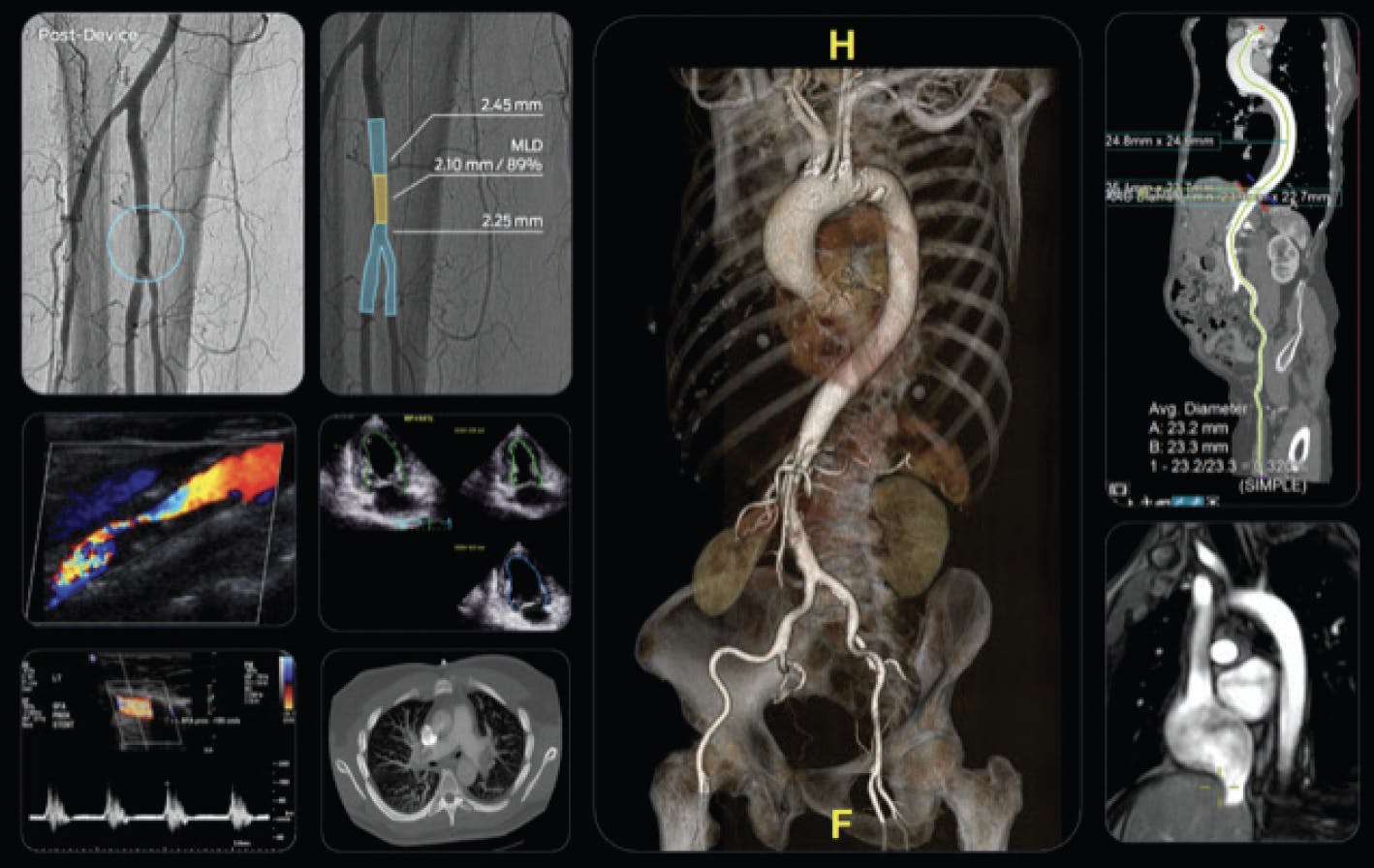
Figure 1. Representative examples of multi-modality expertise at MMI.
CONSIDERATIONS IN CHOOSING A CORE LAB
The choice of a core lab can be critical to the success or failure of a clinical trial, as the imaging endpoints are often central to demonstrating the safety and efficacy of the proposed intervention or device. The increasing sophistication of medical imaging has fueled the growing importance and prominence of imaging endpoints in modern clinical trials. There are no formal accrediting or oversight bodies for core labs. Thus, the burden of due diligence in selecting a qualified and high-performing core lab falls on the clinical trial sponsor. The ideal core lab should have a broad range of image analysis capabilities, scientific and clinical expertise, and operational excellence to develop a comprehensive imaging protocol, execute it efficiently across multiple investigational sites, and analyze and report data in a timely manner.
An entire book on medical imaging in clinical trials has been published and testifies to the level of sophistication required to conduct clinical studies with imaging outcomes.6 The authors dedicate a chapter to “Evaluating and Working with an Imaging Core Laboratory” and summarize a variety of factors that are critical to evaluate when choosing a core lab. The following is a list of key attributes adapted from that chapter:
- Adequate staffing and experience
- Focus on imaging core competency
- Medical and scientific expertise
- Access to senior management
- Financial stability
- Rigorous and well-established standard operating procedures
- Risk mitigation plans
- Validated image management tools
- Low staff turnover rates
- Site management and training services
- Proven compliance to regulatory requirements
Beyond this list, there are many other characteristics critical to the decision behind selecting a core lab. These factors include the reason(s) the core lab exists; the involvement of key staff, executives, scientists, and managers in day-to-day operations; and above all, their imaging and clinical research pedigrees. The partnership between the core lab and the leadership of a given clinical study must be on a peer-to-peer level. Forsthoffer and Krasnow identify this characteristic specifically in reference to developing a successful imaging protocol: “To date, I have yet to see a phase II/III protocol where some improvements to the protocol were not recommended by the imaging partner.”6 Other critical, non-negotiable characteristics include the “right sizing” of the core lab, robustness of the quality system, track record of regulatory inspections, history of approvals and clearances, investment in research and development, security of software infrastructure, and the ability to incorporate state-of-art image analyses methodologies in a compliant and validated manner.
Clinical studies require significant financial, temporal, and human resources, as well as relevant expertise. A thorough analysis of capabilities is critical to the selection of a core lab given the central role that medical imaging endpoints can have in the success of the clinical study and the realization of its goals.
PROFILE OF A MATURE CORE LAB: MEDICAL METRICS
Medical Metrics, Inc. (MMI; medicalmetrics.com) is an independent medical imaging core lab that was founded in 2000 out of the Texas Medical Center in Houston, Texas. MMI’s founders, imaging scientists, and engineers originally developed technology to objectively quantify spinal motion, which was successfully commercialized and used in pivotal clinical trials to characterize the performance of spinal implants. The acceptance of such data by regulatory authorities resulted in a core lab being born.
Over the last 2 decades, MMI has grown exponentially, quickly becoming the leading spine imaging core lab and expanding into multiple therapeutic areas shortly thereafter. MMI’s infrastructure, proprietary image management platform, and tested and validated processes were designed and built specifically for the core lab workflow (Figure 2). MMI’s focus on science and clinical research is evident in the fact that out of approximately 70 employees, over one-third hold advanced degrees in engineering, medical imaging, or clinical research. With experience in more than 700 clinical studies across six continents, including over 50 products that have obtained regulatory approvals, MMI provides expertise for companies looking to run any type of clinical trial, regardless of size, phase, or regulatory jurisdiction.

Figure 2. The MMI advantage.
Today, cardiovascular clinical trials constitute MMI’s fastest-growing focus area, where the company has conducted more than 25 clinical trials, including eight FDA-regulated investigational device exemption studies involving neuro-, cardio-, and peripheral vascular products. MMI’s ability to support the multimodality and complex image analysis requirements of cardiovascular studies is grounded in its strong scientific focus and extensive experience operationalizing trials across different therapeutic areas. MMI works with leading cardiovascular imaging experts to design imaging protocols and counsel trial sponsors on imaging endpoint selection. MMI’s proprietary, custom-built platform has also enabled the company to integrate specialized, third-party analysis tools into its validated clinical trial workflow to support cardiovascular image analysis needs. Along with its dedicated staff, MMI upholds its reputation in the cardiovascular space as a core lab that delivers high-quality, accurate, and timely image analyses.
Central to MMI’s mission to deliver best-in-class offerings is the demonstration of excellence through ISO 9001:2015 certification, Good Clinical Practice (GCP) adherence, and 21 CFR Part 11 compliance, which are all important aspects to ensure a well-conducted trial. The company’s excellent track record with sponsor audits and regulatory inspections stands as a testament to a culture of continuous improvement. In short, MMI “checks every box” of Forsthoffer and Krasnow’s checklist of critical factors in core lab selection.
Since its founding in 2000, MMI has built a strong reputation for supporting clinical trials and research studies thanks to its world-class imaging services and solutions. MMI stands well positioned to continue its leadership role in defining the standard for excellence in clinical research involving medical imaging.
1. US Food and Drug Administration. Statement from FDA Commissioner Scott Gottlieb, MD, and Jeff Shuren, MD, Director of the Center for Devices and Radiological Health, on transformative new steps to modernize FDA’s 510(k) program to advance the review of the safety and effectiveness of medical devices. November 26, 2018. Accessed October 18, 2023. https://www.fda.gov/news-events/press-announcements/statement-fda-commissioner-scott-gottlieb-md-and-jeff-shuren-md-director-center-devices-and
2. Junod S. Commemorating the 40th anniversary of the 1976 Medical Device Amendments. Food Drug Law J. 2017;72:26-31.
3. Emergo by UL. USA: overview of medical device industry and healthcare statistics. Accessed October 26, 2020. https://www.emergobyul.com/resources/market-united-states
4. US General Accounting Office. Federal regulation of medical devices: problems still to be overcome. September 30, 1983. Accessed October 18, 2023. https://www.gao.gov/assets/hrd-83-53.pdf
5. Rajebi MR, Benenati MJ, Schernthaner MB, et al. Reliability and accuracy of simple visual estimation in assessment of peripheral arterial stenosis. J Vasc Interv Radiol. 2015;26:890-896. doi: 10.1016/j.jvir.2015.02.018
6. Forsthoffer ES, Krasnow J. Evaluating and working with an imaging core laboratory. In: Miller CG, Krasnow J, Schwartz LH, eds. Medical Imaging in Clinical Trials. Springer-Verlag London; 2014:135-151. https://doi.org/10.1007/978-1-84882-710-3_7
Advertisement
Advertisement