Advertisement
Advertisement
September 2023
Optimizing DCB Results in the Femoropopliteal Segment
Successful revascularization of the femoropopliteal artery relies on knowledge of the anatomic, physiologic, and histologic processes and an understanding of when each tool and technique in your armamentarium is best used.
By Kumar Madassery, MD; Shaan Haider, BS; and Akhilesh Pillai, BS
Management of peripheral artery disease (PAD)—which is usually secondary to diabetes, smoking, and hypertension, among other risk factors—primarily involves conservative risk factor modification and exercise therapy. For patients who fail these attempts and have severe quality-of-life–limiting claudication, as well as most patients with rest pain or nonhealing wounds (ie, chronic limb-threatening ischemia [CLTI]), peripheral vascular interventions or surgical revascularization are typically considered. For both life-limiting claudication and CLTI, the primary goal is to ensure unhindered arterial perfusion from the aorta through the popliteal artery for claudicants and through the tibial arteries and toes in CLTI patients. The most common site of plaque-related significant disease burden tends to occur in the femoropopliteal segment of the vasculature. The anatomic, physiologic, and histologic processes that are encountered in this segment portend much complexity in achieving optimal long-term outcomes for patients. Although there have been substantial advancements in the endovascular approaches, tools, and techniques in this vascular bed, several factors need to be evaluated to attain patency and ensure success.
CONSIDERING PLAQUE BURDEN AND VASCULAR WALL TRAUMA
The burden of atherosclerotic plaque in the peripheral arteries can vary in degree and composition, with a heavy calcium burden posing one of the biggest challenges to successful revascularization in the femoropopliteal segment (Figure 1). This is most often seen in patients with diabetes and renal failure, where there is an abundance of medial calcinosis causing increased wall stiffness and luminal stenosis, making a vessel noncompliant. Based on the makeup of the plaque burden, the vascular specialist may be able to individualize the treatment strategy for the revascularization. Historically, percutaneous transluminal angioplasty (PTA) was the only treatment option, and it was associated with limited patency.1 Over the years, adjunctive tools such as specialty balloons, atherectomy, and scaffolds have increased the long-term patency of endovascular revascularizations. Balloon angioplasty results in dissections, and although it may not be significant enough to directly visualize on angiography or intravascular ultrasound (IVUS), it occurs nearly every time. Specialty balloons are often used to combat noncompliant vessels with heavy atherosclerosis and calcium burden (such as sculpting, scoring, and cutting balloons that aim to reduce dissections), but will still be affected by the decreased patency of PTA alone. The degree of injury to the vessel wall resulting in dissections or perforations is directly related to the force required to expand the vessel wall with PTA, due to the plaque-associated stiffness causing stenosis and lack of vessel compliance.2
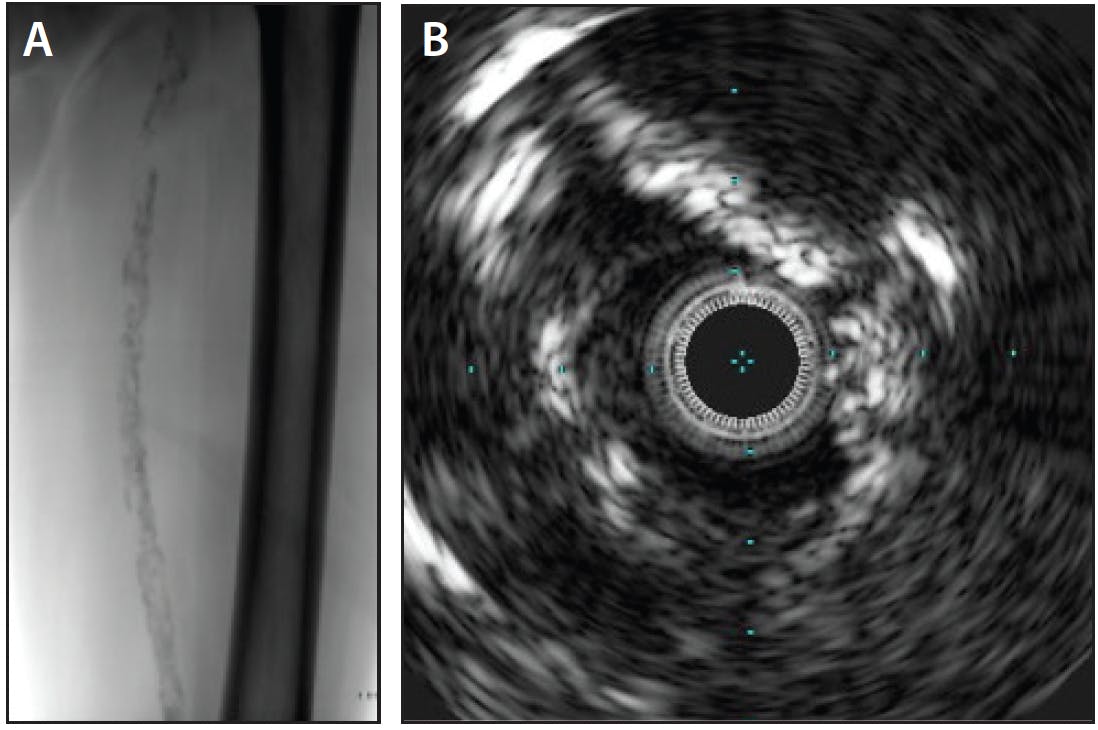
Figure 1. Heavily calcified femoropopliteal artery. Native scout image showing diffuse coral reef–like calcifications throughout (A). IVUS image of the mid-SFA with diffuse circumferential calcification with acoustic shadowing (B).
The vascular wall trauma resulting in dissections and the ensuing secondary inflammatory neointimal hyperplasia (NIH) is the cause of short-term patency loss and increased need for target limb revascularization (TLR) in PAD. NIH can be seen on IVUS or histologically as layers of smooth muscle proliferation resulting in lumen loss and related to recurrence of patient symptoms/continued nonhealing of wounds. Additionally, NIH is often the cause of recurrent stenosis and eventual occlusion of scaffolds placed in the peripheral arteries, particularly bare-metal stents. On the other hand, underexpansion of vessels with PTA, which is of particular concern in heavily calcified arteries, can result in short-term loss of patency as well as underexpansion of stents.
OPTIONS FOR REVASCULARIZATION
With this in mind, the focus of many revascularization tools has been to increase vessel compliance by decreasing the plaque burden within a target vessel, which then allows reduced pressures during PTA and subsequently less trauma and inflammation. As a result, the reduced need for scaffolds and potentially less NIH improves long-term patency of the treated vessels. Adding to this, for more than a decade, we have increasingly used specialty drug-coated balloons (DCBs) and drug-eluting stents (DESs) carrying paclitaxel, an antiproliferative agent that combats the NIH after vessel injury. Use of DCBs has been shown to increase long-term vessel patency and reduce TLR compared to PTA,3-4 as well as for in-stent restenosis (ISR) cases and other PAD presentations.
After widespread use of DCBs and other DESs with paclitaxel, a meta-analysis by Katsanos et al approximately 5 years ago resulted in a global halt to the use of these devices due to concerns of increased mortality in pooled patients from several different and disparate studies.5 After several ensuing panels, additional meta-analyses, exhaustive data reviews, and FDA back and forth regarding paclitaxel, use of the drug-based devices was cleared from concerns of increased mortality in 2023.6
TECHNICAL APPROACH
This leads to the main question at hand: How are DCBs used in the femoropopliteal segment? Patients with PAD who warrant intervention (ie, those with lifestyle-limiting claudication who have failed conservative methods with optimized medical and exercise therapy) or CLTI undergo peripheral angiography. Generally, this is planned based on a segmental ankle-brachial index (ABI) and toe-brachial index studies, which, along with the physical examination, can demonstrate levels of suspected disease. If the segmental pressure ABI study is not conclusive, such as in patients with noncompressible vessels or supranormal ABI values, a duplex arterial ultrasound is obtained to assist in further noninvasive stratification of disease burden. If the femoral pulses are weak or nonpalpable on physical exam or the patient has had previous bypasses/extensive surgeries, I prefer to obtain a CTA or MRA. CTA can help identify inflow aortoiliac disease but has little value in patients with heavy medial calcinosis (ie, those with diabetes and in renal failure) because the patency of the tibiopedal vessels is very difficult to determine. MRA can be helpful in patients who cannot receive intravenous contrast or have heavy calcification; however, these studies are not easily obtained in all centers, and patients may have contraindications/difficulty with the exam. If the duplex ultrasound or CT scans show a heavy calcified disease burden, my plan for intervention may include use of intravascular lithotripsy (IVL) or calcium modification atherectomy such as orbital atherectomy, when appropriate.
If this is the first angiogram or if previous angiograms are not available, I typically plan for contralateral groin retrograde access and perform an aortoiliac evaluation, followed by runoff of the affected extremity. If the aortoiliac system is patent and there is heavy disease burden in the common femoral artery (CFA), I would consider referral for femoral endarterectomy for the infrainguinal arteries, regardless of the remaining runoff. If the patient is not a candidate for surgery or refuses after consultation, I would consider IVL followed by DCB use. The concerns here include (1) potential need for scaffolds in case of significant dissection, which is not ideal, but studies are evolving regarding use of interwoven nitinol mimetic scaffolds, and they are used by certain specialties; (2) need for a covered stent graft in the event of CFA rupture; and (3) potential injury to the profunda femoris artery, which is the lifeline for the lower extremity in patients with PAD (Figure 2).
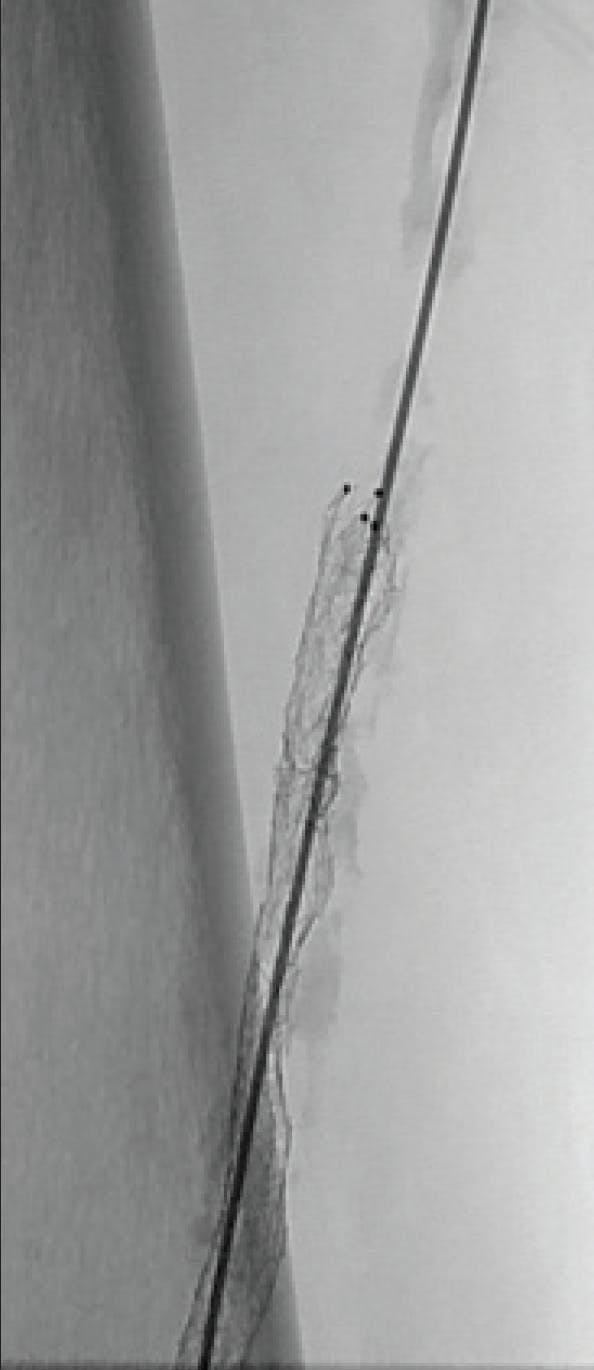
Figure 2. Underprepped heavily calcified SFA resulting in underexpanded scaffolds, despite aggressive pre– and post–plain balloon angioplasty. This revascularization resulted in repetitive restenosis and eventual occlusions.
In the femoropopliteal artery, my approach is based on the atherosclerotic disease pattern, length of occlusion/stenosis, and runoff vessels. The ultimate goal is to use PTA followed by DCB if possible and use scaffolds in areas that need support from recoil or significant dissections. Scaffolds are vital in some interventions, but my preference is to avoid permanent implants when feasible. Additionally, the more dynamic/torsional forces that exist in the distal femoral and popliteal arteries are less than ideal areas for primary scaffold use and can result in stent failure. If there is complete flush occlusion of the superficial femoral artery (SFA) origin with popliteal reconstitution, I would strongly consider bypass options for the patient.
If the patient does not have native veins of appropriate size and length or is not suitable for bypass, the SFA is revascularized, often using combined antegrade and retrograde approaches. If plaque modification is planned to improve vessel compliance for eventual DCB or scaffold use, it is vital and appropriate to know plaque consistency to choose appropriate tools. The makeup of the atherosclerotic burden can be determined with IVUS or with prior noninvasive imaging. Although not in routine use and without standardized guidelines for its use, IVUS can provide important information to ensure success of the revascularization, such as significant dissections, which are often overlooked; true luminal diameter, which is often underestimated and important for PTA/DCB use; and whether scaffolds have fully expanded. If the burden is mostly calcium, this will be a barrier for effective PTA because it increases risk of dissection, reduces compliance, and decreases effective antiproliferative agent absorption. In these cases, I choose IVL to crack the calcium and allow more successful definitive interventions that carry low embolization and complication risk.7 If there is mostly fibrofatty atherosclerosis and atherectomy is desired, my preference would be excimer laser or directional atherectomy, often with embolic protection device (EPD) use.
Regardless of device, the most important consideration is whether atherectomy is needed at all for each case and if it can be performed safely, because loss of distal vessels from embolization or device complication is not without severe negative consequences. My goal for using atherectomy is to increase vessel compliance, increase antiproliferative DCB delivery, reduce scaffold needs, or help scaffold expansion (Figure 2), with the overall goal of increased long-term patency and decreased TLR, particularly in CLTI patients.
Prior to using a DCB, I perform PTA using varying balloons depending on the vessel makeup. Often, standard semicompliant balloons are used in the femoropopliteal segments. If there are resistant lesions, regardless of IVL or atherectomy, I choose specialty balloons that either have nitinol cages encased within or on the outside of the balloon to assist with heavy fibrotic lesions. Once adequate PTA is achieved as shown on angiography and/or IVUS with < 30% stenosis and there is no significant dissection or perforation, I choose a DCB. I size it 1:1 with the vessel and extend to the healthy segments of the vessel.
In long occlusions, subintimal tracts or transition zones may be needed to spot scaffold use, along with DCB. If there are short dissections in the target lesion territory, I may consider use of dissection repair with Tacks (Philips) along with the DCB. In patients with ISR, my preference is to perform laser atherectomy, PTA, and DCB (with EPD use), which has been shown to be effective in nonrandomized studies.8 If there is suspicion for subacute or mixed acute thrombosis during revascularization, my approach is aspiration thrombectomy (or thrombolysis) followed by laser atherectomy of the inciting lesion. This can help with ablating plaque and thrombus in the same setting, but the definitive treatment would be DCB if scaffold can be avoided. Other instances where I choose DCBs are to prevent edge stenoses of covered stent grafts, at the anastomoses of surgical bypasses undergoing revascularization, and in the ostial area of flush SFA revascularizations. Methods to avoid complications in this segment include use of braided support sheaths either up and over or antegrade, EPD use when using atherectomy or possibly with use of multiple long-length DCBs, and appropriate anticoagulation during the procedures. Postrevascularization, I tend to use either dual antiplatelet therapy or single antiplatelet therapy plus rivaroxaban, depending on patient comorbidities. The patients are usually followed in clinic within 1 month, then every 3 months with segmental ABI studies or added duplex if stents/bypasses are present, for life.
CONCLUSION
Endovascular revascularization tools and techniques have progressed over the last 2 decades. Our current armamentarium includes means to evaluate the consistency of atherosclerotic disease (IVUS), methods to increase vessel compliance with IVL and atherectomy for increased long-term patency and reduced TLR, and definitive treatments apart from PTA alone, such as DCBs (Figure 3, Figure 4, and Figure 5).
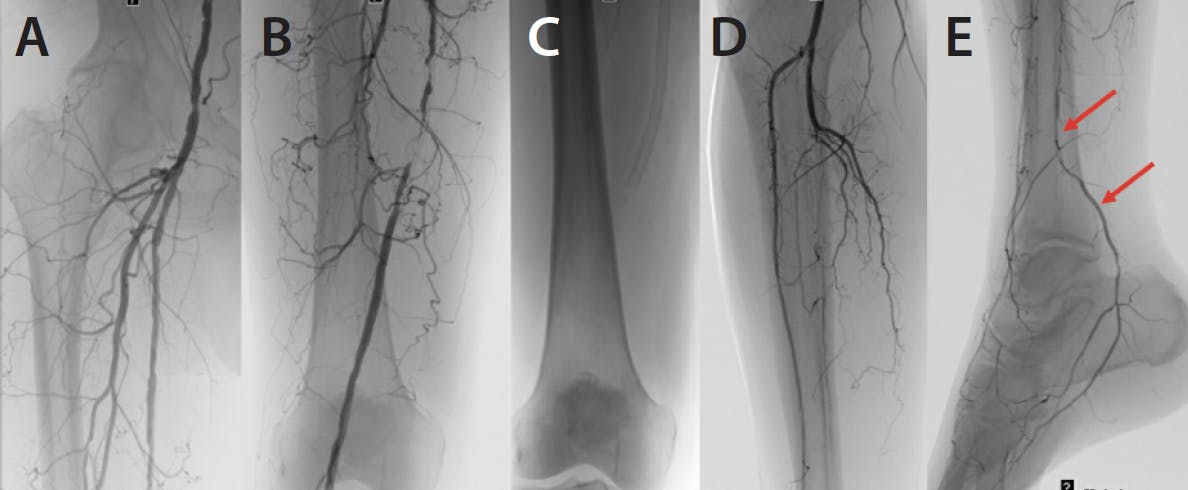
Figure 3. Diagnostic angiogram in late-aged patient with nonhealing right first ray amputation site showing ISR of the right SFA mimetic interwoven stent (A-C), with an intact anterior tibial artery, occluded posterior tibial artery, and reconstituted peroneal artery. Due to chronic PAD, the reconstituted peroneal continues as the distal posterior tibial artery (red arrows) to the posterior circulation (ie, acquired peroneus magnus) (D, E).
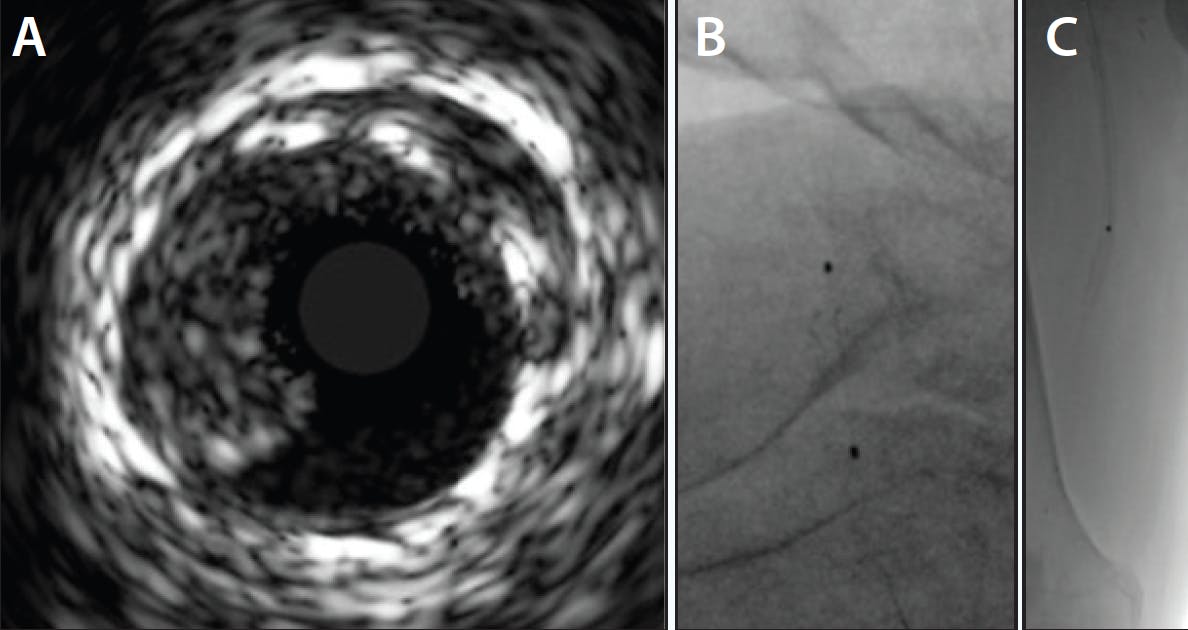
Figure 4. IVUS showing hyperplastic ingrowth within the bare-metal stents, consistent with NIH (A). Excimer laser atherectomy of the ISR was performed with placement of an EPD to protect from distal embolization (B, C).
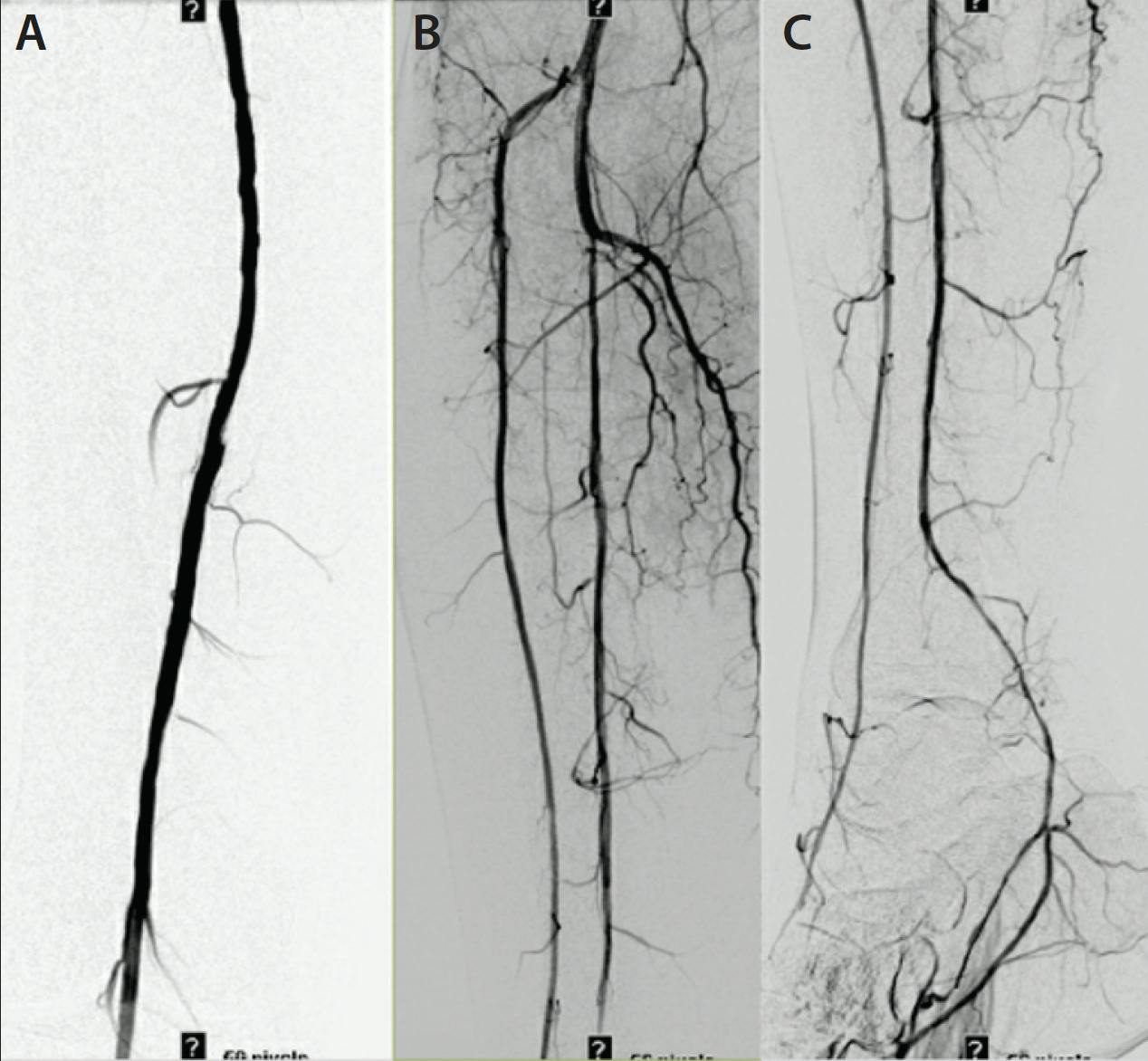
Figure 5. Completion angiogram after sculpting balloon and DCB PTA (not shown), with widely patent stents and two-vessel runoff to the foot. This patient achieved successful wound closure within 4 weeks.
The use of antiproliferative agents to reduce the inherent restenosis faced in PAD revascularizations are a continuing focus of interest, as prior concerns for adverse events from its use have been alleviated, and other antiproliferative agents are currently undergoing trials. Regardless of techniques and approaches, whether endovascular or surgical, the plan should be individualized to each patient—consideration of their quality of life; understanding of PAD as a progressive, lifelong disease; and awareness of all options by experienced operators should be standard of care.
1. Tepe G, Brodmann M, Bachinsky W, et al. Intravascular lithotripsy for peripheral artery calcification: mid-term outcomes from the randomized Disrupt PAD III trial. JSCAI. 2022;1:100341. doi: 10.1016/j.jscai.2022.100341
2. Spiliopoulos S, Karamitros A, Reppas L, Brountzos E. Novel balloon technologies to minimize dissection of peripheral angioplasty. Expert Rev Med Devices. 2019;16:581-588. doi: 10.1080/17434440.2019.1626715
3. Tepe G, Laird J, Schneider P, et al; IN.PACT SFA trial investigators. Drug-coated balloon versus standard percutaneous transluminal angioplasty for the treatment of superficial femoral and popliteal peripheral artery disease: 12-month results from the IN.PACT SFA randomized trial. Circulation. 2015;131:495-502. doi: 10.1161/CIRCULATIONAHA.114.011004
4. Tepe G, Schnorr B, Albrecht T, et al. Angioplasty of femoral-popliteal arteries with drug-coated balloons: 5-year follow-up of the THUNDER trial. JACC Cardiovasc Interv. 2015;8:102-108. doi: 10.1016/j.jcin.2014.07.023
5. Katsanos K, Spiliopoulos S, Kitrou P, et al. Risk of death following application of paclitaxel-coated balloons and stents in the femoropopliteal artery of the leg: a systematic review and meta-analysis of randomized controlled trials. J Am Heart Assoc. 2018;7:e011245. doi: 10.1161/JAHA.118.011245
6. US Food and Drug Administration. Update: paclitaxel-coated devices to treat peripheral arterial disease unlikely to increase risk of mortality - letter to health care providers. Published July 11, 2023. Accessed August 25, 2023. https://www.fda.gov/medical-devices/letters-health-care-providers/update-paclitaxel-coated-devices-treat-peripheral-arterial-disease-unlikely-increase-risk-mortality
7. Wong CP, Chan LP, Au DM, et al. Efficacy and safety of intravascular lithotripsy in lower extremity peripheral artery disease: a systematic review and meta-analysis. Eur J Vasc Endovasc Surg. 2022;63:446-456. doi: 10.1016/j.ejvs.2021.10.035
8. Kokkinidis DG, Behan S, Jawaid O, et al. Laser atherectomy and drug-coated balloons for the treatment of femoropopliteal in-stent restenosis: 2-year outcomes. Catheter Cardiovasc Interv. 2020;95:439-446. doi: 10.1002/ccd.28636
Advertisement
Advertisement