Advertisement
Advertisement
April 2024
A Case of a Red Toe
An interactive case study illustrating the importance of a multidisciplinary approach and thorough history in a patient who initially presented with pain and redness of the big toe and had underlying progressive claudication.
Nonvascular diagnoses in peripheral vascular disease patients can be difficult to identify due to similarities in presentation with vascular complaints. This creates a diagnostic challenge for some patients. This case review illustrates the diagnostic challenges of vascular patients while highlighting the importance of the basic tenets of medical diagnosis.
CASE PRESENTATION
A woman in her mid-80s presented to the emergency department (ED) with a primary complaint of left toenail pain. Her medical history was notable for long-standing, well-controlled hypertension, hyperlipidemia on a moderate-intensity statin, and stage 4 chronic kidney disease (CKD). She was nondiabetic and a nonsmoker. In the ED, she was diagnosed with onychomycosis and treated empirically for cellulitis. A podiatry referral was placed for routine nail care. About 6 weeks later at a routine podiatric follow-up, she endorsed severe left first and second toe pain, which was sensitive to touch to the point where she was intolerant of a blanket touching her foot. At night, she reported dangling her foot off the bed for relief. She also endorsed calf claudication symptoms after about 1 block of walking. She had poor pedal pulses. Noninvasive testing demonstrated noncompressible ankle-brachial indices bilaterally with a left toe pressure of 0 mm Hg. Pulse volume recordings were dampened from the upper thigh to the foot (Figure 1). She was subsequently referred to a vascular specialist.
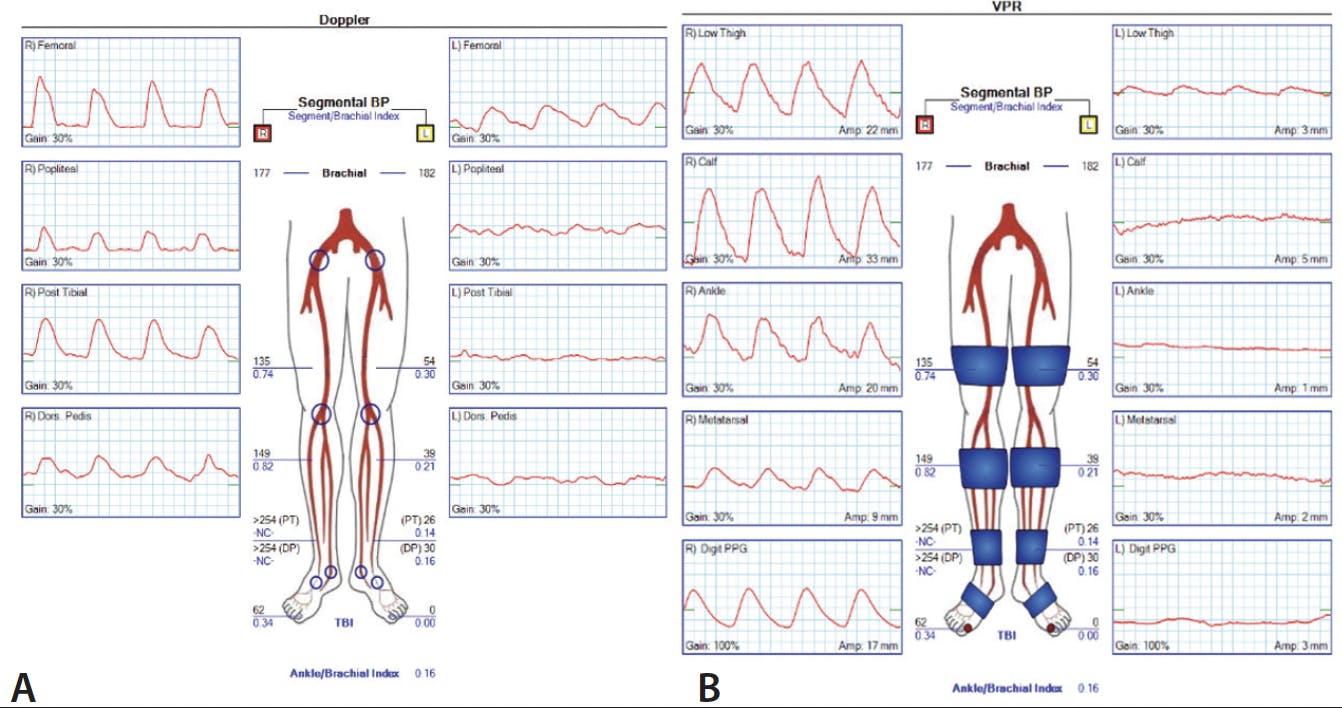
Figure 1. Initial noninvasive physiologic data showing the Doppler evaluation (A) and pulse volume recordings (B).
Upon initial evaluation by a vascular specialist, additional history was elicited. She noted progressive exertional left lower extremity pain for the past 3 years. Initially, the pain was in her buttock but had slowly progressed down her left leg into her left calf. These symptoms were occurring after less than a block of walking, and she slowly changed her lifestyle to avoid walking. Additionally, over the past several weeks, her toes progressively became more red, slightly swollen, and extremely painful. Because of these symptoms, she avoided weight-bearing and anything touching her feet, and she dangled her foot off the bed for relief. She denied other pertinent cardiovascular and neurovascular symptoms. Upon physical examination, she had reduced left femoral, popliteal, and pedal pulses. Her left toe was deeply erythematous and swollen, and gentle palpation elicited 10/10 pain. The swelling in her left big toe was consistent with a developing tophus. She had no other evidence of wounds or ulcerations.
1. Highlight Point
It is of paramount importance to confirm a patient’s history. In this case, additional history was elicited describing at least a 3-year period of progressive claudication symptoms. This is clearly consistent with severe peripheral artery disease (PAD) and unsurprising given the results of her noninvasive vascular studies.
CASE CONTINUED
Based on her history and physical examination, the patient was diagnosed with PAD with Rutherford class 3 symptoms and an acute gout flare. Aspirin 81 mg monotherapy was initiated, her statin was increased to a high-intensity dose, and a supervised exercise program referral was placed. Cilostazol was offered, but the patient refused, as she did not want to take more pills. Her most recent glomerular filtration rate (GFR) was 24 mL/min/1.73 m2, so a short course of steroids was prescribed for the gout flare along with a uric acid level. Short-term follow-up was scheduled.
2. Highlight Point
Based on the objective data presented, an acute gout flare is clear. However, the diagnostic challenge is whether her resting symptoms can solely be contributed to the gout alone. She has severe PAD from noninvasive testing with evidence of inflow disease. One could argue that she may have ischemic rest pain as well, especially with the history of having to dangle her foot off the bed. Nonetheless, the decision was made to treat the acute issue and then reassess symptoms at a follow-up visit.
CASE CONTINUED
The patient was followed-up with a phone call 5 days later where she noted improvement in her toe pain and reduced erythema of the toes. She continued to have mild pain at rest but was hopeful it would continue to improve. The patient was scheduled for a 2-week follow-up but was unable to make the appointment due to transportation issues. Although amenable to the program, she also had not initiated a supervised exercise program, as the closest center was 45 minutes away from her, and she did not have reliable transportation.
3. Highlight Point
Access to care and resource limitations are prevalent in every practice, and this case is a prime example. It is interesting to think about how these factors may affect additional therapy, as invasive intervention is usually reserved for patients who have persistent symptoms, despite an exercise program and the addition of cilostazol. In this case, the patient did not receive either one.
CASE CONTINUED
The patient next presented to her podiatrist about 4 weeks after the initial vascular encounter. She noted improvement in the swelling; however, the redness had returned. She continued to have rest pain, but it now migrated to the dorsum of her foot. Upon examination, she had evidence of a small wound at the lateral aspect of her first toenail with purulent drainage. She was treated with oral antibiotics, a wound care referral was placed, and an urgent vascular clinic appointment was scheduled. At her subsequent vascular clinic visit, she continued to endorse resting symptoms consistent with ischemic rest pain and had evidence of a new wound but without significant drainage.
The patient now had evidence of a new wound, and her presentation was consistent with ischemic rest pain. Although the wound was a few weeks old, this represented chronic limb-threatening ischemia (CLTI). There was clear concern that this wound would not heal with a toe pressure of 0 mm Hg. In cases of suspected CLTI, the recommendation is to proceed with angiography. A CTA could be considered, especially with the concern of significant inflow disease, but her CKD and low GFR made this a less attractive option. Additionally, an invasive approach offers the options of CO2 angiography and potential simultaneous intervention.
CASE CONTINUED
The patient was scheduled for urgent, outpatient invasive angiography, utilizing CO2. A right common femoral artery (CFA) access was obtained without complication, and CO2 angiography was performed directly through the sheath (Figure 2A). The initial images demonstrated a left external iliac artery (EIA) occlusion without reconstitution of the CFA. Due to suboptimal resolution, the decision was made to proceed with selective left lower extremity contrast angiography, which demonstrated reconstitution of the superficial femoral and profunda femoris arteries via internal iliac collaterals (Figure 2B). In addition, she had two-vessel runoff to the foot supplied by a dominant anterior tibial artery and a diminutive peroneal artery (not shown). Total contrast used was 15 mL.
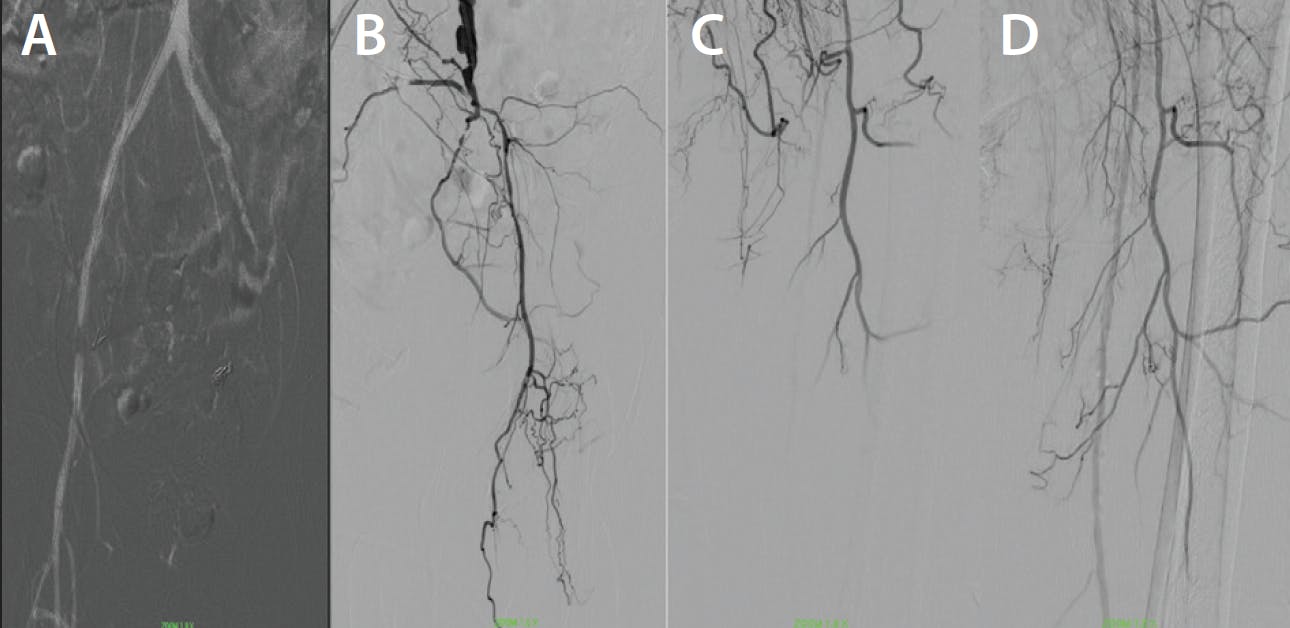
Figure 2. Initial angiograms. CO2 aortoiliac angiography demonstrating a left EIA occlusion (A). Selective contrast angiography with an occlusion of the left EIA and reconstitution in the left superficial femoral artery (B-D).

Due to the involvement of the left CFA, the decision was made to contact vascular surgery for a potential hybrid approach to revascularization. This would consist of a surgical cutdown with CFA endarterectomy followed by stenting of the EIA. For CFA revascularization, endarterectomy remains the preferred revascularization modality due to its well-published durable outcomes, which outweigh the risk of surgical site infection.1 Due to the anatomic location of the CFA, endovascular intervention has been less favored due to repetitive hip flexion predisposing to high rates of early in-stent restenosis. However, recent literature suggests comparable data between stenting and surgery of the CFA in select patients.2 Consideration was made for a complete endovascular approach to revascularization, but the patient was felt to be an acceptable risk for surgery and intubation. With her presentation of CLTI, medical management would not be appropriate if there were revascularization options. Consideration of a surgical autologous bypass is reasonable but was less favored due to increased surgical risk and other durable options present.
CASE CONTINUED
Within 5 days, the patient underwent a hybrid revascularization procedure. Following uncomplicated cutdown of the left CFA, initial angiographic images were obtained (Figure 3A). Femoral endarterectomy was performed. Intravascular ultrasound imaging was utilized, which demonstrated circumferential calcification of the EIA. Intravascular lithotripsy was performed, followed by successful implantation of 7- X 80-mm self-expanding bare-metal stent. Post-stent dilatation (1:1) was performed, and final angiographic images were obtained (Figure 3B). Her postoperative course was uncomplicated. At 1 month, her wound had healed, and her noninvasive physiologic testing greatly improved (Figure 3C).
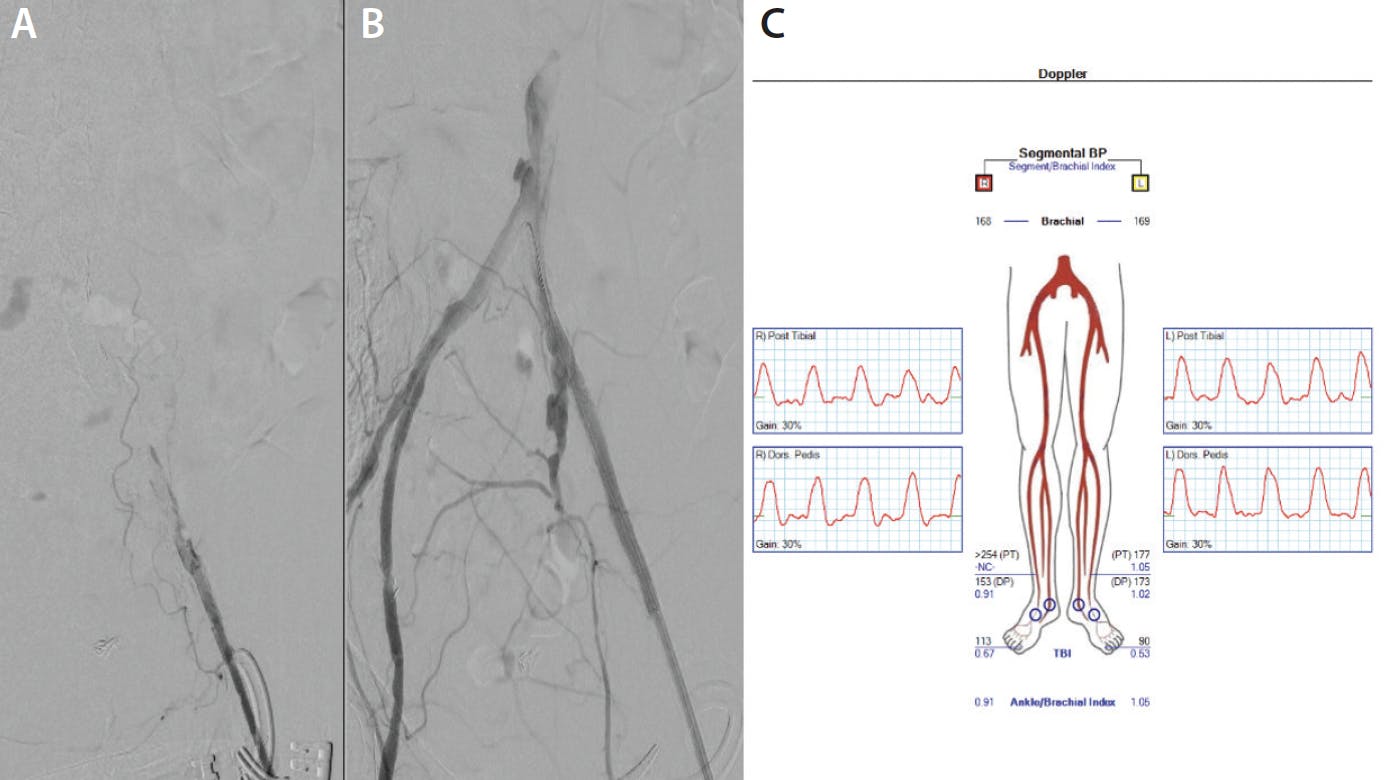
Figure 3. Final angiographic and physiologic data. Initial contrast angiography following cutdown of the left CFA (A). A patent EIA following stenting (B). One-month postrevascularization physiologic data (C).

The VOYAGER PAD trial demonstrated a significant decrease in adverse cardiovascular and limb outcomes with the addition of rivaroxaban to aspirin when compared to aspirin alone.3 Although the patient’s renal dysfunction and age conferred a bleeding risk, she remained a suitable candidate for low-dose rivaroxaban. Indeed, the patient was placed on this regimen and has been tolerating it without issue for over 6 months. Regarding the other options, most agree aspirin alone is not a favored approach. Dual antiplatelet therapy with aspirin and clopidogrel remains the most common regimen due to comfort with the regimen and lower cost. Although there are decreased limb events with vorapaxar, it does increase the risk of bleeding significantly and is not commonly used.
CONCLUSION
This case represents a diagnostic challenge in a patient with known vascular disease. There is no argument that the patient had significant PAD, but her prominent initial complaint was big toe pain consistent with gout. Carefully reviewing her history, she did have evidence of rest ischemic pain, but the intense gout pain delayed appropriate diagnosis. Certainly, the progression to a wound may have been avoided if angiography and subsequent revascularization were performed earlier for Rutherford class 4 symptoms. Despite the several-week delay, this patient made a full recovery, ambulating with minimal claudication symptoms.
This case also highlights the importance of taking a multidisciplinary approach to promote the delivery of high-quality health care. In modern, high-volume clinical practices, taking a fresh, complete history and performing a careful, focused examination has never been more important as we sometimes take shortcuts for efficiency.
1. Kang JL, Patel VI, Conrad MF, et al. Common femoral artery occlusive disease: contemporary results following surgical endarterectomy. J Vasc Surg. 2008;48:872-877. doi 10.1016/j.jvs.2008.05.025
2. Goueffic Y, Della Schiava N, Thaveau F, et al. Stenting or surgery for de novo common femoral artery stenosis. JACC Cardiovasc Interv. 2017;10:1344-1354. doi: 10.1016/j.jcin.2017.03.046
3. Bonaca MP, Bauersachs RM, Anand SS, et al. Rivaroxaban in peripheral artery disease after revascularization. N Engl J Med. 2020;382:1994-2004. doi: 10.1056/NEJMoa2000052
Advertisement
Advertisement