Advertisement
Advertisement
April 2024
Splenic Artery Embolization for Bleeding Gastroesophageal Varices
An interactive case study for decision-making on the use of splenic artery embolization in recurrent variceal bleeding in a patient with noncirrhotic portal hypertension.
Noncirrhotic portal hypertension (NCPH) refers to a group of liver disorders that primarily affect the liver vascular system. There are multiple causes of NCPH; among them is chronic portal vein obstruction. Development of esophageal and gastric varices is a well-known sequela of portal hypertension (pHTN), which comes with increased risk of spontaneous and clinically significant hemorrhage. Often, varices may be managed medically; however, in cases of refractory bleeding, further management with interventions by endoscopy or interventional radiology (IR) may be indicated. This article aims to provide a treatment pathway utilizing splenic artery embolization in a patient with NCPH secondary to chronic splenic vein thrombosis who presented with variceal bleeding.
CASE PRESENTATION
A woman in her late 20s with a history of pancreatitis secondary to alcohol abuse with resultant chronic splenic vein thrombosis causing NCPH, complicated by esophageal and gastric varices, presented to the emergency department (ED) with nausea, vomiting with bright red blood, and severe epigastric pain. She had a surgical history of prior pancreatic duct stent placement and cholecystectomy. Pertinent labs in the ED included an approximately 50% decrease in hemoglobin from baseline as well as a normal lipase, amylase, and total bilirubin. She was hemodynamically stable upon presentation. A CT of the abdomen and pelvis with contrast showed known chronic occlusion of the portal and splenic veins, as well as splenomegaly and multiple esophageal and gastric varices without evidence of active bleeding (Figure 1).
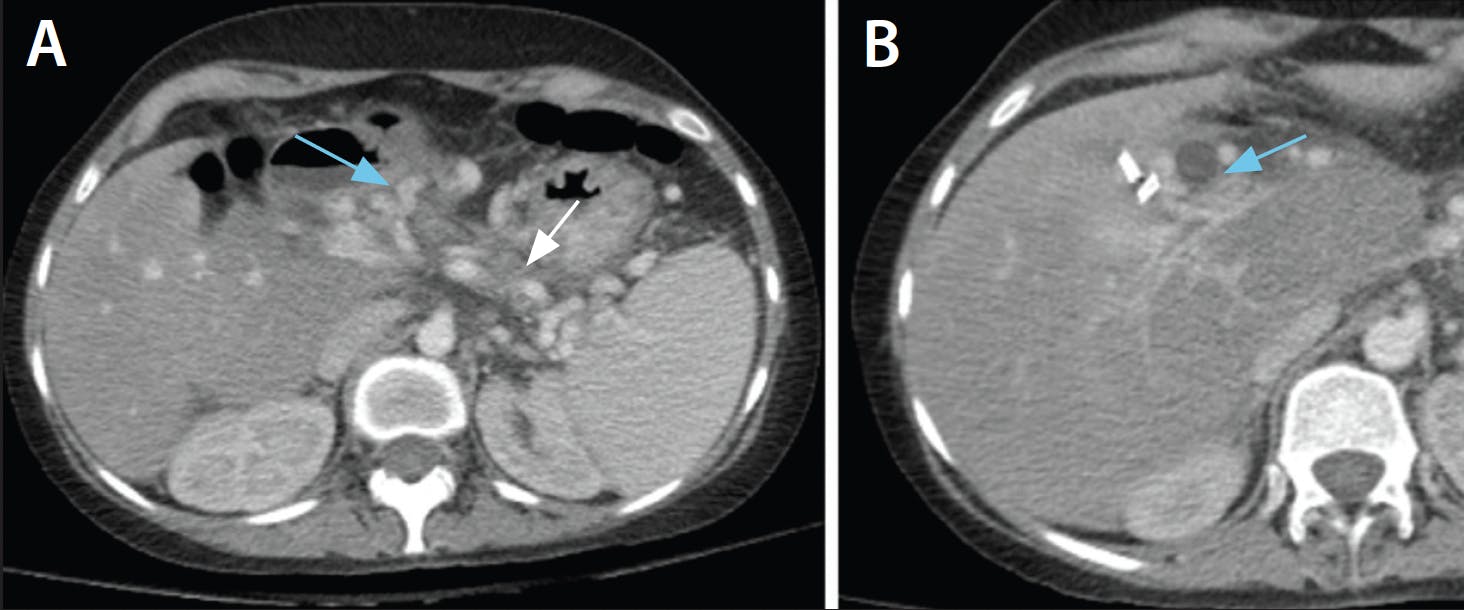
Figure 1. Contrast-enhanced CT of the abdomen and pelvis demonstrating thrombosed splenic vein (white arrow) with adjacent collaterals (blue arrow) (A) and thrombosed main portal vein with cavernous transformation (blue arrow) (B).
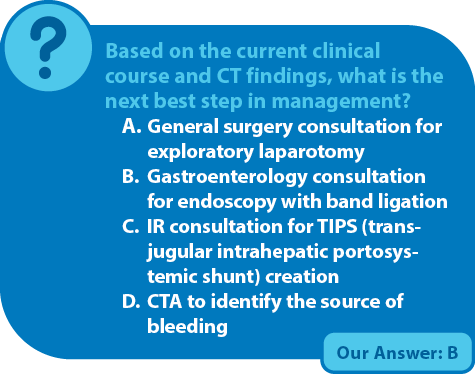
Although all specialties mentioned play a crucial role in patients with variceal bleeding, after medical management with nonselective β-blockers (NSBBs), endoscopy with an attempt to ligate or sclerose the varices is the next best step. According to the American Association for the Study of Liver Diseases, endoscopy should be performed within 12 hours of presentation with acute variceal hemorrhage.1 NSBBs reduce the portosystemic gradient (PSG) and endoscopic band ligation (EBL) acts locally on the varices. Often, this combination approach may be successful in treating variceal bleeding and therefore should be attempted first prior to more invasive procedures. In this clinical scenario, CTA would be of little utility given that the patient’s bleeding is most likely variceal in origin, not arterial.
CASE CONTINUED
Per gastroenterology’s recommendations, the patient was started on an octreotide infusion and taken the following day to the endoscopy suite where multiple small esophageal and large gastric varices were identified (Figure 2). There was evidence of prior gastric variceal bleeding; however, due to patient anatomy, the advanced endoscopist was unable to treat the gastric varices. Meanwhile, the patient remained hemodynamically stable, but continued to experience small-volume hematemesis.
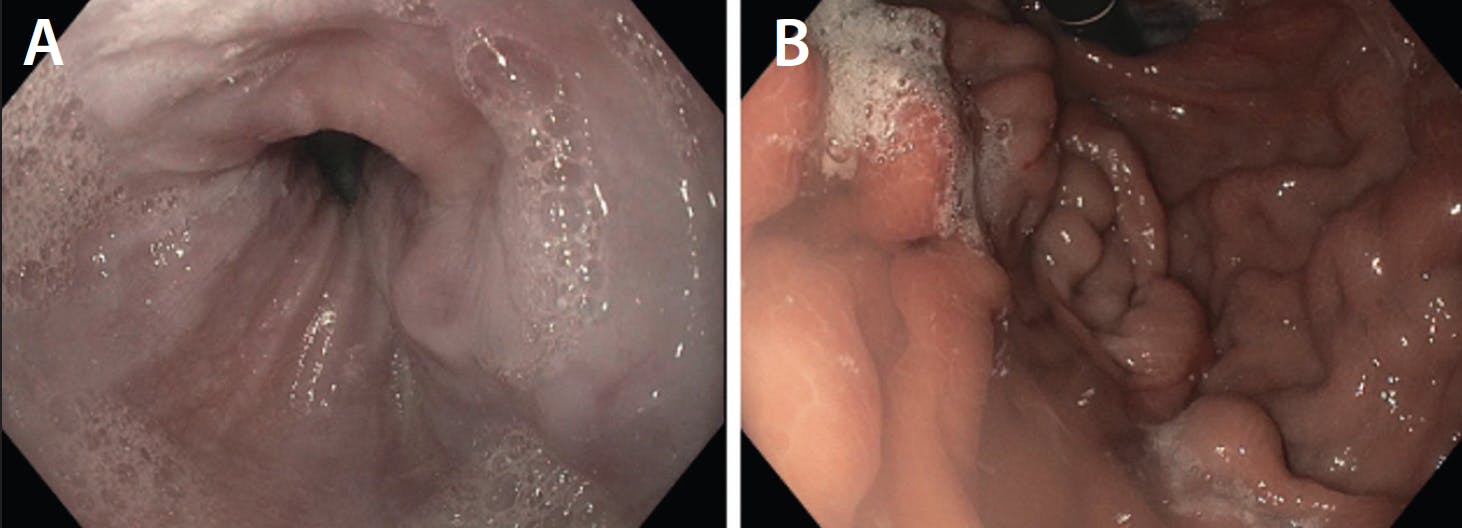
Figure 2. Large esophageal (A) and gastric (B) varices.
The primary therapy from IR in the setting of variceal hemorrhage with pHTN is TIPS creation, which decompresses the varices through reduction of the PSG. Alternatively, variceal hemorrhage can be treated via transvenous obliteration, which treats the varices directly using a combination of embolics and sclerosants. Both procedures have a well-established history of technical and clinical success with emerging evidence supporting a combined approach of variceal decompression with obliterative techniques.2,3 A retrospective study of patients with recurrent episodes of variceal bleeding demonstrated that recurrence of variceal bleeding was significantly less for patients who underwent TIPS when compared to endoscopic therapy alone.4 Regarding transvenous obliteration treatment of varices, this technique which falls under the umbrella term of balloon-occluded retrograde transvenous obliteration (BRTO), where the varix is accessed on the systemic venous side, typically from a gastrorenal shunt associated with the left renal vein. Once access has been achieved, the shunt is occluded using a balloon in BRTO, or more commonly, with a vascular plug (plug-assisted) or endovascular coils (coil-assisted). The occlusion devices prevent reflux of the embolic or sclerosing agent from the varix back into the systemic circulation. For the purpose of this article, we will refer to BRTO as the catch-all term unless otherwise specified. One multicenter, retrospective study of 183 cirrhotic patients with pHTN and bleeding varices found that approximately 50% of patients with follow-up endoscopy had complete resolution of their gastric varices and another 16% had significant reduction in their gastric varices after BRTO.5 Therefore, given this patient’s clinical scenario of recurrent bleeding gastric varices and failed EBL, it is reasonable to consider TIPS with or without BRTO.
CASE CONTINUED
The patient was taken the following day to the IR suite. Given the patient’s intrahepatic vascular anatomy and chronic splenic vein thrombosis, the physician chose to pursue percutaneous balloon-occluded antegrade transvenous obliteration (BATO) instead of TIPS creation. In BATO, the varix is accessed from the portal-venous side instead of the systemic side as in BRTO. Transhepatic percutaneous access into the right portal vein was obtained. Portal venography (Figure 3) identified the splenic vein thrombosis but found no identifiable connection to the large gastric varices. Left renal and inferior phrenic-adrenal vein truck venograms were performed (not shown) without evidence of a gastrorenal shunt amenable for BRTO. Systemic and portal pressures obtained during this procedure showed a PSG of 14 mm Hg (portal vein pressure, 33 mm Hg; inferior vena cava pressure, 19 mm Hg).
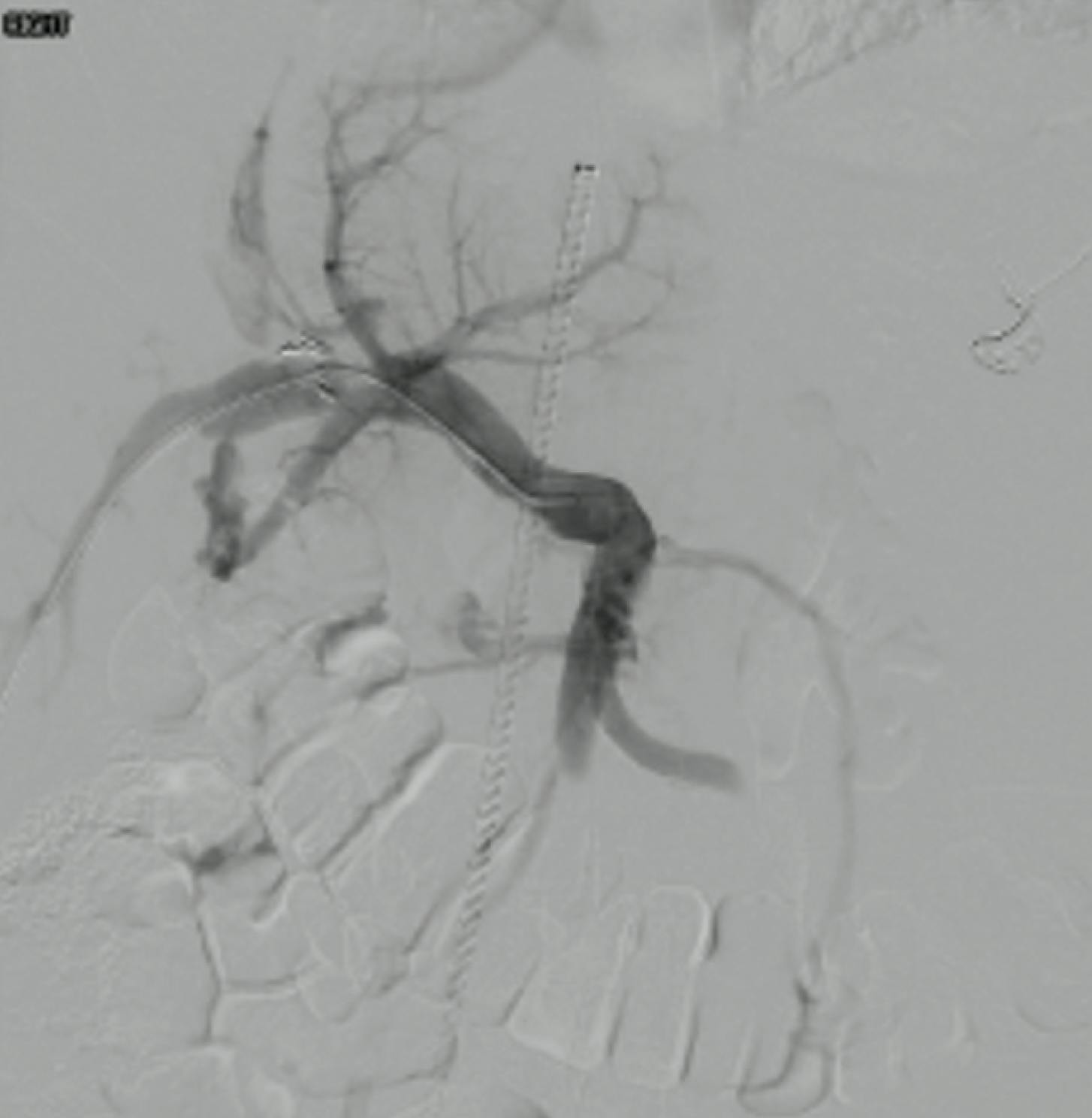
Figure 3. Portal venogram from transhepatic access shows an occluded splenic vein without connection to any gastric varices.
The patient was evaluated by general surgery for possible splenectomy and the patient did not wish to pursue surgical options. Therefore, PSE was pursued. Splenic artery embolization (SAE) was first introduced as a technique in 1973 using autologous clot to treat hypersplenism.6 Over the last several decades, SAE has been performed for several etiologies, including splenic injury, hypersplenism, and complications arising in the setting of pHTN. It has been proven to be a safe and efficacious procedure. For example, a recent retrospective review of 25 patients (13 with NCPH and 12 with cirrhotic pHTN) who were not TIPS or BRTO candidates treated with PSE for variceal hemorrhage reported technical success in 100% of patients.6 Of note, 52% of the PSEs occurred in the urgent or emergent setting. The authors noted regression in the gastric varices and no instances of rebleeding in the cohort. To achieve these results, the authors embolized 60% to 80% of the spleen.
CASE CONTINUED
The next day, the patient was taken to the IR suite for PSE. The right common femoral artery was accessed under sonographic guidance and a 6-F Pinnacle sheath (Terumo Interventional Systems) was placed via Seldinger technique. The celiac trunk was cannulated with a 5-F diagnostic catheter and angiography performed to outline the splenic artery anatomy (Figure 4A). Using a high-flow microcatheter and wire, the splenic arterial branch supplying the lower one-third of the spleen was catheterized. The lower pole of the spleen was chosen to avoid any potential pleural irritation after the embolization. After catheterization of the appropriate artery, the lower third of the spleen was embolized using 300–500-µm Embosphere particles (Merit Medical, Inc.) (Figure 4B). The target artery was embolized to stasis and a repeat angiogram from the main splenic artery demonstrated an appropriate postembolization appearance (Figure 4C).
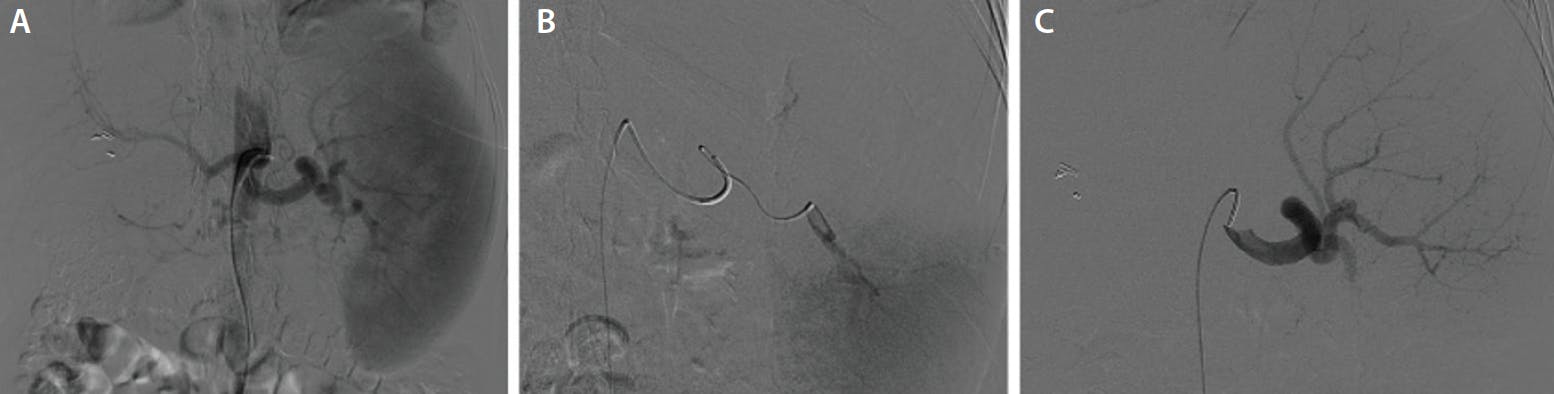
Figure 4. Celiac angiogram demonstrating anatomic celiac trunk anatomy (A). Angiogram of the inferior segmental splenic artery just prior to embolization (B). Postembolization angiogram of the splenic artery demonstrating expected nonenhancement of the lower one-third of the spleen (C).
Five days after PSE, the patient underwent planned repeat endoscopy to evaluate for any changes to the varices. At this time, the endoscopist reported significant interval improvement in the varices without evidence of recent bleeding (Figure 5). The patient was scheduled to see gastroenterology at regular intervals for endoscopy to evaluate for recurrence of the varices.
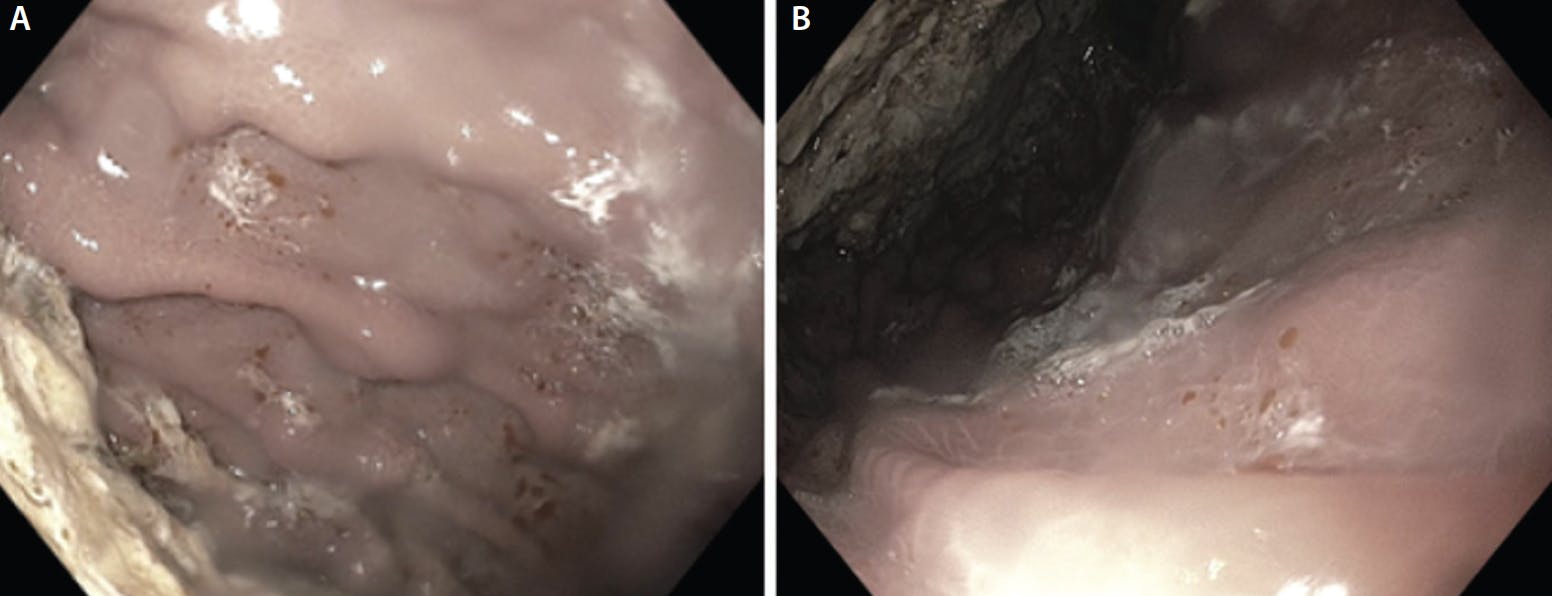
Figure 5. Repeat endoscopy demonstrating markedly improved gastric (A) and esophageal (B) varices without evidence of recent bleeding.
CONCLUSION
Treatment of recurrent bleeding gastroesophageal varices in the setting of NCPH requires a multidisciplinary approach. IR plays a crucial role in the management and treatment of these patients with procedures like TIPS and BRTO. Alternatively, in patients who are not TIPS or BRTO candidates and have failed medical and endoscopic management, PSE is an additional option to obtain successful and sustained hemostasis.
1. Garcia-Tsao G, Abraldes JG, Berzigotti A, Bosch J. Portal hypertensive bleeding in cirrhosis: Risk stratification, diagnosis, and management: 2016 practice guidance by the American Association for the study of liver diseases. Hepatology. 2017;65:310-335. doi: 10.1002/hep.28906
2. Kim M, Al-Khalili R, Miller J. Vesical varices: An unusual presentation of portal hypertension. Clin Imaging. 2015;39:920-922. doi: 10.1016/j.clinimag.2015.04.011
3. Shah KY, Ren A, Simpson RO, et al. Combined transjugular intrahepatic portosystemic shunt plus variceal obliteration versus transjugular intrahepatic portosystemic shunt alone for the management of gastric varices: comparative single-center clinical outcomes. J Vasc Interv Radiol. 2021;32:282-291. doi: 10.1016/j.jvir.2020.10.009
4. Korsic S, Stabuc B, Skok P, Popovic P. TIPS vs. endoscopic treatment for prevention of recurrent variceal bleeding: a long-term follow-up of 126 patients. Radiol Oncol. 2021;55:164-171. doi: 10.2478/raon-2021-0006
5. Jang SY, Kim GH, Park SY, et al. Clinical outcomes of balloon-occluded retrograde transvenous obliteration for the treatment of gastric variceal hemorrhage in Korean patients with liver cirrhosis: a retrospective multicenter study. Clin Mol Hepatol. 2012;18:368-374. doi: 10.3350/cmh.2012.18.4.368
6. Pavel V, Scharf G, Mester, P, et al. Partial splenic embolization as a rescue and emergency treatment for portal hypertension and gastroesophageal variceal hemorrhage. BMC Gastroenterology. 2023;23:180. doi: 10.1186/s12876-023-02808-1
Advertisement
Advertisement