Advertisement
Advertisement
April 2024
Filter-Associated Inferior Vena Cava Thrombosis
A case study on diagnosis and management considerations in the setting of postthrombotic syndrome with chronic filter-associated iliocaval thrombosis.
CASE PRESENTATION
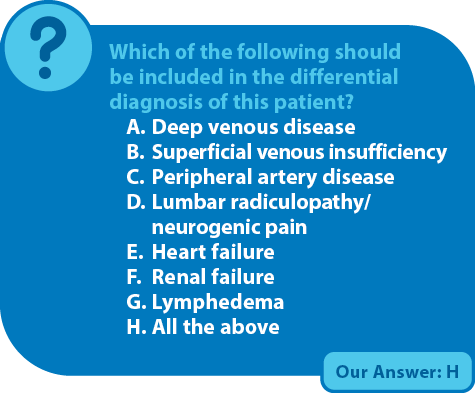
A man in his 40s presented with bilateral leg pain and swelling, with several ulcerated shallow wounds involving the lower extremities, primarily on the shins and calves. He complained of cramps, pain, mild itching, heaviness in both extremities, and difficulty walking.
Learning Point
All of the above diagnoses should be considered in the initial evaluation of a patient presenting with bilateral lower extremity symptoms, particularly discomfort, edema, and ulceration. Overlapping diagnoses are also common and should be incorporated into the treatment algorithm because they may change management. For example, a patient with mixed chronic limb-threatening ischemia, superficial venous insufficiency, and a poorly healing wound may be more appropriately treated with arterial angiography and interventions prior to compression therapy or venous intervention. Alternatively, a patient with peripheral artery or coronary artery disease who may need a vascular conduit might be treated more conservatively for superficial venous insufficiency.1,2
CASE CONTINUED
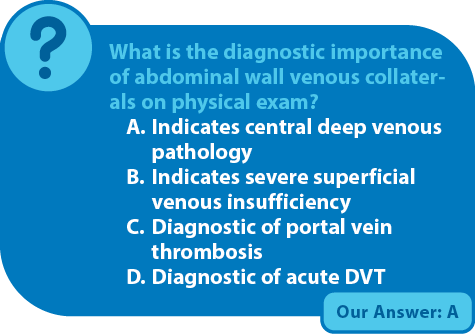
The patient’s history was notable for provoked lower extremity deep venous thrombosis (DVT) 4 years previously that was associated with hospitalization for severe pneumonia. The DVT was treated with anticoagulation, but an inferior vena cava (IVC) filter was also placed at an outside institution, possibly due to the severity of his respiratory illness at the time and decreased pulmonary reserve. Lower extremity symptoms began a few months after filter placement. Other relevant history included stage 3 chronic kidney disease (CKD) with a component of acute kidney injury (AKI) at the time of evaluation. An exam was notable for lower extremity edema, lipodermatosclerosis, multiple shallow open weeping ulcers, and some lower extremity varicosities. The abdominopelvic exam was notable for varicosities and scrotal swelling. No imaging was available for review.
Learning Point
The presence of abdominal and pelvic varicosities on physical exam should direct the physician to deep abdominopelvic venous pathology. IVC occlusion, portal hypertension from cirrhosis, chronic portomesenteric thrombosis, and pelvic venous congestion or varicocele in the presence of labial or scrotal varicosities should be considered in the appropriate contexts.
CASE CONTINUED: DIAGNOSIS
The clinical exam, including Villalta score and Venous Clinical Severity Score (VCSS), was consistent with severe postthrombotic syndrome (PTS). Iliocaval occlusion was suspected given the bilateral lower extremity symptoms and abdominopelvic varicosities in the presence of an IVC filter with prolonged dwell time. Total caval occlusion at 1 year can occur in up to 1.1% of patients after filter placement.3

Learning Point
VCSS and Villalta scoring systems are used in the evaluation of PTS. They incorporate elements of the CEAP (clinical, etiologic, anatomic, pathophysiologic) classification system but are better metrics for evaluating clinical change during follow-up. Both Villalta and VCSS have good correlation for detecting mild to moderate disease. VCSS may be more sensitive in the evaluation of severe disease.4
Learning Point
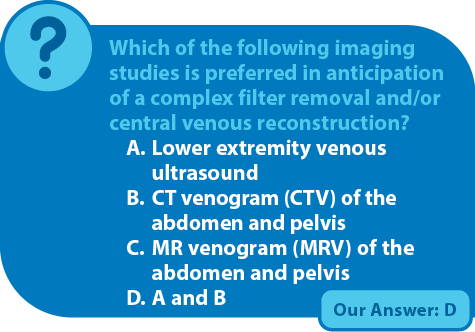
Preprocedure imaging before complex IVC filter removal and potential iliocaval reconstruction typically includes bilateral lower extremity venous duplex ultrasounds and a CTV of the abdomen and pelvis. Ultrasound and CT are necessary to evaluate the caval anatomy, collateral pathways, extent of infrainguinal thrombosis, and inflow/outflow anatomy, which may serve as potential failure points after reconstruction. If MRA/MRV is pursued, a plain abdominal radiograph is helpful to evaluate the filter type and position due to the superior spatial resolution of digital radiography.
CASE CONTINUED: PREPROCEDURAL IMAGING
Lower extremity venous ultrasound demonstrated bilateral chronic common femoral and femoropopliteal thrombosis. Abdominal x-ray demonstrated a retrievable IVC filter with incomplete tine expansion, which was suggestive of a narrowed or occluded IVC. Note that incomplete filter tine expansion during deployment can also be seen in the setting of gonadal vein maldeployment but is beyond the scope of this case. CTV was deferred due to AKI on CKD; instead, ferumoxytol-enhanced MRA (FE-MRA) of the abdomen and pelvis was obtained. Ferumoxytol is an iron-based MR contrast agent with exceptional vascular imaging properties. FE-MRA can be used in cardiac and peripheral vascular imaging and has applications in transcatheter aortic valve replacement preprocedural imaging, DVT evaluation, endoleak imaging after endovascular aneurysm repair, and evaluation of complex congenital heart disease. Ferumoxytol can be used in patients with renal failure and those with contraindications or allergies to conventional contrast media.5 In this case, FE-MRA demonstrated total infrarenal IVC occlusion, diminutive left common iliac vein remnant, and bilateral chronic common femoral and femoral venous thrombosis with lumbar, scrotal, and superficial variceal collaterals (Figure 1).
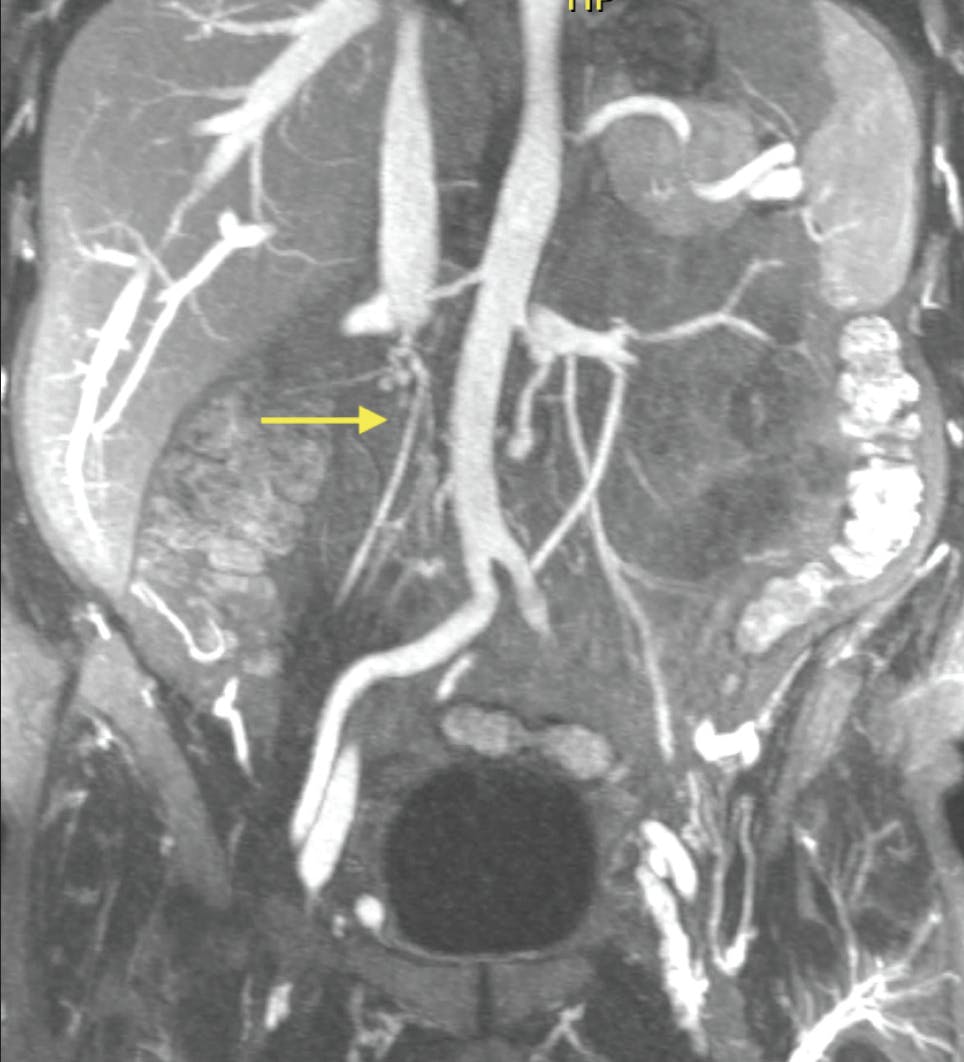
Figure 1. Coronal postcontrast FE-MRA maximum intensity projection images of the abdomen and pelvis demonstrated total caval occlusion (arrow). A narrow left common and external iliac vein remnant and bilateral chronic CFV and femoral vein thrombus was also present (not shown).
Learning Point
There are several steps to consider when treating chronic filter-associated iliocaval thrombosis, including level of sedation, vascular access, anticoagulation, standard and complex filter retrieval techniques, reconstruction techniques, and complication bailouts. One easily overlooked but important step is positioning and choosing vascular access; inflow access from the popliteal vein, femoral vein, common femoral vein (CFV), or saphenofemoral junction are potential options. Poor access decisions can doom the procedure from the onset. For example, CFV access may not be suitable if there is significant disease in the CFV extending to the infrainguinal segments, as there may be insufficient room to properly balloon, debulk, or place stents. Furthermore, prematurely stenting into a diseased segment may serve as a potential point of failure and stent thrombosis. Internal jugular venous access is necessary for most filter retrievals with a cranial hook, except when performing an inversion retrieval.
CASE CONTINUED: INTERVENTION
The procedure was performed under general anesthesia in the supine position. This was preferred due to the case complexity. Right internal jugular venous access was achieved, and a 24-F DrySeal sheath (Gore & Associates) was placed. Right groin access was achieved, but sheath placement was unsuccessful due to severe total occlusion of the femoral and distal external iliac segment (Figure 2). Left groin access was achieved with a standard Seldinger technique, and venography was performed (Figure 3). A 9-F sheath was placed. The patient was then given a weight-based bolus of 80 U/kg of intravenous heparin followed by hourly bolus, with a target activated clotting time > 250 to 300 seconds during the entirety of the case.
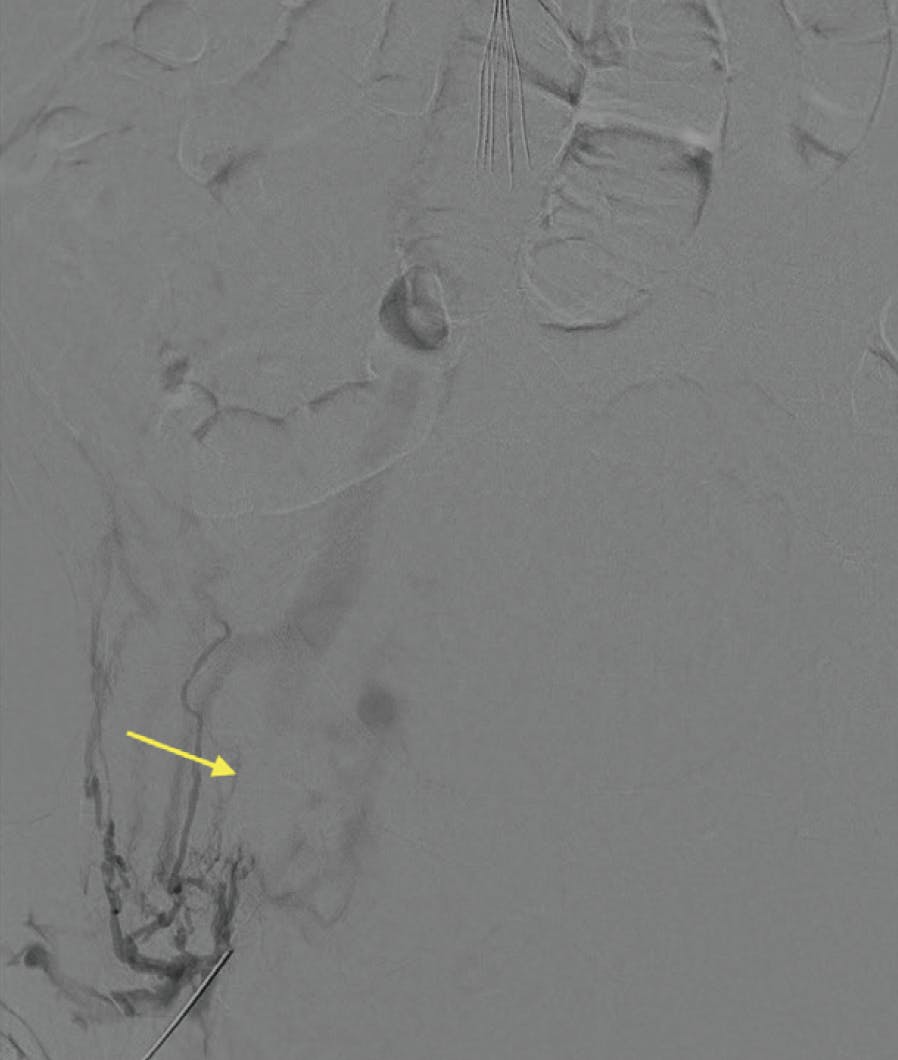
Figure 2. Digital subtraction angiogram of the right saphenofemoral junction with several unnamed collaterals and total short-segment occlusion of the CFV (arrow) with late reconstitution of the iliac vein.
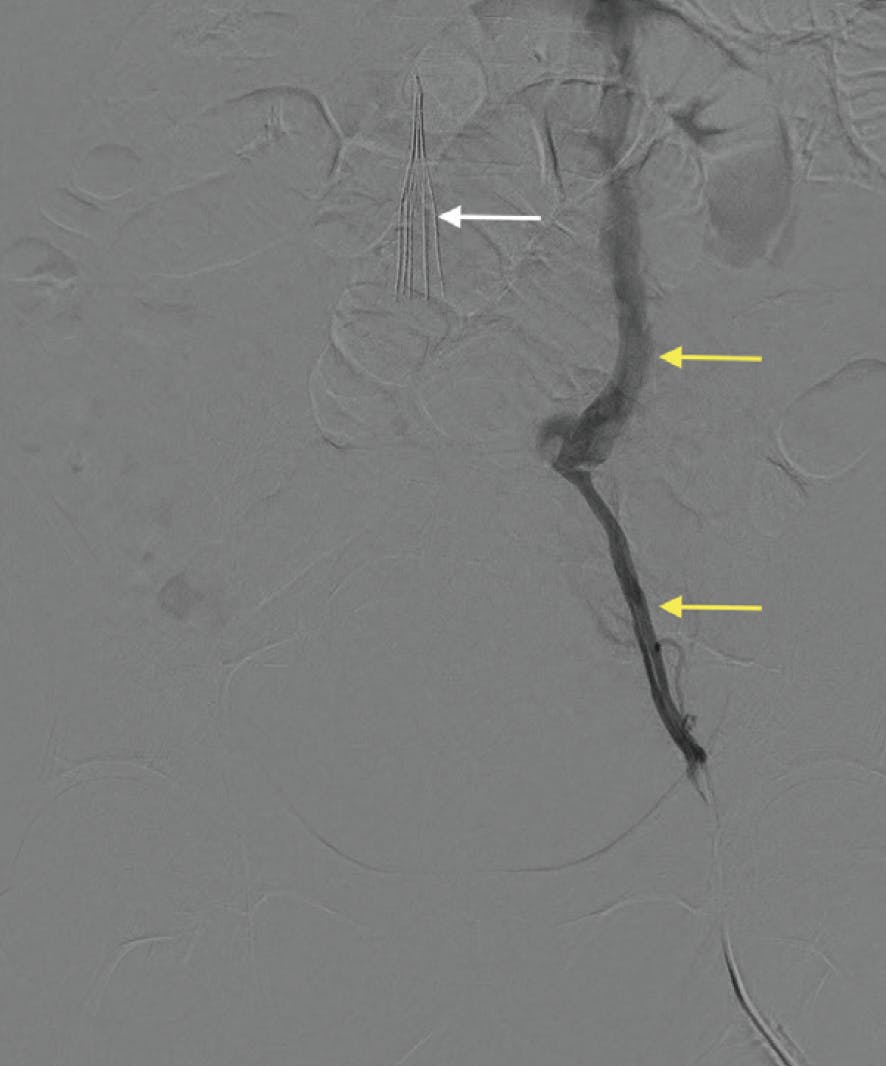
Figure 3. Patent but diminutive left external iliac and common iliac veins with outflow entirely through a large lumbar collateral (yellow arrow); note the IVC filter with no flow in the native IVC (white arrow).
Pivot Point
A decision must be made to either cross the occlusion and then retrieve the filter or to retrieve the filter and then cross the occlusion. The former is safer in the setting of caval injury because wire access for intervention/balloon occlusion is available. The latter could be a faster option because removal of the filter can make crossing easier. We opted to cross through the caval occlusion prior to filter retrieval.
CASE CONTINUED: INTERVENTION
Using a TriForce catheter (Cook Medical) and stiff Glidewire (Terumo Interventional Systems) from the left groin access, the occlusion was traversed. Several initial attempts to cross were unsuccessful. Infrarenal venography demonstrated collateral flow and caval thrombosis below the filter (Figure 4). Eventually, the IVC occlusion was crossed, and appropriate position was confirmed with multioblique fluoroscopy and venography of the suprarenal IVC. After recanalization, the Glidewire was snared from the jugular access, and through-and-through access was achieved. Attention was then turned to filter retrieval.
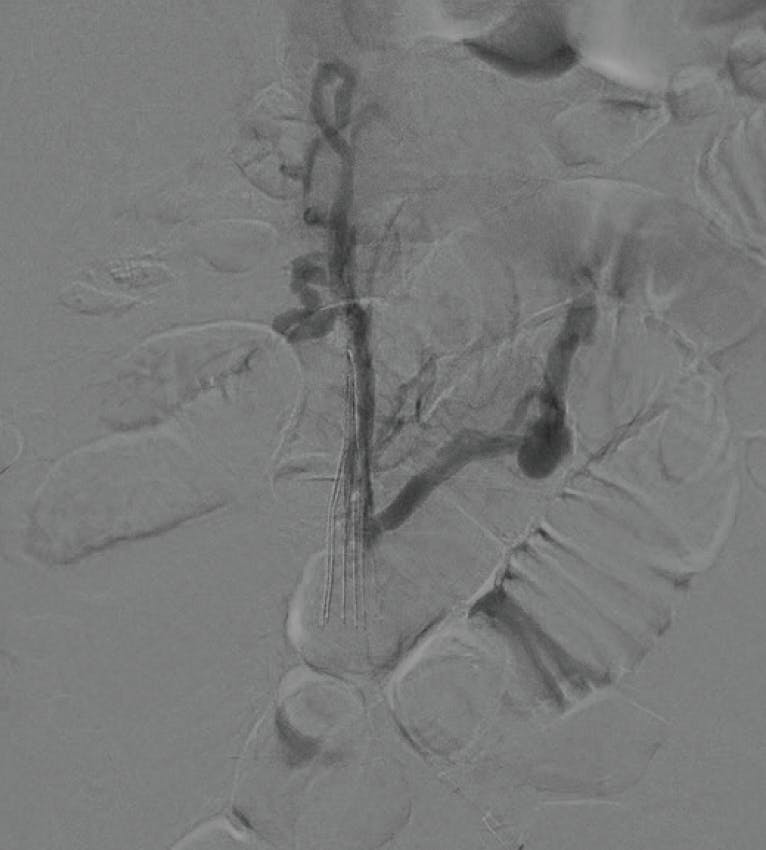
Figure 4. Venogram below the IVC obtained during attempted recanalization demonstrated caval occlusion with collateral venous outflow to the suprarenal vena cava.
Learning Point
Recanalization should be confirmed with aspiration of blood followed by angiography to confirm appropriate intraluminal position. Multioblique fluoroscopy should be performed during recanalization as well to ensure appropriate progression and wire position. These safety steps can reduce potential complications such as stent deployment into a lumbar vein, which has been reported.6
Learning Point
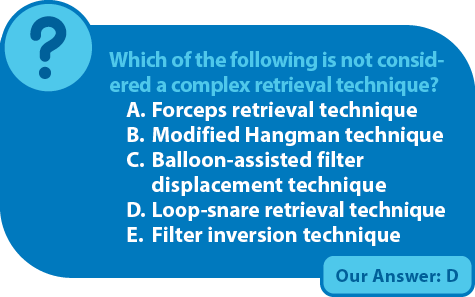
Standard retrieval includes the loop-snare technique. The remainder are considered complex filter retrieval techniques.
CASE CONTINUED: INTERVENTION
The filter was removed with a combination of balloon displacement from the left groin access and endobronchial forceps through a 16-F sheath telescoping through the right internal jugular venous access. The tissue around the cranial hook was dissected, the hook was grasped firmly, and the filter was oversheathed for retrieval (Figure 5).
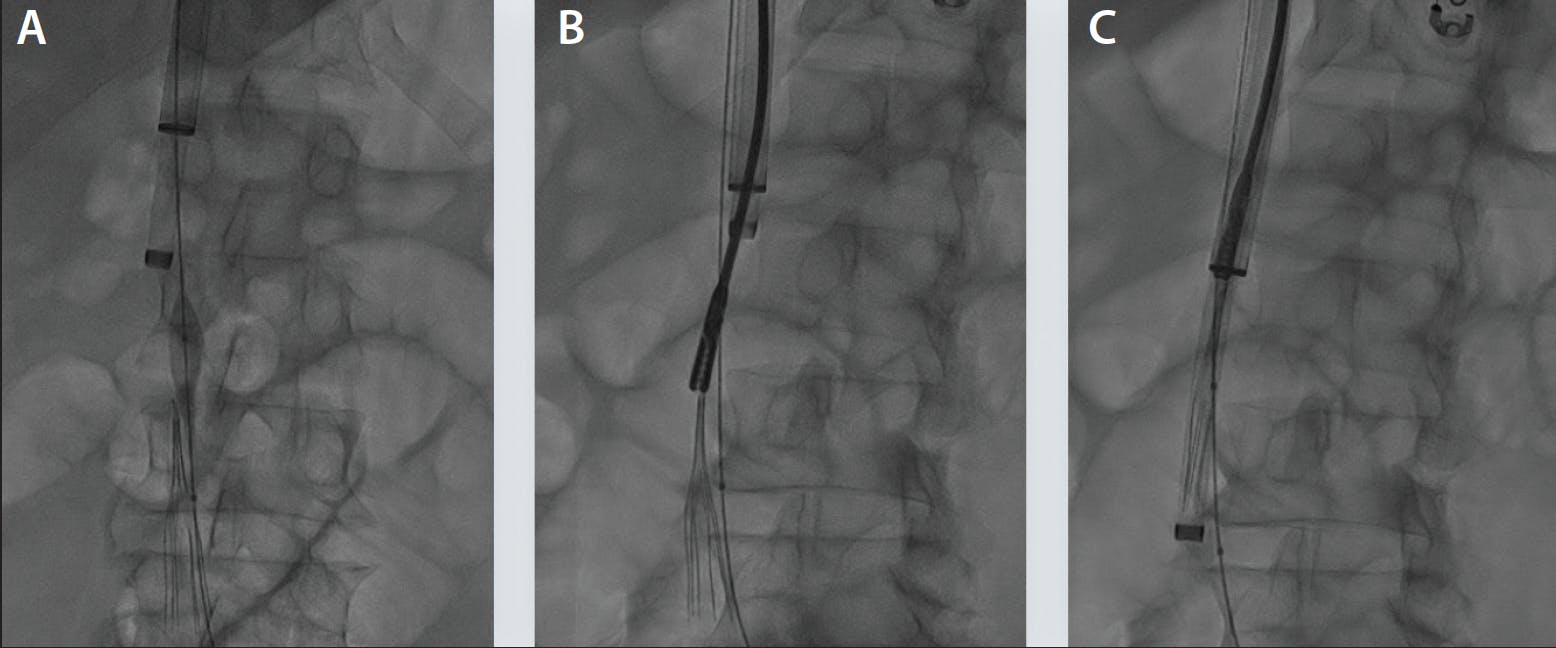
Figure 5. Balloon displacement using a 12-mm high-pressure balloon (A); endobronchial forceps retrieval with securement of the cranial hook (B); oversheathing of the forceps and filter for safe retrieval (C).
After retrieval, the right external iliac vein was accessed in retrograde fashion for recanalization of the right CFV using a variety of support and crossing catheters in 0.035- and 0.018-inch systems. This was unsuccessful. Therefore, sharp recanalization with the back end of a Glidewire was used and was ultimately successful. Aspiration and venography confirmed an intraluminal position, but venography demonstrated position within a collateral branch and not the true CFV (Figure 6).
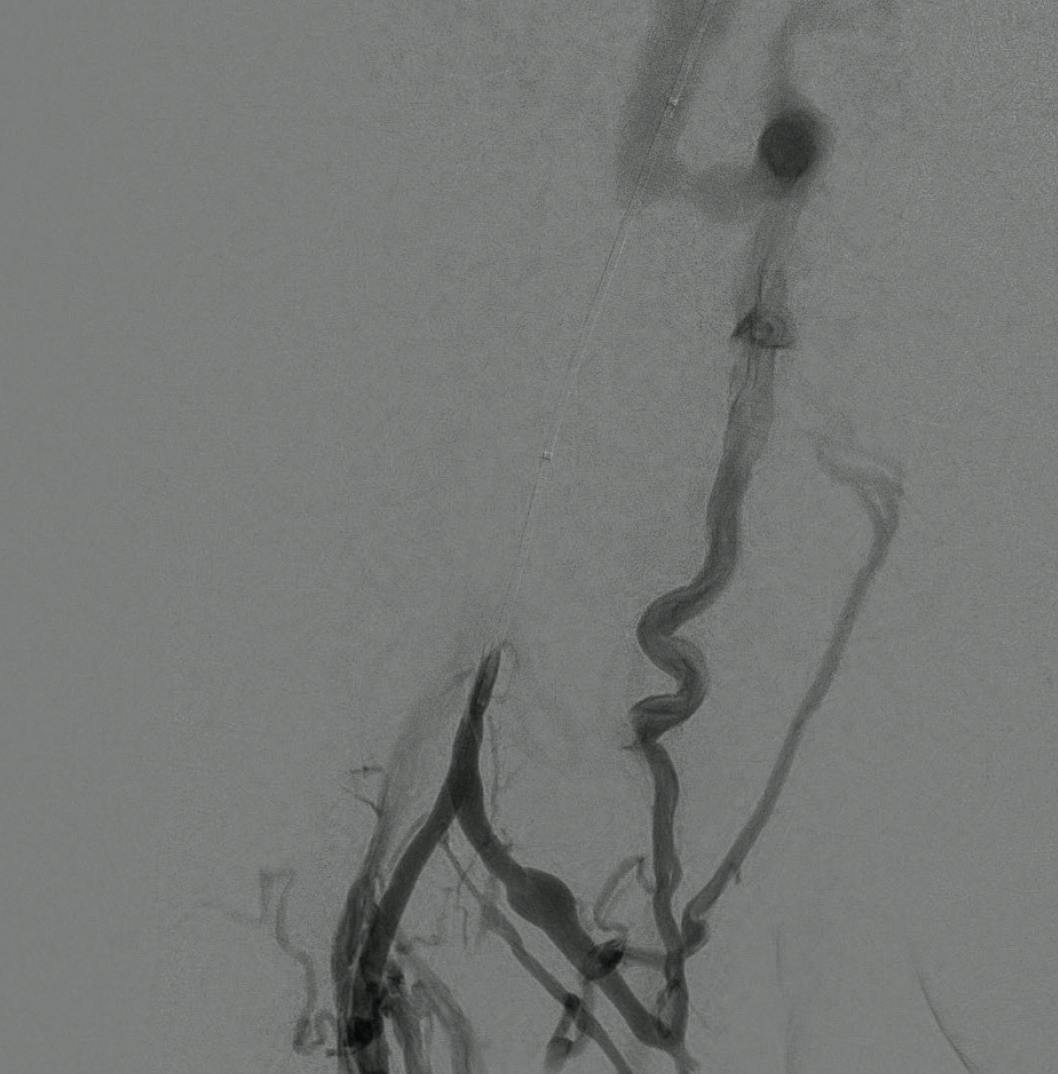
Figure 6. Venogram demonstrated occlusion of the CFV with collateral venous outflow.
After popliteal access was achieved, an attempt at recanalization was made, followed by balloon angioplasty, with immediate recalcitrant stenosis. Intravascular ultrasound (IVUS) was performed from the jugular vein access throughout the IVC to the bilateral lower extremity veins. IVUS demonstrated IVC occlusion and severe disease in the lower extremities from the common femoral segment. The IVC and bilateral iliac veins were then treated with balloon angioplasty using kissing 14-mm, high-pressure angioplasty balloons. The femoropopliteal segments were treated with aspiration thrombectomy and balloon angioplasty but did not have significant yield due to the chronic nature of the thrombus. Repeat IVUS was obtained and showed improvement in the caval stenosis but worse recalcitrant stenosis of the CFV and femoral vein segments on the right side. No healthy inflow vein was identified on IVUS imaging. Iiliocaval venography was performed (Figure 7).
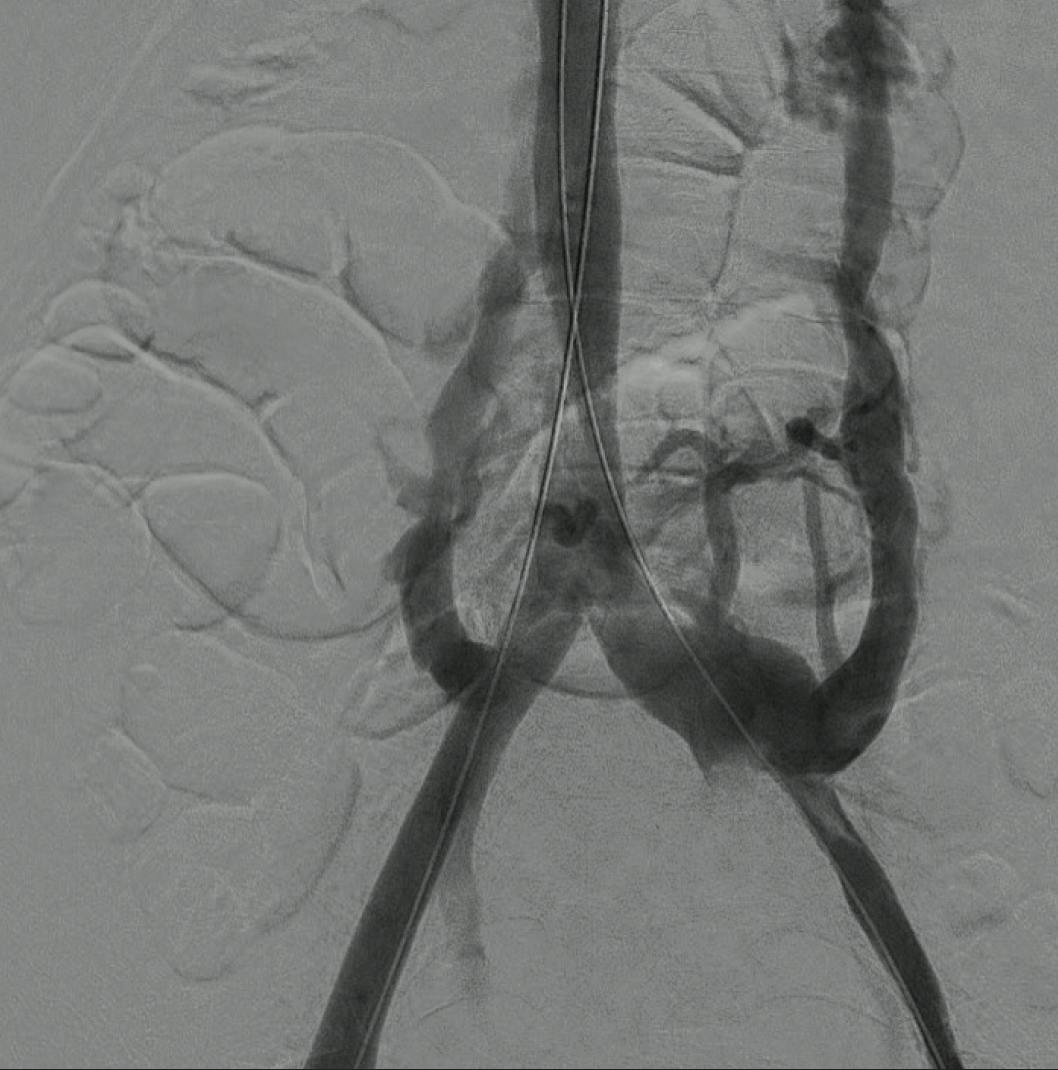
Figure 7. Iliocaval venogram demonstrates marked improvement in outflow through the now-patent IVC. Decreased but persistent lumbar collateral flow is present.
CASE CONTINUED: CONCLUSION AND DISCHARGE
Vascular access sheaths were removed and hemostasis achieved with manual compression and dissolvable purse-string sutures. A dose of 1 mg/kg of enoxaparin sodium was given at the end of the procedure. The patient was monitored overnight and discharged home the next morning in stable condition. Outpatient, he was treated with therapeutic twice-daily enoxaparin sodium and aspirin, with a plan for a transition to an oral anticoagulant, lower extremity graded compression, and daily walking. The patient was seen in clinic 1-month postprocedure and already had demonstrable improvements in lower extremity symptoms, with closed venous wounds and improvements in VCSS. Repeat intervention may be needed depending on clinical symptoms.
Pivot Point
A decision to reconstruct with stent placement must be made. Because of the marked improvement in outflow but without healthy native inflow veins, stent placement was deferred in place of clinical monitoring. Stent placement in a poor inflow segment can lead to stent failure and early thrombosis. However, there is still significant collateral flow and high likelihood of recalcitrant stenosis.
DISCUSSION
PTS is a difficult disease process to manage, and prevention is paramount. Treatment includes compression therapy, appropriate wound care, appropriate anticoagulation, and thoughtful intervention. It is important to stratify patients based on validated scores and follow them longitudinally. Symptomatic filter-associated iliocaval occlusion can be safely treated with endovascular filter retrieval and venous reconstruction.
1. Kakkos SK, Gohel M, Baekgaard N, et al. Editor’s Choice – European Society for Vascular Surgery (ESVS) 2021 clinical practice guidelines on the management of venous thrombosis. Eur J Vasc Endovasc Surg. 2021;61:9-82. doi: 10.1016/j.ejvs.2020.09.023
2. Vedantham S, Weinberg I, Desai KR, et al. Society of Interventional Radiology position statement on the management of chronic iliofemoral venous obstruction with endovascular placement of metallic stents. J Vasc Interv Radiol. 2023;34:1643-1657.e6. doi: 10.1016/j.jvir.2023.06.013
3. Johnson MS, Spies JB, Scott KT, et al. Predicting the safety and effectiveness of inferior vena cava filters (PRESERVE): outcomes at 12 months. J Vasc Interv Radiol. 2023;34:517-528.e6. doi: 10.1016/j.jvir.2022.12.009
4. Jayaraj A, Meissner MH. A comparison of Villalta-Prandoni scale and Venous Clinical Severity Score in the assessment of post thrombotic syndrome. Ann Vasc Surg. 2014;28:313-317. doi: 10.1016/j.avsg.2012.11.014
5. Jalili MH, Yu T, Hassani C, et al. Contrast-enhanced MR angiography without gadolinium-based contrast material: clinical applications using ferumoxytol. Radiol Cardiothorac Imaging. 2022;4:e210323. doi: 10.1148/ryct.210323
6. Di Santo M, Belhaj A, Rondelet B, Gustin T. Intraspinal iliac venous stent migration with lumbar nerve root compression. World Neurosurg. 2020;137:372-375. doi: 10.1016/j.wneu.2020.02.028
Advertisement
Advertisement