Advertisement
Advertisement
August 2024
Building a Comprehensive Dialysis Access Team
Essential elements for a multidisciplinary, patient-centered approach to dialysis access care.
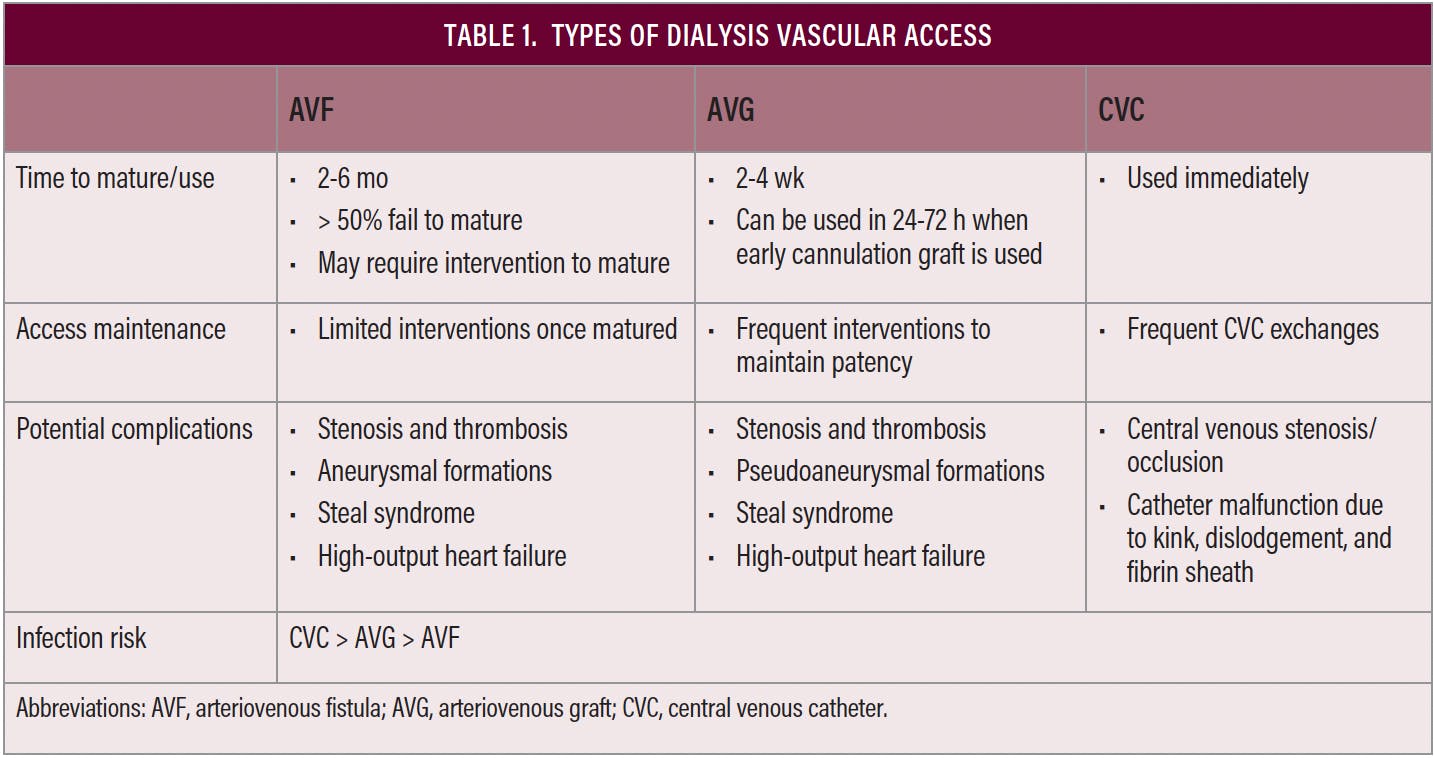
The prevalence and incidence of end-stage kidney disease (ESKD) continue to rise around the world and in the United States. Hemodialysis via vascular access remains the dominant treatment modality for ESKD patients, and the longevity of dialysis is directly related to having a functional dialysis vascular access.1,2 However, dialysis access dysfunction is associated with increased morbidity and mortality in this population. The ideal vascular access provides adequate blood flow, is easy to cannulate, has long-term patency and minimal complications, and fulfills the patient’s needs.1 There are three types of dialysis vascular access: arteriovenous fistula (AVF), arteriovenous graft (AVG), and central venous catheter (CVC) (Table 1). Peritoneal dialysis (PD), a nonhemodialysis modality, also has several merits (eg, preserving residual kidney function and vascular access) and is associated with better quality of life.3
The 2019 Kidney Disease Outcomes Quality Initiative (KDOQI) vascular access guidelines introduced a paradigm shift in dialysis access care from a paternalistic approach decided by the vascular surgeon to a more comprehensive, patient-first approach that revolves around life expectancy, comorbidities, and preferences and needs of the patient.1,4 Known as P-L-A-N (Patient Life-Plan, Access Needs), this patient-centered approach to ESKD is centered around (1) kidney replacement therapy choices, including conservative measures, and (2) creating and maintaining the dialysis access.1,5
The KDOQI ESKD Life-Plan is a strategy for living with ESKD that involves both the patient/their family and the care team, which includes primary care physicians (PCPs), a nephrologist, vascular interventionalists and surgeons, an access coordinator, and dialysis unit staff, as well as the hospital policies related to ESKD patients (Figure 1). In essence, the ESKD Life-Plan represents a continuum of care model that starts in the predialysis period and incorporates ESKD dialysis modality choices (eg, hemodialysis, PD, kidney transplant) based on the patient’s current medical condition, life goals and preferences, social support, functional status, and other factors.
The shared decision-making paradigm uses a multidisciplinary approach that involves several players who work together to provide the right dialysis access, at the right time, for the right reasons, and for the right patient. Building a functional, comprehensive dialysis team is dependent on the coordination of the key participants of the dialysis care model, as detailed in this article.1,5
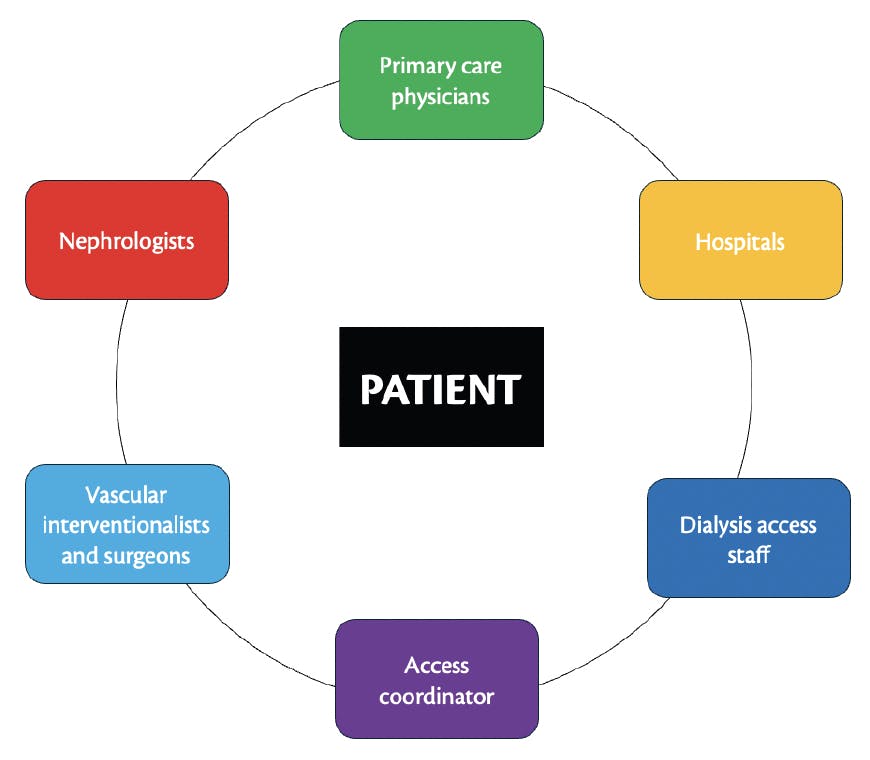
Figure 1. Dialysis access team key players.
KEY PARTICIPANTS OF THE DIALYSIS TEAM
PCP
PCPs are the gatekeepers of care for patients with chronic kidney disease (CKD). Once the estimated glomerular filtration rate (eGFR) decreases to < 45 mL/min/1.73 m2, the patient should be referred to a nephrologist to start comprehensive care for CKD, which includes dialysis access and dialysis treatment options.5 Importantly, due to the complexity of CKD and its high morbidity, nephrologists are required to be involved in managing other CKD comorbidities (hypertension, hyperlipidemia, diabetes) in collaboration with PCPs.6 One crucial area where PCPs can contribute to vascular access care is in avoiding antecubital venipunctures to preserve veins for future potential vascular access.
Nephrologist
Upon receiving the referral from PCPs, nephrologists begin the discussion about living with CKD, the natural history of disease progression, dialysis modalities, and access options. In other words, the ESKD Life-Plan is initiated to facilitate the creation of the right access in the right time for the right patient and for the right reasons. This plan must be documented and updated annually.
When eGFR approaches 15 to 20 mL/min/1.73 m2, the treating nephrologist should refer the patient to a vascular interventionalist or surgeon, especially in those with concurrent rapid decline of eGFR to plan the proper future access. Patients with failed PD or kidney transplant also require a prompt referral for dialysis access evaluation and vein mapping to plan the proper future access.
One of the main tasks of the nephrologist is to identify the patient’s preferences regarding dialysis access and kidney replacement therapy options within the parameters of the patient’s comorbidities, previous dialysis accesses, local expertise, and available resources.
Both nephrologists and PCPs should be aware of the detrimental effects of vascular interventions on creating a future dialysis access; these include peripheral insertion of central line, CVCs, and cardiac devices (pacers and defibrillators).7-9
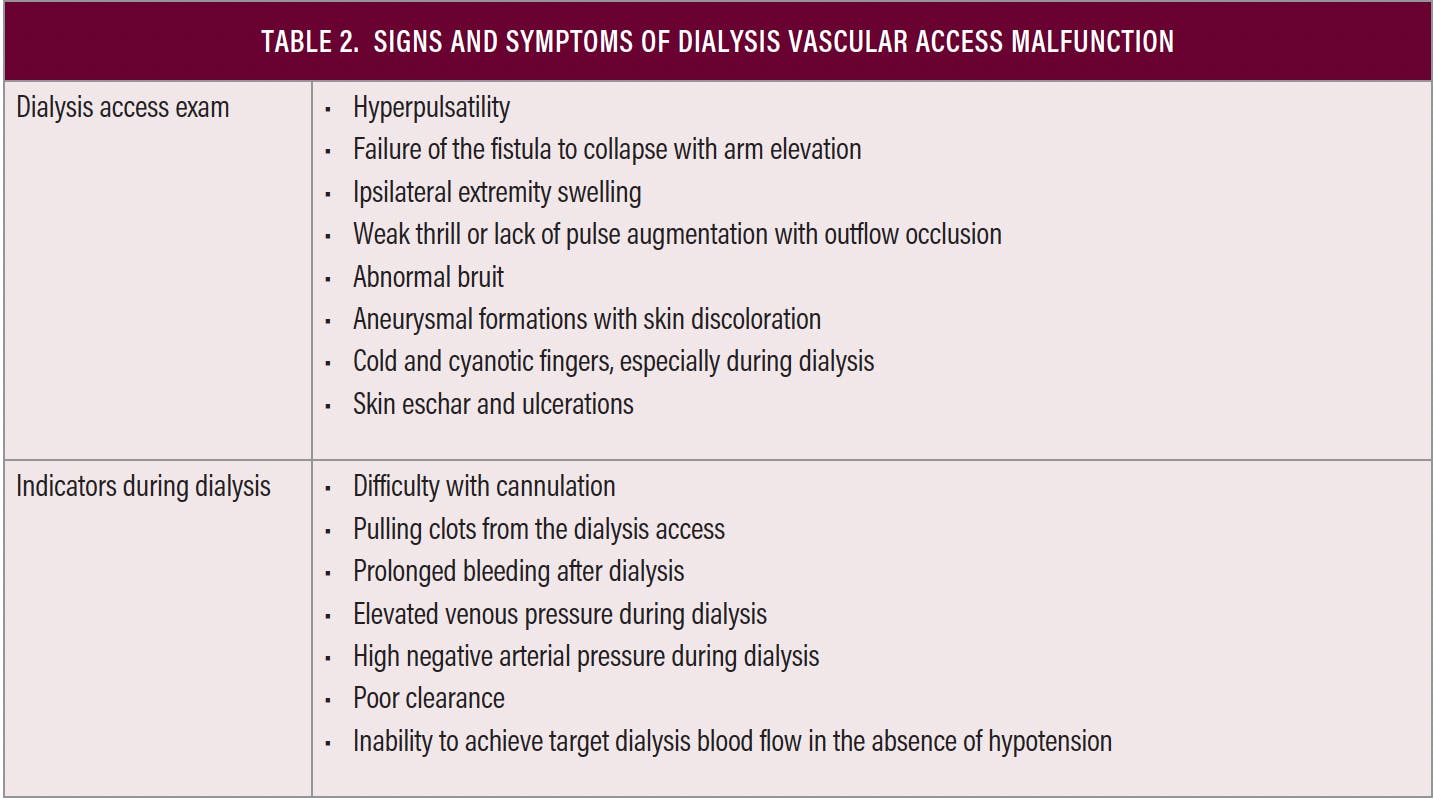
General nephrologists need to be familiar with the physical exam for dialysis access and aware of the indications for referral to an interventionalist (Table 2).
Of particular importance in the dialysis population is the management of blood pressure (BP). Although higher predialysis BP is associated with decreased access thrombosis, intradialytic hypotension increases the risk of access thrombosis.10 Moreover, patients with reduced left ventricular ejection fraction have a higher rate of dialysis access failure,11 and PD modality might be a viable option for those patients.
Vascular Interventionalist and Surgeon
The main role of the vascular interventionalists and surgeons is to address the access needs component of the P-L-A-N strategy, which are summarized as ViP ACCeS: (1) vessel important preservation, (2) access creation, (3) contingency, and (4) ESKD access succession plans. The overarching goal is to create a functional access that is easy to use, has a good long-term patency rate and minimal complications, is cost-effective, and is acceptable to the patient. It is important to bear in mind that the creation of vascular access in the ESKD population carries a risk similar to major surgery due to the multiple comorbidities in these patients.
In general, if the patient has a good life expectancy, cardiovascular status, and vessel size, PD and creation of an AVF or distal AVG are the preferred options. On the other hand, AVG, CVC, or PD are reasonable alternatives if the patient has small vessel size, poor cardiovascular status, and unfavorable life expectancy.
Access planning. A detailed history should be obtained about previous vascular procedures such as CVC and peripherally inserted central catheter (PICC) lines, previous dialysis accesses, and venipunctures. Further, vein mapping is indicated for elderly females and those with history of cardiac devices to plan the best access. Cardiac assessment, including presence of coronary artery disease, left ventricular ejection fraction, and BP, is vital for access planning.
Access creation. The location and type of access are generally individualized based on life expectancy and the urgency of starting dialysis. Good guidelines and algorithms about dialysis access selection can be found at www.myvascularaccess.com. Generally, PD catheter placement and distal vascular access should be considered initially for young patients. Endovascular AVF is a secondary option.
The decision to create AVG or AVF is largely founded on patient preference, comorbidities, access patency, complication rate, and urgency. Early cannulation AVGs are an attractive option for urgent-start dialysis; they can be cannulated within 2 to 3 days of creation and have a similar patency rate to a standard AVG at 12 months (69.7% vs 67.8%, respectively; P = .65) (Table 1).12
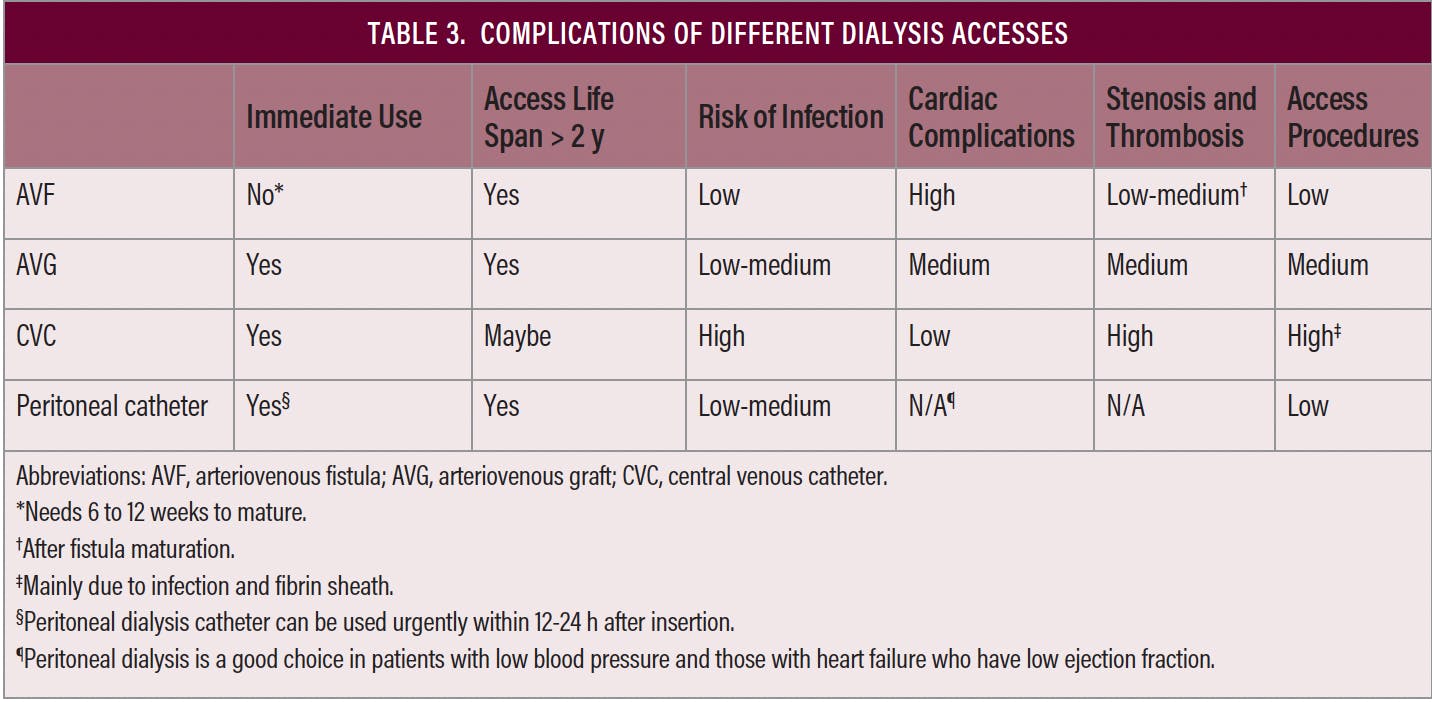
Access maintenance. After creation, the dialysis access is monitored clinically for any symptoms and signs of dysfunction (Table 2 and Table 3). There is insufficient evidence to support access surveillance using special devices and equipment.1 During the lifespan of functional dialysis access, several complications are encountered that are classified into flow related and nonflow related. The flow-related complications include stenotic lesions within the dialysis conduit and thrombosis. Steal syndrome, infections, aneurysmal and pseudoaneurysmal formations, and high-output heart failure are nonflow complications.5
For stenotic lesions that are clinically significant, standard and drug-coated balloons can be utilized. Access thrombectomy is performed endovascularly or surgically.
In specific clinical scenarios, stent deployment is indicated. The main indications of self-expanding stent grafts are recurrent graft-vein anastomosis, recurrent AVG thrombosis due to recurrent graft-vein anastomosis lesions, in-stent stenosis, dialysis venous segment rupture, and, rarely, access aneurysms and pseudoaneurysm.
It is worth noting that preemptive angioplasty for treating clinically asymptomatic AVF or AVG stenotic lesions does not improve access outcomes and therefore is not recommended.13
Dialysis Access Coordinator
The access coordinator plays a central role in streamlining the care of dialysis access among the different players involved using an access database. After referral from the primary nephrologist, the access coordinator arranges for vein mapping (if indicated) and referral to either a surgeon or vascular interventionalist to place the appropriate access. If feasible, both PD catheter and AV access will be placed at the same time on an outpatient basis according to the local expertise, resources, and patient preferences. Subsequently, the home dialysis nurse and nephrologist are notified, and the database is updated. AV access follow-up is determined by access type and natural history of maturity, as well as findings of the physical exam and imaging studies. AVF immaturity or abnormal clinical findings triggers referral to an interventionalist. Maintenance of dialysis access and management of its complications are organized and scheduled by the access coordinator, who will make the appointments and update the access database.
Dialysis Unit Staff
Dialysis staff (technicians and nurses) are at the forefront of dialysis access care and are considered the interface between the patient and patient’s family and the other members of the access care team. The technician and dialysis nurse assess the suitability of the dialysis access for cannulation, monitor access pressures, and inspect for any complications (stenosis, thrombosis, aneurysms, infection, steal syndrome). Ideally, the dialysis staff should be familiar with dialysis access exam and subsequent timely referral, when clinically warranted. Moreover, dialysis unit staff are considered the primary educators of the patients about the care of their dialysis access care. However, this function is often compromised due to the high turnover of dialysis technicians. As such, creating educational posters and conducting educational seminars for dialysis unit staff are crucial in bridging this gap.
On a different note, staff members are in a good position to recognize the social dynamics of the patient and the patient’s concerns and preferences regarding dialysis access. This collective feedback from the dialysis unit staff is usually communicated to the dialysis unit director, primary nephrologist, and then the rest of the managing team via the access coordinator.
Patient and Family
The “patient-first” approach was a major shift in the new dialysis access guidelines and revolves around the patient’s preferences, social dynamics, and medical comorbidities. The access plan is customized and centered around each patient’s context. As such, a conservative approach is appropriate for a certain group of ESKD patients.
Family involvement and social circumstances are central to dialysis access outcomes. For example, PD is inappropriate for elderly patients who lack family support. However, PD might be the modality of choice for nursing home residents who are on dialysis and have physical disabilities.
Hospital Administration/Policies
PICC and central lines are commonly placed in the hospital setting for a variety of reasons. Despite their proven benefits, these lines are associated among CKD patients with deleterious complications (phlebitis, stenosis, thrombosis) for future dialysis access creation.14 Both the National Kidney Foundation and American Board of Internal Medicine recommend that a nephrology consult occurs in patients with CKD stages 3 to 5 prior to insertion of these lines; it has also been recommended that forearm and upper arm veins suitable for placement of vascular access are preserved.15 As such, hospital policies that involve nephrologists early to avoid the placement of these lines and preserve the veins for future access creation are needed. One potential alternative to a PICC is a small-bore, 4- or 6-F tunneled internal jugular catheter.
In summary, coordinated educational policies that involve all stakeholders—including interventionalists, nephrologists, patients, and other caregivers—to protect the venous real estate before and after dialysis initiation are needed. Patients with no prior nephrology care who present to the emergency department with acute need for dialysis should be evaluated for urgent-start PD and vein mapping to assess the suitability for early cannulation AVG.
CONCLUSION
Vascular access care is multidimensional in nature and requires building a strong comprehensive team that aims to provide the ideal dialysis access for every patient. At the center of this approach is patient needs and preferences within the context of a patient’s comorbidities and available local expertise and resources.
1. Lok CE, Huber TS, Lee T, et al. KDOQI clinical practice guideline for vascular access: 2019 Update. Am J Kidney Dis. 2020;75:S1-s164. doi: 10.1053/j.ajkd.2019.12.001
2. Schwab SJ. Hemodialysis vascular access: the Achilles’ heel remains. Kidney Int. 2007;72:665-666. doi: 10.1038/sj.ki.5002470
3. Karkar A, Wilkie M. Peritoneal dialysis in the modern era. Perit Dial Int. 2023;43:301-314. doi: 10.1177/08968608221114211
4. Murea M, Grey CR, Lok CE. Shared decision-making in hemodialysis vascular access practice. Kidney Int. 2021;100:799-808. doi: 10.1016/j.kint.2021.05.041
5. Lok CE, Huber TS, Orchanian-Cheff A, Rajan DK. Arteriovenous access for hemodialysis: a review. JAMA. 2024;331:1307-1317. doi: 10.1001/jama.2024.0535
6. Sperati CJ, Soman S, Agrawal V, et al. Primary care physicians’ perceptions of barriers and facilitators to management of chronic kidney disease: a mixed methods study. PLoS One. 2019;14:e0221325. doi: 10.1371/journal.pone.0221325
7. McGill RL, Ruthazer R, Meyer KB, et al. Peripherally inserted central catheters and hemodialysis outcomes. Clin J Am Soc Nephrol. 2016;11:1434-1440. doi: 10.2215/CJN.01980216
8. Otoya D, Simmonds A, Lavingia K, Amendola MF. Central line access for hemodialysis adversely affects ipsilateral arteriovenous graft outcomes. Ann Vasc Surg. 2022;86:236-241. doi: 10.1016/j.avsg.2022.04.043
9. Czajkowski M, Jacheć W, Polewczyk A, et al. Severity and extent of lead-related venous obstruction in more than 3000 patients undergoing transvenous lead extraction. Vasc Health Risk Manag. 2022;18:629-642. doi: 10.2147/VHRM.S369342
10. Sherman RA, Kapoian T. Intradialytic hypotension strikes again. J Am Soc Nephrol. 2011;22:1396-1398. doi: 10.1681/ASN.2011060541
11. Flythe JE, Chang TI, Gallagher MP, et al. Blood pressure and volume management in dialysis: conclusions from a Kidney Disease: Improving Global Outcomes (KDIGO) Controversies conference. Kidney Int. 2020;97:861-876. doi: 10.1016/j.kint.2020.01.046
12. Tawfik AM, Zidan MH, Salem A, Salem A. A randomized controlled study of early versus standard cannulation of arteriovenous grafts in hemodialysis patients. J Vasc Surg. 2022;75:1047-1053. doi: 10.1016/j.jvs.2021.08.106
13. Lok CE, Rajan DK. KDOQI 2019 vascular access guidelines: what is new. Semin Intervent Radiol. 2022;39:3-8. doi: 10.1055/s-0041-1740937
14. Oza-Gajera BP, Davis JA, Farrington C, et al. PICC line management among patients with chronic kidney disease. J Vasc Access. 2023;24:329-337. doi: 10.1177/11297298211025897
15. Kalloo S, Wish JB. Nephrologists versus peripherally inserted central catheters: are the PICCs winning? Clin J Am Soc Nephrol. 2016;11:1333-1334. doi: 10.2215/CJN.05750516
Advertisement
Advertisement