Advertisement
Advertisement
August 2024
Mentors and Protégés: Conversations on Career and Craft With Andrew J. Gunn, MD, FSIR
Shakthi Kumaran Ramasamy, MD, a postdoctoral research fellow at Stanford School of Medicine, talks with Dr. Gunn about his career trajectory, research endeavors, mentorship, and more.
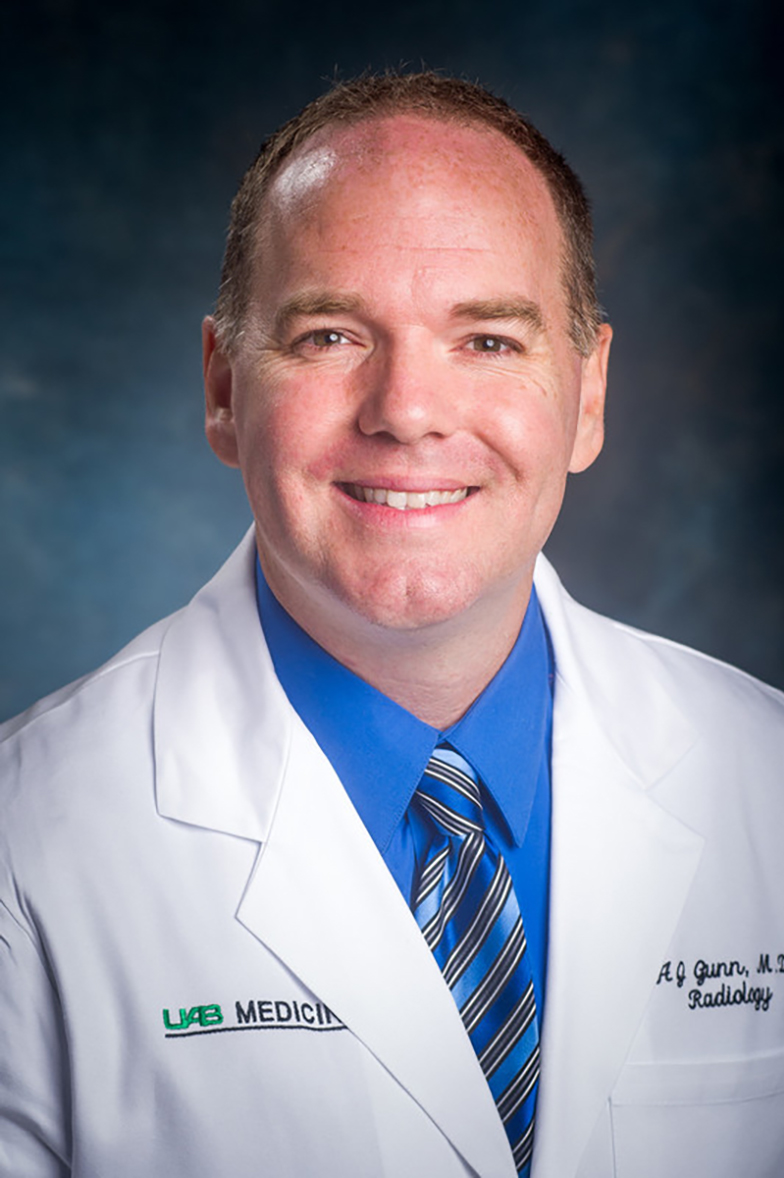
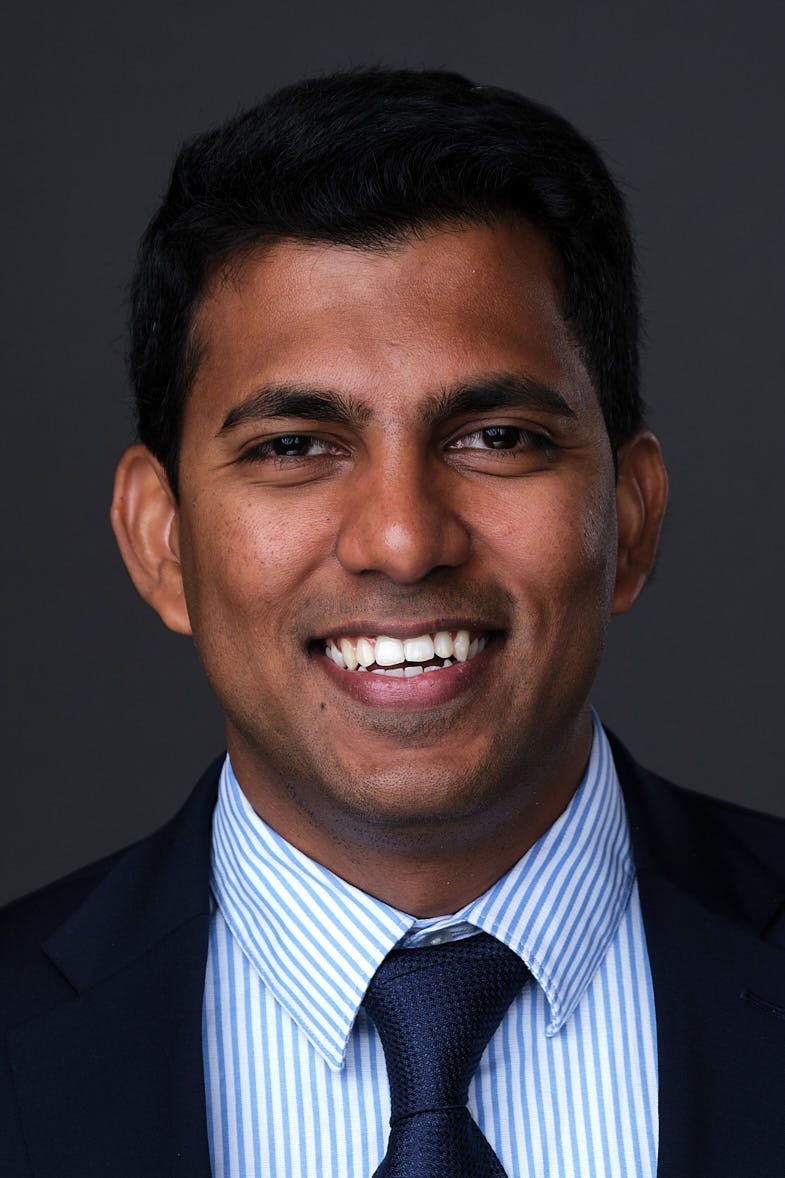
Dr. Gunn, please tell us about yourself and where you did your training.
I'm an interventional radiologist at the University of Alabama (UAB) in Birmingham, Alabama, where I've practiced for about 8 years. I attended medical school in South Dakota, where I'from originally. During that time, I completed a research year at the National Institutes of Health through the Howard Hughes Medical Institute. After medical school, I did a transitional year at Christiana Health in Delaware, followed by my radiology residency at the Massachusetts General Hospital in Boston, Massachusetts. Then, I completed my interventional radiology (IR) fellowship at Johns Hopkins in Baltimore, Maryland.
How did you decide on IR as a specialty? Did you consider any other specialties?
For me it was a few different things. I was interested in treating patients with cancer, and as I went through my clinical rotations, I really enjoyed my surgery rotation. I began to consider surgical, medical, or radiation oncology, but I also had developed an interest in radiology, and I didn’t know how to make that fit with some of the things I wanted to do with cancer patients.
It wasn’t until I did a week of IR as a medical student that I learned more about the specialty. On that rotation, the things we did as students included inserting peripherally inserted central catheter lines, taking biopsies, and paracentesis. That experience inspired me to learn more about IR, and I remember reading about stroke thrombectomy and chemoembolization. To me, it was exciting that you could pull a clot out and have that big of an effect on a stroke patient or administer chemotherapy or radiation therapy directly at a tumor. As a resident, I remember performing a liver ablation with one of my attendings where we only used ultrasound. My attending saw the lesion and placed the needle in, and then we just burned it off and it was gone. It was a combination of those experiences interacting with different patients and having highly specialized and focused interactions.
Very interesting. Based on your interest in treating cancer patients, specifically in renal cell carcinoma (RCC), can you tell us about your IR research career and how to obtain a research focus in a specific disease type?
I started as a resident when I was asked to help write a review article with Deb Gervais, MD, about percutaneous ablation for RCC. One of the early lessons I learned from that was to say yes to opportunities because it drove me to read about the procedure and learn what was standard at the time. When I arrived at UAB, RCC was an area where our practice needed to be developed. I had this background information and was presented with the opportunity to treat more RCC patients within the system. I took this baseline knowledge, matched it with what was needed inside my practice, and ran with it. After that, we began to write about our experiences with ablation—initially about embolization and ablation and then about ablating larger tumors—because we felt both of those areas had poor data. Being in that space allowed for opportunities to speak at places like the Society of Interventional Radiology (SIR) meetings.
Due to some of those early speaking experiences with the opportunity to gather early data, before I knew it, people began to consider me an expert in the area of RCC, even when I didn’t feel like one myself. That lead to more opportunities to research and talk about it. The interesting thing is that once you start learning more about a topic, you realize that you can identify areas of opportunity in research and innovation because you can see where the gaps are.
With RCC, the number one priority was establishing it as a frontline therapy for patients with small renal tumors. Number two was asking, how do we improve outcomes for patients with larger tumors? We had been in this space with embolization plus ablation for a few years and were able to develop a prospective trial. The EMBARC trial is a single-arm, prospective, multicenter trial evaluating the safety of embolization plus ablation. In fact, we have now enrolled our first few patients into that trial.
From these experiences, my advice is to just say yes when these opportunities arise and be flexible. When you get into a practice, be flexible about identifying areas that might be weak for your group or where your institution might have a need. If you identify something that you think is a good idea, continue down the road with it. Finally, understand that it will take time. In my example, we wrote the first protocol for embolization plus ablation back in 2018 or 2019, but it didn’t get funded until 2023. It’s important to understand these things take time, which can be frustrating, but if you’re passionate about it, keep pushing forward until something hits.
Excellent insights from your experiences. You mentioned that you had an early opportunity to write a review article. Can you discuss how you approach mentorship, and why do you think it’s important?
I look at myself as very fortunate to have been around many people who took an interest in me and wanted to mentor me along the way. I look back and see my path from a small medical school in South Dakota to where I am now. A lot of this has been because people took an interest in me and helped me along the way. I am acutely aware of the benefits of mentorship. Now as an attending physician, I feel I can’t adequately pay back the people who mentored and helped me. The way I pay them back for their mentorship is by doing a good job and trying to make the path for the people coming behind me a little bit easier.
It’s incredibly important, regardless of topic, to find as many people as possible who are willing to share their experience with you and mentor you. If I’ve done anything right so far in my career, it’s surrounding myself with people who want to help me get to where I want to go, and that has been immensely helpful. I think that’s the best piece of advice: Try to find people who are willing to mentor you to get to where you want to go. There are a lot of ups and downs along the way with any path you choose, and having people who have been there before to offer you their perspective is really impactful.
Can you talk about any specific mentor who made a significant impact on your career and what made the mentorship so influential?
It’s not just one. I gave a talk at SIR a couple of years ago to the Women in IR section, and I had this great presentation slide that listed all the people who have influenced me throughout my career. It’s awesome to go back and think about them. I was able to put pictures of them on the slide, and there were about 30 to 50 people up there. It included Dave Maddux, the first person who got me into a lab in medical school. In my clinical and residency years, there was Drs. Deb Gervais, Peter Mueller, and Ron Arellano. In my fellowship, Drs. Cliff Weiss and Mark Lessne were my attendings. I’m still collecting mentors and sponsors even now. I hate even mentioning names because I know I’m leaving out so many. It’s all these people along the way who have made such a huge difference in my career.
I also think about what makes a mentor impactful. It’s about following through on the things you say you’re going to do. As a mentor, you need to help all the way through with things like targeted advice and feedback. As a mentee, you need to put the legwork in. I think that’s what makes the relationship work. When people see that you’re willing to do the work, they’re then willing to invest more into you.
Yes, I completely agree with you. Having many mentors along the way is the path to success. How do you balance the demands of your career, mentorship, and personal life?
It starts with the mentor-mentee relationship. From a mentor perspective, if you have a mentee who’s willing to do the work, those are the relationships that are most successful. If you find yourself mentoring someone and you feel like you’re doing most of the work, that’s not really a good relationship, and you probably aren’t helping them. In that case, the mentee is definitely not getting as much out of the relationship as they should. Over the years, I’ve learned as a mentor to make sure that even if a task might take a bit longer, sending it back to the mentee and letting them know what needs to be worked on is the best approach. Then, plan to meet about it and discuss the changes with feedback.
That approach helps you manage your time with multiple people working on different projects. When you start in your career, you need to say yes to a lot of things and continue seeing what hits and what doesn’t. I’ve found success as I start to round into the middle part of my career where I can be more selective about what I work on.
Finally, for work-life balance, it’s important to have an honest conversation with yourself and set priorities about what you want. Identify what your two or three career goals are, and then spend your time on those rather than other things that could distract you from your goals. Managing that mentor-mentee relationship and prioritizing your career goals are good ways to manage time and not feel overwhelmed or take on too much.
Thank you, that is very insightful. Can you share some of the challenges you have faced in your career and how you have overcome them?
There are always problems, whether that is complications with patients, workplace conflict, or trying to make sure medical students, residents, and faculty are getting mentorship and progressing on the career path they want. There will be stumbling blocks along the way no matter what. The key to overcoming those challenges is continued perseverance. What has been beneficial for me is this idea of perseverance, to keep working through it and not letting the setbacks define me. Learn why it went wrong, and be persistent in accomplishing what you want to achieve.
Thank you so much for sharing that. My next question is forward-looking—what are your goals and aspirations?
I had three career goals when I started, and I’m pretty close to checking them all off, which really does make me reflect about what’s next. I’ve just recently moved into the roles of Vice Chair of Interventional Affairs and Division Director UAB. My goals and aspirations now are for others in my group and nationally to be successful and then to maybe broaden my impact, not necessarily by the things I do but by providing opportunities and mentorship.
Congratulations on accomplishing your career goals. Can you share how you see IR evolving? What skills do you think will be important for future professionals in IR?
Dr. Mike Darcy gave the Dotter lecture at SIR in 2017, and he had a great, impactful presentation slide. It had a list of procedures he did in fellowship and a list of procedures he was currently doing in his practice. Essentially, there was no overlap between those two lists. That’s the message I try to get across to medical students and trainees. The future of IR will involve continued innovation, new disease processes to apply to our existing technologies, and new technologies to apply to our existing disease processes.
It’s going to continue to grow and evolve over time. The skills people need to be successful are really an ability to adapt and grow throughout their career. It is easy to get caught in a rut of “This is what I’ve always done, this is what I’m comfortable doing.” I think people need to be in a growth mindset where they are eager and willing to take on new challenges and continue to grow. More than anything else, this skill will allow you to be successful going into the future.
Amazing, thank you for that insight. What are hobbies and activities do you enjoy away from work?
The biggest thing I have tried to do outside of work is to play golf about once a week. It was one of my New Year’s resolutions to get better at playing and play enough rounds to get a certain handicap, which I was able to get. I’ve gotten about as good as I’ll probably get—which isn’t that great, but it’s where it is. I also practice my Spanish, and I feel pretty fluent. My goal last year was to learn French, and I am at a very basic level now.
This year, I’m trying to learn how to play chess as a hobby. I also spend a great deal of time with my daughter after work and after school doing whatever she is doing, and is the one of the things that is most important to me outside of work.
Excellent, you have very interesting hobbies! Thank you for taking the time to speak with me and share your story.
Advertisement
Advertisement