Advertisement
Advertisement
February 2024
Sponsored by Medtronic
Plug-Assisted Embolization of an Accessory Left Gastric Artery to Prevent Nontarget Organ Injury During Y90 Radioembolization

Transarterial radioembolization (TARE) with yttrium-90 (Y90) microspheres is a well-established, FDA-approved treatment for primary and secondary hepatic malignancies. One of the primary determinants of the safety of this procedure is prevention of nontarget deposition of Y90 microspheres—especially to the gastrointestinal tract, which can result in radiation ulcers. These risks are minimized by performing detailed angiography of the hepatic vasculature as part of the “mapping procedure” and proactively occluding vessels at risk of nontarget embolization. The risk of nontarget embolization varies depending on the vascular anatomy, origin of enteric-supplying arteries in relation to the catheter position during Y90 microsphere administration, and vascular flow dynamics. Commonly occluded arteries include the gastroduodenal artery, right gastric artery, accessory hepatic artery, gastric/esophageal branches of the accessory left hepatic artery, and supra/retroduodenal arteries. To minimize any nontarget Y90 deposition, the arteries are occluded at their origin, proximal to any branch vessels. In addition, arteries are occluded to redirect the flow of intrahepatic arteries and minimize the number of arteries chosen for Y90 administration.
Occlusion of nontarget vessels can be achieved with various methods. Embolization with coils or plugs is most common. Detachable coils and plugs both allow for precise positioning and successful occlusion of the desired arteries. Larger vessels require anchoring and packing coils for precision position and complete vessel occlusion, but smaller vessels can be embolized with regular helical coils, without anchoring coils. The critical step during vessel occlusion is preventing coil migration into hepatic arteries while achieving adequate proximal embolization of nontarget arteries. Plugs allow precise position, can be employed in large and small arteries, and, for smaller plugs, can be deployed via a microcatheter. Like coils, they can be retrieved if not adequately positioned or retracted and redeployed for accuracy. Unlike coils, which often require multiple coils, a single plug can, in my experience, achieve adequate and immediate vessel occlusion, thus decreasing procedure duration, radiation exposure to personnel and patients, and cost in specific cases.
CASE PRESENTATION
A man in his 50s was found to have multifocal hepatocellular carcinoma (HCC) on surveillance imaging. Prior history was significant for hepatitis C cirrhosis and microwave ablation of a single, 2-cm HCC 1 year before. The patient was asymptomatic. Laboratory tests revealed a Child-Pugh score of A6 and an alpha-fetoprotein (AFP) of 4,400 ng/mL. His performance status was excellent. CT revealed bilobar and multifocal 1- to 2-cm hypervascular lesions on arterial phase imaging. The lesions demonstrated washout during the delayed phase.
The patient was considered for TARE with Y90 microspheres after a review by the multidisciplinary tumor board. He underwent mapping angiography and selective coil embolization of the right gastric artery. The hepatopulmonary shunt estimated with Tc-99m macroaggregated albumin scintigraphy was < 4%. Tumor dosimetry was calculated using the MIRD (Medical Internal Radiation Dose) formula, and glass microspheres were chosen. Given the tumor burden, Y90 in the right hepatic lobar was performed first.
After 4 weeks, the patient returned for left lobe treatment. Left hepatic angiography (Figure 1) demonstrated patent left hepatic artery branches, small tumor blushes, and a suspicious curly branch (arrow, Figure 1) coursing beyond the hepatic margin. Cone-beam CT was performed to assess the vascular anatomy (Figure 2). This revealed an accessory left gastric artery (vertical arrow, Figure 2) supplying the gastric mucosa (block arrow, Figure 2). Multiple hepatic lesions were also noted (horizontal arrow, Figure 2). The accessory left gastric artery was selectively catheterized, and angiography was performed (Figure 3). The artery supplied the gastric cardia and fundus (horizontal arrow, Figure 3). A draining left gastric vein was also noted (vertical arrow, Figure 3). To prevent nontarget deposition of Y90 microspheres, the accessory left gastric artery was occluded proximal to the origin of the gastric/esophageal branches. The vessel measured 2 mm, and an MVP-3Q MVP™ micro vascular plug system (Medtronic) was chosen as the embolic material due to its microcatheter compatibility and ability for rapid vascular occlusion. The MVP device (arrow, Figure 4) was deployed successfully via a 2.8-F (0.027-inch) microcatheter. Left hepatic angiography postembolization showed no opacification of the accessory left gastric artery and no flow to the gastric cardia and fundus (Figure 5). The patient underwent successful Y90 TARE to the left lobe with glass microspheres.
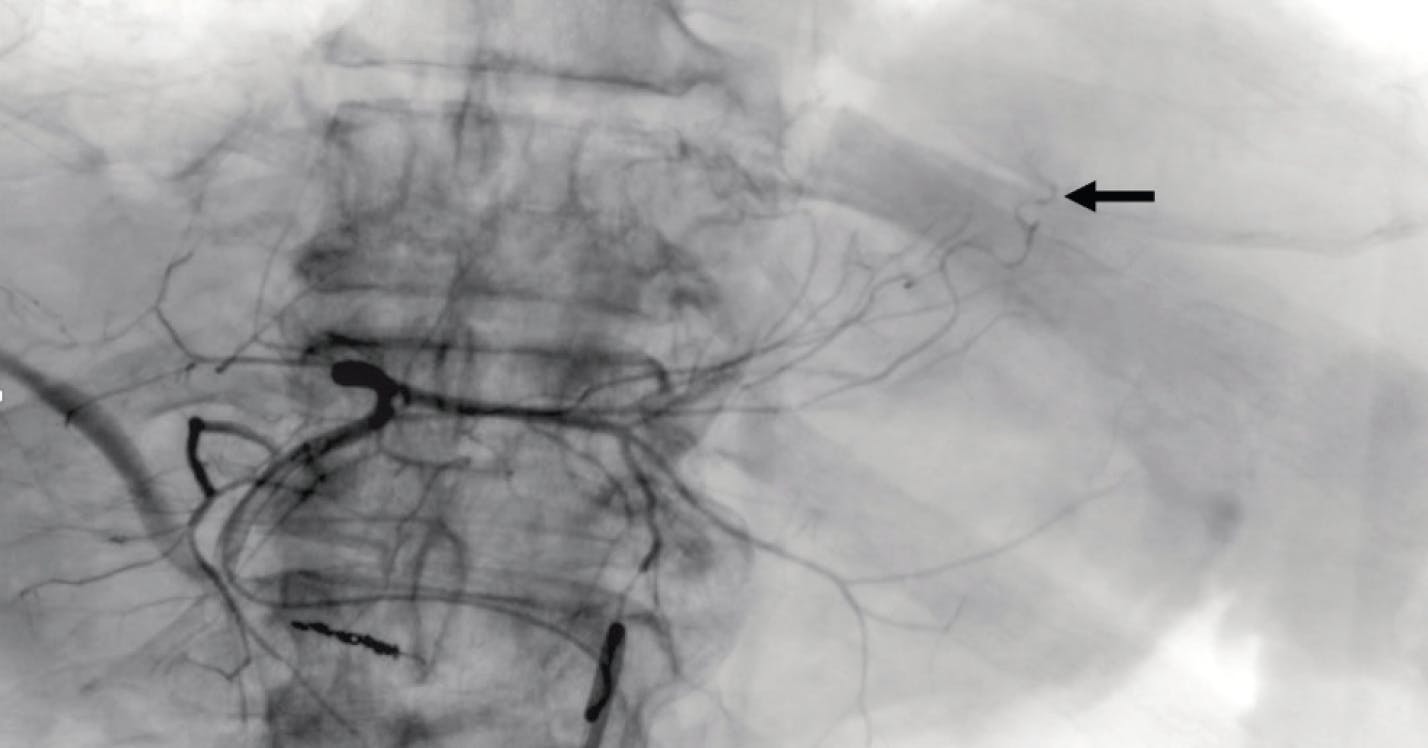
Figure 1. Left hepatic angiography shows a curvy vessel (arrow) beyond the hepatic margin. Associated gastric mucosal enhancement is faintly seen.
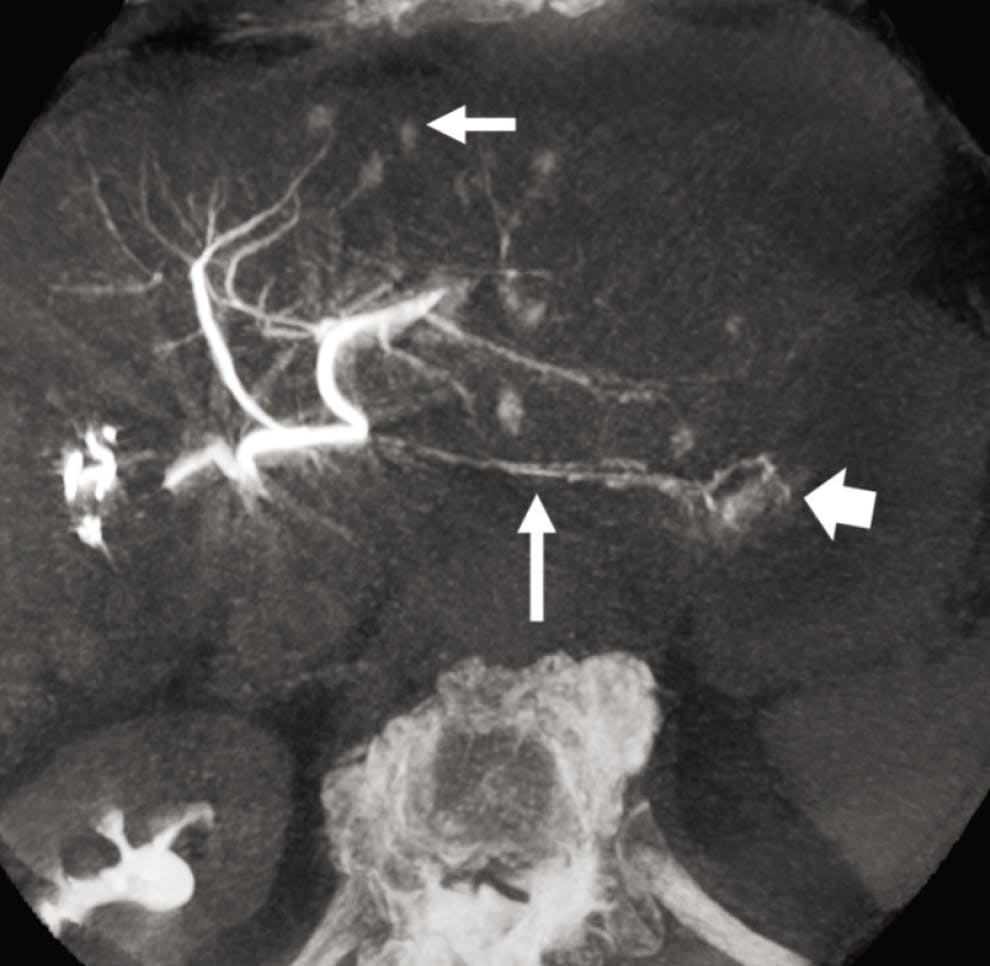
Figure 2. Cone-beam CT of the left hepatic arterial injection shows the accessory left gastric artery (vertical arrow) with associated gastric mucosal enhancement (block arrow). Also noted are multiple hypervascular hepatic tumors (horizontal arrow).
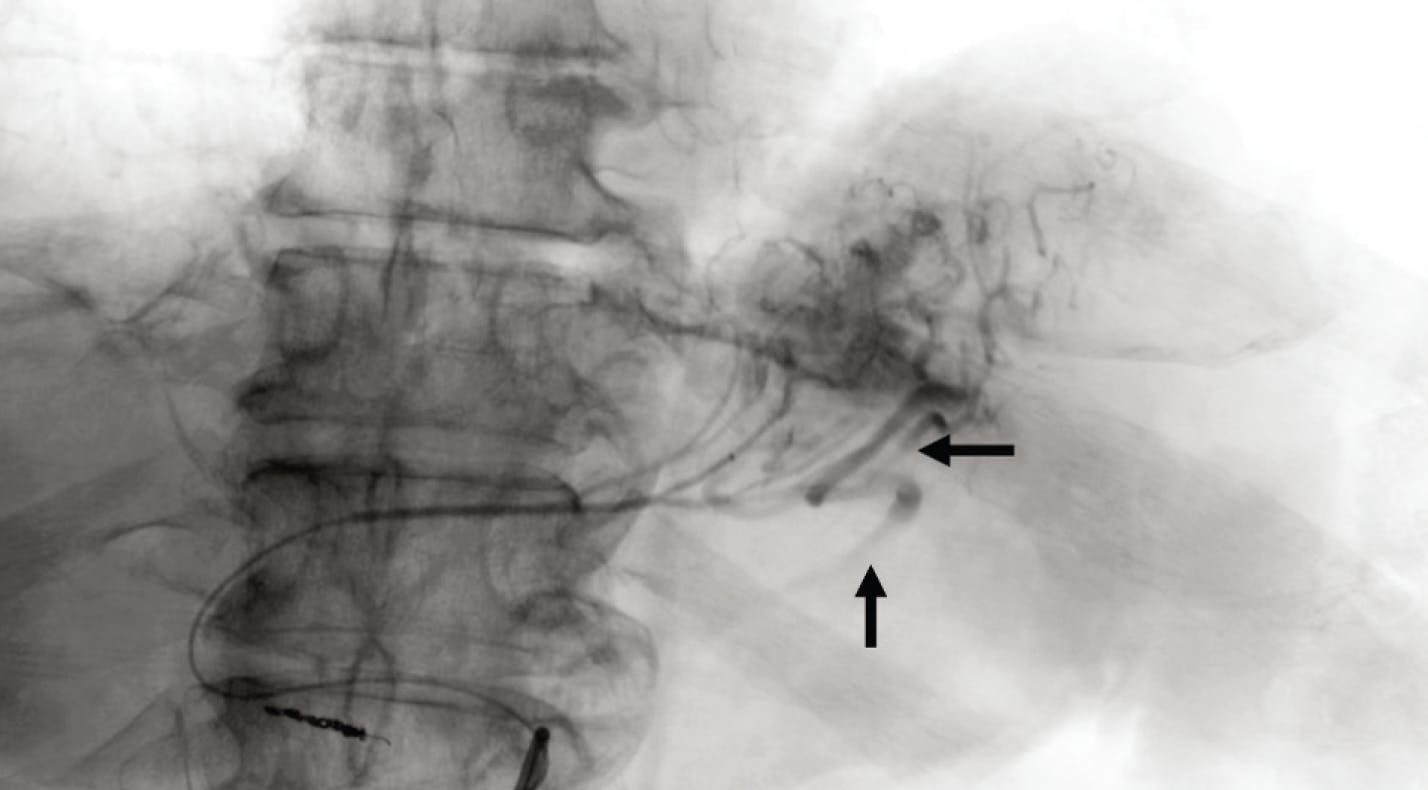
Figure 3. Selective accessory left gastric angiography shows multiple branches (horizontal arrow) supplying the stomach and the draining left gastric vein (vertical arrow).
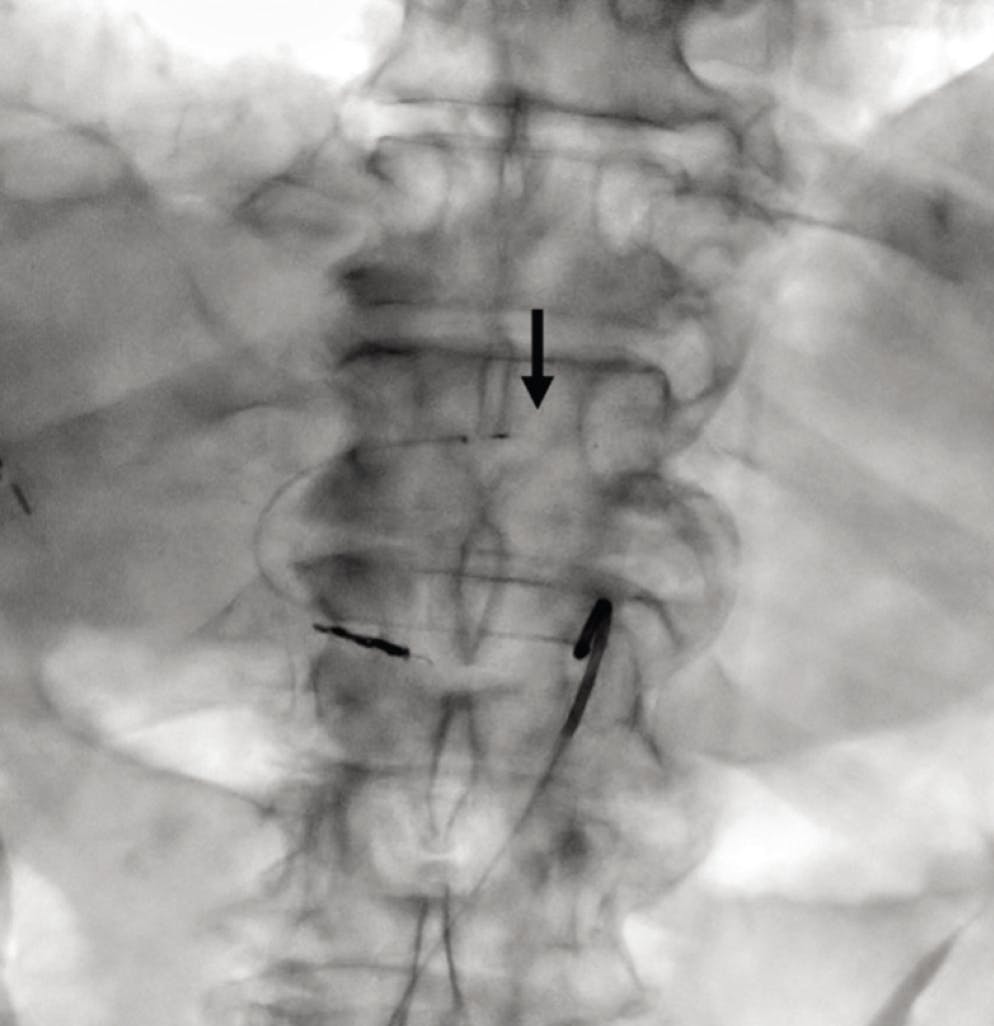
Figure 4. Successful deployment of an MVP™ micro vascular plug system (arrow) in the accessory left gastric artery.
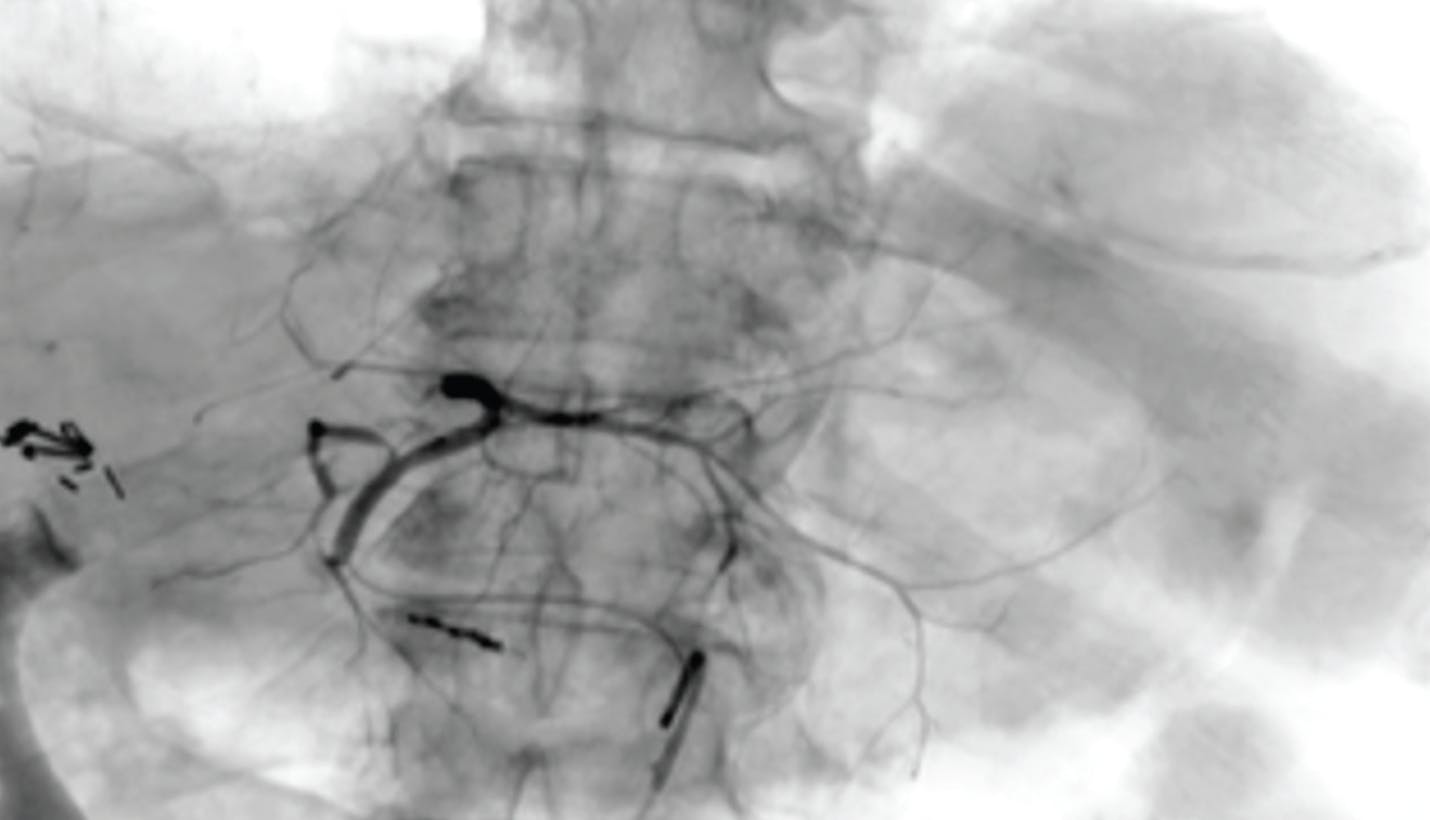
Figure 5. Postembolization left hepatic angiography shows opacification of normal hepatic branches. The accessory left gastric artery is no longer visualized.
The postoperative period was uneventful, with no reported stomach upset or ulcerations. Follow-up imaging at 8 weeks revealed a complete response to TARE, and his AFP decreased to 120 ng/mL. The patient continues to be monitored via our follow-up.
Discussion
The accessory left gastric artery arises from the left hepatic artery and supplies the stomach.1 The incidence varies widely. CT may demonstrate a small vessel in the fissure for ligamentum venosum.2 It may arise from the proximal or distal segments of the left hepatic artery, and it supplies the gastric cardia, gastroesophageal junction, fundus, and, rarely, the body of the stomach.2 Angiography reveals a characteristic curvy appearance with associated gastric mucosal enhancement followed by opacification of the left gastric vein (or the coronary vein) in the late phase.1,2 To prevent gastric injury, embolization of this vessel should be considered before administering Y90 microspheres. Embolization can be achieved with coils, plugs, or liquid embolic materials.
In this case, the MVP micro vascular plug system allowed precise positioning, rapid and complete vascular occlusion, decreased procedure time and radiation exposure, and microcatheter compatibility.
CONCLUSION
Prevention of nontarget Y90 deposition is key to preventing complications and improving the safety of TARE in managing primary and secondary hepatic tumors. Embolization of nontarget arteries can be achieved with vascular plugs. These plugs allow accurate placement via microcatheters and achieve immediate vascular occlusion.
Disclosures
Dr. Kalva: Consultant to BD, Boston Scientific, Canon, Instylla, Medtronic, Okami Medical, Penumbra, Sirtex, and Varian.
1. Nakamura H, Uchida H, Kuroda C, et al. Accessory left gastric artery arising from left hepatic artery: angiographic study. AJR Am J Roentgenol. 1980;134:529-32. doi: 10.2214/ajr.134.3.529
2. Ishigami K, Yoshimitsu K, Irie H, et al. Accessory left gastric artery from left hepatic artery shown on MDCT and conventional angiography: correlation with CT hepatic arteriography. AJR Am J Roentgenol. 2006;187:1002-1009. doi: 10.2214/AJR.05.1114
MVP™ micro vascular plug system
Reference Statement
Important Information: Indications, contraindications, warnings and instructions for use can be found in the product labeling supplied with each device.
Indications for Use: The MVP™ micro vascular plug system is indicated to obstruct or reduce the rate of blood flow in the peripheral vasculature.
Results may vary. Not all patients achieve the same results.
Potential Adverse Effects of the Device on Health: Potential adverse events that may occur during or after a procedure placing this device include, but are not limited to, the following items: air embolism, allergic reaction or toxic effects, bleeding, death, device migration, fever, foreign material embolic event, infection, occlusion of unintended vessel, peripheral embolism, recanalization, residual flow, stroke or transient ischemic attack (TIA), surgical intervention, vascular access site complication, and vessel trauma or perforation.
CAUTION: Federal (USA) law restricts these devices to sale, distribution and use by or on the order of a physician. Indications, contraindications, warnings and instructions for use can be found in the product labeling supplied with each device.
501422 ©2024 Medtronic. Medtronic, Medtronic logo are trademarks of Medtronic.
All other brands are trademarks of Medtronic. For global distribution. 02/2024
Advertisement
Advertisement