Advertisement
Advertisement
July 2024 Supplement
Sponsored by The PERT Consortium™
Impactful Papers in Pulmonary Embolism
Summaries of recent analyses of The PERT Consortium™ Registry, including investigation of sex-based differences in PE management, outcomes of high-risk PE, and cost modeling of catheter-directed treatment in the United States and Europe.
With Jay Giri, MD, MPH; Elizabeth Bruno, MD; Frances Greathouse, MD; Amir Darki, MD, MSc; Taisei Kobayashi, MD; and Katharina Mohr, MA

Since its inception, leadership of The National Pulmonary Embolism Response Team (PERT) Consortium™ recognized that a key pillar in advancing care and outcomes in pulmonary embolism (PE) lay in the development of a formal structure for clinical innovation and research. The Consortium™ has sought to act on this principle through partnerships with clinical trialists aiming to perform prospective studies of novel PE therapeutics as well as through retrospective research based on data acquired through The PERT Consortium™ Registry. The Registry is a quality assessment platform that aggregates data from PERT activations at > 30 programs across the United States. Details regarding patient characteristics, presentation, and outcomes are entered by participating sites, which allows for quantitative assessment of hospital performance in the care of PE as well as benchmarking against other participating centers. This platform naturally allows for observational research characterizing modern care and outcomes in hospitalized patients with acute PE. Hence, a formalized research proposal process was developed and funded by The Consortium™, allowing for competitive analytic grants to be awarded to research teams aiming to further the collective knowledge about PE through independent investigation within the PERT Registry. Currently over 10,000 individual PE patient hospitalizations are included in The PERT Consortium™ Registry, making it arguably the richest resource available worldwide for observational PE research.
The Influence of Patient Sex on Pulmonary Embolism Evaluation, Treatment Modality, and Outcomes


Over the past several decades, trends in pulmonary embolism (PE) incidence, morbidity, and mortality have shown dynamic shifts attributable to improvements in diagnostic imaging and treatment approaches.1-4 The literature also describes epidemiologic differences between male and female patients, although often with variable results.5-8 A recent review of Nationwide Inpatient Sample (NIS) data from 2003 to 2018 found that, while case fatality rates decreased for all patients, more improvements were seen for male patients.5 As the field of PE care evolves with the increased use of advanced therapies, it is unclear how the complex roles of sex and gender may influence management decisions and ultimately clinical outcomes.
STUDY DESIGN
To evaluate differences in contemporary PE evaluation, management, and outcomes between male and female patients, we performed a retrospective analysis of acute PE patients using the multicenter Pulmonary Embolism Response Team (PERT) Consortium™ Registry. The National PERT Consortium™ Registry encompasses a comprehensive collection of over 400 data elements collected on patients presenting with acute PE. These data elements include patient demographics, comorbidities, medications, clinical characteristics at presentation, diagnostic imaging, laboratory data, PERT recommendations, therapies received, and clinical outcomes.
The PERT Consortium™ Registry includes 5,722 eligible patients for analysis, with 2,838 females and 2,884 males. Both groups demonstrate a similar distribution of PE risk categories (25% high, 52% intermediate, 15% low, and 8% unknown risk; Figure 1).
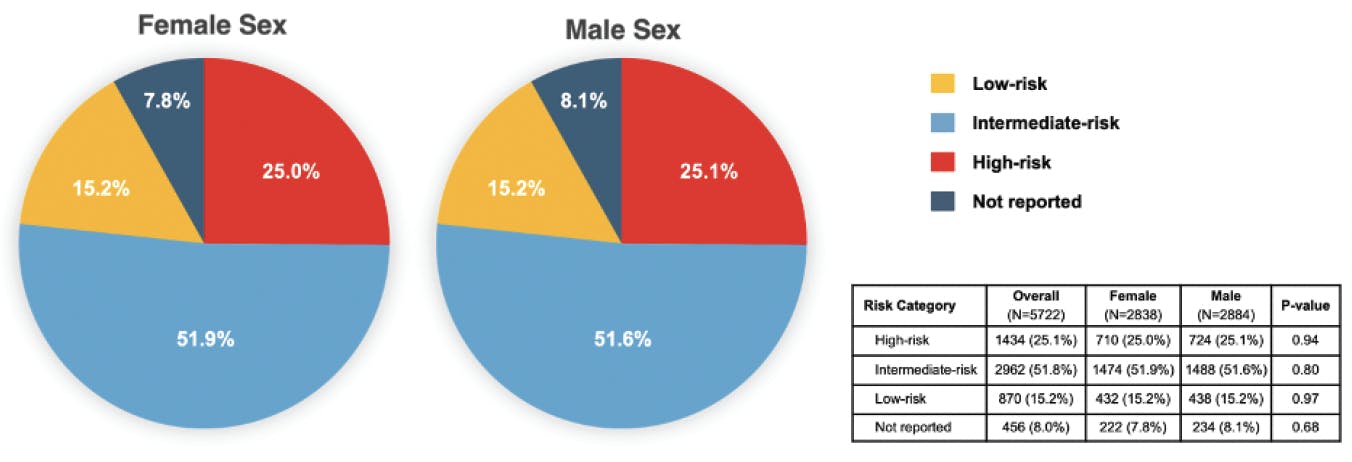
Figure 1. Distribution of PE risk categories by patient sex. Pie charts demonstrating proportions of high-risk PE (red), intermediate-risk PE (light blue), low-risk PE (yellow), and unknown risk category (dark blue) for patients of each sex. There are no differences in the distribution of PE risk categories between female and male patients.
The primary outcomes of interest in our study included the treatment type prior to PERT consultation, the treatment type recommended by PERT, and the treatment type administered after PERT consultation. Secondary outcomes include diagnostic imaging modality, imaging characteristics, major bleeding events, and in-hospital mortality rates. We plan to perform a multivariable analysis to identify predictors of major bleeding outcomes and in-hospital mortality. The results of the study are pending, but outcomes of interest are summarized in Figure 2.
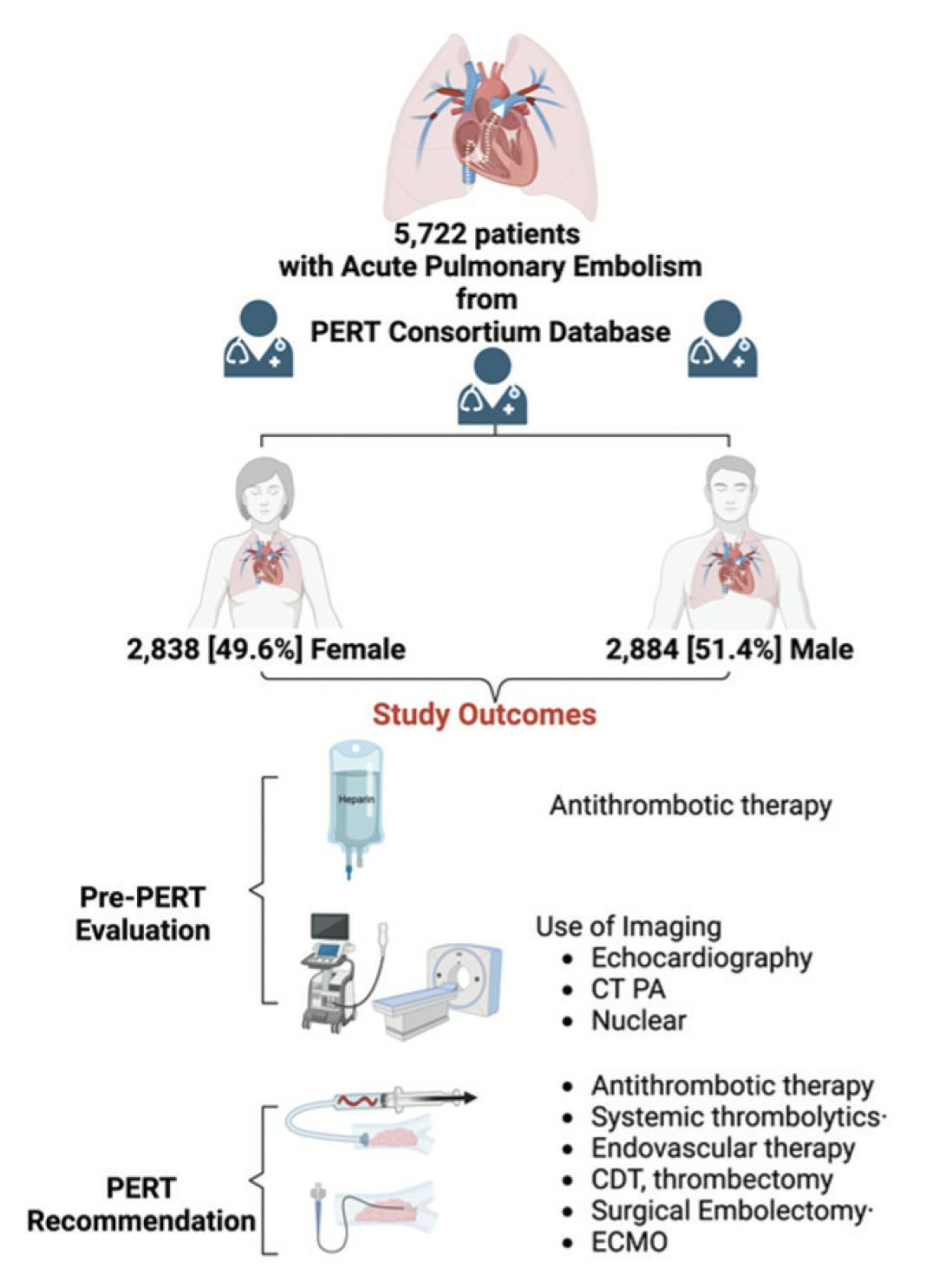
Figure 2. Study outcomes. CTPA, CT pulmonary angiography; CDT, catheter-directed thrombolysis.
RESULTS AND POTENTIAL IMPACT
In this large cohort of patients from a prospective, multicenter quality assurance database, we aim to identify disparities in the evaluation and management of acute PE based on patient sex. Previous studies exploring sex differences in PE have been limited to clinical outcomes or utilization of single-treatment modalities such as thrombolysis.5-9 Furthermore, many of these studies predate contemporary approaches to PE management and catheter-directed therapies. Our study is uniquely designed to comprehensively evaluate differences across various phases of PE care. Our analysis will incorporate treatments administered before and after PERT activation as well as recommendations provided by PERT.
The results of our study will provide clarity on whether PE treatments vary based on patient sex, detailing the specific types of treatments and phases of care where potential differences occur. Additionally, our analyses will allow us to identify whether there are delays in treatment initiation, differences in diagnostic imaging, and disparities in recommendations for advanced therapies. The granularity of our results will inform our understanding of the complex factors that may contribute to disparities in clinical outcomes.
In addition to exploring differences in PE evaluation and treatment strategies, our study also aims to investigate potential sex-based disparities in clinical outcomes, particularly major bleeding events and in-hospital mortality between male and female patients in the PERT Registry. Historically, literature describing sex-based differences in mortality among PE patients have shown variable results. A 2015 analysis of NIS data found improvements in mortality rates among male patients, which may be attributable to advancements in PE treatment.5 A subsequent NIS study reported higher mortality rates among females, although data on disease severity in these patients was not accounted for.10 Our current study will compare in-hospital mortality rates and major bleeding events in the largest PE-specific database to date. The male and female patients in this cohort have a similar distribution of disease severity. In addition to comparing overall bleeding and mortality rates, we will be performing multivariable analyses to identify predictors of these events in each group. The results of our study will provide valuable insight into sex-based disparities in PE care, guiding clinician practices and informing future research efforts aimed at mitigating these disparities.
1. Lilienfeld D. Decreasing mortality from pulmonary embolism in the United States, 1979–1996. Int J Epidemiol. 2000;29:465-469.
2. Horlander K, Mannino D, Leeper K. Pulmonary embolism mortality in the United States, 1979-1998: an analysis using multiple-cause mortality data. Arch Intern Med. 2003;163:1711-1717. doi: 10.1001/archinte.163.14.1711
3. Martin K, Molsberry R, Cuttica M, et al. Time trends in pulmonary embolism mortality rates in the United States, 1999 to 2018. J Am Heart Assoc. 2020;9:e016784. doi: 10.1161/JAHA.120.016784
4. Wiener R, Schwartz L, Woloshin S. Time trends in pulmonary embolism in the United States: evidence of overdiagnosis. Arch Intern Med. 2011;171:831-837. doi: 10.1001/archinternmed.2011.178
5. Agarwal S, Clark D, Sud K, et al. Gender disparities in outcomes and resource utilization for acute pulmonary embolism hospitalizations in the United States. Am J Cardiol. 2015;116:1270-1276. doi: 10.1016/j.amjcard.2015.07.048
6. Jarman A, Mumma B, Singh K, et al. Crucial considerations: sex differences in the epidemiology, diagnosis, treatment, and outcomes of acute pulmonary embolism in non-pregnant adult patients. J Am Coll Emerg Physicians Open. 2021;2:e12378. doi: 10.1002/emp2.12378
7. Kourlaba G, Relakis J, Kontodimas S, et al. A systematic review and meta-analysis of the epidemiology and burden of venous thromboembolism among pregnant women. Int J Gynaecol Obstet. 2016;132:4-10. doi: 10.1016/j.ijgo.2015.06.054
8. Rosovsky R, Elgendy I, Cannegieter S, et al. Sex differences in risk factors, clinical presentation, treatment and outcomes of patients presenting with acute pulmonary embolism. Blood. 2019;134(Supplement_1):2429-2429. doi: 10.1182/blood-2019-131090
9. Barrios D, Morillo R, Guerassimova I, et al. Sex differences in the characteristics and short-term prognosis of patients presenting with acute symptomatic pulmonary embolism. PLoS One. 2017;12:e0187648. doi: 10.1371/journal.pone.0187648
10. Agarwal M, Dhaliwal J, Yang E, et al. Sex differences in outcomes of percutaneous pulmonary artery thrombectomy in patients with pulmonary embolism. Chest. 2023;163:216-225. doi: 10.1016/j.chest.2022.07.020
Contemporary Management and Outcomes of High-Risk Pulmonary Embolism: Insights From The PERT Consortium™ Registry

High-risk PE is defined as patients presenting with a PE and the concurrent presence of systemic hypotension with sustained systolic blood pressures (SBPs) < 90 mm Hg, the need for vasopressor support, or cardiac arrest.1 These patients traditionally carried high mortalities estimated between 30% and 50% in prior observational trials.2-4 Despite such a high mortality, this population has been understudied, with only one therapeutic randomized trial of eight patients to date and the largest multicenter, observational analyses reporting treatment patterns and outcomes in 108 and 115 patients, respectively.2,5 As a result, current guidelines and risk stratification models are extrapolated from studies on more stable patient populations. The National PERT Consortium™ Registry is a prospective registry compiling data from a wide range of United States centers focused on providing multidisciplinary care to PE patients. This registry contains information on mortality, treatment complications including major bleeding, and the wide array of rapidly evolving therapeutic options for acute PE. The goal of this study was to investigate contemporary United States practice patterns and outcomes in this high-risk PE population.6
METHODS
Data within The PERT Consortium™ Registry were analyzed between 2015 and 2022, which included data compiled from 35 United States sites. The European Society of Cardiology criteria were used to categorize patients into severity of PE risk: intermediate-risk as defined as patients with SBP > 90 mm Hg with evidence of right ventricular strain and/or biomarker abnormalities at the initial assessment; or high-risk which include patients with hemodynamic collapse, hypotension, sustained BP < 90 mm Hg, or the need for vasopressor support.1 Hemodynamic collapse was defined as those necessitating the use of high-dose vasopressors due to concern for impending cardiac arrest or those experiencing cardiac arrest with or without cardiopulmonary resuscitative efforts. Patients within the high-risk PE cohort who also had hemodynamic collapse were also selected out into a new stratum labeled as catastrophic PE given that these patients likely represented the highest-risk cohort.
Baseline demographics were compiled for each cohort and analyzed. The use of advanced therapies for PE were also abstracted and were defined as the use of systemic thrombolysis, catheter-directed thrombolysis (ultrasound assisted and non–ultrasound assisted) catheter-based embolectomy, surgical embolectomy, and/or mechanical circulatory support including extracorporeal membrane oxygenation (ECMO). Identified clot-in-transit was defined as an intracardiac mobile clot noted to be present by transthoracic echocardiography or CT findings. When not identified, this was noted as being absent.
The primary outcomes were in-hospital mortality and in-hospital major bleeding. Major bleeding events were defined according to the International Society on Thrombosis and Haemostasis major bleeding criteria.7 Hospital lengths of stay were also abstracted. There was a total of 5,790 patients in The PERT Consortium™ Registry during the study period. In this cohort, 1,442 patients were categorized as high risk (24.9%), and 2,976 patients (51.4%) were categorized as intermediate risk. Of the 1,442 high-risk patients, 197 of these patients presented with catastrophic PE (13.7%) and 1,245 patients presented with noncatastrophic high-risk PE.
RESULTS
We found that high-risk patients were significantly more likely to undergo advanced therapies for PE (41.9%) versus those that presented with intermediate-risk PE (30.2%). ECMO, surgical embolectomy, and systemic thrombolysis were more likely to be utilized in high-risk patients. Catheter-based therapies were utilized with similar frequencies between intermediate- and high-risk PE patients.
When noncatastrophic versus catastrophic high-risk PE patients were compared, the overall rates of advanced therapies used were similar between groups (41.2% vs 45.3%, respectively) with ECMO and systemic thrombolytics more frequently utilized in catastrophic PE patients, while catheter-based therapies were used more frequently in noncatastrophic PE patients.
Unadjusted in-hospital mortality rates were 20.6% in high-risk patients and 3.7% in intermediate-risk patients. High-risk PE patients had higher in-hospital major bleeding events (10.5% vs 3.5%) and longer in-patient hospital stays (10.2 vs 6.8 days). Multivariable regression modeling demonstrated vasopressor use, ECMO utilization, identified clot-in-transit, hypoxia at time of presentation, and malignancy were associated with higher rates of in-hospital mortality. The in-hospital mortality for catastrophic PE patients was 42.1% versus 17.2% in noncatastrophic PE patients with a higher risk of in-hospital bleeding and lengths of stay.
CONCLUSION
This study represents the largest multicenter experience focusing on patients presenting with high-risk PE and shows that, despite higher utilization rates of advanced therapies for PE in this subgroup, these patients still had a 20.6% rate of in-hospital mortality. Further, those that presented with catastrophic PE or those that also had hemodynamic instability within this high-risk cohort represented the highest-risk subgroup and had a 42.1% mortality despite similar use of advanced therapies for PE in comparison to the noncatastrophic high-risk PE group. This study underlines the importance and opportunity to improve outcomes in these high-risk patient populations.
1. Konstantinides SV, Meyer G, Becattini C, et al. 2019 ESC Guidelines for the diagnosis and management of acute pulmonary embolism developed in collaboration with the European Respiratory Society (ERS). Eur Heart J. 2020;41:543-603. doi: 10.1093/eurheartj/ehz405
2. Kucher N, Rossi E, De Rosa M, Goldhaber SZ. Massive pulmonary embolism. Circulation. 2006;113:577-582. doi: 10.1161/CIRCULATIONAHA.105.592592
3. Goldhaber SZ, Visani L, De Rosa M. Acute pulmonary embolism: clinical outcomes in the International Cooperative Pulmonary Embolism Registry (ICOPER). Lancet. 1999;353:1386-1389. doi: 10.1016/s0140-6736(98)07534-5
4. Torbicki A, Galié N, Covezzoli A, et al. Right heart thrombi in pulmonary embolism: results from the International Cooperative Pulmonary Embolism Registry. J Am Coll Cardiol. 2003;41:2245-2251. doi: 10.1016/s0735-1097(03)00479-0
5. Silver MJ, Gibson CM, Giri J, et al. Outcomes in high-risk pulmonary embolism patients undergoing FlowTriever mechanical thrombectomy or other contemporary therapies: results from the FLAME study. Circ Cardiovasc Interv. 2023;16:e013406. doi: 10.1161/CIRCINTERVENTIONS.123.013406
6. Kobayashi T, Pugliese S, Sethi SS, et al. Contemporary management and outcomes of patients with high-risk pulmonary embolism. J Am Coll Cardiol. 2024;83:35-43. doi: 10.1016/j.jacc.2023.10.026
7. Schulman S, Angerås U, Bergqvist D, et al. Definition of major bleeding in clinical investigations of antihemostatic medicinal products in surgical patients. J Thromb Haemost. 2010;8:202-204. doi: 10.1111/j.1538-7836.2009.03678.x
Catheter-Directed Treatment of PE: How The PERT Consortium™ Registry in the United States Can Help Model the Costs in a European Health Care System

Catheter-directed treatment (CDT), encompassing local low-dose fibrinolysis and thromboaspiration/thrombectomy, has recently emerged as an effective and safe reperfusion option for patients with acute PE in need of advanced reperfusion treatment. The candidates for CDT are patients belonging to the high- and intermediate-high–risk PE category based on their clinical findings and hemodynamic status at presentation.1-3 Several CDT systems have received approval by the United States FDA and the European Medicines Agency.1,4,5 In the United States, use of CDT has continuously increased in the past decade,6,7 and although the results of ongoing randomized controlled trials are yet to confirm the clinical benefits of this type of treatment,4,5 decisions in current clinical practice are facilitated by the establishment of multidisciplinary PERTs, which combine local expertise and optimize resource allocation in each hospital.3,8 On the other hand, in Germany, integration of CDT procedures into the diagnosis-related groups–based hospital reimbursement system occurred only recently, and thus the use of CDT in this country has just begun to enter an early growth phase.
METHODS AND RESULTS
We analyzed the past trends of CDT use in the United States and used them as the basis for estimating the future (2025-2030) rate of CDT penetration and PE hospitalization costs in the German health care system.9 For this purpose, we built two statistical models to generate an upper and a lower estimate of monthly CDT use in patients with intermediate- and high-risk PE. The first model used data from United States hospitals that developed an early expertise in CDT and were thus expected to yield the upper estimate. These data were obtained from The United States PERT Consortium™ Quality Assurance Database registry, spanning from 2018 to 2021. Intermediate- or high-risk PE was defined based on current European guidelines2; in cases in which no explicit risk classification by the PERT was recorded, patients were classified into one of the above PE risk categories if one or more of the following criteria were fulfilled: hemodynamic collapse or need for vasopressors; simplified Pulmonary Embolism Severity Index ≥ 1; elevated troponin or natriuretic peptide levels; elevated RV/LV (right ventricular/left ventricular) diameter ratio on the CTA; and echocardiographic signs of RV pressure overload or dysfunction. Our second model was based on data from the National Inpatient Sample (NIS) from 2016 to 2020. This database represents an unselected sample of all United States hospital admissions and was thus suitable for yielding the lower estimate of CDT use. We calculated the time trend using a binomial (logistic) model with calendar month as a continuous explanatory variable. Indeed, and as shown in by comparing the two upper panels in Figure 1,9 the PERT-based model displayed both higher absolute penetration of CDT and faster growth of CDT use over time compared to the NIS model.
Subsequently, we obtained the annual incidence of hospitalizations for PE from the German Federal Statistical Office for the most recent years available (2016-2020),10 along with the Office’s publicly available forecast for the entire German population size in a scenario with moderate development of natality, life expectancy, and immigration for 2025-2030. By applying the United States PERT and NIS model to the predicted number of high- and intermediate-high–risk PE cases in Germany for this future period, we could provide a high and a low estimate for the expected CDT penetration in Germany in the following years (Figure 1; compare left with right lower panel). This allowed us to predict a cumulative increase of total hospitalization costs for PE ranging 3.8% to 12.4% until the end of 2030.
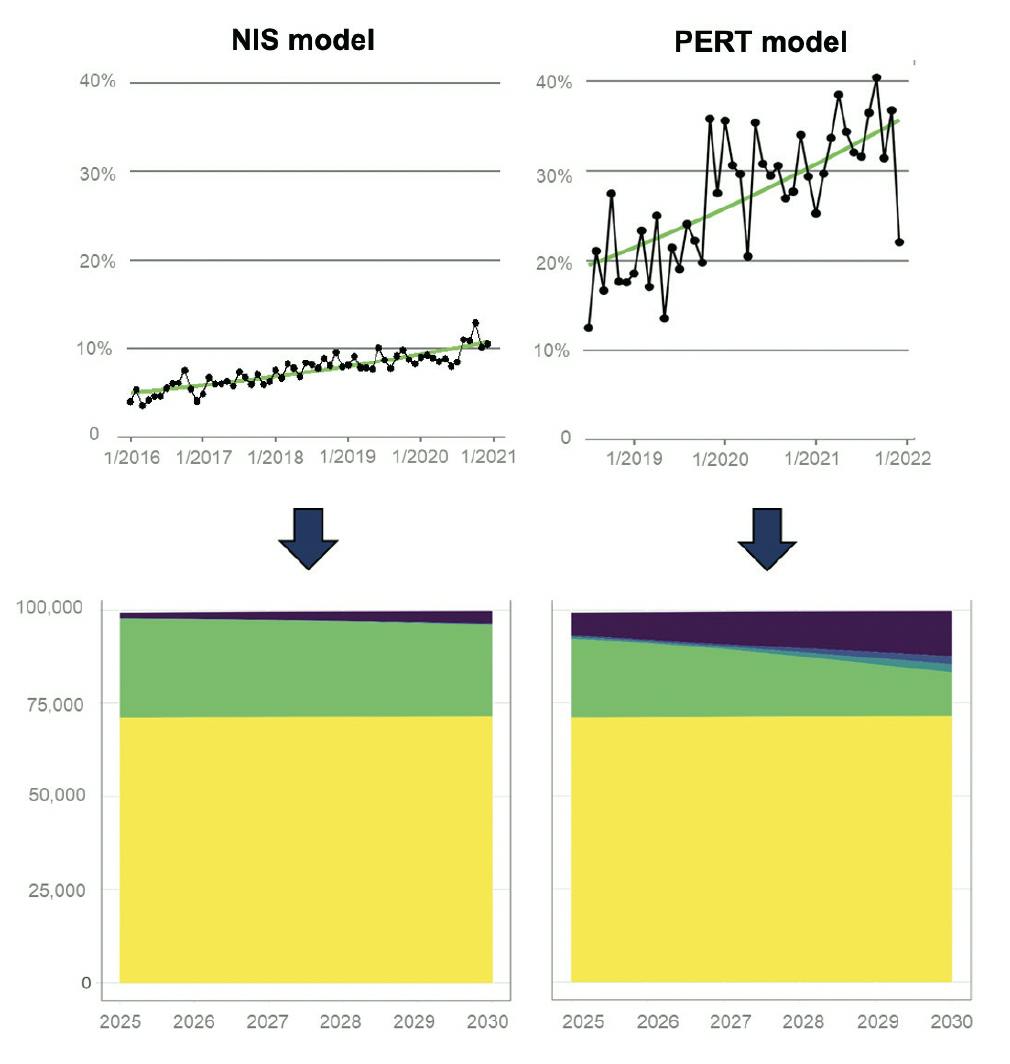
Figure 1. Trends in the use of CDT in the United States and the corresponding number of patients with PE estimated to receive CDT in Germany in 2025-2030. The left panels show the results of the conservative, NIS-based model, and the right panels the model based on The PERT Consortium™ Registry. In the upper panels, connected black dots represent observed monthly proportions; green lines show modeled proportions. In the lower panels, the blue zone indicates annual numbers of patients with intermediate-high– or high-risk PE forecast to receive CDT in Germany depending on each model, with different shades of blue exhibiting the 95% CI of the estimate. The green zone shows the remaining patients in this risk category expected to continue to be treated conservatively. Finally, the lower, yellow zone represents the numbers of patients with low- or intermediate-low–risk PE, in whom anticoagulation alone is, and will remain adequate treatment, with no need for CDT. Adapted from Mohr K, Keeling B, Kaier K, et al. Modelling costs of interventional pulmonary embolism treatment: implications of US trends for a European healthcare system. Eur Heart J Acute Cardiovasc Care. Published online February 13, 2024.
CONCLUSION
Our estimates do not take into account possible future changes in CDT reimbursement in Germany, which are extremely difficult to predict at this early stage. Moreover, increases in direct costs may be offset by cost savings related to the reported and anticipated benefits of CDT in terms of reducing early adverse outcomes (mostly major bleeding), a shorter stay in the intensive care unit, earlier discharge from the hospital, return to work and productivity, and prevention of late PE complications such as chronic thromboembolic pulmonary disease and the broader spectrum of the so-called post-PE syndrome.11-13 Ongoing prospective randomized trials with a focus on both early and late clinical outcomes4,14 will inform not only the recommendations of future guidelines on the indications of CDT but also the decisions of policymakers in further countries regarding its reimbursement and broader availability.
1. Giri J, Sista AK, Weinberg I, et al. Interventional therapies for acute pulmonary embolism: current status and principles for the development of novel evidence: a scientific statement from the American Heart Association. Circulation. 2019;140:e774-e801. doi: 10.1161/CIR.0000000000000707
2. Konstantinides SV, Meyer G, Becattini C, et al. 2019 ESC guidelines for the diagnosis and management of acute pulmonary embolism developed in collaboration with the European Respiratory Society (ERS). Eur Heart J. 2020;41:543-603. doi: 10.1093/eurheartj/ehz405
3. Kobayashi T, Pugliese S, Sethi SS, et al. Contemporary management and outcomes of patients with high-risk pulmonary embolism. J Am Coll Cardiol. 2024;83:35-43. doi: 10.1016/j.jacc.2023.10.026
4. Gotzinger F, Lauder L, Sharp ASP, et al. Interventional therapies for pulmonary embolism. Nat Rev Cardiol. 2023;20:670-684. doi: 10.1038/s41569-023-00876-0
5. Pruszczyk P, Klok FA, Kucher N, et al. Percutaneous treatment options for acute pulmonary embolism: a clinical consensus statement by the ESC Working Group on Pulmonary Circulation and Right Ventricular Function and the European Association of Percutaneous Cardiovascular Interventions. EuroIntervention. 2022;18:e623-e638. doi: 10.4244/EIJ-D-22-00246
6. Raghupathy S, Barigidad AP, Doorgen R, et al. Prevalence, trends, and outcomes of pulmonary embolism treated with mechanical and surgical thrombectomy from a nationwide inpatient sample. Clin Pract. 2022;12:204-214. doi: 10.3390/clinpract12020024
7. Abumoawad A, Shatla I, Behrooz L, et al. Temporal trends in the utilization of advanced therapies among patients with acute pulmonary embolism: insights from a national database. Eur Heart J Acute Cardiovasc Care. 2023;12:711-713. doi: 10.1093/ehjacc/zuad092
8. Rosovsky R, Chang Y, Rosenfield K, et al. Changes in treatment and outcomes after creation of a pulmonary embolism response team (PERT), a 10-year analysis. J Thromb Thrombolysis. 2019;47:31-40. doi: 10.1007/s11239-018-1737-8
9. Mohr K, Keeling B, Kaier K, et al. Modelling costs of interventional pulmonary embolism treatment: implications of US trends for a European healthcare system. Eur Heart J Acute Cardiovasc Care. Published online February 13, 2024. doi: 10.1093/ehjacc/zuae019
10. Mohr K, Hobohm L, Kaier K, et al. Drivers and recent trends of hospitalisation costs related to acute pulmonary embolism. Clin Res Cardiol. Published online April 2, 2024. doi: 10.1007/s00392-024-02437-y
11. Pasha AK, Siddiqui MU, Siddiqui MD, et al. Catheter directed compared to systemically delivered thrombolysis for pulmonary embolism: a systematic review and meta-analysis. J Thromb Thrombolysis. 2022;53:454-466. doi: 10.1007/s11239-021-02556-7
12. Sullivan AE, Holder T, Truong T, et al. Use of hospital resources in the care of patients with intermediate risk pulmonary embolism. Eur Heart J Acute Cardiovasc Care. Published online November 27, 2020. doi: 10.1177/2048872620921601
13. Klok FA, Ageno W, Ay C, et al. Optimal follow-up after acute pulmonary embolism: a position paper of the European Society of Cardiology Working Group on Pulmonary Circulation and Right Ventricular Function, in collaboration with the European Society of Cardiology Working Group on Atherosclerosis and Vascular Biology, endorsed by the European Respiratory Society. Eur Heart J. 2022;43:183-189. doi: 10.1093/eurheartj/ehab816
14. Klok FA, Piazza G, Sharp ASP, et al. Ultrasound-facilitated, catheter-directed thrombolysis vs anticoagulation alone for acute intermediate-high-risk pulmonary embolism: Rationale and design of the HI-PEITHO study. Am Heart J. 2022;251:43-53. doi: 10.1016/j.ahj.2022.05.011
Advertisement
Advertisement