Advertisement
Advertisement
May 2024 Supplement
Sponsored by Surmodics, Inc.
Case Report: Revascularization of Femoropopliteal and Tibiopedal Total Occlusions Facilitated by Use of the Sublime™ Microcatheter
Patient Presentation
A man in his mid 70s with a history of peripheral artery disease (PAD), tobacco use (former), hypertension, chronic lung disease, and dyslipidemia presented to the clinic with severe PAD with true ischemic rest pain in the right lower extremity (Rutherford class 4) and prior femoropopliteal bypass surgery.
DIAGNOSTIC FINDINGS
A diagnostic angiogram of the right lower extremity revealed a subtotal occlusion of the peroneal artery and total occlusions of the superficial femoral artery (SFA), popliteal artery, anterior tibial (AT) artery, and the dorsalis pedis (DP) artery (Figure 1).
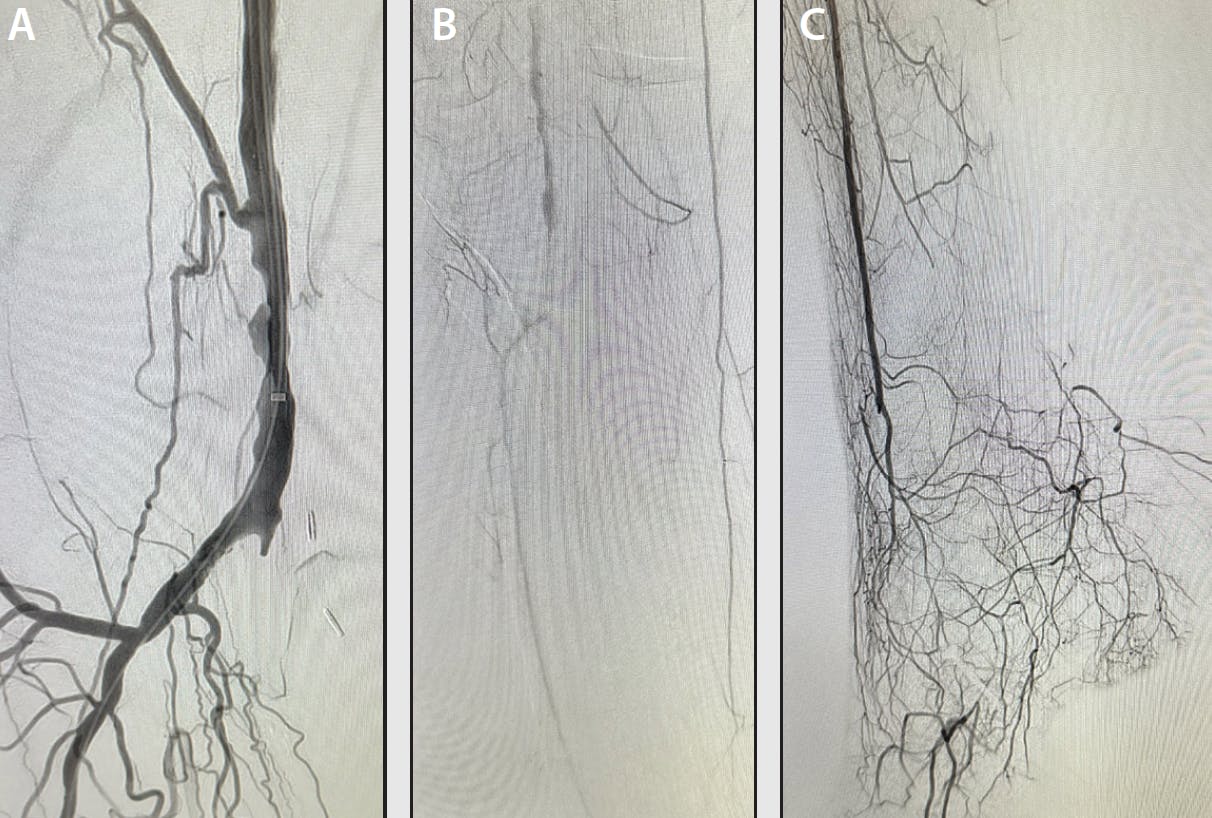
Figure 1. Diagnostic angiography revealed severe disease in the SFA (A), popliteal artery (B), and AT and DP arteries (C).
TREATMENT
Access was achieved under ultrasound guidance via the left femoral artery, and a 6 Fr, 45 cm sheath was advanced to the right iliac artery after the initial angiography. A .035 guidewire was inserted but was not able to advance through the vasculature, whereupon a .035 Sublime™ Microcatheter (Surmodics, Inc.) was advanced over the wire and—using rotation and gentle advancement with minimal force—the device crossed a 50 cm occlusion in the SFA and popliteal arteries. Intravascular ultrasound showed a true lumen crossing through the occlusion. Once the guidewire was across the occlusion, a 2.0 mm Turbo-Power™ laser atherectomy catheter (Philips) was advanced and passed twice in the SFA and popliteal artery.
A 5.0 X 220 mm balloon was then advanced and inflated in the SFA and popliteal artery, whereupon the .035, 135 cm Sublime™ Microcatheter was advanced to the DP via the AT. A 2.5 X 220 mm, .018 Sublime™ RX PTA Catheter was advanced to the distal portion of the AT, inflated, deflated, and removed. Because the guidewire would not advance through the DP, a .018, 170 cm Crosswalk® microcatheter (Asahi Intecc) was telescoped through the .035 Sublime™ Microcatheter to cross the DP (Figure 2). After the microcatheters were removed, a .014 guidewire was inserted and a .014” Sublime™ RX PTA Catheter was advanced and inflated in the DP, and pedal loop reconstruction was performed into the lateral plantar branch of the posterior tibial artery (Figure 3). Drug-coated balloons (DCBs) were then advanced and inflated in the SFA and popliteal artery.
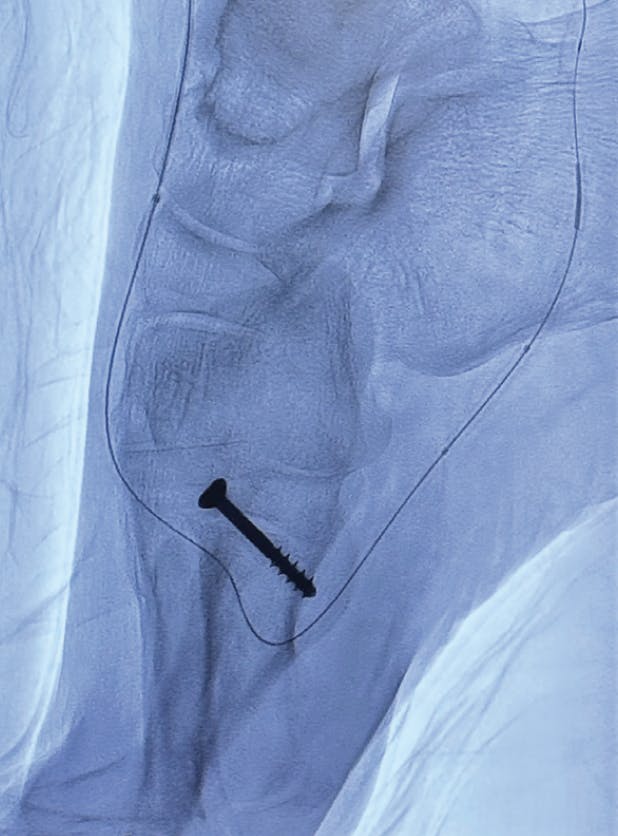
Figure 2. A .018, 170 cm Crosswalk® microcatheter was telescoped through the .035 Sublime™ Microcatheter to cross the DP artery.
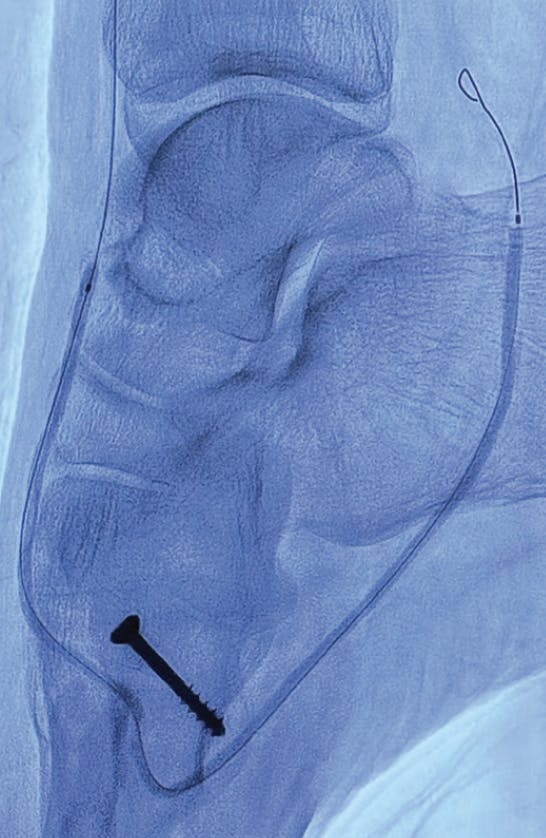
Figure 3. Balloon angioplasty of the DP artery using a .014 Sublime™ RX PTA Catheter.
POST-PROCEDURE OUTCOME
Laser, balloon angioplasty, and DCB application restored blood flow to the SFA, popliteal, peroneal, AT, and DP arteries (Figure 4). The Sublime™ Microcatheter played a pivotal role in securing access to treatment by crossing a 50 cm total SFA occlusion and assisting with crossing the occluded DP artery.
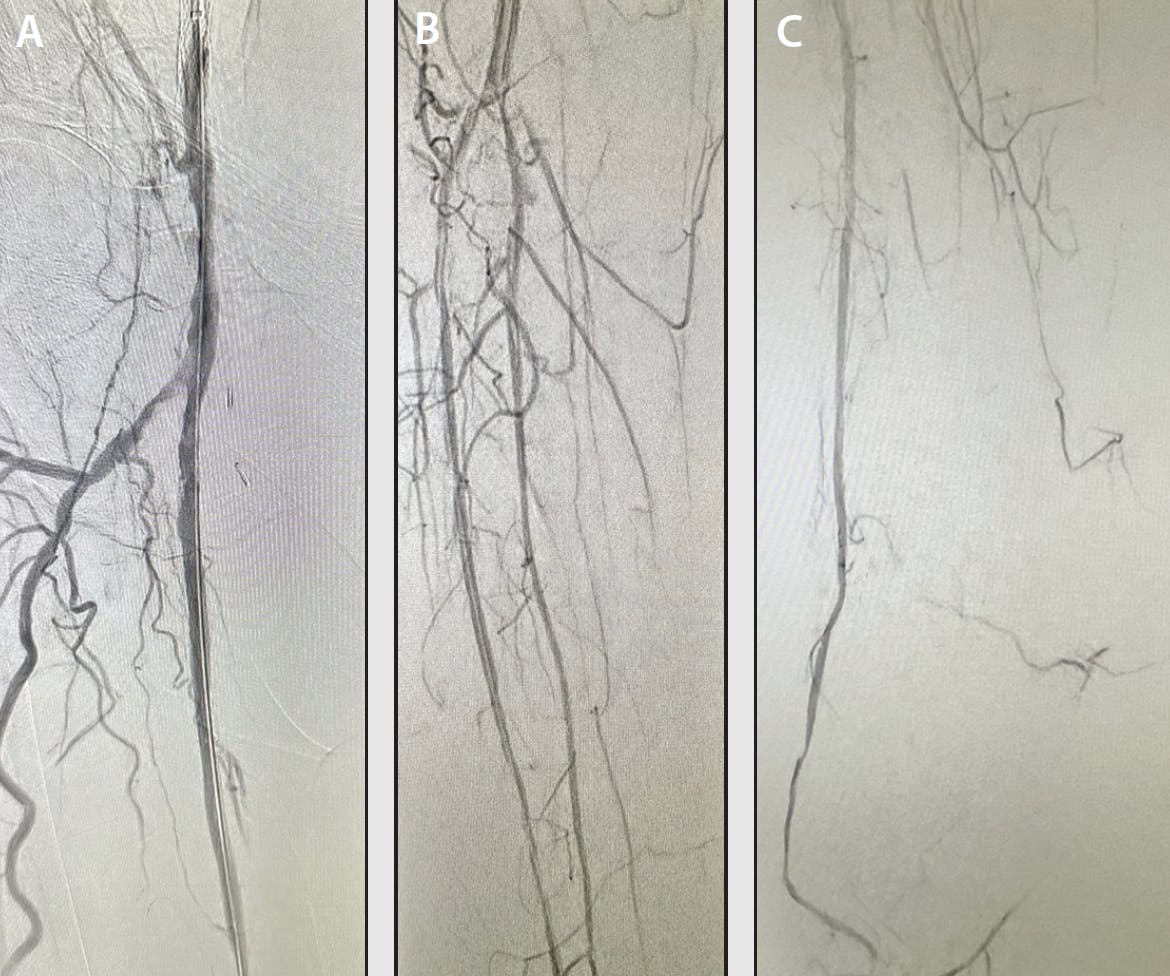
Figure 4. Arteriogram demonstrating successful revascularization of the SFA (A), peroneal and AT arteries (B), and AT and DP arteries (C).
Caution: Federal (US) law restricts the Sublime™ Radial Access .014 and .018 RX PTA Dilatation Catheters, and the Sublime™ Radial Access .014, .018, and .035 Microcatheters to sale by or on the order of a physician. Please refer to each product’s Instructions for Use for indications, contraindications, warnings, and precautions. SURMODICS, SUBLIME, and SURMODICS and SUBLIME logos are trademarks of Surmodics, Inc. and/or its affiliates. Third-party trademarks are the property of their respective owners. All images used with permission of author. © 2024 Surmodics, Inc. All rights reserved. SRDX-SRA-975 A
Advertisement
Advertisement