Advertisement
Advertisement
May 2024 Supplement
Sponsored by Surmodics, Inc.
Case Report: Successful Removal of Brachial and Ulnar Artery Thrombus Using the Pounce™ LP Thrombectomy System
Patient Presentation
A man in his late 60s presented to the emergency department with a cold left hand symptomatic for 24 hours. The patient had previously been seen at an outside hospital for open heart surgery, where his radial artery was harvested for the intervention. Beyond his prior open heart surgery, the patient’s medical history included hypertension, hyperlipidemia, and chronic obstructive pulmonary disease. The patient was initially put on aspirin and statin medication and brought into the operating room for further diagnosis.
DIAGNOSTIC FINDINGS
An initial ultrasound showed a complete occlusion of the patient’s left brachial artery and partial occlusion of the left ulnar artery. A 6 Fr, 90 cm procedural guide sheath was inserted into the patient’s femoral artery and was navigated to the left axillary artery. An initial angiogram confirmed the ultrasound findings (Figure 1 and Figure 2). The patient was not a candidate for tissue plasminogen activator (tPA) due to his recent cardiac surgery, and open surgical thrombectomy was not deemed appropriate because the ulnar artery measured 2 mm. The interventional strategy was to conduct thrombectomy with the Pounce™ LP Thrombectomy System (Surmodics, Inc.).
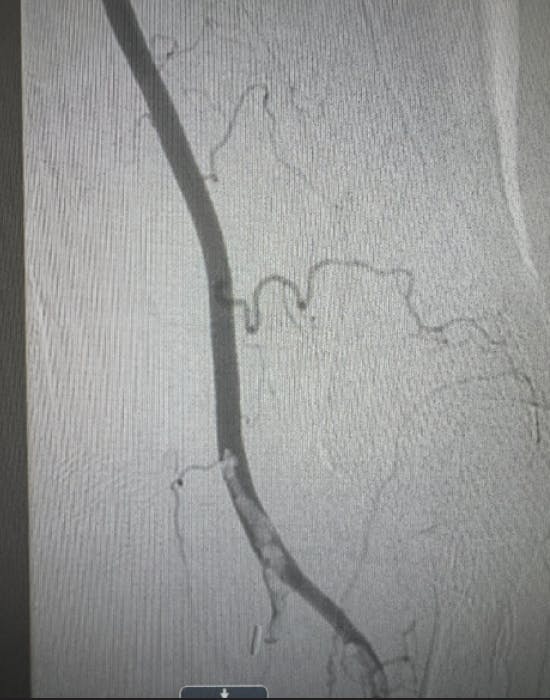
Figure 1. Initial angiogram of the left brachial artery.
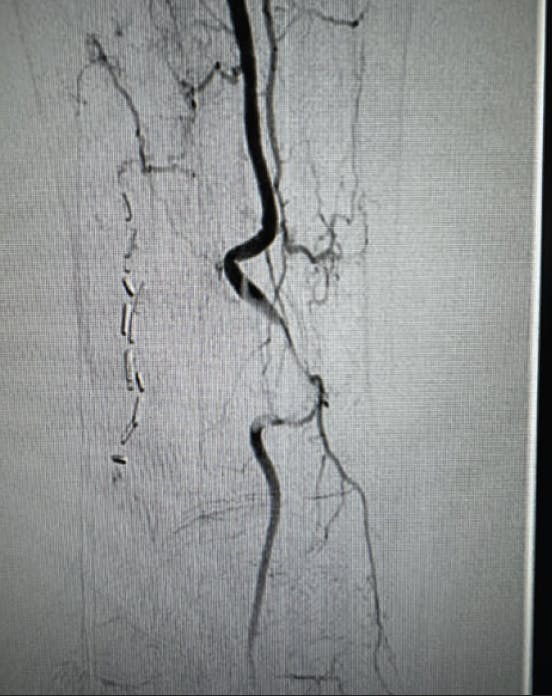
Figure 2. Initial angiogram of the ulnar artery.
TREATMENT
The procedural guide sheath was upsized to a 7 Fr, 90cm version, and the tip of the sheath was placed in the left axillary artery. The .018 guidewire compatible Pounce™ LP Thrombectomy System was prepared, whereupon the basket wire was deployed in the distal brachial artery via the delivery catheter included with the system. The funnel catheter was deployed in the mid brachial artery. The baskets were pulled back into the collection funnel, retrieving partial thrombus, and removed from the body. A second pass was made in the brachial artery utilizing the same deployment steps and component positioning as the first pass. After the second pass in the brachial artery, the basket wire was deployed in the distal ulnar artery, and the funnel catheter was again deployed in the mid brachial artery. One pass was made to clear out the thrombus burden in the ulnar artery. Final angiograms showed a patent brachial artery (Figure 3) and complete resolution of the ulnar artery (Figure 4), with no embolization to the patient’s hand.
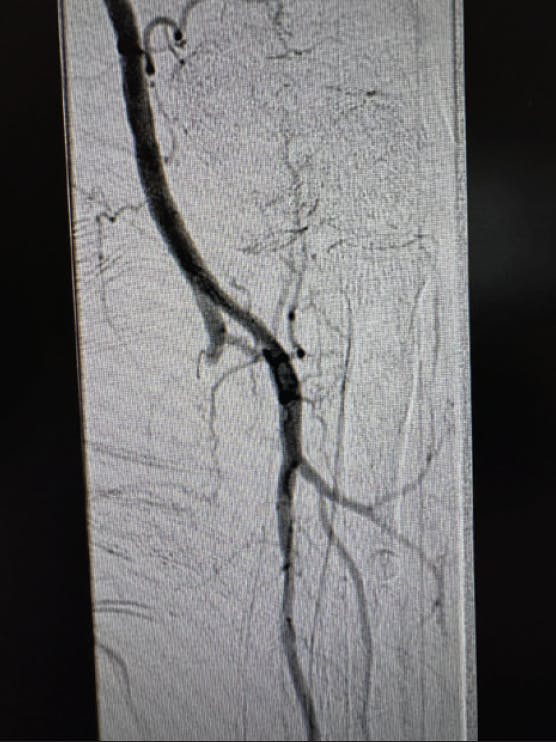
Figure 3. Angiogram of brachial artery after two passes with the Pounce™ LP Thrombectomy System.
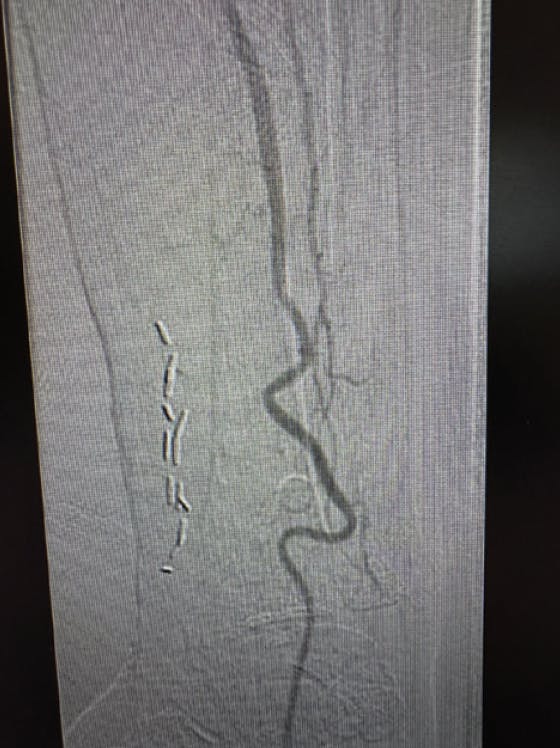
Figure 4. Angiogram of the left ulnar artery after one pass with the Pounce™ LP Thrombectomy System.
POST-PROCEDURE OUTCOME
The patient was discharged the day after the intervention, with instructions to maintain his warfarin regimen for 3 months. At 1-month follow-up, the patient’s brachial and ulnar arteries continued to show patency and good flow. Due to the Pounce™ LP Thrombectomy System’s low profile, the thrombus burden was able to be removed in a percutaneous fashion without the need for surgical intervention and tPA.
Caution: Federal (US) law restricts the Pounce™ Thrombectomy System and Pounce™ LP Thrombectomy System to sale by or on the order of a physician. Please refer to each product’s Instructions for Use for indications, contraindications, warnings, and precautions. SURMODICS, POUNCE, and SURMODICS and POUNCE logos are trademarks of Surmodics, Inc. and/or its affiliates. Third-party trademarks are the property of their respective owners.
Advertisement
Advertisement