Advertisement
Advertisement
November 2024
Mentors and Protégés: Conversations on Career and Craft With Dr. Robert J. Lewandowski, MD, FSIR (2024)
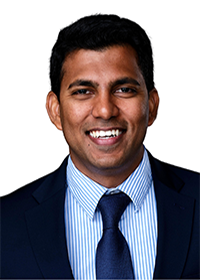
Shakthi Kumaran Ramasamy, MD, Co-Chair of the Research and Innovation Committee of the Society of Interventional Radiology Resident, Fellow, and Student section, talks with Dr. Lewandowski about his career trajectory, research endeavors, mentorship, and more.
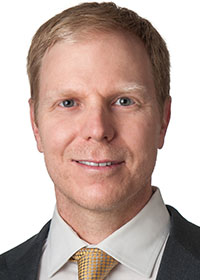
Dr. Robert J. Lewandowski, MD, FSIR, originally from Detroit, Michigan, pursued a degree in mechanical engineering at the University of Michigan before transitioning into medicine. Initially interested in orthopedic surgery, he conducted research at the University of Michigan on the Ilizarov procedure but ultimately found his passion in interventional radiology (IR). After completing medical school at Michigan State University and a preliminary surgical year at Virginia Mason in Seattle, he shifted focus to radiology and IR. His residency at William Beaumont Hospital led to his mentorship under Dr. Riad Salem, influencing his career path toward interventional oncology (IO). Dr. Lewandowski later completed his fellowship at Northwestern University, working alongside Dr. Salem to advance early IO techniques. Read more about his career path in his previous interview in the series.
Dr. Ramasamy: Can you talk about any specific mentor who made a significant impact on your career and what made the mentorship so influential?
Dr. Lewandowski: Mentorship has made a significant impact on my career, regardless of level of training. When you think of the medical training paradigm, a big part of it is an apprenticeship. Without that personal connection and without people who take the time, effort, and interest to help others succeed, we wouldn’t be as successful. Looking back, I recognize that I’ve benefited from mentorship throughout my life, starting with my parents, teachers, friends, and many others. Mentorship comes in different sizes, shapes, and forms, and we don’t always recognize it.
When I was starting my residency at William Beaumont Hospital in Detroit, I sought research opportunities. I reached out to a new attending, Riad Salem, who looking back was on his way to becoming a world-renowned interventional radiologist. Riad offered for me to meet him at the hospital on a Saturday to begin a research project. That event over 20 years ago started a collaborative relationship that continues to this day, moving beyond mentorship and into a friendship. For me, one of the more interesting parts of my story is something I learned many years later. Riad had also offered this opportunity to two of my coresidents, but I was the only one who showed up. For me, the lesson is that we must be able to recognize mentorship possibilities and be willing to put in the effort to take advantage of those opportunities, even if on a Saturday.
One other important lesson that I’ve learned about mentorship is that it is a two-way street, meaning both the mentor and the mentee benefit from these relationships. Further, the roles can reverse within the same relationship, depending on the scenario. Acknowledging the synergistic impact of a healthy mentor-mentee relationship is a key to continued collaboration.
Dr. Ramasamy: Fantastic. Yes, certainly mentorship is a two-way street. How do you see IO evolving over the next decade, and what upcoming advancements excite you the most?
Dr. Lewandowski: I am excited about the evolution of our specialty, moving beyond image-guided proceduralists to interventional radiologists providing meaningful comprehensive clinical care. When I completed my fellowship in 2006, I was one of the early interventional radiologists seeking to focus primarily on subspecialty care in IO, recognizing the dedicated effort required to be successful in this space. It is not enough to be proficient at performing image-guided therapies; rather, we need to understand the medical conditions affecting our patients, what expanding therapeutic options exist, where image-guided therapies fit in the treatment paradigm, and how to provide longitudinal and comprehensive clinical care within a multidisciplinary team.
When thinking of how interventional radiologists should consider our role in this space (and others), I believe it’s about collaboration not competition. To bring it back to something personal and specific to my practice at Northwestern, I am now integrated in a multidisciplinary clinic with Dr. Laura Kulik (Hepatology), Dr. Aparna Kalyan (Medical Oncology), and our surgical colleagues. Every Monday afternoon, we are connecting with patients and their families in a combined effort. Bringing this back to our discussion on mentorship, I’m continually learning from my colleagues in these different disciplines, expanding my medical knowledge, improving my ability to care for our patients, and gaining increased satisfaction from my occupation.
Now, what about IO treatments? I've always been fascinated by the dynamics at tumor boards, realizing that most of the discussants are locoregional experts (surgeons, radiation oncologists, interventional radiologists) as compared to the systemic therapies offered by medical oncologists. In the locoregional therapy hierarchy, surgeons tend to get first consideration because they provide curative-intent therapies. As our imaging, imaging equipment, therapeutics, and understanding of patient selection and prognosticators have improved, I believe that interventional radiologists can offer curative intent therapies too. Through data, we need to do a better job of demonstrating how our therapies meet the curative-intent threshold, and we then need to ensure that these outcomes are promoted to multidisciplinary audiences and offered to patients. The discussion about curative intent doesn’t mean that we shouldn’t also focus our efforts to providing palliative care. There is tremendous interest in integrating systemic and locoregional therapies, especially as we move beyond curative treatments.
In my nearly 20 years of IR practice, we’ve gotten much better at what we do, but the tools remain largely the same. Certainly, imaging has improved, and the instruments we use to catheterize and deliver therapies have gotten better, but they’re not dramatically different. I recently gave a talk at CIO 2024, where I was tasked with the title “What's Hot, What’s New, and What’s the Future of Radioembolization?” My conclusion was that we need to think more broadly when considering the possibilities of what we can offer patients. Instead of contemplating the future of the transcatheter intra-arterial delivery (radioembolization) of a specific isotope (yttrium-90 [Y90]), my belief is that we need to reimagine ourselves as experts in the locoregional image-guided delivery of therapeutics, which might include isotopes and/or other therapeutic agents. We need to be disruptive in our approach.
Dr. Ramasamy: Yes, that's excellent. There are new technologies coming up, but certainly, as you mentioned, we don’t know how they’re going to affect the patient care in the long term, or how efficient they would be in treating patients. You’ve had a long-standing collaboration with Dr. Salem, particularly in IO and Y90 treatments. How have your partnerships in IO evolved over the years?
Dr. Lewandowski: I’ve been fortunate to have worked much of my career with Riad, and we’ve accomplished a tremendous amount together. My current collaborations are focused on several new areas, including my multidisciplinary team at Northwestern. As stated, I believe this multidisciplinary collaboration enables us to have a greater impact on our patients. Our team at Northwestern is working to improve this concept and demonstrate its value.
I am very excited about evolving collaboration with my newest IR colleague at Northwestern, Dr. Andrew Gordon. Andrew is a physician scientist, having recently completed his training at Northwestern. Beyond my role in his clinical training, Andrew and I have collaborated on many scientific projects, and I believe that we are just scratching the surface as to what we can accomplish.
Finally, I am also keen to continue collaboration with colleagues outside my institution, particularly in the IO space. Through combined efforts, supporting each other’s ideas and projects, we can accomplish more than individually.
Dr. Ramasamy: The Barcelona Clinic Liver Cance (BCLC) 2022 update that incorporated radioembolization for very early (0), early stage (A), and intermediate-stage (B) hepatocellular carcinoma (HCC) treatment is a significant milestone.1 However, ablative radioembolization (ie, segmentectomy and lobectomy) is not specifically discussed. What are your thoughts on this?
Dr. Lewandowski: FDA approval and guideline inclusion are very important for the application and adoption of therapies. It is a big deal for all interventional radiologists who provide IO care that radioembolization has joined thermal ablation and chemoembolization as IR therapies recognized in the BCLC HCC guidelines for 2022.
Regarding your question, there is a significant and growing body of medical literature demonstrating the curative intent of radiation segmentectomy, highlighted by Dr. Ed Kim’s RASER study.2 Radiation segmentectomy provides high tumor response rates and long time-to–treated tumor progression, and evolving dosimetry threshold studies have been performed, demonstrating the ability to deliver explant complete pathologic necrosis. Further, there are a few retrospective propensity-matched studies demonstrating favorable comparison of radiation segmentectomy with thermal ablation or even surgical resection. I think it is a matter of time before this is reflected in the guidelines.
Moving forward, I think there’s also a role for radioembolization to be recognized as a treatment option for patients with intermediate-stage disease. There are two prospective randomized trials comparing radioembolization to chemoembolization. One was called the PREMIER trial,3 and the other was the TRACE trial.4 Both trials showed significant improvement in tumor progression outcomes with radioembolization, and the TRACE trial also demonstrated a survival benefit versus chemoembolization.
I also think there are data to support the application of radioembolization for patients with locally advanced HCC. The DOSISPHERE-01 trial demonstrates the value of personalized dosimetry for radioembolization in patients with large tumors (average 10 cm) and local vascular invasion (two-thirds of patients).5 I look forward to the next BCLC HCC staging paradigm to stratify advanced patients (BCLC C), much like they did for the intermediate group in 2022. With that, radioembolization should be considered an option for those with locally advanced disease. Optimally, these patients might be best served with radioembolization and systemic therapy.
Dr. Ramasamy: You published the LEGACY study in 2021, a multicenter, single-arm retrospective study involving 162 patients with solitary HCC ≤ 8 cm treated with ablative dosimetry, demonstrating an overall survival rate of 86.6% at 3 years.6 With the rise of immune checkpoint inhibitors, combination therapies, and emerging approaches like radioembolization plus immune checkpoint inhibitor therapy, how do you now view the role of Y90 and radiation segmentectomy in treating liver cancer? Do you see these therapies complementing the newer immunotherapies, or has their positioning shifted in the current treatment landscape?
Dr. Lewandowski: It is not clear to me the role of immunotherapy in the setting of early stage HCC, as was the patient population for LEGACY. A few adjuvant systemic trials have been performed, most recently IMBRAVE 050 (atezolizumab/bevacizumab).7 Unfortunately, these studies have been negative. I do think this continues to be an unmet need.
It would be a tremendous value if we can find a meaningful way to combine locoregional therapies with immunotherapies. Valerie Chew published a paper in 2019 demonstrating the potential of combining radioembolization with immunotherapy, and there have been a few papers showing the safety of this combination.8 However, much work needs to be done before conclusions can be drawn.
Dr. Ramasamy: Previously, you highlighted significant research projects, including your work on inferior vena cava filters, radiation segmentectomy, and the comparison of radioembolization with chemoembolization.9-12 Are there any recent research projects or innovations you’re particularly excited about that hold special significance for you?
Dr. Lewandowski: I’m very proud of the fact that I have an National Institutes of Health R01 grant—Y90 radiation lobectomy: dose optimization and prediction of future liver remnant hypertrophy to enable resection of HCC (NCT04390724).13 My colleague Dr. Jeremy Collins and I are Coprincipal Investigators for this study on radiation lobectomy to facilitate future liver remnant hypertrophy and subsequent resection for patients presenting with unresectable tumors.
I’m also enthused to promote translational research at Northwestern. Through collaboration with Dong-Hyun Kim and more recently Andrew Gordon, we’ve assembled a great team of translational researchers. Upcoming projects involve novel therapeutics, artificial intelligence, and integrating locoregional therapies and immunotherapies.
Dr. Ramasamy: Congratulations on your R01 grant, and congratulations on being elected as the new Society of Interventional Radiology (SIR) President. Could you share the personal or professional experiences that most influenced your decision to pursue this leadership role as President? What key areas or initiatives do you aim to focus to drive the field of IR forward, or do you have any specific goals or visions for the future of IR?
Dr. Lewandowski: Thank you, it’s a huge honor to be President of SIR, and it is a big commitment. I have been involved with SIR for much of my career, with the mission of helping create a strong, healthy specialty. I became more invested in SIR volunteerism in 2014 when I was invited to join the Annual Meeting Committee (AMC), culminating in me being Chair of the SIR 2017 Annual Scientific Meeting in Washington, DC. When my time on the AMC ended, I sought other volunteer opportunities within SIR, which has led me to my current position.
My personal vision is that one day, all patients in every corner of the globe will have knowledge of and access to our image-guided therapies. Regarding an agenda for this year, I think it is important to clarify that being the SIR president isn’t truly a 1-year experience. Rather, it’s a 4-year commitment, providing consistency to the ongoing priorities, which are a collaboration between the Secretary, President-Elect, President, Immediate Past President, and SIR Chief Executive Officer (CEO). Overall, we aim to serve all SIR members by moving forward as an independent medical specialty providing minimally invasive image-guided therapies and comprehensive longitudinal patient care. Our leadership group is highly focused on innovative approaches to collecting data and quality metrics to demonstrate the value of our specialty, gaining recognition for what we do.
There are two high-priority topics to highlight. First, we are amid a search for the next CEO of SIR. In this process, we have strived to continue our organizational evolution and embrace this as an opportunity to bring in fresh and dynamic perspectives. Second, SIR 2025 in Nashville will be our 50th Annual Scientific Meeting. This is a huge accomplishment and milestone, for which we plan to celebrate and use as a springboard for our next 50 years as a specialty.
Dr. Ramasamy: Previously, you mentioned that the future of IO would rely on interventionalists taking a leading clinician role and emphasized the importance of a clinically oriented approach. Reflecting on the past 5 years, how has this shift toward clinical leadership evolved? Have these collaborative, multidisciplinary strategies, which you predicted would be crucial for the field, played out as expected, and what new advancements do you see shaping the future of IO in the next decade?
Dr. Lewandowski: One of the driving factors in changing the IR training paradigm so that IR is a primary certificate was to facilitate the recruitment of clinically minded people. With that, our training pathways have evolved to provide more clinical opportunities rather than focusing primarily on imaging and image-guided procedures. As such, graduates of IR training programs have a broader skill set to help them integrate into multidisciplinary care teams.
We also need to demonstrate the value of being more clinically active. This includes improvement in patient outcomes, enhanced patient satisfaction, personal and professional growth, and increased downstream revenue and patient referrals.
Dr. Ramasamy: What hobbies and activities do you enjoy away from work?
Dr. Lewandowski: I am proud to report that most of my time spent outside of work or SIR-related activities is devoted to my family. My wife, Dr. Mona Gupta, is an interventional radiologist at Northwestern, and we have two daughters. Uma is 11 years old and Mia is 9 years old. Mia plays soccer and Uma plays softball, and whenever possible, I help as an assistant coach. I just love being there, watching them, supporting them, and seeing them grow and develop. It’s such a rewarding experience.
Dr. Ramasamy: How do you balance the demands of being a clinician, researcher, teacher, husband, and father?
Dr. Lewandowski: It’s not easy. I try to be as efficient as possible, particularly with work-related tasks. But you must be balanced to be successful. For me, the most important thing is my family. That’s not to say I don’t spend a lot of energy on other things, but I make sure I’m giving my family—and extended family and friends—the time they deserve. I don’t compromise on that, and the rest works itself out.
Dr. Ramasamy: Thank you so much for your time.
1. Reig M, Forner A, Rimola J, et al. BCLC strategy for prognosis prediction and treatment recommendation: the 2022 update. J Hepatol. 2022;76:681-693. doi: 10.1016/j.jhep.2021.11.018
2. Kim E, Sher A, Abboud G, et al. Radiation segmentectomy for curative intent of unresectable very early to early stage hepatocellular carcinoma (RASER): a single-centre, single-arm study. Lancet Gastroenterol Hepatol. 2022;7:843-850. doi: 10.1016/S2468-1253(22)00091-7
3. Salem R, Gordon AC, Mouli S, et al. Y90 radioembolization significantly prolongs time to progression compared with chemoembolization in patients with hepatocellular carcinoma. Gastroenterology. 2016;151:1155-1163.e2. doi: 10.1053/j.gastro.2016.08.029
4. Dhondt E, Lambert B, Hermie L, et al. 90Y radioembolization versus drug-eluting bead chemoembolization for unresectable hepatocellular carcinoma: results from the TRACE phase ii randomized controlled trial. Radiology. 2022;303:699-710. doi: 10.1148/radiol.211806
5. Garin E, Tselikas L, Guiu B, et al. Personalised versus standard dosimetry approach of selective internal radiation therapy in patients with locally advanced hepatocellular carcinoma (DOSISPHERE-01): a randomised, multicentre, open-label phase 2 trial. Lancet Gastroenterol Hepatol. 2021;6:17-29. doi: 10.1016/S2468-1253(20)30290-9
6. Salem R, Johnson GE, Kim E, et al. Yttrium-90 radioembolization for the treatment of solitary, unresectable HCC: the LEGACY study. Hepatology. 2021;74:2342-2352. doi: 10.1002/hep.31819
7. Hack SP, Spahn J, Chen M, et al. IMbrave 050: a phase III trial of atezolizumab plus bevacizumab in high-risk hepatocellular carcinoma after curative resection or ablation. Future Oncol. 2020;16:975-989. doi: 10.2217/fon-2020-0162
8. Chew V, Lee YH, Pan L, et al. Immune activation underlies a sustained clinical response to yttrium-90 radioembolisation in hepatocellular carcinoma. Gut. 2019;68:335-346. doi: 10.1136/gutjnl-2017-315485
9. Minocha J, Idakoji I, Riaz A, et al. Improving inferior vena cava filter retrieval rates: impact of a dedicated inferior vena cava filter clinic. J Vasc Interv Radiol. 2010;21:1847-1851. doi: 10.1016/j.jvir.2010.09.003
10. Lewandowski RJ, Gabr A, Abouchaleh N, et al. Radiation segmentectomy: potential curative therapy for early hepatocellular carcinoma. Radiology. 2018;287:1050-1058. doi: 10.1148/radiol.2018171768
11. Salem R, Gordon AC, Mouli S, et al. Y90 radioembolization significantly prolongs time to progression compared with chemoembolization in patients with hepatocellular carcinoma. Gastroenterology. 2016;151:1155-1163.e2. doi: 10.1053/j.gastro.2016.08.029
12. Salem R, Gabr A, Riaz A, et al. Institutional decision to adopt Y90 as primary treatment for hepatocellular carcinoma informed by a 1,000-patient 15-year experience. Hepatology. 2018;68:1429-1440. doi: 10.1002/hep.29691
13. Lewandowski RJ, Collins JD. Yittrium-90 radiation lobectomy: dose optimization and prediction of FLR hypertrophy to enable resection of HCC. Accessed October 21, 2024. https://reporter.nih.gov/search/6HZLwYny90ibul30kJIWCw/project-details/10675427
Advertisement
Advertisement