Advertisement
Advertisement
When I was invited by Endovascular Today to serve as Guest Chief Medical Editor of an edition on aortic dissection (AD), I considered the many possible directions and topics we could pursue within this vast space. Reviewing previous AD-themed editions, I saw perspectives on advances in technology with increasing application specificity, discussions on when and in whom, proper technique, and probing of the ever-growing list of unanswered AD questions. I also saw a void, or perhaps better yet, an opportunity to cover perhaps the most important topics in AD today—those most important to the patients living with this condition.
Although the aforementioned topics are critical in our care of AD patients, they are not the questions our patients ask us or don’t know to ask us. Faced with a frightening diagnosis, our patients don’t lose sleep over chronicity considerations. They want to know if they can work tomorrow and provide for their family, if they can continue to grow their family, if they can exercise and stay healthy to enjoy their family.
As aortic specialists, we should focus at least as much on generating data to support our responses to these questions as we do device and technique advancements, if not more. With this in mind, our design for this edition focuses on the patient with AD, our conversations with them, and the research needs we must embrace and meet.
To start off our cover focus, Michael J. Troncone, MD, and I share our model for multidisciplinary AD teams as an organized approach to improving outcomes. We discuss rationale, essentials of the aortic team, and the benefits of centralizing aortic care. Then, Mariam Qazi, MD, and Siddharth K. Prakash, MD, outline tips and strategies for physicians to help counsel aortic disease patients on medications—including risk assessment, side effects, and dosing—and exercise compliance for the lifelong management of aortic diseases.
Next, we move to a discussion of pregnancy and family planning during and after AD. Melissa Russo, MD, answers questions regarding contributing risk factors, diagnosis of AD in the pregnant patient, the algorithm for management, common misconceptions, and counseling and surveillance of patients with known heritable thoracic disease.
We round out our focus of AD with initiatives to improve awareness. Advocates Carin Anderson and Ben Youdelman, MD, with Aortic Hope/Think Aorta; Ellen Hostetler with The John Ritter Foundation for Aortic Health; and Jake Howitt with The Aortic Dissection Collaborative for Patient-Centered Research, discuss how they are raising awareness of AD through research and education.
Outside of our feature on AD, the Endovascular Today editors have assembled a summary of current trends in radial access. Basel Musmar, MD, and Pascal M. Jabbour, MD, provide an update on the adoption of radial access in neuroendovascular procedures, including advantages in safety and patient comfort, managing complications, and what’s coming next. Then, Sameh Sayfo, MD, and Marcelo Guimaraes, MD, share their thoughts on next-generation needs and potential “game changers” for radial access in peripheral artery disease and embolotherapy, respectively. Opportunities to improve or optimize radial access include additions and expansions to the current toolbox, safety and efficacy data, and increased physician adoption.
Closing out this issue with our monthly featured interview, Narayan Karunanithy, MRCS, discusses his multidisciplinary approach to vascular anomalies, trends in acute pulmonary embolism, what adult and pediatric interventional radiologists can learn from each other, and more.
This discussion just begins to scratch the surface, and other topics such as mental health issues following AD still require further research and discussion. Endovascular Today will continue to pursue and cover the patient-centered research we’ve presented here in future editions. I encourage you to devote time to reviewing the past and ongoing studies and initiatives discussed in this edition, and to please get personally involved in your own way. Our patients need more answers than we currently have, but the opportunity to dramatically improve our understanding of life with AD is within reach.
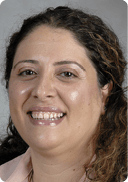
Rana O. Afifi, MD
Guest Chief Medical Editor
Advertisement
Advertisement