Advertisement
Advertisement
September 2024
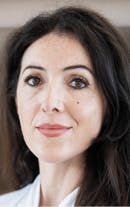
An Interview With Flavia Gentile Johansson, MD
The Luxembourg-based vascular surgeon and breast oncology surgeon talks research priorities and innovation needs in dialysis care, efforts in introducing dialysis access and intervention skills to trainees, challenges practicing in a small country, and more.
How would you summarize your current top research and clinical priorities? What do you find most rewarding and most challenging about the current phase of your career?
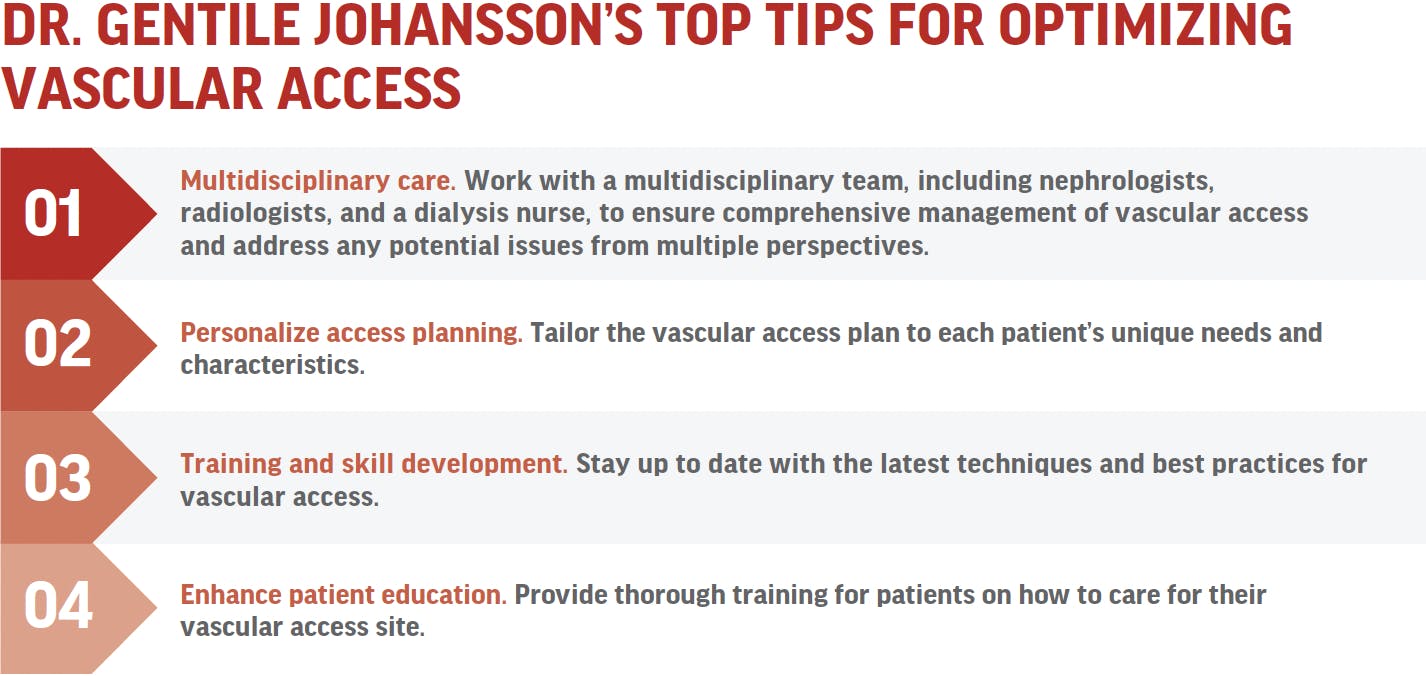
My primary research focus is on optimizing access options in the complex and high-risk dialysis population, with particular attention to specific subgroups such as the frail and elderly. As the dialysis population ages, we must shift our focus toward enhancing quality of life rather than quantity of life, and this might include rethinking the most appropriate access selection as well.
My clinical priorities are to tailor access solutions to the patient, considering a range of factors and, importantly, patient perspective. Surveillance is also crucial: Spotting in a timely manner those complications that could have been avoided or preventable can prolong access lifespan.
At this stage of my career, the challenge lies in finding durable access solutions for a population that lives longer and often exhausts their options. However, the most rewarding aspect is the relationships I build with my patients and the positive impact I can have on their quality of life.
One focus of yours in recent years has been vascular access, serving as European Society for Vascular Surgery (ESVS) Academy Vascular Access Pathway Lead, where you regularly organize and run continuing education workshops. What have you noticed are the technical skills most in need of refreshing or refining in dialysis access trainees and established physicians, and how does the ESVS Academy help address these gaps?
Technical skills in need of refreshing are surely the ability to use ultrasound. This is fundamental in all aspects of access, including planning, as an intraoperative tool, and for surveillance. Trainees come from different countries and backgrounds, and while radiologists/nephrologists or vascular scientists are in charge of this aspect in some centers, I believe that being able to use ultrasound is fundamental for vascular surgeons because it allows us to reevaluate the patient intraoperatively, can assist and guide the procedure, and reduces the risk of complications.
With the ESVS Vascular Access Pathway, I have been organizing face-to-face workshops on use of ultrasound for many years now. Trainees get firsthand practice and learn tips and tricks from the experts. The same applies for endovascular fistula creation—almost no trainees have experience here. By attending our workshop, they can obtain knowledge on how it works and can practice on simulators.
As a member of the ESVS Vascular Access Guidelines Committee, can you share some of the main issues or questions prompting the need for an updated set of guidelines?
The guidelines need to keep up with the development of new technologies and material, as well as outcome-based research on the procedures. Endovascular fistula creation will surely be addressed in the guidelines, as will the importance of educating patients on how to care for and manage their vascular access sites effectively. There’s much more, and we are still working on it. Stay tuned!
What do you consider to be the most significant research and/or innovation needs regarding the care of patients undergoing dialysis?
The care of dialysis patients has improved thanks to novel techniques, especially from an endovascular perspective. And yet, several aspects require innovations. For example, grafts need improvements to reduce thrombosis or infections; low-rate thrombosis grafts and bioengineered materials could offer a longer lifespan. There is also a need to improve catheter technology, thus reducing thrombosis rate and infection.
Other needed innovations include:
- Portable dialysis devices to enhance patient mobility (ability to travel or work, time off dialysis) and innovations focusing on home therapy
- Smart wearable devices that can assist physicians in monitoring patients between dialysis sessions
- Sensors integrated into vascular access devices that detect early indicators of stenosis, infection, or thrombosis and notify health care providers
You are also a trained breast oncology surgeon. How did this come to be a clinical focus for you, and what do you enjoy about this work?
When my hospital sought support in the breast surgery unit, I saw it as an exciting new challenge and eagerly stepped in. Expanding my skill set and stepping beyond my comfort zone could only enhance my professional growth. Initially, it was an intense period; I had to travel back and forth between Luxembourg, where I work and live with my family, and Paris, where I did my breast surgery training and earned my degree.
Today, breast surgery accounts for 20% of my practice. Although I still have much to learn and need to remain current with the latest trials and therapeutic strategies, I thrive on challenges and the unique opportunity to grow. I also deeply value my interactions with oncology patients and the collaboration with the supportive oncology team at my hospital.
What are some of the challenges unique to practicing vascular surgery in Luxembourg?
The biggest difference is surely population size, which can impact the frequency of complex vascular cases. However, Luxembourg does have a diverse population, and so despite being a small country, there is a great genetical/biological variety. Luxembourg also has a very well-developed health care system that invests in modern hospitals and the latest medical technology. Overall, Luxembourg’s access to cutting-edge medical technology is strong.
And, what role does your position as Vice President of the Luxembourg Society of Vascular Surgery play in addressing these challenges? What is your vision for this leadership term?
My role is to foster communication between members, encourage collaboration between hospitals, and deliver the best care for our population. I want to promote the participation of Luxembourgish physicians in educational and research projects at an international level.
All vascular surgeons in Luxembourg are also ESVS members, and we are actively involved in projects such as the ESVS Academy, Vascunet, and the recently formed Equality, Diversity, and Inclusion Task Force. With the support of the ESVS Academy, I am also in the process of organizing a 2-day vascular access course here in Luxembourg for 2025.
What is one specific milestone you hope to achieve in the next decade, either professionally or personally?
One specific milestone I hope to achieve is leading a multidisciplinary initiative that integrates personalized medicine into dialysis care, with the support of artificial intelligence. This could involve tailoring treatment plans based on genetic, lifestyle, and clinical data to optimize outcomes for each patient, creating individualized dialysis care. By using tools that leverage patient-specific data, we could guide the choice and management of vascular access, thus enhancing individual and effectiveness.
Advertisement
Advertisement
Interested in reading more interviews?
To read more interviews with thought leaders in the vascular field, check out our Profiles & Perspectives hub.
Read More