Advertisement
Advertisement
April 2025
Acute Ischemic Stroke Due to Tandem Occlusion
Planning an endovascular approach for an uncommon scenario.
Acute ischemic stroke (AIS) is the leading cause of adult disability in the United States and a major cause of death both domestically and worldwide. There are approximately 800,000 strokes per year in the United States, roughly 85% of which are ischemic. Large vessel occlusion (LVO) is a leading cause of major ischemic strokes, with an incidence of approximately 24 per 100,000 and affecting approximately 80,000 people per year.1 Until 2015, the only validated acute stroke treatment was intravenous thrombolysis (IVT), which had poor recanalization efficacy in LVO stroke. That year, five randomized trials showed overwhelming clinical benefit for LVO treatment with mechanical embolectomy (MT) for patients treated within 6 hours of last known well (LKW). Then, in 2018, two more trials (DAWN and DEFUSE 3) showed a major benefit in highly selected LVO patients out to 24 hours from LKW.2 Those trials mostly included patients without tandem occlusion, such as a proximal cervical occlusion, usually due to atherosclerotic plaque with a distal embolic occlusion.
Tandem occlusion patients typically have worse neurologic deficits and worse prognosis because a cervical internal carotid artery (ICA) occlusion causes reduced potential for collateral flow via the anterior cerebral artery to the middle cerebral artery (MCA), the latter being the major recipient of emboli and the most common location of occlusion in LVO stroke.3 There are multiple large series and extensive experience in the treatment of tandem occlusion but many unanswered questions in the management of these patients.
Highlight Point
CT of the head and cerebral vasculature is the mainstay of acute stroke evaluation. These are necessary to exclude intracerebral hemorrhage (ICH), which is a contraindication to IVT; confirm the presence of a LVO, the main cause of major disabling AIS; and evaluate the extent of any infarction. The latter is graded via the ASPECTS, a 10-point scale that assigns points to areas of the MCA territory showing signs of infarction. A score of 10 represents a normal brain and a 0 represents complete infarction of the MCA territory. A score of ≥ 7 is associated with a good prognosis with revascularization therapy and decreasing scores are associated with lower probabilities of functional recovery as well as higher risks of ICH.4
CASE PRESENTATION
A man in his early 50s with coronary artery disease treated with coronary stenting, hypertension, hyperlipidemia, smoking, and prior stroke was found walking around confused. In the emergency department, he presented with aphasia and a mild right hemiparesis with systolic blood pressures ranging from 160 to 170 mm Hg and a normal glucose. No additional history on the timing of the stroke (ie, LKW) was available. One year earlier, he had presented with right-sided hypoesthesia, and a left parieto-occipital acute stroke was noted on MRI. A right common carotid artery (CCA) occlusion was seen at that time, and he was treated with dual antiplatelet therapy (DAPT) and usual risk factor control but with questionable compliance.
A CT scan of the head showed a hyperdense left proximal MCA with early infarct signs of loss of gray-white differentiation in the left frontal operculum and peri-Sylvian cortex. The Alberta Stroke Program Early CT Score (ASPECTS) was 6. CTA demonstrated a left CCA occlusion at its ostium with a tandem left MCA trunk occlusion. The left ICA was filling via retrograde collaterals from the vertebral artery to the external carotid artery (ECA) (Figure 1).
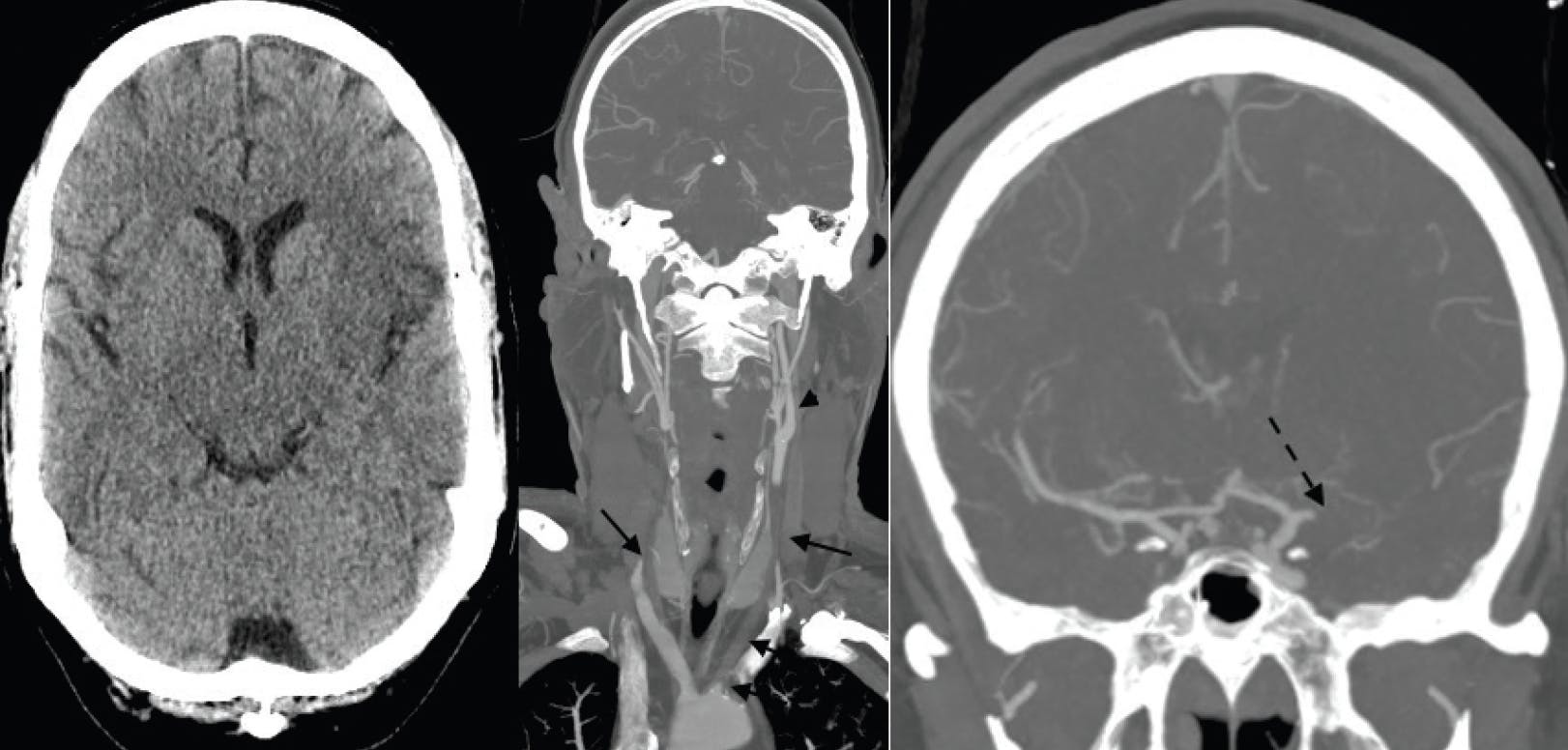
Figure 1. CT of the head showed early infarct signs of loss of gray-white differentiation in the left frontal operculum, insula, and peri-Sylvian cortex. The CTA showed right CCA occlusion and acute left CCA occlusion from its origin (arrows) with reconstitution of the ICA (arrowhead) via ECA collaterals as well as tandem MCA occlusion (dashed arrow).
CASE CONTINUED
The patient was transferred to the comprehensive stroke center where upon arrival he was hemodynamically stable but neurologically deteriorated. He had a worsening right hemiparesis with a National Institutes of Health Stroke Scale (NIHSS) score of 18. A CT perfusion scan was performed, which revealed a core infarct volume of 53 mL with surrounding ischemic penumbra measuring approximately 145 mL with a mismatch volume of 92 mL (Figure 2).
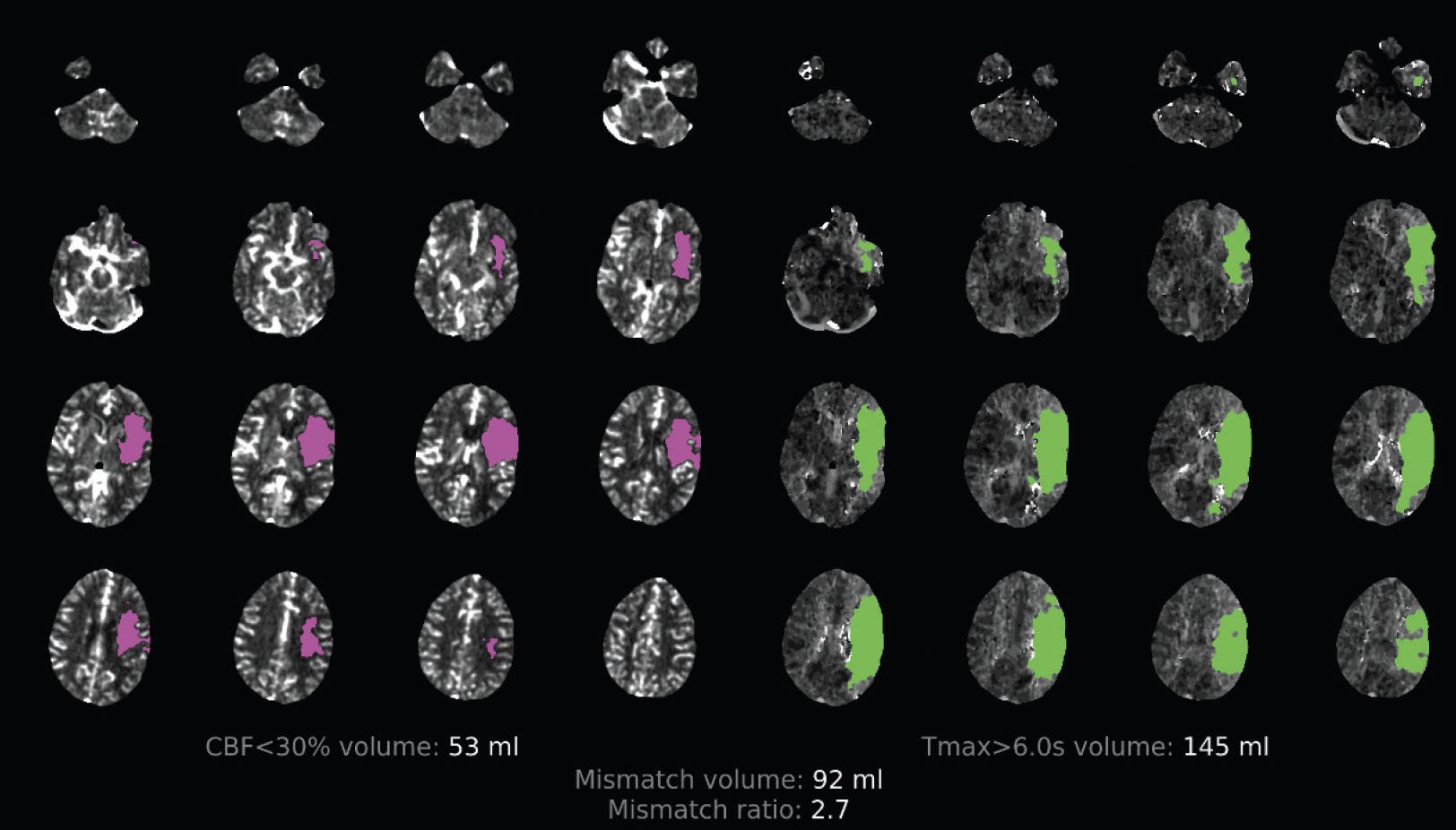
Figure 2. CT perfusion scan processed with artificial intelligence software showing a core infarct volume of 53 mL (correlating with the areas of early infarct noted on CT [Figure 1]) with significant ischemic penumbra measuring approximately 145 mL and a mismatch volume of 92 mL, the latter representing the volume of salvageable tissue with a mismatch ratio greater than the threshold for treatment of 1.8.
On perfusion imaging, the infarct core (ie, tissue that is not salvageable) is defined as a region with relative cerebral blood flow (rCBF) < 30% of baseline. The baseline CBF is usually derived from the same territory in the contralateral, unaffected hemisphere. The ischemic penumbra (ie, tissue that is salvageable) is defined as a region with Tmax delay > 6 seconds. More specifically, Tmax is derived from the arterial input function and is a quantification of the time it takes for the maximum concentration of contrast to reach a specific region of brain. The mismatch volume is then calculated by subtracting the total volume of tissue with rCBF < 30% from the volume of tissue with Tmax > 6 seconds, and the mismatch ratio is defined as (volume Tmax > 6 seconds)/(volume rCBF < 30%) and is commonly considered significant if >1.8.
Highlight Point
Due to the unknown LKW, the patient cannot be treated with IVT, which is the standard of care for AIS within 4.5 hours of LKW. However, had the patient presented within that time window, the available evidence suggests that IVT before MT would have been appropriate. Although there are some conflicting data on the utility of IVT before planned MT, the evidence shows that, at worst, IVT plus MT is not inferior to MT alone, and at best, outcomes are better with combined therapy.5 This is particularly important in patients presenting to non–MT-capable centers, where the initiation of MT will be delayed due to the need to transfer the patient to a MT-capable center. Additionally, IVT may help with final tissue reperfusion due to thrombolysis of distal branch occlusions not accessible by traditional MT techniques.
CASE CONTINUED
The patient was given 300 mg of rectal aspirin and 300 mg of clopidogrel per nasogastric tube and was transferred to the neurointerventional suite. Via an 8-F femoral sheath, an 8-F AL1 guide catheter (which had been steam shaped into a J-shape) was advanced into the aortic arch and used to perform angiography of the left CCA origin (Figure 3). A 0.014-inch neuro guidewire was then used to cross the occlusion, and angioplasty of the CCA ostium was performed with a 4-mm balloon. Angiography revealed that antegrade flow had been restored in the CCA, although there was a long thrombus adhering to the lateral wall of the CCA.
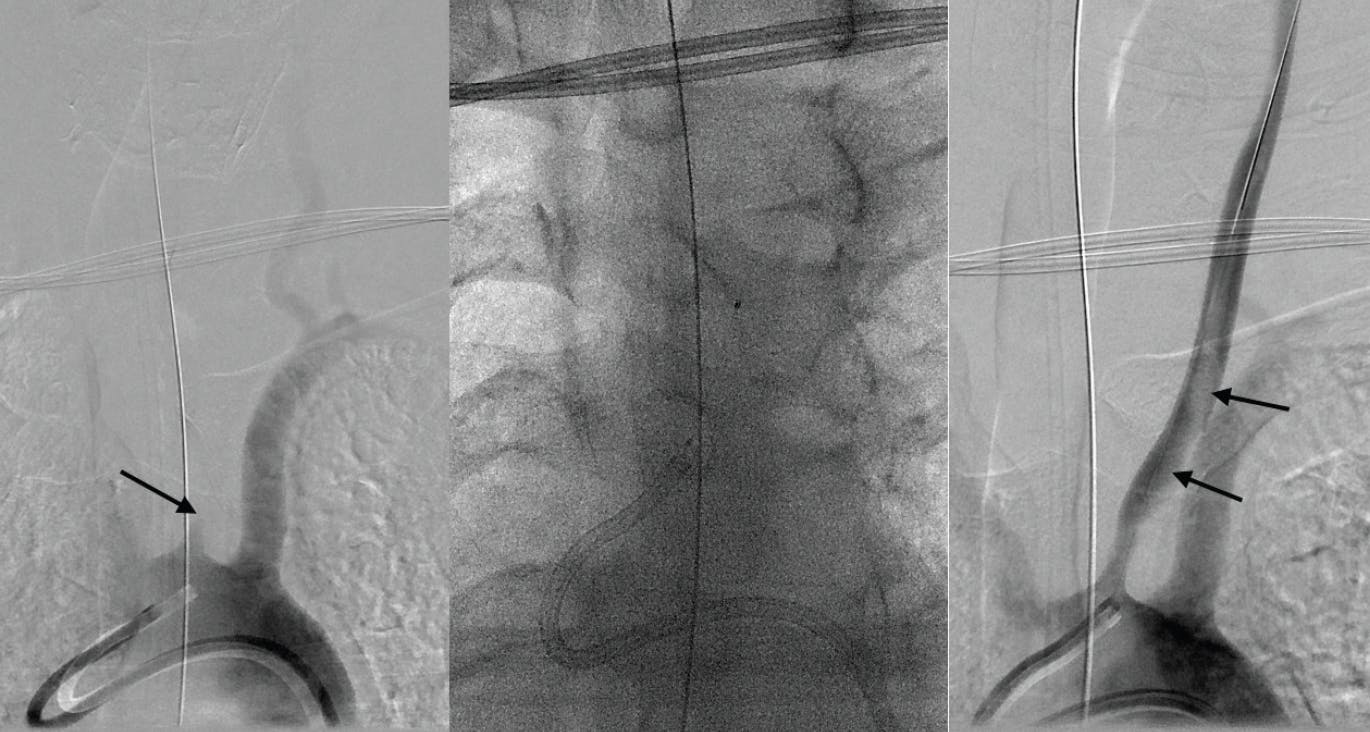
Figure 3. Aortic arch injection in the LAO view through the AL1 guide catheter revealed the left CCA stump (arrow) off the aorta. The guide provided excellent support for crossing the occlusion and advancing the balloon. Postangioplasty angiography revealed recanalization of the CCA ostium, but there was a large linear filling (arrows) defect consistent with acute thrombus.
A hydrophilic 0.035-inch wire was advanced into the left ICA, over which the AL1 guide was advanced into the CCA while suction was applied using an aspiration pump. A large thrombus was removed. Then, the AL1 was exchanged for an 8-F balloon guide catheter (BGC) that was advanced into the distal cervical ICA. ICA angiography confirmed persistent MCA occlusion (Figure 4).
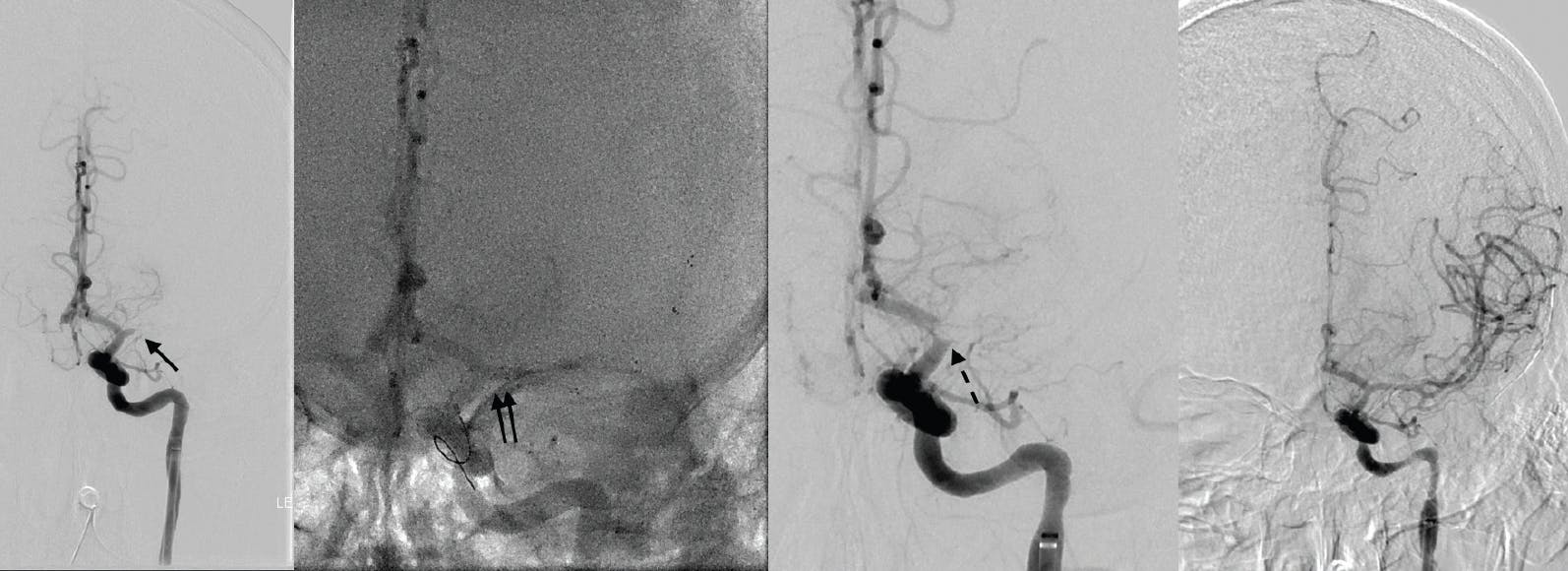
Figure 4. Left ICA anteroposterior angiogram showed distal location of the BGC with proximal left MCA occlusion (arrow). The Solitaire was deployed extending from the inferior division of the MCA with most of the device distal to the thrombus and the proximal markers at the proximal face of the occlusion (double arrows). Following the first pass, the thrombus migrated proximally (dashed arrow), but the MCA remained occluded. The second pass resulted in complete recanalization, although there was ICA and MCA vasospasm, the former caused by the balloon on the BGC and the latter by the stent retriever. Although not severe, vasospasm should be treated to ensure that there is no residual thrombus or underlying dissection.
Highlight Point
The landmark mechanical embolectomy trials, which validated the robust clinical efficacy of MT in patients with LVO within 6 to 24 hours of LKW, used penumbral imaging for patient selection. In the DAWN trial, an infarct core of > 50 mL was an exclusion criterion; however, the DEFUSE 3 trial used an infarct core cutoff of 70 mL as long as the perfusion ischemic volume to infarct volume ratio was ≥ 1.8. This patient met the perfusion imaging criteria for MT. However, DAWN and DEFUSE 3 required LKW within 24 hours and 16 hours, respectively. Because this patient had an unknown LKW, he did not meet guidelines for MT, although the presence of a disabling neurologic deficit as well as a large penumbra have been reported as sufficient for treatment regardless of time window.6
CASE CONTINUED
MT of the MCA was performed using a 4- X 40-mm Solitaire (Medtronic) stent retriever with aspiration via the BGC. The stent retriever was deployed for 4 minutes before it was withdrawn while the balloon on the BGC was inflated (Figure 4). Aspiration was performed with a 60-mL syringe (although an aspiration pump generally provides more consistent aspiration). Angiography revealed proximal migration of the thrombus, but with a second pass, complete recanalization was achieved. There was vasospasm of the MCA and ICA, which was treated with nitroglycerin. The 0.035-inch wire was replaced in the ICA before the BGC was withdrawn into the mid CCA. At that point, aspiration was applied on the BGC as it was withdrawn into the proximal CCA and then into the aorta to aspirate any residual thrombus in the CCA origin.
Highlight Point
Most mechanical embolectomy is performed via a femoral approach with the largest-bore catheters possible, typically an 8-F BGC. Typical stroke BGCs are straight and would not have facilitated cannulation of the CCA unless a complex-shaped introducer catheter was used. This would have required an exchange for a balloon and may not have given enough support to cross the lesion. Therefore, an 8-F AL1 guide was chosen first line because this catheter is very stable in the arch and provides robust support for crossing calcified or occluded ostial great vessel lesions. It was later exchanged for a BGC because these have been shown to improve recanalization efficacy when combined with stent retrievers.7 An alternative approach would have been to advance a large-bore hybrid guide/aspiration catheter into the intracranial ICA and perform direct thrombus aspiration with a distal aspiration catheter placed in the MCA with or without a stent retriever. The optimal approach is unclear with advocates for each touting specific benefits. The author has preferred the BGC plus stent retriever approach, as this was the approach used in most of the seven randomized trials that validated the clinical efficacy of MT and therefore has the most robust support in the literature. New evidence suggests that a combination of BGC and proximal clot face aspiration plus stent retriever may provide the best recanalization efficacy.8
Angiography was then performed, revealing persistence of the filling defects and significant recoil of the CCA ostial stenosis (Figure 5). The patient was then given 10 mg of eptifibatide and 2,000 U of heparin. A carotid filter (4–7-mm Nav6 Emboshield; Abbott) was advanced into the ICA while the 0.035-inch wire was kept in place to maintain BGC stability near the CCA ostium. A 7- to 9- X 4-mm Xact (Abbott) carotid self-expanding stent was advanced over the filter wire and deployed covering the proximal filling defects and extending into the aortic arch—the 0.035-inch wire was trapped behind the stent.
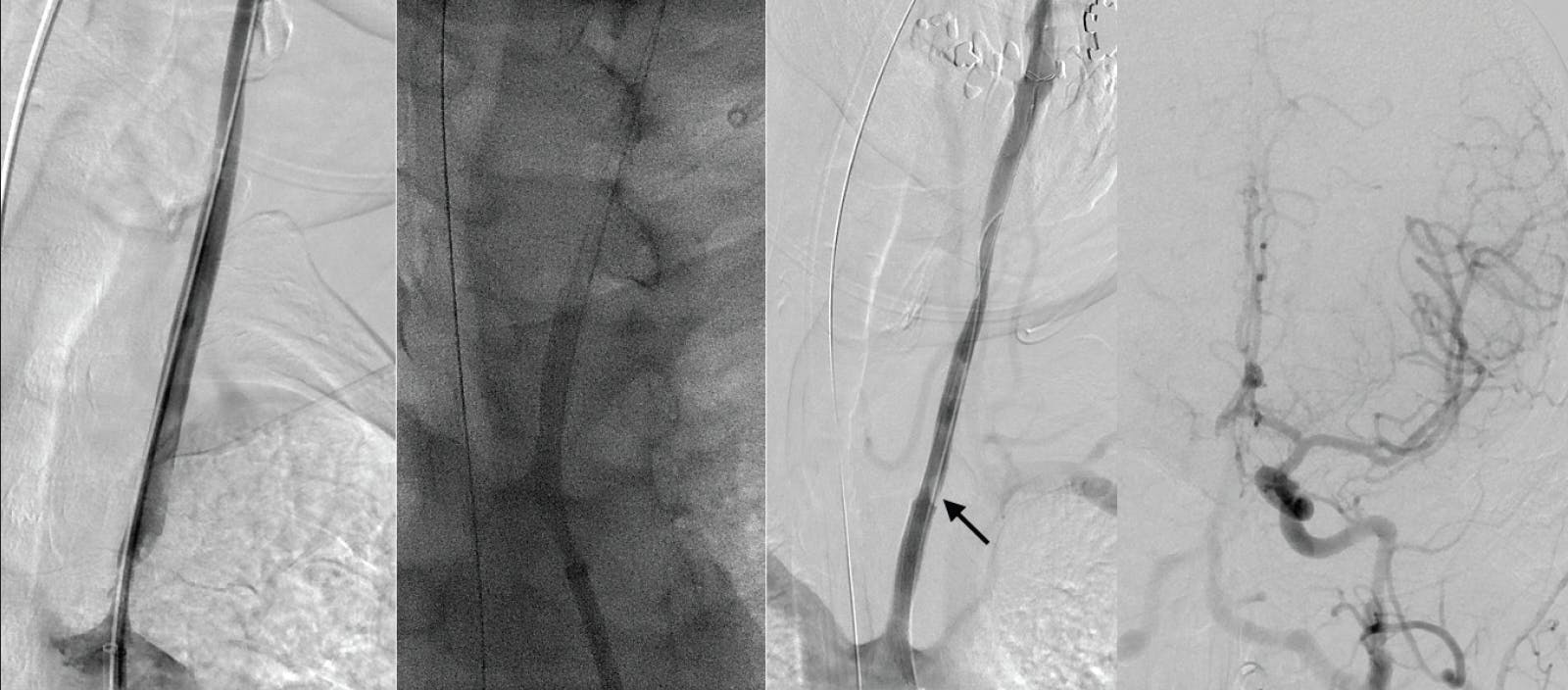
Figure 5. Angiography after MCA thrombectomy revealed significant recoil of the CCA ostial stenosis with persistence of the adherent thrombus. Following self-expanding stent placement and postdilation, the stenosis resolved and most of the thrombus was trapped, with only a small portion remaining distal to the stent (arrow). Final intracranial angiography confirmed no distal embolization and complete resolution of the MCA vasospasm.
Although balloon-expandable stents are typically preferred for ostial lesions, especially of the great vessels, a self-expanding stent was chosen because of the need to cover a very long segment of the CCA to trap the bulk of the thrombus. A covered stent was a treatment option, but one was not chosen because the available devices are generally stiffer and more difficult to deliver than typical carotid stents; they are also considerably more thrombogenic than noncovered stents with a higher risk of acute occlusion, and based on anecdotal experience, a closed-cell carotid stent is typically sufficient to trap thrombi in these situations.
The stent was postdilated with a 5- X 15-mm balloon, although the CCA is typically closer to 7 to 9 mm in diameter, to avoid fragmentation and embolization of the thrombus. Final angiography revealed good stent expansion, trapping of most of the thrombus, and continued patency of the ICA, MCA, and ICA with a final TICI (thrombolysis in cerebral infarction) 3 flow grade indicating complete reperfusion. The patient improved to a NIHSS score of 7 upon arrival in the intensive care unit. CT at 24 hours showed that the infarct core did not grow. The patient made steady improvement and was discharged on DAPT on hospital day 4 with a NIHSS score of 2.
Highlight Point
There is significant debate in the literature on whether to treat the proximal lesion first or the distal occlusion, as well as whether to perform stenting or angioplasty alone of the cervical stenosis.3 Our approach is to recanalize the lesion that will provide the earliest flow to the ischemic penumbra. In this case, the ICA was patent, and therefore the lesion that was most likely limiting cerebral perfusion was the MCA occlusion. However, angioplasty of the CCA ostium was required to permit passage of the devices for MT of the MCA. Although the angioplasty result was suboptimal, a stent was not placed immediately because of the need to quickly recanalize the MCA, but also because proximal stent placement can sometimes complicate advancement of devices distally, which would have likely happened in this case because of the need to protrude the stent into the aorta. Another risk of early stent deployment is interaction between the stent tines and a stent retriever leading to inadvertent device entanglement. Of course, in some cases, the important flow-limiting lesion is the proximal lesion or lesion recoil is severe and immediate, and in both of those situations, stenting prior to distal thrombectomy may be necessary. Regardless of stent timing, potent platelet inhibition is required. Eptifibatide has been studied in stroke and appears to be generally safe, except in patients treated with IVT, with no agreement on appropriate dosing.9 The author prefers to give one-quarter to one-half of the typical coronary dose intra-arterially with enteral DAPT rather than an infusion afterwards.10 The major concern is symptomatic ICH, which is more likely in patients receiving IVT, those with larger infarct cores, elevated blood glucose, low ejection fraction, older age, and those with hypertension, especially postprocedure.
DISCUSSION
Mechanical embolectomy for LVO stroke is one of the most validated and effective treatments in all of medicine. However, the complex nature of stroke pathophysiology—as compared to ST-segment elevation myocardial infarction, for example—and the lack of randomized trials based on pathophysiology has resulted in wide variations in endovascular techniques for various underlying pathologies. Whereas embolic stroke is treated with traditional thrombectomy with little need for adjuvant pharmacologic agents or endovascular devices, management of LVO due to an underlying atherosclerotic stenosis remains highly variable.3 Some operators perform MT only, sometimes with angioplasty, but do not stent or give potent antiplatelet agents. Others always treat the distal lesion first and some the proximal lesion. Some perform stenting in all cases, while others only use it as a bailout.
This case highlights the various issues that can be encountered in cases of tandem occlusion, but in a very rare scenario of proximal CCA origin occlusion; the typical location of the proximal occlusion is the cervical ICA bulb, which is the most common location for atherosclerotic stenosis of the cerebral vessels and the most common atherosclerotic cause of cerebral ischemia in the United States. The most important teaching aspects of this case are the need to plan the endovascular approach based on the presumed pathophysiology and anatomy gleaned from the CTA as well as the need to focus on minimizing the risk of ICH, while simultaneously restoring cerebral perfusion despite the patient not meeting the criteria for intervention in published guidelines.11 Until definitive randomized trial data clarify the best approach, individualization of the approach to each patient weighing all of the known predictors of ICH versus the risks of the various available endovascular reperfusion tools seems to be the most prudent approach and in this case resulted in an excellent neurologic outcome.
1. Rennert RC, Wali AR, Steinberg JA, et al. Epidemiology, natural history, and clinical presentation of large vessel ischemic stroke. Neurosurgery. 2019;85(suppl_1):S4-S8. doi: 10.1093/neuros/nyz042
2. Raha O, Hall C, Malik A, et al. Advances in mechanical thrombectomy for acute ischaemic stroke. BMJ Med. 2023;2:e000407. doi: 10.1136/bmjmed-2022-000407
3. Di Donna A, Muto G, Giordano F, et al. Diagnosis and management of tandem occlusion in acute ischemic stroke. Eur J Radiol Open. 2023;11:100513. doi: 10.1016/j.ejro.2023.100513
4. Schroder J, Thomalla G. A critical review of alberta stroke program early CT score for evaluation of acute stroke imaging. Front Neurol. 2016;7:245. doi: 10.3389/fneur.2016.00245
5. Zheng M, Li L, Chen L, et al. Mechanical thrombectomy combined with intravenous thrombolysis for acute ischemic stroke: a systematic review and meta-analyses. Sci Rep. 2023;13:8597. doi: 10.1038/s41598-023-35532-7
6. Mohamed GA, Nogueira RG, Essibayi MA, et al. Tissue clock beyond time clock: endovascular thrombectomy for patients with large vessel occlusion stroke beyond 24 hours. J Stroke. 2023;25:282-290. doi: 10.5853/jos.2023.00017
7. Nguyen TN, Malisch T, Castonguay AC, et al. Balloon guide catheter improves revascularization and clinical outcomes with the Solitaire device: analysis of the North American Solitaire Acute Stroke Registry. Stroke. 2014;45:141-145. doi: 10.1161/STROKEAHA.113.002407
8. Gupta R, Miralbes S, Calleja Bonilla A, et al. Technique and impact on first pass effect primary results of the ASSIST global registry. J Neurointerv Surg. 2025;17:128-138. doi: 10.1136/jnis-2023-021126
9. Adeoye O, Broderick J, Derdeyn CP, et al. Adjunctive intravenous argatroban or eptifibatide for ischemic stroke. N Engl J Med. 2024;391:810-820. doi: 10.1056/nejmoa2314779
10. Osteraas ND, Crowley RW, Panos N, Dafer RM. Eptifibatide use following emergent carotid stenting in acute anterior circulation ischemic stroke with tandem occlusion. J Stroke Cerebrovasc Dis. 2020;29:105021. doi: 10.1016/j.jstrokecerebrovasdis.2020.105021
11. Powers WJ, Rabinstein AA, Ackerson T, et al. Guidelines for the early management of patients with acute ischemic stroke: 2019 update to the 2018 guidelines for the early management of acute ischemic stroke: a guideline for healthcare professionals from the American Heart Association/American Stroke Association. Stroke. 2019;50:e344-e418. doi: 10.1161/STR.0000000000000211
Advertisement
Advertisement