Advertisement
Advertisement
April 2025
An Interview With Vivian L. Bishay, MD
Dr. Bishay discusses the keys to a successful interventional radiology program, her role as National Co-Principal Investigator of SYMPHONY-PE and the broader clinical trial landscape for PE, priorities for women’s health research, and more.

The Mount Sinai Division of Vascular and Interventional Radiology, where you’ve practiced since 2017, is a globally recognized leading interventional radiology (IR) program. What do you see as the program’s building blocks to success?
The success of our division rests on three elements. First, we prize innovation. At Mount Sinai, we honor and build on the legacy of IR’s earliest pioneers. We work through many avenues to foster innovation, from research to pairing with industry to education. One aspect of our current research and industry partnerships focuses on leveraging artificial intelligence (AI) and robotics to improve the delivery of patient care. These tools will be integral to expanding minimally invasive options to more patients in the future. We also continue to innovate in the ways we educate patients and providers on the procedures we perform. For the past year, we have live-streamed endovascular interventions via our TREAT iR LIVE platform as a means of sharing our expertise with the audience in real time. The cases use cutting-edge techniques—for example, balloon occlusion and liquid embolics for prostate artery embolization. We have had an array of national and international panelists join the operators remotely, interacting live with the audience to facilitate a maximally educational environment.
The second element leading to our clinical success is our unwavering focus on patient care and clinical knowledge beyond technical know-how. We believe that being experts on our patients is the only way that interventional radiologists can maintain a competitive advantage among other specialties. This seems like a simple idea, but as a specialty traditionally housed under the umbrella of diagnostic imaging, many interventional radiologists are seen as technicians. At Mount Sinai, we have had dedicated office hours for 2 decades. We train our residents in the workup, treatment, and long-term management of our ambulatory patients. This starts during their intern year and progresses throughout their training years.
The third key to success is a cultural one. We are very team-oriented in the delivery of patient care. Individuals are encouraged to pursue their varied interests, but we are always communicating and collaborating with one another (faculty, residents, and ancillary staff) to bring our diverse strengths to the broader goal of improved patient care.
Also at Mount Sinai, you are Program Director of the Independent IR Training Pathway. Outside of technical proficiency, what do you hope to see participants take away from the independent pathway? What do you think will be the essential skills for this next generation of interventional radiologists?
My answer goes back to the fundamental need for interventional radiologists to have sound clinical knowledge. The medical landscape is changing dramatically, and this will only accelerate in the next decade, particularly with the integration of AI into all aspects of diagnostic imaging and patient care in general (Grok is interpreting x-rays!). Although imaging is a tool we need as interventionalists, more and more our success as individual providers and as a specialty hinges on being experts in the disease states we treat and demonstrating excellent results (through high-quality research) for our patients. My hope for all my trainees in the IR/diagnostic radiology, early specialization in IR, and independent pathways is the same—that they seek to become excellent clinicians who approach patients holistically and take ownership of their outcomes.
You’re the National Co-Principal Investigator of the SYMPHONY-PE investigational device exemption (IDE) study and are currently enrolling patients at Mount Sinai. What excites you about this technology, and what do you expect for the future?
The Symphony platform (Imperative Care Vascular) has sought to make improvements on existing FDA-cleared thrombectomy technologies for the pulmonary arteries. The device comes in 16- and 24-F sizes and can be telescoped if needed for more distal thrombus extraction. The device works under continuous “deep pulse” precision aspiration and is meant for single-operator use, with speed and safety in mind. The catheter handle houses a power chamber that delivers strong pulses of aspiration; this power chamber is also where aspirated material enters, allowing for immediate visualization of the thrombus that has been removed from the patient. Aspirated fluids can be siphoned off from this power chamber with a clearing button that quickly recharges the power chamber. This workflow allows for quick visualization of clot and catheter repositioning for the next deep pulse. This is all intended to reduce the time that a sick patient is on the procedure table, which is a key component to procedural safety.
We are excited about our experience with this technology and believe that this platform holds promises to address limitations of the current technologies. The Symphony platform is currently cleared by the FDA for nonsurgical removal of fresh, soft emboli and thrombi from blood vessels, and it is intended for use in the peripheral vasculature. We are approaching the end of patient enrollment in the IDE study designed to expand indications for use to pulmonary embolism (PE). I’m excited to see the trial results, with the expectation that the outcomes will lead to clearance and marketing of the Symphony device for patients with PE. Stay tuned!
What do you think are the major gaps in the current clinical data for PE, and what are clinical trials doing to address them?
Currently, much of the data being produced in the PE space revolve around the acute diagnosis and treatment of PE. The endpoint of many of the device studies have largely been related to reduction of right ventricular/left ventricular (RV/LV) ratio as a surrogate for improvement of right heart strain at 48 hours. Often, they have been single-arm safety and efficacy studies. This has already started to change. PE-TRACT is a parallel-group, open-label randomized controlled trial with medium- to long-term follow-up. It uses objective data like New York Heart Association classification and peak oxygen consumption after PE. Thus, we are already in a second wave of trials that will provide better-quality data and longer-term follow-up. We need studies that focus on how to optimize follow-up protocols and maximize the number of patients seen in long-term PE clinics and adhering to guideline-based treatment.
The current data have also started to better parse out risk assessment for intermediate-high–risk PE, but we can continue to refine our assessment tools to best identify patients at greater risk for impending cardiovascular collapse and also stand to benefit most from advanced therapies. As these therapies become further validated and more accessible to a wider patient population, we also need to delineate our procedural endpoints. This is an area ripe for research. To determine endpoints currently, interventionalists use a variety of physiologic metrics and imaging findings, as well as on-table, subjective, patient-reported feedback (eg, “I feel better,” “I can breathe more easily”). More data are needed to guide intraprocedural decision-making.
In 2024, you and a group of colleagues across multiple specialties began working on the American College of Radiology PE-RADS system. What are the goals of PE-RADS, and why is it important?
The goal of the PE-RADS system is to create a standard imaging lexicon for the diagnosis of acute PE and develop a structured hierarchical reporting system that incorporates anatomic and accessory findings to classify thrombus and assist in determining its cardiovascular impact. The working group consists of physicians from a variety of specialties, including chest radiology, interventional cardiology, IR, and pulmonary and critical care, and it is in alignment with multisocietal guidelines (European Society of Cardiology, American Heart Association) that risk-stratify patients presenting with acute PE. Critical findings with clinical implications such as overall thrombus burden, clot centrality, and reproducible indications of right heart strain such as RV/LV ratio are the focus of the reporting system. The current PE treatment landscape is one of evolving treatment strategies, including catheter-based therapies, and the hope is that this reporting system is better tailored to inform next steps in management.
You’ve also published on various women’s health topics, with research in uterine artery embolization (UAE), PE in pregnancy, and obstetric hemorrhage. If you received funding for a project of your choosing in the area of women’s health, what would it be?
Women’s health is another area that will always be near and dear to my heart. One of my partners and I, along with one of our residents, recently submitted a grant for a multicenter 5-year observational study of patients who desire future pregnancy and are undergoing UAE for the treatment of obstetrics and gynecologic (OB/GYN) pathologies. We strongly believe it is essential to clarify fertility outcomes after IR procedures to provide effective patient counseling, strengthen collaborations with our OB/GYN colleagues, and advance the development of minimally invasive medicine.
We plan to collaborate with IR and OB/GYN departments at three other major health care institutions in New York City to capture a large and diverse patient population. The primary outcome will be pregnancy rate in those seeking pregnancy after UAE. The secondary outcomes will be pregnancy outcomes and changes in menses. We will also evaluate how moderating variables, such as type of embolic agent, may influence fertility outcomes.
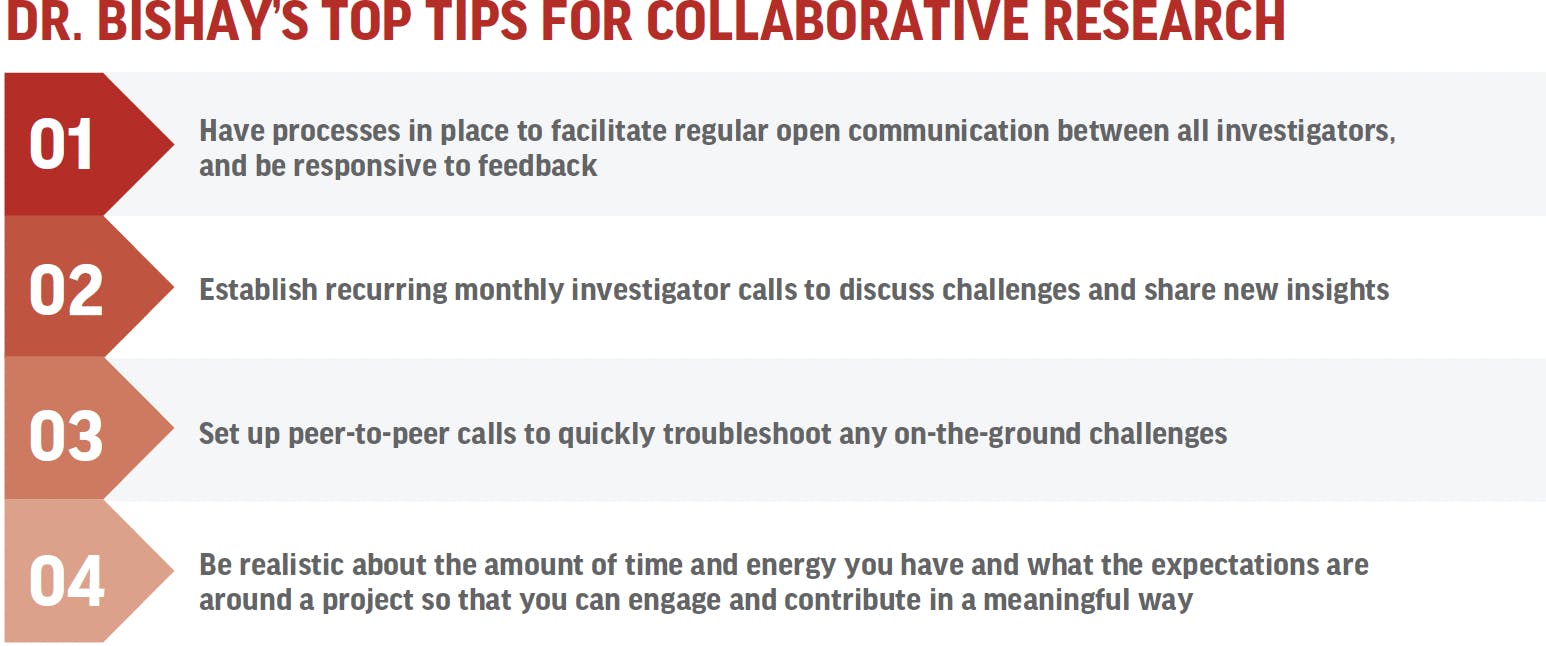
Another area that deserves more focus is PE in pregnancy. Much of the data on management is extrapolated from studies that did not include pregnant populations, despite the fact that PE is a leading cause of morbidity and mortality in this population and the physiology of pregnant patients is dramatically different. Their risk profile also differs significantly, with high risk of bleeding in the setting of anticoagulation or lytic use in the peripartum period. At Mount Sinai, we have successfully treated pregnant patients with catheter-based thrombectomy. Further outcome reporting in this population is sorely needed.
How have your interests and priorities changed as you’ve advanced in your career?
Earlier in my career, I just said yes to everything. Now, I have more leeway to decline opportunities that don’t get me excited. On the research front, I enjoy working with industry partners, providing feedback on new technologies, and collaborating on study design, particularly in the venous thromboembolism space.
On a day-to-day basis, I focus on the practice of clinical medicine and providing the best care possible to my patients. Despite all the challenges in health care, in IR we are fortunate to have a lot of opportunities to be creative and have a significant impact on our patients lives.
What’s the best piece of advice a mentor has given you, whether professional or personal?
Be honest about your needs and desires. Sometimes, a career in medicine can make you think the goal should be jumping through other people’s hoops. The closer you can stay to things that are meaningful to you, the more easily you will be able to remain consistently invested, committing the time, patience, and resources required for them to grow in a sustainable way. Build your career around what is important to you.
Advertisement
Advertisement
Interested in reading more interviews?
To read more interviews with thought leaders in the vascular field, check out our Profiles & Perspectives hub.
Read More