Advertisement
Advertisement
April 2025
Approach to Iliofemoral DVT Complicated by a Large Pelvic Mass
A case presentation involving a patient with severe, symptomatic iliofemoral deep vein thrombosis and need for urgent abdominal surgery highlights the complexities of clinical decision-making for VTE.
Patients with iliofemoral deep vein thrombosis (DVT) often present with severe symptoms and, in some cases, limb-threatening complications. Current guidelines recommend early thrombus removal strategies only for patients with severe symptoms, particularly for those aged < 65 years. These recommendations are largely based on the findings from the ATTRACT trial.1 However, ATTRACT was conducted before the advent of modern large-bore thrombectomy devices. The ability to offer early thrombus removal without the use of thrombolytics has likely expanded the population of patients who may benefit from intervention. In today’s clinical landscape, physicians must weigh the risks and benefits of acute thrombus removal in patients with iliofemoral DVT using new tools that were not available in previous randomized trials. This case highlights the complexities of clinical decision-making in a patient with iliofemoral DVT, severe symptoms, and need for urgent abdominal surgery.
CASE PRESENTATION
A woman in her early 40s presented to the emergency department with progressive abdominal fullness and discomfort that developed over a period of several months, along with acute-onset left leg pain and swelling. She reported difficulty bending her knee and bearing weight on her leg, which was the primary reason she sought medical attention.
She was nulliparous and had an unremarkable medical history other than her recent abdominal and leg symptoms. Although she had no shortness of breath at rest, she had progressive dyspnea on exertion and difficulty with deep inspiration.
On presentation, she was normotensive and not tachycardic, with an oxygen saturation of 98%. Her left leg was edematous to the mid thigh and was darker in color than the right leg. Her pulses were palpable, and her foot was warm. Laboratory studies, including a complete blood count and blood chemistry, were unremarkable.
Highlight Point: Imaging
DUS is the gold standard for diagnosis in the lower extremity.2 However, it has limitations in determining the cranial extent of iliofemoral thromboses. Factors such as patient body habitus, nothing by mouth status, and the presence of intra-abdominal or pelvic pathology can limit visualization of the IVC and iliac veins.
In this patient, the need for cross-sectional imaging was clear given her abdominal distention and dyspnea. However, in cases without abdominal or pulmonary symptoms, the need to pursue additional imaging is less straightforward.
In keeping with the Society of Radiologists in Ultrasound Consensus guidelines, it is the practice of our group to routinely obtain cross-sectional imaging when the cranial extent of the thrombus is not clearly visualized on DUS.2 This approach aids in procedural planning, helps refine prognosis, and provides the added benefit of detecting pelvic and intra-abdominal pathology. Notably, in cases of unprovoked extensive DVT, we have identified occult malignancies on a number of occasions. Although the prevalence of occult malignancy in all cases of unprovoked proximal DVT or PE in the SOME trial was relatively low at 3.9%, it has been reported as high as 39% when selecting for iliofemoral DVT in one study.3,4
A duplex ultrasound (DUS) revealed extensive DVT involving the left external iliac, common femoral, femoral, popliteal, and tibial veins. A heparin drip was initiated, and cross-sectional imaging was performed. Imaging revealed thrombus extending into the left common iliac vein (CIV) and inferior vena cava (IVC) at the confluence. A large pelvic mass was identified, extending into the abdomen and compressing adjacent structures (Figure 1). A pulmonary angiogram showed no evidence of pulmonary embolism (PE). Both gynecologic and vascular surgery consultations were obtained with care coordination between the two services. Given the patient’s age, clot burden, and severe symptoms, thrombectomy was planned; however, surgical excision of the pelvic mass was prioritized as the first step in management.
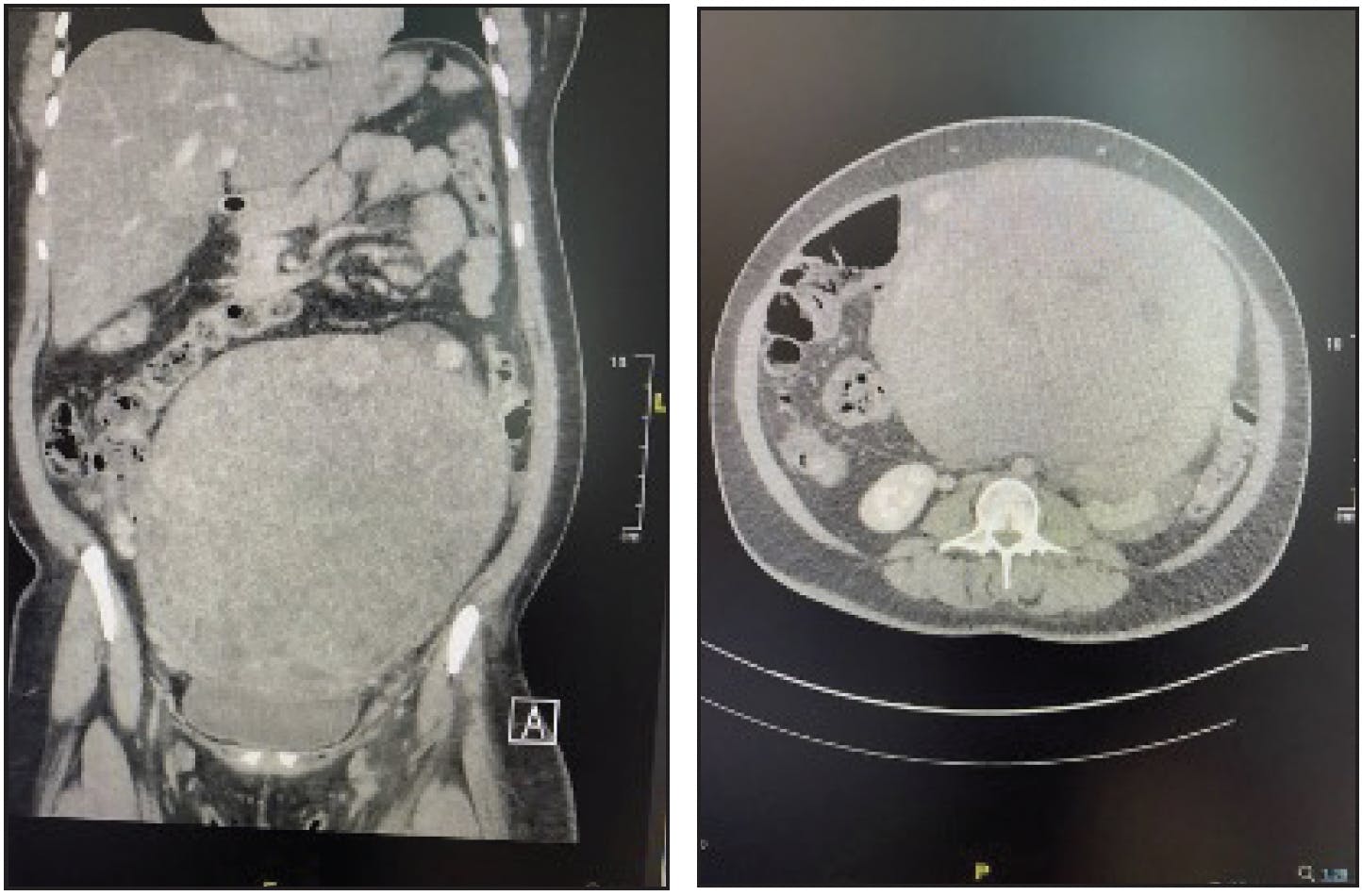
Figure 1. Preprocedure CT scan.
CASE CONTINUED
An infrarenal IVC filter was placed via a right internal jugular vein (IJV) approach. Heparin administration was temporarily paused, and the pelvic mass was removed via laparotomy. Postoperatively, anticoagulation with enoxaparin was initiated. Pathologic evaluation confirmed the mass to be a large uterine leiomyoma. The patient remained hemodynamically stable, with an expected postoperative drop in hematocrit after the complex procedure. However, she did not require a blood transfusion.
At 1 week after the laparotomy, the patient returned to the operating room for mechanical thrombectomy. Given her recent abdominal surgery and associated discomfort, the procedure was performed under general anesthesia. The patient was positioned prone, and venous access was achieved via the left popliteal vein, which was patent on ultrasound. Extensive iliofemoral DVT was confirmed (Figure 2).
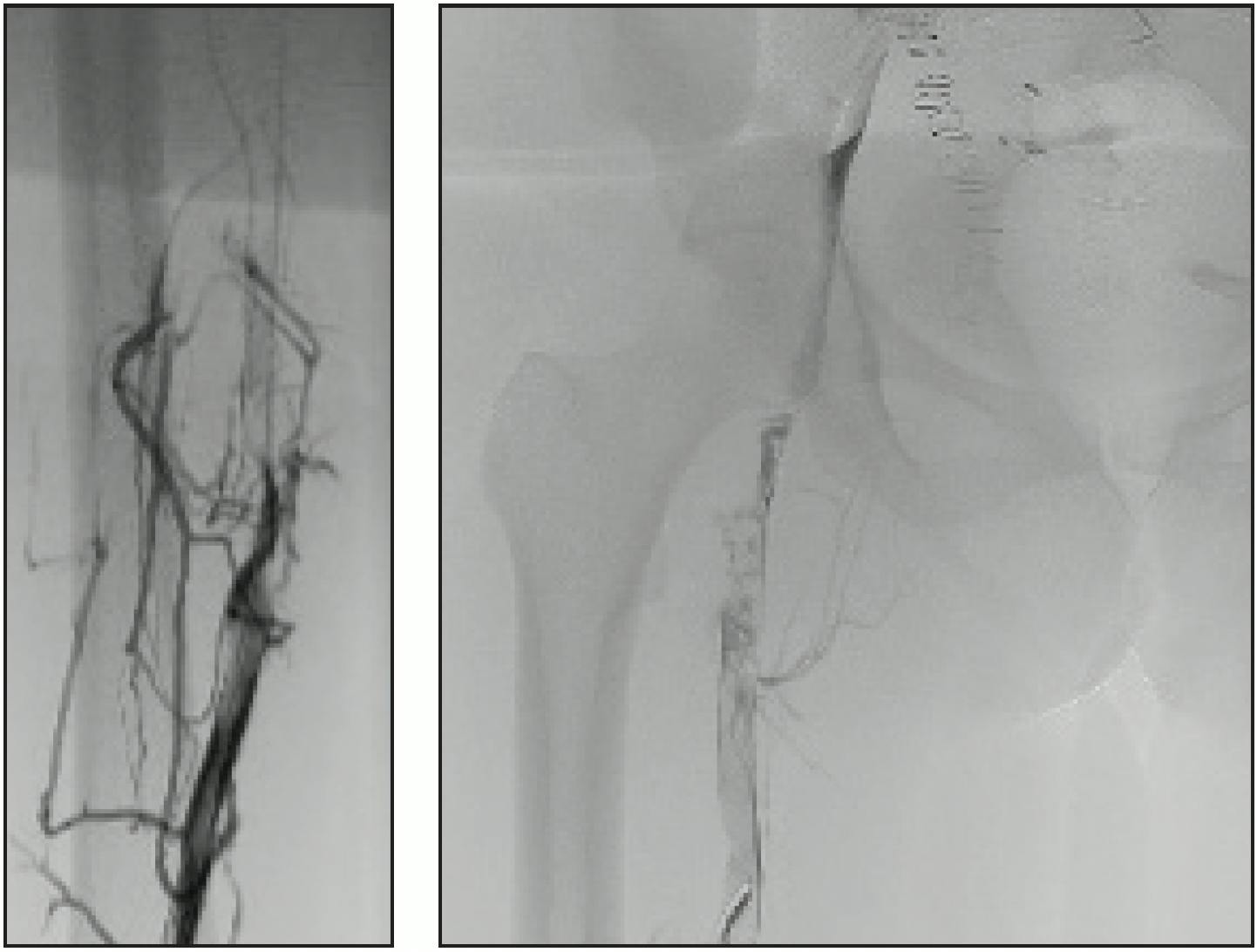
Figure 2. Initial venogram.
Mechanical thrombectomy was performed using the Lightning 12 thrombectomy system (Penumbra, Inc.). During the procedure, difficulty was encountered while attempting to advance the device past the IVC confluence. Intravascular ultrasound (IVUS) imaging revealed a chronic focal stenosis versus occlusion.
Highlight Point: IVC Filters
The use of prophylactic IVC filters in the United States has been declining, and for good reason.3 Failure to retrieve filters—whether due to lack of follow-up or technical challenges—can lead to complications such as caval thrombosis, filter erosion, migration, and fracture.4,5 However, current guidelines support IVC filter placement in specific scenarios. Indications include extensive DVT in patients requiring temporary interruption of anticoagulation (as in this case) or in the case of anticoagulation failure.6 When an IVC filter is placed prophylactically prior to a surgical procedure, retrieval should be expeditiously scheduled as soon as anticoagulation can be safely resumed.7
Balloon dilatation facilitated passage of the thrombectomy device. After achieving satisfactory removal of the acute thrombus, attention was directed to the severe stenosis at the IVC confluence (Figure 3A). The decision was made to place a stent.
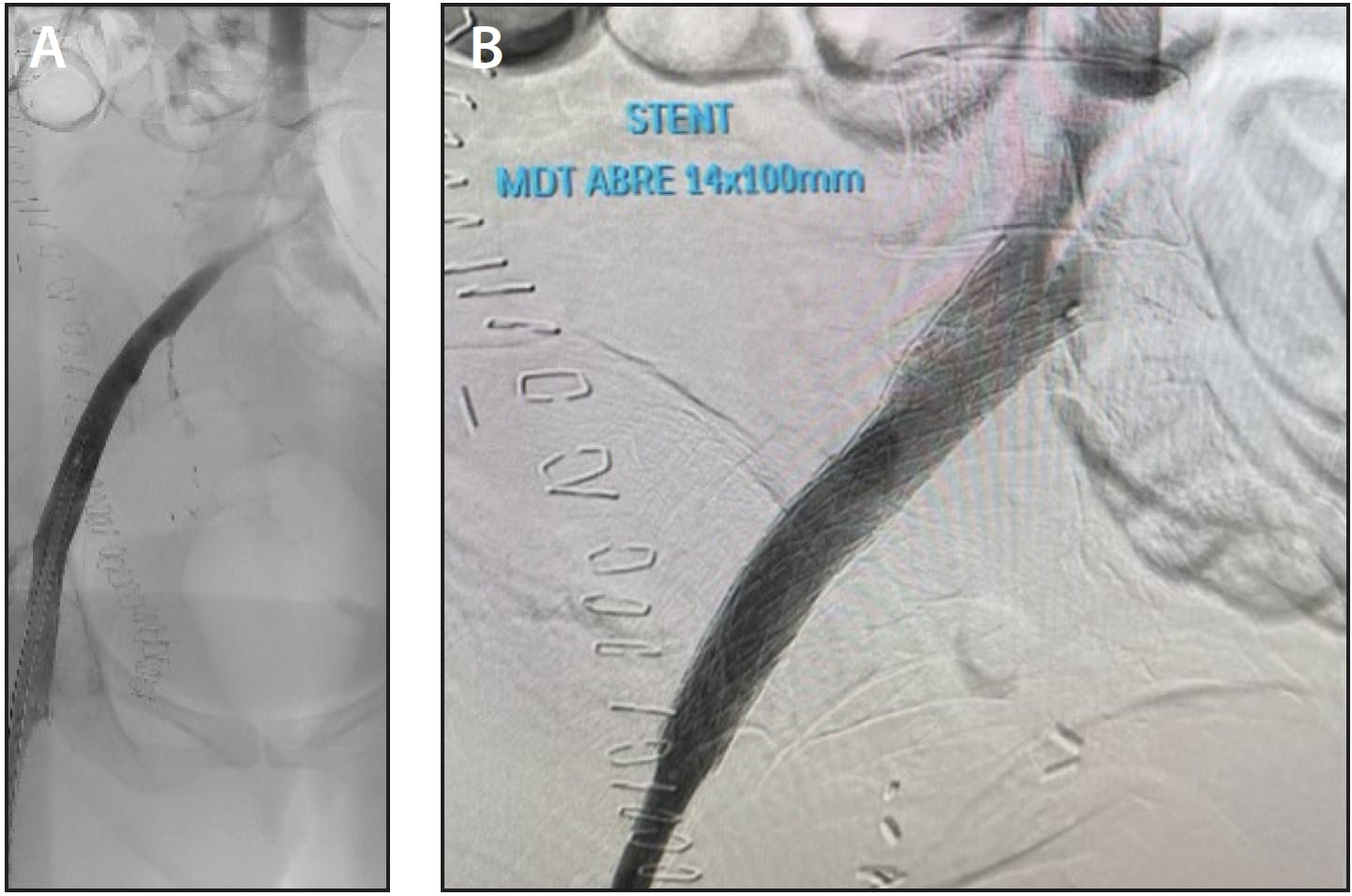
Figure 3. Left CIV stenosis at confluence after thrombectomy (A) and after stenting (B).
The lesion was predilated with a 14- X 60-mm Atlas Gold balloon (BD Interventional). A 14- X 100-mm Abre stent (Medtronic) was then deployed (Figure 3B). The 100-mm length was chosen, as it extended just into the confluence, covered the area of disease, and landed with a good transition to the external iliac vein. The caudal extent of the stent was directed anteriorly in an effort to minimize chronic pelvic and back pain. The 14-mm diameter was chosen based on IVUS diameters in the healthy segment of vein. Completion venography through the popliteal sheath demonstrated rapid contrast emptying into the IVC, confirming successful restoration of venous flow.
Highlight Point: Case Planning
In distinction to the urgency of arterial thrombectomy, venous thrombectomy (when phlegmasia is not present) allows for greater flexibility in procedural timing. In this case, the decision was made to remove the pelvic mass first, ensuring that full and uninterrupted anticoagulation could be initiated after venous thrombectomy and stent placement.
In general, thrombectomy for acute venous thrombus remains feasible for several weeks after the onset of symptoms.8 It is not uncommon to discover components of subacute thrombosis, chronic stenosis, or occlusive changes in the CIV, as we found in this case. Consequently, expertise in crossing chronic venous occlusions may be required.
In our practice, IVUS is an indispensable tool for evaluating venous stenosis and detecting residual thrombus. Additionally, maintaining an inventory of crossing catheters, guidewires, high-pressure balloons, and venous stents is essential for vascular interventionalists to effectively manage a wide range of clinical presentations. For crossing chronic venous occlusions, we generally start with an angled Glidewire (Terumo Interventional Systems) and a KMP catheter (Cook Medical) via popliteal or femoral vein access. If unsuccessful in recanalization, we quickly proceed to an angled Glidewire Advantage (Terumo Interventional Systems) and/or a TriForce peripheral crossing catheter (Cook Medical) for more support. If this too proves to be challenging, we attempt additional access via the right IJV. Inflating a balloon in the IVC may serve as a target while trying to recanalize the occlusive proximal CIV lesion.
CASE CONCLUSION
Anticoagulation with enoxaparin was continued, and the IVC filter was successfully removed via a right IJV approach 2 weeks postthrombectomy. Enoxaparin was continued for an additional 2 weeks before transitioning to apixaban 5 mg twice daily for 6 months.
Serial DUS showed wide patency of the stent at 2 weeks and 6 months after stent placement. At this point, the patient was transitioned to prophylactic dosing of apixaban (2.5 mg twice daily) for an additional 6 months.
At 1 year, serial imaging showed continued stent patency and no postthrombotic changes in her left external iliac or infrainguinal veins. At 1 year, anticoagulation was stopped. The patient remains asymptomatic and with continued stent patency at 2.5 years postthrombectomy.
CONCLUSION
Patients with iliofemoral DVT present with diverse clinical scenarios, anatomic considerations, and underlying conditions. Historically, the decision to pursue intervention was guided by weighing the potential reduction in postthrombotic syndrome against the risks—specifically, bleeding complications associated with thrombolytic therapy.
Highlight Point: Anticoagulation
The optimal duration and choice of anticoagulation after thrombectomy and stent placement remain undefined. Although the CHEST guidelines provide recommendations for anticoagulation in provoked and unprovoked venous thromboembolism (VTE), they do not specifically address postthrombectomy or poststenting management.8 For patients with unprovoked VTE, after a period of full-dose anticoagulation for 3 to 6 months, indefinite low-dose anticoagulation is recommended if bleeding risk is not high.
In contrast, for provoked VTE, such as in this patient with a large pelvic mass, guidelines suggest that anticoagulation may be stopped after 3 to 6 months, without specific consideration for patients with venous stents.
Given the lack of definitive guidance, much of the decision-making surrounding anticoagulation after stent placement relies on clinical experience rather than robust data. In our practice, we adopt the following approach for patients with provoked VTE requiring stenting:
- First month: Enoxaparin
- Months 2-5: Full-dose apixaban
- Months 6-12: Transition to low-dose apixaban or rivaroxaban
At 1 year, the decision to discontinue anticoagulation is individualized based on stent imaging, review of ongoing risk factors, and the presence or absence of postthrombotic symptoms. Although no supportive data exist, twice-daily dosing of apixaban may afford more stable levels of pharmacologic therapy rather than rivaroxaban in the early postoperative period to augment stent patency. Our group does not routinely use long-term antiplatelet therapy, as it appears to have little benefit in primary patency of venous stents.
With the advent of modern thrombectomy devices, clot removal without thrombolytics has become somewhat routine.9 However, risks remain without the use of thrombolytics. All interventions carry inherent risks, making careful patient selection essential. Ideal candidates should have a clear indication for treatment, favorable anatomy for successful intervention, and the ability to adhere to postprocedure anticoagulation.
Preprocedural planning is critical, particularly, ensuring the availability of tools to address underlying chronic venous stenosis or occlusion when necessary. Equally important is longitudinal follow-up with imaging and anticoagulation management, which is essential for optimizing long-term outcomes.
1. Vedantham S, Goldhaber SZ, Julian JA, et al. Pharmacomechanical catheter-directed thrombolysis for deep-vein thrombosis. N Engl J Med. 2017;377:2240-2252. doi: 10.1056/NEJMoa1615066
2. Needleman L, Cronan JJ, Lilly MP, et al. Ultrasound for lower extremity deep vein thrombosis: multidisciplinary recommendations from the Society of Radiologists in Ultrasound Consensus conference. Circulation. 2018;137:1505-1515. doi: 10.1161/CIRCULATIONAHA.117.030687
3. Carrier M, Lazo-Langner A, Shivakumar S, et al. Screening for occult cancer in unprovoked venous thromboembolism. N Engl J Med. 2015;373:697-704. doi: 10.1056/NEJMoa1506623
4. Bowden S, VanAsseldonk B, Eisenberg N, et al. Ten-year trends in iliofemoral deep vein thrombosis treatment and referral pathways. Vascular. 2021;29:751-761. doi: 10.1177/1708538120975244
5. Angel LF, Tapson V, Galgon RE, et al. Systematic review of the use of retrievable inferior vena cava filters. J Vasc
Interv Radiol. 2011;22:1522-1530.e3. doi: 10.1016/j.jvir.2011.08.024
6. Olanipekun T, Ritchie C, Abe T, et al. Updated trends in inferior vena cava filter use by indication in the United States after Food and Drug Administration safety warnings: a decade analysis from 2010 to 2019. J Endovasc Ther. 2024;31:873-881. doi: 10.1177/15266028231156089
7. Montoya C, Rey J, Polania-Sandoval CA, et al. Inferior vena cava filter long term complications and retrieval techniques: a case series and literature review. Vasc Endovascular Surg. 2024;58:559-566. doi: 10.1177/15385744231226048
8. Stevens SM, Woller SC, Baumann Kreuziger L, et al. Antithrombotic therapy for VTE disease: second update of the CHEST guideline and expert panel report. Chest. 2021;160:2247-2259. doi: 10.1016/j.chest.2021.07.055
9. Shaikh A, Zybulewski A, Paulisin J, et al; CLOUT Investigators. Six-month outcomes of mechanical thrombectomy for treating deep vein thrombosis: analysis from the 500-patient CLOUT registry. Cardiovasc Intervent Radiol. 2023;46:1571-1580. doi:10.1007/s00270-023-03509-8
Advertisement
Advertisement