Advertisement
Advertisement
April 2025
IVUS-Guided Femoropopliteal CTO Intervention
A case-based discussion of the role of IVUS in the evolving landscape of complex peripheral interventions.
By Subhash Banerjee, MD, FACC, FSCAI; Zachary Rosol, MD; and Sameh Sayfo, MD
In this case-based discussion, we explore the growing role of intravascular ultrasound (IVUS) as an indispensable tool in peripheral artery interventions, particularly in the management of chronic total occlusions (CTOs). In CTO procedures, where precise identification, access, or maintenance within the true lumen are paramount, IVUS offers critical guidance that enhances procedural success.
CASE PRESENTATION
A male patient in his early 70s was referred for intervention for a CTO of the right superficial femoral artery (SFA) after a prior unsuccessful attempt at recanalization 9 weeks earlier at an outside facility. The patient presented with rest pain in the right lower extremity and abnormal ankle-brachial indices (left, 0.82; right, 0.52). A selective angiogram was performed via a 6-F, 45-cm crossover sheath inserted percutaneously through the left common femoral artery. The diagnostic angiogram obtained during the right femoropopliteal (FP) CTO revascularization procedure revealed a diffusely diseased proximal SFA (Figure 1A) and a mid-SFA CTO with an ambiguous proximal cap accompanied by a well-developed large collateral vessel, with reconstitution of the distal SFA and a two-vessel infrapopliteal runoff to the foot (Figure 1B-D). A faint angiographic tract was observed leading to a short mid-SFA segment, suggesting the potential location of the ambiguous proximal CTO cap, which was subsequently confirmed using IVUS (0.014-inch Vision, Philips) (Figure 2A). IVUS, from within a collateral branch, showed the fibrocalcific occluded proximal cap of the mid-SFA CTO (Figure 2B). This crucial finding guided the precise localization for microcatheter-assisted guidewire penetration (FineCross, Terumo Interventional Systems; 0.014-inch Hi-Torque Command, Abbott) of the proximal CTO cap (Figure 3). As the guidewire progressed into the distal SFA, it transiently entered the subintimal space for a short segment (< 1 cm) (Figure 4). IVUS confirmed the extraluminal position of the IVUS catheter and the compressed true lumen of the distal SFA, separated by a thin partition of the vessel wall (Figure 5). Given the close proximity to the true lumen, through the microcatheter, the original guidewire was replaced with a penetrating 0.014-inch Astato XS 20 (Asahi Intecc Medical) guidewire with a shaped angulated tip, which passed into the true lumen. Given the limited extraluminal course, the target left SFA CTO was successfully treated with balloon predilation and drug-coated balloon (DCB) application.
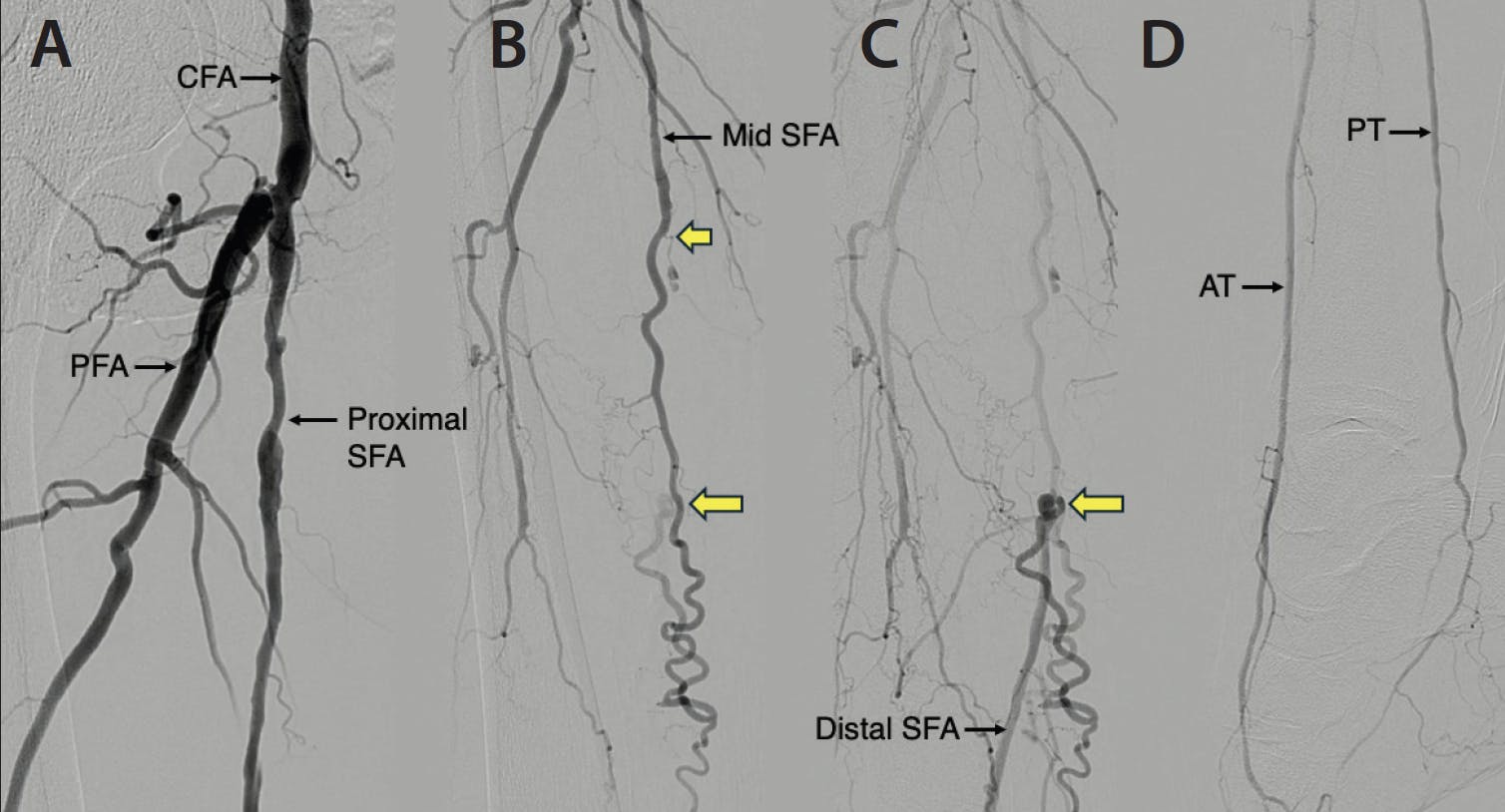
Figure 1. Diagnostic angiographic images of the right SFA CTO (A), a mid-SFA CTO with an ambiguous proximal cap (short yellow arrow) and reconstitution of the distal SFA (B, C), and two-vessel infrapopliteal runoff to the foot (D). PFA, profunda femoral artery; AT, anterior tibial artery; PT, posterior tibial artery.
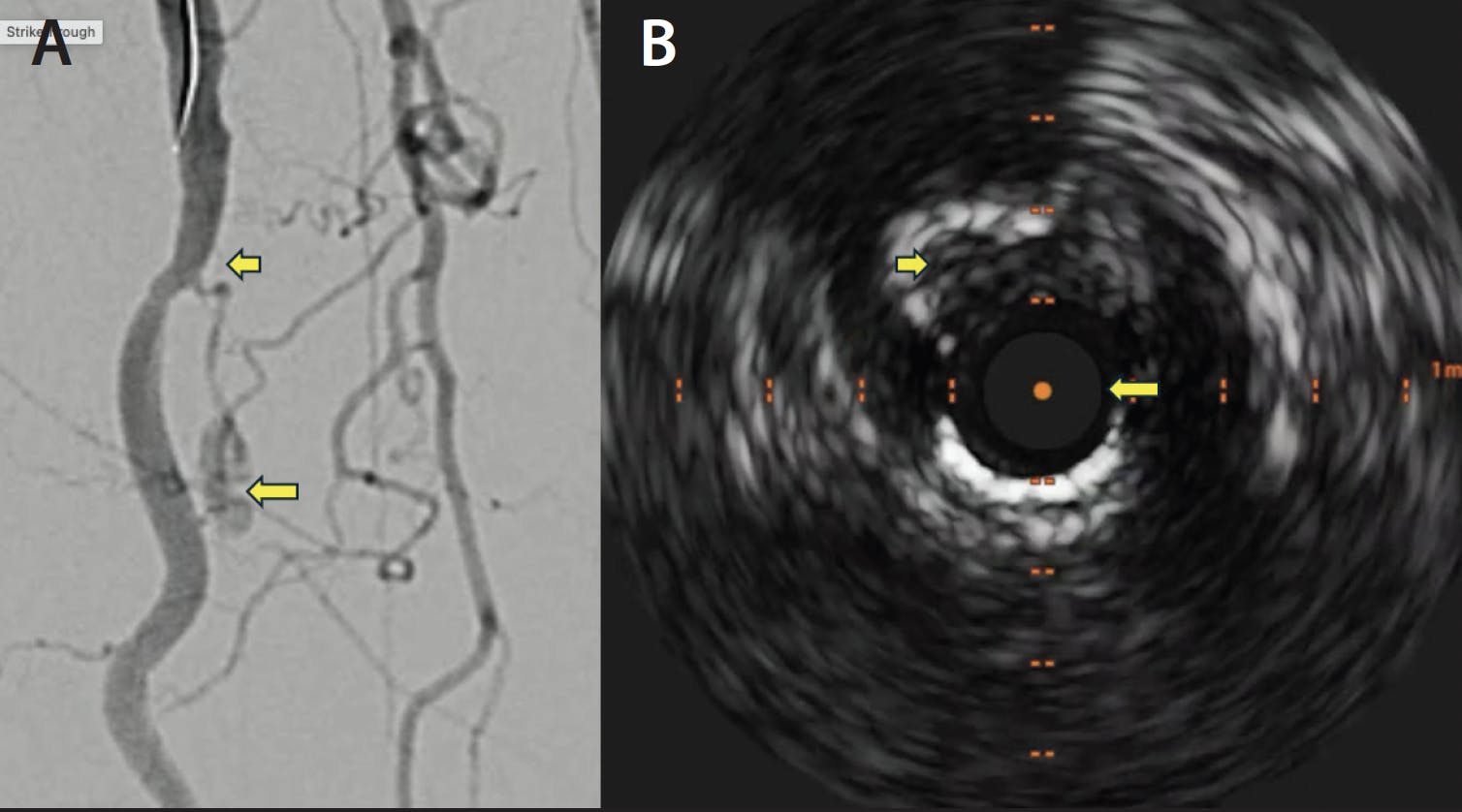
Figure 2. Angiographic and IVUS images of the ambiguous proximal cap of the right SFA CTO. A faint angiographic tract (short yellow arrow) leading to a short mid-SFA segment (long yellow arrow). The ambiguous proximal CTO cap was confirmed using IVUS (A). The fibrocalcific occluded proximal cap of the mid-SFA CTO (short yellow arrow), visualized during IVUS interrogation within a collateral branch (long yellow arrow) (B).
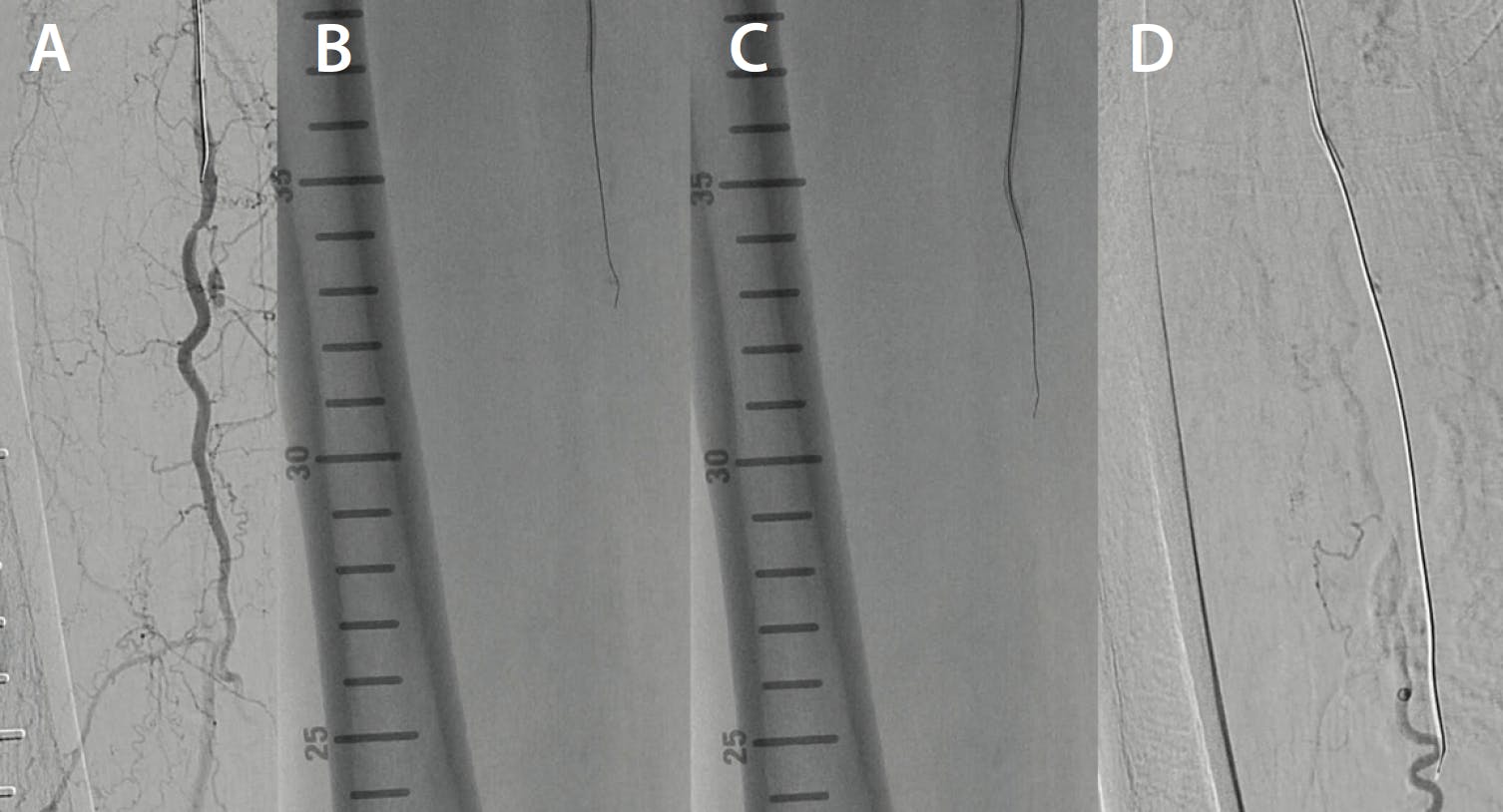
Figure 3. Microcatheter-supported guidewire proximal cap penetration of right SFA CTO (A) and advancement (B-D).
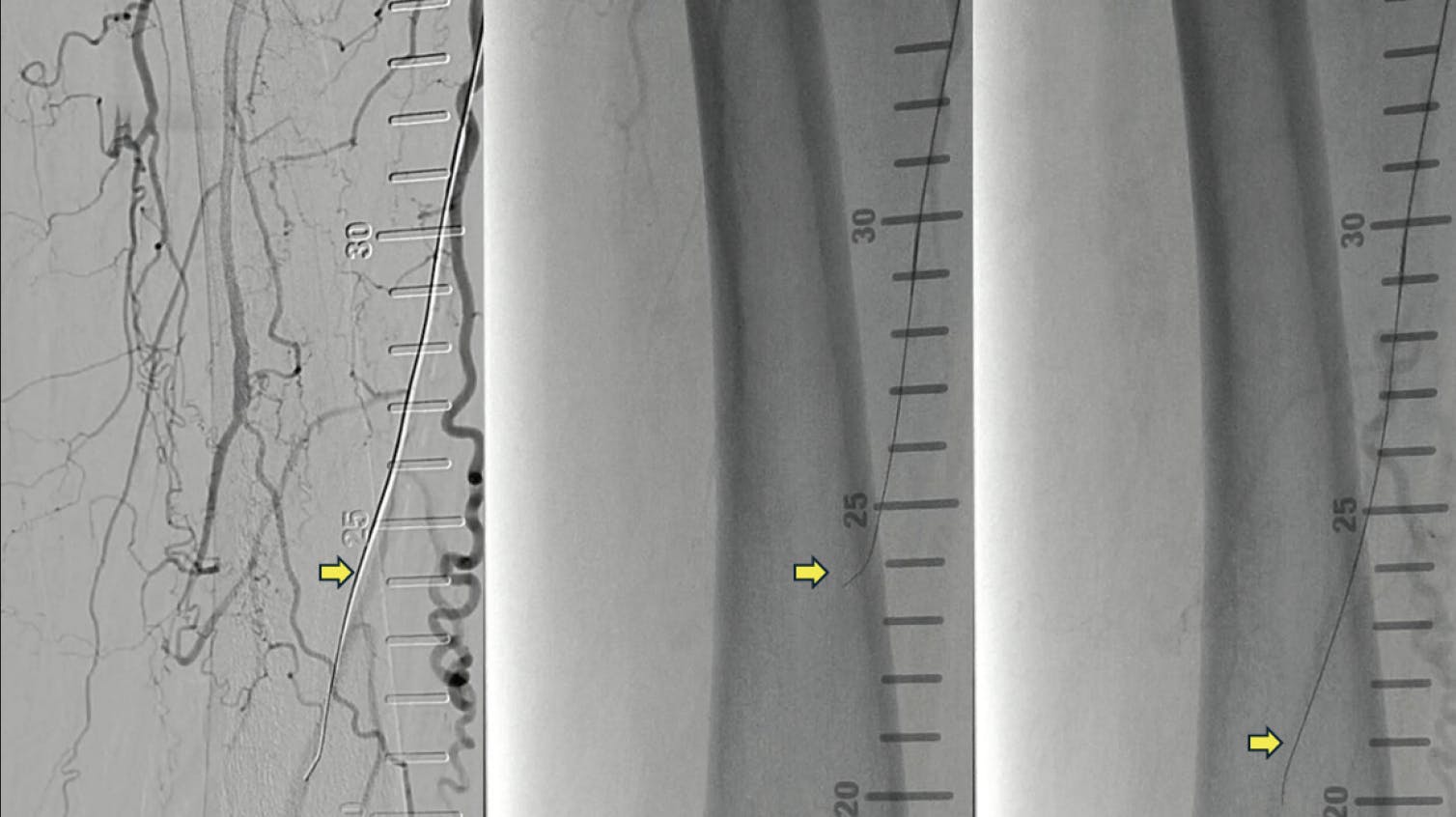
Figure 4. Subintimal guidewire passage and wire-assisted reentry into distal true lumen of the right SFA CTO.
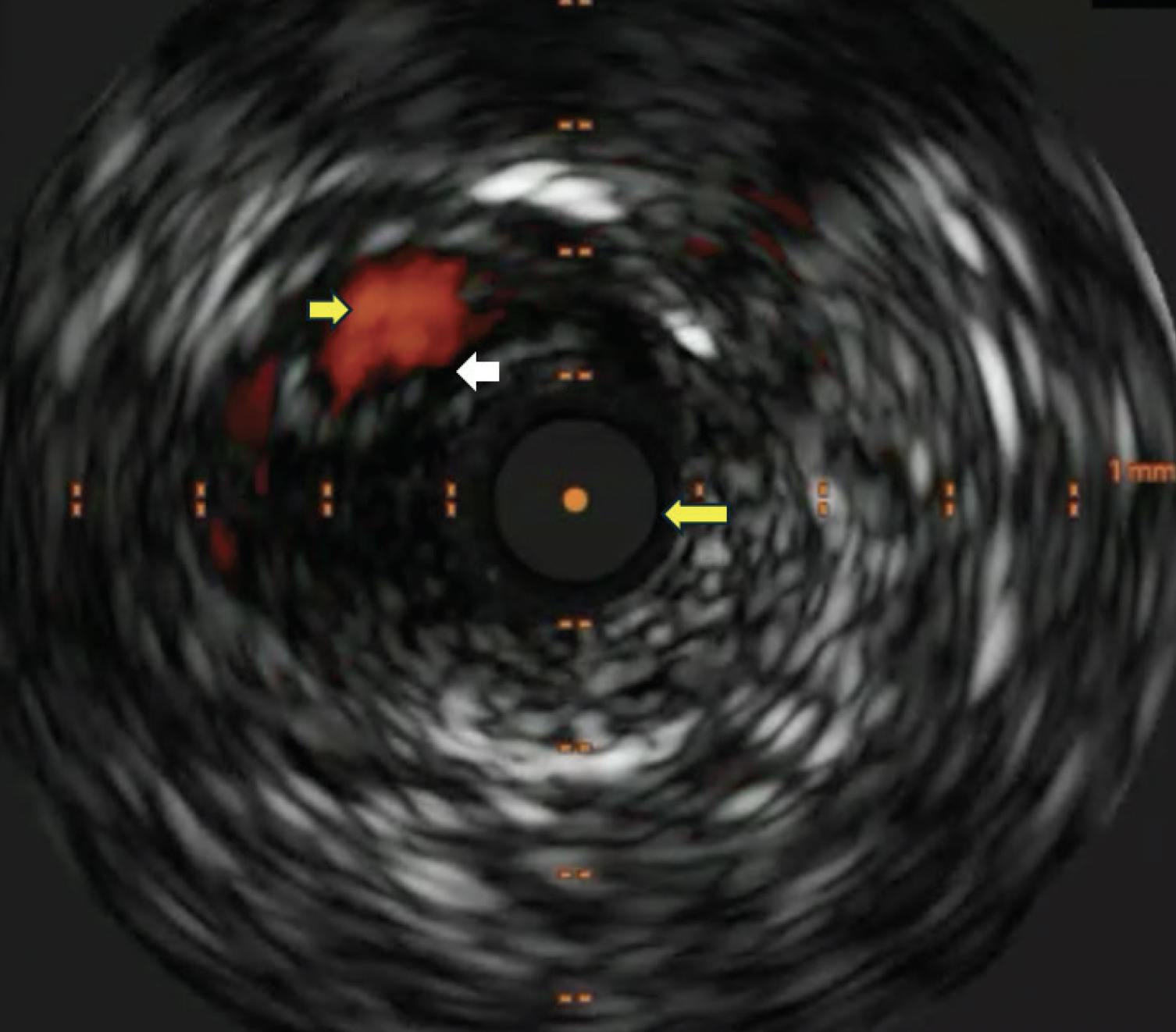
Figure 5. IVUS showing the extraluminal position of the IVUS catheter (long yellow arrow) and the compressed true lumen of the distal SFA (short yellow arrow), separated by a thin partition of the vessel wall (white arrow).
The initial probing and crossing of the leading cap in a peripheral artery CTO are a pivotal factor in determining procedural success.2 Precise identification of the cap and a well-executed first crossing attempt can profoundly impact the treatment strategy, including the decision to deploy a stent or not based on the extent of the subintimal course. This step often dictates the course of the intervention, shaping both the technical approach and the overall clinical outcome.
Highlight Point
The findings in this case study underscore the critical role of IVUS in identifying the CTO cap morphology, facilitating precise guidewire passage, and optimizing procedural success in complex peripheral arterial interventions.1
ROLE OF IVUS IN PERIPHERAL ARTERY CTO INTERVENTIONS
IVUS plays a key role in assessing lesion characteristics, guiding treatment, and evaluating treatment success and potential complications.
- Lesion assessment. IVUS provides high-resolution, cross-sectional imaging, allowing for precise evaluation of plaque burden, degree and depth of calcification, vessel size, lumen and vessel wall morphology including side branches, or occluded CTO caps.
- Treatment optimization. IVUS ensures selection of appropriate nonstent or stent-based treatment strategy, post–balloon dilation dissections, efficiency of lesion debulking, microfracturing of calcified plaque, appropriate sizing of balloon or stent, selection of reentry location and reentry device, and stent expansion and apposition.
- Postintervention evaluation. IVUS confirms procedural success and identifies complications such as residual dissections, in situ thrombus, intramural hematoma or pseudoaneurysms, or malapposed stents.
After subintimal passage, IVUS serves as a valuable tool in guiding reentry techniques. It aids in the precise deployment of reentry devices such as the Enteer (Medtronic) or Outback (Cordis) or for ensuring accurate targeting of the distal lumen. In techniques like the reverse CART (controlled antegrade and retrograde tracking), IVUS enhances visualization of the external elastic lamina and guidewire positioning, facilitating a controlled reentry into the true lumen. IVUS guidance can also be used for employing the parallel wire technique and redirecting a guidewire into the true lumen.
Highlight Point
In peripheral CTO interventions, IVUS can play a crucial role in ensuring precise guidewire positioning and facilitating successful revascularization. One of its primary advantages is identifying the true lumen. Angiography lacks depth resolution and cannot confirm wire position. IVUS provides real-time confirmation of whether the guidewire is within the true lumen or has deviated into the subintimal space, a distinction that is essential for safe and effective crossing and selection of downstream treatment strategies. Additionally, it enhances visualization of the distal landing zone, enabling operators to plan an optimal reentry strategy.3
Beyond reentry facilitation, IVUS is instrumental in selecting the most appropriate guidewire and adjusting crossing strategies based on lesion characteristics. In cases of soft plaque, hydrophilic polymer-coated wires such as Fielder XT (Asahi Intecc Medical) and Gladius (Asahi Intecc Medical) offer enhanced penetration, while for fibrotic or calcified caps, stiffer wires like Confianza Pro 12 (Asahi Intecc Medical) or Astato, often supported by an angled tip microcatheter, provide the necessary pushability and control. Furthermore, real-time wire manipulation guided by IVUS allows operators to make critical adjustments before balloon dilation or stenting, optimizing procedural outcomes and minimizing complications. IVUS can substantially reduce the need for blind reentry attempts. The use of IVUS during repeat revascularization procedures can help elucidate the mechanism of failure.4
CHALLENGES IN IDENTIFYING THE PROXIMAL CTO CAP
One of the biggest challenges in FP artery CTO interventions is accurately identifying the leading cap, especially when it is ambiguous or unclear on angiography. IVUS can help overcome this challenge.
- Ambiguous or blunt caps. FP CTOs often lack a well-defined entry point, making guidewire or CTO crossing device engagement and penetration difficult.
- Heavily calcified caps. Hard plaques may deflect the guidewire or crossing device into the subintimal space.
- Stump variability. Some lesions have a tapered soft cap, while others have a blunt, fibrotic, or calcified cap that is resistant to penetration.
- Angiographic limitations. Angiography during peripheral lower extremity interventions provides only two-dimensional views (often without angulated or orthogonal) and may not clearly show cap morphology.
As highlighted by our case, where the CTO cap was ambiguous and flush occluded, IVUS of the main vessel, a collateral branch, or a side branch can provide critical visualization to guide wire or crossing device entry and optimize the crossing strategy.5 The precise technique involves several key steps:
Step 1: IVUS Imaging to Define the CTO Cap
IVUS is first performed in the proximal segment of the main vessel or through a side branch near the occlusion. By assessing vessel morphology, plaque composition, and cap characteristics (fibrotic, calcified, or both), IVUS helps clarify the optimal entry site for crossing and traversing the body of the occlusion.
Step 2: Targeting Wire Entry Using IVUS Guidance
If the CTO cap is flush with a bifurcation, IVUS from a side branch can reveal the true lumen location and the best angle for wire penetration. IVUS can differentiate between a soft plaque, which may be crossed using a hydrophilic wire, and a fibrotic or calcified cap, which requires a stiffer guidewire, microcatheter support, or a crossing device.
Using IVUS, operators can adjust wire choice based on plaque morphology. For soft or fibrotic plaque, recommended wires include the Fielder XT and Hi-Torque Pilot 200 (Abbott), as they are flexible and atraumatic. In cases of moderate fibrosis, the Confianza Pro 12 and Astato 20 are preferred due to their ability to penetrate dense caps. When dealing with a calcified cap, the Astato 40 and Gaia Third (Asahi Intecc Medical) are optimal choices, providing a high tip load for effective cap penetration.
IVUS pullback across the leading CTO track allows operators to mark the precise trajectory for wire advancement, reducing the risk of subintimal dissection or its extension or enlargement.
Step 3: Guiding CTO Crossing Devices or Reentry Techniques
When a guidewire alone is insufficient, IVUS can direct a CTO crossing device or reentry catheter toward the true lumen. These options could be precisely selected based on evaluation of the reentry zone with IVUS. The distance and intervening vessel wall separating the true and false lumens during subintimal passage can provide tactical guidance during reentry.
As mentioned previously, in a reverse CART approach, IVUS enhances visualization of both the true lumen and the external elastic lamina, allowing selection and controlled guidewire advancement from the subintimal space. Real-time IVUS monitoring ensures that the wire remains on course, confirming successful penetration into the true lumen.
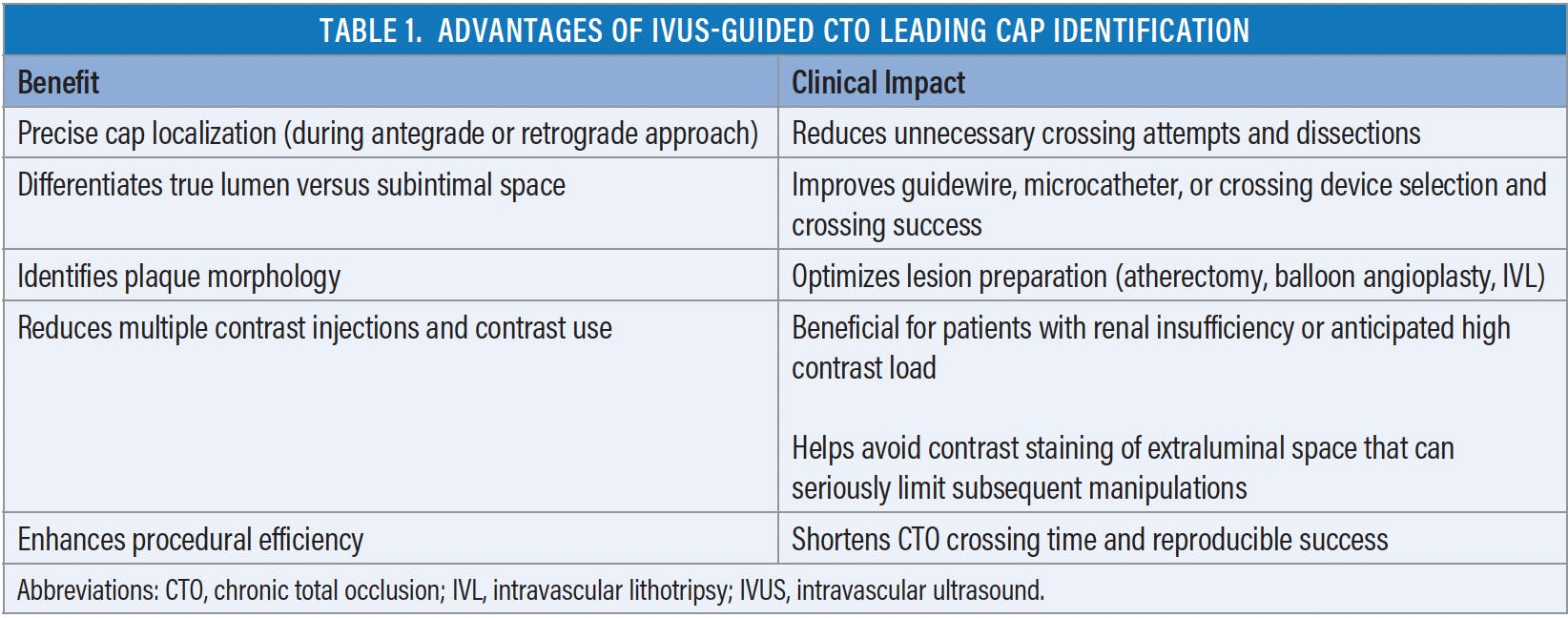
By providing precise spatial orientation and detailed lesion characterization, IVUS transforms the approach to complex CTOs, improving crossing success rates, minimizing complications, and optimizing procedural outcomes outlined in Table 1. In select situations, FP CTO track imaging could be obtained with IVUS imaging from an adjacent parallel vein.6
Highlight Point
Navigating the complexities of fibrocalcific FP CTOs demands a strategic, precision-driven approach that integrates advanced imaging, meticulous lesion preparation, and refined interventional techniques. When conventional antegrade access proves insufficient, the rendezvous technique provides an invaluable alternative, facilitating lesion crossing via a retrograde approach. However, the true linchpin of reproducible success in these challenging cases is IVUS, which transforms interventions from reactive, episodic procedures into systematic, evidence-driven strategies.7 Optical coherence tomography offers a high-resolution alternative to IVUS; however, it requires blood clearance and can be challenging to use in long FP CTOs. In contrast, IVUS offers real-time, cross-sectional imaging, enables wire guidance, and allows for plaque burden assessment, making it highly valuable in complex interventions. IVUS has a learning curve and can add to the procedural cost.
CONCLUSION
By offering unparalleled insights into vessel morphology, plaque burden, and lesion composition, IVUS ensures precise atherectomy, lithotripsy, conventional balloon, DCB selection, and stent optimization, ultimately reducing complications and enhancing long-term durability. In the evolving landscape of complex peripheral interventions, IVUS is not merely an adjunct but an essential instrument, elevating procedural elegance and precision while setting a new standard for durable, patient-centered outcomes.
1. Secemsky EA, Aronow HD, Kwolek CJ, et al. Intravascular ultrasound use in peripheral arterial and deep venous interventions: multidisciplinary expert opinion from SCAI/AVF/AVLS/SIR/SVM/SVS. J Soc Cardiovasc Angiogr Interv. 2024;3:101205. doi: 10.1016/j.jscai.2023.101205
2. Shimada T, Shima Y, Miura K, et al. Impact of guidewire route on severe dissection after balloon angioplasty for femoropopliteal chronic total occlusion lesions: an intravascular ultrasound analysis. Eur J Vasc Endovasc Surg. 2021;61:830-836. doi: 10.1016/j.ejvs.2021.01.014
3. Sangera R, Mercogliano C, George JC, Varghese V. Facilitated intravascular ultrasound-guided balloon-assisted re-entry technique for complex lower-extremity chronic total occlusions: the FIBRE technique. Cardiovasc Revasc Med. 2021;30:65-69. doi: 10.1016/j.carrev.2020.09.030
4. Soga Y, Nakamura M, Hirose K, et al. Primary use of the TruePath crossing device for infrainguinal chronic total occlusions with intravascular ultrasound evaluation. J Endovasc Ther. 2018;25:592-598. doi: 10.1177/1526602818793901
5. Rosenfield K, Schainfeld R, Pieczek A, et al. Restenosis of endovascular stents from stent compression. J Am Coll Cardiol. 1997;29:328-338. doi: 10.1016/s0735-1097(96)00498-6
6. Takahashi Y, Sato T, Okazaki H, et al. Transvenous intravascular ultrasound-guided endovascular treatment for chronic total occlusion of the infrainguinal arteries. J Endovasc Ther. 2017;24:718-726. doi: 10.1177/1526602817723139
7. Soney H, Kakkilaya A, Vazquez DF, et al. Reproducibility of femoropopliteal artery intravascular ultrasound imaging in patients with peripheral artery disease. Am J Cardiol. 2023;199:1-6. doi: 10.1016/j.amjcard.2023.04.026
Advertisement
Advertisement