Advertisement
Advertisement
April 2025
Endovascular Management of Complex Aortic Aneurysms in High-Risk Patients
A case-based discussion on physician-modified endografts.
Abdominal aortic aneurysm (AAA) repair has undergone a remarkable transformation over the last 2 decades, primarily driven by advances in endovascular technology. The emergence of endovascular aneurysm repair (EVAR) has revolutionized the management of AAA, offering minimally invasive alternatives to open surgical repair (OSR) that have significantly reduced the operative morbidity and mortality, although at an increased rate of reinterventions, including a small but appreciable risk of conversion to OSR. EVAR has become the dominant repair method for infrarenal AAA, comprising 80% to 90% of all repairs.1 However, for AAAs with hostile infrarenal aortic necks, a significant proportion of these aneurysms are treated outside the device instructions for use (IFU). In patients with high physiologic risk profiles, this departure from IFU guidelines can become even more significant, resulting in less durable repairs, a higher incidence of type Ia endoleak, and lower 5- and 10-year survival.2
The development of fenestrated and branched aortic grafts has expanded the boundaries of EVAR, enabling the treatment of complex AAAs that involve or originate close to the renal and visceral arteries. In complex AAA repair, there are only two endografts currently on the market and available for use. The Zenith fenestrated AAA endovascular graft (ZFEN, Cook Medical) is a graft with renal fenestrations designed to treat juxtarenal AAA with short (≥ 4 mm) infrarenal necks. ZFEN is FDA approved and has been available for many years. ZFEN has limited use in aneurysms that involve the renal arteries or more proximal aneurysms; an additional drawback is that it is custom made, requiring a waiting time of up to 6 weeks for graft manufacture and delivery. Up until recently, the endovascular treatment of suprarenal and thoracoabdominal aortic aneurysms (TAAAs) has been restricted to select centers granted a physician-sponsored investigational device exemption (PS-IDE) by the FDA. These centers have provided treatment via physician-modified endografts (PMEGs) or custom-made devices (CMDs) provided by industry. With the recent introduction of the Gore Excluder thoracoabdominal branch endoprosthesis (TAMBE, Gore & Associates), an FDA-approved, off-the-shelf device for treatment of suprarenal AAA and TAAA is now available. However, this device comes with its own anatomic restrictions, leaving many anatomic variations and patients in need. This article describes several unique treatment options in high-risk patients with complex AAAs.
CASE STUDY 1
Case Presentation
A man in his early 60s, who was a heavy smoker and had a history of hyperlipidemia, hypertension, and right coronary artery (RCA) stenting 8 years ago, presented to a local hospital with back and abdominal pain and an AAA of 9.5 cm in largest diameter. He had been diagnosed with an AAA 7 years prior but had not followed up with a vascular specialist or undergone regular imaging. He had exertional angina and decreased his workload over the last couple of months. He was considered for an OSR but found to be a high-surgical-risk candidate and transferred to our center for escalation of care. Upon evaluation, he was deemed to have a symptomatic juxtarenal AAA with an accessory left renal artery that supplied approximately 50% of the kidney and a highly angulated neck. His CT scan showed an enhancing ring of the aneurysm sac consistent with diagnosis of an inflammatory aneurysm (Figure 1).
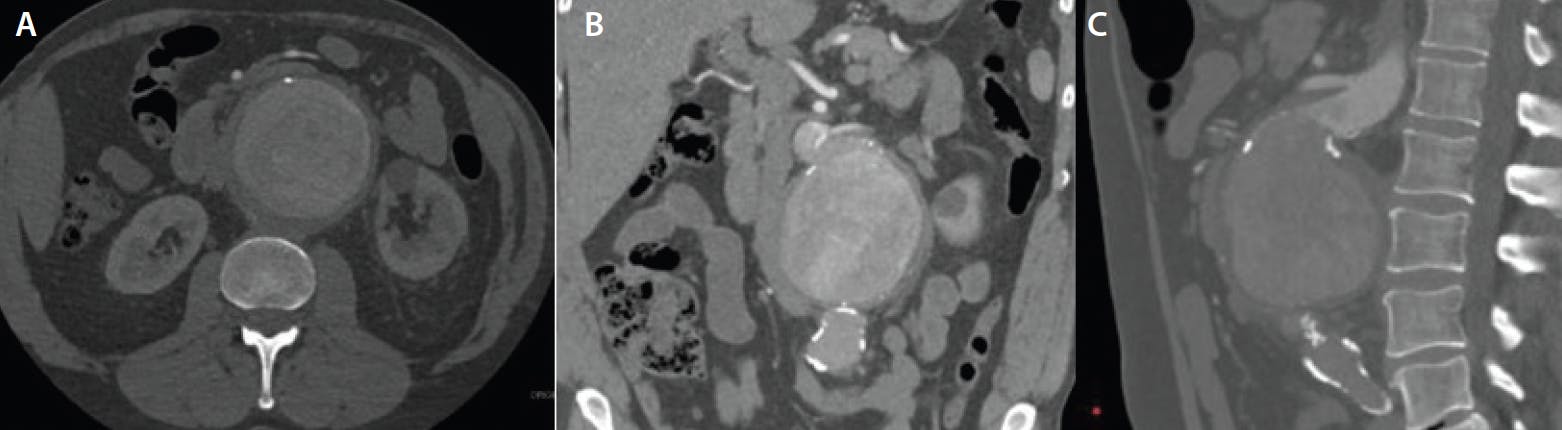
Figure 1. A large, inflammatory juxtarenal AAA (A). Coronal view showing accessory left renal artery originating just above the aneurysm sac (B). Sagittal view showing the angulated neck (C).
Case Continued: Approach to Treatment and Cardiovascular Medicine Consult
The patient was evaluated by the cardiovascular medicine team and taken for a cardiac catheterization. He had three-vessel disease, with mild stenosis of his RCA stent and an 80% stenosis of his left anterior descending (LAD) coronary artery. Considerations for management of this patient included OSR, OSR after percutaneous coronary intervention (PCI), open coronary artery revascularization with delayed OSR, or complex EVAR after possible PCI.
Cardiovascular medicine indicated that PCI would involve extensive LAD stenting, which would still leave him at high risk for OSR of his juxtarenal AAA. They felt his coronary artery disease would be best served by coronary artery bypass grafting (CABG) and thus did not intervene with a PCI. Given his symptomatic AAA, a decision was made to proceed with urgent complex AAA endovascular repair.
Case Continued: Procedure Planning
ZFEN repair was not an option given the urgency as well as the presence of a large accessory left renal artery. A PMEG repair with five-vessel fenestrations was elected as the optimal method of repair. Adjusted centerline imaging was performed, with measurements of distances and arc lengths for each target vessel. To ensure a good long-term proximal seal, the decision was made to extend the proximal graft to seal above the celiac artery. A 32- X 28- X 160-mm Zenith TX2 thoracic stent graft (Cook Medical) was selected for modification. The modifications were performed as described by Gupta et al.3 After deploying the graft on a sterile back table, five fenestrations were created using low-voltage ophthalmologic electrocautery. We created 8-mm fenestrations for the celiac and superior mesenteric arteries (SMA), and 6-mm fenestrations were created for the three renal arteries. The fenestrations were reinforced with EN Snare wires (EN Snare endovascular snare system, Merit Medical), braided and looped twice around and sewn around their periphery with 5-0 braided polyester sutures (Ethibond Excel, Ethicon, a Johnson & Johnson Medtech company) (Figure 2).
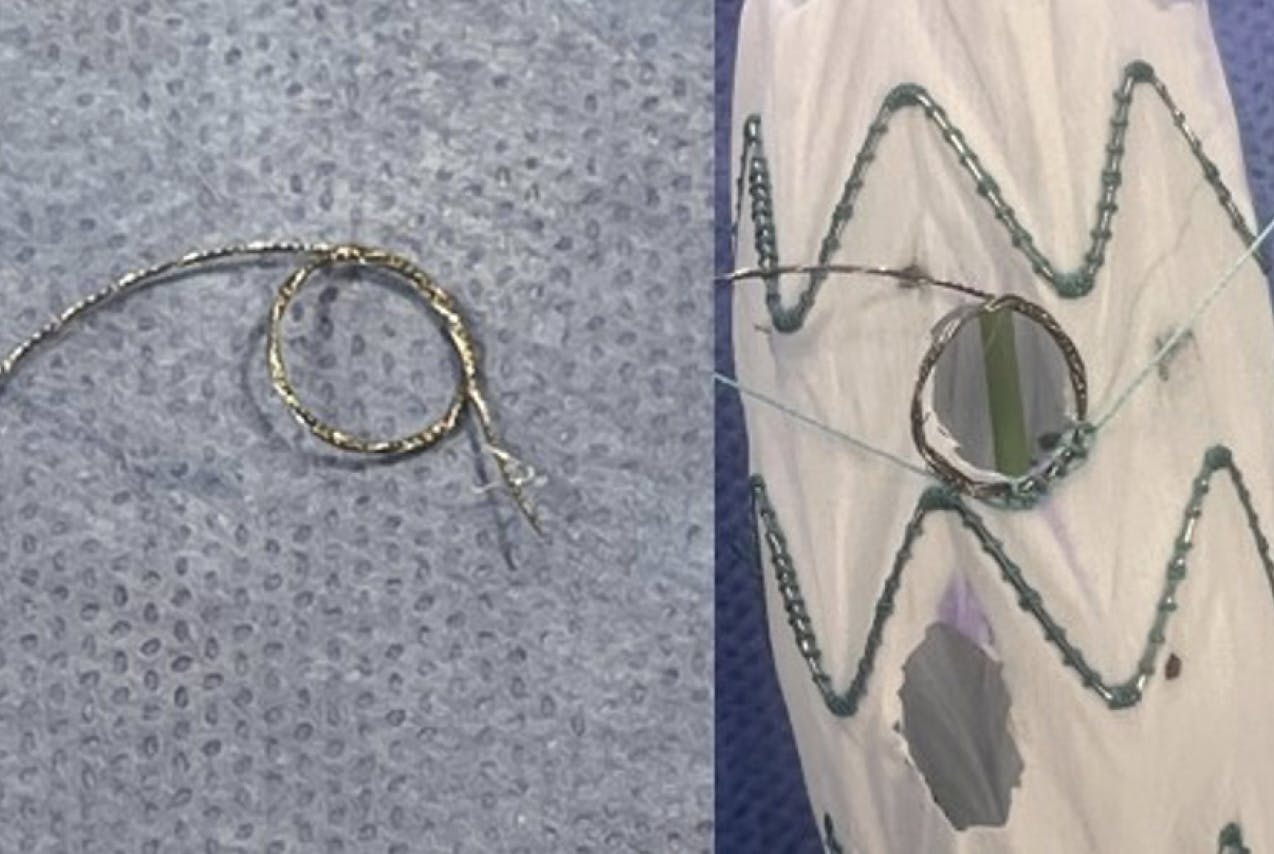
Figure 2. EN Snare wire braided and looped around itself. Also shown sewn in with Ethibond suture.
Circumferential diameter reduction of the deployed graft was performed using 4-0 chromic suture, and the top row of the TX2 graft was marked anteriorly at 12 o’clock with gold markers to help with orientation and deployment of the stent graft (Figure 3A). The TX2 stent graft was then resheathed back into its original sheath. After gaining percutaneous large-bore access from both groins, the graft was advanced into position, and after obtaining an angiogram identifying the renal arteries as reference, the graft was deployed. Sequential cannulation of the three renal arteries, followed by the SMA and celiac artery was then performed, eventually leaving 0.035-inch Rosen wires behind. The graft was then ballooned to break the chromic diameter reduction ties, with sequential stenting of the vessels in reverse order, starting with celiac artery proceeding down to the renal arteries. Viabahn VBX 8-mm stents (Gore & Associates) were used for the celiac artery and SMA, and 6-mm iCast stents (Getinge) for the renal arteries. These balloon-expandable stents were flared on the aortic end with balloons 2-mm larger than the stents. An aorto-bi-iliac endograft was deployed to extend distally. In this case, a 32-mm-diameter Gore Excluder AAA endoprosthesis (Gore & Associates) was used with bilateral iliac limb extensions into the common iliac arteries. There was > 4 cm of overlap between the TX2 and Gore Excluder grafts. Final aortography showed no type I or III endoleaks and just a small type II endoleak from a lumbar near the iliac bifurcation (Figure 3B).
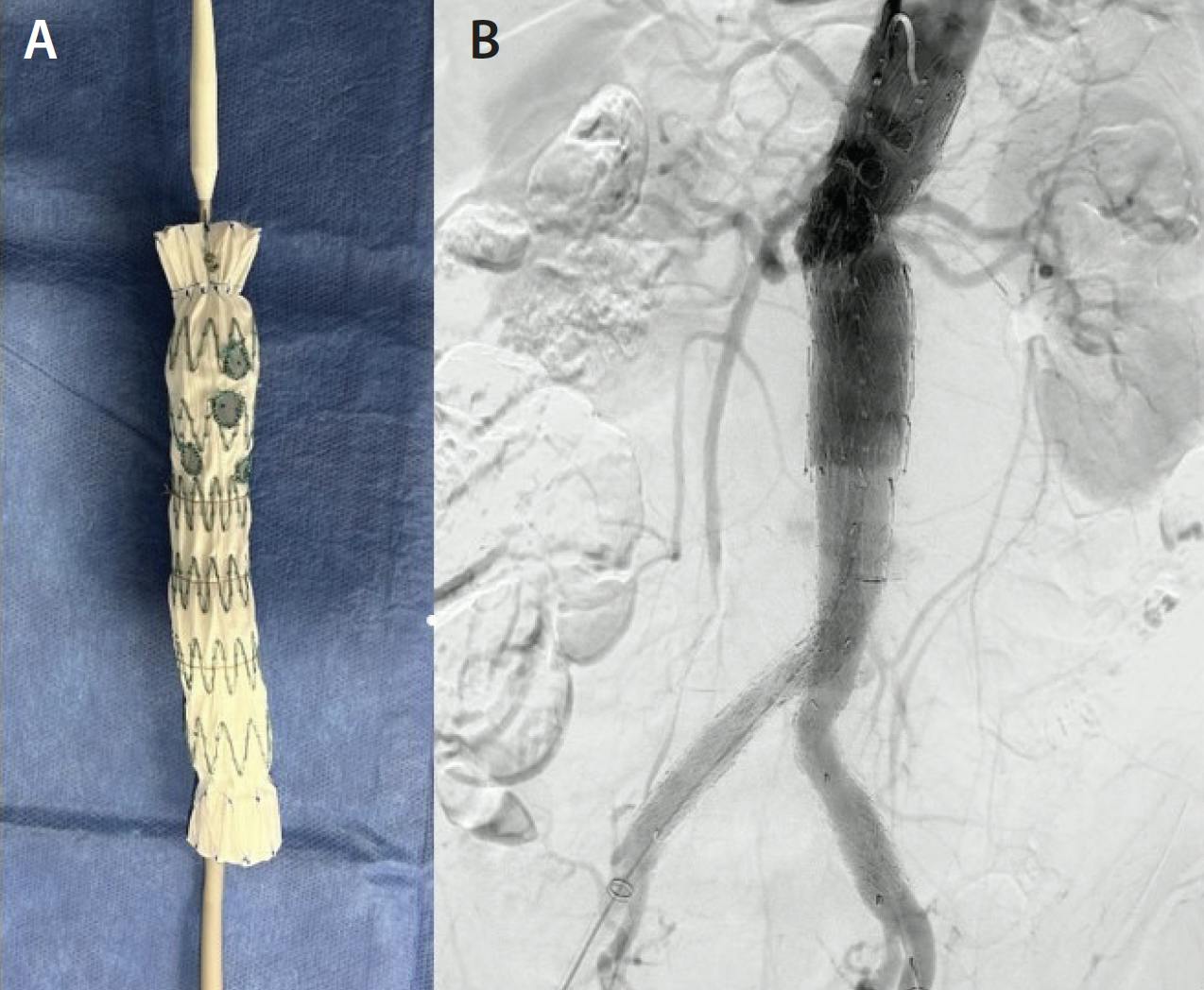
Figure 3. The modified TX2 graft, four of the five fenestrations can be seen, with gold markers at the top of the graft at 12 o’clock and chromic diameter reduction ties (A). Final angiogram showing exclusion of the aneurysm with small type II endoleak (B).
Postprocedure Outcome
The patient did well postoperatively and was discharged home after 1 week. Three months later, he had a CABG procedure and has since recovered well. At 1 year after repair with the PMEG, the AAA diameter had shrunk by 1 cm (Figure 4). The small type II endoleak continues to be monitored with surveillance CT scans.
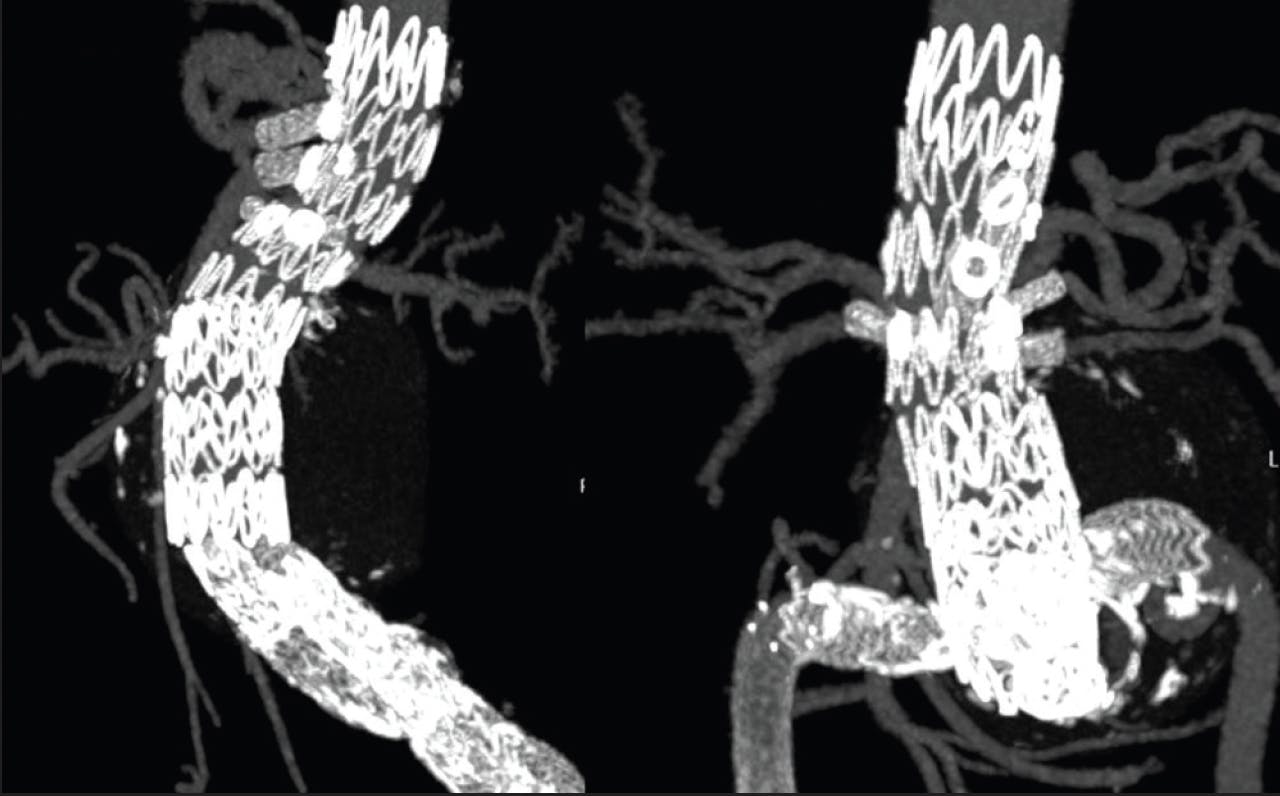
Figure 4. Three-dimensional (3D) reconstruction (lateral and anteroposterior) showing the five stented fenestrations of the PMEG.
CASE STUDY 2
Case Presentation
A man in his late 70s was referred for a type III TAAA as a potential TAMBE candidate. He was asymptomatic, with a 6.5-cm aneurysm. He had a long history of smoking, had marginal pulmonary function testing, and was seeking an endovascular repair. He had an anomalous left hepatic artery originating directly from aorta and a right hepatic artery branch from the celiac artery as usual. The aorta near the renal arteries was narrowed for a short segment, measuring around 16 mm in diameter (Figure 5 and Figure 6).
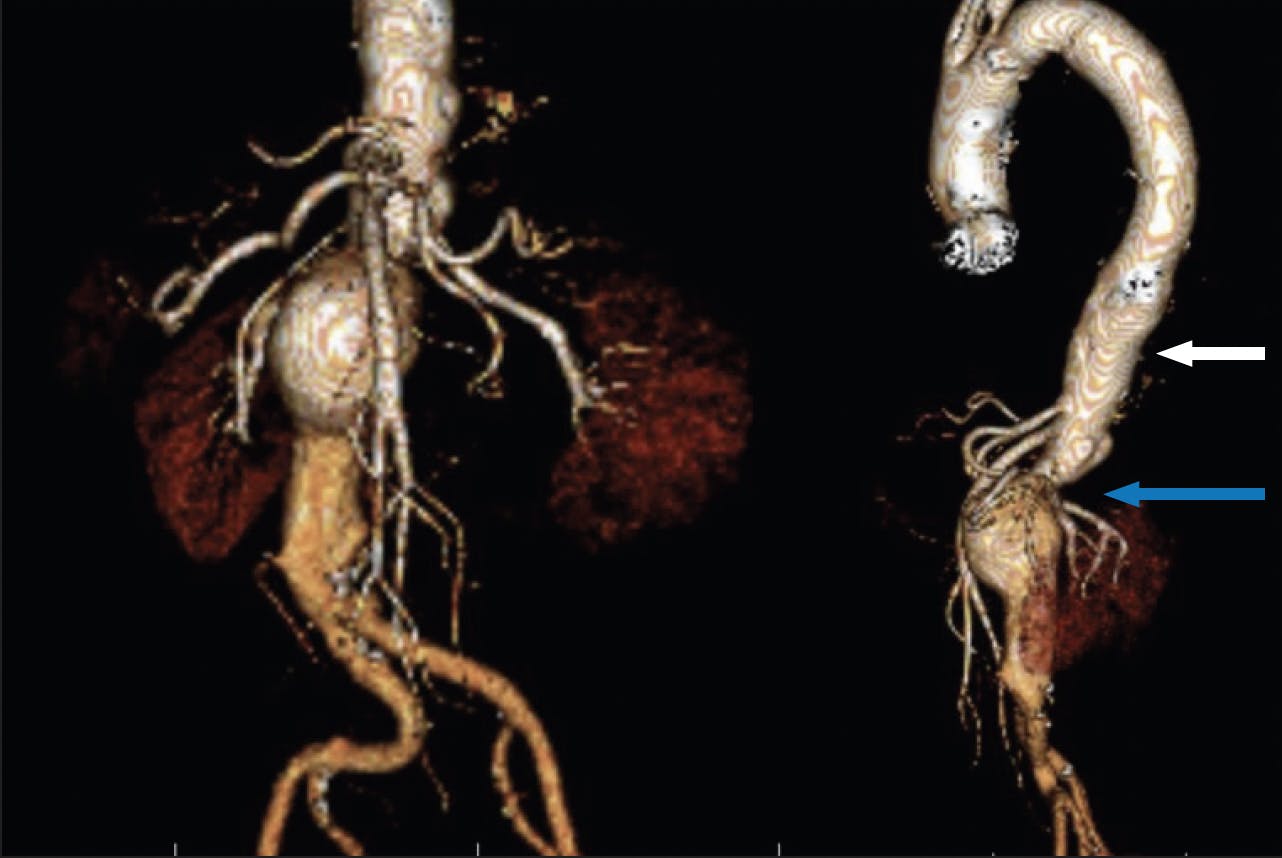
Figure 5. 3D reconstruction of type III TAAA. The white arrow shows an aorta of approximately 5 cm. The blue arrow points to the focal narrowing of the pararenal aorta to 16 mm. The infrarenal diameter measured 6.5 cm.
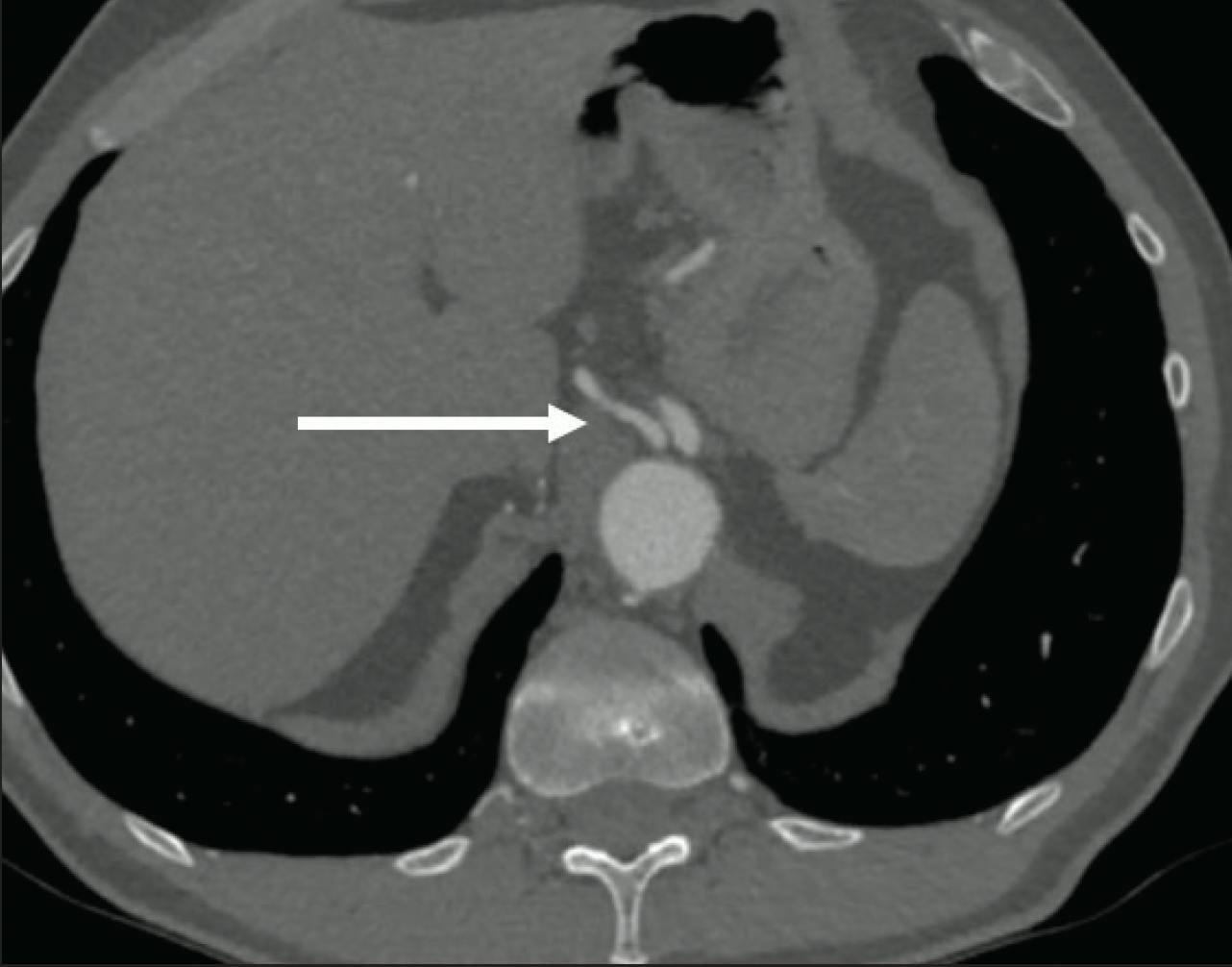
Figure 6. Anomalous origin of left hepatic artery (white arrow).
Case Continued: Procedure Planning
Given his anomalous left hepatic artery origin off the aorta as well as the narrowed pararenal aorta, the patient was not a good candidate for a TAMBE repair. TAMBE is an off-the-shelf device with four branches, which in this patient's situation would mean sacrificing the left hepatic artery. Also, the renal branch extensions through the narrowed pararenal aorta would lead to graft competition and an increased risk of compromising branch patency. Discussions were held with him regarding referral to a PS-IDE center for repair with a CMD. The patient lived independently with no social support and had limited financial resources, and it was hard for him to arrange evaluation at our site, a few hours away. Thus, he refused the referral.
At this point, it was felt he would be optimally managed with a PMEG repair with five fenestrations. A 34- X 26- X 194-mm tapered TX2 graft with a proximal extension using a 38- X 117-mm Zenith Alpha thoracic endovascular graft (Cook Medical) was chosen. Distal extension was planned with a 28.5-mm-diameter Gore Excluder AAA endoprosthesis, with bilateral iliac limb extensions. The case planning and modifications were made as described in the previous case. Execution was performed without any issues. An overlap of > 4 cm was created proximally and distally between the grafts. No endoleaks were detected at the end of the case. Of note, the patient had a small accessory left renal artery that supplied < 20% of the left kidney (< 3 mm in diameter), which was cannulated and coiled during the same procedure, prior to performing PMEG repair. The final angiogram is shown in Figure 7.
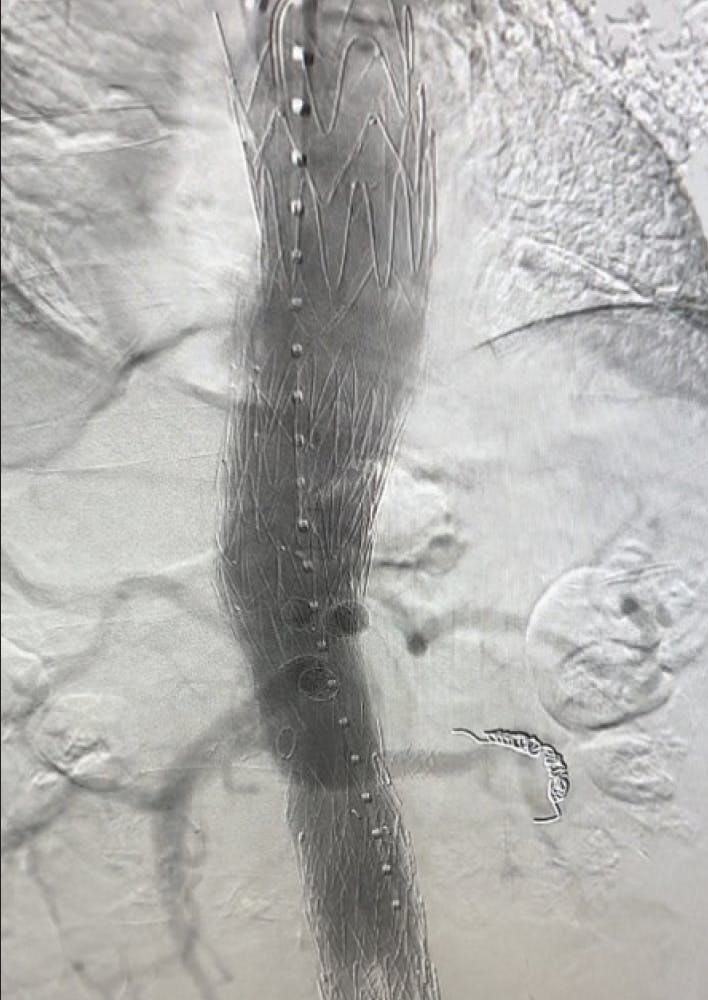
Figure 7. Final angiogram showing the five stented fenestrations, a coiled accessory left renal artery, and no endoleaks.
Postprocedure Outcome
The patient was discharged on postoperative day 5 after prolonged time to wean off oxygen with aggressive pulmonary therapy.
Highlight Point
PMEGs can provide a safe, effective, and durable repair for complex AAAs, while awaiting FDA-approved commercial devices to become available. However, it is critically important that these repairs are done at high-volume centers that not only possess operators with advanced technical skills but also have the infrastructure support required to manage such complicated patients. Lastly, we are presently operating in a relative data void. There is an increasing number of publications suggesting an increasing use of PMEG, yet a paucity of publications on outcomes of such procedures outside of PS-IDE centers.
SUMMARY
In the management of complex AAAs, PMEGs have been adopted over the last decade as a mainstay therapy, currently outpacing usage over commercially available devices, such as the ZFEN, outside of PS-IDE centers.4 TAMBE has a role in the management of complex aortic aneurysms, but PMEGs will continue to be utilized, as highlighted by the cases discussed here. Recent literature has documented that PMEGs are safe and effective in the treatment of complex AAAs with acceptable adverse event rates.5 These are not easy repairs, and there is a learning curve involved. With increasing experience and expertise comes improved outcomes including perioperative mortality, major adverse events, secondary interventions, and procedural process metrics, including operative time, radiation dose, contrast volume, and blood loss.6 Newer generations of vascular surgery and other interventional specialty residents and fellows are entering practice with more exposure and experience with PMEGs, and the use of PMEGs will only increase with time.
1. Suckow BD, Goodney PP, Columbo JA, et al. National trends in open surgical, endovascular, and branched-fenestrated endovascular aortic aneurysm repair in Medicare patients. J Vasc Surg. 2018;67:1690-1697.e1. doi: 10.1016/j.jvs.2017.09.046
2. O’Donnell TFX, McElroy IE, Boitano LT, et al. Comparison of treatment options for aortic necks outside standard endovascular aneurysm repair instructions for use. J Vasc Surg. 2021;74:1548-1557. doi: 10.1016/j.jvs.2021.04.052
3. Gupta S, Peshkepija A, Toursavadkohi S. Complex endovascular repair of pararenal and thoracoabdominal aneurysms utilizing physician-modified endografts (PMEG). In: Shepard AD, Hans SS, Weaver MR, Nypaver TJ, eds. Endovascular & Open Vascular Reconstruction: A Henry Ford Surgical Guide. 2nd ed. CRC Press; 2025.
4. O’Donnell TFX, Dansey KD, Schermerhorn M, et al. National trends in utilization of surgeon-modified grafts for complex and thoracoabdominal aortic aneurysms. J Vasc Surg. 2024;79:1276-1284. doi: 10.1016/j.jvs.2024.01.216
5. Tsilimaparis N, Gouveia E Melo R, Tenorio ER, et al. Multicenter study on physician-modified endografts for thoracoabdominal and complex abdominal aortic aneurysm repair. Circulation. 2024;150:1327-1342. doi: 10.1161/CIRCULATIONAHA.123.068587
6. Mirza AK, Tenorio ER, Kärkkäinen JM, et al. Learning curve of fenestrated and branched endovascular aortic repair for pararenal and thoracoabdominal aneurysms. J Vasc Surg. 2020;72:423-434.e1. doi: 10.1016/j.jvs.2019.09.046
Advertisement
Advertisement