Advertisement
Advertisement
April 2025
Much Supply Confers Great Demand: Renal Denervation for Resistant Hypertension
A discussion of a challenging case of renal artery denervation for resistant hypertension.
By Brian Fulton, MD; Taisei Kobayashi, MD; and Jay Giri, MD, MPH
Hypertension (HTN) is estimated to affect as much as 50% of the adult population in the United States or approximately 120 million people.1 It is further estimated that nearly 80% of these patients may remain suboptimally controlled, attributable to factors such as underrecognition, medication intolerance or cost, or undertreatment of secondary causes of HTN.2,3 Prior studies have projected that a decrease in the systolic blood pressure (SBP) by only 5 mm Hg translates into a 10% decrease in major adverse cardiac events (MACE) such as stroke, heart failure, ischemic heart disease, and cardiovascular death, with even greater reduction in MACE observed with greater achieved reductions in BP.4 Renal denervation (RDN) is a novel, catheter-based therapy for patients with resistant HTN that serves as an adjunct to maximally tolerated medical therapy. This article describes a challenging RDN case performed for a patient with resistant primary HTN.
CASE PRESENTATION
A male patient in his early 60s with history of resistant HTN, hyperlipidemia, former tobacco use, coronary artery disease treated with multiple percutaneous coronary interventions, peripheral artery disease (PAD) treated with stenting of the superficial femoral artery, and rectal carcinoma treated with partial colectomy presented to our multidisciplinary HTN center to discuss treatment options for his HTN. The patient was consistently noted to have an office SBP and 24-hour ambulatory mean SBP > 160 mm Hg despite adherence to optimal doses of four antihypertensive medications (amlodipine, benazepril, chlorthalidone, and carvedilol). A full evaluation for secondary causes of HTN, including renal artery stenosis, hyperaldosteronism, fibromuscular dysplasia, obstructive sleep apnea, and pheochromocytoma, was performed and noted to be unremarkable. The patient’s vital signs in the office were notable for BP of 167/77 mm Hg and heart rate of 54 bpm. Laboratory evaluation was notable for creatinine of 0.57 mg/dL, hemoglobin of 17.2 g/dL, and platelet count of 133,000. After a shared decision-making session with the patient and his family, we elected to proceed with RDN as the next step in treatment of his resistant HTN.
Highlight Point: SCAI Consensus Statement
The Society for Cardiovascular Angiography and Interventions (SCAI) has produced a consensus statement on multiple aspects of RDN, including patient selection, procedural best practices, and institutional guidelines. According to this statement, patients considered for RDN should be evaluated by a multidisciplinary care team made up of providers from different training backgrounds, with both invasive and noninvasive specialties providing a comprehensive evaluation and approach to care.5 It is recommended that RDN be considered for “Patients with uncontrolled hypertension despite attempting lifestyle modification and antihypertensive medication but who are either intolerant of additional medication or do not wish to be on additional medications and who are willing to undergo renal denervation after shared decision-making.”4 It further recommends that patients with higher cardiovascular risk and greater predilection for MACE should be prioritized for treatment.
CASE CONTINUED
After informed consent was obtained, the patient was brought to the cardiac catheterization laboratory, and conscious sedation was administered with fentanyl and midazolam. A noncontrast CT was performed as part of his diagnostic workup, which demonstrated severe PAD with high-grade stenosis of the right common femoral and iliac arteries (Figure 1). For this reason, access was obtained via the left common femoral artery under ultrasound and fluoroscopic guidance. As a standard 0.035-inch J-wire was unable to navigate the iliofemoral system due to calcification and tortuosity, this was exchanged via a 4-F dilator for a 0.035-inch Wholey wire (Medtronic), which was successfully advanced into the thoracic aorta. A 6-F, 23-cm sheath was inserted. Next, a 5-F Omniflush pigtail catheter was advanced into the abdominal aorta, and aortography was performed using digital subtraction angiography (DSA) to evaluate the number and locations of the main renal arteries as well as any accessory renal arteries that would require treatment. This demonstrated a total of five renal arteries that would require treatment: two main renal arteries, two right-sided accessory arteries, and one left-sided accessory artery (Figure 2). One of the right-sided accessory arteries can be seen originating at the L4-L5 vertebral level, an uncommon location, and extending toward the inferior pole of the right kidney. The Omniflush was removed over a standard 0.035-inch J wire and exchanged for a 6-F, 55-cm internal mammary (IM) guide catheter for purposes of selective renal artery angiography.
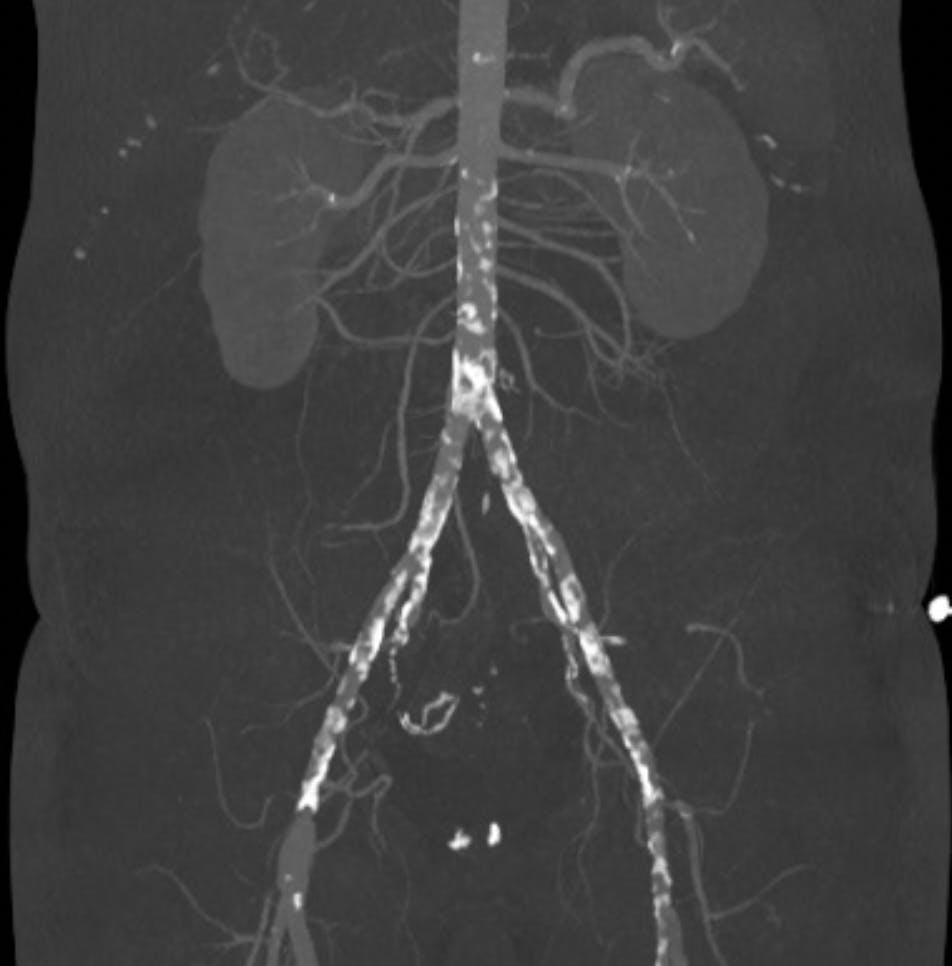
Figure 1. CT demonstrating severe bilateral iliofemoral calcific disease.
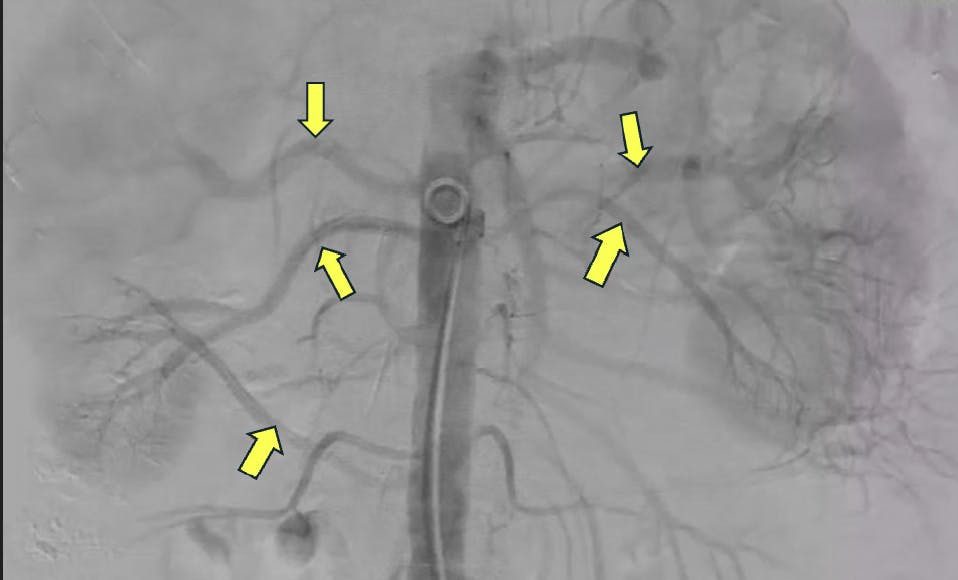
Figure 2. The abdominal angiogram performed with DSA demonstrated bilateral main renal arteries as well as three total accessory renal arteries (two on right, one on left).
Highlight Point: Available Devices
The FDA has approved two RDN devices for commercial use in the United States, the Symplicity Spyral radiofrequency RDN (rRDN) system (Medtronic) (Figure 3) and the Paradise ultrasound RDN (uRDN) system (Recor Medical) (Figure 4). The rRDN system is a one-size-fits-all catheter system that emits radiofrequency waves from four electrodes at the tip of a helix-shaped catheter, which is designed to conform to the renal arterial wall.6 The uRDN system contains a balloon at its tip, sized to the vessel diameter, that surrounds an ultrasound-emitting core, and a sterile water irrigation system allows for the arterial wall to be cooled during treatments to mitigate vessel trauma.6
Both systems are designed to transmit their energy through the arterial wall to cause heat-mediated destruction of the surrounding nerve fibers. The rRDN system is designed to treat main and accessory renal arteries and their distal branches sized 3 to 8 mm, while the uRDN system treats only main and accessory renal arteries exclusive of branches, also sized 3 to 8 mm. Both systems have been demonstrated to be safe, durable, and efficacious in the treatment of resistant HTN.7-15
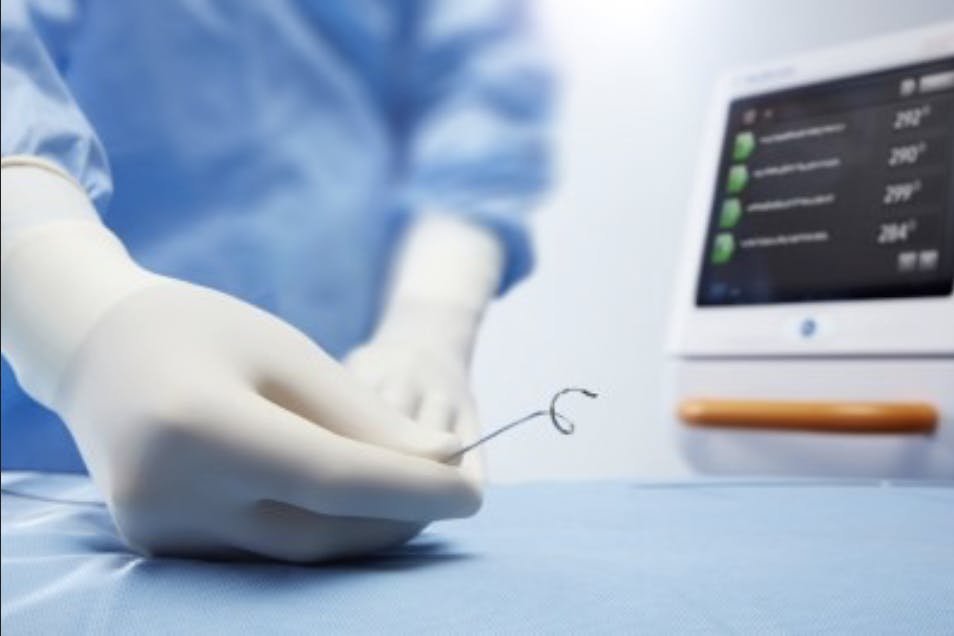
Figure 3. The Symplicity Spyral RDN catheter.
(Courtesy of Medtronic.)
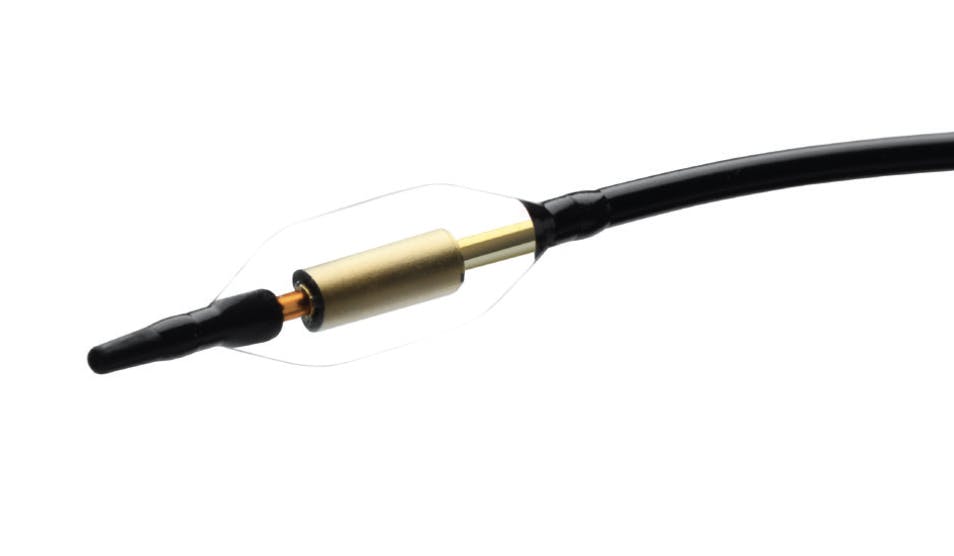
Figure 4. The Paradise RDN catheter.
(Courtesy of Recor Medical.)
Selective angiography was then performed in sequence, noting challenging engagement of the accessory vessels due to varying takeoff angles and proximity to other vessels. This confirmed each of the five vessels was suitable for treatment. Knowing that complete treatment would warrant denervation of all five vessels, we planned for increased total procedure time and made adjustments to our contrast dye admixture to limit overall dosage. We also planned to save more fluoroscopy imaging rather than perform cineangiography to limit radiation exposure to the patient and procedural staff. Unfractionated heparin (UFH) was administered to achieve an activated clotting time (ACT) > 250 seconds.
CASE CONTINUED
After angiography, we proceeded with treatment of the right renal arterial tree with the Symplicity Spyral rRDN system. The most inferior of the accessory renal branches was engaged with the IM guide catheter and the vessel was wired with a 0.014-inch, 190-cm Thunder wire (Medtronic), a nonhydrophilic workhorse wire. The wire was advanced into a distal branch proximal to the renal parenchyma to avoid injury to this region. The Spyral catheter was advanced over the Thunder wire and into the distal accessory artery. The wire was then retracted, allowing for the Spyral catheter to assume its helical shape and for each of the four electrodes to contact the arterial wall. Over 60 seconds, radiofrequency energy was delivered through the catheter by way of the Symplicity generator. The system monitors vessel impedance and temperature to detect loss of contact, vessel spasm, or other vessel trauma with the ability to automatically discontinue radiofrequency emission from the associated electrodes. The electrodes may be individually and selectively reactivated to deliver treatment in the event of contact loss with the arterial wall.
Treatments were delivered in distal-to-proximal fashion, beginning with the branches and ending with the parent vessel. Nitroglycerin was administered intermittently between treatments to minimize vessel spasm, and intravenous sedation was administered liberally to mitigate any associated discomfort to the patient. After the accessory artery was comprehensively treated, angiography was performed, confirming no vessel trauma requiring intervention had occurred. We then proceeded with treatment in sequence of the more superior right renal accessory artery, the right main renal artery, and subsequently the left main renal artery. Our last target, the left accessory renal artery, was noted to have an exaggerated posterior and inferior takeoff. Thus, our IM catheter was unable to provide adequate support for wiring and catheter advancement. This would also confer elevated risk of vessel injury if not appropriately engaged and limit our ability to deliver adequate treatment to all target areas. Thus, we elected to exchange the IM catheter for a 6-F renal double curve catheter, which engaged the ostium of the vessel successfully and provided adequate support for intervention. As previously described, nitroglycerin and sedation were administered liberally and selective angiography performed of each vessel following treatment to confirm no vascular injury. ACTs were drawn and measured periodically to ensure appropriate level of anticoagulation throughout the procedure, with additional UFH administered as needed to maintain the ACT > 250 seconds.
After all vessels were appropriately treated and angiography performed, the guide catheter and wire were removed over a 0.035-inch J wire. Given the degree of calcification of the femoral access site, the introducer sheath was removed, and manual hemostasis was achieved following normalization of the ACT. After 4 hours of bed rest, the patient was permitted to ambulate prior to being discharged home later the same day with no complaints. The patient was maintained on aspirin therapy postprocedure. He was discharged with a plan to follow up in our multidisciplinary clinic in 4 weeks to assess for any procedural complications and make any adjustments to his medication regimen. At that visit, his BP was found to be 154/68 mm Hg, a > 10 mm Hg decrement in both SBP and diastolic BP compared to preprocedure values.
DISCUSSION
RDN has been demonstrated across multiple randomxized, placebo-controlled trials as well as long-term registry data to be a safe, effective, and durable therapy for patients with resistant HTN despite maximally tolerated medical therapy.7-15 This case highlights several important aspects of a typical RDN procedure, including patient selection and technical details. However, this case was hardly typical. The degree of tortuosity and calcification that was encountered in the iliofemoral system conferred significant challenge and increased risk of trauma with vascular access. The advent of RDN catheters designed to be inserted via the radial artery may mitigate the risk in these cases to some extent, although peripheral interventions from the radial approach are associated with their own set of challenges.16 Next, it is rare to require multiple different guide catheters to engage the renal arteries within the same patient as was the case here. Further, the presence of three accessory renal arteries in addition to the bilateral main renal arteries necessitated the treatment of five total vessels as well as their distal branches. The ability to obtain the best overall result relies on complete and comprehensive denervation of all eligible neurovascular beds. Thus, this patient’s anatomy posed a natural challenge in being able to obtain the best long-term result. It also increased overall procedural time and forced our team to be especially diligent with contrast dye and sedation administration as well as fluoroscopy and cineangiography use. With adequate preparation and protocols for managing the above variables in these types of cases, we will have the greatest ability to provide safe and effective RDN therapy for our patients.
1. Tsao CW, Aday AW, Almarzooq ZI, et al. Heart disease and stroke statistics—2023 update: a report from the American Heart Association. Circulation. 2023;147:e93-e621. doi: 10.1161/CIR.0000000000001123
2. Chang TE, Ritchey MD, Park S, et al. National rates of nonadherence to antihypertensive medications among insured adults with hypertension, 2015. Hypertension. 2019;74:1324-1332. doi: 10.1161/HYPERTENSIONAHA.119.13616
3. Richardson LC, Vaughan AS, Wright JS, Coronado F. Examining the hypertension control cascade in adults with uncontrolled hypertension in the US. JAMA Netw Open. Published September 3, 2024. doi: 10.1001/jamanetworkopen.2024.31997
4. Blood Pressure Lowering Treatment Trialists’ Collaboration; Rahimi K, Bidel Z, Nazarzadeh M, et al. Pharmacological blood pressure lowering for primary and secondary prevention of cardiovascular disease across different levels of blood pressure: an individual participant-level data meta-analysis. Lancet. 2021;397:1625-1636. doi: 10.1016/S0140-6736(21)00590-0
5. Swaminathan RV, East CA, Feldman DN, et al. SCAI position statement on renal denervation for hypertension: patient selection, operator competence, training and techniques, and organizational recommendations. J Soc Cardiovasc Angiogr Interv. 2023;2:101121. doi: 10.1016/j.jscai.2023.101121
6. Fulton B, Giri J, Cohen D, et al. Renal denervation in the treatment of resistant hypertension: expert analysis. American College of Cardiology website. Published November 28, 2022. Accessed March 3, 2025. https://www.acc.org/Latest-in-Cardiology/Articles/2022/11/28/12/46/Renal-Denervation-in-the-Treatment-of-Resistant-Hypertension
7. Böhm M, Kario K, Kandzari DE, et al. Efficacy of catheter-based renal denervation in the absence of antihypertensive medications (SPYRAL HTN-OFF MED Pivotal): a multicentre, randomised, sham- controlled trial. Lancet. 2020;395:1444-1451. doi: 10.1016/s0140-6736(20)30554-7
8. Azizi M, Schmieder RE, Mahfoud F, et al. Endovascular ultrasound renal denervation to treat hypertension (RADIANCE- HTN SOLO): a multicentre, international, single-blind, randomised, sham-controlled trial. Lancet. 2018;391:2335-2345. doi: 10.1016/s0140-6736(18)31082-1
9. Rader F, Kirtane AJ, Wang Y, et al. Durability of blood pressure reduction after ultrasound renal denervation: three-year follow-up of the treatment arm of the randomised RADIANCE-HTN SOLO trial. EuroIntervention. 2022;18:e677-e685. doi: 10.4244/eij-d-22-00305
10. Kandzari DE, Böhm M, Mahfoud F, et al. Effect of renal denervation on blood pressure in the presence of antihypertensive drugs: 6-month efficacy and safety results from the SPYRAL HTN-ON MED proof-of-concept randomised trial. Lancet. 2018;391:2346-2355. doi: 10.1016/s0140- 6736(18)30951-6
11. Mahfoud F, Kandzari DE, Kario K, et al. Long-term efficacy and safety of renal denervation in the presence of antihypertensive drugs (SPYRAL HTN-ON MED): a randomised, sham-controlled trial. Lancet. 2022;399:1401-1410. doi: 10.1016/s0140-6736(22)00455-x
12. Kandzari DE, Townsend RR, Kario K, et al. Safety and efficacy of renal denervation in patients taking antihypertensive medications. J Am Coll Cardiol. 2023;82:1809-1823. doi: 10.1016/j.jacc.2023.08.045
13. Azizi M, Sanghvi K, Saxena M, et al. Ultrasound renal denervation for hypertension resistant to a triple medication pill (RADIANCE-HTN TRIO): a randomised, multicentre, single-blind, sham-controlled trial. Lancet. 2021;397:2476-2486. doi: 10.1016/s0140-6736(21)00788-1
14. Mahfoud F, Mancia G, Schmieder RE, et al. Cardiovascular risk reduction after renal denervation according to time in therapeutic systolic blood pressure range. J Am Coll Cardiol. 2022;80:1871-1880. doi: 10.1016/j.jacc.2022.08.802
15. Mahfoud F, Azizi M, Daemen J, et al. Real-world experience with ultrasound renal denervation utilizing home blood pressure monitoring: the Global Paradise System registry study design. Clin Res Cardiol. 2024;113:1375-1383. doi: 10.1007/s00392-023-02325-x
16. Kovacic JC, Skelding KA, Arya S, et al. Radial access approach to peripheral vascular interventions: a scientific statement from the American Heart Association. Circ Cardiovasc Interv. 2025;18:e000094. doi: 10.1161/HCV.0000000000000094
Advertisement
Advertisement